
This is one of the most important elements of fishkeeping. Filters process the fishes waste, remove it from the water column and or create circulation within the aquarium. One of the main elements that spending a bit more is definitely worth doing as they should last many years or decades.
One term I should specify first is turnover, how often the filter processes x volume of water per x time designated in litres per an hour or for the imperial system gallons per hour. Beware that gallons is technically different in the US to elsewhere.
Types of aquarium filters?
Filters can realistically be put into three categories; internal, external and the Hang on the Back filters.
Internals: This covers filters that are contained within the aquarium, they are generally cheaper and have less risks of leaks. They tend though to have a lower turnover and reduced water velocity current. Tending to be better for smaller aquariums, 100L or below. The other downside is when removing the media or filter to clean it tends to cough a lot of waste out into the aquarium so needs time to clear afterwards.
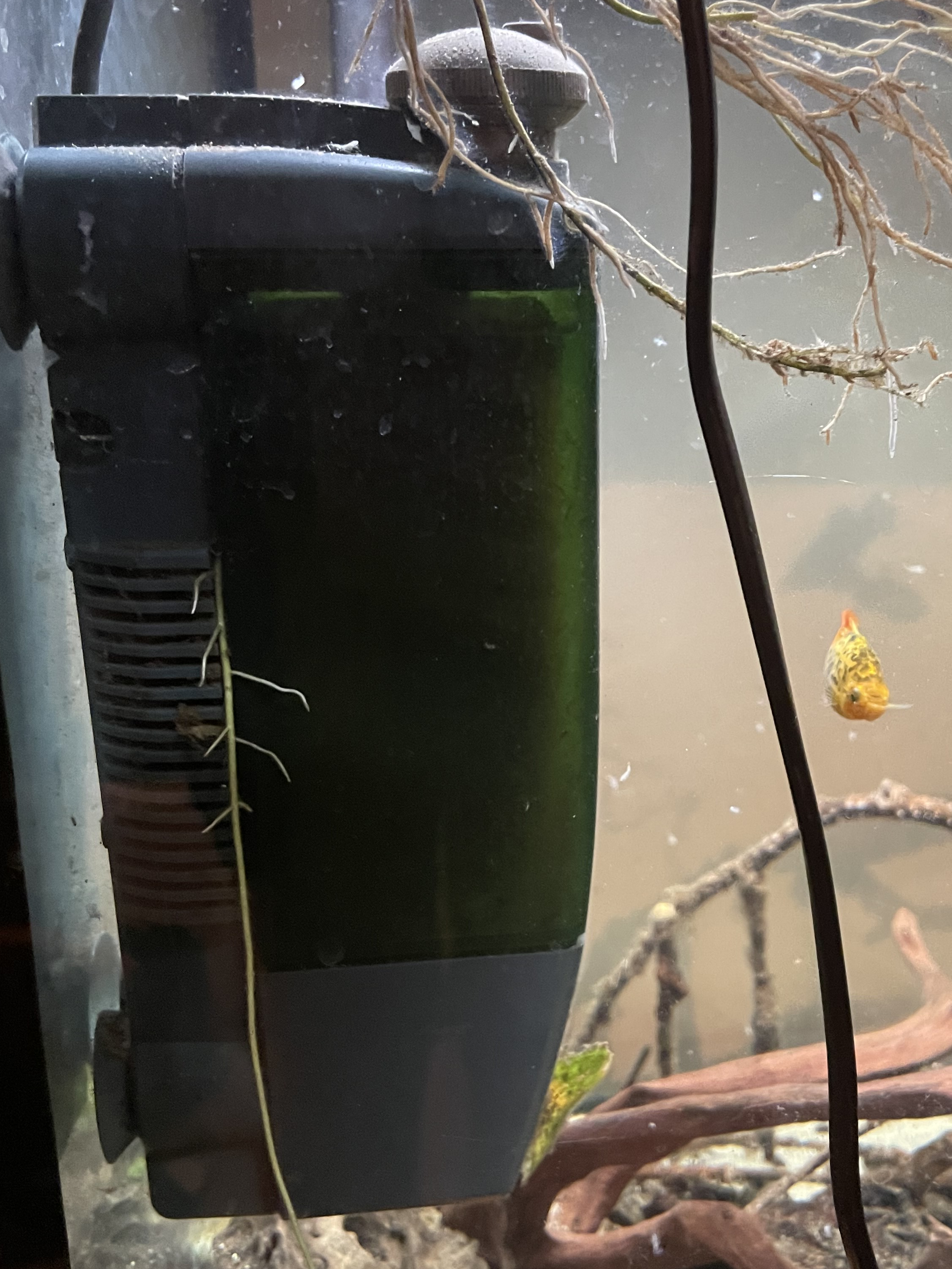
- Box filters: These tend have a much better current and flow then the other types of internal filtration but varies massively. They tend to be the most widely available internal filters in the UK at a range of prices, generally these I find have a good longevity regardless of brand or quality. Of all the internals you’ll have the widest range of medias, explained later. Can be built into the aquarium which offers a lot of space and ease of cleaning.
- Airpowered filters: Very similar to box filters but are air powered, which can make them more noisy. Otherwise these can be really good and come in a range of designs from the simple round ones to Hamburg Matten filters usually based on sponges. Cheap and easy to replace if parts break, one of the best ways to have a fish room on a budget. These do require maybe extra equipment explained in the Air Pumps page.
- Undergravel filters: Having worked with these for years and as my first filter. The first big element is that they require gravel as the name suggests which very much limits your choice of stocking, check out the substrates page for why. There is no ease of cleaning as they will collect dirt and detritus which cannot be removed. These can be air or pump powered, the issue with air power is just because it is processing a lot of waste an airstone will need replacing frequently.
Externals: As the name suggests, outside of the aquarium. These are great but do have a leak risk, with quality filters and brands such as Eheim then this is very low. Unlike internals great for a wider range of aquariums due to the higher turnover and stronger flow although there is a diversity available.
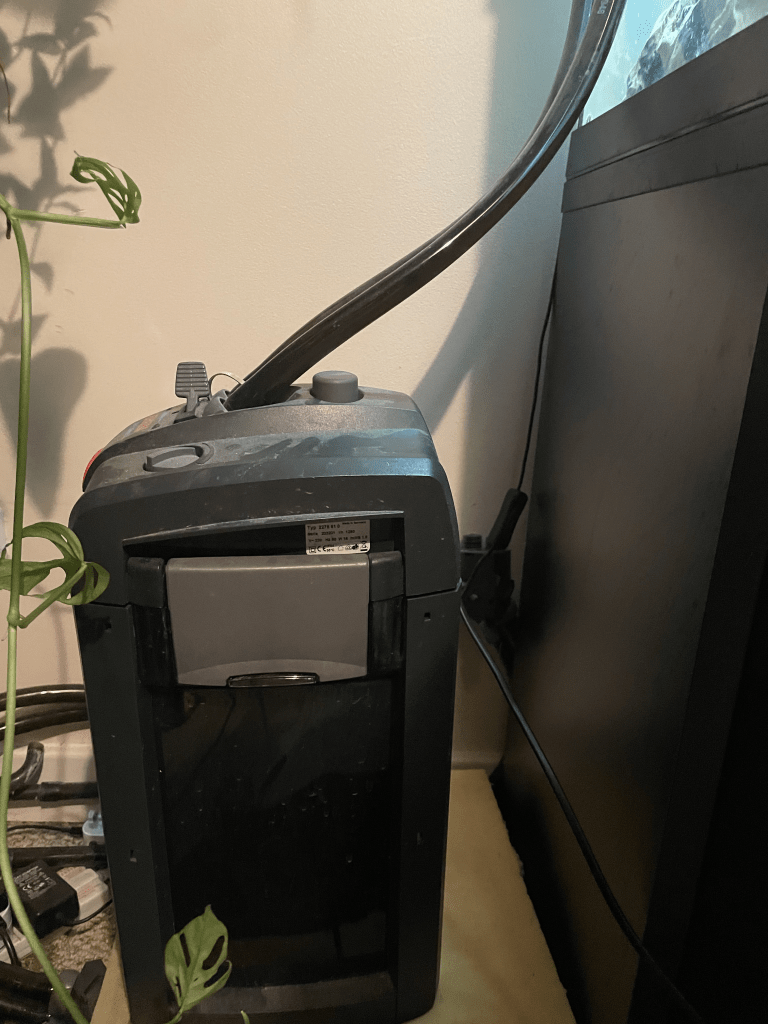
- Canisters: These are the most commonly used external filters, they are less customisable but as sealed units there isn’t needed any consideration for power cuts. They do have a great output but unless for low flow fishes I personally (opinion) wouldn’t have for 300L or more maybe without a good amount of powerheads. I’ve been using these for years and do swear by my Eheim Professional 4+ 600’s, I have used a variety of other brands.
- Sumps: Not just for marine but really have their place in freshwater too! These are great with a powerhead on those 300L or heavy waste fishes where you do need to remove a lot more waste. Easy to access, easy to clean, easier to design (that aspect maybe isn’t useful for beginners) and I really like them. Take into consideration during powercuts they will need to either be drilled or with an overflow box. Maybe not a great idea for your first aquarium.
- Overhead: Maybe this is an older style, like a sump canister hybrid it is a box above the tank where the pump pulls the water into the box and gravity returns it afterwards. The risk here is if media is blocked or any of the holes for water to return they can leak. During a powercut or too long switched off they could risk drying out. Otherwise ease of access is great and are not a bad design as easily customable. Generally they come with aquariums rather then built for them but on very large aquariums gravity fed filters use this method.
Hang on the Backs: It’s own category. Not a common sight in the UK but having visited America and bought the popular Penguin BioWheels and Aquaclears home. My personal opinion is they would not be bad for a fish that wants very little current or for placing plants in an aquaponic system for decor otherwise they do not have the turnover required, they can be loud and have the leak risk of overheads. Very little filter media space which later on is why you’ll see that might matter. The trickling water if at the water level can encourage fishes to enter the filter.
Types of filter media? Firstly filter media is what you place inside of the filter.
- Mechanical: Removes solid and particulate matter. These come at different grades or densities for different sized solid matter. Great for keeping the water clearer. An important aspect as well of preventing biological matter becoming clogged. Some can be cleaned others might need replacing on a frequent basis. These can be flosses or sponges in most cases but could be grids and filter socks as well.
- Biological: The most important element of any filter, this contains the bacteria and Archaea involved in processing the fishes waste from ammonia, to nitrites to nitrates by a process known as the nitrogen cycle. This requires a media such as sponge with good flow so might require frequent cleaning, all explained in the nitrogen cycle article.
- Chemical: This is generally a big topic and it’s requirement is a little debatable. These are filter medias that using a compound or element remove or add certain elements and compounds into the water. The most common being activated carbon which removes certain ‘toxins’ and impurities from the water. Polyfilter is another great one for removing certain compounds and potential toxins. Are they needed all the time, I’d generally say no, if wanting to change your water parameters check out my page on water sources.
How do I clean an aquarium filter?
This is generally done by switching off the filter and definitely needed when removing the filter from the water as that could risk burning out the impeller.
Filter media needs to be cleaned under dechlorinated or old aquarium water as the cholorine from the tap will damage or kill the microbial (bacteria and Archaea) populations that process fishes waste. Sponges can be squished until clear and ceramic media can be swished around in the bag or basket in that water. Any mechanical media requiring throwing away can be done then.
Some filters as by manufacture recommendations might require filling with decholorinated water but this varies such as sumps shouldn’t.
Why do I need to clean an aquarium filter?
To shift solid waste that prevents the flow of nutrients and oxygen to the microbes in the biological media and inhibits their ability to process fishes waste. While anaerobic filtration might be mentioned we do not know if it happens at the safe rate to prevent exposure of fishes to ammonia and nitrites.
How frequently should I clean an aquarium filter?
Purely depends on the fish you have and how heavily stocked the tank is. There is some element of how frequently and if you need to siphon the substrate. It’s very variable. I recommend every new filter or setup checking weekly, if it’s looking particularly clogged then that is likely what is required. If the filter is clear then wait two weeks and if that is clogged then that is likely the time required. Extend the time till you find the right amount for you setup, generally around monthly to be the most common amount.
Better more then less cleaning a filter does not remove these waste processing microbes and their recovery time is extremely fast.
If flow from the filter is heavily reduced it definitely needs cleaning more, that waste is preventing circulation to the fish and limiting waste processing.
Do I need to replace filter media?
Only chemical media definitely needs replacing, this is because the properties they have tend to be short term and they become saturated. Mechanical media only when cannot be unclogged otherwise it’s just filter floss due to how fine it is cannot be cleaned.
What about UV filters?
These are very important if running systems, multiple tanks running off one filter as it reduces pathogens spreading. The bulbs do need replacing frequently and for some the whole unit. Generally they do not help with algae on the glass and aquariums do not experience green water frequently where they might be useful. I find green water like microbial blooms are generally a sign of something more such as an introduction of too much nutrients from fishes, waste or botanicals. Hence really have a place with the high nutrient loads of ponds.
 The Scientific Fishkeeper