
Is it the real villain botanical? The one we should all avoid.

Wood we all think we know what it is but can we describe what it is? Woody? We somewhat know what it does, for plants it gives them structure but also allows for the transportation of materials and water, it’s highly vascular allowing to transport different compounds and importantly water (Groover & Mansfield, 2020). Bare this in mind, it’s like a train network for the plant or blood vessels.
One of the most well known networks is known as xylem, these are the vessels that transport nutrients and water upwards (Kasper et al., 2022). On the other hand phloem, another set of vessels transports much of the nutrients around the plant; sugars and amino acids are some of the things (Killiny, 2019). Both using sap to transport these materials around the plant.
Lets cut to the chase though, plant toxins.
There are many different toxins plants use largely for preventing herbivory or maybe disease. These toxins can be potentially seasonal but more then often localised, like how you can eat a potato but not the leaves.
Toxins are also very taxa specific so there are definitely plants to avoid, if unsure of the species of if it’s safe don’t use. I cross out evergreens as an example but particularly conifers, notoriously toxic to most animals.
A quick list of woods/trees to avoid (Morgan, 2023):
- Pines/conifers such as Ceder or Cypress.
- Grape vines.
- Ivy
- Horse chestnut, Aesculus (not sure why?).
- Yew, Taxus.
- Walnut, Juglans.
- Any Euphorbia.
In many cases except Euphobia it’s very difficult to know how it effects aquatic organisms due to a lack of studies.
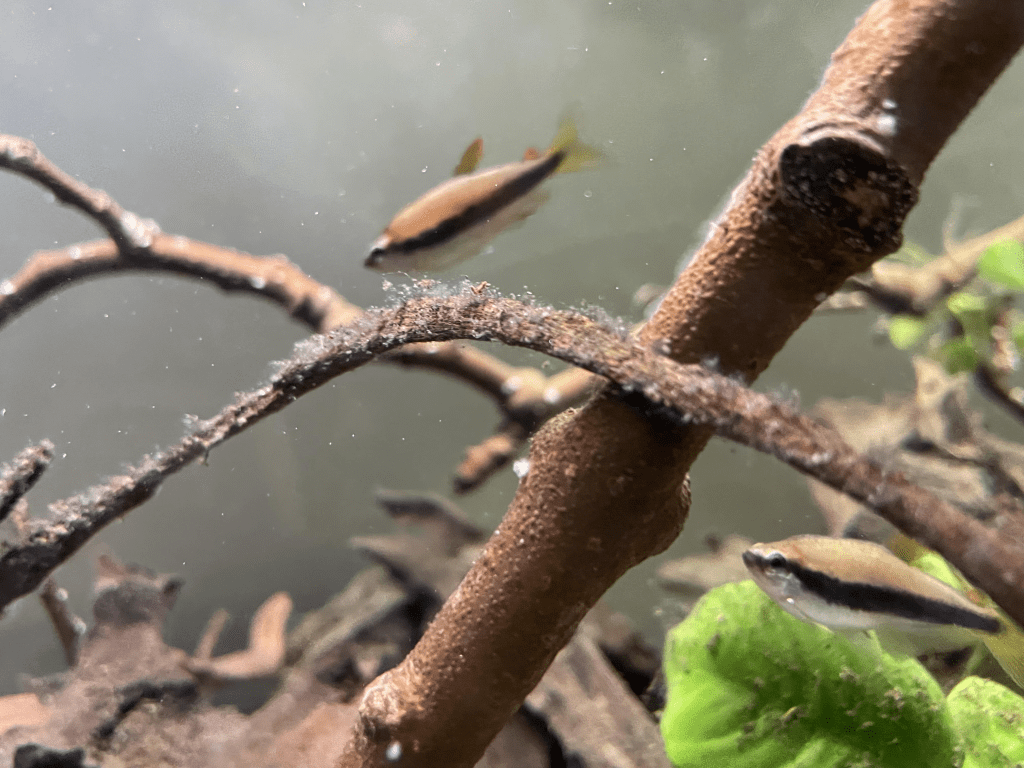
Safe woods
So with a few definite safes like apple, cherry and pear fruit trees. Others like some of our deciduous trees in the UK; beech, sycamore, birch and oak.
And a reader might ask where are you references? Well this is because well time…. I could do an xyz of all the plants mentioned but then I couldn’t provide much other content. In addition what about the plants where you live? So I’m going to really talk about how I research what is safe and not.
- Identify the species of tree, if I cannot do this I wont collect the wood. Many trees do have ivy attached so beware of that but you should be able to identify ivy from the tendrils.
- Research: So it is great for the first go to use search terms like x tree toxic. Scientific names and the genus is a great idea too, there might be records on other species of that genus. Then I use the search term ‘journal’ to bring up scientific papers. Instead of toxic maybe sap, poison, aquatic life.
- Critically analyse your sources. How are these plants toxic, what type of toxin and where on the plant is toxic?
It’s a mine field due to lack of research, most recommendations will be working off the same knowledge or educated assumptions.
Is fresh wood toxic?
There seems to be no logic or argument behind this idea. If a plant tissue is toxic it’s going to be toxic dry or fresh, that toxin isn’t going anywhere maybe unless you boil it. For tannin’s which are quite often the toxin in a few species of plants well they certainly aren’t going anywhere, don’t be mistaken though there are many different tannoid compounds.
Yet, like anything the right amount and right compound of tannins can be beneficial or neutral (Ashraf & Bengston, 2007; Peng et al., 2022).
Lets discuss the sap a little further.
Sap isn’t a toxin as explained earlier but it can transport toxins, we have already established how to identify toxic plants though. By removing the bark it doesn’t remove the vascularised areas of the wood, they are still there and as is the sap, drying out might be another argument.
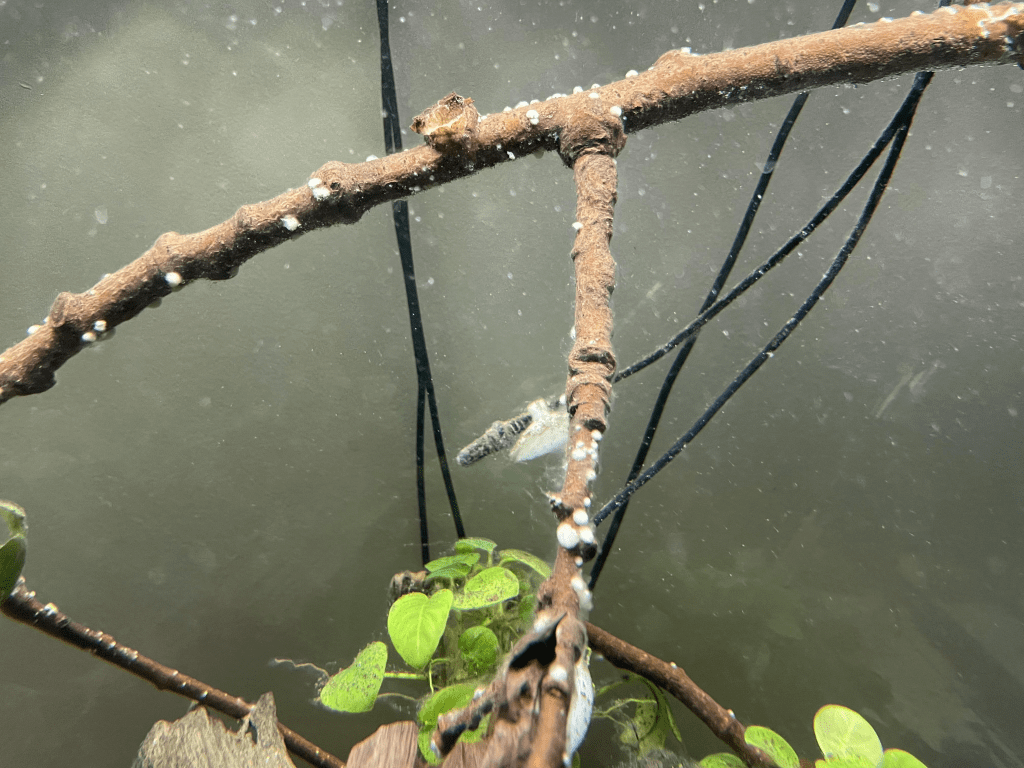
Just by the nature of what particularly the phloem is carrying it is very nutrient dense, as explained earlier, it transports nutrients. So any wood is going to carry quite a bit of nutrients, this nutrients definitely does encourage biofilms particularly and I find they grow extremely well at first, taking advantage of the nutrients while it can. Adding Poly-Filter can be beneficial here along with water changes to help control how much nutrients is present.
A great precaution just to control any bacterial blooms would be adding a little wood at a time over a few months.
We don’t really see these nutrient bursts in those woods you buy from aquarium stores, like they might have a short quick burst of growth but it really doesn’t last long. I partially think it’s how the woods are treated, many people boil them and the species used differ massively. Of course this is the only issue I see with fresh wood but then dried wood I can’t say I’ve experienced personally these blooms.
The time scale of any bacterial blooms or nutrient leakage seems to vary, some woods it definitely lasts much longer and maybe is more localised to notches, others is a bit more all over the plant.
In my observation these biofilms aren’t utilised by the fishes I keep but I’d be curious how maybe smaller Loricariids, Hypoptopominae utilise them, snails do seem to.
Extra precautions for collecting wood from outside.
Ensure you collect from an area that has had no fertilisers or pesticides being sprayed, it would be a good idea to avoid areas with dog fouling.
As a good precaution definitely rinse the wood, if possible under the shower. Soaking might not be a bad idea just to help remove any potential residues.
References:
Ashraf, M., & Bengtson, D. A. (2007). Effect of tannic acid on feed intake, survival and growth of striped bass (Morone saxatilis) larvae. International Journal of Agriculture and Biology, 9, 751-754.
Groover, A., & Mansfield, S. D. (2020). An introduction to a Virtual Issue on Wood Biology. New Phytologist, 225(4), 1401-1403.
Kasper, K., Abreu, I. N., Feussner, K., Zienkiewicz, K., Herrfurth, C., Ischebeck, T., … & Polle, A. (2022). Multi‐omics analysis of xylem sap uncovers dynamic modulation of poplar defenses by ammonium and nitrate. The Plant Journal, 111(1), 282-303.
Killiny, N. (2019). Collection of the phloem sap, pros and cons. Plant signaling & behavior, 14(8), 1618181.
Morgan, S. (2023). Guide to Aquarium Wood. INJAF. https://injaf.org/articles-guides/general-guides/guide-to-aquarium-wood/
Peng, K., Chen, B., Zhao, H., Wang, Y., & Huang, W. (2022). Condensed Tannins Improve Glycolipid Metabolism but Induce Liver Injury of Chinese Seabass (Lateolabrax maculatus). Frontiers in Marine Science, 9, 902633.
 The Scientific Fishkeeper