
As inspired by a recent article in Practical Fishkeeping I feel I should again discuss a term used in fishkeeping too frequently yet lacks a true definition.

What is the community aquarium? The majority of fishkeepers would answer simply something along the lines of easy, peaceful fishes that can be kept together. This outlook is entirely flawed as stocking is more of a pick and mix with a lot of rules or educated judgements. No fish is entirely all the time peaceful. Take the simple and popular guppy, Poecilia reticulata can be nippy in the wrong context and males can hound females (Darden & Watts, 2012; Magurran & Seghers) or other fishes as they only have one thing on their mind, for slower feeding fish they are more then easily outcompeted by the swarm. So it is very context dependent. Take the neon tetra, Paracheirodon innesi as another alternative, for many fishes these like many other small tetra are easily predated on by other fishes.
Ease of care is very difficult to quantify or even evaluate, many of us have had particular species we for some reason have an issue keeping. For those maybe like myself who have specialised the jump between two species which might provide a challenge for a similar reason seems like nothing. I would argue research makes the difference, experience only goes so far because if you can’t research the fish any challenges will be unexpected or not responded to.
As a scientist the word community is very different and yet scientists have debated the definition of this name (Stroud et al., 2015). To those outside of the academic world they might not be familiar with how much science is argued and debated, that’s what makes it great as it is one big discussion to answer the biggest questions, there is still a level of right and wrong though before anyone questions the shape of the Earth. All of these definitions seem to largely work on an idea of a group of organisms living together at the same time and therefore likely interacting together. There is a functional effect to ecosystems and this is very different from aquariums due to the diversity of biotic and abiotic interactions in the wild.
So what is a community in the aquarium? I feel it saves a lot of hassle to be very broad as even just asking about community fishes is vague enough.
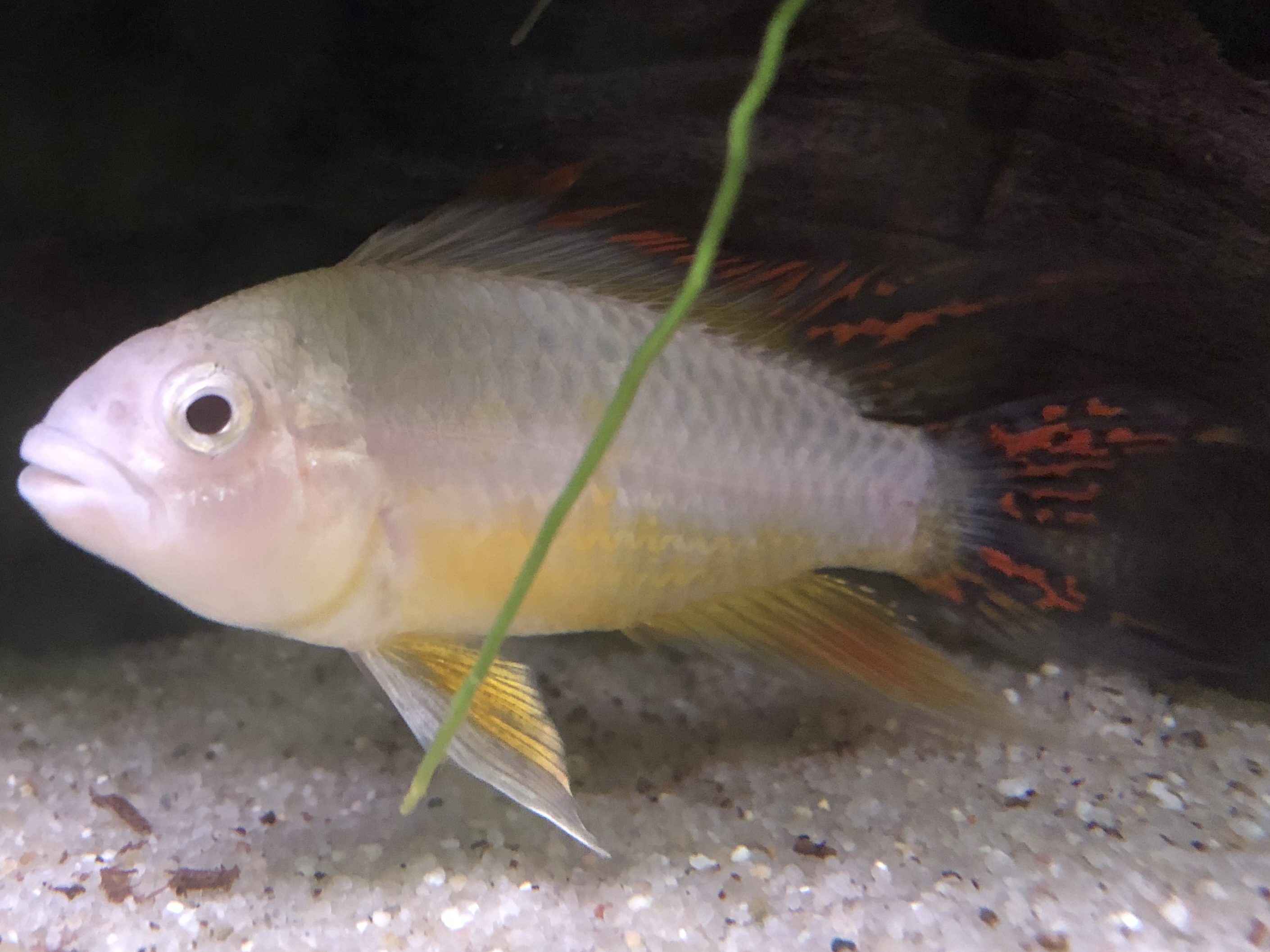
A community aquarium is a group of fishes that can be housed together. This is the more traditional definition hence you might see references to a predator community in the past. This definition separates it from species only, those fishes that can’t be housed with others for a variety of reasons. I would easily place freshwater and brackish pufferfishes under this category along with many predatory fishes who either are not gape limited e.g. Cetopsidae or do not house well with larger fishes they cannot eat. Then there is fishes like many Gymnotiformes or pipefishes that are soo slow to feed and need a lot of very small food items they might as well be species only unless for certain situations.
Only by understanding there is no community would we solve many of the issues with stocking choices and encourage research of every species added to the aquarium.
At the end of the day as I always say stocking is an art with a lot of judgement and educated guesses, research is important here. There is no stocking rules.
References
Darden, S. K., & Watts, L. (2012). Male sexual harassment alters female social behaviour towards other females. Biology letters, 8(2), 186-188.
Magurran, A. E., & Seghers, B. H. (1991). Variation in schooling and aggression amongst guppy (Poecilia reticulata) populations in Trinidad. Behaviour, 214-234.
Stroud, J. T., Bush, M. R., Ladd, M. C., Nowicki, R. J., Shantz, A. A., & Sweatman, J. (2015). Is a community still a community? Reviewing definitions of key terms in community ecology. Ecology and evolution, 5(21), 4757-4765.
 The Scientific Fishkeeper