
This statement and those disagreeing features constantly in aquarium groups, websites, videos or any format. It’s such a well known saying with truths and untruths. The truths maybe as are as harmful as the untruths. So can fish grow to the size of the aquarium?
Here we have to really discuss stunting, the process at which growth is stalled or slowed down to one or more organs, tissues or anatomical parts. Here we are looking for causes not caused by malnutrition as that will cause changes in growth of fishes.
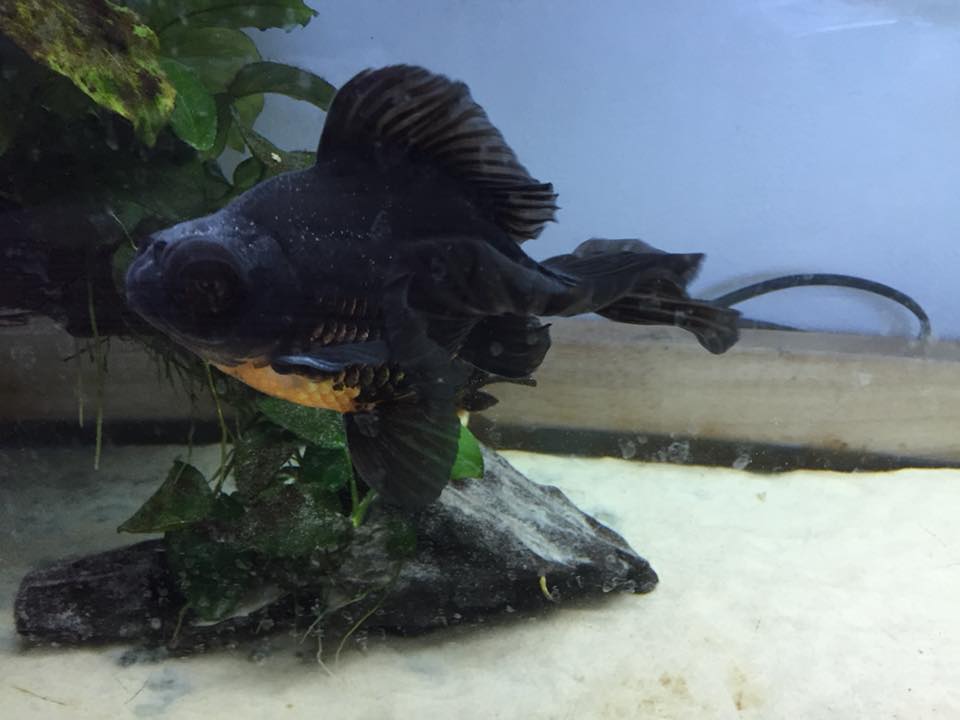
It is important to emphasize that the causes of reduced growth are not so much the size of the aquarium but the water it holds so aquariums where water is constantly being refreshed at a level that doesn’t result in a build up of certain compounds are exempt.
There are almost too many studies looking at stocking density and the growth of fishes, definitely inferring that the higher the stocking of fishes where water is not replaced anymore then the lower densities, the lower the growth rate (Björnsson & Ólafsdóttir, 2006; Maucieri et al., 2019).
The causes of this reduced growth rate are diverse and no doubt species dependent. Water quality is no doubt a large contributing factor as with higher stocking the lower the water quality and the more maintenance is required. In Björnsson & Ólafsdóttir (2006) the conclusion was ammonia was the largest cause of that reduced growth rate. While in a 2022 study it was suggested that low oxygen, pH, high ammonia, nitrite and nitrates all contributed to decreasing growth rate in the nile tilapia, Oreochromis niloticus (Abd El-Hack et al., 2022). And nitrite and nitrates particularly were found to reduce growth rate in grass carp, Ctenopharyngodon Idella (Zhang et al., 2023)
Outside of the contributions of fish waste to growth rate is the interaction between different species, higher densities in general and the social interactions, aggression or even without that can decrease or decrease growth rate depending on the species (da Silva et al., 2021). Pheromones are frequently mentioned in the aquarium hobby although I cannot seem to find any scientific research into their influence on growth rate, so should we assume either way?
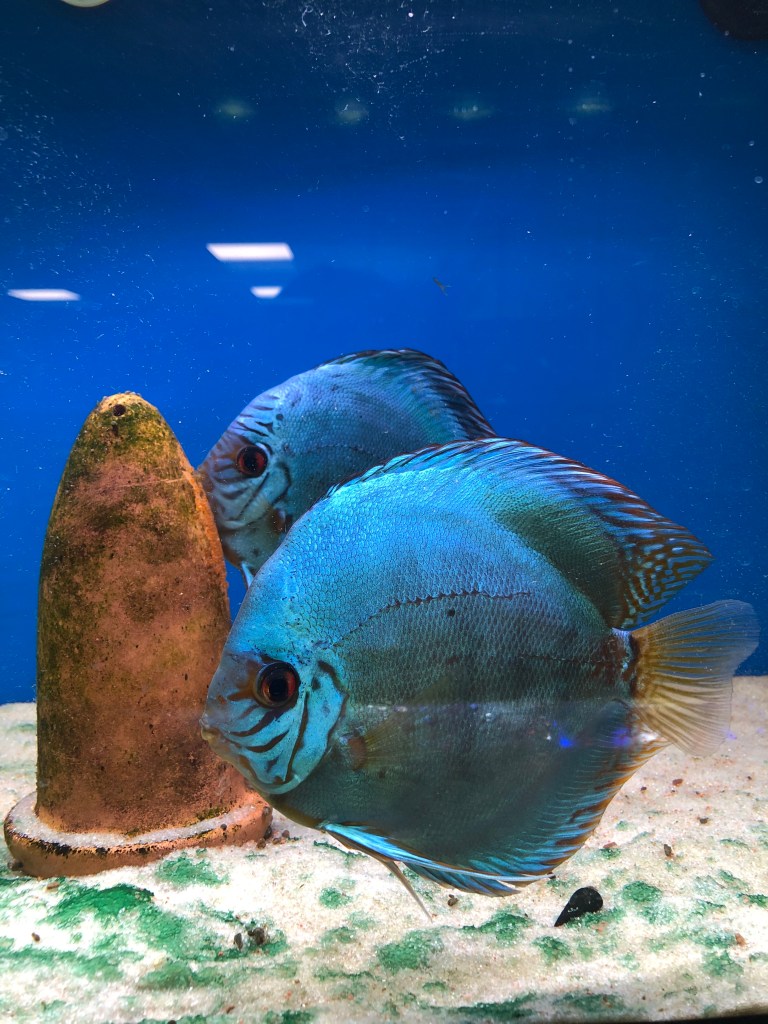
There is a lot more to this story though, while there is the argument fishes can be stunted in the hobby what are the effects? No doubt this is largely species specific and depends on the cause of the stunting as certain compounds such as ammonia, nitrites, nitrates and oxygen will have different physiological effects. Many people probably falsely report the organs keep growing but the body does not, I can’t see this being physiologically viable but individual organ enlargement does seem reasonably common.
While not entirely relevant I feel it is particularly interesting where predation and food limitation occurred results in stunting of the rest of the body while the head grows closer to a normal rate and shape (Chizinski et al., 2010). This is so similar to the eye size reported in discus that are stunted. A study with quite the number of variables where goldfish, Carassius auratus were kept in a pond with a limited space displayed abnormalities differing them from wild/feral individuals (Almeida et al., 2008).
So do we have a conclusion here? I’m not entirely sure. We know that growth is effected by what the size of an aquarium usually entails such as poor water quality and increased stocking but that is not quite the same as growing to the same size as the aquarium. What I did miss is the many studies into how water quality increases mortality and is that maybe a lot more important? So regardless if a fish is stunted but has a higher chance of death that should be the real focus of appropriate aquarium size.
References
Abd El-Hack, M. E., El-Saadony, M. T., Nader, M. M., Salem, H. M., El-Tahan, A. M., Soliman, S. M., & Khafaga, A. F. (2022). Effect of environmental factors on growth performance of Nile tilapia (Oreochromis niloticus). International Journal of Biometeorology, 66(11), 2183-2194.
Almeida, D., Almodóvar, A., Nicola, G. G., & Elvira, B. (2008). Fluctuating asymmetry, abnormalities and parasitism as indicators of environmental stress in cultured stocks of goldfish and carp. Aquaculture, 279(1-4), 120-125.
Björnsson, B., & Ólafsdóttir, S. R. (2006). Effects of water quality and stocking density on growth performance of juvenile cod (Gadus morhua L.). ICES Journal of Marine Science, 63(2), 326-334.
Chizinski, C. J., Pope, K. L., Wilde, G. R., & Strauss, R. E. (2010). Implications of stunting on morphology of freshwater fishes. Journal of Fish Biology, 76(3), 564-579.
Maucieri, C., Nicoletto, C., Zanin, G., Birolo, M., Trocino, A., Sambo, P., … & Xiccato, G. (2019). Effect of stocking density of fish on water quality and growth performance of European Carp and leafy vegetables in a low-tech aquaponic system. PloS one, 14(5), e0217561.
da Silva, M. C., Canário, A. V. M., Hubbard, P. C., & Gonçalves, D. M. F. (2021). Physiology, endocrinology and chemical communication in aggressive behaviour of fishes. Journal of Fish Biology, 98(5), 1217-1233.
Zhang, J. M., Fu, B., Li, Y. C., Sun, J. H., Xie, J., Wang, G. J., … & Yu, E. M. (2023). The effect of nitrite and nitrate treatment on growth performance, nutritional composition and flavor-associated metabolites of grass carp (Ctenopharyngodon idella). Aquaculture, 562, 738784.
 The Scientific Fishkeeper