
This is a seriously large topic with 1,050 species according to Catalog of Fishes, so it’s not a simple answer. The majority of Loricariids are algivores and detritivores (Lujan et al., 2012). Even within detritivory and algivory there is partitioning (Lujan et al., 2011), this does mean they will not be feeding on the same thing. There is little research if to whether their diet changes with age but it seems there might be slight changes, certainly not towards any omnivorous/carnivorous diet as adults still had algae within their gut (Nonogaki et al., 2007), there is although evidence for seasonal shifts in diet (Mazzoni et al., 2010).

Here as I cannot really discuss all species and we are still in early days of understanding Loricariid diets I will present different categories with diets and suggestions to further supplement their diet.
Contents:
- Algivores/Detritivores
- What brands can I recommend as this basis to the diet, the foundations?
- What genera are included in this (off the top of my head)?
- Quick comment on wood ‘eaters’
- So lets discuss supplements and additions to further cater for these fishes diets.
- Gut Biota, what and why?
- References:
Algivores/Detritivores
It’s almost impossible to separate algivores and detritivores when it comes to Loricariids as there is so much overlap between the two categories but of course there is partitioning. It’s just we can’t really entirely cater for that partitioning. A lot of what is contained within detritus is this matrix of bacteria, protozoa, algaes and other microbes. In addition there are species who will feed more on algaes and some certain algaes like cyanobacteria e.g. Lasiancistrus caucanus (potentially L. mayoloi; Valencia & Zamudio, 2007), while others who might focus more on bacteria or fungi. We really don’t entirely know how much subdivision there is beyond the fact it exists. This is maybe the most fascinating dietary category as few other groups of fishes can do it like Loricariids can.
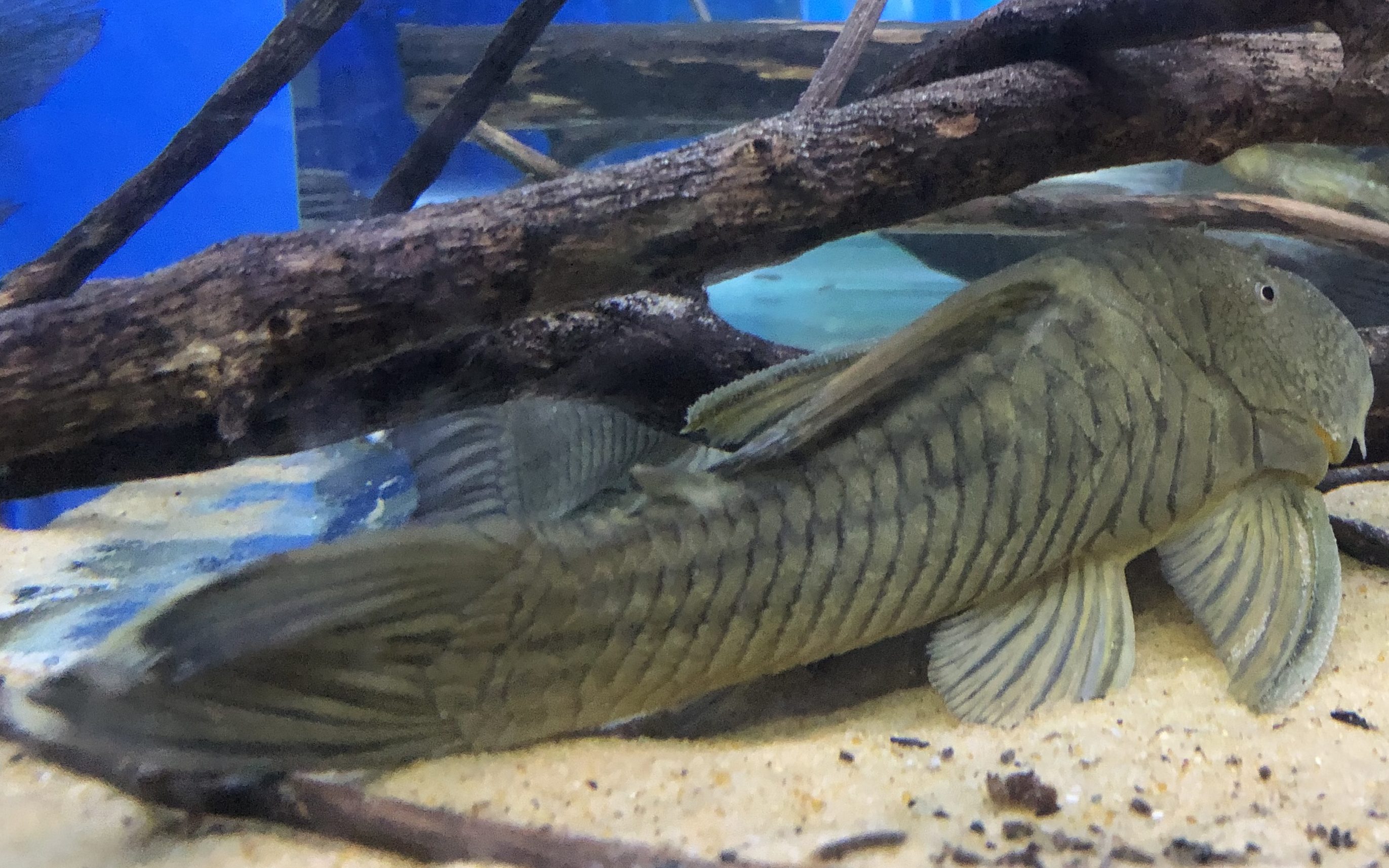
So, this category fills up the majority of Loricariids (Lujan et al., 2012) yet is maybe the most misunderstood or catered for. Bacteria, protozoa and other microbes are not really available in any commercial diets or even as ingredients which is very limiting leaving just algaes. We do know algaes are great in nutrition given just one species of algae replaced the nutritional requirements of a commercial diet which contained fish meal, cereals but only very few algaes in small volumes (Vucko et al., 2017).
The common misconception is that algaes are low in protein, yet they can be very high (Chen et al., 2022). This misconception comes from their similarity to plants but only green algaes are closely related to plants, while the term algae includes many other groups e.g. spirulina which is a cyanobacteria. Plants used in fish feeds might even lack many essential amino acids or contain anti-nutritional factors (Trevi et al., 2023). Algaes aren’t just high in protein but also very high in vitamins, minerals and essential fatty acids, to top the list of why algaes are great is their benefits on fish pigmentation (Alagawany et al., 2021; Trevi et al., 2023; Chen et al., 2022). So certainly an ingredient that shouldn’t be forgotten.
As we are talking fishes that feed on algaes as a large amount of their wild diets I can’t see how these simple ingredients are not useful. There is the issue of palatability and I have largely noticed they might struggle to recognise food not growing on a surface so in a wafer or pellet as algaes hence some taxa like those which are carnivores seem to do better then the very strict algivores.
So all we have to go off is a very small set of algaes but what should you look for in a main staple diet?
A main diet is what I see as the foundations of any fish food, this will contain all the main nutrition, vitamins and minerals. I understand additionally that different foods are limited around the world and cost also varies which makes it incredibly difficult for this dietary group.

What brands can I recommend as this basis to the diet, the foundations?
- Repashy Soilent Green and Repashy Super Green: Large diversity of algaes and high amounts of these algaes, I believe 80% in Super Green. They are higher up the list of ingredients so make up a lot of these diets. Easy to access for the majority of the world with many distributors. A gel diet so can be mixed to different consistencies and cooked to a jerky.
- In The Bag, Tropical Fish UK, Pleco Pops: Over 75% algaes which is a very high amount. Also a gel diet, the gelling agent used is brilliant as holds for an extremely long time, over 24 hours which is longer then any other gel food or one you can make your own.
- New Life Spectrum, Algaemax: Not to be confused with others of the same name so check the ingredients. Does contain a lot of algal ingredients but I can’t comment further due to UK availability.
- C.E Essentials, Naturekind: While aimed at discus, Symphysodon it does contain a lot more algaes then other diets.
- Should you make your own? You can but and that is a big but narrowing down the gelling agent that can last a few hours. This is difficult and takes time. Making your own diet commands research into nutrition and I’m really just only a beginner I think in that. It’s a large initial financial input as the ingredients particularly algaes are not cheap. This might be the only solution for some people in many countries and it is a debate for me how to help there.
What genera are included in this (off the top of my head)?
- Acanthicus (maybe, the rest of that group isn’t)
- Acestridium
- Ancistrus
- Aphanotorulus
- Baryancistrus
- Chaetostoma
- Cordylancistrus
- Guyanancistrus
- Hemiancistrus
- Hypancistrus
- Hypoptopoma
- Hypostomus
- Isorineloricaria
- Lasiancistrus
- Nannoptopoma
- Otocinclus
- Panaqolus
- Panaque – Largely specialist for extracting microbes and fungi from wood.
- Parancistrus
- Parotocinclus
- Peckoltia
- Pogonopoma
- Pseudancistrus
- Pseudorinelepis
- Pterygoplichthys
- Rhinotocinclus
- Rinelepis
- Spectracanthicus – maybe excluding S. murinus
- Sturisoma
- Sturisomatichthys
Obviously I might forget a few or they aren’t even seen in the trade. There is also a lot we haven’t found on these fishes diets yet. I also haven’t included some that I put other niches for other reasons e.g. the substrate dwellers. I also can’t use common names as I’d end up making a list of hundreds for every common name there is.

Quick comment on wood ‘eaters’
These fishes have been proven as the article linked here cites to not digest wood or use it for digestion. Instead these genera Panaque, Panaqolus, the Hypostomus cochliodon group and Lasiancistrus heteracanthicus digest the microbes within wood in the wild but are just finding it in a different place. They do though consume and digest fungi. If wood within the aquarium had this diversity of microbes it’d decay very rapidly in captivity and it clearly doesn’t given a bit of wood can last years or over a decade.
So lets discuss supplements and additions to further cater for these fishes diets.
- Vegetables: The most well known and there are always long lists of what they can be fed. They should never replace the algaes as nutritionally do not even compare as even suggested in Trevi et al. (2023). There is always a use in having something when a fish is skinny or newly imported and just feeding, I particularly find sweet potato and courgette great there but it shouldn’t be relied on. For larger species additionally as just padding out their diet and adding to. Given these fishes are rarely if ever feeding on plants in the wild then there is a lot of nutrition that is not easily accessible from plants.
- Mushrooms: Now I separate these as the only fungi available to use aquarists, for those wood ‘eaters’; Panaque, Panaqolus, Hypostomus cochliodon group and Lasiancistrus heteracanthicus they can be of massive use given they feed on fungi in the wild. Potentially other algivores/detritivores might additionally feed on these but it is difficult to identify for many scientists if they do. I definitely recommend removing before 12 hours as it smells strong after being in an aquarium.
- Additional algaes: Algae powders can be brought and can be mixed in with diets like Repashy soilent green or super green to bulk them up. Just bare in mind they might expire quicker then the Repashy and the amount of gelling agent might not be sufficient for it to hold well with other ingredients. I wouldn’t recommend adding much and any dried seaweeds would need to be blended.
- Nori: All I can say is great if they will eat it but I think how easily it breaks down in the water column. So for some genera like Pterygoplichthys who are reasonably fast to feed it might actually work.
- Seeds: These feature reasonably in Hypancistrus diets but given monocots and dicots covers most plants it could mean a lot (Armbruster et al., 2007). I think there is no harm in trying seeds such as sunflower seeds but also small low acidic fruits such as blueberries or blackberries. It could be that these fishes are actually consuming fruits. I have seen multiple examples where Loricariids do feed on these small fruits not just Hypancistrus but Panaqolus seems keen on these food items. I’d definitely not look to citrus fruits, large amounts of fruit and apple seeds are best avoided.
- Growing rocks in the sun for algae: This can really work and is great for Otocinclus, it’s just being able to do so and the surface growing enough.
- Botanicals: These could provide benefits but in large amounts or certain types add a lot of complexity to an aquarium. I find additionally the biofilms botanicals produce actually vary in how they appeal to different fishes. They definitely wont sustain anything other then maybe a few of the smallest fish.
- Nettles: Potentially a great resource that needs to be explored more. Definitely dry than blanch for a few minutes in hot water for a few minutes to remove the sting.
- General fish foods: These typical diets might not always be bad if bulking out a diet particularly during periods where a fish needs more food.
Gut Biota, what and why?
This is an emerging science regarding to biology but has barely touched the ornamental fish industry beyond probiotics should they work. There is a lot to unpack and I think there is a benefit in having other fishes and their waste providing gut biota. These gut biota might have been lost during importing or a period of stress and poor diet. As much as gut biota might change with introduction after stressful periods diet does also influence this.

Wood
I generally in my day job look at Loricariid diets in the literature and other then the previously mentioned genera have never seen wood in the guts of other species. It is not needed and even those species who consume wood as a byproduct do not use it for digestion (Lujan et al., 2011) so is not needed in a diet. Even more so cellulose and lignin were proven not to be digested or used in digestion and these are added into many diets, so these are more wasted space and added waste to any fishes diet.
At the end of the day these are massively misunderstood fishes as is their diet. There are many more Loricariids to understand here such as the carnivores and substrate feeders.
References:
Alagawany, M., Taha, A. E., Noreldin, A., El-Tarabily, K. A., & Abd El-Hack, M. E. (2021). Nutritional applications of species of Spirulina and Chlorella in farmed fish: A review. Aquaculture, 542, 736841.
Armbruster, J.W., Lujan, N.K. and Taphorn, D.C., 2007. Four new Hypancistrus (Siluriformes: Loricariidae) from Amazonas, Venezuela. Copeia, 2007(1), pp.62-79
Chen, F., Qian, J., He, Y., Leng, Y., & Zhou, W. (2022). Could Chlorella pyrenoidosa be exploited as an alternative nutrition source in aquaculture feed? A study on the nutritional values and anti-nutritional factors. Frontiers in Nutrition, 9, 1069760.
Lujan, N. K., German, D. P., & Winemiller, K. O. (2011). Do wood‐grazing fishes partition their niche?: morphological and isotopic evidence for trophic segregation in Neotropical Loricariidae. Functional Ecology, 25(6), 1327-1338.
Lujan, N. K., Winemiller, K. O., & Armbruster, J. W. (2012). Trophic diversity in the evolution and community assembly of loricariid catfishes. BMC Evolutionary Biology, 12(1), 1-13.
Mazzoni, R., Rezende, C. F., & Manna, L. R. (2010). Feeding ecology of Hypostomus punctatus Valenciennes, 1840 (Osteichthyes, Loricariidae) in a costal stream from Southeast Brazil. Brazilian Journal of Biology, 70, 569-574.
Nonogaki, H., Nelson, J. A., & Patterson, W. P. (2007). Dietary histories of herbivorous loricariid catfishes: Evidence from δ 13 C values of otoliths. Environmental Biology of Fishes, 78, 13-21.
Valencia, C. R., & Zamudio, H. (2007). Dieta y reproducción de Lasiancistrus caucanus (Pisces: Loricariidae) en la cuenca del río La Vieja, Alto Cauca, Colombia. Revista del Museo Argentino de Ciencias Naturales nueva serie, 9(2), 95-101.
Van der Laan, R. & Fricke, R. (2023). ESCHMEYER’S CATALOG OF FISHES: FAMILY-GROUP NAMES. (http://www.calacademy.org/scientists/catalog-of-fishes-family-group-names/). Electronic version accessed 04 October 2023.
Vucko, M. J., Cole, A. J., Moorhead, J. A., Pit, J., & de Nys, R. (2017). The freshwater macroalga Oedogonium intermedium can meet the nutritional requirements of the herbivorous fish Ancistrus cirrhosus. Algal research, 27, 21-31.
Trevi, S., Uren Webster, T., Consuegra, S., & Garcia de Leaniz, C. (2023). Benefits of the microalgae Spirulina and Schizochytrium in fish nutrition: a meta-analysis. Scientific Reports, 13(1), 2208.
 The Scientific Fishkeeper
Pingback: Feeding Loricariids – The Basics: The substrate dwellers. | The Scientific Fishkeeper
Pingback: Premixed foods for plecos (Loricariids) and other rasping fishes. | The Scientific Fishkeeper
Pingback: What to feed your pleco when they wont eat. | The Scientific Fishkeeper
Pingback: Pleco’s and Whiptail Catfishes, the Beginners Guide to Loricariid catfishes. | The Scientific Fishkeeper