
When people think of plecos they think of the term ‘suckermouth catfish’, yet these are the total exception with little to no ability to attach to any surface.

Here I am referring to those Loricariids who spend their time largely on the substrate often with their ornate mouths with many long and short barbels also known as cirri (Rojas-Molina et al., 2019). Unlike most other Loricariids, plecos these fishes are not crevice spawners and in some species the ornate cirri are used by the males to hold the eggs (Corvain & Fisch-Muller, 2007). There is one exception here, I tend to classify Isorineloricaria and Aphanotorulus (previously known as Squaliforma) and largely known as the Thresher plecos, these are in the subfamily Hypostominae where the majority of well known Loricariids, plecos place. While the majority of this category are in the subfamily Loricariinae often known as whiptail catfish.
So this is not so much a nutritional, dietary category as much as to where they feed and to me that makes a massive difference. Scientifically there isn’t the greatest understanding of this group either but hopefully with future advances in the coming years we can. So obviously I will have to edit this one day.

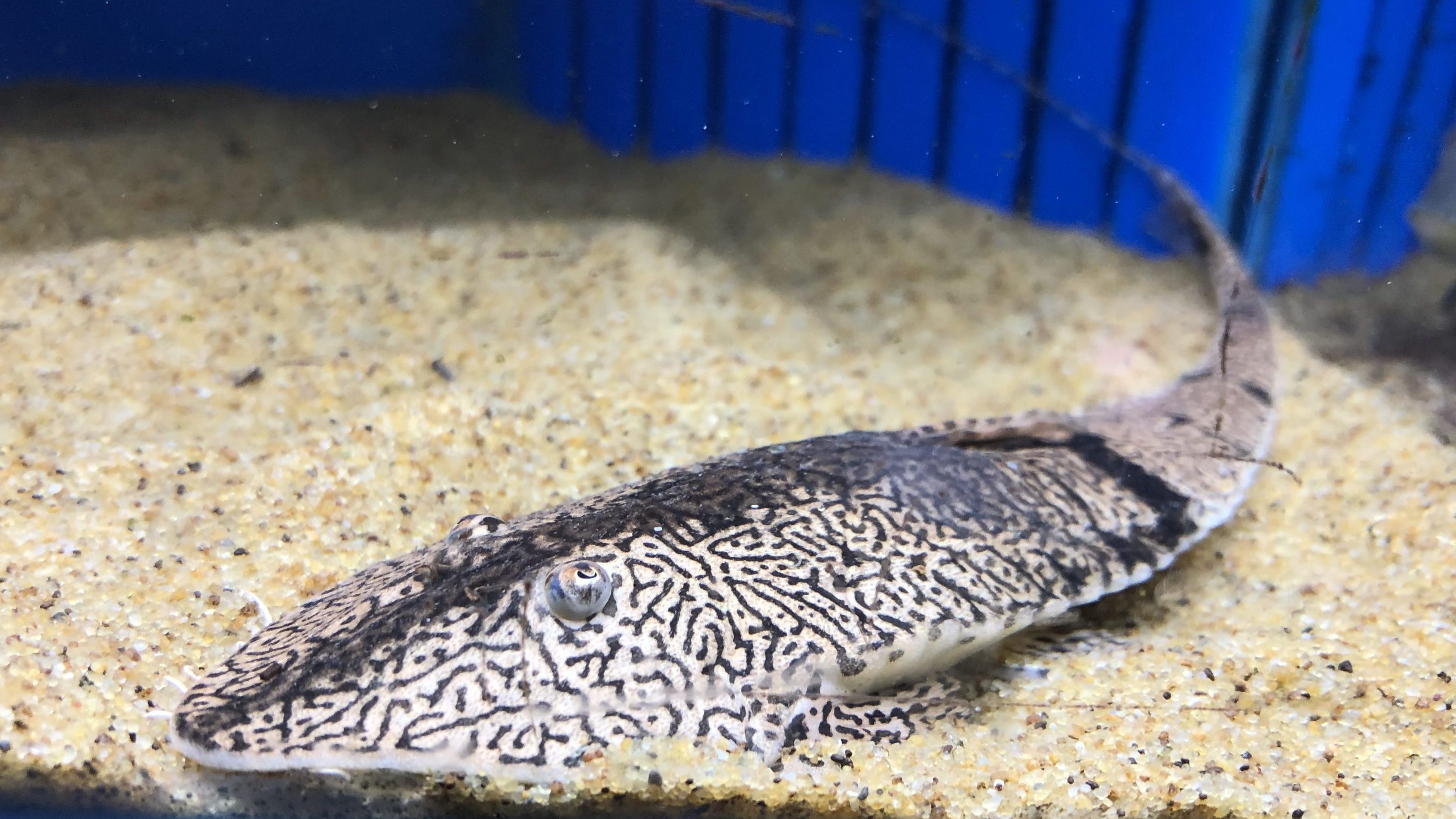
Many of these species forage and locate food by processing the substrate a bit like Panaque process wood in search of their food. Using their jaws they filter food objects from that substrate. All of these species really need a sandy substrate, not just because many need to hide in it but also the enrichment of naturally removing food from it.
There are both algivores/detritivores and carnivores in this category. Ofcourse I definitely recommend reading my article on algivores and detritivores but their mode of feeding limits a lot.
What genera are in this category?
- Aphanotorulus (Squaliforma): Generalist detritivore
- Crossoloricaria
- Hemiodontichthys acipenserinus: Maybe a carnivore?
- Isorineloricaria: Likely generalist detritivore.
- Loricaria
- Planiloricaria cryptodon: Either carnivore or feeds on seeds.
- Pseudohemiodon: Suggested to be periplakton and algaes but could also feed on seeds.
- Reganella
- Rineloricaria (To an extent): Not exactly purely the substrate but do interact a lot with it.
There isn’t that many and I think this niche in many habitats are often catered for by other groups of fishes.
Anything these fishes feed needs to sink but that’s usually a given for Loricariids and ideally not large food items. Some of these genera have few to any teeth and very small jaws so cannot break into large food items. I’m not even sure we entirely know the actual mode of feeding they use and for research they are not the cheapest to obtain. For Isorineloricaria and Aphanotorulus their jaws are large and strong so it doesn’t make the largest amount of difference.
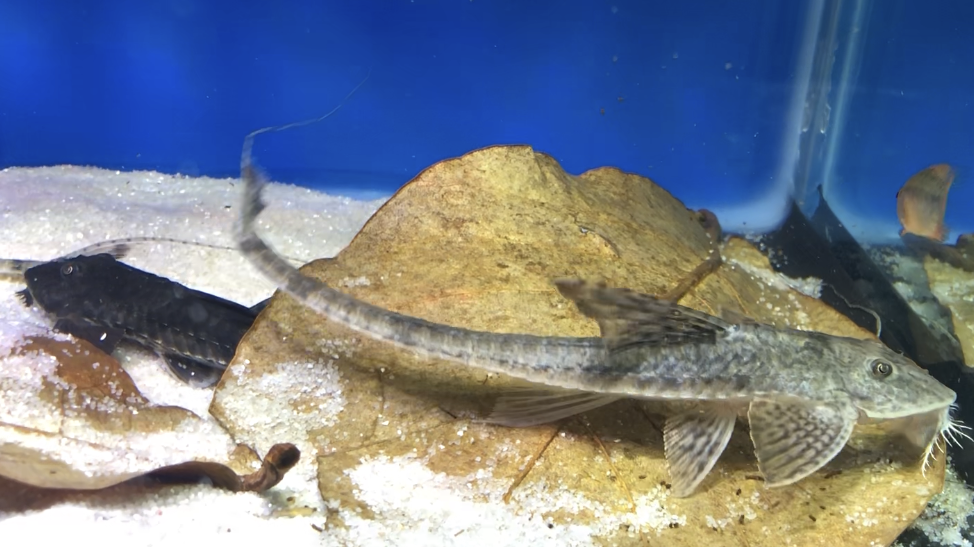
There are multiple genera here with morphology/anatomy that is unexplained, split between granivores (Seeds) or potentially molluscivorous (Gastropods like snails and bivalves) we just don’t know. We do know from a previous article that hardness of food items can matter so I think either way providing both would be beneficial, seeds such as from non-citrus fruits or apples, such as blue berries. Pest snails, no harm in having them as suggested in my snail article they can be a benefit. These are great snails for such species as easy for them to break down with the pharyngeal jaws.
When it comes to carnivores their interaction with the substrate does hint to them feeding on those invertebrates such as annelids and insect larvae that spend a considerable amount of time there.
It’s so difficult as we are making a lot of assumptions as to what they are eating and here I will treat them as the same. There is likely a lot of overlap at least. So as per the previous article into algivores and detritivores I highly recommend a good basic diet to build off. This will provide the essential nutrition to work off.
Anyway suggested basis diets:
- Repashy Soilent Green and Bottom scratcher: Large diversity of algaes and high amounts of these algaes in Soilent Green. Bottom Scratcher on the other hand is very high in invertebrate items. They are higher up the list of ingredients so make up a lot of these diets. Easy to access for the majority of the world with many distributors. A gel diet so can be mixed to different consistencies and cooked to a jerky. It sinks and is very easy to break apart even if large by many of these species. The issue is what to which species if their diet is unknown.
- In The Bag, Tropical Fish UK, Pleco Pops! Algae Grazer or Crickie-Dough: Over 75% algaes which is a very high amount for the algae based diet. The Crickie-Dough is even better I’d argue then bottom scratcher as high in crustaceans which is what most of these fishes would eat in the wild. While Repashy Bottom scratcher does provide a mollusc it is not closely related to gastropods or bivalves. Also a gel diet, the gelling agent used is brilliant as holds for an extremely long time, over 24 hours which is longer then any other gel food or one you can make your own. Cocoa powder is one is the most interesting and brilliant ingredients!
- New Life Spectrum, Algaemax: Not to be confused with others of the same name so check the ingredients. Does contain a lot of algal ingredients but I can’t comment further due to UK availability.
- C.E Essentials, Naturekind: While aimed at discus, Symphysodon it does contain a lot more algaes then other diets.
- Should you make your own? You can but and that is a big but narrowing down the gelling agent that can last a few hours. This is difficult and takes time. Making your own diet commands research into nutrition and I’m really just only a beginner I think in that. It’s a large initial financial input as the ingredients particularly algaes are not cheap. This might be the only solution for some people in many countries and it is a debate for me how to help there.
Now to additions or supplements:
Frozen foods: A diversity of them would be brilliant so they can really feed off the substrate. Avoiding mussels as high in thiaminase and deficient in thiamine.
Live foods: Avoid any that move around the water column but those that focus in the substrate would be brilliant and offer more natural enrichment particularly black worms and tubifex.
Nori: Once it’s no longer a sheet I’d be inclined to suggest this as it rests in the substrate eventually, maybe not the best.
Earthworms: For larger species these might be found at the reptile store under the name Dendrobaena but definitely not to be missed. Do not forget though as they can survive underwater for some time if left and forgotten.
This sounds like a very limited list but compared to traditional algivores and detritivores frozen foods alone offers a lot more!
References:
Covain, R., & Fisch-Muller, S. (2007). The genera of the Neotropical armored catfish subfamily Loricariinae (Siluriformes: Loricariidae): a practical key and synopsis. Zootaxa, 1462(1), 1-40.
Rojas-Molina, Y. A., Provenzano-Rizzi, F., & Ramírez-Gil, H. (2019). A new species of whiptail armored catfish, genus Pseudohemiodon (Siluriformes: Loricariidae) from the Orinoco River basin, Llanos region of Colombia and Venezuela. Neotropical Ichthyology, 17, e180160.
 The Scientific Fishkeeper
Pingback: Premixed foods for plecos (Loricariids) and other rasping fishes. | The Scientific Fishkeeper
Pingback: What to feed your pleco when they wont eat. | The Scientific Fishkeeper
Pingback: Pleco’s and Whiptail Catfishes, the Beginners Guide to Loricariid catfishes. | The Scientific Fishkeeper