
Common names are half a mystery to themselves, their origins and what species they really apply to and not. They lack regulations and frequently change spatially and temporally. You can’t expect to go to every country and people call a giraffe, Giraffa, a giraffe. It’s like you can’t expect common names to stay the same, a well known example would be the European robin, Erithacus rubecula was at one point called the redbreast and then that changed to robin redbreast and then just robin. The point maybe is common names change so much with little ability to track, plant common names do so frequently as well.
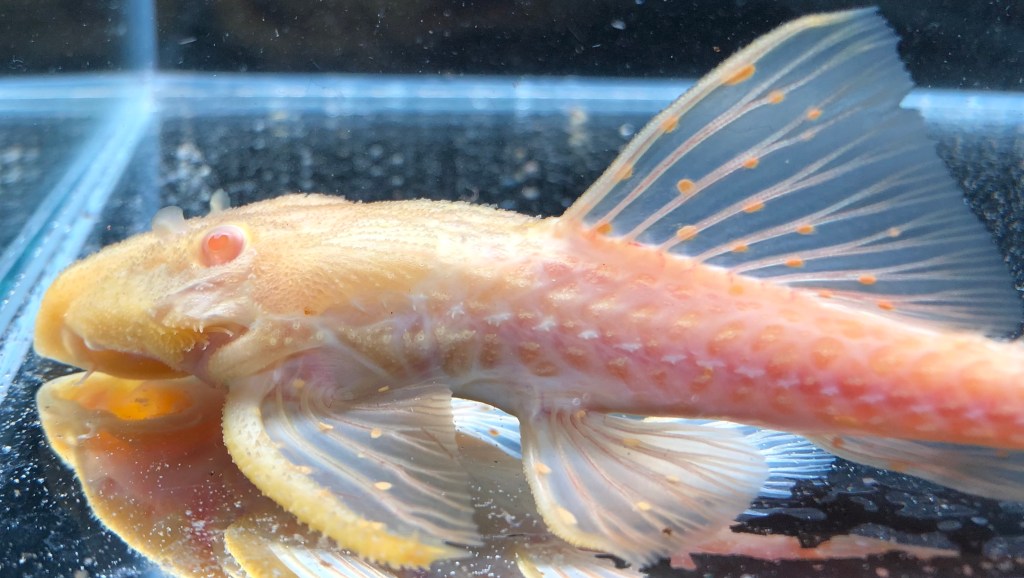
Pleco is one of those common names, originally Plecostomus but Plecostomus used to be the name of a genus. Much like many have created Cory as a common name for the genus Corydoras. The type and most notable species was Hypostomus Plecostomus (Linnaeus 1758), formally Plecostomus Plecostomus. Plecostomus is no longer a valid genus and has not been since 1980 where species were then placed in multiple other genera such as Ancistrus, Isorineloricaria, Loricariichthys and eventually Aphanotorulus. The majority of those previously known as Plecostomus were moved into Hypostomus, described in 1803 with the type Hypostomus guacari which is now understood to be a synonym of Hypostomus plecostomus (Fricke et al., 2023). Interestingly Pterygoplichthys, a genus that contains species known as the common plecos was never in the genus Plecostomus. This summarizing the main flaws of the arguments behind the common name. Ancistrus, bristlenose plecos are often argued not to be plecos but they had members once in Plecostomus whereas many such as Pterygoplichthys who there is no debate about were never placed in Plecostomus. Currently while there are none with the genus Plecostomus there is Hypostomus plecostomus and H. plecostomoides. Of genera Neoplecostomus, Microplecostomus and Nannoplecostomus exists, currently within Hypoptopominae, which is the same subfamily as Otocinclus. These genera add the other argument do people consider Otocinclus a pleco?
The other issue with the name pleco as a common name is where it is applied evolutionary.
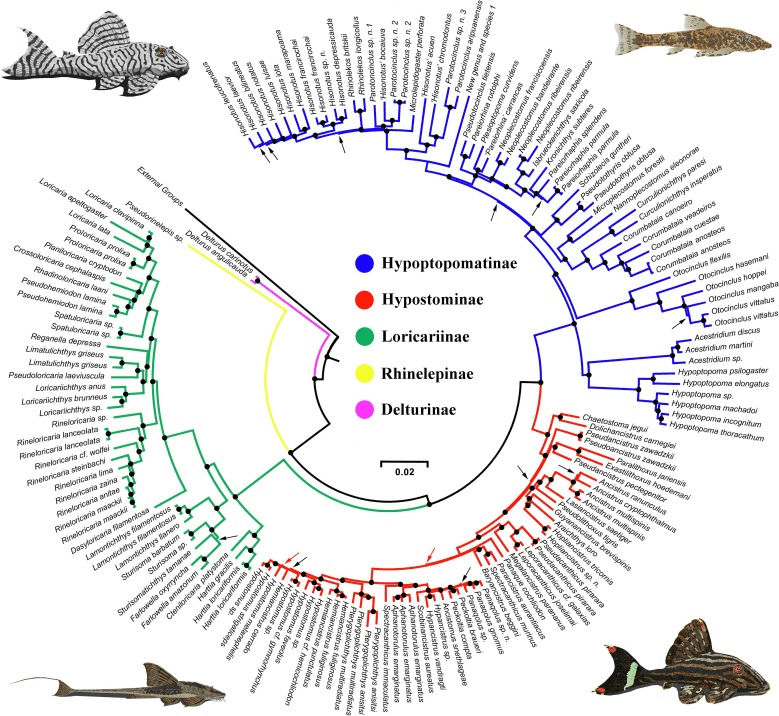
Names need some consistency so people can understand each other and that is what scientific names provide. The common name pleco also lacks consistency in where it places in the evolutionary/phylogenetic tree. If you exclude Ancistrus as so many do it is the only member of Hypostominae (coloured in red, Fig 1) to not be a pleco. But members outside of that subfamily are included, right at the earliest branches is Rinelepinae (coloured in yellow, Fig 1) it excludes a lot of later branching Loricariids. Not pictured here is also Pseudancistrus geniseiger who would be considered a pleco and also branches out this far (Lujan et al., 2015). Loricariinae and Hypoptopominae are often debated as if they are a pleco or not.
The problem is more that no one is quite referring to pleco in the same way under this pick and mix system. Some of us refer to the whole of Loricariidae as it would make sense to do, L numbers themselves also do as the L refers to Loricariidae. In Germany these fishes are often referred to as L Welse, meaning Loricariidae Catfish I assume as also members of Siluriforme, catfishes. It means everyone understands each other using this method even if being much broader, we should be recognising the diversity within Loricariidae anyway. In Loricariids and therefore plecos it is an international aspect of the fishkeeping hobby and many countries do not even use the term pleco.
References:
Britto, M. R. (2003). Phylogeny of the subfamily Corydoradinae Hoedeman, 1952 (Siluriformes: Callichthyidae), with a definition of its genera. Proceedings of the Academy of Natural Sciences of Philadelphia, 153(1), 119-154.
Fricke, R., Eschmeyer, W. N. & Van der Laan, R. (2023). ESCHMEYER’S CATALOG OF FISHES: GENERA, SPECIES, REFERENCES. (http://researcharchive.calacademy.org/research/ichthyology/catalog/fishcatmain.asp). Electronic version accessed 18/10/2023.
Lujan, N. K., Armbruster, J. W., Lovejoy, N. R., & López-Fernández, H. (2015). Multilocus molecular phylogeny of the suckermouth armored catfishes (Siluriformes: Loricariidae) with a focus on subfamily Hypostominae. Molecular phylogenetics and evolution, 82, 269-288.
Roxo, F. F., Ochoa, L. E., Sabaj, M. H., Lujan, N. K., Covain, R., Silva, G. S., … & Oliveira, C. (2019). Phylogenomic reappraisal of the Neotropical catfish family Loricariidae (Teleostei: Siluriformes) using ultraconserved elements. Molecular phylogenetics and evolution, 135, 148-165.
 The Scientific Fishkeeper