
This has to be one of the most hotly contested, almost every brand has their own product and if someone isn’t aligned with a brand they might have their own personal reputation weighing on their method. It’s worse when it comes to fish in or fishless cycling and that might be a whole other debate.
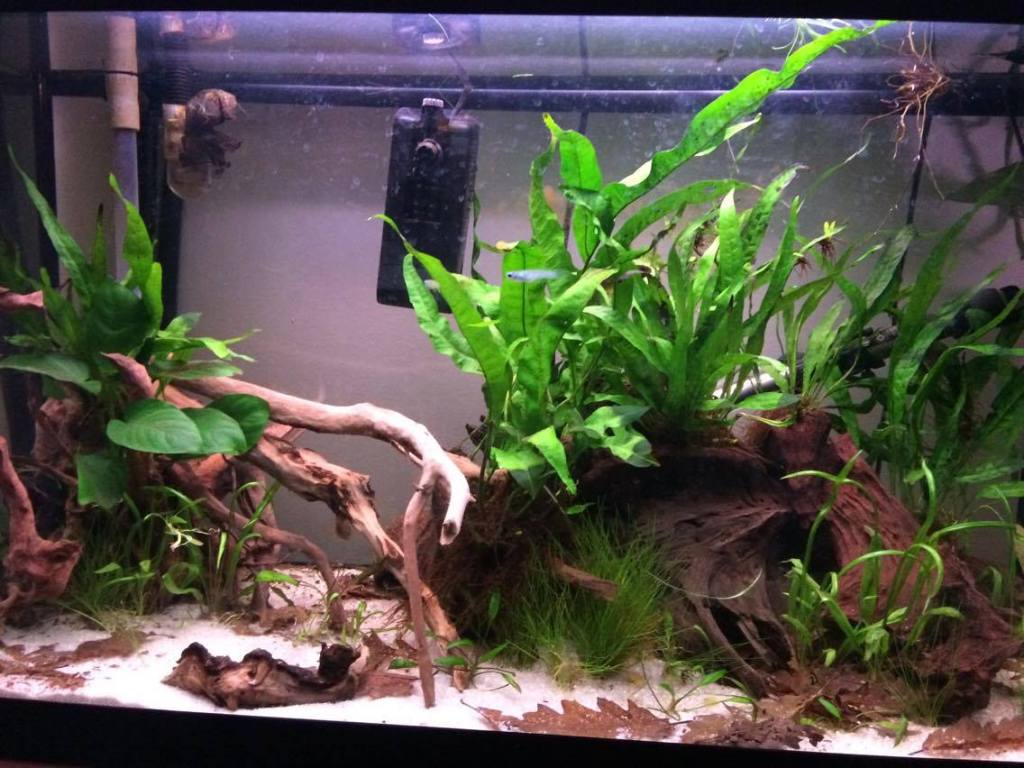
As a long term fishkeeper who’ve had fishes for a long time I’ve not needed to cycle a tank for a long time. I have plenty of media to cycle an aquarium and I go on a precaution of not enough for the fish I’m adding so I feed less and water change more to start with. For people reading this they are likely not new to fishkeeping so probably in the same field but maybe it means we are rusty on what to recommend? I actually ask is there a wrong and a right? I don’t think so.
When thinking about nitrification and realistically microbial colonies as it’s not just archaea and bacteria (Klotz et al., 2022). So commonly we might think of these as units and because we cannot see them we do not identify them for what they are, biological organisms and effected by the abiotic conditions and the other biological organisms around them. It is a whole ecosystem where they have to compete for particularly space and oxygen. Each nitrifying organism will have it’s own range of tolerance depending on strain and species but there will be much more generalist strains and species. When it comes to what bacterium and archaea are best for our aquariums might be known but so few products label what they contain.
The flaws of research
There is peer reviewed research into the topic (Scagnelli et al., 2023) and comparing brands but it is important to recognise particularly that the effects here are largely dependent on the actual methods. Are their study aquariums representative of what we keep as fishkeepers?
It is clear from the results that many of the bottled treatments did not differ from the control where they have no effect on ammonia concentration. Tetra’s bottled bacterial treatment has statistically significant results, decreasing the levels of ammonia over 14 days by 0.562 (+-0.08). This does mean that it still stands that these products vary (Scagnelli et al., 2023). Being scientific though and in the discussion of this topic it is worth critically analysing. The test kits were not mentioned and therefore the accuracy and reliability could be of question both regarding why the other products might not be displaying statistically significant results. It doesn’t seem to be mentioned the age of the products and how close to expiry they are.
It would not be fair to include unreliable experiments that lack peer reviewing.
Dr Tim’s One and Only
One of the most interesting brands, this is a scientist who has a good background in understanding nitrification as a microbiologist and a bibliography in the field. He is an aquarist as well which is of real value to the hobby, I feel in the UK his products have been a little forgotten.
There have been no reliable experiments or investigations into his products which makes them difficult to actually evaluate. While Dr. Hovanec has extensive experience in the field and his own products I guess the issue with him doing research that can get peer reviewed into his own products is conflict of interests. His research into the world of nitrification is particularly interesting.
Few brands as it is not required by law (as far as I know?) are likely to declare what strains and bacteria they contain to avoid competition. Burrell et al., (2001) suggested Nitrosomonas marina-like as a major contributor to nitrification while, Nitrosospira tenuis-like and Nitrosomonas europaea-like bacterium contribute to the mature aquarium. This paper was also contributed to by Dr Hovanec but Dr Tims as a brand was only started in 2007 and it’d make logical sense that the products would contain these strains. It’s not to say other brands do not contain these strains as the research is open access and it likely is that many do. In an earlier paper Nitrospira moscoviensis and Nitrospira marina were further confirmed to be contributors to nitrification but later studies on that mature aquarium were not conducted (Hovanec et al., 1998).
Of course this means brands are likely containing the right strains if did properly but concentrations would vary.
So can they live that long?
One of the largest arguments is that the bacteria are all dead, this is quite weak as we know bacteria can go into hibernation for long periods of time when conditions are not ideal, not just when they are cold. Nitrifying bacterium are no exception and can survive long periods of time sealed (Alleman & Preston, 1991). Oxygen is a known cause for dormancy and therefore preventing death (Murphy et al., 2016), this assumes they are sealed without or very limited access to oxygen and many brands are able to provide this. Another aspect is when in the presence of other bacterium if they are not in this state it’s not difficult to see how they could be outcompeted or not survive.
Conclusion
Definitely not the longest discussion as it’s so personal. My personal criticism is there is no way someone can say x fish equals requiring x amount of product, it also depends what the fish is fed on.
I didn’t want to focus on any brands really as a criticism as it would be unfair given how little we know about them. While I do want to do personal experiments on the topic it would only be so reliable, the number of aquariums I’d need and to counter for so many variables.
It’s such a controversial topic and on top of that is social media. I personally think we should be open minded but critical about brands claiming to provide something while claiming other brands do not. That includes personal brands such as social media.
At the end of the day I feel cycle an aquarium how you want, there are too many knowns the discussion of fishless vs fish in entirely cannot be settled so that is another discussion. It’s very emotive as a topic. As a fish biologist I am not a microbiologist and therefore I think it’s worth making that clear.
References:
Alleman, J. E., & Preston, K. (1991). Behavior and physiology of nitrifying bacteria. In Proceedings of the second annual conference on commercial aquaculture, CES (Vol. 240, pp. 1-13).
Burrell, P. C., Phalen, C. M., & Hovanec, T. A. (2001). Identification of bacteria responsible for ammonia oxidation in freshwater aquaria. Applied and Environmental Microbiology, 67(12), 5791-5800.
Hovanec, T. A., Taylor, L. T., Blakis, A., & Delong, E. F. (1998). Nitrospira-like bacteria associated with nitrite oxidation in freshwater aquaria. Applied and environmental microbiology, 64(1), 258-264.
Klotz, F., Kitzinger, K., Ngugi, D. K., Büsing, P., Littmann, S., Kuypers, M. M., … & Pester, M. (2022). Quantification of archaea-driven freshwater nitrification from single cell to ecosystem levels. The ISME Journal, 16(6), 1647-1656.
Murphy, C., Rajabzadeh, A. R., Weber, K. P., Nivala, J., Wallace, S. D., & Cooper, D. J. (2016). Nitrification cessation and recovery in an aerated saturated vertical subsurface flow treatment wetland: Field studies and microscale biofilm modeling. Bioresource technology, 209, 125-132.
Scagnelli, A. M., Javier, S., Mitchell, M., & Acierno, M. (2023). Efficacy of quick-start nitrifying products in controlled fresh-water aquaria. Journal of Exotic Pet Medicine, 44, 22-26.
 The Scientific Fishkeeper