
Loricariidae, also known under the common names L numbers, whiptail catfishes and pleco’s are popular fishes within the aquarium trade. Many people will come across the problem in their new fish where they will not eat and in fact they might never eat.
Worming
The first sign might be that the fish might have a concaved stomach and the first solution will be to worm the fish. I doubt this is the usual cause of the concave stomach in Loricariid’s but it is worth crossing out, Loricariids do quite frequently have parasitic worm’s (usually nematodes rather then Annelid’s) in the wild and these will maintain at a low level (Borges et al., 2018). If a fish is stressed such as from import this parasite load can become much higher then a healthy level. So there is logic in worming fishes when they arrive and most stores do this. Most wormers cover different internal parasites but the most common would be containing praziquantel, levamisole and flubendazole (do not use with stingrays). I would personally advise definitely not using more then one as they do all have side effects. Generally wormers need to be repeated after a week to cover the parasites lifecycle.
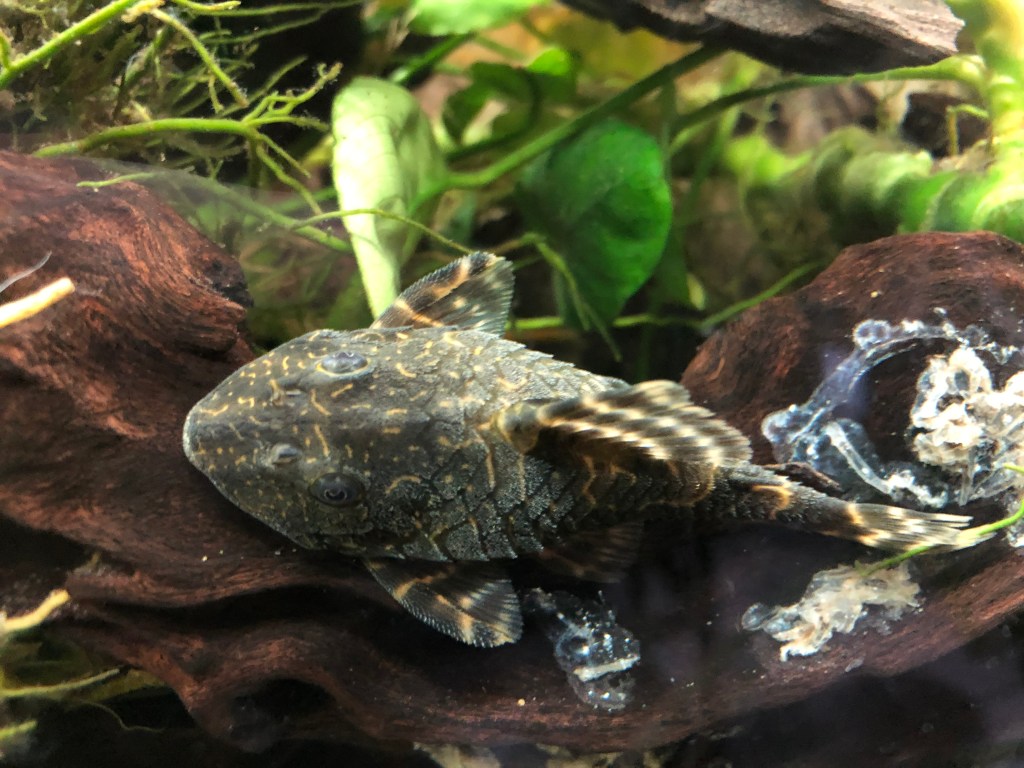
The importance of getting the fish feeding.
While a rounded and healthy diet is important for wild caught fishes particularly they do need to feed. It is quite a large jump for many from a wild diet to a captive diet and many might not even identify it as food.
More importantly it is possible that the gut flora, microbes will start to decline in number while they are not eating and for shipping this is useful but not for keeping the fish. One possible thing that could help this is rather then adding them to a clean quarantine tank is to one where other similar species have lived, there is likely a benefit from those fishes waste in rebuilding that gut flora lost after shipping.
What should I feed my fish?
First identify what they eat, so their natural diet. While most diets contain the steryotypical fish/insect/krill meal, cereal, vegetable and minimal algae diets this is no issue in the short term but many wont touch these diets at first. So regardless of long term them being vastly different from their natural diet and homogenous whether you have a Trophius, Loricariid or angelfish they actually are the same (Vucko et al., 2017); they can also be unhelpful.
One day I will create a proper list of what Loricariid eats what as far as we know but currently I cannot. I do have articles on some commonly misunderstood fishes; Hypancistrus (zebra, king tigers, queen arabesque, snowball pleco, L236 etc.), Panaque and Panaqolus (royal pleco’s, flash pleco and the clown pleco’s), substrate dwelling Loricariinae (Pseudohemiodon, Planiloricaria etc.), Baryancistrus (gold nugget pleco, mango/magnum pleco, snowball pleco), mollusc specialists (Scobinancistrus, goldie/sunshine pleco, vampire pleco, galaxy pleco, Leporacanthicus), Chaetostoma (Rubbernoses and one of the bulldog plecos) and finally algivores/detritivores. Maybe some more will be created in the future.
This is important as feeding an incorrect diet can lead to bloat and other issues, it has been commonly noted when Hypancistrus are fed a wholly carnivorous diet.
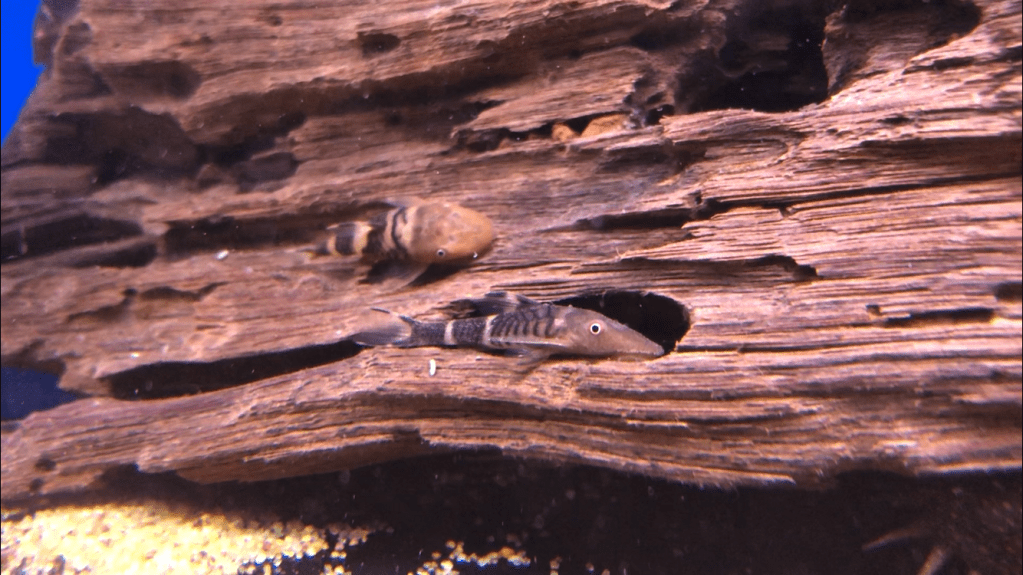
Carnivorous species
This is only for true carnivores but aspects of this can be fed to others in small numbers with care, avoid it with some of the more extreme algivores such as Ancistrus, Chaetostoma, Baryancistrus etc.
Mussels and prawns are very good for getting a fish feeding at first but the issue with these two food items at high in thiaminase and therefore degrade thiamin, vitamin b1.
Generally for this reason I’d advise a range of frozen foods and for some larger species earthworms might not be a bad choice.
Algivores and Detritivores
This includes most Loricariids that people keep to some degree but the specialities within their diet are best looking at later.
These are definitely the most tricky to get feeding at first and I often give a range of options even at the same time. Generally I’d offer that dry/gel diet once or twice a day and vegetables replaced every 12-24 hours depending on how quickly they are braking down.
For dry/gel diets I’d offer certainly Repashy soilent green if possible as I’ve never had a fish fail to give it a go. Later on I’d bulk it out with other ingredients such as algal powders, you could do similar with other gel diets but I can’t say fishes are going to take up them as well. At the end of the day whatever they are eating in the short term is worth it. Remember vegetables and similar are more treats as do not even closely replicate their wild diets.
Vegetables and other easy food items you can leave in for the fishes:
| Courgette | Reasonable in nutrition, is willingly eaten by many fishes but they might select either the flesh or skin over the other. |
| Cucumber | While often declared as low nutrients due to water content they do contain minerals and other compounds that have nutritional value. |
| Mushrooms (Edible species from supermarket) | Could be part of a staple diet for Panaqolus, Panaque and Hypostomus cochliodon group as they do feed on fungi in the wild (Lujan et al., 2011). It is difficult to say the nutrition levels for these fishes as many might be able to digest more so then nutritional estimates for humans. So far mushrooms are shown to increase weight gain opposed to traditional diets (Zakaria et al., 2021; Dawood et al., 2010), a potential prebiotic (Chandra & Qureshi, 2023) and other potential benefits (Sánchez-Velázquez et al., 2014) |
| Sweet Potatoes | These doesn’t need to be blanched and I am not convinced by their digestibility for Loricariids (Omoregie et al., 2009) but if they can get the fish feeding that is what matters. |
| Further on I find whether fishes feed on these more hit and miss. | |
| Green beans | The common bristlenose, Ancistrus sp. is meant to be a big fan of this. Nutrition doesn’t need to be debated but as a plant would be more of a treat after acclimation. |
| Bell peppers | I don’t think it entirely matters whether the pepper is red, yellow or green but the sugar and nutrition levels will vary. |
| Pumpkins and other squashes | I find very hit or miss but never blanched them. They can break down very quickly producing a film over the fruit. I would say they are much more similar to courgette. |
Later on and narrowing down the diet
While whatever they will eat is generally the best rule as they are acclimatizing over the first few weeks and months. Afterwards I would look to narrowing down their diet to what they would feed on in the wild as in the articles mentioned earlier on.
Is the setup right?
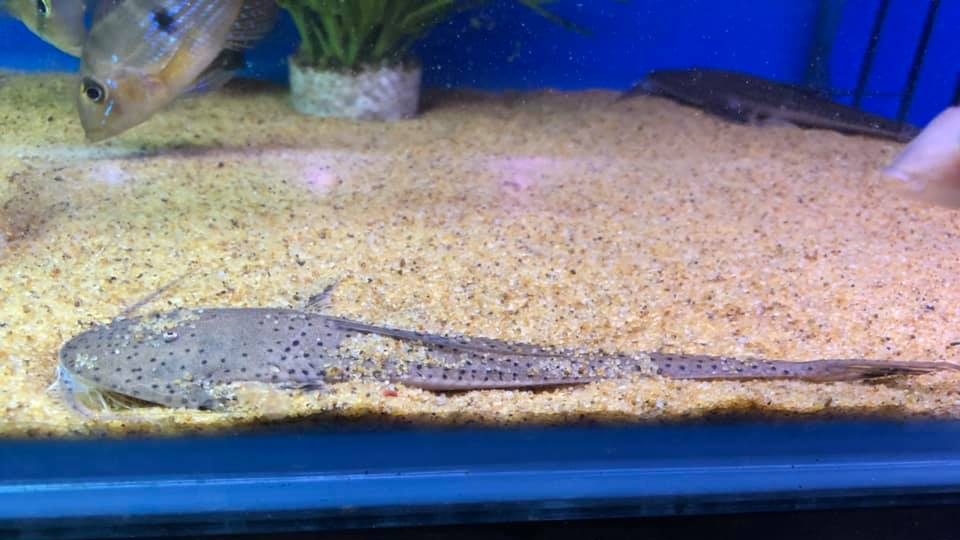
This sometimes get’s forgotten but a major part of why a fish might not be feeding could be they are not getting to the food. Loricariids are slow to feed, some might take hours even without lights to feed and this can make some tankmates ill-suited. Some tankmates might work better where if needed you can remove them to another tank so that is worth considering particularly for many cichlids, many shoaling species in very high numbers or quite a few live numbers.
References:
Borges, W. F., de Oliveira, M. S. B., Santos, G. G., & Tavares-Dias, M. (2018). Parasites in Loricariidae from Brazil: checklist and new records for fish from the Brazilian Amazon. Acta Scientiarum. Biological Sciences, 40, 1-9.
Chandra, O. P., & Qureshi, Y. (2023). Importance of mushroom supplementation as a prebiotic amalgamation in fed diet of improvement of weight gain (WG) in Nile Tilapia,(Oreochromis niloticus). Journal of Pharmaceutical Negative Results, 1681-1687.
Dawood, M. A., Eweedah, N. M., El-Sharawy, M. E., Awad, S. S., Van Doan, H., & Paray, B. A. (2020). Dietary white button mushroom improved the growth, immunity, antioxidative status and resistance against heat stress in Nile tilapia (Oreochromis niloticus). Aquaculture, 523, 735229.
Lujan, N. K., German, D. P., & Winemiller, K. O. (2011). Do wood‐grazing fishes partition their niche?: morphological and isotopic evidence for trophic segregation in Neotropical Loricariidae. Functional Ecology, 25(6), 1327-1338.
Omoregie, E., Igoche, L., Ojobe, T. O., Absalom, K. V., & Onusiriuka, B. C. (2009). Effect of varying levels of sweet potato (Ipomea Batatas) peels on growth, feed utilization and some biochemical responses of the cichlid (Oreochromis Niloticus). African Journal of Food, Agriculture, Nutrition and Development, 9(2), 700-712.
Sánchez-Velázquez, J., Peña-Herrejón, G. A., & Aguirre-Becerra, H. (2024). Fish Responses to Alternative Feeding Ingredients under Abiotic Chronic Stress. Animals, 14(5), 765.
Vucko, M. J., Cole, A. J., Moorhead, J. A., Pit, J., & de Nys, R. (2017). The freshwater macroalga Oedogonium intermedium can meet the nutritional requirements of the herbivorous fish Ancistrus cirrhosus. Algal research, 27, 21-31.
Zakaria, Z., Abd Rasib, N. A., & Tompang, M. F. (2021). Spent mushroom substrate based fish feed affects the growth of catfish (Clarias gariepinus). In IOP Conference Series: Earth and Environmental Science (Vol. 765, No. 1, p. 012082). IOP Publishing.
 The Scientific Fishkeeper