
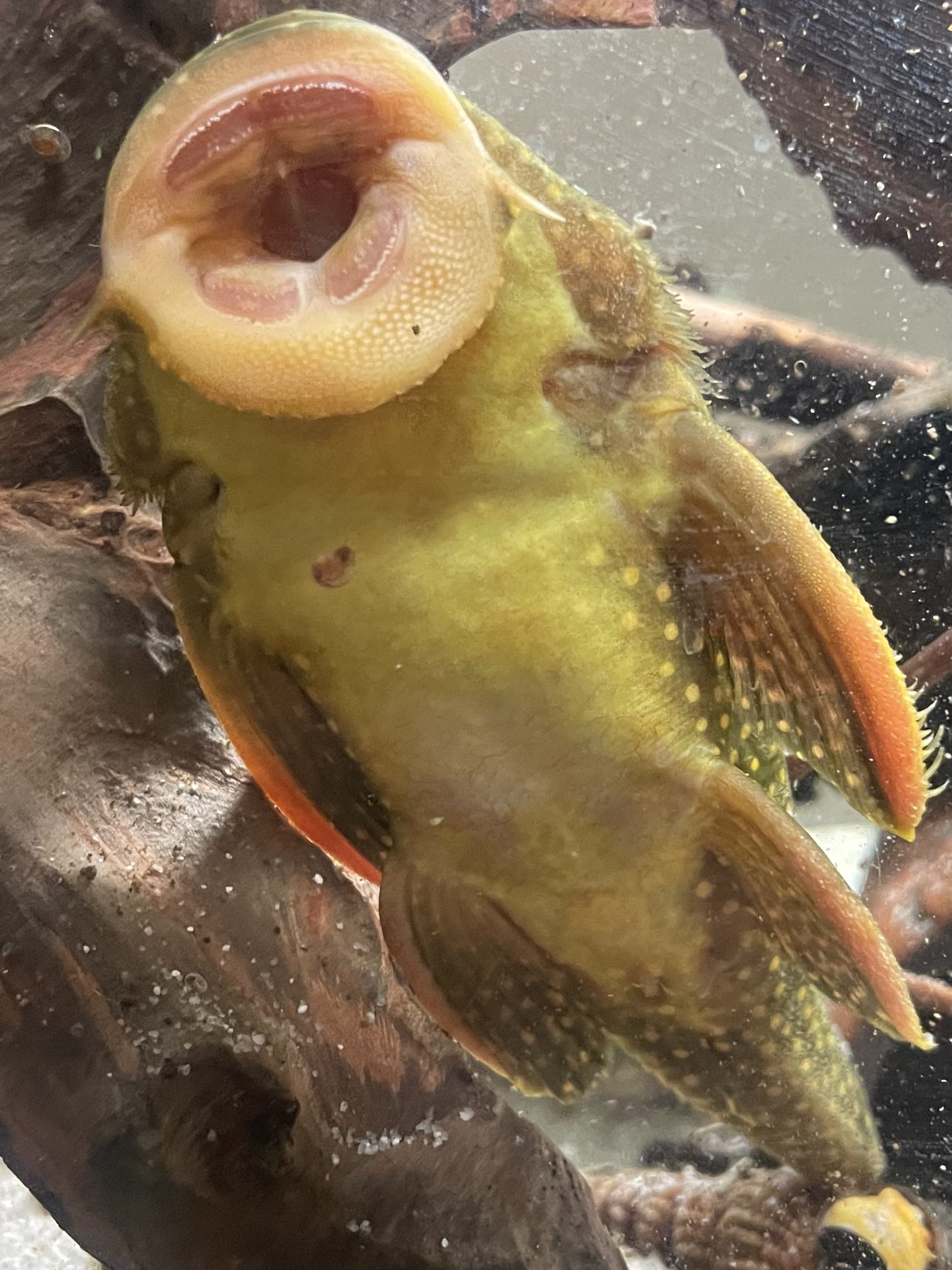
I commonly get asked what I’d feed different groups of pleco’s and it does vary by the pleco, Loricariid but also by what is available in your country. Some genera are more generalist and forgiving then others, some will withstand a less then ideal diet for maybe a few decades and others a few months/days.
While I would love to provide more details some I cannot list yet or am not entirely clear on some aspects of a species dietary ecology. So this should hopefully help for now.
I shall split it up by diet, some species might feed on a different diet to what you expect so please search for the genus/species.
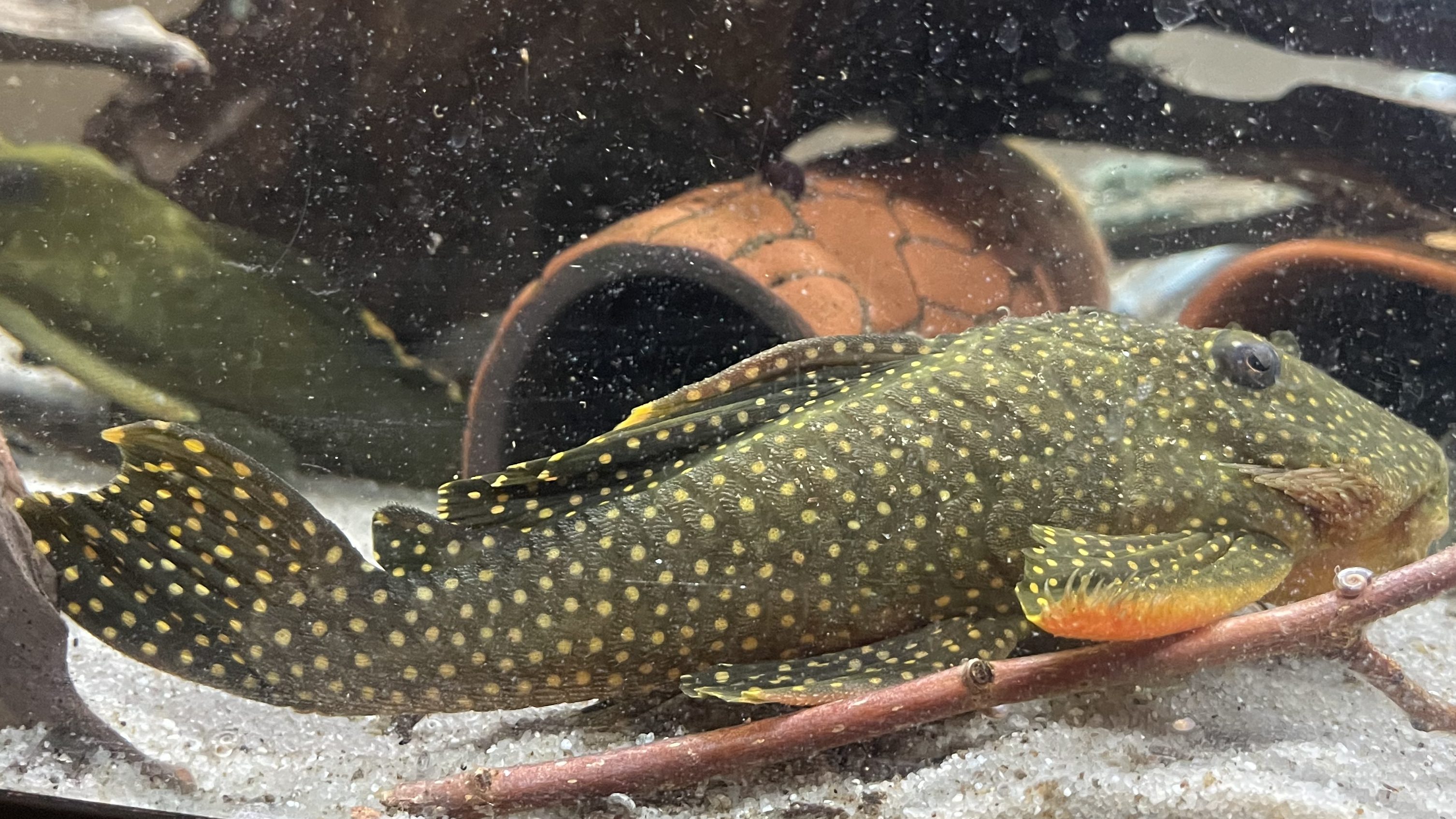
The majority of Loricariids are algivores and detritivores so this contains the larger amount of categories.
Algivores
This is one of the largest categories as many Loricariids specialize in different algae’s, biofilms etc. But due to mode of feeding and availability of ingredients I will kind of have to generalize. Due to this the algae growing in the aquarium might be the wrong species so the fish might not feed on it, regardless any algae in the aquarium will not sustain most species long term.
Prepared diets:
- Repashy Super Green
- Repashy Soilent Green (you can add in extra algae powders to bulk it out, fishes seem to prefer this diet).
Making your own Algivore Diet
This is a trial as it seems Repashy is becoming unavailable in many countries. I have done many different trials and tests but am still developing something.
Nutritional ingredients:
These are the main ingredients and should make up at least 80% of the nutritional ingredients used but can makeup the whole diet minus gelling agents (Vucko et al., 2017). Percentages might vary, ideally try to include higher volumes of those highlighted in bold, not all will be available so try to include as wide of a diversity of possible. High spirulina content might take a while for the fishes to get used to. Seaweeds will need to be blended or might not be eaten.
- Chlorella algae (Vital)
- Spirulina algae (Vital)
- Seaweed meal (Vital)
- Kelp meal (vital)
- Wakame algae (vital)
- Nori (Vital)
- Bladderwrack
- Other human consumption seaweeds and algaes.
- Potentially mosses, never tried but are recorded in Loricariid diets.
Herbal ingredients:
These should be very limited excluding the mushrooms I wouldn’t go above around 1-2% per ingredient.
- Paprika, associated with red enhancing.
- Mushrooms, dried or powdered while not entirely known it is potential they feed on fungi in the wild. While edible mushrooms might not be the same taxa it does seem to be a taste enhancer for fishes at least.
- Basil, associated with improved physiological and immunological health while being an attractant (Mansour et al., 2023).
- Ginger, feed attractant and immunological support (Ahmad et al., 2024).
- Garlic, I don’t always use it but feed attractant with potential immunological support but can cause liver damage.
- Seeds, particularly found in the guts of Hypancistrus and potentially Peckoltia. Higher in fats and proteins.
Gelling agents:
I would recommend using carrageenan powder due to it lasting longer then the alternatives. I would use this regardless as to whether it is a carnivorous or herbivorous diet.
Who are the algivores that we keep?
- Ancistrus
- Baryancistrus
- Dekeyseria
- Farlowella
- Hemiancistrus
- Hypostomus
- Isorineloricaria
- Lamontichthys
- Lasiancistrus
- Nannoptopoma
- Otocinclus
- Panaque
- Panaqolus
- Parancistrus
- Parotocinclus
- Pseudancistrus
- Pseudorinelepis
- Pterygoplichthys
- Rhinotocinclus
- Spectracanthicus zuanoni/punctasissimus
- Sturisoma/Sturisomatichthys
This diet will cover most of Loricariidae but particularly these genera, while they might be also more detritivorous in the wild this is the closest we can get to their natural diet.
Regarding Hypancistrus, Peckoltia and potentially Panaqolus I would add seeds to their diet and maybe look at the addition of infrequent invertebrates.
A little more carnivorous
If you want to increase the volume of carnivorous ingredients, Loricariids don’t consume fishes in the wild so we will be looking at invertebrates. Due to the presence of thiaminase in some ingredients I do not recommend the frequent use of mussels or prawns.
So as you’re looking more into carnivory I would increase the volume of these ingredients, luckily for carnivorous ingredients you could feed as a frozen or live food they have to forage.
Ingredients:
- Daphina
- Brine shrimp
- Tubifex
- Bloodworm (Chironomatid larvae).
- Cockels
- Mysis
- Red plankton
- Ant eggs
- Earthworms
- Cyclops
- Whiteworms
- Blackworms
- Vinegar worms
What about molluscivores?
Scobiancistrus, Leporacanthicus, Pseudohemiodon, Loricaria and Planiloricaria are likely capable on feeding on mussels and occasionally this is proven. A diversity of snails can be trialed for the Scobinancistrus and Leporacanthicus larger species such as Ampulluridae would be ideal as these are evolved to extract snails from their shells, escargot snails that are not treated with garlic would be interesting to explore. For others then smaller snails whether it be juveniles of harder species of pest snails.
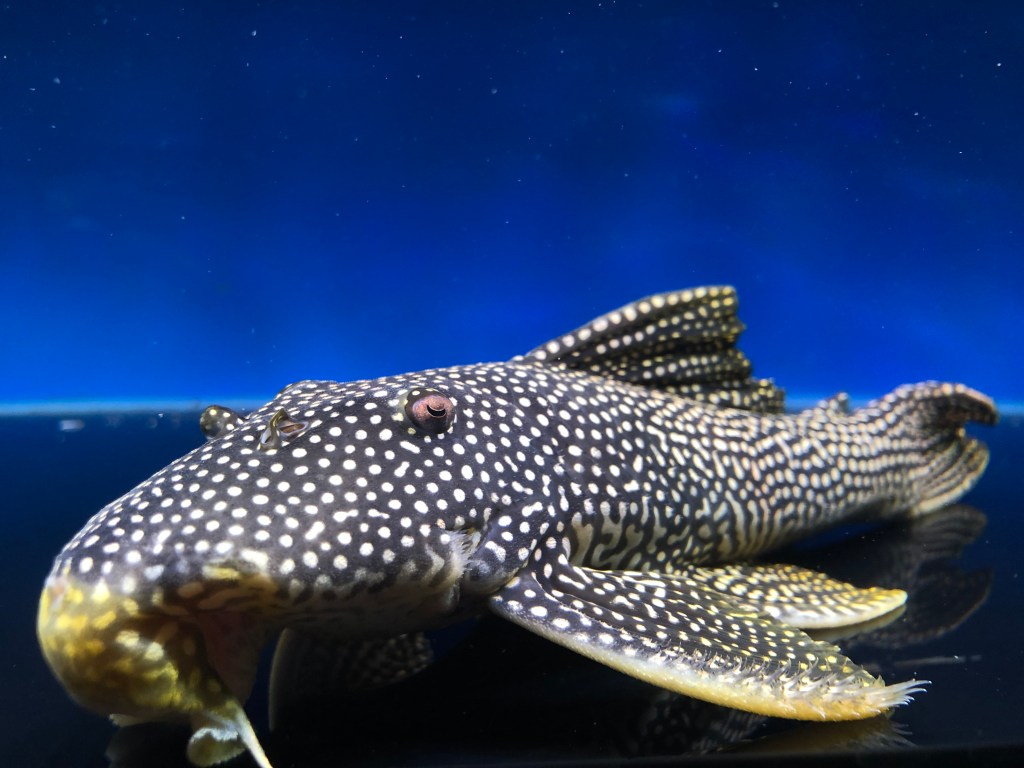
Plant eaters
Realistically many Loricariids do not consume traditional plants so often these are best to identify if a fish is feeding or not. Some very broad generalist taxa might consume more like Pterygoplichthys and Hypostomus.
Using other premade foods as a base.
This is largely only possible with gel diets but possibly some pastes. The main rule is not to add so many that the gelling agent doesn’t hold as well as it used to but also this will depend on how fast your fishes feed.
What base diets can you use?
- Repashy. It does have a wide range of other ingredients.
- In the Bag Tropical Fish UK’s pleco pops. Very strong gelling agents and true carnivorous and herbivorous diets.
- EBO pastes
- Tropical’s gels/pastes
Testing diets to identify if they are being used.
Glass petri dishes can be ideal here as they sink and are inert, you can pipette or place food on and ideally it will not be disturbed over the time you are not observing the food being eaten. Therefore it can be a reliable method of identifying what is taken and what is not.
References:
Ahmad, I., Irm, M., Ahmed, I., Haoran, Y., Taj, S., Bhat, T. A., … & Amin, A. (2024). Role of ginger in fish nutrition with special emphasis on growth, health, gut and liver morphology. Journal of the World Aquaculture Society, 55(6), e13101.
Mansour, A. T., Diab, A. M., Khalil, R. H., Eldessouki, E. A., El-Sabbagh, N., Elsamannoudy, S. I., & Younis, N. A. (2023). Physiological and immunological responses of Nile tilapia fed dietary supplementation of sweet basil ethanolic and aqueous extracts. Frontiers in Marine Science, 9, 1064455.
Vucko, M. J., Cole, A. J., Moorhead, J. A., Pit, J., & de Nys, R. (2017). The freshwater macroalga Oedogonium intermedium can meet the nutritional requirements of the herbivorous fish Ancistrus cirrhosus. Algal research, 27, 21-31.
 The Scientific Fishkeeper