Category Archives: Fish Nutrition and Diets

Premixed foods for plecos (Loricariids) and other rasping fishes.

Choosing fish foods can be very confusing, there are many products on the market all with various claims. The majority of fish diets are formulated based on the nutrition for food fishes, these diets have an aim to have a high growth rate while minimizing costs, efficiency would be the best term. The aim of the ornamental aquarist is far from that, we want a long lived healthy fish with good coloration. The nutritional composition requirements are differ between the two aims (Vucko et al., 2017). This has resulted in many diets not catering for the aim of the fishkeeper and no where is this more obvious then diets aimed at plecos, Loricariids.
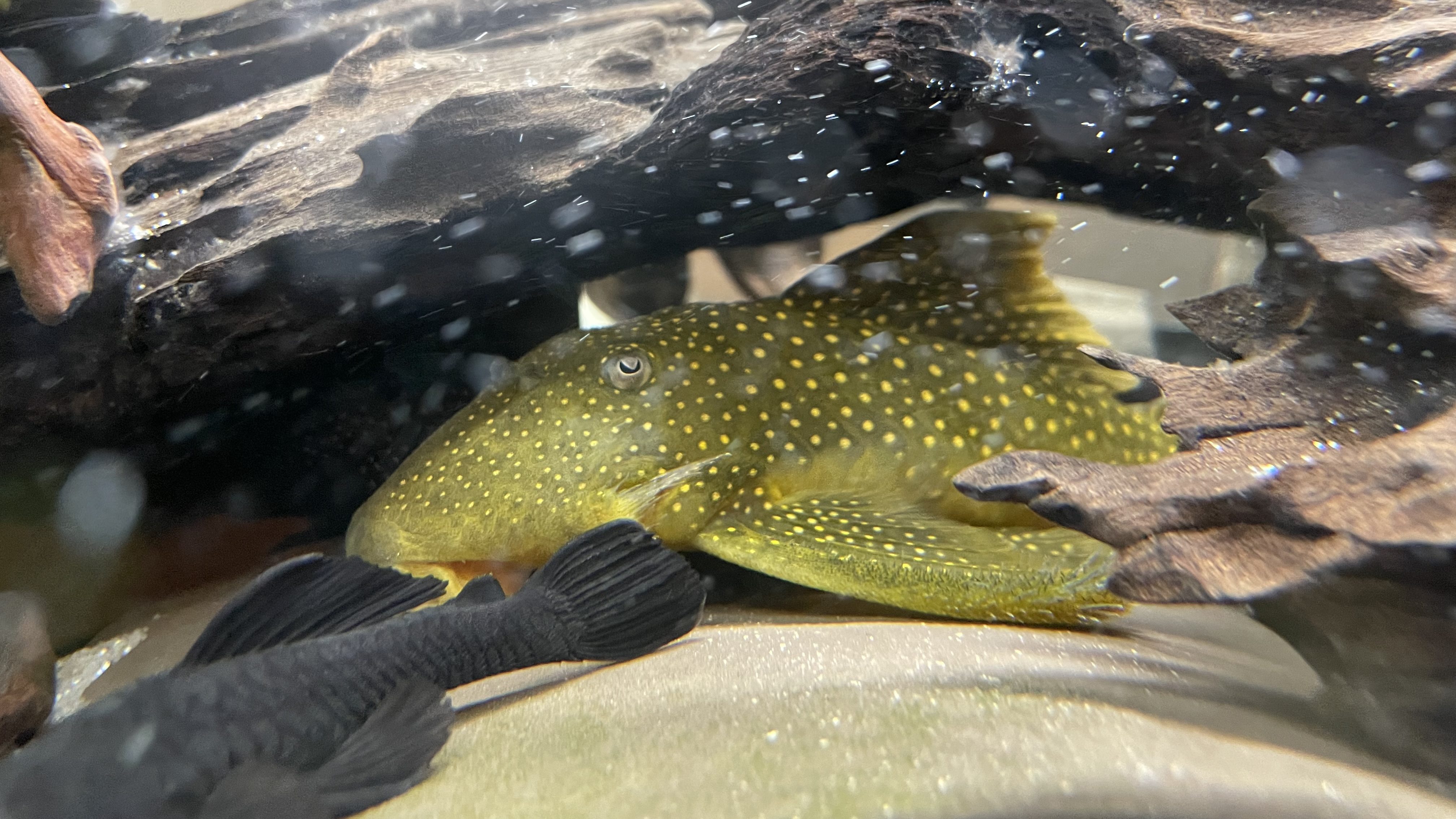
  1. Catering for Algivores/detritivores.
  2. Catering for Carnivores.
  3. Other niches and specialization.
  4. Will they eat it?
  5. Premade diets and their ingredients
  6. The hidden issue with premade diets
  7. Products sold for plecos

The majority of Loricariids are algivores or detritivores, but there is a diversity of dietary niches (Lujan et al., 2015). Contrastingly many products labelled as pleco or algae wafers/pellets contain little to no algae but higher proportions of fish meal (Vucko et al., 2017). The majority of popular Loricariids are along the lines of algivory or feed on various volumes so this should be a focus for the aquarist. Additionally I have yet to see fish ever recorded in the gut of any Loricariid.

Catering for Algivores/detritivores.

I have written quite a bit about this niche and therefore I recommend reading this article here which covers details into algivory, detritivory and wood eating.

These fishes are the most difficult to cater for giving there isn’t quite the selection of algaes available in any diet. Some of them can be difficult for the fish to take to so hence I find Repashy soilent green good and can then be bulked out with even more algae’s.
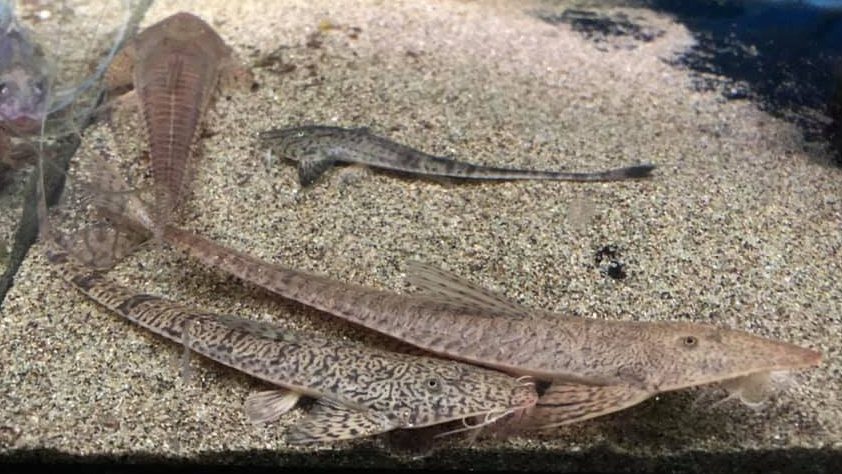
Catering for Carnivores.

I am not really discussing carnivores so much in this article as there are many diets that cater for them and in recent years with the focus into invertebrates it is only improving. Still, many diets are very high in fish meals, something Loricariids do not consume and nutritionally these do not compare. Not just can fish meals be different nutritionally, the nutrients can be difficult to access (Žák et al., 2022).

There is a little diversity of carnivory within Loricariidae but we don’t entirely know to what extent. I have written this article for mollusc specialists and although diverse in diets this for dwell in and around the substrate.

The great thing for carnivores is the diversity of frozen foods we have available within the hobby and even fishmongers. Although keep aware for the enzyme thiaminase (in mussels and some fishes) and limit the frequency these are fed to your fishes.

Other niches and specialization.

Fungi hyphae are found in the diets of Panaque, Panaqolus and the Hypostomus cochliodon group and are likely digested, mushrooms or mycoproteins would be the closest to replicating this (Lujan et al., 2011). Sadly most diets don’t contain these. It would be interesting to feed wood that has many of these but usually by the point they have obvious hyphae they are almost entirely broken down.

While Hypancistrus are largely algivores, there is evidence a few of them feed on seeds, read about Hypancistrus here. The exception being Hypancistrus vandragti who seems a little more carnivorous in comparison (Lujan & Armbruster, 2011).

Will they eat it?

Something few consider is that just because a diet might be amazing with ingredients they might not eat it. So there are a range of ingredients such as some herbs used entirely to encourage fishes to eat a diet. This has been the issue I’ve found with some that have great ingredients Repashy super green for example.

Premade diets and their ingredients

Premade diets unlike if you were to make anything yourself entirely will have a reasonable range of nutrients. They are best more as a basis to work from for a more well rounded diet.

From these tables it is easy to understand the varying suitability of different diets to different species and genera. The colour coding is only to give an idea as many ingredients have multiple purposes e.g. fish meal can be a binding agent as well as for nutrition.

Ingredients are ordered in quantity so the top of the list contributes the most.

The hidden issue with premade diets

There is a hidden issue, as you look across the table how similar are many of these diets? Many fishkeepers will buy a range of different products in the aim of diversity of nutrition and ingredients. If so many of the ingredients and the orders are similar this means that there is little diversity, the exception would be there the major ingredients are very different.

Products sold for plecos
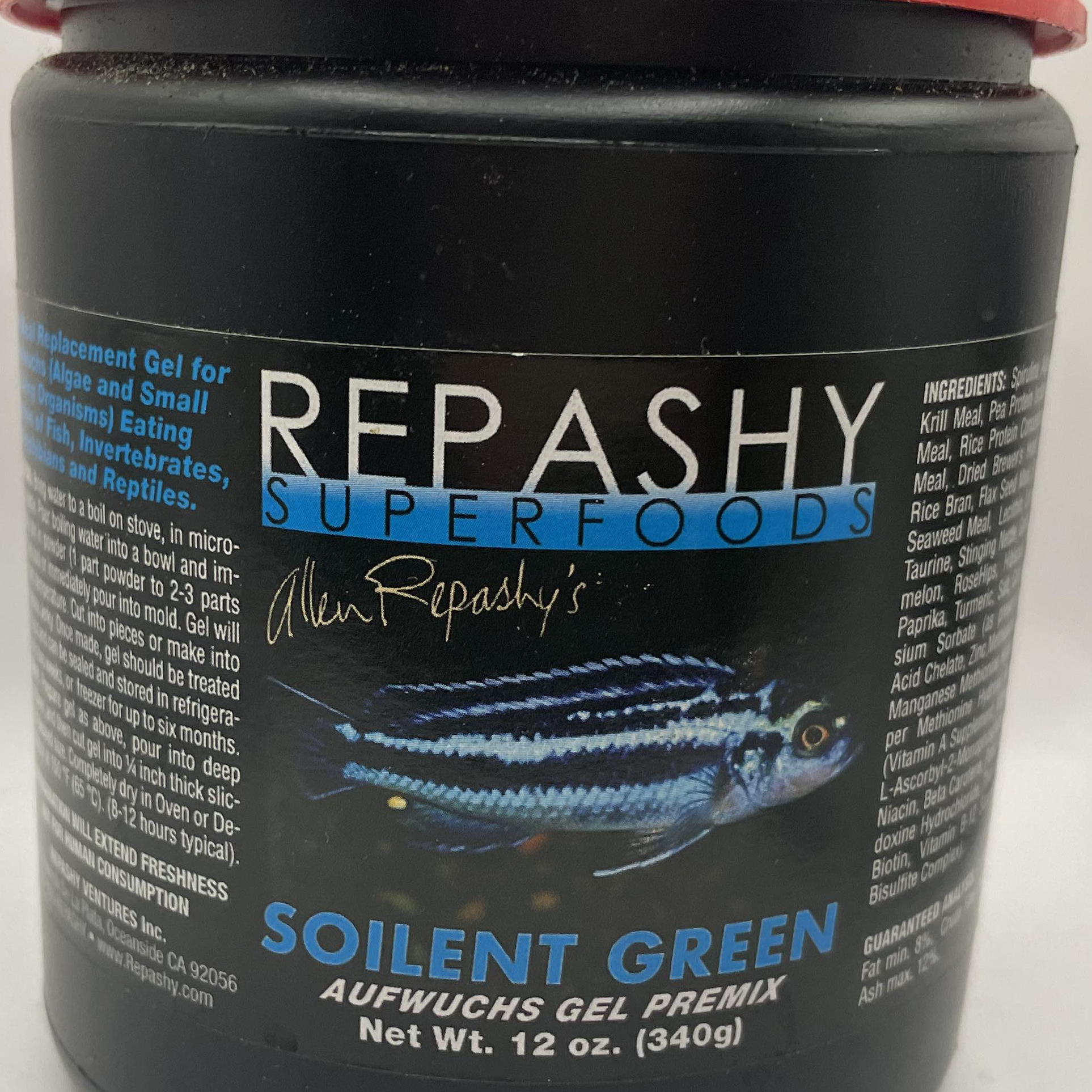
CompanyRepashy
ProductSoilent GreenSuper GreenBottom scratcherMorning wood
Dietary NicheAlgivoryAlgivoryCarnivoryXylovory
SummaryFishes tend to prefer this diet. Contains mostly algae but has a some animal meals but can be bulked out with more algae’s.Contains no animal products. Fish seem less keen on it. High in algae’s.Contains a diversity of invertebrates. Shouldn’t be fed as the only diet for non-carnivores as can lead to bloat e.g. Hypancistrus.No Loricariids digest wood, cellulose is the main ingredient.
Composition (%):
Protein40354520
Fat88103
Fibre881250
Moisture8888
Ash1291115
Ingredients
Spirulina Algae, Algae Meal (Chlorella), Krill Meal, Pea Protein Isolate, Squid Meal, Rice Protein Concentrate, Fish Meal, Alfalfa Leaf Meal, Dried Brewer’s Yeast, Coconut Meal, Stabilized Rice Bran, Flax Seed Meal, Schizochytrium Algae, Dried Seaweed Meal,  Lecithin, Dried Kelp, Locust Bean Gum, Potassium Citrate, Taurine, Stinging Nettle, Garlic, RoseHips, Hibiscus Flower, Calendula Flower, Marigold Flower, Paprika, Turmeric, Salt, Calcium Propionate and Potassium Sorbate (as preservatives), Magnesium Amino Acid Chelate, Zinc Methionine Hydroxy Analogue Chelate, Manganese Methionine Hydroxy Analogue Chelate, Copper Methionine Hydroxy Analogue Chelate, Selenium Yeast. Vitamins: (Vitamin A Supplement, Vitamin D Supplement, Choline Chloride, Calcium L-Ascorbyl-2-Monophosphate, Vitamin E Supplement, Niacin, Beta Carotene, Pantothenic Acid, Riboflavin, Pyridoxine Hydrochloride, Thiamine Mononitrate, Folic Acid, Biotin, Vitamin B-12 Supplement, Menadione Sodium Bisulfite Complex).Spirulina Algae, Algae Meal (Chlorella),  Pea Protein Isolate, Rice Protein Concentrate, Alfalfa Leaf Powder, Stabalized Rice Bran, Dandelion Powder, Dried Brewer’s Yeast, Coconut Meal, Ground Flaxseed, Schizochytrium Algae, Dried Seaweed Meal, Dried Kelp, Locust Bean Gum, Lecithin,  Potassium Citrate, Taurine, Stinging Nettle, Garlic, RoseHips, Hibiscus Flower, Calendula Flower, Marigold Flower, Paprika, Turmeric, Calcium Propionate and Potassium Sorbate (as preservatives), Magnesium Amino Acid Chelate, Zinc Methionine Hydroxy Analogue Chelate, Manganese Methionine Hydroxy Analogue Chelate, Copper Methionine Hydroxy Analogue Chelate, Selenium Yeast. Vitamins: (Vitamin A Supplement, Vitamin D Supplement, Choline Chloride, Calcium L-Ascorbyl-2- Monophosphate, Vitamin E Supplement, Niacin, Beta Carotene, Pantothenic Acid, Riboflavin, Pyridoxine Hydrochloride, Thiamine Mononitrate, Folic Acid, Biotin, Vitamin B-12 Supplement, Menadione Sodium Bisulfite Complex).Krill Meal, Insect Meal, Mussel MealSquid Meal, Dried Brewer’s Yeast, Dried Seaweed Meal,  Lecithin,  Dried Kelp, Locust Bean Gum, Potassium Citrate, Taurine, Watermelon, RoseHips, Hibiscus Flower, Calendula Flower, Marigold Flower, Paprika, Turmeric, Stinging Nettle, Garlic, Salt, Calcium Propionate and Potassium Sorbate (as preservatives), Magnesium Amino Acid Chelate, Zinc Methionine Hydroxy Analogue Chelate, Manganese Methionine Hydroxy Analogue Chelate, Copper Methionine Hydroxy Analogue Chelate, Selenium Yeast. Vitamins: (Vitamin A Supplement, Vitamin D3 Supplement, Choline Chloride, Calcium L-Ascorbyl-2-Monophosphate, Vitamin E Supplement, Niacin, Beta Carotene, Pantothenic Acid, Riboflavin, Pyridoxine Hydrochloride, Thiamine Mononitrate, Folic Acid, Biotin, Vitamin B-12 Supplement, Menadione Sodium Bisulfite Complex).Cellulose Powder, Dried Seaweed Meal, Alfalfa Leaf Meal, Spirulina Algae, Rice Protein Concentrate, Pea Protein Isolate, Stabilized Rice Bran, Dried Brewer’s Yeast, Dried Kelp, Stinging Nettle, Locust Bean Gum, Calcium Carbonate, Potassium Citrate, Malic Acid, Taurine, GarlicWatermelon, RoseHips, Hibiscus Flower, Calendula Flower, Marigold Flower, Paprika, Turmeric, Salt, Calcium Propionate and Potassium Sorbate (as preservatives), Magnesium Amino Acid Chelate, Zinc Methionine Hydroxy Analogue Chelate, Manganese Methionine Hydroxy Analogue Chelate, Copper Methionine Hydroxy Analogue Chelate, Selenium Yeast. Vitamins: (Vitamin A Supplement, Vitamin D Supplement, Choline Chloride, Calcium L-Ascorbyl-2-Monophosphate, Vitamin E Supplement, Niacin, Beta Carotene, Pantothenic Acid, Riboflavin, Pyridoxine Hydrochloride, Thiamine Mononitrate, Folic Acid, Biotin, Vitamin B-12 Supplement, Menadione Sodium Bisulfite Complex).
Repashy products, coloured by type of product; algae (Dark green), Plant Matter (blue), cereal (Orange), animal matter (red), vitamins (pink), not highlighted might have other purposes such as binding agents or other nutrition.

Repashy unlike the other brands is a gel diet, this means other products such as algae powders can be added in. This means for any of them you can increase the algal composition or add ingredients such as basil.
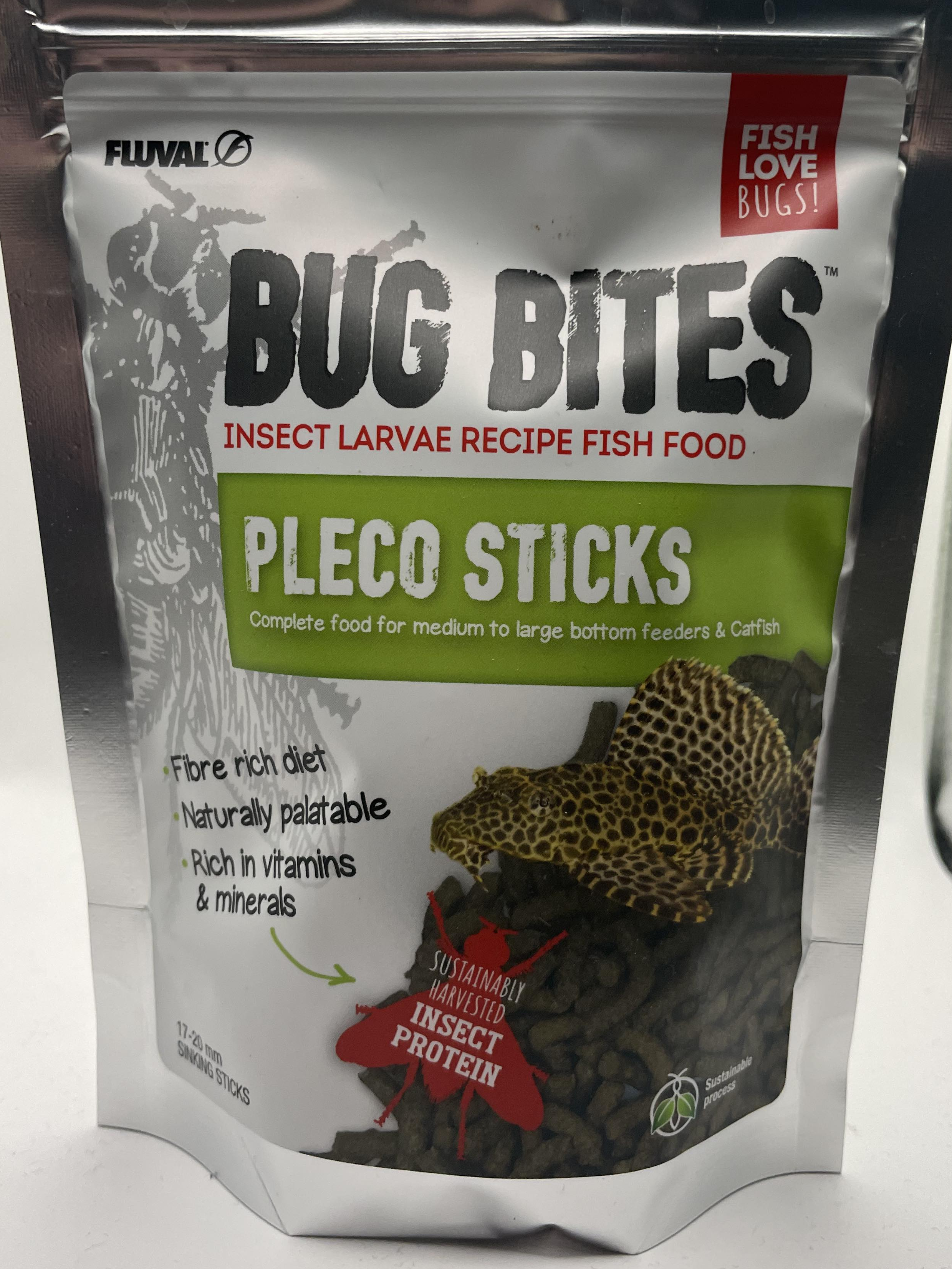
CompanyFluvalAquaCare
ProductBug Bites Pleco SticksBug Bites Pleco CrispsSpirulina Sinking WafersOak
Dietary NicheCarnivoreOmnivore/cerealsOmnivoreOmnivore/cereals
SummaryA reasonable amount of insects so more ideal then those with more fish meals for carnivores. A smaller amount of insect meals and contains a wider range of cereals.Mostly fish meal with a lot of cereals, little algae. Loricariids cannot digest wood/cellulose nor is it used for digestion. Mostly wheat, which will have limited nutrition and a high amount of fish meal.
Composition (%):
Protein3243.543.738.3
Fat1245.73.7
Fibre6333.2
Moisture??7.19
Ash9510.513.4
Ingredients
Black soldier fly larvae (30%), salmon (22%), wheat, peas, potato, dicalcium phosphate, alfalfa nutrient concentrate, calcium carbonate, calendula, rosemary.Insect Meal (Mealworm Meal 15%, Black Soldier Fly Larvae 10%), Wheat flour, Wheat Gluten, Wheat germ, Alfalfa, Spirulina, Fish Protein Hydrolyzed, Kelp (5%), Shrimp Protein Hydrolyzed, Spinach (5%), Activated Charcoal.Fish meal, Wheat, Wheat Gluten, Mycoprotein, Shrimp, Spirulina, Alfa-Alfa, Salmon Oil, Wheat germ, Spinach, Vitamins, MineralsWheat, Herring Meal, Wheatgerm, Spirulina, Alfalfa, Kelp, Oak Bark, Zeolite, Minerals, Vitamins
Coloured by type of product; algae (Dark green), Plant Matter (blue), cereal (Orange), animal matter (red), vitamins and minerals (pink), not highlighted might have other purposes such as binding agents or other nutrition.
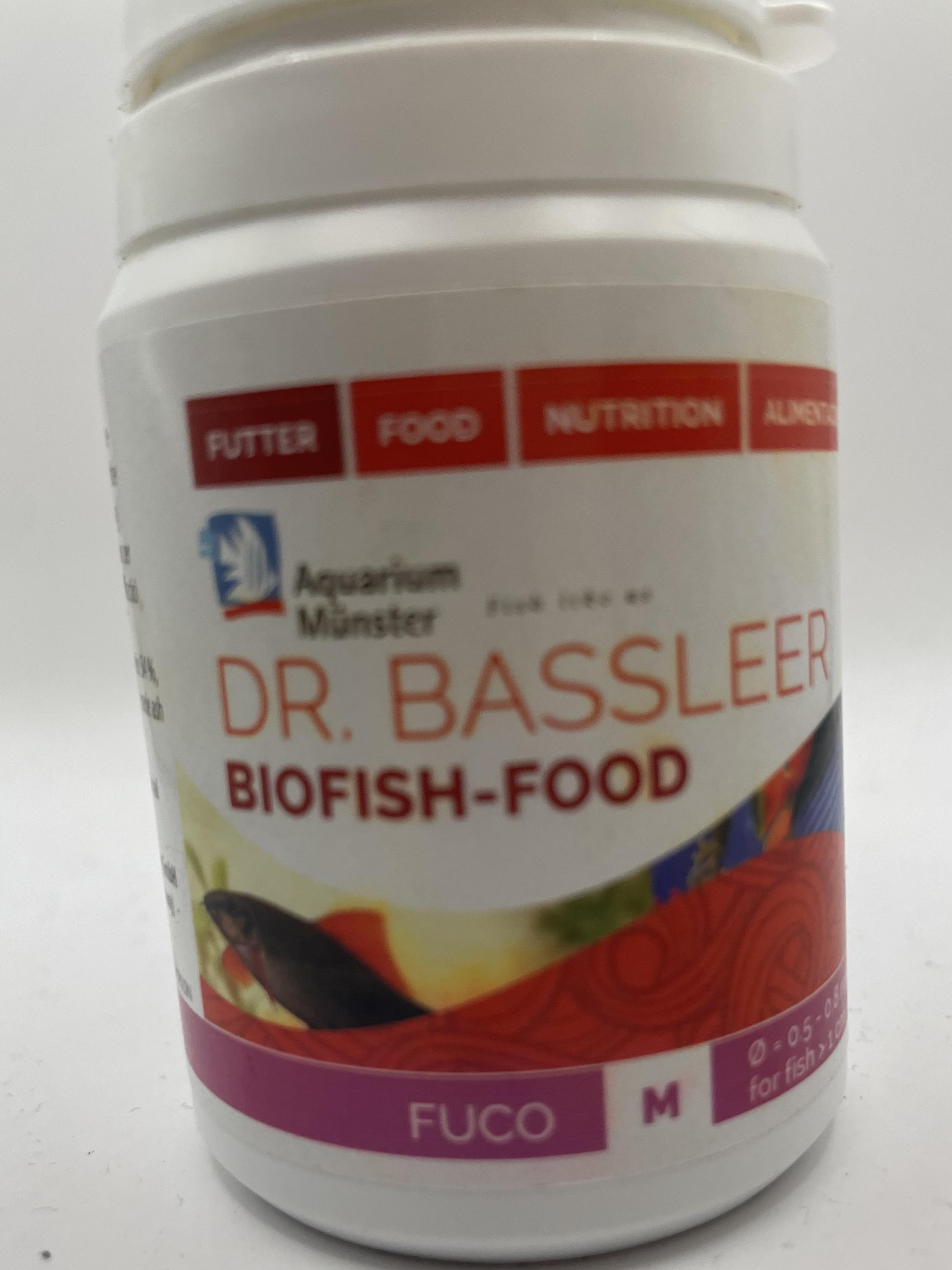
CompanyHikariDr BasslerVitalis
ProductAlgae WafersGreen RegularPleco Pellets
Dietary NicheOmnivoreOmnivoreOmnivoreOmnivore
SummaryNot ideal. Contains a lot of fish meal and cereals. A general diet that targets no species. Very high in cereals and fish meals. Too few algaes to cater for an algivore. Pretty much the same as the green diet. A lot of fish meal and cereals. Not ideal. A very general diet that doesn’t cater for any species. Mostly contains fish.
Composition (%):
Protein33575439.4
Fat418167
Fibre3241.5
Moisture10?625
Ash17101017.3
Ingredients
Fish meal, wheat flour, wheat germ meal, cassava starch, dried bakery product, dried seaweed meal, alfalfa nutrient concentrate dehydrated, dehydrated alfalfa meal, brewers dried yeast, soybean meal, fish oil, krill meal, spirulina, garlic.Cereals, fish and fish derivatives, derivatives of vegetable origin, Chlorella pyrenoidosa (5 %), Moringa oleifera (5 %), molluscs and crustaceans, yeast, minerals
Additives: Vitamins: E672 Vitamin A 7,500 IE/kg, E671 Vitamin D3 2,500 IE/kg , E300 Vitamin C 500 mg/kg, E307 Vitamin E 260 mg/kg, Magnesium 400 mg/kg, Iron 300 mg/kg, Omega-3 fatty acids 50 mg/g, Vitamin B3 7.5 mg/kg, Chlorophyll 2 mg/kg, Folic acid 2 mg/kg, Selenium 1 mg/kg, Iodine 0.02 mg/kg
Fish and fish derivatives, cereals, molluscs and crustaceans, derivatives of vegetable origin, yeast, minerals
Additives: Vitamins: E672 vitamin A 7500 IU/kg, E671 vitamin D3 2500 IU/kg, E300 vitamin C 500 mg/kg, E307 vitamin E 260 mg/kg
Fish and Fish Derivatives, Derivatives of Vegetable Origin, Algae, Oils and Fats, Minerals, Molluscs and Crustaceans.
Coloured by type of product; algae (Dark green), Plant Matter (blue), cereal (Orange), animal matter (red), vitamins (pink), not highlighted might have other purposes such as binding agents or other nutrition.
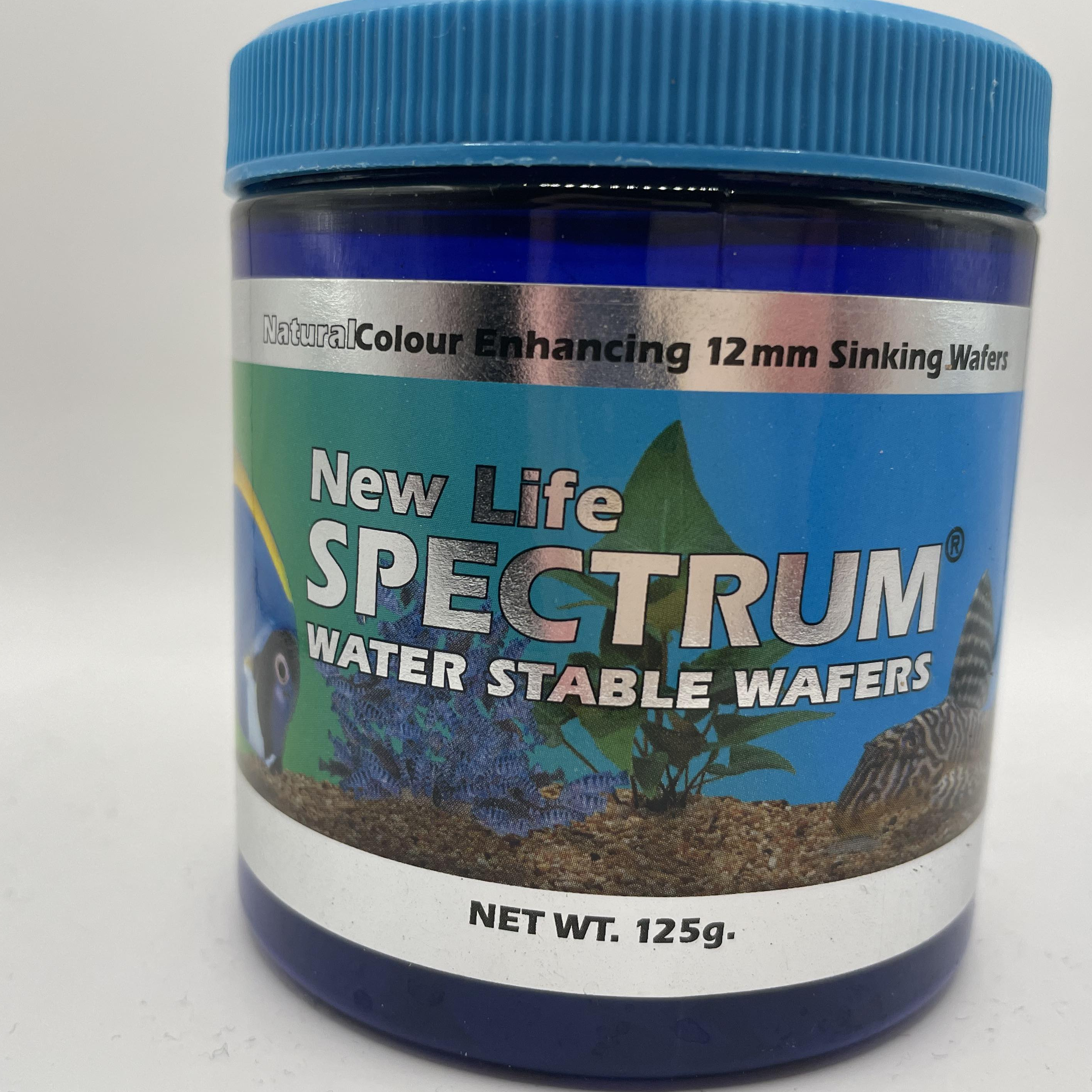
CompanyOaseTetraNew Life SpectrumFish Science
ProductOrganix Veggievore TabsSpirulina WafersAlgae MaxAlgae wafers
Dietary NicheCarnivoreHerbivoreAlgivoreOmnivore
SummaryA lot of fish/shrimp meals. Only a small amount of krill. Plant focused but lacks a lot of algaes.Beware some have higher fish meal volumes. Otherwise a great range of algaes.Would benefit from more algaes, the use of mycoproteins is interesting but still a large amount of cereals and fish meal.
Composition (%):
Protein35283442
Fat13687.5
Fibre1582.2
Moisture?91010
Ash9??8.5
Ingredients
Whole Salmon, Whole Shrimp, Wheat Flour, Kelp, Whole Herring, Wheat GermVitamins and Minerals.Cereals, Vegetable protein extracts, Derivatives of vegetable origin, Yeasts, Oils and fats, Algae (Ascophyllum Nodosum 3,0%, Spirulina 0,9 %), Minerals.
Vitamins: Vitamin D3 1810 IU/kg. Trace elements: Manganese (manganese (II) sulphate, monohydrate) 81 mg/kg, Zinc (zinc sulphate, monohydrate) 48 mg/kg, Iron (iron(II) sulphate, monohydrate) 32 mg/kg. Colourants, Preservatives, Antioxidants.
Seaweed (Ulva latuca, Undaria pinnatafida, Eucheuma cottonii, Eucheuma spinosum, Chondrus crispus, Porphyra umbilicus), Krill (Euphasia superba), Squid (Dosidicus gigas), Whole Wheat Flour, Kelp, Spirulina, Fish (Brevoortia tyrannus), Fish Oil, Garlic, Ginger, Astaxanthin, Marigold, Bentonite Clay, Sea Salt, Vitamin A Acetate,Vitamin D Supplement,Vitamin E Supplement, Vitamin B12 Supplement,Niacin, Folic Acid, Biotin, Thiamine Hydrochloride, Riboflavin Supplement, Pyridoxine Hydrochloride, Calcium Pantothenate, L-Ascorbyl-2-Polyphosphate (Vitamin C), Choline, Chloride, Ethylenediamine Dihydroiodide, Cobalt Sulfate, Ferrous Sulfate, Manganese Sulfate, Tocopherols (a preservative).Algae (Spirulina & Kelp 15%), Mycoprotein, Cereals, Herring meal, Vegetable protein extracts, Insect meal, Vegetables (Cucumber, Spinach), Molluscs and crustaceans, Yeast, Salmon oil and Garlic.
Coloured by type of product; algae (Dark green), Plant Matter (blue), cereal (Orange), animal matter (red), vitamins (pink), not highlighted might have other purposes such as binding agents or other nutrition.

References:

Lujan, N. K., & Armbruster, J. W. (2011). Two new genera and species of Ancistrini (Siluriformes: Loricariidae) from the western Guiana Shield. Copeia2011(2), 216-225.

Lujan, N. K., German, D. P., & Winemiller, K. O. (2011). Do wood‐grazing fishes partition their niche?: morphological and isotopic evidence for trophic segregation in Neotropical Loricariidae. Functional Ecology25(6), 1327-1338.

Lujan, N. K., Winemiller, K. O., & Armbruster, J. W. (2012). Trophic diversity in the evolution and community assembly of loricariid catfishes. BMC Evolutionary Biology12, 1-13.

Vucko, M. J., Cole, A. J., Moorhead, J. A., Pit, J., & de Nys, R. (2017). The freshwater macroalga Oedogonium intermedium can meet the nutritional requirements of the herbivorous fish Ancistrus cirrhosus. Algal research27, 21-31.

Žák, J., Roy, K., Dyková, I., Mráz, J., & Reichard, M. (2022). Starter feed for carnivorous species as a practical replacement of bloodworms for a vertebrate model organism in ageing, the turquoise killifish Nothobranchius furzeri. Journal of Fish Biology100(4), 894-908.

Company
Product
Dietary Niche
Summary
Composition (%):
Protein
Fat
Fibre
Moisture
Ash
Ingredients
Coloured by type of product; algae (Dark green), Plant Matter (blue), cereal (Orange), animal matter (red), vitamins (pink), not highlighted might have other purposes such as binding agents or other nutrition.

Chaetostoma – The Coolest Plecos/Loricariidae

I am personally most charmed by those Loricariids with unusual anatomy and none more then that dorso-ventrally compressed body shape. Most of these fishes enjoy high velocity water, living in the cracks and crevices of the rocks present, more then often not fishes you’d find around plants or even wood. Two genera come to mind when we think of this, Chaetostoma and Ancistrus although many more do exploit such a niche like Pseudolithoxus. Many genera we do not see in the trade though, these are largely members of that Chaetostoma clade; the paraphyletic Cordylancistrus, Andeanancistrus, Transancistrus and Leptoancistrus (Lujan et al., 2015).

Chaetostoma cf. joropo

This Chaetostoma clade have a unique appearance of long wide jaws and dermal plating stopping before the end of the head leaving a fleshy rim that lacks tentacles. The only taxa that look similar would be a few Ancistrus and the Neoplecostominae, Pareiorhapis but the latter displays quite reasonable hypertrophied odontodes and a much wider head. There is more precise skeletal anatomy to identify Chaetostoma (Lujan et al., but not really the easiest for the fishkeeper to identify.

As of 2022 there were 49 currently described species in the genus (Meza-Vargas et al., 2022) making Chaetostoma one of the numerous Loricariid genera excluding Ancistrus and Hypostomus all of which have many undescribed species. While in the aquarium trade we see very few with some rarities appear on occasion, the majority seem to be imported rather generally and therefore bycatch is not rare. This is one of the genera you can find something almost unseen in a general fish store due to this lack of identification. The most common being Chaetostoma formosae, C. sp. ‘L147’ and C. dorsale but Chaetostoma sp. L455/L457 is not unseen and has some amazingly striking patterning.

Chaetostoma brevilabiatum at Pier Aquatics

Chaetostoma has often been associated with being small but this genus represents some larger species such as Chaetostoma brevilabiatum growing to over 18cm Standard Length (SL) although most are around that 6/7cm SL mark (Lujan et al., 2015). They are notorious fast growers if in the right setup so certainly not one to forget about upgrading soon enough.

Habitat

While largely a hillstream or high velocity fish (In terms of our fishkeeping) they can be particularly widespread or less so depending on the species (Lujan et al., 2015). Ecology is rarely recorded as with many fishes where taxonomy has been the focus and while most descriptions come with coordinates that can be crosschecked against other information it is still somewhat making assumptions. Although for Chaetostoma chimu, C. formosae, C. dorsale, C. platyrhynchus and C. joropo all three are found in the same locality, explains mixed imports and we do have ecological records focused on C. chimu. The water is well oxygenated and by our aquarium standards has a high flow, temperatures of 21-29c, a pH of 7.1-8.9 along with a conductivity of 20.4–269.0 μS (Urbano‐Bonilla & Ballen, 2021) . This suggests fishes that experience quite a bit of variation and swings seasonally or maybe if there is frequent rainfall. Generally this does infer maybe a few species not difficult to house in captivity. That neutral pH is not uncommonly recorded, Chaetostoma spondylus is recorded from a habitat of a pH of 7.1 with again highly oxygenated water (Salcedo & Ortega 2015). Chaetostoma joropo also inhabiting highly oxygenated water at a pH of 7.1-8.6, a conductivity of 10.4–258.0 μS and temperatures of 21-30c. These are certainly not fish to keep at least at the high extreme but given the locality of many it seems particularly those at higher elevations would need much cooler water year round.

Chaetostoma sp. ‘L445/L457’

These habitats are extremely rocky with round boulders weathered from the flow of the rivers (Urbano‐Bonilla& Ballen, 2021; Meza-Vargas et al., 2022). Whether it be rocks, wood, pleco caves etc. plenty of hiding spots are a must for this genus.

Diet

While the habitat of Chaetostoma proves them adaptable their diet might not, these elongate jaws are extremely similar to other genera that have provided a challenge to aquarists e.g. Baryancistrus. The longer jaws with more numerous teeth are strongly associated with algivory (feeds on mostly algaes/aufwuch/periplankton; Lujan et al., 2012). Zúñiga-Upegui et al. (2017) is probably the most detailed paper on the diet of Chaetostoma although few ever discuss their diet, from their analysis the genus feeds almost entirely on algaes particularly diatoms. These diatoms are unlikely to be those highly stubborn ones to cause issues in the aquarium though.

If anything much like Baryancistrus this is a genus who would benefit from large amounts of algae’s in their diet whether it be Repashy soilent green with additional algal powders mixed in or In The Bag’s Pleco Pops. Many fish diets even most claimed as algae wafers contain very little and this genus has shown adaptable to these diets nutritionally I can’t see them being ideal.

Behaviour

I can’t argue for or against their territoriality as I haven’t seen it, even with any territorial species there is a benefit in others for enrichment given the right amount of space. Many fishes seem to learn feeding behaviours off each other.

Chaetostoma sp. ‘L445/L457’

Conclusion

Chaetostoma, it’s so unusual looking and can look creepy, they often get forgotten. These algivores who enjoy high flow and velocity would certainly make interesting tankmates in some of those aquariums which allow for such seasonal variation. Adaptable in parameters and maybe less so in diet is probably what defines the genus.

References/species descriptions:

Lujan, N. K., Meza-Vargas, V., Astudillo-Clavijo, V., Barriga-Salazar, R., & López-Fernández, H. (2015). A multilocus molecular phylogeny for Chaetostoma clade genera and species with a review of Chaetostoma (Siluriformes: Loricariidae) from the Central Andes. Copeia103(3), 664-701.

Lujan, N. K., Winemiller, K. O., & Armbruster, J. W. (2012). Trophic diversity in the evolution and community assembly of loricariid catfishes. BMC Evolutionary Biology12(1), 1-13.

Meza-Vargas, V., Calegari, B. B., Lujan, N. K., Ballen, G. A., Oyakawa, O. T., Sousa, L. M., … & Reis, R. E. (2022). A New Species of Chaetostoma (Siluriformes: Loricariidae) Expands the Distribution of Rubbernose Plecos Eastward into the Lower Amazon Basin of Brazil. Ichthyology & herpetology110(2), 364-377.

Salcedo, N. J., & Ortega, H. (2015). A new species of Chaetostoma, an armored catfish (Siluriformes: Loricariidae), from the río Marañón drainage, Amazon basin, Peru. Neotropical Ichthyology13, 151-156.

Urbano‐Bonilla, A., & Ballen, G. A. (2021). A new species of Chaetostoma (Siluriformes: Loricariidae) from the Orinoco basin with comments on Amazonian species of the genus in Colombia. Journal of Fish Biology98(4), 1091-1104.

Zúñiga-Upegui, P. T., Villa-Navarro, F. A., García-Melo, L. J., García-Melo, J. E., Reinoso-Flórez, G., Gualtero-Leal, D. M., & Ángel-Rojas, V. J. (2014). Aspectos ecológicos de< em> Chaetostoma sp.(Siluriformes: Loricariidae) en el alto río Magdalena, Colombia. Biota Colombiana15(2).

Leporacanthicus and Scobinancistrus: A dietary guide to molluscivorous Loricariids.

While the majority of Loricariids are algivores/detritivores (Lujan et al., 2012), there is a number of those who are carnivorous and even less likely specialise in molluscs.

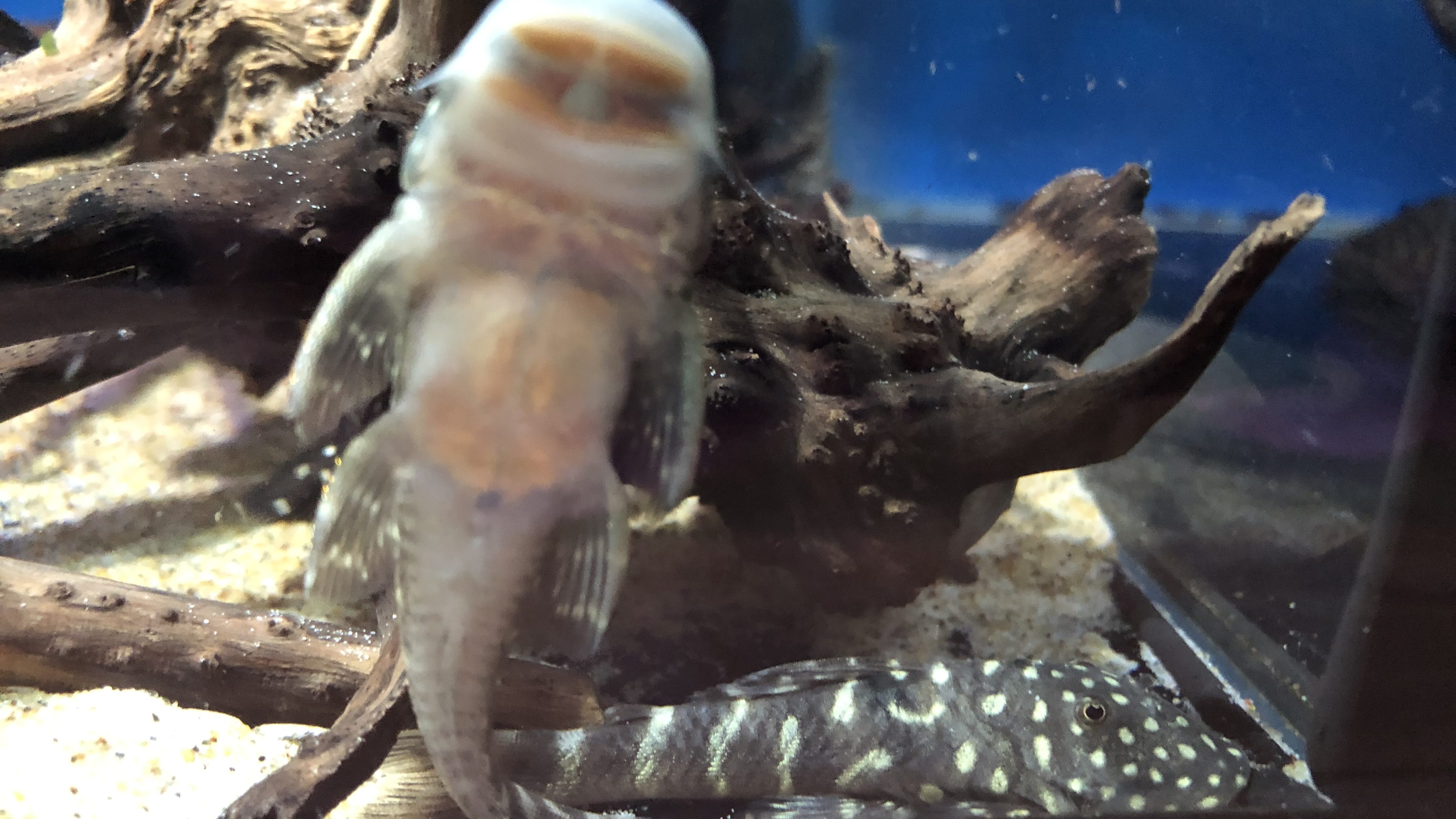
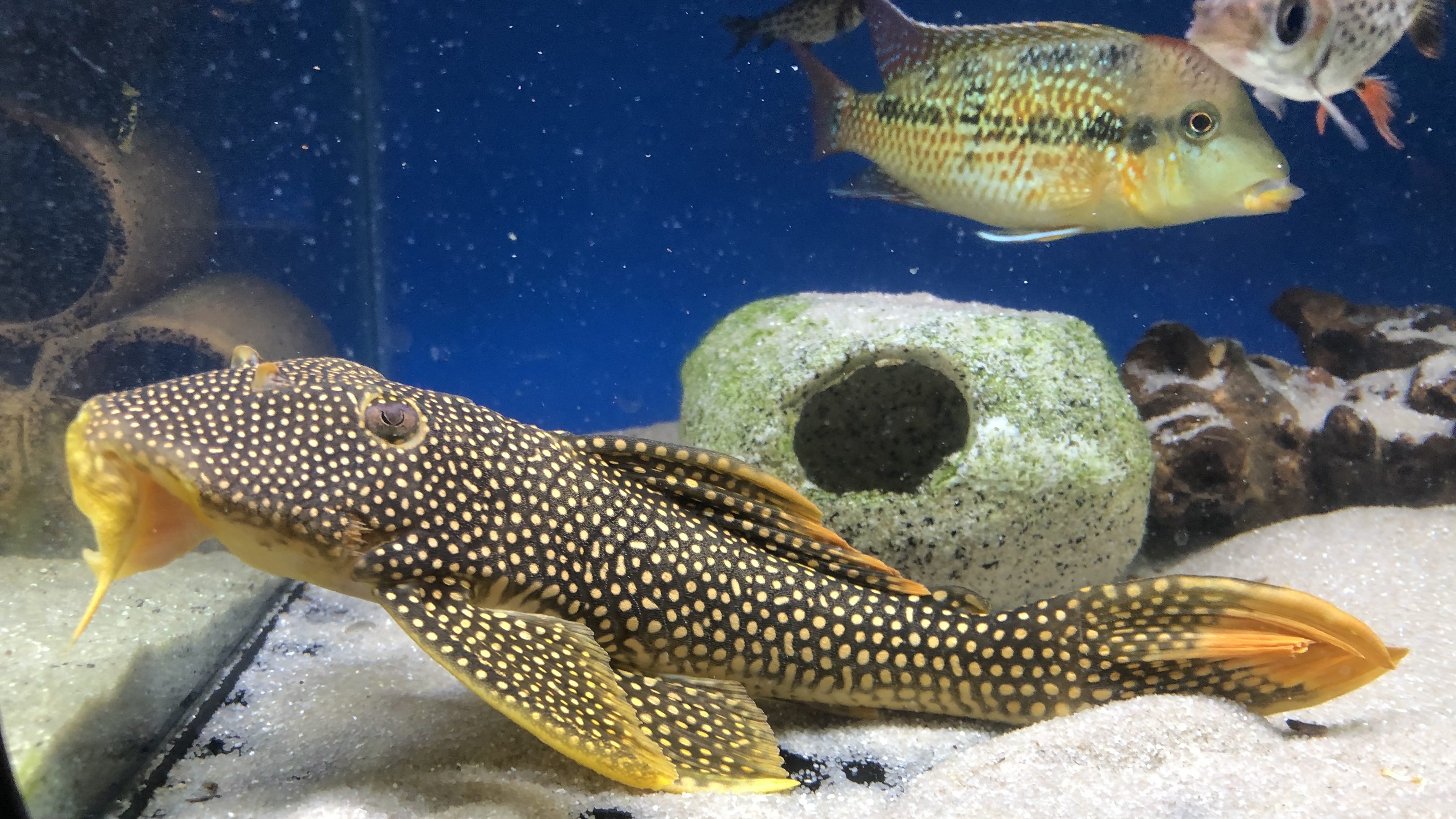
Figure 1: Scobinancistrus auratus at Maidenhead Aquatics, Ascot.

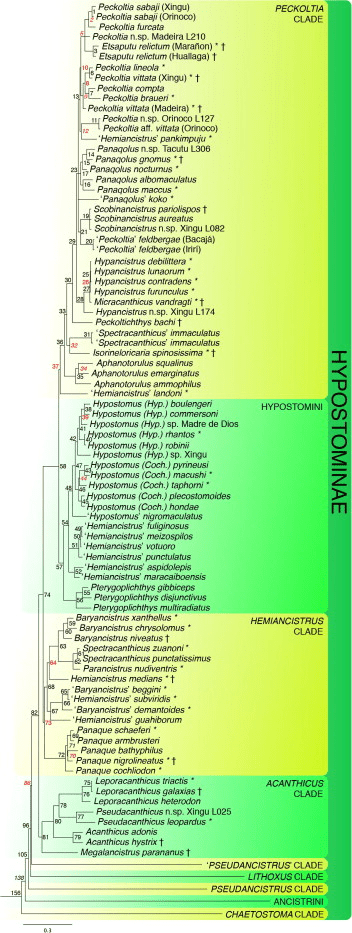
Scobinancistrus and Leporacanthicus are both genera in the subfamily Hypostominae of the Siluriforme (catfish) family, Loricariidae. Scobinancistrus is nested within the Peckoltia group while Leporacanthicus places within the Acanthicus group (Fig 2). As a result these two species are not closely related at all, making the molluscivorous dietary niche convergent.

Figure 2: Phylogeny of the Peckoltia group from: Lujan, N. K., Armbruster, J. W., Lovejoy, N. R., & López-Fernández, H. (2015). Multilocus molecular phylogeny of the suckermouth armored catfishes (Siluriformes: Loricariidae) with a focus on subfamily Hypostominae. Molecular phylogenetics and evolution82, 269-288.

Both genera are reasonably small in size, Leporacanthicus contains four described species: L. galaxias (Galaxy/vampire pleco/L007/L240), L. joselimai (Sultan pleco/L264), L. heterodon (Golden vampire pleco) and L. triactus (Three becon pleco/L091); Scobinancistrus contains three described species: S. auratus (Sunshine pleco/L014), S. pariolispos (Golden cloud pleco/L133) and S. raonii (L082). There are multiple undescribed species or variant’s in both genera. Species descriptions are included in the reference list.

Neither of these genera are particularly small in size particularly Scobinancistrus where both S. pariolispos, S. auratus and the undescribed species grow to 30cm SL, S. raonii being an exception at 22cm SL (Chaves et al., 2023). On the other hand Leporacanthicus while the Acanthicus group represents the largest species is generally around 24cm SL (Collins et al., 2015) with the exception of Leporacanthicus joselimai at around 15cm SL (Isbrücker & Nijssen, 1989). So these are not the smallest of fishes but generally the scientific literature includes much smaller sizes then some of the images of fishes obtained from the wild.

When we look at habitats for this clade it is generally always rocky with little to no macrophyte plants, these fishes enjoy a good current (Chaves et al., 2023; Isbrücker & Nijssen, 1989; https://amazonas.dk/index.php/articles/brasilien-rio-xingu). This is partially a clue to why their morphology is the way it is. Particularly those Rio Xingu species e.g. Scobinancistrus auratus, S. raonii and Leporacanthicus heterodon will not experience temperatures below 28c (Rofrigues-Filho et al., 2015).

While juveniles are not noted to be a particular issue unlike the majority of the Acanthicus clade both can be particularly territorial with age. I have a clear memory of a Leporacanthicus breeder explaining how a pair couldn’t be housed with other Loricariids due to the level of aggression. In a larger aquarium with plenty of caves and decor to break up the tank could work but this has to be taken into consideration for the future.

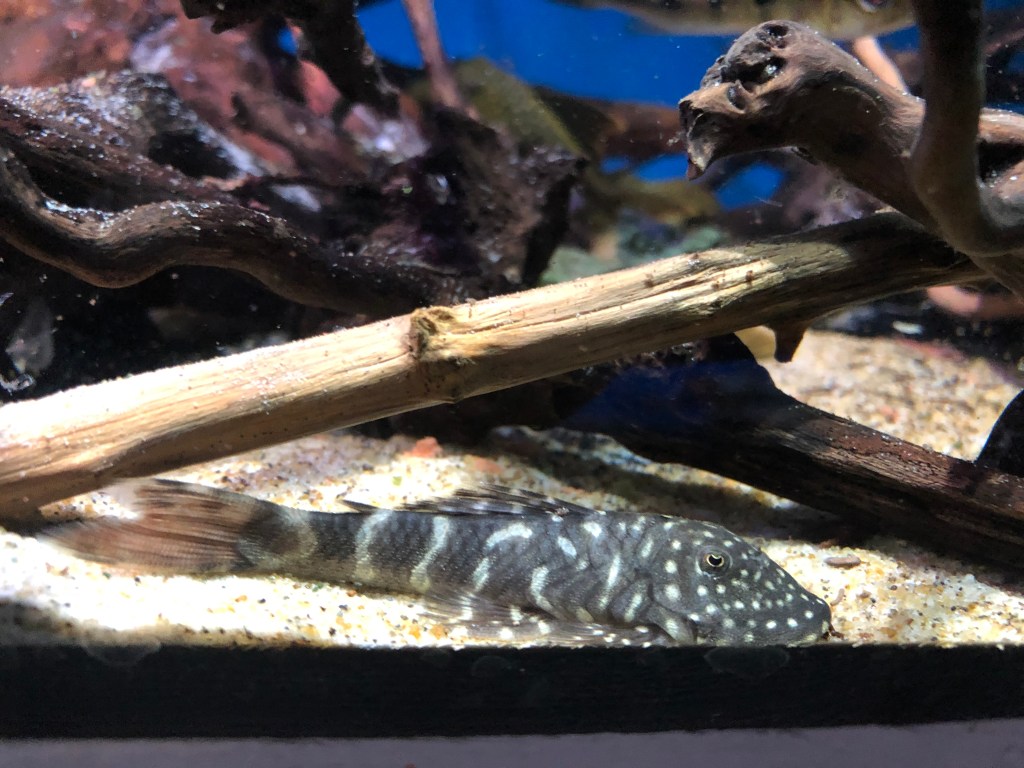
Figure 3: Scobinancistrus aureatus at Maidenhead Aquatics, Ascot.

Dietary niche

Both of these genera have very specialist jaws, they are particularly agile to move around or into a food item as displayed in figure 3. This mobility of the soft oral suction cup-like mouth is to more of an extreme then other carnivores; Pseudacanthicus who is much more general as a carnivore.

Figure 4: Leporacanthicus galaxias from: https://www.suedamerikafans.de/wels-datenbank/maulstudien/

Leporacanthicus goes a little more further with a particularly large, fleshy with many particularly large unculi.

Figure 5: The jaws of Leporacanthicus sp. as featured in: Lujan, N. K., Winemiller, K. O., & Armbruster, J. W. (2012). Trophic diversity in the evolution and community assembly of loricariid catfishes. BMC Evolutionary Biology12(1), 1-13.

If anything talks about diets so much, it is the skeletal anatomy and the jaws (Fig 5). These two genera have very robust jaws but other Loricariids particularly Hypostominae have this, what separates Scobinancistrus and Leporacanthicus is the area around the tooth cup. It is extremely elongate downwards, protruding but unlike other Loricariids it is also very limited for teeth (Fig 5).

The teeth are very few and sparse, which correlates with carnivory (Lujan et al., 2012). These teeth being strong, maybe due to colouration maybe mineralised and, more then anything long.

Their diet

These fish are adapted for reaching into something so……..molluscs……..

The interesting thing about diets is for quite a lot of species we don’t entirely know what they eat. Gut analysis is still the most common method of analysing animal diets but that only shows a snapshot of what is in their gut at that time but ignores seasonal variance or digestion. Hence Panaque being a particular curiosity, few organisms can digest wood were studied further but others it’s not looked further. Often with fishes only a small number of individuals are used which can limit it further. When thinking functionally half of diet is what they eat the rest is where they eat, like it’s fine to eat invertebrates, many animals do but to extract it from an object is another, you can’t compare their morphology.

The suggestion of these fishes feeding on molluscs is not old (Black & Armbruster 2022), other groups e.g. fishes are confirmed to feed on molluscs but morphologically nothing similar. Morphology doesn’t mean molluscs are not their diet as molluscs can be in difficult to reach areas.

The description of Scobinancistrus raonii was the most detailed of their diets inferring the use of invertebrates, algaes and porferia (I know an invertebrate; Chaves et al., 2023). Porferia is not a rare mention in the scientific literature as a Loricariid diet as featuring in the diet of Megalancistrus aculeatus but based on dietary analysis (Delariva & Agostinho, 2001). Sponges are a discussion that would need analysing further, Professor Donovan P. German, a scientist specialising in fishes diets discusses that previous fishes that specialise in sponges do so similar to Panaque, they break down the sponges in search of things they can digest. So I will illude suggestions they can digest sponges, either way not a viable diet in captivity as sponges take so long to grow.

Personal experience only hold up so much ground but I have experienced both take particular interest in molluscs and extracting them from their shells, unlike other taxa they cannot crush those shells. Their jaws and teeth even just suggest how they cannot crush, look at your own teeth, your crushing teeth are rounder and shorter.

We don’t really know if they do eat molluscs, the bodies of molluscs wont appear on gut analysis as easily processed. I don’t know yet enough about isotope analysis to test other methods. But if they show the interest it’s something to explore.

The other avenue is these long jaws and teeth are for extracting things from the cracks and crevices in wood.

Either way though we don’t have the captive diets to really cater carnivory that well yet so no harm in the snails but look at a diet that is based on invertebrates. They show an interest in molluscs so those without the trapdoor would be amazing.

In Loricariidae there is the new frontier in diets, places to explore and understand. We do not know yet so worth looking further. We are miles from the answer in what they really digest and eat.

References:

Black, C. R., & Armbruster, J. W. (2022). Chew on this: Oral jaw shape is not correlated with diet type in loricariid catfishes. Plos one17(11), e0277102.

Collins, R. A., Ribeiro, E. D., Machado, V. N., Hrbek, T., & Farias, I. P. (2015). A preliminary inventory of the catfishes of the lower Rio Nhamundá, Brazil (Ostariophysi, Siluriformes). Biodiversity Data Journal, (3).

Delariva, R. L., & Agostinho, A. A. (2001). Relationship between morphology and diets of six neotropical loricariids. Journal of Fish Biology58(3), 832-847.

Lujan, N. K., Armbruster, J. W., Lovejoy, N. R., & López-Fernández, H. (2015). Multilocus molecular phylogeny of the suckermouth armored catfishes (Siluriformes: Loricariidae) with a focus on subfamily Hypostominae. Molecular phylogenetics and evolution82, 269-288.

Lujan, N. K., Winemiller, K. O., & Armbruster, J. W. (2012). Trophic diversity in the evolution and community assembly of loricariid catfishes. BMC Evolutionary Biology12(1), 1-13.

Rios-Villamizar, E. A., Piedade, M. T. F., Da Costa, J. G., Adeney, J. M. and Junk, W. J. (2013). Chemistry of different Amazonian water types for river classification: A preliminary review. Water and Society 2013, 178.

Species descriptions:

Burgess, W. E. (1994). Scobinancistrus aureatus, a new species of Loricariid Catfish from the Rio Xingu (Loricariidae: Ancistrinae). TFH Magazine. 43(1):236–42.

Chaves, M. S., Oliveira, R. R., Gonçalves, A. P., Sousa, L. M., & Py-Daniel, L. H. R. (2023). A new species of armored catfish of the genus Scobinancistrus (Loricariidae: Hypostominae) from the Xingu River basin, Brazil. Neotropical Ichthyology21, e230038.

Isbrücker I. J. H. and Nijssen H. (1989). Diagnose dreier neuer Harnischwelsgattungen mit fünf neuen Arten aus Brasilien (Pisces, Siluriformes, Loricariidae). DATZ. 42(9):541–47

Isbrucker, I. J., Nijssen, H., & Nico, L. G. (1992). Leporacanthicus triactis, a new loricariid fish from upper Orinoco River tributaries in Venezuela and Colombia (Pisces, Siluriformes, Loricariidae). Die Aquarien-und Terrarienzeitschrift (DATZ)46(1), 30-34.

Hypancistrus – A Dietary Guide to the Fancy Pleco

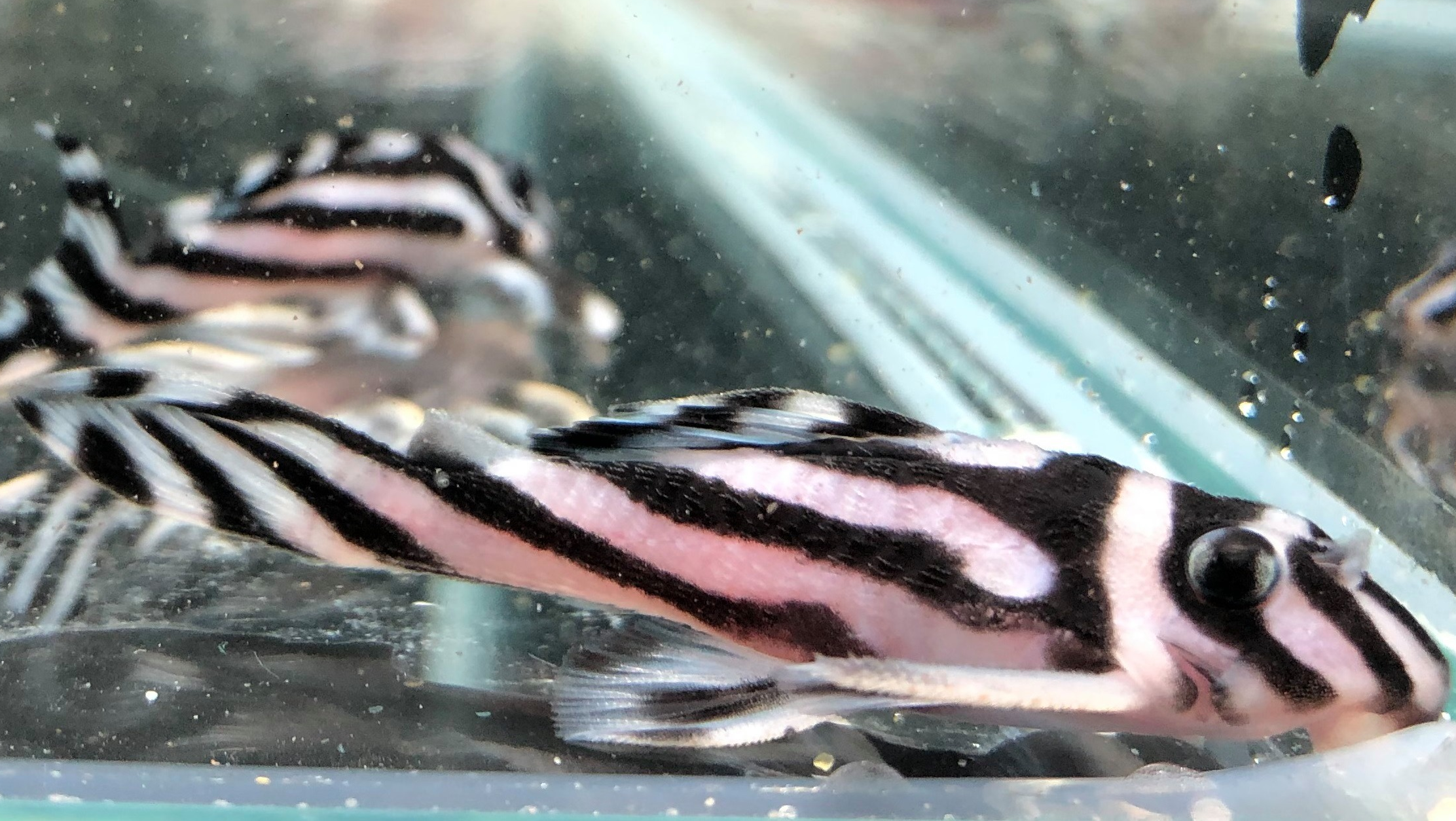
Figure 1: Hypancistrus zebra (Zebra pleco, L046)

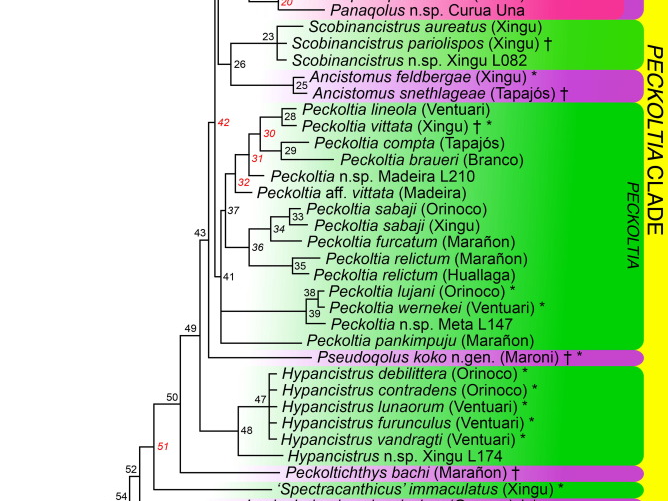
Hypancistrus is a relatively medium sized genera with a type species of Hypancistrus zebra (Fig 1). The genus is nested within the Peckoltia clade in the subfamily Hypostominae (Fig 2) and displays similar morphology to many members of this group.

Figure 2: Phylogeny of the Peckoltia clade: Lujan, N. K., Cramer, C. A., Covain, R., Fisch-Muller, S., & López-Fernández, H. (2017). Multilocus molecular phylogeny of the ornamental wood-eating catfishes (Siluriformes, Loricariidae, Panaqolus and Panaque) reveals undescribed diversity and parapatric clades. Molecular phylogenetics and evolution109, 321-336.

The body shape of Hypancistrus is generally quite characteristic of many typical Hypostominae plecos. They tend to have a shorter head and larger eyes compared to Panaqolus and Peckoltia. Markings are spotted or striped but vermiculations are present, these might reduce with age or change shape. Colouration similarly becomes less distinctive with age but the majority of members are white/yellow and grey/black.

Like the majority of the Peckoltia group Hypancistrus displays hypertrophied (large) odontodes (external teeth, not used for feeding) on the caudal peduncle, pectoral fin spines and at the gill opercula. These odontodes are sexually dimorphic being hypertrophied in the caudal peduncle and pectoral fin spines within males while females also absent. In mature males the odontodes that cover the body tend to become larger giving a more blurred appearance to the fish (Reis et al., 2022).

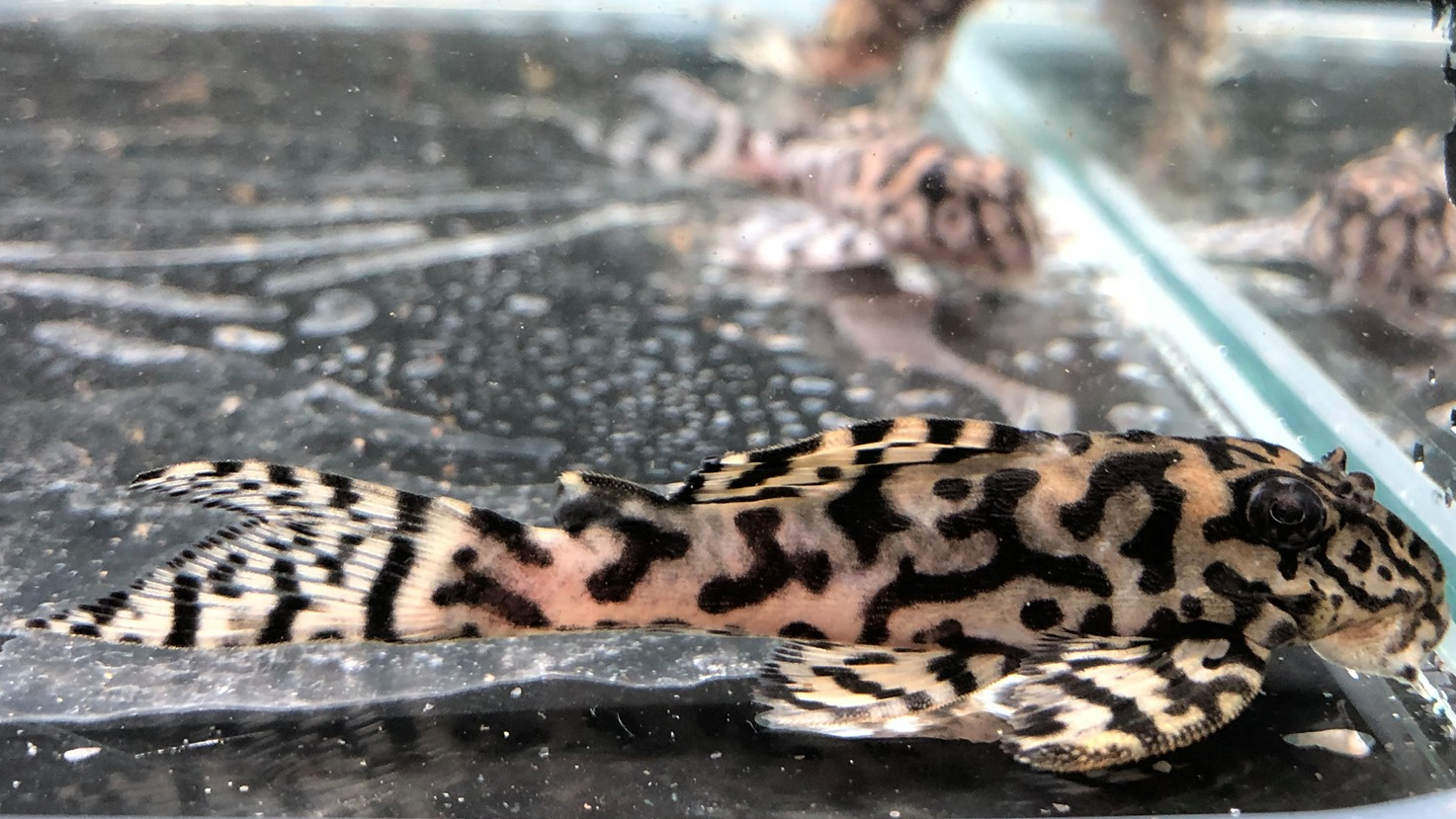
Figure 3: Hypancistrus sp. ‘L236’

Regardless of the popularity of the genus Hypancistrus, there are only 9 described species (Fricke et al., 2023) but almost four times that are undescribed with and without L numbers. This doesn’t define if these undescribed individuals are species as L066 and L333 has been suggested to be the same species (Cardoso et al., 2016).

Hypancistrus is generally located within areas of high velocity water residing between the cracks and crevices. Water temperatures are a minimum of 28c and this is why flow within captivity is important to keep oxygen levels high (de Sousa et al., 2021).

The Ecomorphology of Hypancistrus

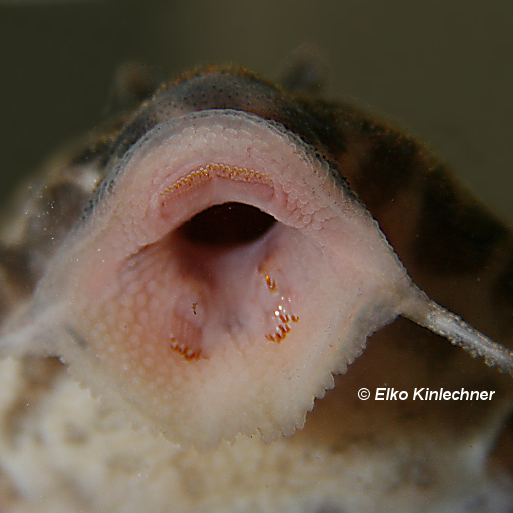
Figure 4: Hypancistrus sp. L333, the image is from the amazing website: https://www.suedamerikafans.de/en/wels-datenbank/maulstudien/?cookie-state-change=1701028628501 Great for anyone wanting to look at mouths of Loricariids and other information.

Ecomorphology are anatomical traits that are involved in functional behaviour such as feeding. This oral morphology (Fig 4) is very similar to particularly Peckoltia itself. There are a reasonable amount of teeth particularly on the maxaillae, upper jaw and less on the dentary, lower jaw. While there are a few it is a lot more then the closely related, carnivorous Scobinancistrus. The jaws of Hypancistrus are strong and robust, very similar again to Peckoltia but not quite the same as the other closely related genus, Panaqolus.

Dietary Ecology

Hypancistrus is often recorded as being a carnivore, I don’t entirely know where the assumption comes from but it must stem from this common idea that any of the colourful Loricariids are, I have seen this stated quite frequently. Additionally maybe the doctorial thesis of Dr. Jansen Zuanon where the species Hypancistrus zebra is suggested to feed on reasonable amounts of Bryozoa along with algaes (Zuanon, 1999). As many things do with time information is lost, some older information generalises the genus as omnivores and later others have suggested carnivores.

When reading the scientific literature including Zuanon (1999) there is limited references to the diet of Hypancistrus. There is gut analysis attached to the description of four species. While various algae and detritus made up the majority of the gut contents of these four species: numerous processed seeds were located in the gut of Hypancistrus inspector (Armbruster, 2002), bryophytes (mosses) within Hypancistrus lunaorum and; in Hypancistrus contradens in addition to mostly algae and detritus, some aquatic invertebrates were located (Armbruster et al., 2007). This infers that Hypancistrus is some what of a generalist but likely more on the herbivorous side.

So what should you feed Hypancistrus in captivity?

Don’t forget those algae’s, a diet with a range and high amounts of these algae’s will be beneficial. Always check ingredient lists, algae’s unlike many macrophyte plants are high in protein and various vitamins and minerals. As the fish are evolved to feed on these it’ll be much more easy for them to digest and less waste produced as a result. In addition a little bit of variation, the odd frozen food such as brine shrimp, tubifex etc. would not be bad but many diets that contain algaes also contain this. Mosses would be an interesting addition to trial, aquarium mosses can be quite expensive but perhaps terrestrial mosses from areas without pesticides?

Of all the things to trial seeds, as mentioned by Armbruster (2002), at least Hypancistrus inspector feeds on seeds. This is certainly worth exploring with many more Loricariids and a variety of seeds as bare in mind the number of plants that produce seeds is immense, fruits that contain seeds such as blueberries and pomegranate could be worth trying. They might not jump to them but it’s worth sitting back and watching, in discussion with other fishkeepers seeds have been worth the trial. As seeds are almost a storage body for many plants they will contain a lot of nutrition and could explain why Hypancistrus and maybe Peckoltia have such strong jaws. A selective advantage at a seasonal or occasional food item? Selective advantages towards awkward to reach food items are not rare in Loricariidae.

Conclusion

Hypancistrus might be popular for their colours, their patterning but ecologically they offer quite a lot that has yet to be explored. The focus on breeding them has maybe moved the husbandry of the genus away from a curiosity of just keeping them and understanding them.

References:

Armbruster, J. W. (2002). Hypancistrus inspector: a new species of suckermouth armored catfish (Loricariidae: Ancistrinae). Copeia2002(1), 86-92.

Armbruster, J. W., Lujan, N. K., & Taphorn, D. C. (2007). Four new Hypancistrus (Siluriformes: Loricariidae) from Amazonas, Venezuela. Copeia2007(1), 62-79.

Cardoso, A. L., Carvalho, H. L. S., Benathar, T. C. M., Serrao, S. M. G., Nagamachi, C. Y., Pieczarka, J. C., … & Noronha, R. C. R. (2016). Integrated cytogenetic and mitochondrial DNA analyses indicate that two different phenotypes of Hypancistrus (L066 and L333) belong to the same species. Zebrafish13(3), 209-216.

Fricke, R., Eschmeyer, W. N. & Van der Laan, R. (eds) 2023.  ESCHMEYER’S CATALOG OF FISHES: GENERA, SPECIES, REFERENCES. (http://researcharchive.calacademy.org/research/ichthyology/catalog/fishcatmain.asp)

Lujan, N. K., Cramer, C. A., Covain, R., Fisch-Muller, S., & López-Fernández, H. (2017). Multilocus molecular phylogeny of the ornamental wood-eating catfishes (Siluriformes, Loricariidae, Panaqolus and Panaque) reveals undescribed diversity and parapatric clades. Molecular phylogenetics and evolution109, 321-336.

Reis, R. G. A., Oliveira, R. S. D., da Silva Viana, I. K., Abe, H. A., Takata, R., de Sousa, L. M., & da Rocha, R. M. (2022). Evidence of secondary sexual dimorphism in King Tiger Plecos Hypancistrus sp, Loricariidae, of the Amazon River basin. Aquaculture Research53(10), 3718-3725.

de Sousa, L. M., Lucanus, O., Arroyo-Mora, J. P., & Kalacska, M. (2021). Conservation and trade of the endangered Hypancistrus zebra (Siluriformes, Loricariidae), one of the most trafficked Brazilian fish. Global Ecology and Conservation27, e01570.

Zuanon, J. A. S. (1999). História natural da ictiofauna de corredeiras do rio Xingu, na região de Altamira, Pará.

You are what you eat – Livefood edition.

So often we don’t really think about what we are feeding our fishes but when we do, do we consider what the food is being fed? This isn’t much of a consideration when it comes to prepared feeds because the companies and manufactures will cater for that. Regarding live foods then what they are fed is up to you. Nutrition doesn’t come out of thin air and unlike plants they cannot manufacture a lot of the sugars.

Here I think we can exclude anything that is not carnivorous as their food requires very different nutrition or more correct fertilising which is a whole other topic.

The term relevant here is known as gut loading and largely refers to the feeding of invertebrate prey to increase nutrition.

Why gut load prey?

As previously mentioned gut loading increases the nutritional value of the prey provided, when initially bought from the store the food item might be low in nutrition particularly calcium and many vitamins (Boykin et al., 2021). While calcium is taken up from the environment in fishes there is still a dietary requirement which varies depending on the species and the environmental calcium values (Baldisserotto et al., 2019) explained a little bit more in my article on mineral content and fish biology.

Considerations

Just feeding anything to the invertebrate feeders wont provide the nutrition required. Whatever going into the prey should be going into the fish so it needs to be a complete diet and there is no benefit from reduced quality. The easiest way to do this would be feeding a complete fish food whether it be dry or a gel diet, alternatively there are many products based on gut loading insects. The issue with exact nutrients required for using feeders depends on the prey item (Finke et al., 2003) and the fish you are feeding of which most will not have complete nutritional studies (Teles et al., 2022; Velasco-Santamaría & Corredor-Santamaría, 2011).

Channa aurantimaculata, the cobra snakehead.

Time after gut loading is also important likely due to that nutrition being used for metabolism and other physiological processes, for dubia roaches and snails after around 1 hour calories decreased but fat content did continue increase up to 12 hours. Mealworms on the other hand nutrition only increases till the 6 hour mark where that creased (Gorst et al., 2015).

What should I gut load?

This really depends on the food items you are using as stated before and what it is possible to feed them. Excluding earthworms fish food would be a logical choice for most, I would not actually say it’d be a bad idea to use generic fish foods to at least meet all of those basic nutritional requirements. Generally a great rule for vegetables in addition to these fish foods is anything but the onion/garlic family so unlike herbivorous rodents even mushrooms. For snails definitely supplement the calcium with cuttlefish shells.

Bran is popular for feeding many feeders particularly insects, it’s not entirely clear the nutritional value of bran as a diet and at least compared to carrots it does seem to have benefits that carrots don’t have and vice versa (Fasce et al., 2022). I wouldn’t be opposed to it’s use with other items included in the insects diet.

Now there are things I would definitely consider avoiding, iceburg lettuce due to low nutrient value and for providing moisture there are many other alternatives.

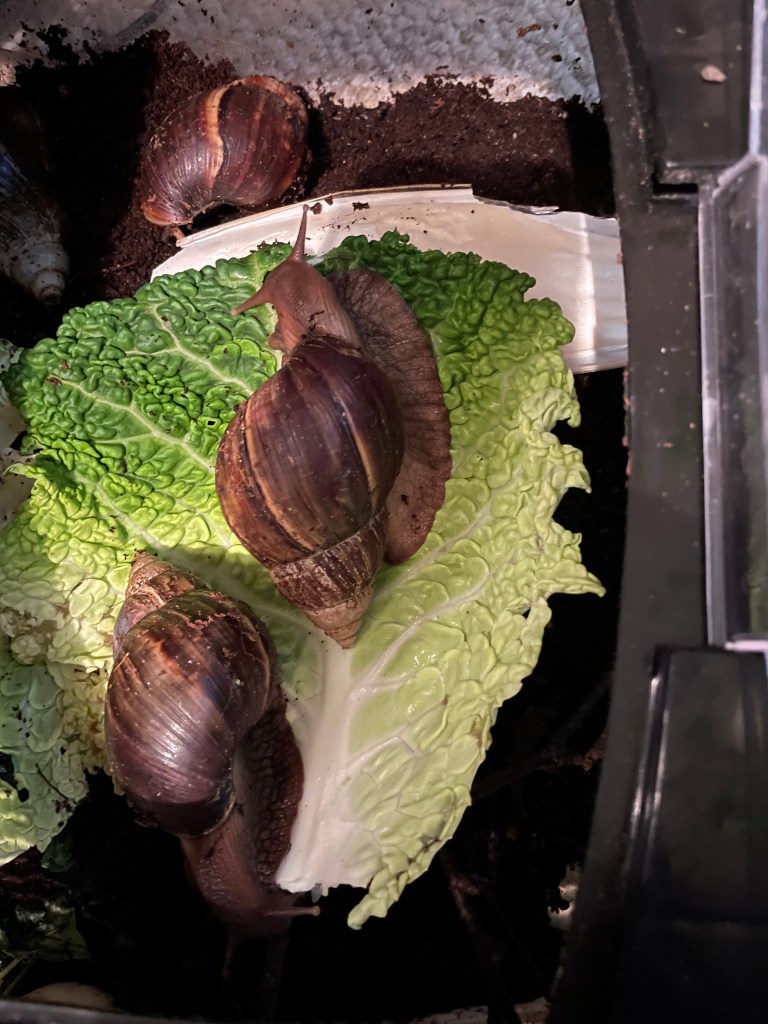
A. fulica, African land snails. One of the smaller but most common species under that common name.

For feeding snails there are many resources on how to feed them, many snail specialist diets even if maybe not needed around. I give my land snails, A. fulica a variety of vegetables along with frequent fish food that has been mixed in with warm water, not that I use them to feed fishes. Herbs can be really great to add to this mixture of fish food. The fish food is to provide protein as definitely these snails are detritivores, omnivores who can be fed pinkie mice, mealworms and I’ve fed mine dubia roaches obviously those who are not alive though!

This does seem a very understudied topic when it comes to fishes and maybe because when it comes to food that needs to be gut loaded it is largely in the realm of ornamental fishes. I personally think citizen science could easily provide some answers such as whether fish condition improves depending on what the feeder is fed, the issue with calcium might be harder to answer though.

The Ethics

This is the final maybe most important statement. Live feeding obviously comes with ethics. In the UK invertebrates are not included under the Animal Welfare Act 2006 and are therefore not protected by law in terms of their welfare, this is largely why I do not mention fishes here. Fishes as a vertebrate are included in the Animal Welfare Act 2006, section 4 clearly stating they are protected from unnecessary harm. There are no fishes in wide distribution or distribution at all in the UK which are obligatory piscivores requiring a live feeder. Live feeding using vertebrates carries a higher parasite and even damage risk to the fish. Many of these fishes are not piscivores or would feed on vertebrates in the wild.

That is the legislation, the personal ethics and sentience of invertebrates is a long debate. I personally believe all animals should be treated with respect so when feeding invertebrates they shouldn’t be exposed to any suffering where possible. Certain Crustaceans and Cephalopods are protected by law in the UK, particularly the octopus and decapods under the Animal Welfare (Sentience) Act, 2022. It doesn’t seem clear to what extent these animals are protected. This legislation was introduced to recognise the intelligence of such animals. So the live feeding of these should be avoided.

The use of unprotected invertebrates in live feeding is not always a necessity and that should be recognised. This method of feeding is a lot more challenging to meet a fishes nutritional needs so if possible I’d recommend against. Of course some fishes need help after acclimating from the wild or even import. Some species are of particular challenges due to their specialised feeding morphology and behaviour. I would argue if creative enough most fishes can be pushed onto frozen, gel or dry, if not should we question their place in the hobby like many Gymnotiformes and Mormyrids? Or even leave them with those who can cater for them.

References:

Baldisserotto, B., Urbinati, E. C., & Cyrino, J. E. P. (Eds.). (2019). Biology and physiology of freshwater neotropical fish. Academic Press.

Boykin, K., Bitter, A., & Mitchell, M. A. (2021). Using a Commercial Gut Loading Diet to Create a Positive Calcium to Phosphorus Ratio in Mealworms (Tenebrio molitor). Journal of Herpetological Medicine and Surgery31(4), 302-306.

Fasce, B., Ródenas, L., López, M. C., Moya, V. J., Pascual, J. J., & Cambra-López, M. (2022). Nutritive value of wheat bran diets supplemented with fresh carrots and wet brewers’ grains in yellow mealworm. Journal of Insect Science22(3), 7.

Finke, M. D. (2003). Gut loading to enhance the nutrient content of insects as food for reptiles: a mathematical approach. Zoo Biology: Published in affiliation with the American Zoo and Aquarium Association22(2), 147-162.

Gorst, V. M., Mitchell, K., & Whitehouse-Tedd, K. M. (2015). Effect of post-gut loading time on the macro-nutrient content of three feeder invertebrate species. Journal of Zoo and Aquarium Research3(3), 87-93.

Teles, A. O., Couto, A., Enes, P., & Peres, H. (2020). Dietary protein requirements of fish–a meta‐analysis. Reviews in Aquaculture12(3), 1445-1477.

Velasco-Santamaría, Y., & Corredor-Santamaría, W. (2011). Nutritional requirements of freshwater ornamental fish: a review. Revista MVZ Córdoba16(2), 2458-2469.

Feeding Loricariids – The Basics: The substrate dwellers.

When people think of plecos they think of the term ‘suckermouth catfish’, yet these are the total exception with little to no ability to attach to any surface.

Here I am referring to those Loricariids who spend their time largely on the substrate often with their ornate mouths with many long and short barbels also known as cirri (Rojas-Molina et al., 2019). Unlike most other Loricariids, plecos these fishes are not crevice spawners and in some species the ornate cirri are used by the males to hold the eggs (Corvain & Fisch-Muller, 2007). There is one exception here, I tend to classify Isorineloricaria and Aphanotorulus (previously known as Squaliforma) and largely known as the Thresher plecos, these are in the subfamily Hypostominae where the majority of well known Loricariids, plecos place. While the majority of this category are in the subfamily Loricariinae often known as whiptail catfish.

So this is not so much a nutritional, dietary category as much as to where they feed and to me that makes a massive difference. Scientifically there isn’t the greatest understanding of this group either but hopefully with future advances in the coming years we can. So obviously I will have to edit this one day.

Many of these species forage and locate food by processing the substrate a bit like Panaque process wood in search of their food. Using their jaws they filter food objects from that substrate. All of these species really need a sandy substrate, not just because many need to hide in it but also the enrichment of naturally removing food from it.

There are both algivores/detritivores and carnivores in this category. Ofcourse I definitely recommend reading my article on algivores and detritivores but their mode of feeding limits a lot.

What genera are in this category?

  • Aphanotorulus (Squaliforma): Generalist detritivore
  • Crossoloricaria
  • Hemiodontichthys acipenserinus: Maybe a carnivore?
  • Isorineloricaria: Likely generalist detritivore.
  • Loricaria
  • Planiloricaria cryptodon: Either carnivore or feeds on seeds.
  • Pseudohemiodon: Suggested to be periplakton and algaes but could also feed on seeds.
  • Reganella
  • Rineloricaria (To an extent): Not exactly purely the substrate but do interact a lot with it.

There isn’t that many and I think this niche in many habitats are often catered for by other groups of fishes.

Anything these fishes feed needs to sink but that’s usually a given for Loricariids and ideally not large food items. Some of these genera have few to any teeth and very small jaws so cannot break into large food items. I’m not even sure we entirely know the actual mode of feeding they use and for research they are not the cheapest to obtain. For Isorineloricaria and Aphanotorulus their jaws are large and strong so it doesn’t make the largest amount of difference.

There are multiple genera here with morphology/anatomy that is unexplained, split between granivores (Seeds) or potentially molluscivorous (Gastropods like snails and bivalves) we just don’t know. We do know from a previous article that hardness of food items can matter so I think either way providing both would be beneficial, seeds such as from non-citrus fruits or apples, such as blue berries. Pest snails, no harm in having them as suggested in my snail article they can be a benefit. These are great snails for such species as easy for them to break down with the pharyngeal jaws.

When it comes to carnivores their interaction with the substrate does hint to them feeding on those invertebrates such as annelids and insect larvae that spend a considerable amount of time there.

It’s so difficult as we are making a lot of assumptions as to what they are eating and here I will treat them as the same. There is likely a lot of overlap at least. So as per the previous article into algivores and detritivores I highly recommend a good basic diet to build off. This will provide the essential nutrition to work off.

Anyway suggested basis diets:

  • Repashy Soilent Green and Bottom scratcher: Large diversity of algaes and high amounts of these algaes in Soilent Green. Bottom Scratcher on the other hand is very high in invertebrate items. They are higher up the list of ingredients so make up a lot of these diets. Easy to access for the majority of the world with many distributors. A gel diet so can be mixed to different consistencies and cooked to a jerky. It sinks and is very easy to break apart even if large by many of these species. The issue is what to which species if their diet is unknown.
  • In The Bag, Tropical Fish UK, Pleco Pops! Algae Grazer or Crickie-Dough: Over 75% algaes which is a very high amount for the algae based diet. The Crickie-Dough is even better I’d argue then bottom scratcher as high in crustaceans which is what most of these fishes would eat in the wild. While Repashy Bottom scratcher does provide a mollusc it is not closely related to gastropods or bivalves. Also a gel diet, the gelling agent used is brilliant as holds for an extremely long time, over 24 hours which is longer then any other gel food or one you can make your own. Cocoa powder is one is the most interesting and brilliant ingredients!
  • New Life Spectrum, Algaemax: Not to be confused with others of the same name so check the ingredients. Does contain a lot of algal ingredients but I can’t comment further due to UK availability.
  • C.E Essentials, Naturekind: While aimed at discus, Symphysodon it does contain a lot more algaes then other diets.
  • Should you make your own? You can but and that is a big but narrowing down the gelling agent that can last a few hours. This is difficult and takes time. Making your own diet commands research into nutrition and I’m really just only a beginner I think in that. It’s a large initial financial input as the ingredients particularly algaes are not cheap. This might be the only solution for some people in many countries and it is a debate for me how to help there.

Now to additions or supplements:

Frozen foods: A diversity of them would be brilliant so they can really feed off the substrate. Avoiding mussels as high in thiaminase and deficient in thiamine.

Live foods: Avoid any that move around the water column but those that focus in the substrate would be brilliant and offer more natural enrichment particularly black worms and tubifex.

Nori: Once it’s no longer a sheet I’d be inclined to suggest this as it rests in the substrate eventually, maybe not the best.

Earthworms: For larger species these might be found at the reptile store under the name Dendrobaena but definitely not to be missed. Do not forget though as they can survive underwater for some time if left and forgotten.

This sounds like a very limited list but compared to traditional algivores and detritivores frozen foods alone offers a lot more!

References:

Covain, R., & Fisch-Muller, S. (2007). The genera of the Neotropical armored catfish subfamily Loricariinae (Siluriformes: Loricariidae): a practical key and synopsis. Zootaxa1462(1), 1-40.

Rojas-Molina, Y. A., Provenzano-Rizzi, F., & Ramírez-Gil, H. (2019). A new species of whiptail armored catfish, genus Pseudohemiodon (Siluriformes: Loricariidae) from the Orinoco River basin, Llanos region of Colombia and Venezuela. Neotropical Ichthyology17, e180160.

Feeding Loricariids – The Basics. Part 1: Algivores, Detritivores and the Wood ‘Eaters’.

This is a seriously large topic with 1,050 species according to Catalog of Fishes, so it’s not a simple answer. The majority of Loricariids are algivores and detritivores (Lujan et al., 2012). Even within detritivory and algivory there is partitioning (Lujan et al., 2011), this does mean they will not be feeding on the same thing. There is little research if to whether their diet changes with age but it seems there might be slight changes, certainly not towards any omnivorous/carnivorous diet as adults still had algae within their gut (Nonogaki et al., 2007), there is although evidence for seasonal shifts in diet (Mazzoni et al., 2010).

Baryancistrus xanthellus (Gold Nugget Pleco)

Here as I cannot really discuss all species and we are still in early days of understanding Loricariid diets I will present different categories with diets and suggestions to further supplement their diet.

Contents:

  1. Algivores/Detritivores
  2. What brands can I recommend as this basis to the diet, the foundations?
  3. What genera are included in this (off the top of my head)?
  4. Quick comment on wood ‘eaters’
  5. So lets discuss supplements and additions to further cater for these fishes diets.
  6. Gut Biota, what and why?
  7. References:

Algivores/Detritivores

It’s almost impossible to separate algivores and detritivores when it comes to Loricariids as there is so much overlap between the two categories but of course there is partitioning. It’s just we can’t really entirely cater for that partitioning. A lot of what is contained within detritus is this matrix of bacteria, protozoa, algaes and other microbes. In addition there are species who will feed more on algaes and some certain algaes like cyanobacteria e.g. Lasiancistrus caucanus (potentially L. mayoloi; Valencia & Zamudio, 2007), while others who might focus more on bacteria or fungi. We really don’t entirely know how much subdivision there is beyond the fact it exists. This is maybe the most fascinating dietary category as few other groups of fishes can do it like Loricariids can.

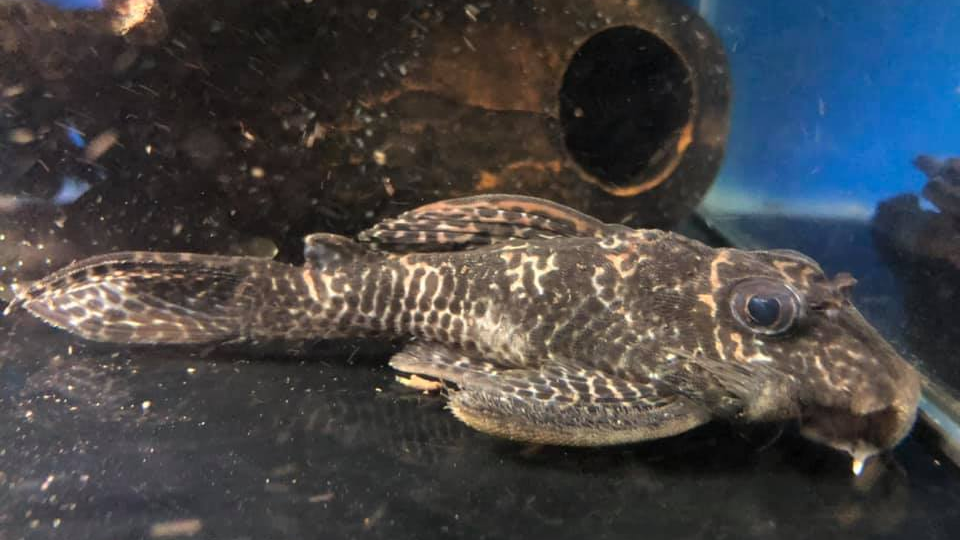
Chaetostoma sp. from Pier Aquatics, Wigan.

So, this category fills up the majority of Loricariids (Lujan et al., 2012) yet is maybe the most misunderstood or catered for. Bacteria, protozoa and other microbes are not really available in any commercial diets or even as ingredients which is very limiting leaving just algaes. We do know algaes are great in nutrition given just one species of algae replaced the nutritional requirements of a commercial diet which contained fish meal, cereals but only very few algaes in small volumes (Vucko et al., 2017).

The common misconception is that algaes are low in protein, yet they can be very high (Chen et al., 2022). This misconception comes from their similarity to plants but only green algaes are closely related to plants, while the term algae includes many other groups e.g. spirulina which is a cyanobacteria. Plants used in fish feeds might even lack many essential amino acids or contain anti-nutritional factors (Trevi et al., 2023). Algaes aren’t just high in protein but also very high in vitamins, minerals and essential fatty acids, to top the list of why algaes are great is their benefits on fish pigmentation (Alagawany et al., 2021; Trevi et al., 2023; Chen et al., 2022). So certainly an ingredient that shouldn’t be forgotten.

As we are talking fishes that feed on algaes as a large amount of their wild diets I can’t see how these simple ingredients are not useful. There is the issue of palatability and I have largely noticed they might struggle to recognise food not growing on a surface so in a wafer or pellet as algaes hence some taxa like those which are carnivores seem to do better then the very strict algivores.

So all we have to go off is a very small set of algaes but what should you look for in a main staple diet?

A main diet is what I see as the foundations of any fish food, this will contain all the main nutrition, vitamins and minerals. I understand additionally that different foods are limited around the world and cost also varies which makes it incredibly difficult for this dietary group.

Parancistrus aurantiacus (Xanto pleco)

What brands can I recommend as this basis to the diet, the foundations?

  • Repashy Soilent Green and Repashy Super Green: Large diversity of algaes and high amounts of these algaes, I believe 80% in Super Green. They are higher up the list of ingredients so make up a lot of these diets. Easy to access for the majority of the world with many distributors. A gel diet so can be mixed to different consistencies and cooked to a jerky.
  • In The Bag, Tropical Fish UK, Pleco Pops: Over 75% algaes which is a very high amount. Also a gel diet, the gelling agent used is brilliant as holds for an extremely long time, over 24 hours which is longer then any other gel food or one you can make your own.
  • New Life Spectrum, Algaemax: Not to be confused with others of the same name so check the ingredients. Does contain a lot of algal ingredients but I can’t comment further due to UK availability.
  • C.E Essentials, Naturekind: While aimed at discus, Symphysodon it does contain a lot more algaes then other diets.
  • Should you make your own? You can but and that is a big but narrowing down the gelling agent that can last a few hours. This is difficult and takes time. Making your own diet commands research into nutrition and I’m really just only a beginner I think in that. It’s a large initial financial input as the ingredients particularly algaes are not cheap. This might be the only solution for some people in many countries and it is a debate for me how to help there.

What genera are included in this (off the top of my head)?

  • Acanthicus (maybe, the rest of that group isn’t)
  • Acestridium
  • Ancistrus
  • Aphanotorulus
  • Baryancistrus
  • Chaetostoma
  • Cordylancistrus
  • Guyanancistrus
  • Hemiancistrus
  • Hypancistrus
  • Hypoptopoma
  • Hypostomus
  • Isorineloricaria
  • Lasiancistrus
  • Nannoptopoma
  • Otocinclus
  • Panaqolus
  • Panaque – Largely specialist for extracting microbes and fungi from wood.
  • Parancistrus
  • Parotocinclus
  • Peckoltia
  • Pogonopoma
  • Pseudancistrus
  • Pseudorinelepis
  • Pterygoplichthys
  • Rhinotocinclus
  • Rinelepis
  • Spectracanthicus – maybe excluding S. murinus
  • Sturisoma
  • Sturisomatichthys

Obviously I might forget a few or they aren’t even seen in the trade. There is also a lot we haven’t found on these fishes diets yet. I also haven’t included some that I put other niches for other reasons e.g. the substrate dwellers. I also can’t use common names as I’d end up making a list of hundreds for every common name there is.

Panaque nigrolineatus (watermelon pleco, one of the many Royal plecos)

Quick comment on wood ‘eaters’

These fishes have been proven as the article linked here cites to not digest wood or use it for digestion. Instead these genera Panaque, Panaqolus, the Hypostomus cochliodon group and Lasiancistrus heteracanthicus digest the microbes within wood in the wild but are just finding it in a different place. They do though consume and digest fungi. If wood within the aquarium had this diversity of microbes it’d decay very rapidly in captivity and it clearly doesn’t given a bit of wood can last years or over a decade.

So lets discuss supplements and additions to further cater for these fishes diets.

  • Vegetables: The most well known and there are always long lists of what they can be fed. They should never replace the algaes as nutritionally do not even compare as even suggested in Trevi et al. (2023). There is always a use in having something when a fish is skinny or newly imported and just feeding, I particularly find sweet potato and courgette great there but it shouldn’t be relied on. For larger species additionally as just padding out their diet and adding to. Given these fishes are rarely if ever feeding on plants in the wild then there is a lot of nutrition that is not easily accessible from plants.
  • Mushrooms: Now I separate these as the only fungi available to use aquarists, for those wood ‘eaters’; Panaque, Panaqolus, Hypostomus cochliodon group and Lasiancistrus heteracanthicus they can be of massive use given they feed on fungi in the wild. Potentially other algivores/detritivores might additionally feed on these but it is difficult to identify for many scientists if they do. I definitely recommend removing before 12 hours as it smells strong after being in an aquarium.
  • Additional algaes: Algae powders can be brought and can be mixed in with diets like Repashy soilent green or super green to bulk them up. Just bare in mind they might expire quicker then the Repashy and the amount of gelling agent might not be sufficient for it to hold well with other ingredients. I wouldn’t recommend adding much and any dried seaweeds would need to be blended.
  • Nori: All I can say is great if they will eat it but I think how easily it breaks down in the water column. So for some genera like Pterygoplichthys who are reasonably fast to feed it might actually work.
  • Seeds: These feature reasonably in Hypancistrus diets but given monocots and dicots covers most plants it could mean a lot (Armbruster et al., 2007). I think there is no harm in trying seeds such as sunflower seeds but also small low acidic fruits such as blueberries or blackberries. It could be that these fishes are actually consuming fruits. I have seen multiple examples where Loricariids do feed on these small fruits not just Hypancistrus but Panaqolus seems keen on these food items. I’d definitely not look to citrus fruits, large amounts of fruit and apple seeds are best avoided.
  • Growing rocks in the sun for algae: This can really work and is great for Otocinclus, it’s just being able to do so and the surface growing enough.
  • Botanicals: These could provide benefits but in large amounts or certain types add a lot of complexity to an aquarium. I find additionally the biofilms botanicals produce actually vary in how they appeal to different fishes. They definitely wont sustain anything other then maybe a few of the smallest fish.
  • Nettles: Potentially a great resource that needs to be explored more. Definitely dry than blanch for a few minutes in hot water for a few minutes to remove the sting.
  • General fish foods: These typical diets might not always be bad if bulking out a diet particularly during periods where a fish needs more food.

Gut Biota, what and why?

This is an emerging science regarding to biology but has barely touched the ornamental fish industry beyond probiotics should they work. There is a lot to unpack and I think there is a benefit in having other fishes and their waste providing gut biota. These gut biota might have been lost during importing or a period of stress and poor diet. As much as gut biota might change with introduction after stressful periods diet does also influence this.

The common bristlenose, Ancistrus sp. male.

Wood

I generally in my day job look at Loricariid diets in the literature and other then the previously mentioned genera have never seen wood in the guts of other species. It is not needed and even those species who consume wood as a byproduct do not use it for digestion (Lujan et al., 2011) so is not needed in a diet. Even more so cellulose and lignin were proven not to be digested or used in digestion and these are added into many diets, so these are more wasted space and added waste to any fishes diet.

At the end of the day these are massively misunderstood fishes as is their diet. There are many more Loricariids to understand here such as the carnivores and substrate feeders.

References:

Alagawany, M., Taha, A. E., Noreldin, A., El-Tarabily, K. A., & Abd El-Hack, M. E. (2021). Nutritional applications of species of Spirulina and Chlorella in farmed fish: A review. Aquaculture542, 736841.

Armbruster, J.W., Lujan, N.K. and Taphorn, D.C., 2007. Four new Hypancistrus (Siluriformes: Loricariidae) from Amazonas, Venezuela. Copeia, 2007(1), pp.62-79

Chen, F., Qian, J., He, Y., Leng, Y., & Zhou, W. (2022). Could Chlorella pyrenoidosa be exploited as an alternative nutrition source in aquaculture feed? A study on the nutritional values and anti-nutritional factors. Frontiers in Nutrition9, 1069760.

Lujan, N. K., German, D. P., & Winemiller, K. O. (2011). Do wood‐grazing fishes partition their niche?: morphological and isotopic evidence for trophic segregation in Neotropical Loricariidae. Functional Ecology25(6), 1327-1338.

Lujan, N. K., Winemiller, K. O., & Armbruster, J. W. (2012). Trophic diversity in the evolution and community assembly of loricariid catfishes. BMC Evolutionary Biology12(1), 1-13.

Mazzoni, R., Rezende, C. F., & Manna, L. R. (2010). Feeding ecology of Hypostomus punctatus Valenciennes, 1840 (Osteichthyes, Loricariidae) in a costal stream from Southeast Brazil. Brazilian Journal of Biology70, 569-574.

Nonogaki, H., Nelson, J. A., & Patterson, W. P. (2007). Dietary histories of herbivorous loricariid catfishes: Evidence from δ 13 C values of otoliths. Environmental Biology of Fishes78, 13-21.

Valencia, C. R., & Zamudio, H. (2007). Dieta y reproducción de Lasiancistrus caucanus (Pisces: Loricariidae) en la cuenca del río La Vieja, Alto Cauca, Colombia. Revista del Museo Argentino de Ciencias Naturales nueva serie9(2), 95-101.

Van der Laan, R. & Fricke, R. (2023).  ESCHMEYER’S CATALOG OF FISHES: FAMILY-GROUP NAMES. (http://www.calacademy.org/scientists/catalog-of-fishes-family-group-names/). Electronic version accessed 04 October 2023.

Vucko, M. J., Cole, A. J., Moorhead, J. A., Pit, J., & de Nys, R. (2017). The freshwater macroalga Oedogonium intermedium can meet the nutritional requirements of the herbivorous fish Ancistrus cirrhosus. Algal research27, 21-31.

Trevi, S., Uren Webster, T., Consuegra, S., & Garcia de Leaniz, C. (2023). Benefits of the microalgae Spirulina and Schizochytrium in fish nutrition: a meta-analysis. Scientific Reports13(1), 2208.

Overfeeding within the aquarium – A stomach only the size of their eyes?

You might have heard the statement before, a fishes stomach is only the size of their eye. As a statement it comes from so many sides of truths, half truths and misunderstanding of fish biology.

I would argue the controversial, the majority of fishes we feed too little.

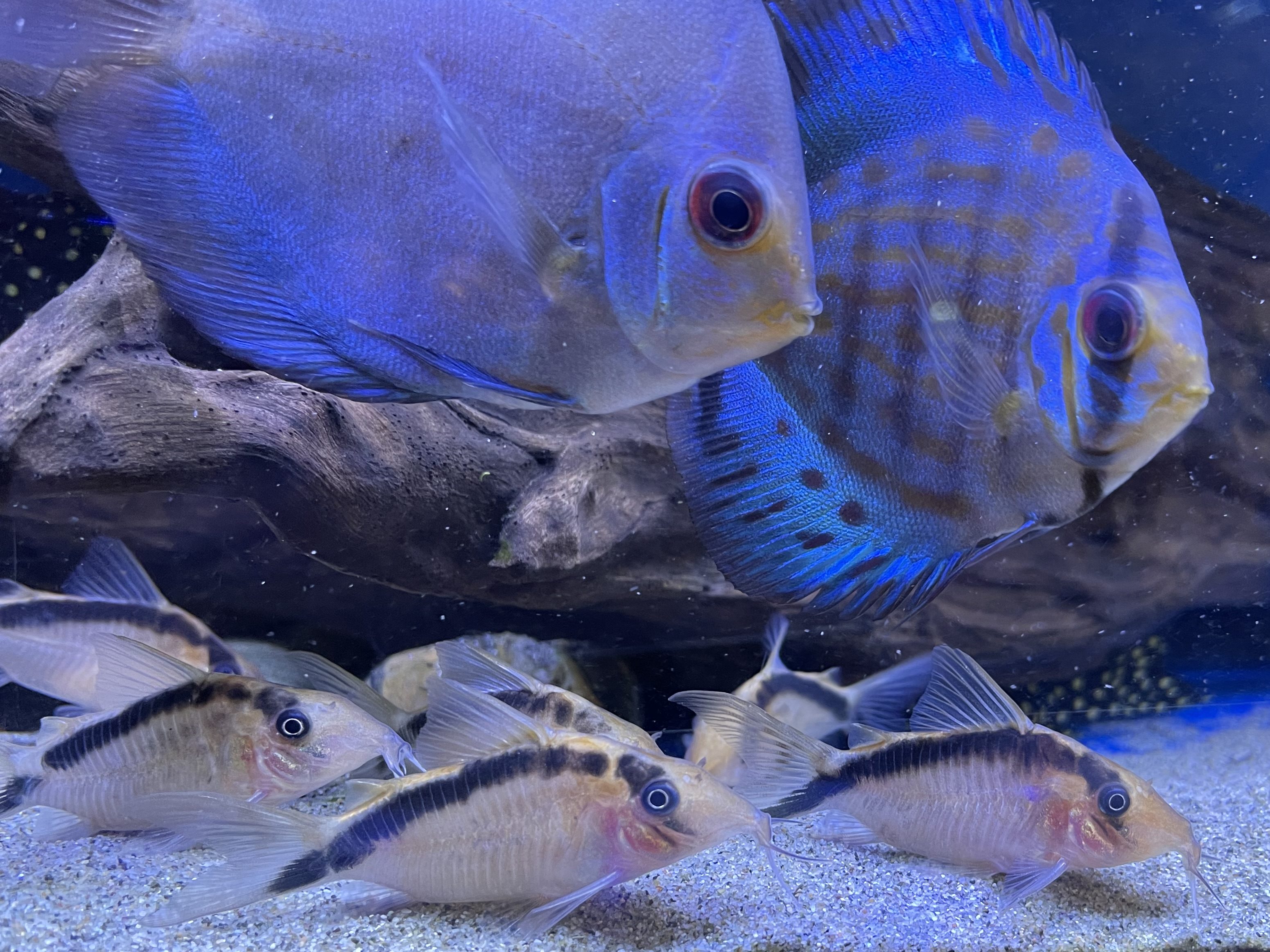
Corydoras bethanae (CW006) and Stendker discus, Symphysodon sp. taken at Maidenhead Aquatics, Wilton near Salisbury.

Largely the reason we don’t overfeed is to avoid overwhelming an aquarium with additional nutrients in the form of uneaten fish food that will decay, the results of that decay are handled by the microbes within the filter. The problem is where there is too much nutrients for those microbes in the filter to handle exposing the fish to it. Ammonia would be the main type of nutrients I am referring to but as we are talking about decay there is a lot more to it. This is the truth, it’s also quite logical but it means when we think about feeding we also need to think in terms of the microbes in the filter.

The stomach of fishes is hugely diverse (Pirhonen et al., 2019; Gosch et al., 2009) and in some species e.g. goldfish, Carassius auratus it is debated on it’s presence but largely the literature leads to the lack of it (McVay & Kaan, 1940; Kodzahinchex et al., 2018). The stomach size can be heavily linked to diet and the ability to specialise (Gosch et al., 2009). In the argument for eye size being related to stomach size, goldfish must lack eyes and imagine the eyes on the gulper catfish, Asterophysus batrachus if this was the case.

How much and how frequently should you feed your fish?

This has to be very species not just that but will have seasonal and allometric variations. There is no hard answer or even a formula, it’s an educated guess that can be narrowed down.

Baryancistrus demantoides, L200 also known as the green phantom or high finned green phantom pleco.

There is a multitude of studies suggesting that more frequent feedings to a point increase the growth of fishes (Fava et al., 2022; Cadorin et al., 2022). Anyone who has seen the two citations will see that farmed for the food industry feature heavily here. While research will always be focused on the highest investor, there is research into ornamental fishes. It’ll also be important to understand frequency and amount are different things, that one day frequency of food might be larger then what you’d feed 5 times a day or less then that.

In a study focusing on angelfish, Pterophyllum scalare by Ribeiro et al. (2012) 15 individual fish per a day were either 30, 60 or 90 grams per a kilogram of body weight, growth plateaued at 60g but 30g can sustain a fish without growth. In the Siamese fighting fish, Betta splendens weight only increased up to three times a day while in the guppy, Poecilia reticulata increased over four times a day, neither mentioned any amounts of food (Norazmi-Lokman et al., 2020). For the Rift Valley cichlid, Melanochromis aureatus growth rate was highest fed twice a day (Karadal et al., 2018).

Of course growth though is only one measure but to go into many others would complicate things and make the article maybe too long. Growth rate is a good all round measure as it can easily indicate how one factor, in our case amount/frequency of feeding influences many factors. Growth is heavily reliant on so many things from temperature, to specifical nutritional values, stress etc. but it does have it’s flaws as a measure.

Zebra pike cichlid, Crenicichla zebrina and I assume thresher plecos, Aphanotorulus emarginatus at Pier Aquatics, Wigan.

So what could effect feeding frequency:

  • Age, younger fishes need to devote a lot more to that growth period as they mature.
  • Breeding, individuals who are rearing young or maturing eggs need to devote more energy into those aspects of reproduction.
  • Temperature, the higher the temperature the more energy will be used and produced. This is more about the fishes optimal temperatures and range of tolerance.
  • Nutrition, a diet with a lower nutritional value will need to be fed a lot more frequently to reach the vital amount of nutrition required by the fish.

There is a misconception that animals generally have one meal every so often, particularly with fishes. This logically cannot be true, take grazing fishes such as discus (Symphysodon spp.), most Loricariids or even many ‘herbivorous’/algivorous/detritivores Rift Valley cichlids who devote large amounts of their time to obtaining food in smaller but frequent volumes (Crampton, 2008; Lujan et al., 2012; Hata et al., 2014). This is just by the nature of feeding on periplankton, algaes or detritus they are almost feeding like cows or rabbits. Although there is aspects of the Liems paradox where certain fishes can generalise and obtain a lot more nutrition in one sitting as seen in two species of grazing Tanganyikan cichlids (Golcher-Benavides & Wagner, 2019). Liems paradox likely has it’s limits though and doesn’t always play well in captivity where food items even if can be eaten can cause nutritional imbalances or issues with health.

Even within carnivores feeding frequency in the wild is going to vary. You can only watch Gymnotiformes, knifefishes and Mormyrids to see as many are micropredators but often at a larger size how often they are feeding. It reminds me of owls who need multiple food items in a day or shrews. They are constantly searching for food.

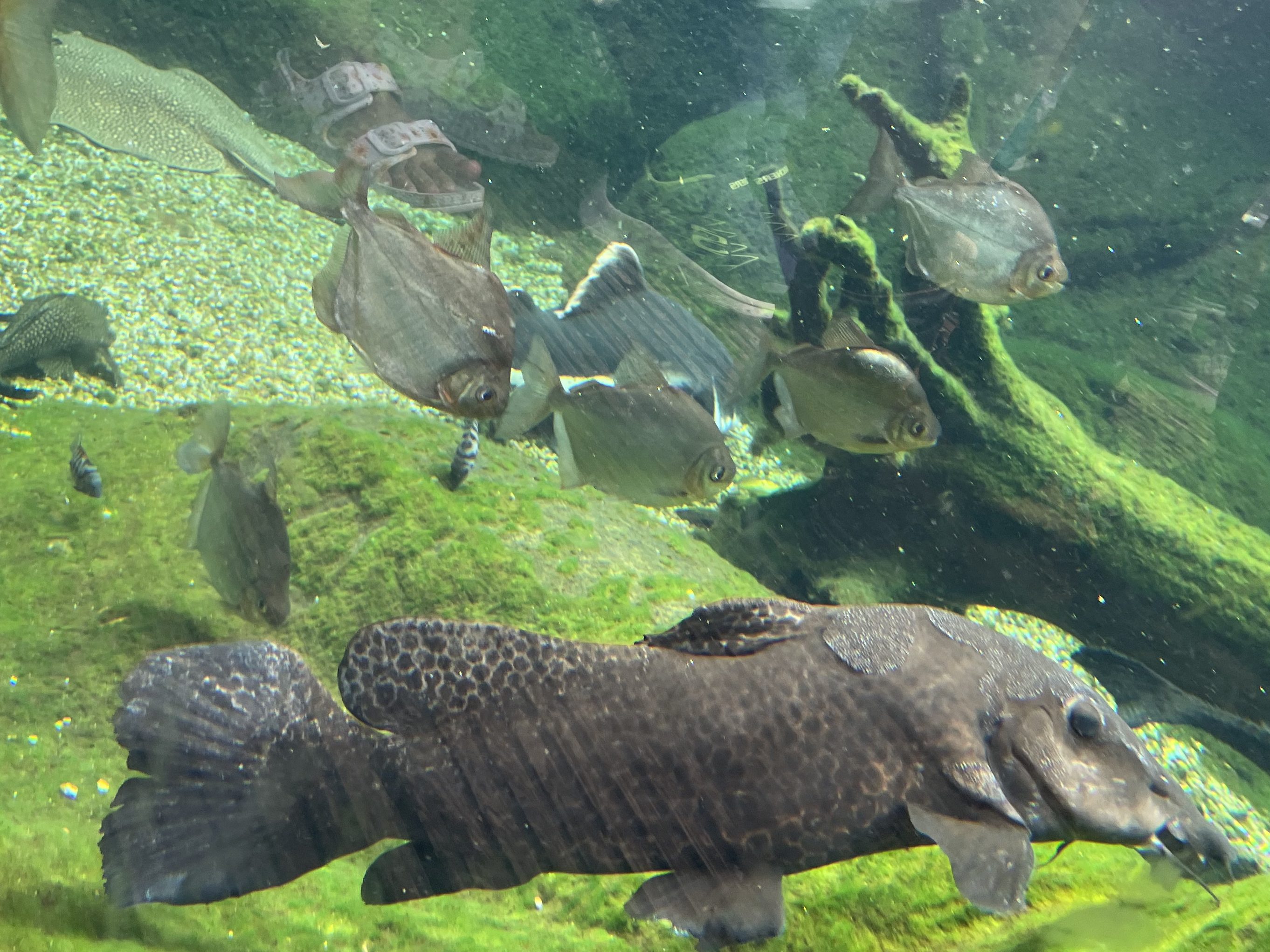
Giraffe catfish, Auchenoglanis occidentalis among many other fished, close up silver dollars, Metynnis sp. at Bristol Aquarium, Bristol.

Feeding frequency does add in questions of nutrition, higher nutritional items might not be need to be fed as frequently but another aspect of that is the rate of digestion which will be a limiting factor. So even if feeding a higher nutrition item, if a fish has a very rapid processing time how much of it will be digested? This is only amplified by food items that contain ingredients that cannot be digested or easy to digest. Such as the difficulty extracting phosphorus and calcium from fish as an ingredient by non-piscivores (Žák et al., 2022).

I personally feel that feeding frequency is behind the stunting of so many fishes particularly Loricariids. And catfishes maybe have lost out the most because there is the idea that they need feeding maybe once or twice a week but Loricariids, these cows of South America really do particularly at night show constant grazing. There was research into this grazing behaviour in Ancistrus sp. and given how much area they can clear and their ecological influence (Power, 1984), they are not once in a day feeders. Someone will argue but artificial captive diets are higher in nutrition, Ancistrus feed largely on algaes and a wide diversity (Lujan et al., 2012) but there is research on a few other species but very few diets (only 2) contain a noticeable amount of algaes. In a study 2017 study by Vucko et al. even just one species of algae replaced the entire commercial feed which if the ingredient list used by most brands. Not just are we not feeding Loricariids enough, we aren’t often feeding them what would be more then enough. Now why is there a claim that these fishes have a slow growth rate in captivity. I would definitely say Royal plecos, gold nugget plecos etc. do not have a slow wild growth rate.

The other aspect of these small feeding amounts is only feeding enough as x fish can eat in x amount of time usually a few minutes. Just watching how some fishes feed proves this wrong. There are many fishes I have kept and worked with who might take hours to reach their food and this will definitely cause harm with. Many are nocturnal or just don’t compete with other fishes.

How to avoid overfeeding?

I’m not sure what to really call overfeeding as there is no overfeeding unless resulting in obesity of the fish. But as it is more about overloading the bacteria with more fish waste or decaying material then they can handle, any increases in feeding should be handle. And if nitrates are peaking then more frequent and/or larger water changes. Sudden changes in feeding is more where issues arise and where water changes aren’t keeping up with the amount of food. Another thing to consider is the amount of waste produced and if the mechanical filtration can keep up or siphoning. I have not though mentioned how different food items and ingredients can heavily influence the amount of waste a fish is eating due to how much might not be digested, another story for another day.

How often you feed and the amount depends on the fish and understanding it’s biology and ecology. So again research is more then key here.

References:

Cadorin, D. I., da Silva, M. F., Masagounder, K., & Fracalossi, D. M. (2022). Interaction of feeding frequency and feeding rate on growth, nutrient utilization, and plasma metabolites of juvenile genetically improved farmed Nile tilapia, Oreochromis niloticus. Journal of the World Aquaculture Society53(2), 500-515.

Crampton, W. G. (2008). Ecology and life history of an Amazon floodplain cichlid: the discus fish Symphysodon (Perciformes: Cichlidae). Neotropical Ichthyology6, 599-612.

Fava, A. F., de Souza Bezerra, G., Neu, D. H., Bittencourt, F., Signor, A., Carvalho, K. V., … & Boscolo, W. R. (2022). Effects of Feeding Frequency for Nile Tilapia Fingerlings (Oreochromis niloticus). Aquaculture Nutrition2022.

Golcher-Benavides, J., & Wagner, C. E. (2019). Playing out Liem’s paradox: Opportunistic piscivory across Lake Tanganyikan cichlids. The American Naturalist194(2), 260-267.

Gosch, N. J., Pope, K. L., & Michaletz, P. H. (2009). Stomach capacities of six freshwater fishes. Journal of Freshwater Ecology24(4), 645-649.

Hata, H., Tanabe, A. S., Yamamoto, S., Toju, H., Kohda, M., & Hori, M. (2014). Diet disparity among sympatric herbivorous cichlids in the same ecomorphs in Lake Tanganyika: amplicon pyrosequences on algal farms and stomach contents. Bmc Biology12, 1-14.

Karadal, O., Güroy, D., & Türkmen, G. (2018). Effects of feed type and feeding frequency on growth performance, reproductive efficiency and skin coloration of auratus cichlids (Melanochromis auratus). Aquaculture Studies18(2), 135-144.

Kodzhahinchev, V., Biancolin, A., & Bucking, C. (2018). Quantification of Mg2+, Ca2+ and H+ transport by the gastrointestinal tract of the goldfish, Carassius auratus, using the Scanning Ion-selective Electrode Technique (SIET). Plos one13(12), e0207782.

Lujan, N. K., Winemiller, K. O., & Armbruster, J. W. (2012). Trophic diversity in the evolution and community assembly of loricariid catfishes. BMC Evolutionary Biology12(1), 1-13.

McVay, J. A., & Kaan, H. W. (1940). The digestive tract of Carassius auratus. The Biological Bulletin78(1), 53-67.

Norazmi-Lokman, N. H., Baderi, A. A., Zabidi, Z. M., & Diana, A. W. (2020). Effects of different feeding frequency on Siamese fighting fish (Betta splenden) and Guppy (Poecilia reticulata) Juveniles: Data on growth performance and survival rate. Data in brief32, 106046.

Pirhonen, J., Muuri, L., Kalliokoski, S. M., Puranen, M. M., & Marjomäki, T. J. (2019). Seasonal and ontogenetic variability in stomach size of Eurasian perch (Perca fluviatilis L.). Aquaculture International27, 1125-1135.

Power, M. E. (1984). Habitat quality and the distribution of algae-grazing catfish in a Panamanian stream. The Journal of Animal Ecology, 357-374.

Ribeiro, F. D. A. S., Vasquez, L. A., Fernandes, J. B. K., & Sakomura, N. K. (2012). Feeding level and frequency for freshwater angelfish. Revista Brasileira de Zootecnia41, 1550-1554.

Vucko, M. J., Cole, A. J., Moorhead, J. A., Pit, J., & de Nys, R. (2017). The freshwater macroalga Oedogonium intermedium can meet the nutritional requirements of the herbivorous fish Ancistrus cirrhosus. Algal research27, 21-31.

Žák, J., Roy, K., Dyková, I., Mráz, J., & Reichard, M. (2022). Starter feed for carnivorous species as a practical replacement of bloodworms for a vertebrate model organism in ageing, the turquoise killifish Nothobranchius furzeri. Journal of Fish Biology100(4), 894-908.

Food hardness, does it matter?

Over generations as humans have eaten softer and softer foods it has resulted in the recession of the lower jaw (von Cramon-Taubadel, 2011). This was a discovery that really shocked people but I’m not really here to talk to you about humans. We are here for the fishes and in fishkeeping we aren’t so interested in change over such long time periods. The question is here, how does the hardness of the food we feed effect our fishes?

There is no doubt that a lot of the commercial diets are particularly soft whether it be pellets, wafers or flakes, this is only increased as foods become saturated with water. The hardness of foods must also be taken in respective to the species of the fish. Mode of eating would likely hold an influence to the hardness of food particularly when it comes to species that eat snails, there is a difference between whether the fish is extracting snails or crushing them. The hardness of the food a species might experience in the wild would definitely depend on what it is feeding on not just as the diet but also the surfaces it might be extracting food from e.g. sponges or wood.

Similar to humans fishes do show change in their jaw shape and morphology when fed a softer diet. In black carp, Mylopharyngodon piceus developed reduced pharyngeal jaws and pharyngeal arches which are involved in breaking down of food (Hung et al., 2015). Pharyngeal jaws are found at the back of the mouth of many fishes as a secondary pair of jaws involved in breaking down food whereas oral jaws that are visible externally are generally involved in prey/food item capture. Pharyngeal jaws might have teeth on them aiding in the breaking down of food, these jaws can be as diverse in a fish group as oral jaws. M. piceus in the wild frequently consume reasonable amounts of snails and mussels, interestingly when they do not have anything in their stomach they contain a lot of parasites previously carried by snails (Poulton et al., 2019).

Other factors are important though, food item hardness doesn’t always mean it is more difficult to break apart, maybe they require a bit more force. It’s always one thing to create an amazing diet but more importantly is will the fish eat it? Food item hardness potentially does effect how much food is eaten but the difficulty in being able to break apart the food is correlated with intake (Aas et al., 2020), perhaps it’s because the fish spend more time breaking it down?

There are other physiological effects of food hardness and durability, as it is broken down more easily in the water this can effect how quickly the fishes stomach can empty and reducing feed intake, Aas et al. (2020) suggested that the harder food takes longer to pass through the gut. A rather concerning aspect of this is the accumulation of fats in the stomach of salmon resulting in osmoregulatory stress from those softer diets that take up more water (Baeverfjord et al., 2006).

Of course it is important to mention there is a lot more to this, some fishes feed on naturally softer diets like a lot of algaes. Pufferfishes have a beak that is constantly growing and requires hard food items to keep that beak from becoming overgrown. The issue with puffer fishes is providing that range of nutrition without having an insane amount of different frozen foods, dry and gel diets generally contain a lot more of that range of nutrition.

An important part of hard against soft diets is water stability as previously mentioned before, as expected gel diets have a very high water stability (Lal et al., 2023). While it does seem counterintuitive there are ways of increasing the hardness of gel diets whether it be including harder items that require more processing or for the case of some fishes the diet can be added to the inside of a snail shell, a crab etc. On solid food items like a crab you could even smear the gel over the food item.

I feel this article has deterred from the original topic and largely this is because as a topic there isn’t much research into it. It does make sense for morphology to change as captive diet changes as well. So maybe it is more of something to think about for the future.

References:

Aas, T. S., Sixten, H. J., Hillestad, M., Ytrestøyl, T., Sveier, H., & Åsgård, T. (2020). Feed intake, nutrient digestibility and nutrient retention in Atlantic salmon (Salmo salar L.) fed diets with different physical pellet quality. Journal of Fisheries8(2), 768-776.

Baeverfjord, G., Refstie, S., Krogedal, P., & Åsgård, T. (2006). Low feed pellet water stability and fluctuating water salinity cause separation and accumulation of dietary oil in the stomach of rainbow trout (Oncorhynchus mykiss). Aquaculture261(4), 1335-1345.

von Cramon-Taubadel, N. (2011). Global human mandibular variation reflects differences in agricultural and hunter-gatherer subsistence strategies. Proceedings of the National Academy of Sciences108(49), 19546-19551.

Hung, N. M., Ryan, T. M., Stauffer Jr, J. R., & Madsen, H. (2015). Does hardness of food affect the development of pharyngeal teeth of the black carp, Mylopharyngodon piceus (Pisces: Cyprinidae)?. Biological Control80, 156-159.

Lal, J., Biswas, P., Singh, S. K., Debbarma, R., Mehta, N. K., Deb, S., … & Patel, A. B. (2023). Moving towards Gel for Fish Feeding: Focus on Functional Properties and Its Acceptance. Gels9(4), 305.

Poulton, B. C., Kroboth, P. T., George, A. E., Chapman, D. C., Bailey, J., McMurray, S. E., & Faiman, J. S. (2019). First examination of diet items consumed by wild-caught black carp (Mylopharyngodon piceus) in the US. The American Midland Naturalist182(1), 89-108.

Samuelsen, T. A., Hillestad, M., Jacobsen, H. J., Hjertnes, T. J., & Sixten, H. J. (2021). Physical feed quality and starch content causes a biological response in Atlantic salmon (Salmo salar L). Aquaculture Reports21, 100791.

The Natural Diet of Discus, Symphysodon spp.

This touches on a very controversial topic, what should you feed your discus fish? Strangely this fish has been described as a carnivore, an invertivore or an insectivore sometimes these myths are impossible to track down the origins. As a result traditionally for many years the answer has been beefheart, there is a lot to unpack about beefheart but equally as much about dry diets. No doubt that beefheart does result in weight gain (Reis et al., 2022; Wen et al., 2018) but it would not be fair entirely to compare it to dry diets given the diversity of dry diets out there. But this is half the story, these fishes are not carnivores in the wild.

Interestingly wild fish show a higher muscle protein content and crude fat was lower then domestic fishes (Wang et al., 2016) although I cannot identify the diet of those domestic fishes. So there is definitely a difference between these fishes, it could also be due to activity levels between the wild and domestic fishes.

There is only one paper specifically covering what these fishes eat in the wild, Crampton (2008). In this study the diet of Symphysodon “haraldi” was identified using gut analysis, as this species name is no longer valid (Amado et al., 2011) and the locality of these fishes being from the Rio Tefe these are probably Symphysodon tarzoo, the green discus identified by spots on the anal fin. This matters because there are other species of discus, Symphysodon aequifasciatus (Blue discus) and S. discus (Heckels) along with one undescribed species known as the blue discus and the undescribed Rio Xingu discus (Amado et al., 2011). Domestics result from a hybridisation of a variety of these species.

Figure 1: The diet of Symphysodon tarzoo (haraldi) in Crampton, W. G. (2008). Ecology and life history of an Amazon floodplain cichlid: the discus fish Symphysodon (Perciformes: Cichlidae). Neotropical Ichthyology6, 599-612. FOD: Fine Organic Detritus, COD: Course Organic detritus. Periplankton is referred to as algae.

One can clearly see the seasonal variation in diets with a slightly higher contribution from invertebrates but still minimal. What is most clear though is the amount of detritus and periplankton these fishes are feeding on (Fig 1).

It is not just scientific research that has reported this, Bleher’s (2009) article on discus care also suggests this diet of mostly detritus. Detritus is a difficult term as a lot of it cannot be identified without a microscope, usually it seems in many fishes any loose or soft detritus generally is a microbial matrix, from my observations of research into Loricariids.

If we look at discus we can really think more about their diet.

Figure 2: Symphysodon tarzoo from the Rio Nanay, Peru.

These fishes are not the best built for prey capture beyond body shape lets focus on the anatomy that is most important for feeding. The jaws, and I don’t just mean upper and lower jaws. First looking at the mouth, they have a small mouth that cannot extend far, this means they are extremely limited on the size of item they can eat, this is known as gape limitation as many fishes including discus cannot chew with the oral jaws. They have strong lips great at removing food items from surfaces much like many other fishes who have a similar niche (Cohen et al., 2023). These are all factors connected with that first set of jaws, the oral jaws that really have a limited ability to expand outwards.

There is a second set of jaws, the pharyngeal jaws which are not immediately obvious as at the back of the mouth. Unlike the oral jaws that are about prey/food capture these pharyngeal jaws are about food processing. In discus these are thinner and more elongate (Roberts-Hugghis et al., 2023), not great at processing particularly solid food like large amount of invertebrates, also lacking the stronger villiforme or molariform teeth. Very similar to other detritivores or fishes feeding largely on algaes and detritus (Burress et al., 2020).

So, not just from their gut analysis but their morphology, Symphysodon are best classified along the lines of algivores and detritivores. You could say omnivores but if the mere addition no matter how small of any animal to any species diet makes them an omnivore then all organisms are omnivores.

From knowing this how should we see what we are feeding our fishes? Should we look to the inclusion of more algaes? And what algaes? What is the current long term effects of captive diets on discus?

There are brands such as Nature Kind by CE Fish Essentials who have started to look at wild diets and the inclusion of replicating that into their captive diet. https://cefishessentials.com/product/naturekind-fish-food-100g/ is the link for anyone who is curious.

Beefheart shouldn’t be the scapegoat for captive diets. Most commercial feeds as well differ massively from wild fish diets and there is a lot of questions to be asked about their use. Beefheart has proven itself as an effective captive diet though and many fishes live full lives on it.

So the story here is, read both what the fish eat in the wild and the ingredients of the food you are feeding.

References:

Amado, M. V., Farias, I. P., & Hrbek, T. (2011). A molecular perspective on systematics, taxonomy and classification Amazonian discus fishes of the genus Symphysodon. International Journal of Evolutionary Biology2011.

Bleher, H. (2009). Definitive Guide to Discus: Part 2. Practical Fishkeeping. https://www.practicalfishkeeping.co.uk/features/definitive-guide-to-discus-part-two/

Burress, E. D., Martinez, C. M., & Wainwright, P. C. (2020). Decoupled jaws promote trophic diversity in cichlid fishes. Evolution74(5), 950-961.

Cohen, K. E., Lucanus, O., Summers, A. P., & Kolmann, M. A. (2023). Lip service: Histological phenotypes correlate with diet and feeding ecology in herbivorous pacus. The Anatomical Record306(2), 326-342.

Crampton, W. G. (2008). Ecology and life history of an Amazon floodplain cichlid: the discus fish Symphysodon (Perciformes: Cichlidae). Neotropical Ichthyology6, 599-612.

Reis, G. A., Siqueira, M. S., & Momo, H. (2022). Evaluation of commercial and experimental grower diets for use in intensive culture of Symphysodon aequifasciatus. Pan-American Journal of Aquatic Sciences17(3), 190-200.

Roberts-Hugghis, A. S., Burress, E. D., Lam, B., & Wainwright, P. C. (2023). The cichlid pharyngeal jaw novelty enhances evolutionary integration in the feeding apparatus. Evolution, qpad109.

Wang, L., Chen, Z., Leng, X., Gao, J., Sun, P., Qu, H., … & Song, X. (2016). Comparison of muscle composition of wild and cultured discus fishes Symphysodon spp. Journal of Shanghai Ocean University25(5), 719-725.

Wen, B., Chen, Z., Qu, H., & Gao, J. (2018). Growth and fatty acid composition of discus fish Symphysodon haraldi given varying feed ratios of beef heart, duck heart, and shrimp meat. Aquaculture and fisheries3(2), 84-89.