
This is the big question, what do you base a fish diet on?
Fish meal is the most common but has come with many questions based on sustainability, but regarding sustainability this can be a little more complex regarding shifting impact (Ghamkar & Hicks, 2020). Therefore there is the question of what gives the most nutrition?

Žák et al. (2023) has been one of the most enlightening papers published in the last few years. This research and other previous research has inferred that for invertivores and insectivores but it is eye opening to apply elsewhere. Digestibility of fish meals does vary depending on the taxa and likely what they feed on in the wild, Cyprinids largely feeding on invertebrates and lacking a stomach struggle to process fishes whereas Tilapia, a cichlid that likely is very generalist even feeding on fishes processes fish much better (Hua & Bureau, 2010). The other aspect is that fish meal can be difficult to extract phosphorus and calcium for fishes that do not naturally feed on fishes (Žák et al. 2023). We can apply this knowledge further?
So maybe fishes isn’t ideal, most of the fishes we keep don’t eat fishes. But what about invertebrates? There is no denying most of the scientific literature focuses on fishes that likely feed on krill being marine fishes or very much generalist omnivores. So, I’m not sure I can find anything regarding that, any environmental impact would be similar to fish meals, talking from personal experience krill and marine mysis does come with a lot of bycatch.
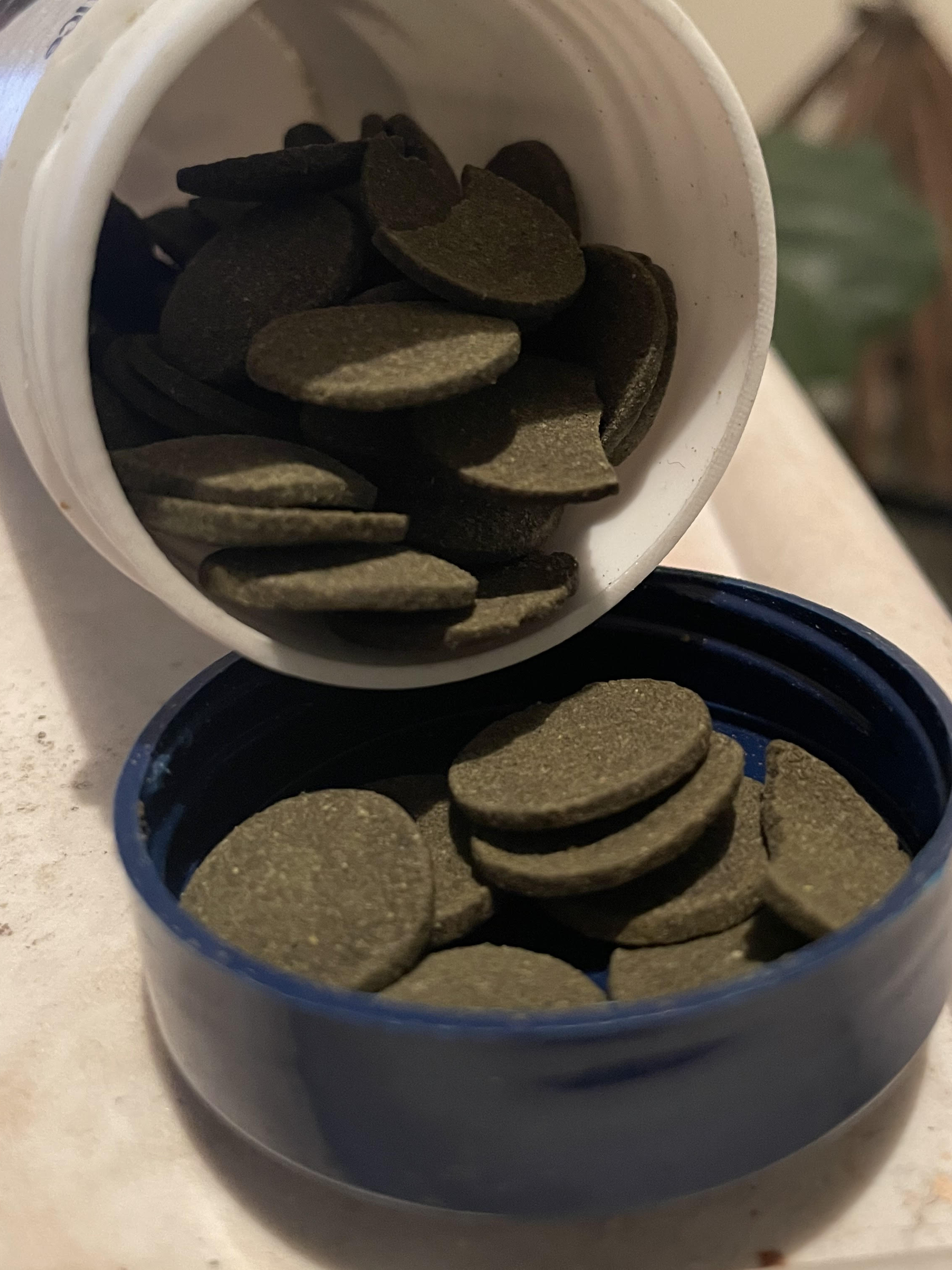
Although insect meals are definitely interesting, there are many more nutritional aspects to consider. While much of the focus from the customer is into protein, vitamins and minerals are vital for fishes. Vitamin b12 is a popular vitamin to mention due to origins, insects contain little to higher amounts but also depends on what they have been fed (Schmidt et al., 2019) although there is a lot of deceptively high amounts in all insects from pseudovitamin b12 such as contained in algaes. Chitin might cause an issue in some fishes, in my experience largely it’s whether an invertebrate is processed or not rather then causing issues with digestion.
There is no strict one is better then the other like many things as it has multiple aspects to the topic (Terova et al., 2021). Given the literature mentioned think about what the fishes eat in the wild and are they piscivores, feeding on fishes naturally.
It is well know how diet influences gut biota, not just are species adapted through evolution regarding enzymes to a specific diet but also symbiotically with bacteria allowing some items to be digested better then others. It’s not just that simple either but like with humans the introduction or even encouragement of certain biota in the gut can effect health in general (Ringø et al., 2016). With humans we are now discussing the gut brain axis but it is becoming a topic within fishes as well where the presence, lack or amount of certain biota influences how the brain functions in fishes and the prevalence of disease (Butt & Volkoff, 2019).
The Question of Soya
The use of crops like soya has been mentioned of reducing the impact of animal based meals yet increases demand for water up 63%, land 81% and phosphorus 83%, phosphorus itself is a finite resource but a vital fertiliser (Malcorps et al., 2019). There are other aspects of soya and I think it’s best to mention most if any fishes I research and this is largely Loricariids do not consume anything similar, cereal crops are very fibrous and difficult to digest which is different from the allochthonous sources they generally feed on.
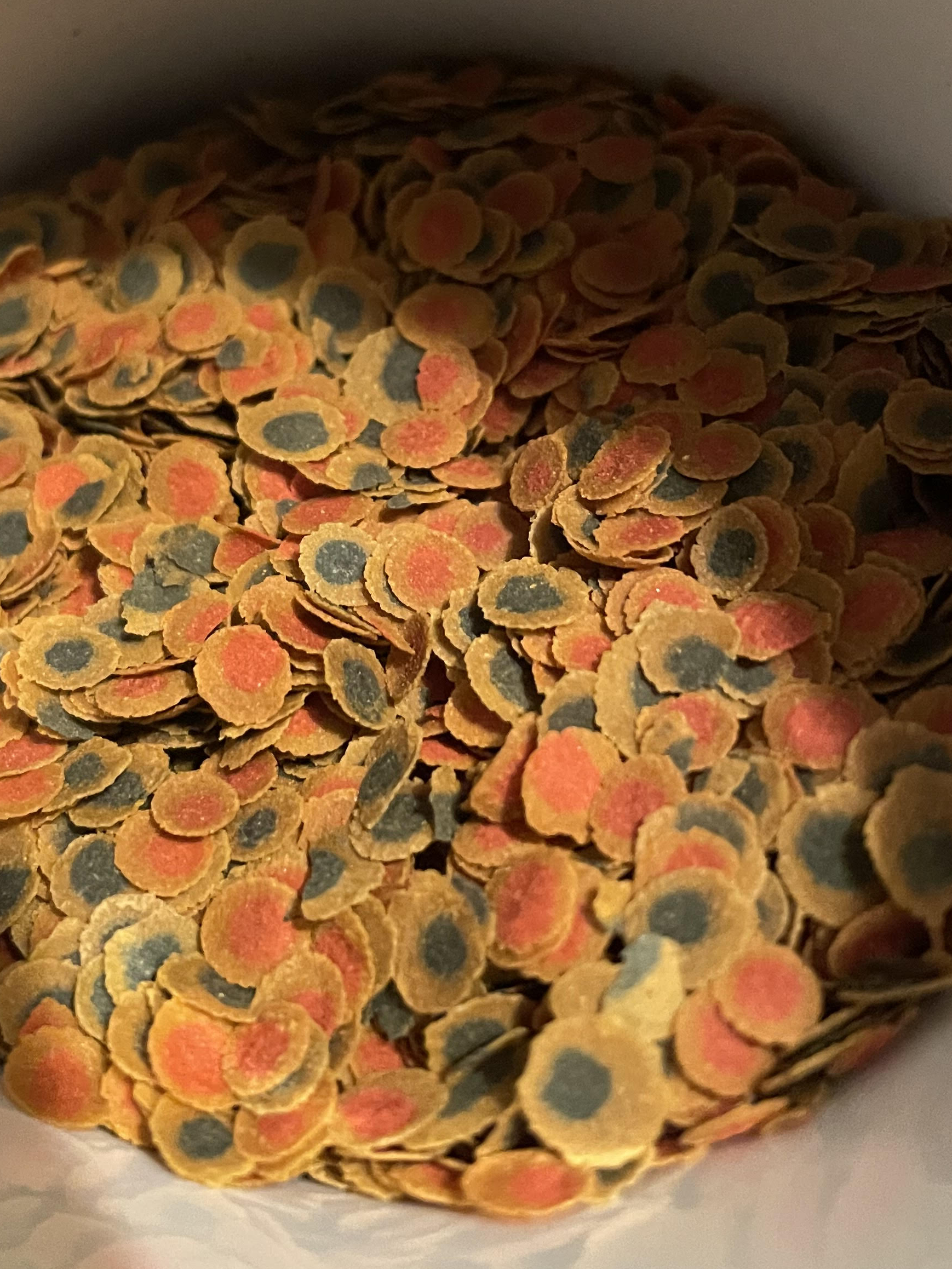
While regarding short term use to certain volumes could replace other meals such as insect or fish (Howlader et al., 2023; Arriaga-Hernández et al., 2021). Yet the use of soya has been associated with a negative effects on growth (Pang et al., 2023). Many of these studies do not look into fishes even similar to what we keep, for discus (Symphysodon) beyond 30% replacement of other meals resulted in reduced growth rate (Chong et al., 2003).
Forgetting algivores?
Algivores or anything feeding on anything similar are not represented or thought about by the fishkeeper often, yet we keep so many of them. Similar information to the above definitely applies regarding how fishes are adapted through evolution to what they feed on in the wild. But could these other meals be of use? There is definitely a lack of studies looking into aquaculture, yet for an algivore just one species of algae the replacement of these traditional meals can produce the same results (Vucko et al., 2017), imagine using other algaes and a diversity of algaes?

References
Arriaga-Hernández, D., Hernández, C., Martínez-Montaño, E., Ibarra-Castro, L., Lizárraga-Velázquez, E., Leyva-López, N., & Chávez-Sánchez, M. C. (2021). Fish meal replacement by soybean products in aquaculture feeds for white snook, Centropomus viridis: Effect on growth, diet digestibility, and digestive capacity. Aquaculture, 530, 735823.
Butt, R. L., & Volkoff, H. (2019). Gut microbiota and energy homeostasis in fish. Frontiers in endocrinology, 10, 9.
Chong, A., Hashim, R., & Ali, A. B. (2003). Assessment of soybean meal in diets for discus (Symphysodon aequifasciata HECKEL) farming through a fishmeal replacement study. Aquaculture Research, 34(11), 913-922.
Ghamkhar, R., & Hicks, A. (2020). Comparative environmental impact assessment of aquafeed production: Sustainability implications of forage fish meal and oil free diets. Resources, Conservation and Recycling, 161, 104849.
Howlader, S., Sumi, K. R., Sarkar, S., Billah, S. M., Ali, M. L., Howlader, J., & Shahjahan, M. (2023). Effects of dietary replacement of fish meal by soybean meal on growth, feed utilization, and health condition of stinging catfish, Heteropneustes fossilis. Saudi Journal of Biological Sciences, 30(3), 103601.
Hua, K., & Bureau, D. P. (2010). Quantification of differences in digestibility of phosphorus among cyprinids, cichlids, and salmonids through a mathematical modelling approach. Aquaculture, 308(3-4), 152-158.
Malcorps, W., Kok, B., van ‘t Land, M., Fritz, M., van Doren, D., Servin, K., van der Heijden, P., plamer, R., Auchterlonie, N. A., Rietkerk, M., Santos, M. J. & Davies, S. J. (2019). The sustainability conundrum of fishmeal substitution by plant ingredients in shrimp feeds. Sustainability, 11(4), 1212.
Pang, A., Xin, Y., Xie, R., Wang, Z., Zhang, W., & Tan, B. (2023). Differential analysis of fish meal substitution with two soybean meals on juvenile pearl gentian grouper. Frontiers in Marine Science, 10, 1170033.
Ringø, E. Z. Z. V., Zhou, Z., Vecino, J. G., Wadsworth, S., Romero, J., Krogdahl, Å., Olden, R. E., Dimitroglou, A., Foey, Davies, S., Owen, M., Lauzon, H. L., Martinsen, L. L., De Schryver, P., Bossier, P., Sperstad, S. & Merrifield, D. L. (2016). Effect of dietary components on the gut microbiota of aquatic animals. A never‐ending story?. Aquaculture nutrition, 22(2), 219-282.
Schmidt, A., Call, L. M., Macheiner, L., & Mayer, H. K. (2019). Determination of vitamin B12 in four edible insect species by immunoaffinity and ultra-high performance liquid chromatography. Food chemistry, 281, 124-129.
Terova, G., Gini, E., Gasco, L., Moroni, F., Antonini, M., & Rimoldi, S. (2021). Effects of full replacement of dietary fishmeal with insect meal from Tenebrio molitor on rainbow trout gut and skin microbiota. Journal of Animal Science and Biotechnology, 12(1), 1-14.
Vucko, M. J., Cole, A. J., Moorhead, J. A., Pit, J., & de Nys, R. (2017). The freshwater macroalga Oedogonium intermedium can meet the nutritional requirements of the herbivorous fish Ancistrus cirrhosus. Algal research, 27, 21-31.
Žák, J., Roy, K., Dyková, I., Mráz, J., & Reichard, M. (2022). Starter feed for carnivorous species as a practical replacement of bloodworms for a vertebrate model organism in ageing, the turquoise killifish Nothobranchius furzeri. Journal of Fish Biology, 100(4), 894-908.
 The Scientific Fishkeeper