Category Archives: Furthering Freshwater Fishkeeping

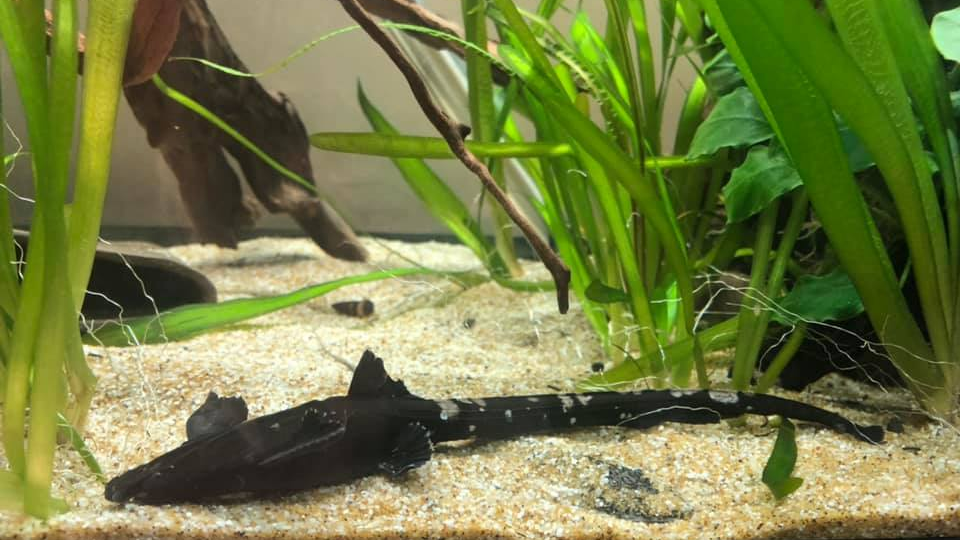
Pleco’s and Whiptail Catfishes, the Beginners Guide to Loricariid catfishes.

With a whole section designated to Loricariidae, I haven’t actually done a beginners guide to the group. This website largely isn’t designed for beginners but Loricariid’s are some of the most misunderstood group of fishes.

  1. What is a Pleco or Whiptail Catfish?
  2. What is the L number system?
  3. Introduction
  4. The size of plecos
  5. What should I feed my pleco?
  6. Do pleco’s need wood?
  7. What parameters do pleco’s need?
  8. What decor do plecos require?
  9. Tankmates
  10. Recommended websites
  11. References:

What is a Pleco or Whiptail Catfish?

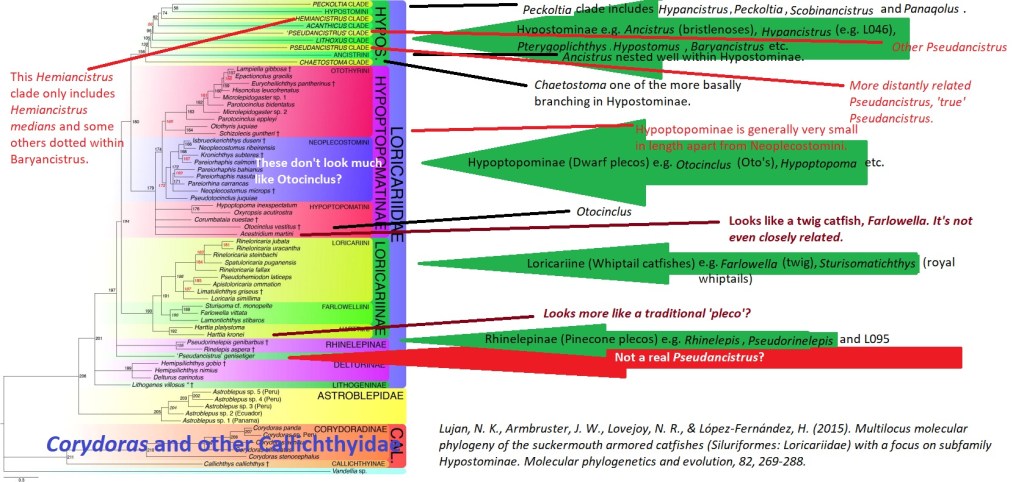
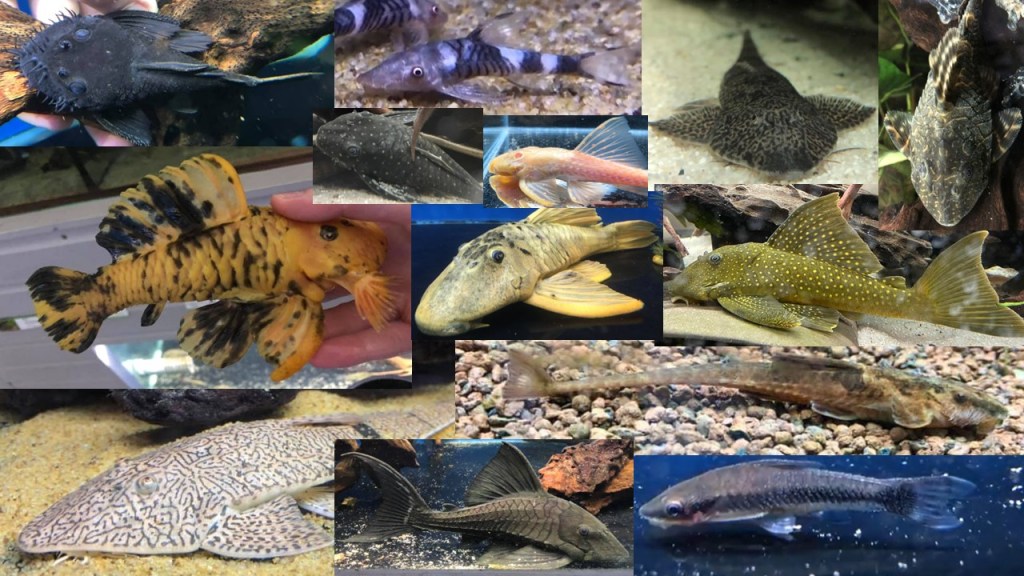
These two common names have no certain definitions, the majority of their use is a pick and mix that varies between the user. It is even more confusing that some loaches are referred to as pleco’s. All common names are equally as valid as each other. I find it easier to refer to the whole of Loricariidae as plecos, why? Figure 1 explains this situation. By excluding the subfamily Loricariinae (whiptail catfishes), you exclude Loricariichthys of which Plecostomus was synonymized with. If you exclude Hypoptopominae (Otocinclus and relatives) then Neoplecostomini and Neoplecostomus are excluded. Ancistrus, commonly known as bristlenose’s places right in the middle of Hypostominae, traditional plecos but Ancistrus also includes the medusa pleco, Ancistrus ranunculus. Then outside of all of these groups is Rhinelepinae, so that includes the pineapple pleco’s, and on it’s own Pseudancistrus genisetiger, so none of those are plecos then?

What would solve the common name issue? Simply not using them. Sadly with Loricariids you can’t avoid scientific names as many species do lack common names or share them.

Figure 1: Annotated phylogeny of Loricariidae from Roxo, F. F., Ochoa, L. E., Sabaj, M. H., Lujan, N. K., Covain, R., Silva, G. S., … & Oliveira, C. (2019). Phylogenomic reappraisal of the Neotropical catfish family Loricariidae (Teleostei: Siluriformes) using ultraconserved elements. Molecular phylogenetics and evolution135, 148-165.

What is the L number system?

The L number system is actually quite simple, it is a hobby made system originating from the German Magazine, DATZ. It simply designates an L number to a variant or species. It is commonly stated that undescribed species are given L numbers, this is partially true but there are many species who were described decades or over 100 years before given their L number such as the sailfin/common/leopard pleco, Pterygoplichthys gibbiceps who was described by Kner in 1854.

I am not entirely convinced the L number system is easy to use, the order of the numbers doesn’t infer anything regarding the fishes care or lineages. Multiple species can share an L number e.g. Baryancistrus demantoides and Hemiancistrus subvirdis are both L200 also known as green phantoms. Hemiancistrus subvirdis is likely the same species as L128 although that is a topic for another day. One species can have multiple L numbers, which don’t always describe populations or all of the morphological variation of the species e.g. Baryancistrus xanthellus has 4 L numbers.

To top it off there are fake L numbers, L600 for example described Pseudacanthicus leopardus who already has the L numbers, L114 and L427. The L number system is only up to around 530 species so far. The letters added to L numbers aren’t a part of the L number system and increase confusion. Sometimes species are given by the hobby the L number of an entirely different species such as L144 which doesn’t even exist in the hobby and hasn’t done for decades or L056 for Parancistrus aurantiacus when actually that L number refers to an undescribed brown Pseudancistrus.

There is additionally the LDA number system which does overlap slightly but isn’t so expansive.

Introduction

Loricariidae, pleco’s are the largest family within the order of fishes known as Siluriforme also known as catfishes or welse, representing 1050 currently described species (Fricke et al., 2024). This group is exclusive to South and Central American freshwaters although has invasive populations in many continents.

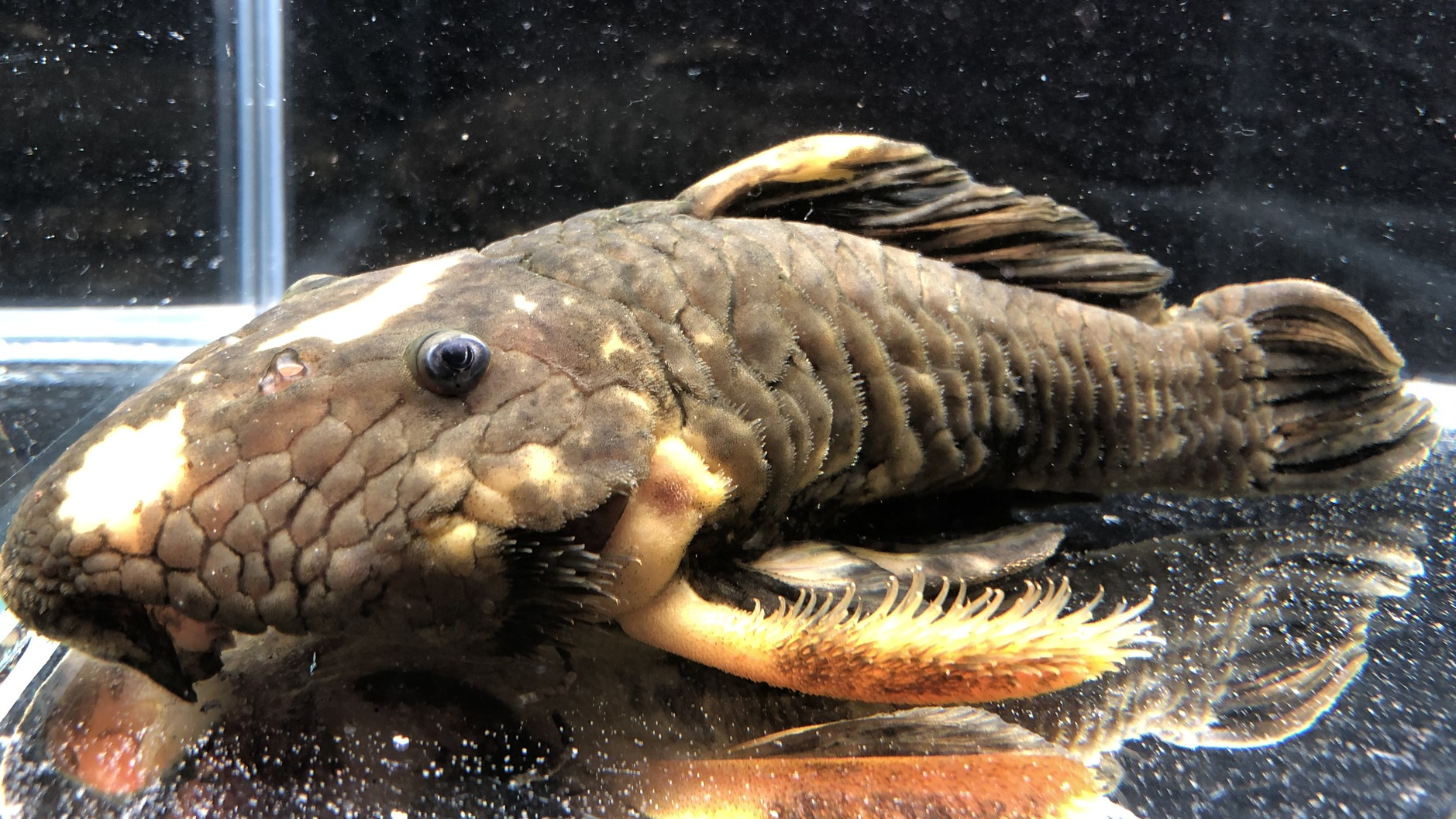
Panaque nirolineatus from Maidenhead Aquatics at Ascot.

The family is identified by a downwards (ventrally) facing oral disc shaped mouth, in some species this is more of a suction cup whereas others they cannot attach to surfaces well or at all. This trait isn’t exclusive to Loricariids but it is not quite the same in other groups. Further more, Loricariids are defined by having a body covered in bony scutes, more scientifically known as dermal plating, not scales as catfishes lack scales.

Baryancistrus chrysolomus.

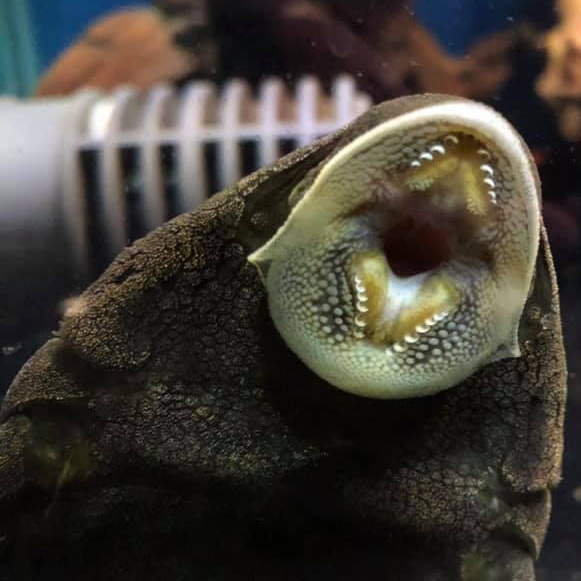
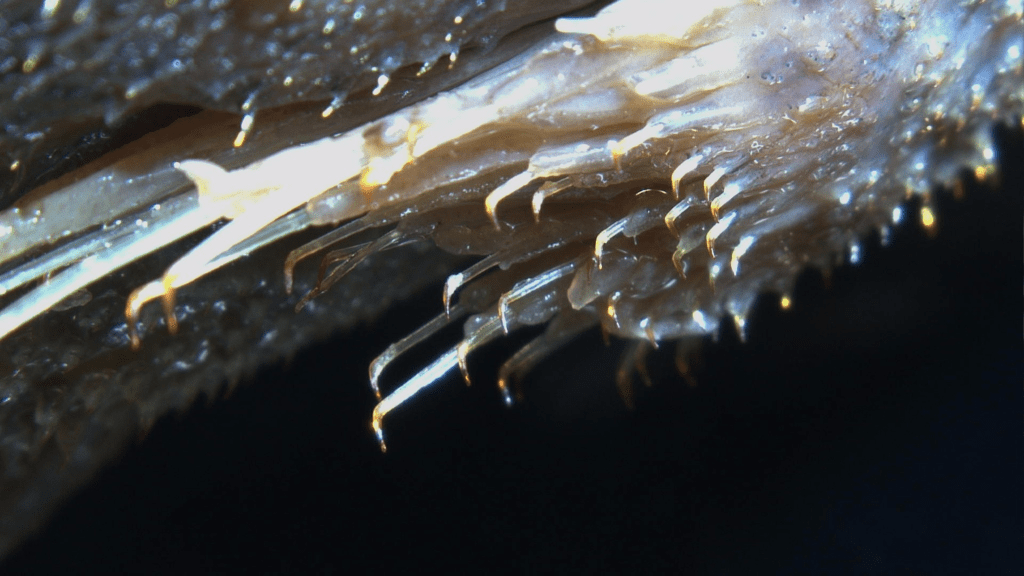
Not does Loricariidae just have dermal plating but they have spines known as odontodes, external teeth (Fig 2). Sometimes these are sexually dimorphic but not always, they can also be shed seasonally.

Figure 2: Odontodes found on I believe Peckoltia sabaji.

Loricariids realistically are one of the most morphologically diverse clades of fishes.

This diversity means that as a group, Loricariids are really difficult if impossible to generalize, research is paramount for this group.

The size of plecos

As one of the most diverse groups of fishes their size varies vastly, 0.2-0.8cm in Parotocinclus halbothi (Lehmann et al., 2014) to 100cm SL possibly in Acanthicus adonis. There is a wide diversity of sizes within many groups so there is no shortage of smaller and larger species. At the end of the article I will recommend reliable websites, there is frequent misleading information about the adult size of many species.

It is important to recognize reliable websites will use standard length, from the head to the base of the caudal/tail fin. That caudal/tail fin will be excluded as these can vary in length. I mention this as many people will not consider this measurement and forget their fish grows much bigger then they would originally consider. This is explained in detail in this article.

Parancistrus aurantiacus

What should I feed my pleco?

This topic has the majority of misconceptions about Loricariids, the majority are algivores or detritivores (Lujan et al., 2012) but a wide range of diets are utilized. I have written a range of articles on a wide variety of diets across the family:  Hypancistrus (zebra, king tigers, queen arabesque, snowball pleco, L236 etc.)Panaque and Panaqolus (royal pleco’s, flash pleco and the clown pleco’s)substrate dwelling Loricariinae (Pseudohemiodon, Planiloricaria etc.)Baryancistrus (gold nugget pleco, mango/magnum pleco, snowball pleco)mollusc specialists (Scobinancistrus, goldie/sunshine pleco, vampire pleco, galaxy pleco, Leporacanthicus)Chaetostoma (Rubbernoses and one of the bulldog plecos) and finally algivores/detritivores.

There are a few myths regarding Loricariid diets I will summerise:

  • Pleco’s are largely carnivores, there are plenty of papers discussing their diets and while I wont cite them all Lujan et al. (2015) summerises it well.
  • Pleco’s become carnivorous with age, there isn’t any studies regarding change in diet as the fishes age. Unlike most fishes, the majority of Loricariids break down their food before it enters their mouth, so the size of the fish doesn’t limit their food item, so not gape limited. This means unlike many other fishes their food item doesn’t need to change with size.
  • Pleco’s clean a tank, while the majority are algivores and detritivores (Lujan et al., 2015) there is a wide diversity in niche partitioning (Lujan et al., 2011) and therefore those algivore’s specialize in certain algae’s. These algae’s seem not to be those that are an issue in the aquarium. Given their lifespan and waste production, they could be an expensive solution to high nutrients.
  • Pleco’s don’t eat cyanobacteria, they actually don’t just eat those that are pests in the aquarium, in the wild they feed on cyanobacteria (Valencia & Zamudio ,2007).

Always check the ingredients as some diets that claim to contain algae’s might contain anything from none to 5%.

Do pleco’s need wood?

This is discussed in more detail here: Panaque and Panaqolus (royal pleco’s, flash pleco and the clown pleco’s).

In simple NO, they do not need wood. The only species that utilize wood are in the genera Panaque, Panaqolus, Hypostomus cochliodon group, Pseudoqolus and perhaps Lasiancistrus heteracanthicus. These groups all share unique spoon shaped teeth they can gouge into wood and if found among wood, wood is found in their gut (Lujan et al., 2017). No other Loricariid has wood in their gut, I’ve scoured gut records but they simply don’t have the jaws or teeth to gouge into wood. There have been many studies to confirm these fishes do not eat/digest the wood (Watts et al., 2021; German, 2009), instead they are just evolved to feed on biofilms, like other species from where other species cannot access, within wood (Lujan et al., 2011).

Peckoltia compta

What parameters do pleco’s need?

While the general idea is that Loricariids and in general anything South America requires soft, low conductivity and acidic water there is a wide diversity of parameters. Some species are found in lower temperatures while other much higher, 28c or higher (Collins et al., 2015; Urbano‐Bonilla & Ballen et al., 2021). Other misconceptions are that South American habitats have a lot of leaf litter and is black water, this is completely untrue, there are many different habitat types (Bogotá-Gregory et al., 2020). In general the majority of Loricariidae are rheophilic and would benefit from a current within the aquarium although there is some diversity (Krings et al., 2023). In general any current within the aquarium is a lot weaker then any of the weaker streams in their wild range.

Planet Catfish has really accessible information to identify parameters before looking into the scientific literature.

What decor do plecos require?

This is largely the only consistent aspect of Loricariids. If anyone has kept Loricariids they will know how much they like cracks, crevices, hiding spaces, rocks, branches and in general cover. There are many caves and tunnels on the market designed for the preferences of a variety of species. I recommend stacking up wood or rocks in a careful way so nothing falls but this will create many more caves.

Tankmates

This will always be based on experience and understanding of the fishes. It’s important to recognize a few key things about Loricariids.

  • Loricariids do not often feed rapidly but even if they do it can take them minutes to an hour to reach food. Fast feeding fishes such as most cichlids, loaches, tetra, livebearers and goldfish particularly in large numbers are a bad idea.
  • Their temperature might not overlap.
  • They will need a current, some more then others which this means they wont work with fishes like long finned Betta splendens.
  • While some Loricariids feed on food items that they wouldn’t naturally it doesn’t mean it is good for them. Bloat can happen in some genera more then others. So I do not recommend keeping other fishes with Loricariids who you plan on feeding anything like beefheart.
  • Hardness, conductivity etc. We don’t actually know the KH or GH of the water many of these fishes come from, usually we have conductivity and pH records for many waters. Ideally these fishes are ill-suited regardless with Rift Valley cichlids, generally the biggest issue is above, those cichlids feed way too rapidly for any Loricariid.

Planet Catfish

Scotcat

Loricariidae.info

L-Welse

www.suedamerikafans.de

References:

Collins, R. A., Ribeiro, E. D., Machado, V. N., Hrbek, T., & Farias, I. P. (2015). A preliminary inventory of the catfishes of the lower Rio Nhamundá, Brazil (Ostariophysi, Siluriformes). Biodiversity Data Journal, (3).

Bogotá-Gregory, J. D., Lima, F. C., Correa, S. B., Silva-Oliveira, C., Jenkins, D. G., Ribeiro, F. R., … & Crampton, W. G. (2020). Biogeochemical water type influences community composition, species richness, and biomass in megadiverse Amazonian fish assemblages. Scientific Reports10(1), 15349.

Fricke, R., Eschmeyer, W. N. & Van der Laan, R. 2024.  ESCHMEYER’S CATALOG OF FISHES: GENERA, SPECIES, REFERENCES. (http://researcharchive.calacademy.org/research/ichthyology/catalog/fishcatmain.asp). Electronic version accessed 22 July 2024.

German, D. P. (2009). Inside the guts of wood-eating catfishes: can they digest wood?. Journal of Comparative Physiology B179, 1011-1023.

Krings, W., Konn-Vetterlein, D., Hausdorf, B., & Gorb, S. N. (2023). Holding in the stream: convergent evolution of suckermouth structures in Loricariidae (Siluriformes). Frontiers in Zoology20(1), 37.

Lehmann, P. A., Lazzarotto, H., & Reis, R. E. (2014). Parotocinclus halbothi, a new species of small armored catfish (Loricariidae: Hypoptopomatinae), from the Trombetas and Marowijne River basins, in Brazil and Suriname. Neotropical Ichthyology12, 27-33.

Lujan, N. K., Cramer, C. A., Covain, R., Fisch-Muller, S., & López-Fernández, H. (2017). Multilocus molecular phylogeny of the ornamental wood-eating catfishes (Siluriformes, Loricariidae, Panaqolus and Panaque) reveals undescribed diversity and parapatric clades. Molecular phylogenetics and evolution109, 321-336.

Lujan, N. K., German, D. P., & Winemiller, K. O. (2011). Do wood‐grazing fishes partition their niche?: morphological and isotopic evidence for trophic segregation in Neotropical Loricariidae. Functional Ecology25(6), 1327-1338.

Lujan, N. K., Winemiller, K. O., & Armbruster, J. W. (2012). Trophic diversity in the evolution and community assembly of loricariid catfishes. BMC Evolutionary Biology12, 1-13.

Roxo, F. F., Ochoa, L. E., Sabaj, M. H., Lujan, N. K., Covain, R., Silva, G. S., … & Oliveira, C. (2019). Phylogenomic reappraisal of the Neotropical catfish family Loricariidae (Teleostei: Siluriformes) using ultraconserved elements. Molecular phylogenetics and evolution135, 148-165.

Urbano‐Bonilla, A., & Ballen, G. A. (2021). A new species of Chaetostoma (Siluriformes: Loricariidae) from the Orinoco basin with comments on Amazonian species of the genus in Colombia. Journal of Fish Biology98(4), 1091-1104.

Valencia, César Román, and Héctor Zamudio. 2007. Dieta y reproducción de Lasiancistrus caucanus (Pisces: Loricariidae) en la cuenca del río La Vieja, Alto Cauca, Colombia. Revista del Museo Argentino de Ciencias Naturales nueva serie 9(2): 95-101.

Watts, J. E., McDonald, R. C., & Schreier, H. J. (2021). Wood degradation by Panaque nigrolineatus, a neotropical catfish: diversity and activity of gastrointestinal tract lignocellulolytic and nitrogen fixing communities. In Advances in Botanical Research (Vol. 99, pp. 209-238). Academic Press.

Bloodworm, a scape goat?

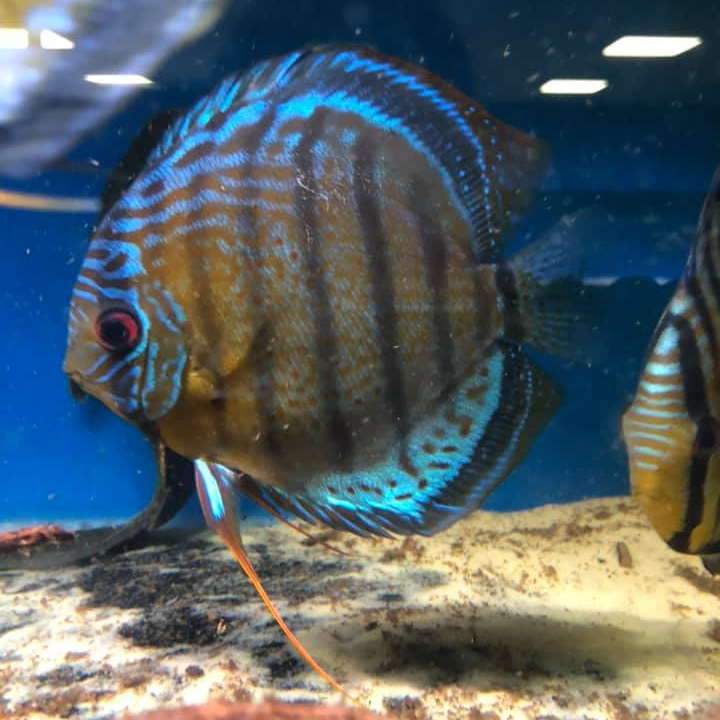
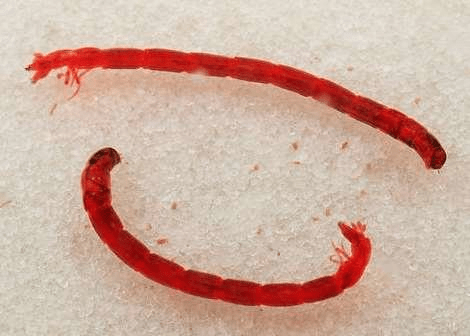
Bloodworm has been a food that has been discouraged against for around 10 or more years. There has never been any doubt that many fishes feed on Chironomatid larvae in the wild (Delariva & Agostinho, 2001; Valtierra-Vega & Schmitter-Soto, 2000), even discus feed on them (Crampton, 2008). Chironomatid larvae being the more scientific name for bloodworm. You might have even seen these larvae in your pond, buckets or similar.

Bloodworms as featured in: Paice, R. (2016). Assessment of mosquito larvicide impacts on aquatic invertebrates in the Vasse-Wonnerup Wetland System.

So why are bloodworms so feared?

I don’t think there is a true origin to this, it is still one of the most common live and frozen foods used, it’s cheap and easy to find. Maybe there are still some aspects of when tubifex was feared due to sewage contamination.

Bloodworm being the larvae of an insect does have a casing, known as an exoskeleton formed of chitin. This can be difficult to digest and for some fishes impossible, although many species are possibly sold as bloodworm it’s likely there is some diversity. There are reports of constipation and similar caused by bloodworm, although bloating is tricky and can have many causes from bacterial infections to a food item not being processed.

Bloodworm is not the entire diet of any fishes I’ve researched and when fed as an entire diet it results in liver enlargement and and poorer body condition (Žák et al., 2022), these results are similar to Hao et al. (2021) where removing to a formulated diet increases general health of the fish.

I chose this topic to find reasons that I am wrong, that bloodworm is much better then I thought it was. It doesn’t seem bad for fattening up fishes but does seem to come with a variety of problems, as a result I think I will continue to recommend Tubifex.

The real worm to try

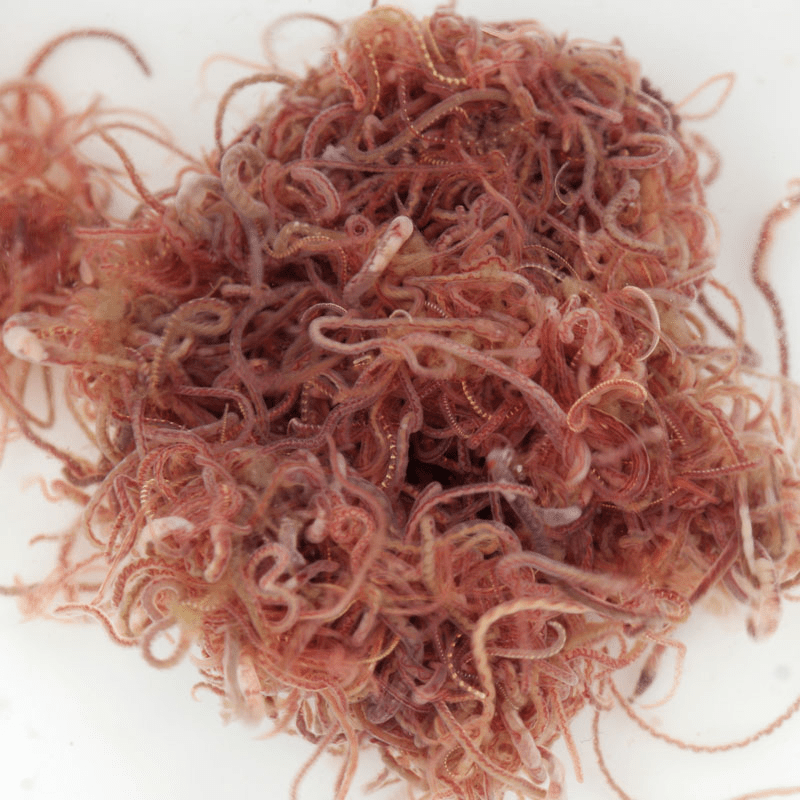
Tubifex is a relatively common live, frozen and freeze dried food available. Unlike bloodworm it’s an annelid, true worm and is fully aquatic. It lacks the thick chitin casing of bloodworms, making them much more easy to digest. To cultivate they are less tricky given their lifestyle but do need a constant flow of freshwater.

Tubifex as featured in: https://plantsam.com/

Unlike bloodworm, Tubifex was vilified for years, this amazing genus is extremely adaptable. This adaptability has meant that Tubifex can be found in the most hostile and polluted habitats and at one time this is where they were collected for the aquarium trade. Due to being collected from very polluted habitats it was not the most ideal live food to avoid pollution. Frozen will be another story as most are gamma irradiated, killing most bacteria on them. But for many years Tubifex is farmed in a clean and sustainable matter.

Unlike bloodworm Tubifex is very high in nutrition (Herawati et al., 2016) and has shown to increase growth when mixed with a prepared diet (Alam et al., 2021) even when compared to other live foods (Mellisa et al., 2018).

Human health

Bloodworm is a known allergen leading to asthma (Wu et al., 2005; Nandi et al., 2014). As someone who is not a medical practitioner I cannot offer much advice, allergies can occur at any time and it is good to be cautious. When dealing with bloodworm, handling particularly wearing disposable gloves can be a good idea, using a tub to defrost it in. It does beg the question given it is quite a common allergen whether to use it at all? In my experience I have met very few people who are allergic to bloodworm.

References:

Alam, M. A., Khan, M. A., Sarower-e-Mahfuj, M. D., Ara, Y., Parvez, I., & Amin, M. N. (2021). A model for tubificid worm (Tubifex tubifex) production and its effect on growth of three selected ornamental fish. Bangladesh Journal of Fisheries33(2), 205-214.

Crampton, W. G. (2008). Ecology and life history of an Amazon floodplain cichlid: the discus fish Symphysodon (Perciformes: Cichlidae). Neotropical Ichthyology6, 599-612.

Delariva, R. L., & Agostinho, A. A. (2001). Relationship between morphology and diets of six neotropical loricariids. Journal of Fish biology58(3), 832-847.

Hao, Q., Teame, T., Wu, X., Ding, Q., Ran, C., Yang, Y., … & Zhou, Z. (2021). Influence of diet shift from bloodworm to formulated feed on growth performance, gut microbiota structure and function in early juvenile stages of hybrid sturgeon (Acipenser baerii× Acipenser schrenckii). Aquaculture533, 736165.

Herawati, V. E., Nugroho, R. A., Hutabarat, J., & Karnaradjasa, O. (2016). Profile of amino acids, fatty acids, proximate composition and growth performance of Tubifex tubifex culture with different animal wastes and probiotic bacteria. Aquaculture, Aquarium, Conservation & Legislation9(3), 614-622.

Mellisa, S., Rahimi, S. A. E., & Umiati, U. (2018). The effect of different live feeds on the growth and survival of comet goldfish Carrasius auratus auratu larvae. In IOP Conference Series: Earth and Environmental Science (Vol. 216, No. 1, p. 012025). IOP Publishing.

Nandi, S., Aditya, G., Chowdhury, I., Das, A., & Saha, G. K. (2014). Chironomid midges as allergens: evidence from two species from West Bengal, Kolkata, India. Indian Journal of Medical Research139(6), 921-926.

Valtierra-Vega, M. T., & Schmitter-Soto, J. J. (2000). Feeding habits of cichlid species (Perciformes: Cichlidae) in Caobas lake, Quintana Roo, Mexico. Revista de Biologia Tropical48(2-3), 503-508.

Wu, K. C., Räsänen, K., & Hudson, T. J. (2005). Fishing for allergens: bloodworm-induced asthma. Allergy, Asthma & Clinical Immunology1, 1-2.

Žák, J., Roy, K., Dyková, I., Mráz, J., & Reichard, M. (2022). Starter feed for carnivorous species as a practical replacement of bloodworms for a vertebrate model organism in ageing, the turquoise killifish Nothobranchius furzeri. Journal of Fish Biology100(4), 894-908.

Epistylis, misinformation in the aquarium hobby.

Fake news was the word of the year for 2017, we are often bombarded by information and it can be very difficult to fact check. Sometimes we just don’t have time to check the information we are given is correct, and other times we are relying on the credential of the writer. The aquarium hobby is no exception with so many different websites and social media platforms all arguing for space and more importantly your trust.

As distrust in authority increases there has never been so much division and this leads into the influences of certain media. Unlike the general hobby there is a strong influence of science, whether the website is actually scientific or not.

This is best discussed in terms of two of the biggest myths that have arisen in the last few years.

How Epistylis ruled the world.

For many years the protozoan whitespot, Ichthyophthirius multifiliis was widely considered the most common parasite on fishes, it is well studied in the scientific literature (Francis-Floyd et al., 2016, 2023) followed by velvet, Oodinium and Piscinoodiniasis. Disease is tricky, unlike identifying animals we don’t necessary have the tools as a hobby for an accurate diagnosis, there are thousands of species to separate.

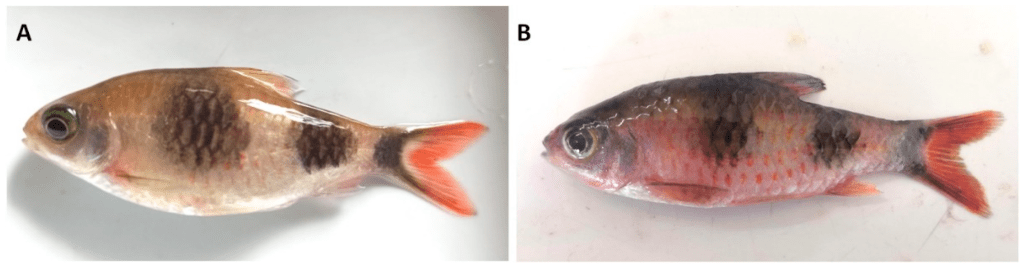
Realistically these two pathogens are one of many that can appear as spots on the fishes body, generally most treatments will cover them. Although there is suggestion that the formalin based treatments are less effective as I discuss here, maybe this has lead to why people come to think they are not dealing with white spot? Because shouldn’t white spot treatments work for I. multifiliis? In addition there is proven acquired immunity to I. multifiliis (Teixeira Alves and Taylor, 2020) but it doesn’t mean that it is unseen. In fact I have noticed a reduced number personally and online of those spotted parasitic cysts, but that is just experience. To add to the confusion not all of these parasites do appear as spots (Sudhagar et al., 2022; Fig 1). I. multifilliis and Piscinoodiniasis is known to target the gills of fishes.

An infection of Piscinoodinium as featured in: Sudhagar, A., Sundar Raj, N., Mohandas, S. P., Serin, S., Sibi, K. K., Sanil, N. K., & Raja Swaminathan, T. (2022). Outbreak of Parasitic Dinoflagellate Piscinoodinium sp. Infection in an Endangered Fish from India: Arulius Barb (Dawkinsia arulius). Pathogens11(11), 1350.

This confusion isn’t aided by nematode cysts looking incredibly similar to I. multifilliis and that used to be quite a common misdiagnosis. Going back to the difficulties in identification, microscopes are very important here as many of these pathogens are really only different to look at under the microscope. Using a microscope is one thing but identifying what you are looking at is another, the koi world seems to have this sorted with pathologists available but it seems to have been a reduced talent within the aquarium hobby. There are very few useful books on pathology still available, most if all will be second hand. Microscopes are really only useful for what can be seen so bacteria and even more viruses are another ball game, requiring expensive technology to identify the pathogen.

So, the story is set for Epistylis. Why Epistylis? We will never know but it is likely a random page that came up and sometimes names stick. Unlike Ichthyophthirius multifiliis, Epistylis is easy to remember. I don’t think the why matters but more that it is there, it’s difficult to work out what website started it.

Figure 2: Whitespot, Ichthyophthirius multifiliis as featured in: Martins, M. L., Cardoso, L., Marchiori, N., & Benites de Pádua, S. (2015). Protozoan infections in farmed fish from Brazil: diagnosis and pathogenesis. Revista Brasileira de Parasitologia Veterinária24, 1-20.

It might be that fact checking takes time and we should trust what we read to be true. but Ichthyophthirius multifiliis looks nothing alike Epistylis in any way that can be confused as you can clearly see in figure 2 and 3.

Figure 3: Epistylis as featured in: Martins, M. L., Cardoso, L., Marchiori, N., & Benites de Pádua, S. (2015). Protozoan infections in farmed fish from Brazil: diagnosis and pathogenesis. Revista Brasileira de Parasitologia Veterinária24, 1-20.

What is more clear is that Epistylis is almost always present and not always as a pathogen, it can also be asymptomatic (Ksepka et al., 2021). But if symptomatic it is expressed as more of a plaque that could be confused with some of the herpes viruses (Fig 3).

Figure 4: Credits to Aquarium Science https://aquariumscience.org/

So why are they confused? It has to do with this graph (Fig 4). Firstly ich is referring to Ichthyophthirius multifiliis, that we more then often call whitespot in the UK. No citations are provided so this is not backed up with the identification of Epistylis.
So some will say the science is wrong, the issue is that genera are described with set features and if those features don’t match then that is not that species, it would be another. That’s how scientific descriptions work. Epistylis doesn’t display itself as distinct round spots whether rough sized or not (Ksepka et al., 2021; Wu et al., 2021; Valladao et al., 2015). If it was so common and lethal there would be more literature when in reality there isn’t that much comparatively. In my experience as well white spot can kill a fish rapidly, and due to the effect on the gills it is quite taxing on the fish (Martins et al., 2015).

So why this whole essay? To discuss misinformation I must first state why this myth isn’t true. Interestingly it is a brilliant story regarding understanding critical analysis.

How to identify a reliable website:

  • Ability to cite their sources, ideally papers if they are scientists.
  • Using standard length, just because there are no reliable measurements of total size including the caudal/tail fin.
  • Avoiding plagiarism, if a scientist this is a key issue.

References:

Francis-Floyd, R., Yanong, R., & Pouder, D. (2023). Ichthyophthirius multifiliis (white spot) infections in fish.

Francis-Floyd, R., Yanong, R., & Pouder, D. (2016). Ichthyophthirius multifiliis (White Spot) Infections in Fish: CIR920/FA006, rev. 12/2016. EDIS2016(10).

Ksepka, S. P., & Bullard, S. A. (2021). Morphology, phylogenetics and pathology of “red sore disease”(coinfection by Epistylis cf. wuhanensis and Aeromonas hydrophila) on sportfishes from reservoirs in the South‐Eastern United States. Journal of Fish Diseases, 44(5), 541-551.

Martins, M. L., Cardoso, L., Marchiori, N., & Benites de Pádua, S. (2015). Protozoan infections in farmed fish from Brazil: diagnosis and pathogenesis. Revista Brasileira de Parasitologia Veterinária24, 1-20.

Sudhagar, A., Sundar Raj, N., Mohandas, S. P., Serin, S., Sibi, K. K., Sanil, N. K., & Raja Swaminathan, T. (2022). Outbreak of Parasitic Dinoflagellate Piscinoodinium sp. Infection in an Endangered Fish from India: Arulius Barb (Dawkinsia arulius). Pathogens11(11), 1350.

Teixeira Alves, M., & Taylor, N. G. (2020). Models suggest pathogen risks to wild fish can be mitigated by acquired immunity in freshwater aquaculture systems. Scientific Reports10(1), 7513.

Valladao, G. M. R., Levy-Pereira, N., Viadanna, P. H. D. O., Gallani, S. U., Farias, T. H. V., & Pilarski, F. (2015). Haematology and histopathology of Nile tilapia parasitised by Epistylis sp., an emerging pathogen in South America. Bulletin of the European Association of Fish Pathologists, 35(1), 14-20.

Wang, Z., Zhou, T., Guo, Q., & Gu, Z. (2017). Description of a new freshwater ciliate Epistylis wuhanensis n. sp.(Ciliophora, Peritrichia) from China, with a focus on phylogenetic relationships within family Epistylididae. Journal of Eukaryotic Microbiology, 64(3), 394-406.

Wu, T., Li, Y., Zhang, T., Hou, J., Mu, C., Warren, A., & Lu, B. (2021). Morphology and molecular phylogeny of three Epistylis species found in freshwater habitats in China, including the description of E. foissneri n. sp.(Ciliophora, Peritrichia). European Journal of Protistology, 78, 125767.

What to feed your pleco when they wont eat.

Loricariidae, also known under the common names L numbers, whiptail catfishes and pleco’s are popular fishes within the aquarium trade. Many people will come across the problem in their new fish where they will not eat and in fact they might never eat.

Worming

The first sign might be that the fish might have a concaved stomach and the first solution will be to worm the fish. I doubt this is the usual cause of the concave stomach in Loricariid’s but it is worth crossing out, Loricariids do quite frequently have parasitic worm’s (usually nematodes rather then Annelid’s) in the wild and these will maintain at a low level (Borges et al., 2018). If a fish is stressed such as from import this parasite load can become much higher then a healthy level. So there is logic in worming fishes when they arrive and most stores do this. Most wormers cover different internal parasites but the most common would be containing praziquantel, levamisole and flubendazole (do not use with stingrays). I would personally advise definitely not using more then one as they do all have side effects. Generally wormers need to be repeated after a week to cover the parasites lifecycle.

Panaqolus aff. maccus

The importance of getting the fish feeding.

While a rounded and healthy diet is important for wild caught fishes particularly they do need to feed. It is quite a large jump for many from a wild diet to a captive diet and many might not even identify it as food.

More importantly it is possible that the gut flora, microbes will start to decline in number while they are not eating and for shipping this is useful but not for keeping the fish. One possible thing that could help this is rather then adding them to a clean quarantine tank is to one where other similar species have lived, there is likely a benefit from those fishes waste in rebuilding that gut flora lost after shipping.

What should I feed my fish?

First identify what they eat, so their natural diet. While most diets contain the steryotypical fish/insect/krill meal, cereal, vegetable and minimal algae diets this is no issue in the short term but many wont touch these diets at first. So regardless of long term them being vastly different from their natural diet and homogenous whether you have a Trophius, Loricariid or angelfish they actually are the same (Vucko et al., 2017); they can also be unhelpful.

One day I will create a proper list of what Loricariid eats what as far as we know but currently I cannot. I do have articles on some commonly misunderstood fishes; Hypancistrus (zebra, king tigers, queen arabesque, snowball pleco, L236 etc.), Panaque and Panaqolus (royal pleco’s, flash pleco and the clown pleco’s), substrate dwelling Loricariinae (Pseudohemiodon, Planiloricaria etc.), Baryancistrus (gold nugget pleco, mango/magnum pleco, snowball pleco), mollusc specialists (Scobinancistrus, goldie/sunshine pleco, vampire pleco, galaxy pleco, Leporacanthicus), Chaetostoma (Rubbernoses and one of the bulldog plecos) and finally algivores/detritivores. Maybe some more will be created in the future.

This is important as feeding an incorrect diet can lead to bloat and other issues, it has been commonly noted when Hypancistrus are fed a wholly carnivorous diet.

Carnivorous species

This is only for true carnivores but aspects of this can be fed to others in small numbers with care, avoid it with some of the more extreme algivores such as Ancistrus, Chaetostoma, Baryancistrus etc.

Mussels and prawns are very good for getting a fish feeding at first but the issue with these two food items at high in thiaminase and therefore degrade thiamin, vitamin b1.

Generally for this reason I’d advise a range of frozen foods and for some larger species earthworms might not be a bad choice.

Nannopotopoma sp. ‘Peru/robocop’ at Maidenhead Aquatics at Ascot

Algivores and Detritivores

This includes most Loricariids that people keep to some degree but the specialities within their diet are best looking at later.

These are definitely the most tricky to get feeding at first and I often give a range of options even at the same time. Generally I’d offer that dry/gel diet once or twice a day and vegetables replaced every 12-24 hours depending on how quickly they are braking down.

For dry/gel diets I’d offer certainly Repashy soilent green if possible as I’ve never had a fish fail to give it a go. Later on I’d bulk it out with other ingredients such as algal powders, you could do similar with other gel diets but I can’t say fishes are going to take up them as well. At the end of the day whatever they are eating in the short term is worth it. Remember vegetables and similar are more treats as do not even closely replicate their wild diets.

Vegetables and other easy food items you can leave in for the fishes:

CourgetteReasonable in nutrition, is willingly eaten by many fishes but they might select either the flesh or skin over the other.
CucumberWhile often declared as low nutrients due to water content they do contain minerals and other compounds that have nutritional value.
Mushrooms (Edible species from supermarket)Could be part of a staple diet for Panaqolus, Panaque and Hypostomus cochliodon group as they do feed on fungi in the wild (Lujan et al., 2011). It is difficult to say the nutrition levels for these fishes as many might be able to digest more so then nutritional estimates for humans. So far mushrooms are shown to increase weight gain opposed to traditional diets (Zakaria et al., 2021; Dawood et al., 2010), a potential prebiotic (Chandra & Qureshi, 2023) and other potential benefits (Sánchez-Velázquez et al., 2014)
Sweet PotatoesThese doesn’t need to be blanched and I am not convinced by their digestibility for Loricariids (Omoregie et al., 2009) but if they can get the fish feeding that is what matters.
Further on I find whether fishes feed on these more hit and miss.
Green beansThe common bristlenose, Ancistrus sp. is meant to be a big fan of this. Nutrition doesn’t need to be debated but as a plant would be more of a treat after acclimation.
Bell peppersI don’t think it entirely matters whether the pepper is red, yellow or green but the sugar and nutrition levels will vary.
Pumpkins and other squashesI find very hit or miss but never blanched them. They can break down very quickly producing a film over the fruit. I would say they are much more similar to courgette.

Later on and narrowing down the diet

While whatever they will eat is generally the best rule as they are acclimatizing over the first few weeks and months. Afterwards I would look to narrowing down their diet to what they would feed on in the wild as in the articles mentioned earlier on.

Is the setup right?

This sometimes get’s forgotten but a major part of why a fish might not be feeding could be they are not getting to the food. Loricariids are slow to feed, some might take hours even without lights to feed and this can make some tankmates ill-suited. Some tankmates might work better where if needed you can remove them to another tank so that is worth considering particularly for many cichlids, many shoaling species in very high numbers or quite a few live numbers.

Planiloricaria cryptodon at Maidenhead Aquatics at Ascot.

References:

Borges, W. F., de Oliveira, M. S. B., Santos, G. G., & Tavares-Dias, M. (2018). Parasites in Loricariidae from Brazil: checklist and new records for fish from the Brazilian Amazon. Acta Scientiarum. Biological Sciences40, 1-9.

Chandra, O. P., & Qureshi, Y. (2023). Importance of mushroom supplementation as a prebiotic amalgamation in fed diet of improvement of weight gain (WG) in Nile Tilapia,(Oreochromis niloticus). Journal of Pharmaceutical Negative Results, 1681-1687.

Dawood, M. A., Eweedah, N. M., El-Sharawy, M. E., Awad, S. S., Van Doan, H., & Paray, B. A. (2020). Dietary white button mushroom improved the growth, immunity, antioxidative status and resistance against heat stress in Nile tilapia (Oreochromis niloticus). Aquaculture523, 735229.

Lujan, N. K., German, D. P., & Winemiller, K. O. (2011). Do wood‐grazing fishes partition their niche?: morphological and isotopic evidence for trophic segregation in Neotropical Loricariidae. Functional Ecology25(6), 1327-1338.

Omoregie, E., Igoche, L., Ojobe, T. O., Absalom, K. V., & Onusiriuka, B. C. (2009). Effect of varying levels of sweet potato (Ipomea Batatas) peels on growth, feed utilization and some biochemical responses of the cichlid (Oreochromis Niloticus). African Journal of Food, Agriculture, Nutrition and Development9(2), 700-712.

Sánchez-Velázquez, J., Peña-Herrejón, G. A., & Aguirre-Becerra, H. (2024). Fish Responses to Alternative Feeding Ingredients under Abiotic Chronic Stress. Animals14(5), 765.

Vucko, M. J., Cole, A. J., Moorhead, J. A., Pit, J., & de Nys, R. (2017). The freshwater macroalga Oedogonium intermedium can meet the nutritional requirements of the herbivorous fish Ancistrus cirrhosus. Algal research27, 21-31.
Zakaria, Z., Abd Rasib, N. A., & Tompang, M. F. (2021). Spent mushroom substrate based fish feed affects the growth of catfish (Clarias gariepinus). In IOP Conference Series: Earth and Environmental Science (Vol. 765, No. 1, p. 012082). IOP Publishing.

Splitting up Corydoras: Understanding the Corydoradinae Revision

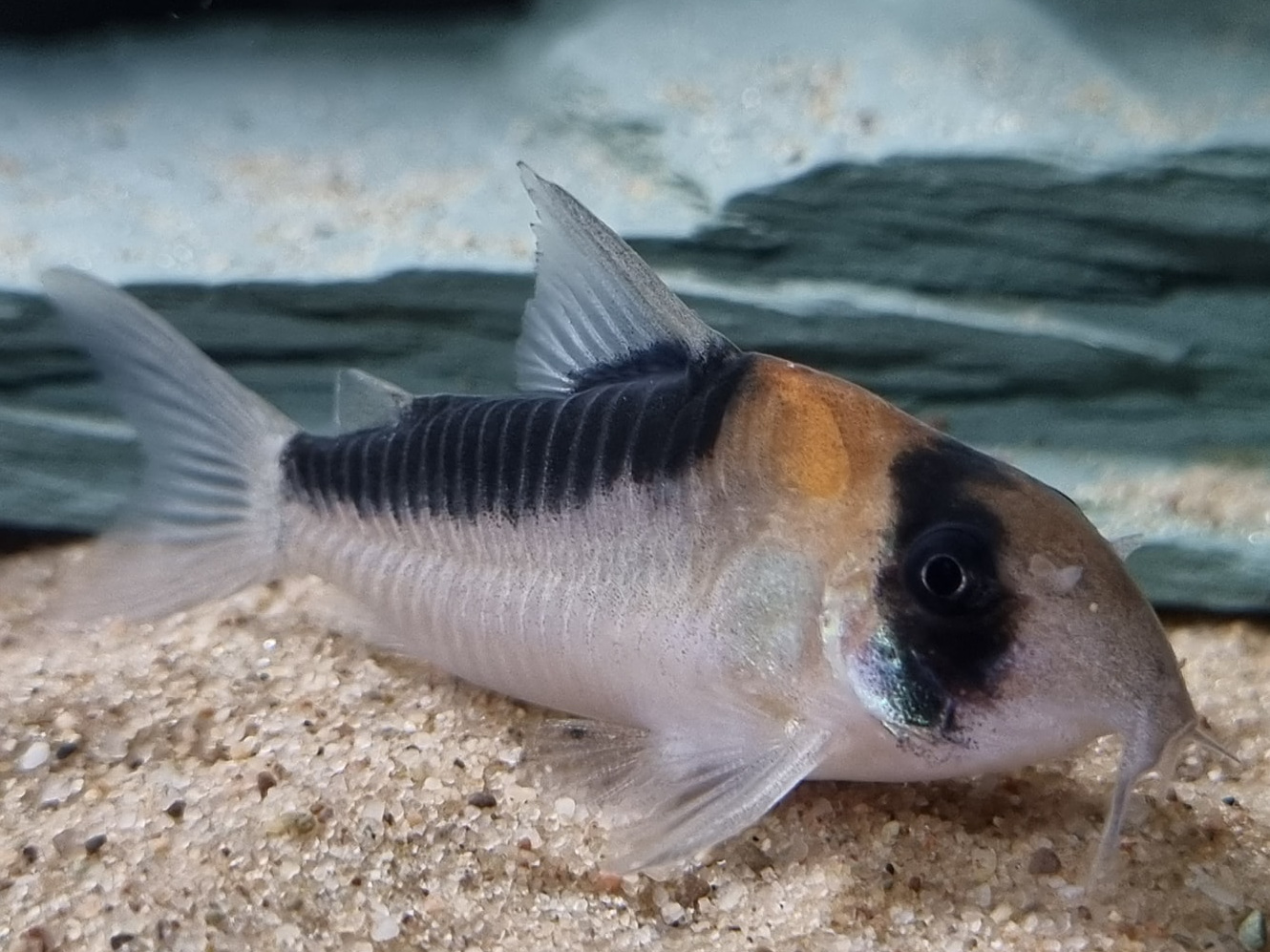
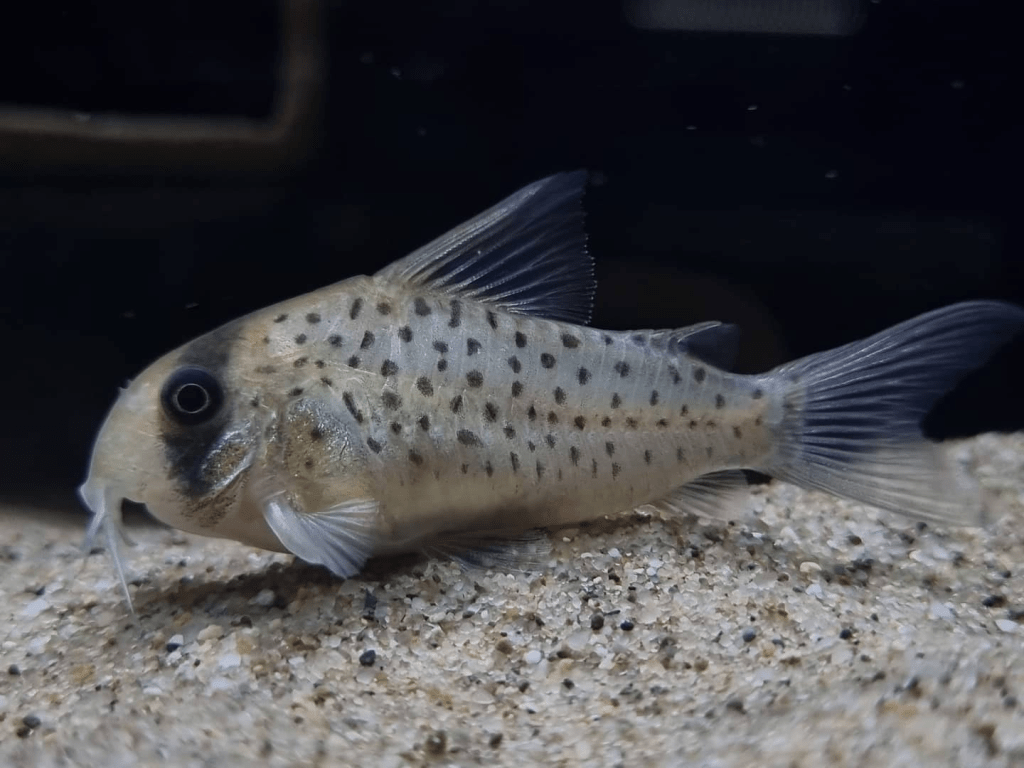
Corydoras has been revised splitting up the genus and resurrecting previously synonymized genera. But what does this all mean?

Corydoras semiaquilus, obtained from INaturalist, photo owner: Blair Chen – some rights reserved (CC BY-NC-SA)

Corydoras is a genus of Catfishes in the family Callichthyidae. Callichthyidae includes: Callichthyinae (Callichthys, Lepthoplosternum, Hoplosternum, Megalechis and Dianema); Corydoralinae which is the focus of this article and revision. Figure 1 explains the topography (family tree format) of this group but bare in mind it doesn’t reflect the current knowledge for Corydoralinae.

Figure 1: Phylogeny of Callichthyidae. Bare in mind the topography (shape) of Corydoras doesn’t match our current understanding. As featured in:
Shimabukuro-Dias, C. K., Oliveira, C., Reis, R. E., & Foresti, F. (2004). Molecular phylogeny of the armored catfish family Callichthyidae (Ostariophysi, Siluriformes). Molecular Phylogenetics and Evolution32(1), 152-163.

Previously many genera were inferred for members of what was known for a long time as Corydoras but over time these were synonymized finalizing with Britto (2003) which resulted in Brochis no longer being valid. To put it simply as there were many reasons behind but also to have Corydoras as the genus it was then Brochis would have to be Corydoras.

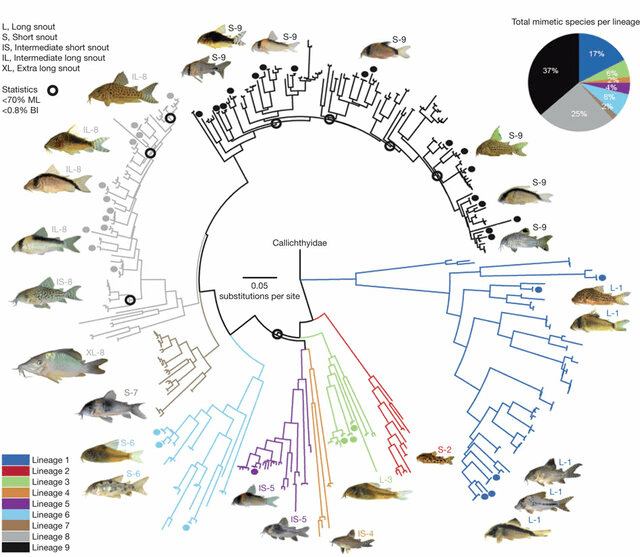
Figure 2: Phylogeny of Corydoralinae featured in: Alexandrou, M. A., Oliveira, C., Maillard, M., McGill, R. A., Newton, J., Creer, S., & Taylor, M. I. (2011). Competition and phylogeny determine community structure in Müllerian co-mimics. Nature469(7328), 84-88.

The history is a bit messy. We have known for a long time Corydoras has had a lineage system, this was explained clearly in Alexandrou et al (2011). This phylogeny shows how embedded Brochis is inside of Corydoras and therefore would not easily be valid as a genus.

The issue of type species

So while many of the ‘Corydoras‘ kept in the aquarium trade are not Corydoras, the type, C. geoffroy places in lineage 1. These would be the only true Corydoras, basically this is the reference species in a way.
Some might note what was known as Aspidoradini, a tribe separate to what was Corydoras branches out in the middle of Corydoras, more problems. It’s really messy.

What are the new genera?

  • Corydoras: Used to represent lineage 1 of Corydoras. These have a but curved block shaped head, most distinctively is a filament behind the barbel’s which can look like an additional barbel.
  • Aspidoras: Always known as Aspidoras but excludes Gastrodermis pauciradiatus.
  • Scleromystax: Sometimes known as bearded Corydoras, the only to show really clear sexual dimorphism through odontodes.
  • Gastrodermus: Originally the C. elegans group, lineage 5 and the microcorydoras such as G. pygmeaus and G. hastatus. Much shorter and rounder in the head but still slightly trinagular unlike Hoplisoma.
  • Osteogaster: Originally the C. aeneus group, contains the bronze, O. aeneus. Rounded head, short.
  • Brochis: This is a much larger group, likely for the time being. Contains the whole of lineage 8 from what was Brochis to species such as C. arcuatus. Similar to Corydoras the majority have large heads but these lack the curvature of Corydoras, similarly contains many large members.
  • Hoplisoma: Lineage 9, another very popular genus from the trade. Very rounded head but much shorter then Osteogaster.

Corydoradinae head shapes

The clearest way to see the difference between the different genera is their head shapes, there is quite the diversity as shown in the above figure. The majority of these genera can be identified from that head shape in my opinion. Brochis seems to display the widest range of morphological disparity in head shape but this can be expected from such a large genus.

Why is this revision important?

This revision reflects our current knowledge of the group Corydoradinae, both regarding morphological and molecular information. Rather then have one large category which doesn’t describe the morphological diversity or any phylogenetic information, these genera are easier to navigate particularly for a hobbyist. Not just does their morphology differ but likely their care. I already know Corydoras and some Brochis display territorial behavior which is not reflective of all groups, from a hobbyist view point knowing the genera helps avoid this, or avoid larger species.

Revisions are normal in science as technology and knowledge advances, they aren’t done for no reason or for publication. Over time we have developed techniques that have helped us understand the evolution of fishes better and therefore give them more accurate names that reflect this evolution. Technology such as Computerized tomography (CT) scanning, extracting DNA from formalin preserved/historical specimens, gene expression, developmental techniques etc. We can now understand fishes in a way we never could before, it means that change is inevitable but it’s the path to understanding evolution, biodiversity and reflecting that in how we name species, genera, families etc.

This work was done by the scientists; Angelica C. Dias, Luiz F. C. Tencatt, Fabio F. Roxo, Gabriel de Souza da Costa Silva, Sérgio A. Santos, Marcelo R. Britto, Dr. Martin I. Taylor and Dr. Claudio Oliveira.

No doubt our knowledge of Corydoradinae wouldn’t be the same without the efforts of Steven Grant (Catfishes of the World) and Ian Fuller who runs Corydoras World, both have done a lot for bridging the gap between the hobbyist and the scientist. Corydoras World I can certainly recommend for anyone who wants to learn more about this curious group of fishes.

What species are what?

To save time I wont cite authors, but this should ideally be done. I wont include C and CW numbers as it’ll make the lists much much longer.

Corydoras

  • Corydoras acutus
  • Corydoras amapaensis
  • Corydoras areio
  • Corydoras aurofrenatus
  • Corydoras blochi
  • Corydoras caramater
  • Corydoras cervinus
  • Corydoras coriatae
  • Corydoras cortesi
  • Corydoras desana
  • Corydoras filamentosus
  • Corydoras fowleri
  • Corydoras fulleri
  • Corydoras geoffroy
  • Corydoras maculifer
  • Corydoras narcissus
  • Corydoras negro
  • Corydoras ourastigma
  • Corydoras oxyrhynchus
  • Corydoras pastazensis
  • Corydoras saramaccensis
  • Corydoras sarareensis
  • Corydoras semiaquilus
  • Corydoras septentrionalis
  • Corydoras serratus
  • Corydoras simulatus
  • Corydoras solox
  • Corydoras spilurus
  • Corydoras stenocephalus
  • Corydoras treitlii
  • Corydoras vittatus
  • Corydoras zawadzkii

Aspidoras

  • Aspidoras albater
  • Aspidoras aldebaran
  • Aspidoras azaghal
  • Aspidoras belenos
  • Aspidoras brunneus
  • Aspidoras carvalhoi
  • Aspidoras depinnai
  • Aspidoras fuscoguttatus
  • Aspidoras gabrieli
  • Aspidoras kiriri
  • Aspidoras lakoi
  • Aspidoras maculosus
  • Aspidoras mephisto
  • Aspidoras poecilus
  • Aspidoras psammatides
  • Aspidoras raimundi
  • Aspidoras rochai
  • Aspidoras velites

Scleromystax

  • Scleromystax barbatus
  • Corydoras lacerdai
  • Scleromystax macropterus
  • Scleromystax prionotos
  • Scleromystax reisi
  • Scleromystax salmacis
  • Scleromystax virgulatus

Gastrodermus

  • Gastrodermus bilineatus
  • Gastrodermus elegans
  • Gastrodermus gracilis
  • Gastrodermus guapore
  • Gastrodermus hastatus
  • Gastrodermus latus
  • Gastrodermus mamore
  • Gastrodermus nanus
  • Gastrodermus napoensis
  • Gastrodermus nijsseni
  • Gastrodermus paucerna
  • Gastrodermus pauciradiatus
  • Gastrodermus pygmaeus
  • Gastrodermus undulatus

Osteogaster

  • Osteogaster aeneus
  • Osteogaster eques
  • Osteogaster hephaestus
  • Osteogaster maclurei
  • Osteogaster melanotaenia
  • Osteogaster rabauti
  • Osteogaster zygatus

Brochis

  • Brochis agassizii
  • Brochis amandajanea
  • Brochis ambiacus
  • Brochis approuaguensis
  • Brochis arcuatus
  • Brochis bethanae
  • Brochis bifasciatus
  • Brochis britskii
  • Brochis brittoi
  • Brochis condiscipulus
  • Brochis costai
  • Brochis crimmeni
  • Brochis crypticus
  • Brochis delphax
  • Brochis deweyeri
  • Brochis difluviatilis
  • Brochis ephippifer
  • Brochis garbei
  • Brochis geryi
  • Brochis gomezi
  • Brochis haraldschultzi
  • Brochis heteromorphus
  • Brochis imitator
  • Brochis incolicana
  • Brochis isbrueckeri
  • Brochis lamberti
  • Brochis leopardus
  • Brochis multiradiatus
  • Brochis noelkempffi
  • Brochis ornatus
  • Brochis orphnopterus
  • Brochis pantanalensis
  • Brochis pinheiroi
  • Brochis pulcher
  • Brochis reticulatus
  • Brochis robineae
  • Brochis robustus
  • Brochis seussi
  • Brochis sodalis
  • Brochis spectabilis
  • Brochis splendens
  • Brochis sychri
  • Brochis virginiae

Hoplisoma

  • Hoplisoma acrensis
  • Hoplisoma adolfoi
  • Hoplisoma albolineatum
  • Hoplisoma amphibelum
  • Hoplisoma apiaka
  • Hoplisoma araguaiaensis
  • Hoplisoma armatum
  • Hoplisoma atropersonatum
  • Hoplisoma axelrodi
  • Hoplisoma baderi
  • Hoplisoma benattii
  • Hoplisoma bicolor
  • Hoplisoma boehlkei
  • Hoplisoma boesemani
  • Hoplisoma bondi
  • Hoplisoma breei
  • Hoplisoma brevirostris
  • Hoplisoma burgessi
  • Hoplisoma carlae
  • Hoplisoma caudimaculatum
  • Hoplisoma cochui
  • Hoplisoma colossus
  • Hoplisoma concolor
  • Hoplisoma copei
  • Hoplisoma coppenamensis
  • Hoplisoma cruziensis
  • Hoplisoma davidsandsi
  • Hoplisoma diphyes
  • Hoplisoma duplicareum
  • Hoplisoma ehrhardti
  • Hoplisoma esperanzae
  • Hoplisoma evelynae
  • Hoplisoma eversi
  • Hoplisoma flaveolum
  • Hoplisoma froehlichi
  • Hoplisoma gladysae
  • Hoplisoma gossei
  • Hoplisoma granti
  • Hoplisoma griseum
  • Hoplisoma gryphus
  • Hoplisoma guianensis
  • Hoplisoma habrosum
  • Hoplisoma julii
  • Hoplisoma kanei
  • Hoplisoma knaacki
  • Hoplisoma lacrimostigmata
  • Hoplisoma leucomelas
  • Hoplisoma longipinnis
  • Hoplisoma loretoensis
  • Hoplisoma loxozonum
  • Hoplisoma lymnades
  • Hoplisoma melanistium
  • Hoplisoma melini
  • Hoplisoma metae
  • Hoplisoma micracanthus
  • Hoplisoma microcephalum
  • Hoplisoma multimaculatum
  • Hoplisoma nattereri
  • Hoplisoma oiapoquensis
  • Hoplisoma ortegai
  • Hoplisoma osteocarum
  • Hoplisoma paleatus
  • Hoplisoma panda
  • Hoplisoma paragua
  • Hoplisoma parallelum
  • Hoplisoma pavanelliae
  • Hoplisoma petracinii
  • Hoplisoma polystictum
  • Hoplisoma potaroensis
  • Hoplisoma punctatum
  • Hoplisoma revelatum
  • Hoplisoma reynoldsi
  • Hoplisoma sanchesi
  • Hoplisoma schwartzi
  • Hoplisoma similis
  • Hoplisoma sipaliwini
  • Hoplisoma steindachneri
  • Hoplisoma sterbai
  • Hoplisoma surinamensis
  • Hoplisoma trilineatum
  • Hoplisoma tukano
  • Hoplisoma urucu
  • Hoplisoma weitzmani
  • Hoplisoma xinguensis

References:

Alexandrou, M. A., Oliveira, C., Maillard, M., McGill, R. A., Newton, J., Creer, S., & Taylor, M. I. (2011). Competition and phylogeny determine community structure in Müllerian co-mimics. Nature469(7328), 84-88.

Britto, M. R. (2003). Phylogeny of the subfamily Corydoradinae Hoedeman, 1952 (Siluriformes: Callichthyidae), with a definition of its genera. Proceedings of the Academy of Natural Sciences of Philadelphia153(1), 119-154.

Dias, A. C., Tencatt, L. F., Roxo, F. F., Silva, G. D. S. D. C., Santos, S. A., Britto, M. R., … & Oliveira, C. (2024). Phylogenomic analyses in the complex Neotropical subfamily Corydoradinae (Siluriformes: Callichthyidae) with a new classification based on morphological and molecular data. Zoological Journal of the Linnean Society, zlae053.

Shimabukuro-Dias, C. K., Oliveira, C., Reis, R. E., & Foresti, F. (2004). Molecular phylogeny of the armored catfish family Callichthyidae (Ostariophysi, Siluriformes). Molecular Phylogenetics and Evolution32(1), 152-163.

The Diet of Corydoras, lessons in carnivory

Little seems known about the diet of Corydoradinae, it might be due to a generalization of the genus but also a lack of understanding of their ecology. For scientists it is a relatively small genus from a small family, Callichthyidae which also contains genera such as Megalechis, Hoplosternum and Aspidoras.

Brochis bethanae CW006 also known as the Narcisso Corydoras taken at Maidenhead Aquatics, Ascot

There is no doubt that Corydoras feeds largely as a carnivore but as a term that is very vague. These fishes are hardly hunting down capybara that enter the water or swarming round the carcasses of fishes. Carnivory purely just refers to the fact an animal eats an animal, and what is defined as an animal is just Animalia which is a gigantic category of organisms. Animalia covers from the simple sponges and corals all the way to molluscs, mammals and fishes, it includes some strange organisms as well like bryozoa and jellyfish. Each of these animals will have different nutritional compositions, some toxins but also accessibility. It is well known that insectivores (carnivores that specialize on insects) are not able to access nutrition from fishes, mammals etc. efficiently (Žák et al., 2022), this also increases nitrogenous waste. There might be other aspects of nutrition commonly missed such as perhaps the importance of chitin? It’s very difficult to digest, too much and the food item wont be processed, too little might result in blockages. It reminds me very much of the bloodworm used in the aquarium trade having a strong chitin casing compared to the chromatid larvae the fishes are likely eating in the wild. I have seen bloodworm pass out the fish as if it hadn’t been eaten at all, even carnivorous fishes. Not just does carnivory cover a wide range of different nutritional profiles and species but also modes of feeding. It is very different to catch and feed on a whole fish as it is to maybe feed on scales (lepidophagy), break down snails (durophagy), maybe extract a snail from it’s shell etc. Carnivory is so obviously diverse compared to herbivory but it still is best visualized like a field of grass, all grass specialists but put sheep, cattle and horses out and they will all feed on very different parts of the grass.

What I am emphasizing is not to generalize any dietary category and just fall to the general diets for fishes. Carnivory is just a man made category regardless and doesn’t reflect realistically aquatic dietary niches.

Corydoradinae sp. image from: Olivia’s and Dad’s Fishroom. https://www.facebook.com/profile.php?id=100063396450007

The Wild Corydoras Diet

Corydoradinae has previously been identified as an omnivore by Nijssen (1970) although only used aquarium fishes as evidence. This paper records them feeding on fallen leaves of which I find particularly strange. Although a particular fondness for invertebrates is noted, particularly tubifex and daphina, identifying the worms using their highly evolved sense of smell/taste. This record is later referenced in Alexandrou et al. (2011) but also noted that they feed on algae, insects, zooplankton and annelids. Algae I would not be surprised that is consumed but I do not believe they are targeting it, much like invertebrates are found in small numbers the guts of grazing Loricariids.

Isotope analysis was used to compare different lineages of Corydoras and identify any partitioning in where and what they feed on. Different lineages display divergent nutritional profiles between different genera of Corydoradinae based on head shape, eye placement and body depth. There is a clear difference between the diet of the longer snouted and shorter snouted Hoplisoma and Gastrodermus, I can assume due to the depths of substrate that can be exploited by either. These longer snouted, Corydoras are referenced as feeding on a lower trophic level (Alexandrou et al., 2011). This could infer on feeding on more algaes but maybe those lower trophic level invertebrates such as worms who would be lower down in the substrate then predatory invertebrates.

The shorter to medium snouted Hoplisoma paleatum, the peppered ‘Corydoras‘ is recorded as feeding largely on fly larvae such as chromatid’s with a small addition of nematode’s. Algae and plant fragments are recorded in the gut but near minimal volumes, less then substrate ingested (Bertora et al., 2021).

So the picture of what Corydoradinae eat in the wild is unclear.

The Dietary Morphology of Corydoras

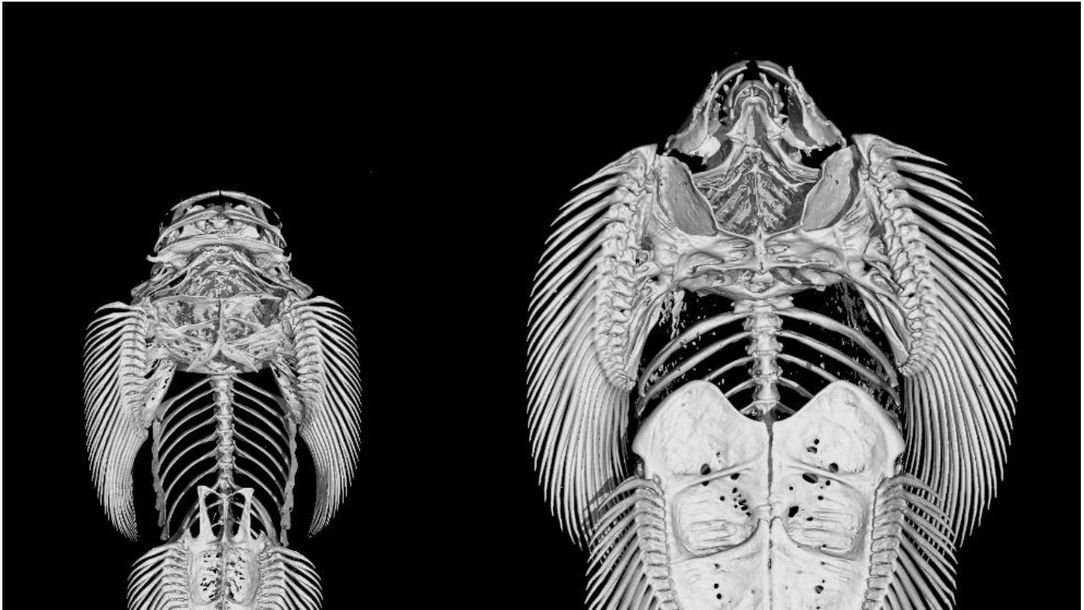
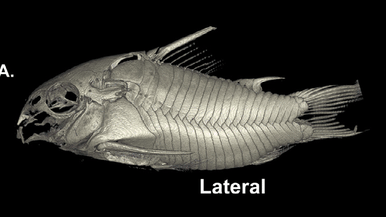
Figure 1: Hoplisoma trilineatum skeletal anatomy produced by computerized tomography (CT) scanning. Produced by: Lowe, A., Summers, A. P., Walter, R. P., Walker, S., & Paig-Tran, E. M. (2021). Scale performance and composition in a small Amazonian armored catfish, Corydoras trilineatusActa Biomaterialia121, 359-370.

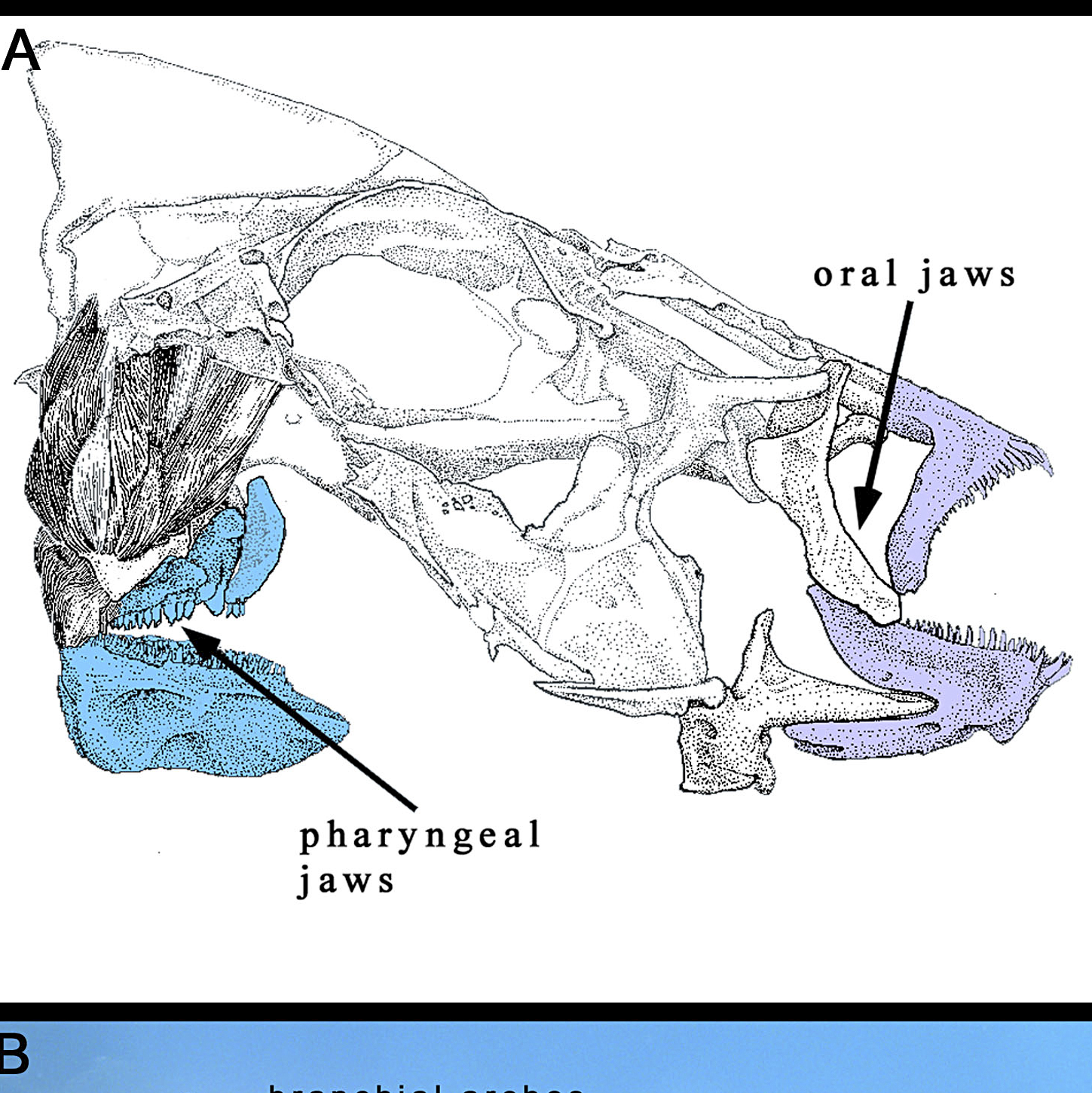
Again, an unclear topic. We know Corydoradinae have oral jaws (Fig 1) at the front of the head humongous with our the general vertebrate jaw. These oral jaws contain teeth (Huysentruyt et al., 2011) but there seems to have been no exploration of the diversity of these teeth. These oral jaws are very similar to other invertivores (feeds on invertebrates), being elongate to extract food items out of crevices or the substrate.

What is not researched is the secondary pair of jaws found in most fishes, the pharyngeal jaws. While the oral jaws in fishes are often involved in prey capture, the pharyngeal jaws are involved in prey processing, so the grinding and breaking down. These are at the back of the mouth so aren’t obvious but when you see a fishes head move after feeding it’s likely those jaws are moving. Corydoradinae do have pharyngeal jaws, they contain teeth (Huysentruyt et al., 2011) but we have no idea how this morphology differs across Corydoradinae. In Osteogaster aenea Huysentruyt et al. (2011) identified elongate pharyngeal teeth which would confirm that at least O. aeneus is not evolved to feed on snails but the jaws do seem some what robust. It contrasts from those species that feed on algae to any extent who seem to have much more simplistic and often bladed pharyngeal anatomy. Most research into pharyngeal anatomy focuses on cichlids of which might not be the best reference given differential feeding behaviour.

I believe Hoplisoma duplicareus, image from Olivia’s and Dad’s Fishroom. https://www.facebook.com/profile.php?id=100063396450007

Head shape can tell a lot about the fish, these fishes have such inferiorly facing mouths will be feeding around the substrate. What is more interesting is the shape of the snout mentioned earlier but we know so little about it. Those elongate snouts certainly allow the fish to dig deeper for food but how it effects them we only have clues.

What should I feed my Corydoras?

These are certainly not feeding on fishes, there is also the misconception that because fishes die that all fishes have access to them. Generally weaker individuals would be picked up by predators before they die and any dead fish would be more quickly exploited by species evolved to detect and quickly feed on carcasses. So fish meal is logically best avoided. These fishes also do not feed on plants so cereals are certainly of little use. This means those general diets are not great for them, most containing fish meal, cereals, vegetables etc. usually in that order.

Luckily for carnivores there is a few options for insect based foods. Fish Science is generally good and they offer some diversity. Fluval bug bites can be okay but still has quite a lot of fish meal and cereals in it. Repashy bottom scratcher is certainly worth looking at, being a gel diet you can add additional ingredients to it. I wouldn’t be afraid to use either Fish Science or Repashy bottom scratcher as the basis of the diet then frozen and freeze dried foods to build on it creating a more well rounded diet. Certainly live foods are worth looking at and would offer a lot of enrichment.

Corydoradinae are very forgiving regarding diets so experimenting is certainly possible.

Hoplisoma sp. I assume H. atropersonatus from Olivia’s and Dad’s Fishroom. https://www.facebook.com/profile.php?id=100063396450007

What about frozen foods?

Frozen foods are great but often will not contain all of the nutrition a species might require. In the wild most fishes will feed on hundreds of species and the narrow range of frozen foods available likely doesn’t compare nutritionally. These are great as enrichment or an addition to a fishes diet but not as a complete diet.

Protein Blisters

This is something that will always need mentioning regarding diets. I am not convinced it is caused by too much protein, even protein that isn’t absorbed/taken up by the fish e.g. excreted as nitrogenous waste. There is no evidence either way, it is clear bacteria can cause blisters and cysts but it can’t be said every cyst is caused by them without exploring further. Some frozen/live foods such as bloodworm can harbor Aeromonas (Senderovich et al., 2008) so it is difficult to make assumptions but there is little research on that.

A suggestion has been a form of gas bubble disease, true gas bubble disease as I call it though is caused from supersaturation of gases in the water, or some change in pressure resulting in bubbles forming in tissues very rapidly like the bends. It kills extremely rapidly as those bubbles form and burst blood vessels. There are other similar diseases like I have seen extreme algae growth associated, not proven though, to cause bubbles in some fishes but doesn’t kill and they are very localized.

We see similar in Loricariids, also armored and personally I would associate it with an infection of some kind. Blisters are tricky though as it’s such a general pathological symptom it could mean anything.

References:

Alexandrou, M. A., Oliveira, C., Maillard, M., McGill, R. A., Newton, J., Creer, S., & Taylor, M. I. (2011). Competition and phylogeny determine community structure in Müllerian co-mimics. Nature469(7328), 84-88.

Bertora, A., Fontanarrosa, M. S., Grosman, F., Sanzano, P., & Rosso, J. J. (2021). Trophic ecology of the Neotropical tolerant fish Corydoras paleatus under the influence of contrasting environmental conditions in a prairie stream. Anais da Academia Brasileira de Ciências93, e20200981.

Huysentruyt, F., Geerinckx, T., Brunain, M., & Adriaens, D. (2011). Development of the osteocranium in Corydoras aeneus (Gill, 1858) Callichthyidae, Siluriformes. Journal of Morphology272(5), 573-582.

Lowe, A., Summers, A. P., Walter, R. P., Walker, S., & Paig-Tran, E. M. (2021). Scale performance and composition in a small Amazonian armored catfish, Corydoras trilineatus. Acta Biomaterialia121, 359-370.

Nijssen, H. (1970). Revision of the Surinam catfishes of the genus Corydoras Lacépède, 1803 (Pisces, Siluriformes, Callichthyidae). Beaufortia18(230), 1-75.

Senderovich, Y., Gershtein, Y., Halewa, E., & Halpern, M. (2008). Vibrio cholerae and Aeromonas: do they share a mutual host?. The ISME journal2(3), 276-283.

Žák, J., Roy, K., Dyková, I., Mráz, J., & Reichard, M. (2022). Starter feed for carnivorous species as a practical replacement of bloodworms for a vertebrate model organism in ageing, the turquoise killifish Nothobranchius furzeri. Journal of Fish Biology100(4), 894-908.

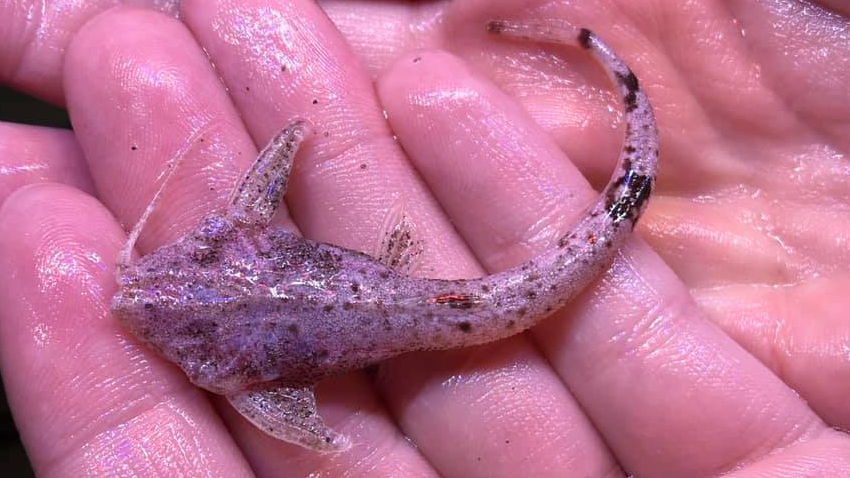
Solving the Eel-tailed Banjo Catfish, Platystacus cotylephorus

Banjo catfishes, Aspredinidae are a frequent catfish family that appears within the aquarium hobby although the majority will have seen and kept individuals from a single genus, Bunocephalus. Little seems known about the other Aspredinidae that rarely circulate the hobby.

Taxonomy and Phylogenetics

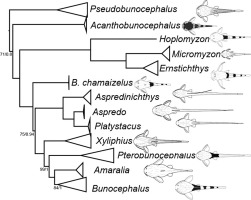
Aspredinidae is comprised of 13 genera and 49 species (Fricke et al., 2024), so it is a relatively small group of catfishes. As above Bunocephalus is the most commonly seen genus although Platystacus cotylephorus, Pterobunocephalus, Pseudobunocephalus and Amaralia are seen in the trade. The majority of these represent the smaller members of the family growing to around a maximum of 6-7cm SL, although Platystacus cotylephorus being the exception growing closer to 30cm SL similar to it’s sister genus, Aspredo (Carvalho et al., 2018; Fig 1). At one point Platystacus cotlyphorus was actually placed in Aspredo and you might see that in museum collections. I am unclear as to whether Aspredo does enter the aquarium trade.

Figure 1: The phylogenetic relationships of Aspredinidae by Carvalho et al. (2018): Carvalho, T. P., Arce, M., Reis, R. E., & Sabaj, M. H. (2018). Molecular phylogeny of Banjo catfishes (Ostaryophisi: Siluriformes: Aspredinidae): A continental radiation in South American freshwaters. Molecular Phylogenetics and Evolution127, 459-467.

Between these groups there is a clear morphological trend, although identification to species level in some can be particularly tricky.

This group is exclusive to South America but particularly widespread, curiously much of their morphology seems conserved across the group and given the limited species number it infers to me they are quite generalist and adaptable. The adaptability is certainly evident for anyone who has kept Bunocephalus.

Figure 2: Pterobuncephalus sp. ‘Peru white’.

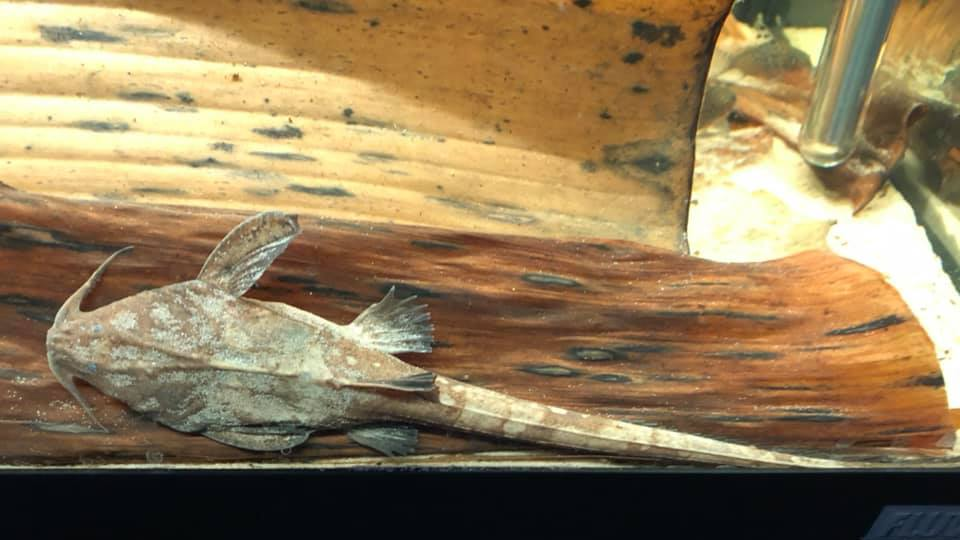
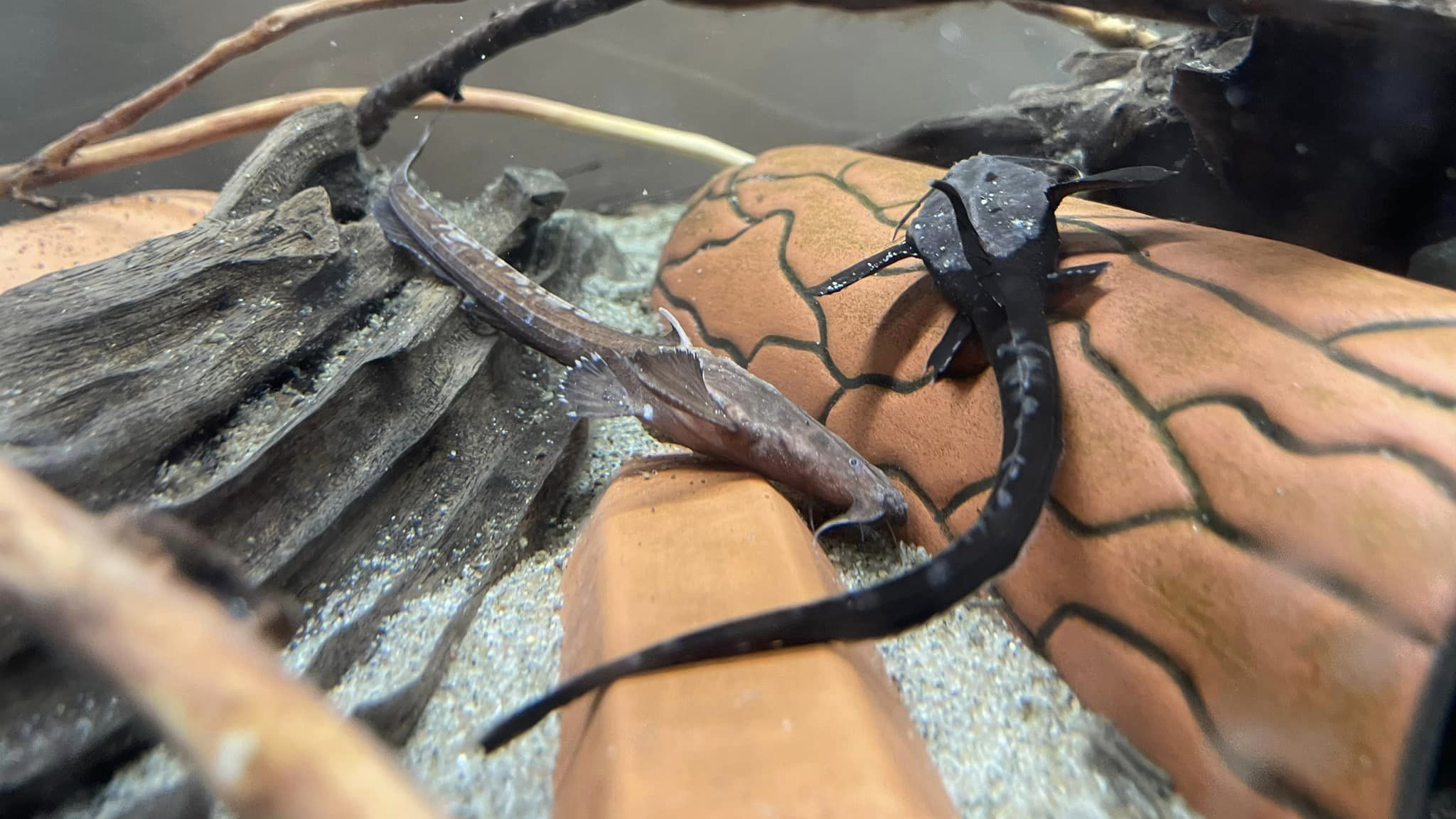
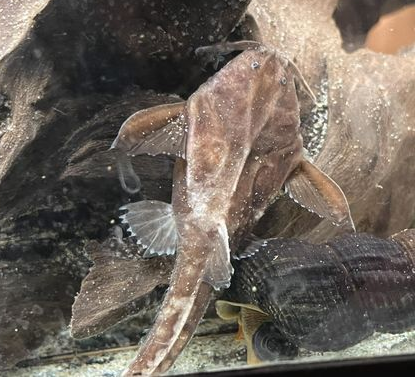
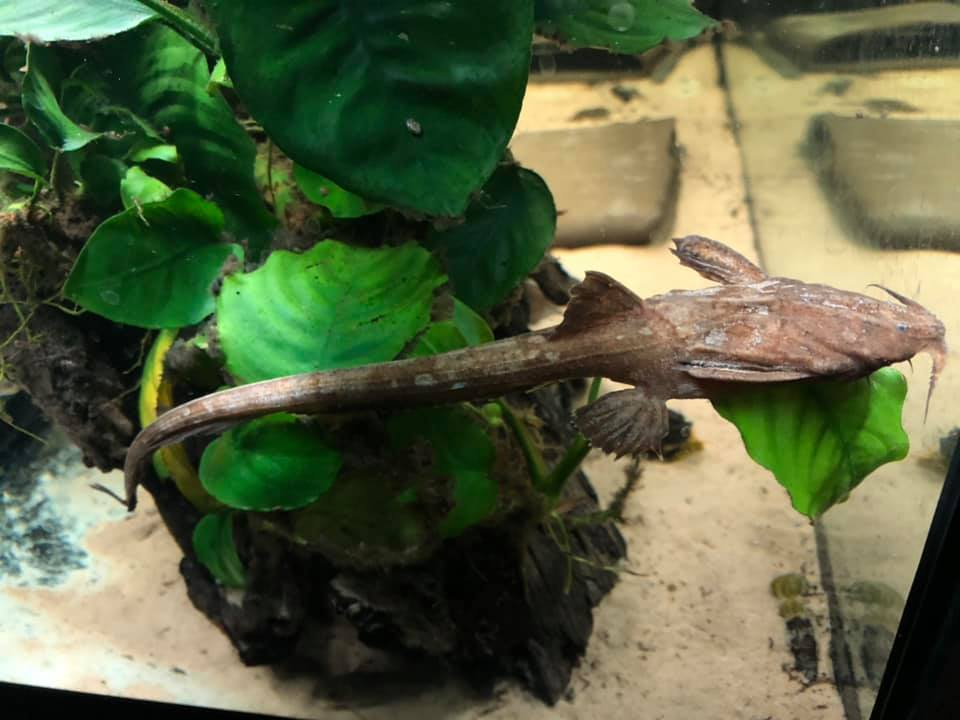
Platystacus cotylephorus is one of the most elongate members of the family, it has a large caudal peduncle with an elongate anal fin. This anal fin extending from the anus to close to the caudal fin is rather distinctive but is also found in Aspredo aspredo. In my experience, it seems to help with swimming in the water column and frequent activity, something I also saw in Pterobunocephalus sp. ‘Peru white’ (Fig 2). Unlike Bunocephalus these fishes are a lot more ventrally-dorsally compressed. Their pectoral fin spines are much stronger and more heavily serrated.

These are largely bottom dwelling fishes with inferior mouths, facing downwards and that is largely where they feed. Don’t be mistaken Platystacus will enter the water column occasionally, I find mostly when introduced to a new tank, they seem to exploit the current but unlike a typical fish are not the best at directing themselves. They use their larger pectorals and pelvic fins to glide with the anal fin like a stern to help guide themselves. When moving around the bottom they use that anal fin and eel shape much more. I can imagine in the wild they are much more adapted to leaf litter.

Many species of Aspredinidae display a wide diversity of colouration within species and it doesn’t seem to be due to locality. Platystacus cotylephorus being no exception but generally there are lighter more beige individuals and darker mahogany wood individuals, some have more markings then others.

Strangely there is little literature on the species regardless of it’s fascinating biology.

Etymology

Platys refers to the flat shape at the anterior of the fish and acus refers to the needle like posterior of the fish. Cotylephorus is even more interesting cotyla refers to a cup and phorus to bear. This scientific name is perfect, it describes the shape of the fish, the species epithet meaning bearing cups, these fishes have eggs attached via stalks to the abdomen of the fish (https://etyfish.org/siluriformes10/).

Diet

These are carnivores, pretty clear likely carnivores given their morphology, they do seem to lack oral teeth although I would not be surprised if they had substantial pharyngeal jaws. They respond with a reasonable speed to any of those invertebrate based food items and do not seem fussy.

The main issue with Platystacus cotylephorus and this goes for other Aspredinidae it seems that their abdominal cavity is much more restricted then Bunocephalus or in fact other catfishes. They cannot handle certain food items or high volumes, it seems to cause bloat that can be fatal. This means they really shouldn’t be in a tank where they can gorge themselves to death but also be careful to avoid too much fish meal based diets. I keep mine with Baryancistrus spp. right now which means I can control how much they have while the Baryancistrus have an awful lot of algaes.

So while for carnivorous fish I think there is a whole range they can be fed, for Platystacus cotylephorus I’d step back and think. If that abdomen is extended and the females do produce a lot of eggs, then it is best to reduce feeding for the time being.

Vocalization through stridulating

I’m surprised this isn’t talked about as much in the hobby. Many Aspredinidae or catfishes in general are capable of making sounds, sometimes it’s from the swim bladder but in this case it’s from those pectoral fins. Platystacus cotylephorus seem to make a range of sounds but it’s difficult to know what they are for. If handled and usually before they draw blood there is a higher pitch sound. I have caught a male during water being emptied for a water change making a cracking/clapping like sound, a much lower pitch sound.

Sounds aren’t frequently heard but it does happen.

Shedding skin

I’m not sure how clear it is as to why they do this, it is probably and possibly to a source of irritation. Unlike many other fishes it is not just the slime coat but a thin layer of skins. I find sometimes it seems to be done frequently but all I can say is these fishes are capable of doing it.

Sexing

This is assumed by the dorsal fin, males having dorsal extensions that can develop rapidly while the fish matures. Females have a much more rounded dorsal fin. Other then that I certainly would say there is little other difference unless that female is full of eggs and can have a slight yellow tinge to the abdomen.

Spawning

As far as I know Platystacus cotylephorus has never been spawned in captivity. Females carry the eggs on stalks on their abdomens and individuals have been imported in this state. It is not just Platystacus who does this but many members of Aspredinidae. These stalks don’t just function as attachment but somewhat function as a placenta for the developing embryo’s (Wetzel et al., 1997). I would be curious if there is any correlation between activity levels and this reproductive method between species.

Water Parameters and Habitat

A curious ability of this species is it’s range of habitats, while originating from Brazil they are capable of moving from fresh to brackish and even identified in marine waters. Could this be why they can shed their skin? But it makes them perfectly adaptable. I have been curious in the past that they need these changes to survive but it seems currently that isn’t true and the main reason they seem to fail in captivity is diet.

Photos of these fishes in the wild show them moving across very varied substrates, they do have some capability to dig in the sand and therefore I’d certainly provide that. I so suspect they are adapted to leaf litter although I find it a pain to clean around without trapping a lot of waste.

References

Carvalho, T. P., Arce, M., Reis, R. E., & Sabaj, M. H. (2018). Molecular phylogeny of Banjo catfishes (Ostaryophisi: Siluriformes: Aspredinidae): A continental radiation in South American freshwaters. Molecular Phylogenetics and Evolution127, 459-467.

Fricke, R., Eschmeyer, W. N. & Van der Laan, R. (eds) 2024.  ESCHMEYER’S CATALOG OF FISHES: GENERA, SPECIES, REFERENCES. (http://researcharchive.calacademy.org/research/ichthyology/catalog/fishcatmain.asp). Electronic version accessed 06 May 2024.

Wetzel, J., Wourms, J. P., & Friel, J. (1997). Comparative morphology of cotylephores in Platystacus and Solenostomus: modifications of the integument for egg attachment in skin-brooding fishes. Environmental Biology of Fishes50, 13-25.

Venturi, the power diffuser you didn’t know you needed.

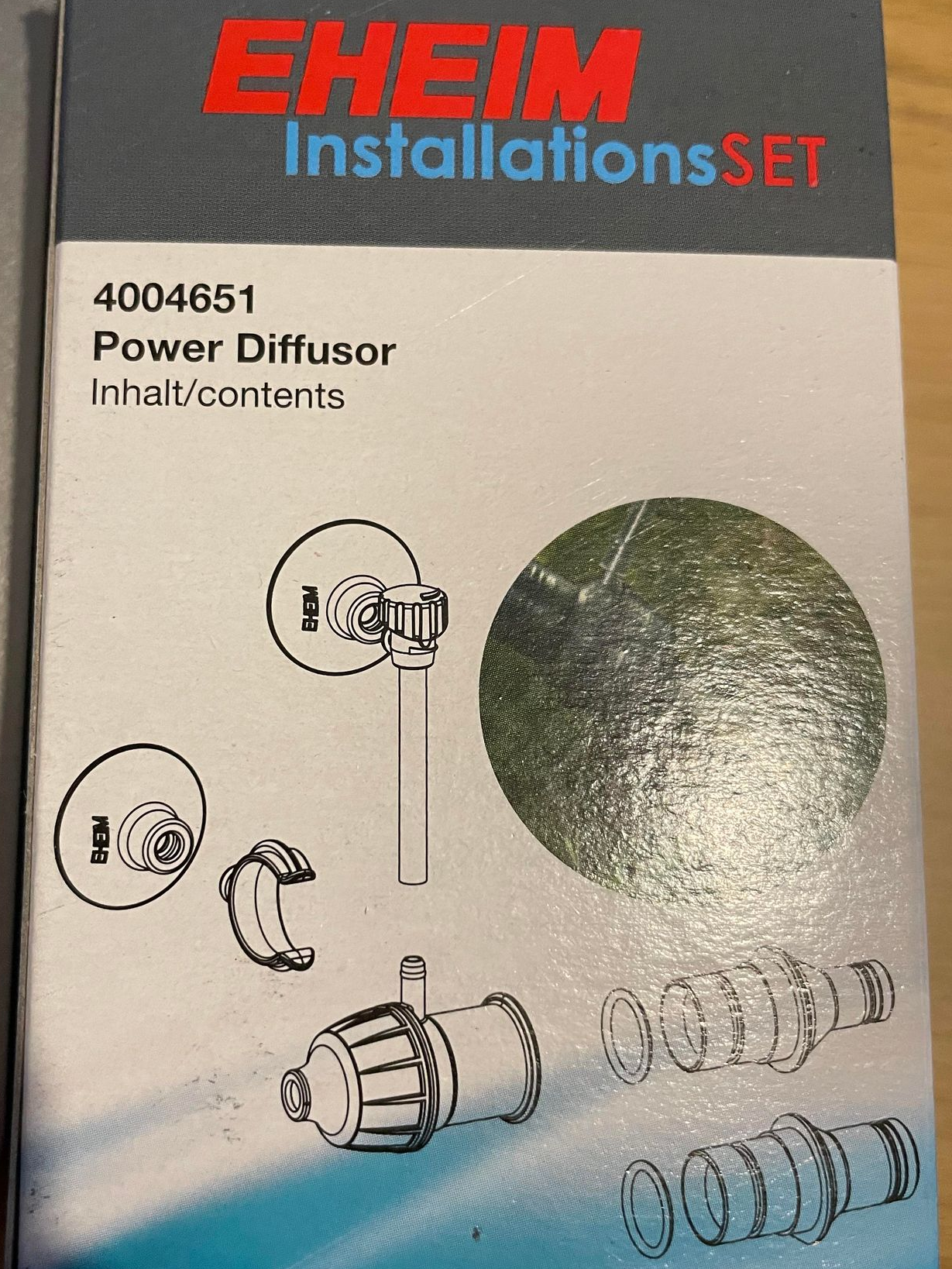
This small gadget I would never be without and they aren’t well known. One of the most important purposes of an aquarium is movement and therefore also oxygen supply. While air stones are largely decorative they can have a purpose in helping oxygen saturation by breaking up the surface of the water. Many filters do not provide enough of this surface movement and this is where venturi’s come in.

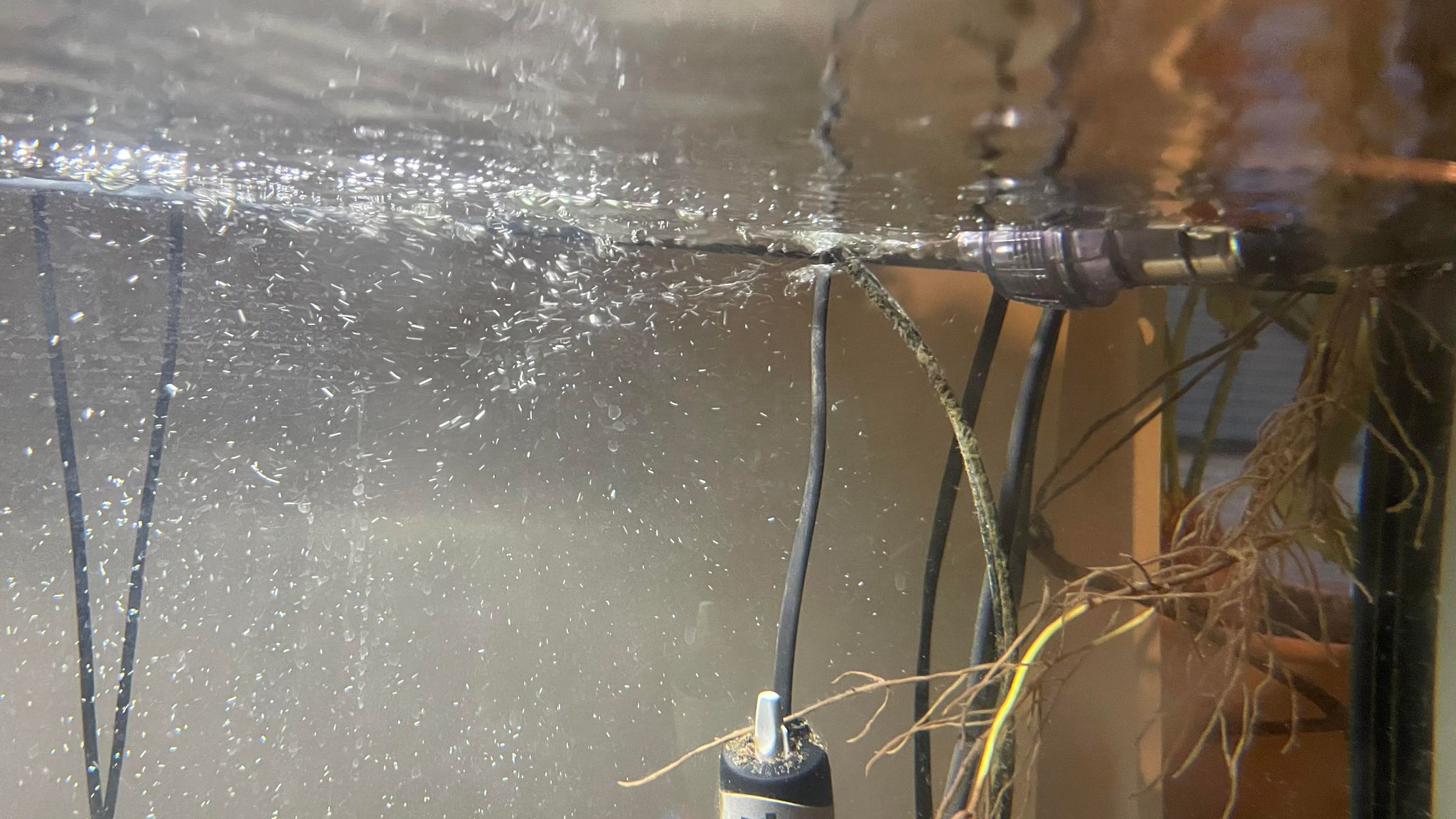
Venturi’s are a solution to this, they simply use the force of the filter outlet to pull air through into the water column. The amount of flow provided is much stronger then without or with a spray bar. So while this might not be much use for fishes such as Betta splendens that like next to no current for most fishes particularly those that like a current it is really a life saver. On top of these benefits it helps you identify the route of flow through the tank from these bubbles.

These little adaptations are easy to setup, all that is required is hose line that can attach it to the external filters outlet, I recommend heating that tubing with boiled water for 10 seconds to make it easier to attach.

There are are few available on the market and some filters come up with attachments that force air through. I have trialed a few over time but the majority tend to be loud or produce little air. Eheim’s remain the only you could attach to any external filter with a spare bit of tubing. There are some cheaper ones on the market that attach to filters I cannot comment on.

Most of my comments on these are through experience. I keep largely high flow fishes and one powerhead wouldn’t cut it. Since adding these I wouldn’t look back, improving flow but also oxygen saturation and where these fishes also need higher temperatures oxygen saturation is a limitation. For around £7-10 it’s not much more, while designed for Eheim filters they should work on Fluval and other brands.

One big question would be do they reduce the flow of the outlet by creating a barrier? It seems very clearly not. My only worry is back pressure on the impeller and filter pump but in maybe 4 years of having them I’ve had no issues with them.

Otherwise I cannot recommend this simple device even more. They change aquariums for the better in many ways.

Understanding Scientific (Latin) Names of Aquarium Fishes.

This is a subject that rarely gets discussed as it’s not something many are taught, even in the scientific community many are not taught it. Two important terms are needed here; Taxonomy, the study involving the description of species, genera and the larger groupings and Nomenclature, this is more about how these species are named. Since the mid-1700’s we have been using a system for scientific names known as Binomial Nomenclature created by Carl Linnaeus (a name everyone should know). This binomal system uses two names, the genus name (E.g. Corydoras) and the species name/epithet (aeneus), together this forms Corydoras aenus.

Pseudohemiodon apithanos at Maidenhead Aquatics at Ascot

Scientific names on the face of them aren’t that complex, and a lot of the rules are for those describing species, some rules are formal and others not. There is a guide, rulebook or bible for the naming of species, genera etc. and this is known as the International Code for Zoological Nomenclature, as the name suggests plants, fungi and bacteria have other codes.

The Groupings

To understand scientific names it can be useful to know the hierarchy of animal groups; Kingdom, Phylum, Class, Order, Family, Genus and finally Species. So an example would be Animalia (animals), Chordata (vertebrates, sea squirts etc.), Actinoptergii (Ray-finned fishes), Siluriforme (Catfishes), Loricariidae (Armoured suckermouth catfishes/plecos), Ancistrus (Bristlemouth catfishes/plecos) and Ancistrus ranunculus. There are some intermediate groups e.g. subfamily so in this case for Ancistrus would be Hypostominae, other genera in that group would be like Hypostomus, Hypancistrus, Scobinancistrus etc. I have been giving common names to some of these groups but beware as they can be misleading e.g. Synbranchiformes are eels but they are not closely related to Anguilliforme eels. Ray finned fishes, Actinopterygii doesn’t mean they all have fins, one that I find confuses students is they are asked to find lobe finned fishes, Sarcopterygii and presented with the African lungfish (Protopterus), or worse humans (Homo sapien). So this goes to show how useful scientific names and the systems are, they do teach placement within a group, or more precisely these groups are known as clades.

So this idea of grouping brings up another study, phylogenetics, unlike the name suggests this study uses morphology/anatomy and/or DNA. It is the study of evolutionary relationships between species to produce beautiful trees that hypothesize how species are related. When you know these relationships between whatever interests you, you can then identify trends and maybe keep species who have little information on them, of course understanding anatomy is important too.

Pangio myersi

Why are Scientific Names Important?

  • Scientific names are universal, they are the same around the world.
  • There is documentation e.g. papers which say the characteristics that define each species. So you can use these to identify your species.
  • Many species lack common names.
  • They are peer reviewed, other scientists have to agree with the decision.
  • Common names are deceptive, mountain chicken is not a bird at all and a racoon dog is neither a racoon or dog.
  • If importing fish the fact scientific names are universal becomes important as they might use direct translations or their own names e.g. Pez globo as common names.
  • Common names change frequently over time with no ability to record how they change.
  • Common names can often describe many vastly different species e.g. Snowball pleco covers Hypancistrus spp. and Baryancistrus sp. ‘L142’ so the size difference is a 7-10cm SL fish vs a 25-30cm SL fish with a much more specialized diet.

How to Write Scientific Names

This is the topic that maybe throws the most people.

So lets go with one of my favorite scientific names:

Satanoperca jurupari (Heckel 1840)

  • Firstly the genus first letter is uppercase, the species is in lower case. This designates the species from the other groupings as the larger groupings above e.g. genus, family etc. are all uppercase for the first letter.
  • Scientific names, genus and species are in italics. If hand written then the scientific name can be underlined. This designates a scientific name from the common names.
  • There is no plural or singular to genera or species names. Corydora is not the name of a genus, Corydoras is the singular and the plural.
  • When first stated technically all scientific names should be cited. This is like if you were citing a paper but it cites the work describing the species, not any revisions just the species. If the name is in brackets it means that there has been a revision in the genus, if not there has been no revision. So in this case Satanoperca jurupari was originally in Geophagus.
Platystacus cotylephorus from Maidenhead Aquatics at Farnham

The Short Hand, and Their Meanings

Frequently you’ll come across letters with a full stop after and they are important. Some designate opinions about a species identification and others just save time.

  • sp. This means species as singular. Usually used where the species is not known or is undescribed. It will mostly be used where the genus is known but can be used even at the family level. Should not be italicized. E.g. Corydoras sp. one unknown or described species of Corydoras.
  • spp. This is plural for multiple species. It can be used for unknown or undescribed species but is more often to describe many species in the genus. E.g. Corydoras spp. multiple species of Corydoras.
  • subsp. Subspecies but most of us don’t really use subspecies, it’ll follow the scientific name between species and subspecies name.
  • aff. affinity with, means that it is similar to that species but likely not. E.g. Parancistrus aff. aurantiacus, it is similar to Parancistrus aurantiacus but in body shape, size etc. certainly a different species.
  • cf. confer to, similar to the species listed and likely that species but unsure.

There are a few others but they aren’t quite as important.

Etymology, the best bit!

Etymology is the origin of words, every scientific name will mean something usually a description of anatomy, a location, a person, an animal etc. This makes them so fascinating and unlike common names the original paper will include why the name was chosen and what it means.

So for the species earlier, Satanoperca jurupari. Satan actually refers to demons, this is largely due to these fishes being mouth brooders and locals associating them with eating their children. Demon in many countries refers more to spirit. Perca refers to perch, cichlids are Periformes but generally perch like. So this genus, Satanoperca is the demon perch. Many of the species in this genus are named after demons, S. lilith is another associated with eating children. S. jurupari is no exception but this is a local demon or more spirit who swallows children, I believe it should be pronounced as if you were saying yurupari.

I recommend checking out Etyfish for anyone who is interested in etymology of scientific names.

Scientific Names are not Latin

There is the idea that all scientific names are in Latin, and when you look at the names properly this is clearly untrue, they are not in the Latin language. Almost every language probably has scientific names in that language and they can be a hybrid of the two. Latin and Greek maybe were the most popular for a time period, it might have a social historical reason why but with most of us not being taught Latin in school I think that is changing. From the start species have been named after people whose names were not Latin.

This is why the term Latin names is generally incorrect.

Who are These Species Named After?

Not the author of the species description, ideally. It’s seen as more polite to name it after someone else, it is generally a huge honor to have a species named after you. It is usually a notation of the amount of work someone has done in a field although celebrities, political figures etc. have species named after them. Every scientist has their preferences and sometimes the naming after a well known person is great, needed publicity for scientists, and that can equate to funding or jobs. There is still debate about names that have become questionable.

Some of the best are the number of species named after characters in mythology, books and tv shows. We have quite a few Tolkien fans who study catfish as scientific names show, but there is also Aenigmachanna gollum.

Hoplarchus psittacus at Pier Aquatics, Wigan

Scientific names have a Gender

English is a language that we all know lacks gender, in French and Spanish it is quite clear words are gendered. Scientific names are as well, only those describing the species really have to concern themselves with this but the name can be feminine, masculine or neutral and this can change, a revision of the genus can change the gender. A great example of changing names was Megalechis thorcata was Hoplosternum thoracatum.

The Dreaded Pronunciation

I think it’s only correct if a species is named after someone aiming for a good pronunciation is only polite. Otherwise everyone does pronounce things differently, those aiming for a correct Latin or Greek pronunciation we aren’t entirely sure how they pronounced everything in the past, additionally like the UK and US, pronunciation varied between localities. Some pronunciations are difficult for some people, and that’s fine. Generally I think no one really minds how you pronounce scientific names, there are some strange ones but who knows theirs could be more correct.

Scientific Names Change

This is an argument many will bring up against their use, common names change as well and there is often no record to identify previous names. I grew up knowing the dwarf butterfly cichlid, a beautiful species yet over the years their name changed to the ramirezi cichlid, then ram cichlid but now there are many common names for the same species, Mikrogeophagus ramirezi. German blue ram being one which technically should only refer to a certain line of the fish, 99% of people no doubt have fishes with no connection to this line but entirely farmed in Asia. I have seen many more.

Scientific names do change, they change for good reason, they change as we know more about a species. Species get split up sometimes but they also might move genera. This shouldn’t be seen as a bad thing, as knowledge improves our naming systems should change. We can track these changes in papers and catalogs, unlike common names.

How to Keep Up to Date with Revisions

The best source for this will always be Catalog of Fishes by William Eschmeyer. Often within days of a scientific paper revising a species this website will update, not just that but it includes all the references and previous names behind all changes.

Water hardness and pH, what is it and does it really matter?

This is one of the most controversial topics and why not? It involves some really detailed physiology and multiple processes. Generally this means getting your head around things you cannot usually see. I shall only discuss juvenile and adult fishes rather then their eggs here.

First is to understand the anatomy we are discussing in relation to the topic, this is largely the gills found in all fishes.

Figure 1: A diagram of the gills by Campbell, N. A., Reece, J. B., Taylor, M. R., Simon, E. J., & Dickey, J. (2006). Biology: concepts & connections (pp. 70-78). San Francisco, CA: Benjamin Cummings.

The gills while largely known for taking up O2 and release CO2 so have a role in respiration this organ has other purposes. Two major functions are maintenance in osmoregulation and processing of nitrogenous waste, ammonium (NH4+). You can see that the gills are split into gill arches which support two gill filaments, these filaments are then made of many small structures called lamellae (Fig 1). The aim of these structures is to increase surface area so exposure to the water for these purposes.

Another organ that might be discussed is the kidneys, but forget whatever you previously thought about kidneys, fishes kidneys look very different. The structure isn’t really of much use to us but it is generally a thin stretched structure at the top of the fish if curious this website is great for necropsy images: https://www.necropsymanual.net/en/teleosts-anatomy/excretory-and-osmo-regulatory-system/

So lets get into the real physiology.

pH

pH to put simply is a measure of hydrogen ions (H+, reduces the pH) and hydroxide (OH, increases the pH), it measured in a logarithmic scale so a pH of 6 is 10x more acidic then a pH of 7.

This measure has two main interactions with fishes ammonia excretion and uptake/maintenance of minerals within fishes.

High pH

Ammonia generally exists in two states ammonia (NH3) and ammonium (NH4+). At higher pH levels ammonia is the dominant compound, at lower pH’s it is converted to the safer ammonium. At a higher pH environment the fish has a reduced ability to transport ammonia out of the body, leading to accumulation within the fishes body (Eddy & Handy, 2012; Wilkie & Wood, 1996).

Low pH

It is well known fishes take up calcium (Ca2+) and sodium (Na+) from their environment, it is important for many biological processes. H+, in higher volumes in low pH water competes with calcium and sodium to be taken up by the fishes. In a similar process to how a high pH results in high ammonia accumulation a low pH increases excretion of ammonium (Malabarba et al., 2020). Although a low pH is not particularly toxic (Eddy & Handy, 2012), it does limit access to these compounds. Many fishes who inhabit these environments have evolved different physiological responses to allow them to inhabit such an environment.

One interaction of a low pH would be that this erodes rocks even slowly that can allow for aluminum to accumulate in it’s more toxic form, Al3+(Eddy & Handy, 2012). This shouldn’t be an issue in a well water changed aquarium, but could be a contributor to “old tank syndrome”.

Regardless this is generally discussed at extremes and not usually the parameters we keep our fishes in.

Hardness, the various measures under that name

Hardness maybe is more complex, the aquarium trade associates it largely with KH or GH but realistically there are so many compounds involved that we are not testing for. These compounds are what is discussed in the scientific literature (Malabarba et al., 2020). I prefer TDS or conductivity, not just are these likely the only measures you’ll find for wild fishes.

Low hardness

At a low hardness ionic balance as discussed in the pH section would become difficult. This results in the increase in cells that maintain this balance known as ionocytes (Malabarba et al., 2020).

High hardness

High hardness can result in stress from calcium in the gills, liver and intestines at extreme levels but fishes do show the ability to adapt (Limbaugh et al., 2012).

Adaptability

Many fishes clearly display adaptations to deal with extremes, this depends on the species to it’s ideal range and what it can deal with (Eddy & Handy, 2012; Malabarba et al., 2020). So unless a species has been studied we really don’t know how much they can adapt to.

Summary

It is really difficult to say how compounds interact with fishes in the aquarium context, we are dealing with such a comparatively narrow range of parameters. Recently people have been even avoiding the extremes on the lower side so it’s become difficult to say to much. This topic unlike many is discussing such a wide diversity of taxa and many inhabit variable regions.

References:

Campbell, N. A., Reece, J. B., Taylor, M. R., Simon, E. J., & Dickey, J. (2006). Biology: concepts & connections (pp. 70-78). San Francisco, CA: Benjamin Cummings.

Eddy, B., & Handy, R. D. (2012). Ecological and environmental physiology of fishes (Vol. 4). Oxford University Press.

Limbaugh, N., Romano, N., Egnew, N., Shrivastava, J., Bishop, W. M., & Sinha, A. K. (2021). Coping strategies in response to different levels of elevated water hardness in channel catfish (Ictalurus punctatus): Insight into ion-regulatory and histopathological modulations. Comparative Biochemistry and Physiology Part A: Molecular & Integrative Physiology260, 111040.

Malabarba, L. R., Malabarba, M. C., Baldisserotto, B., Urbinati, E., & Cyrino, J. (2020). Biology and physiology of freshwater neotropical fish. Academic Press.

Wilkie, M. P., & Wood, C. M. (1996). The adaptations of fish to extremely alkaline environments. Comparative Biochemistry and Physiology Part B: Biochemistry and Molecular Biology113(4), 665-673.