
This is a subject that rarely gets discussed as it’s not something many are taught, even in the scientific community many are not taught it. Two important terms are needed here; Taxonomy, the study involving the description of species, genera and the larger groupings and Nomenclature, this is more about how these species are named. Since the mid-1700’s we have been using a system for scientific names known as Binomial Nomenclature created by Carl Linnaeus (a name everyone should know). This binomal system uses two names, the genus name (E.g. Corydoras) and the species name/epithet (aeneus), together this forms Corydoras aenus.
Scientific names on the face of them aren’t that complex, and a lot of the rules are for those describing species, some rules are formal and others not. There is a guide, rulebook or bible for the naming of species, genera etc. and this is known as the International Code for Zoological Nomenclature, as the name suggests plants, fungi and bacteria have other codes.
The Groupings
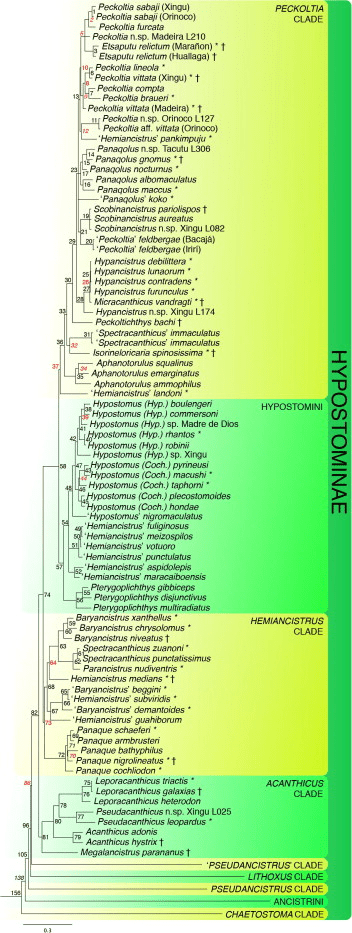
To understand scientific names it can be useful to know the hierarchy of animal groups; Kingdom, Phylum, Class, Order, Family, Genus and finally Species. So an example would be Animalia (animals), Chordata (vertebrates, sea squirts etc.), Actinoptergii (Ray-finned fishes), Siluriforme (Catfishes), Loricariidae (Armoured suckermouth catfishes/plecos), Ancistrus (Bristlemouth catfishes/plecos) and Ancistrus ranunculus. There are some intermediate groups e.g. subfamily so in this case for Ancistrus would be Hypostominae, other genera in that group would be like Hypostomus, Hypancistrus, Scobinancistrus etc. I have been giving common names to some of these groups but beware as they can be misleading e.g. Synbranchiformes are eels but they are not closely related to Anguilliforme eels. Ray finned fishes, Actinopterygii doesn’t mean they all have fins, one that I find confuses students is they are asked to find lobe finned fishes, Sarcopterygii and presented with the African lungfish (Protopterus), or worse humans (Homo sapien). So this goes to show how useful scientific names and the systems are, they do teach placement within a group, or more precisely these groups are known as clades.
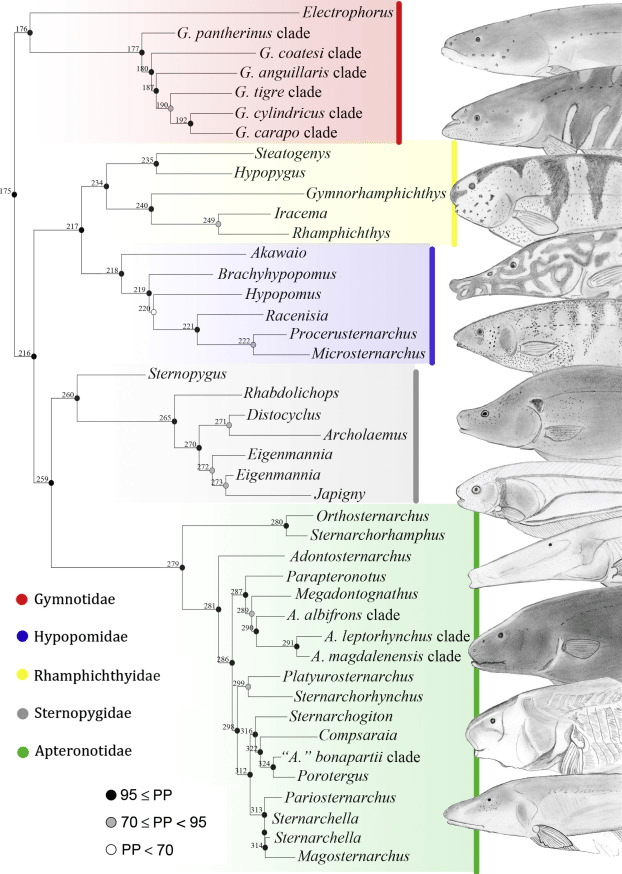
So this idea of grouping brings up another study, phylogenetics, unlike the name suggests this study uses morphology/anatomy and/or DNA. It is the study of evolutionary relationships between species to produce beautiful trees that hypothesize how species are related. When you know these relationships between whatever interests you, you can then identify trends and maybe keep species who have little information on them, of course understanding anatomy is important too.
Why are Scientific Names Important?
- Scientific names are universal, they are the same around the world.
- There is documentation e.g. papers which say the characteristics that define each species. So you can use these to identify your species.
- Many species lack common names.
- They are peer reviewed, other scientists have to agree with the decision.
- Common names are deceptive, mountain chicken is not a bird at all and a racoon dog is neither a racoon or dog.
- If importing fish the fact scientific names are universal becomes important as they might use direct translations or their own names e.g. Pez globo as common names.
- Common names change frequently over time with no ability to record how they change.
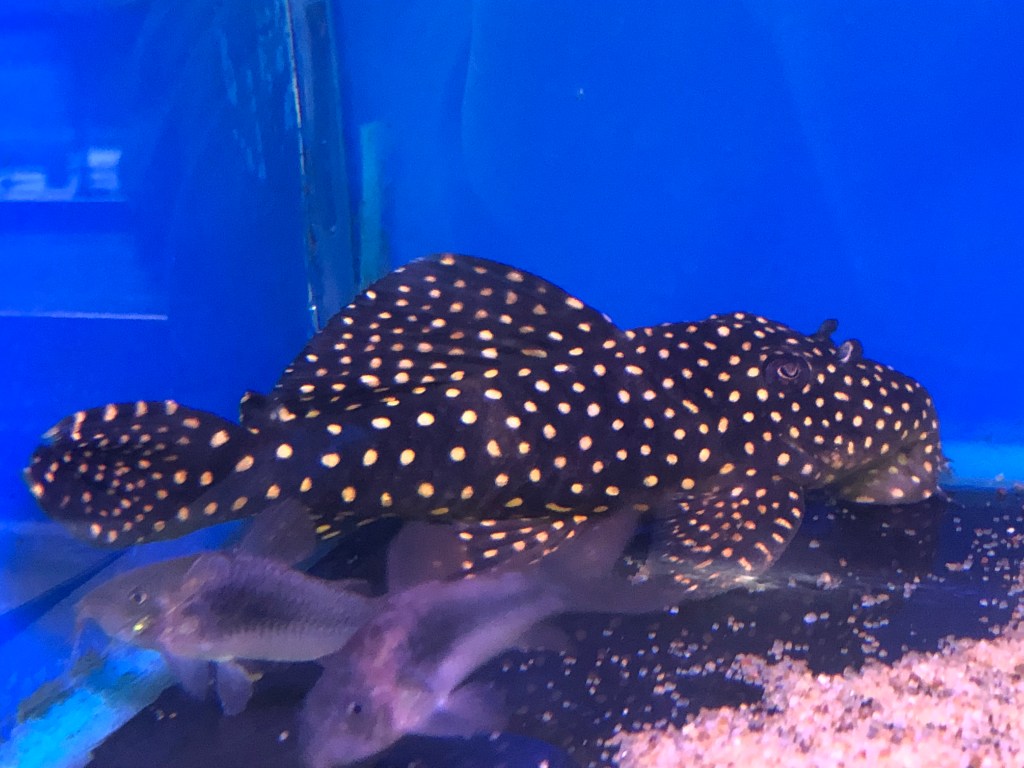
- Common names can often describe many vastly different species e.g. Snowball pleco covers Hypancistrus spp. and Baryancistrus sp. ‘L142’ so the size difference is a 7-10cm SL fish vs a 25-30cm SL fish with a much more specialized diet.
How to Write Scientific Names
This is the topic that maybe throws the most people.
So lets go with one of my favorite scientific names:
Satanoperca jurupari (Heckel 1840)
- Firstly the genus first letter is uppercase, the species is in lower case. This designates the species from the other groupings as the larger groupings above e.g. genus, family etc. are all uppercase for the first letter.
- Scientific names, genus and species are in italics. If hand written then the scientific name can be underlined. This designates a scientific name from the common names.
- There is no plural or singular to genera or species names. Corydora is not the name of a genus, Corydoras is the singular and the plural.
- When first stated technically all scientific names should be cited. This is like if you were citing a paper but it cites the work describing the species, not any revisions just the species. If the name is in brackets it means that there has been a revision in the genus, if not there has been no revision. So in this case Satanoperca jurupari was originally in Geophagus.
The Short Hand, and Their Meanings
Frequently you’ll come across letters with a full stop after and they are important. Some designate opinions about a species identification and others just save time.
- sp. This means species as singular. Usually used where the species is not known or is undescribed. It will mostly be used where the genus is known but can be used even at the family level. Should not be italicized. E.g. Corydoras sp. one unknown or described species of Corydoras.
- spp. This is plural for multiple species. It can be used for unknown or undescribed species but is more often to describe many species in the genus. E.g. Corydoras spp. multiple species of Corydoras.
- subsp. Subspecies but most of us don’t really use subspecies, it’ll follow the scientific name between species and subspecies name.
- aff. affinity with, means that it is similar to that species but likely not. E.g. Parancistrus aff. aurantiacus, it is similar to Parancistrus aurantiacus but in body shape, size etc. certainly a different species.
- cf. confer to, similar to the species listed and likely that species but unsure.
There are a few others but they aren’t quite as important.
Etymology, the best bit!
Etymology is the origin of words, every scientific name will mean something usually a description of anatomy, a location, a person, an animal etc. This makes them so fascinating and unlike common names the original paper will include why the name was chosen and what it means.
So for the species earlier, Satanoperca jurupari. Satan actually refers to demons, this is largely due to these fishes being mouth brooders and locals associating them with eating their children. Demon in many countries refers more to spirit. Perca refers to perch, cichlids are Periformes but generally perch like. So this genus, Satanoperca is the demon perch. Many of the species in this genus are named after demons, S. lilith is another associated with eating children. S. jurupari is no exception but this is a local demon or more spirit who swallows children, I believe it should be pronounced as if you were saying yurupari.
I recommend checking out Etyfish for anyone who is interested in etymology of scientific names.
Scientific Names are not Latin
There is the idea that all scientific names are in Latin, and when you look at the names properly this is clearly untrue, they are not in the Latin language. Almost every language probably has scientific names in that language and they can be a hybrid of the two. Latin and Greek maybe were the most popular for a time period, it might have a social historical reason why but with most of us not being taught Latin in school I think that is changing. From the start species have been named after people whose names were not Latin.
This is why the term Latin names is generally incorrect.
Who are These Species Named After?
Not the author of the species description, ideally. It’s seen as more polite to name it after someone else, it is generally a huge honor to have a species named after you. It is usually a notation of the amount of work someone has done in a field although celebrities, political figures etc. have species named after them. Every scientist has their preferences and sometimes the naming after a well known person is great, needed publicity for scientists, and that can equate to funding or jobs. There is still debate about names that have become questionable.
Some of the best are the number of species named after characters in mythology, books and tv shows. We have quite a few Tolkien fans who study catfish as scientific names show, but there is also Aenigmachanna gollum.
Scientific names have a Gender
English is a language that we all know lacks gender, in French and Spanish it is quite clear words are gendered. Scientific names are as well, only those describing the species really have to concern themselves with this but the name can be feminine, masculine or neutral and this can change, a revision of the genus can change the gender. A great example of changing names was Megalechis thorcata was Hoplosternum thoracatum.
The Dreaded Pronunciation
I think it’s only correct if a species is named after someone aiming for a good pronunciation is only polite. Otherwise everyone does pronounce things differently, those aiming for a correct Latin or Greek pronunciation we aren’t entirely sure how they pronounced everything in the past, additionally like the UK and US, pronunciation varied between localities. Some pronunciations are difficult for some people, and that’s fine. Generally I think no one really minds how you pronounce scientific names, there are some strange ones but who knows theirs could be more correct.
Scientific Names Change
This is an argument many will bring up against their use, common names change as well and there is often no record to identify previous names. I grew up knowing the dwarf butterfly cichlid, a beautiful species yet over the years their name changed to the ramirezi cichlid, then ram cichlid but now there are many common names for the same species, Mikrogeophagus ramirezi. German blue ram being one which technically should only refer to a certain line of the fish, 99% of people no doubt have fishes with no connection to this line but entirely farmed in Asia. I have seen many more.
Scientific names do change, they change for good reason, they change as we know more about a species. Species get split up sometimes but they also might move genera. This shouldn’t be seen as a bad thing, as knowledge improves our naming systems should change. We can track these changes in papers and catalogs, unlike common names.
How to Keep Up to Date with Revisions
The best source for this will always be Catalog of Fishes by William Eschmeyer. Often within days of a scientific paper revising a species this website will update, not just that but it includes all the references and previous names behind all changes.




 The Scientific Fishkeeper