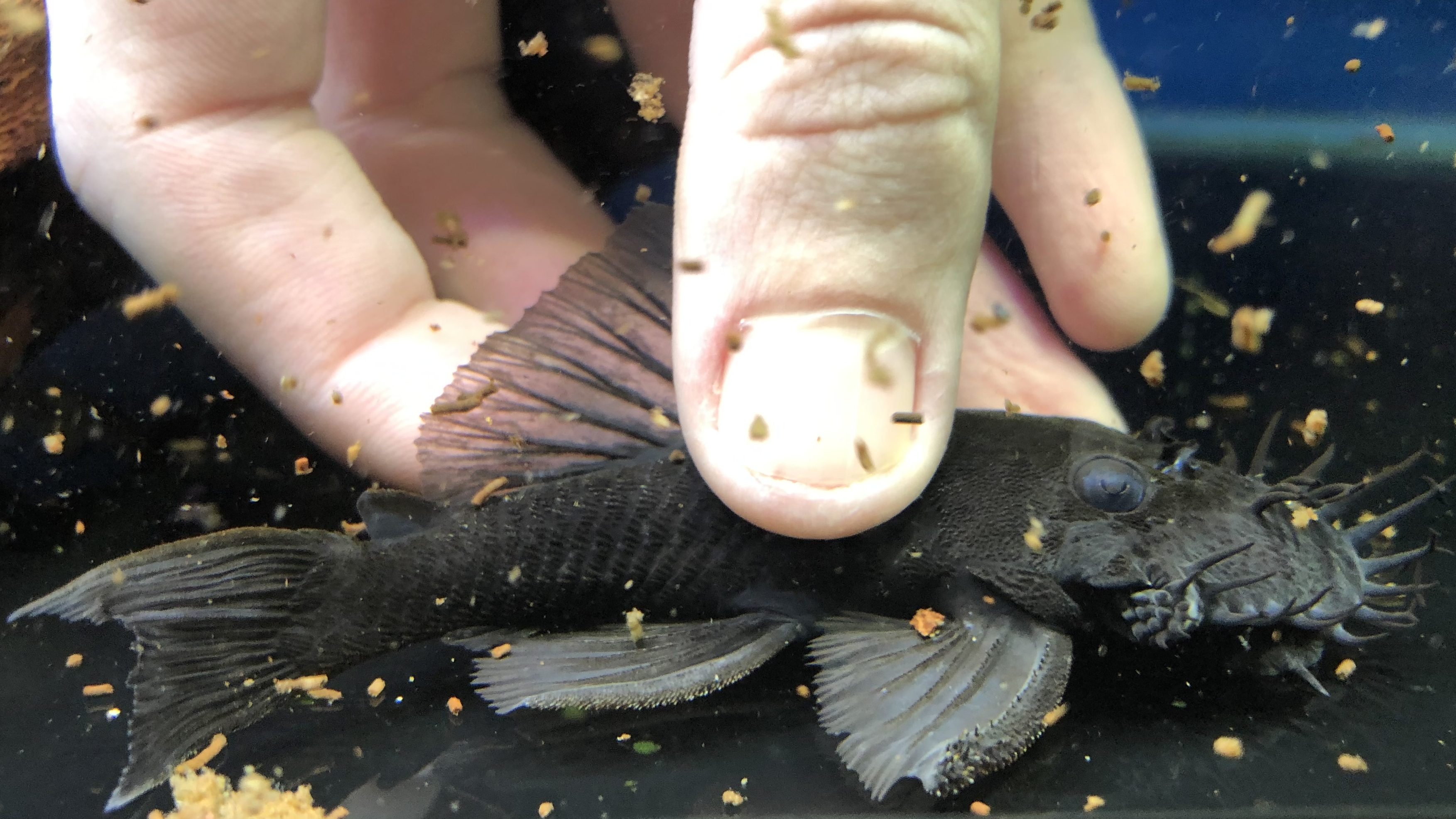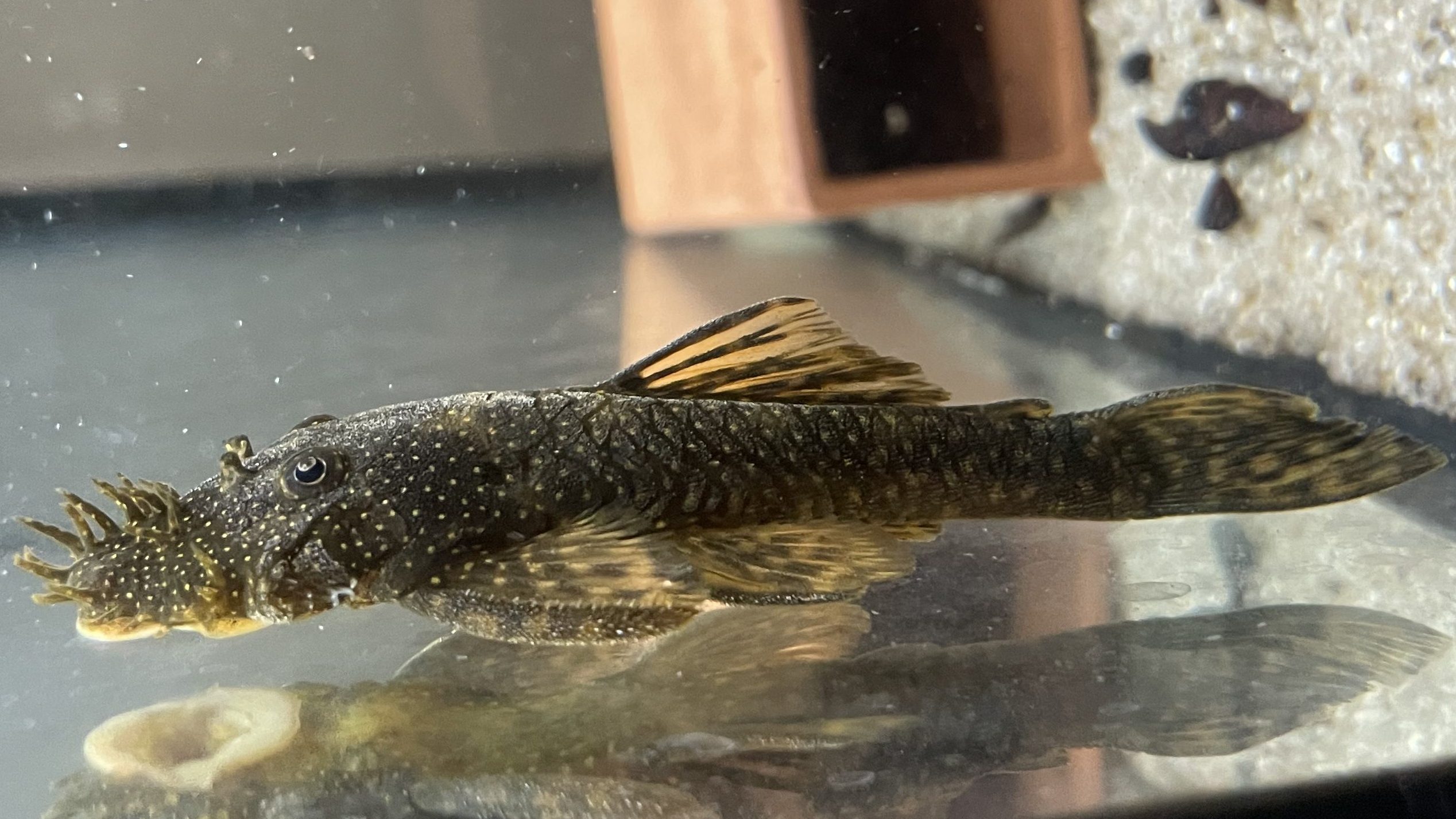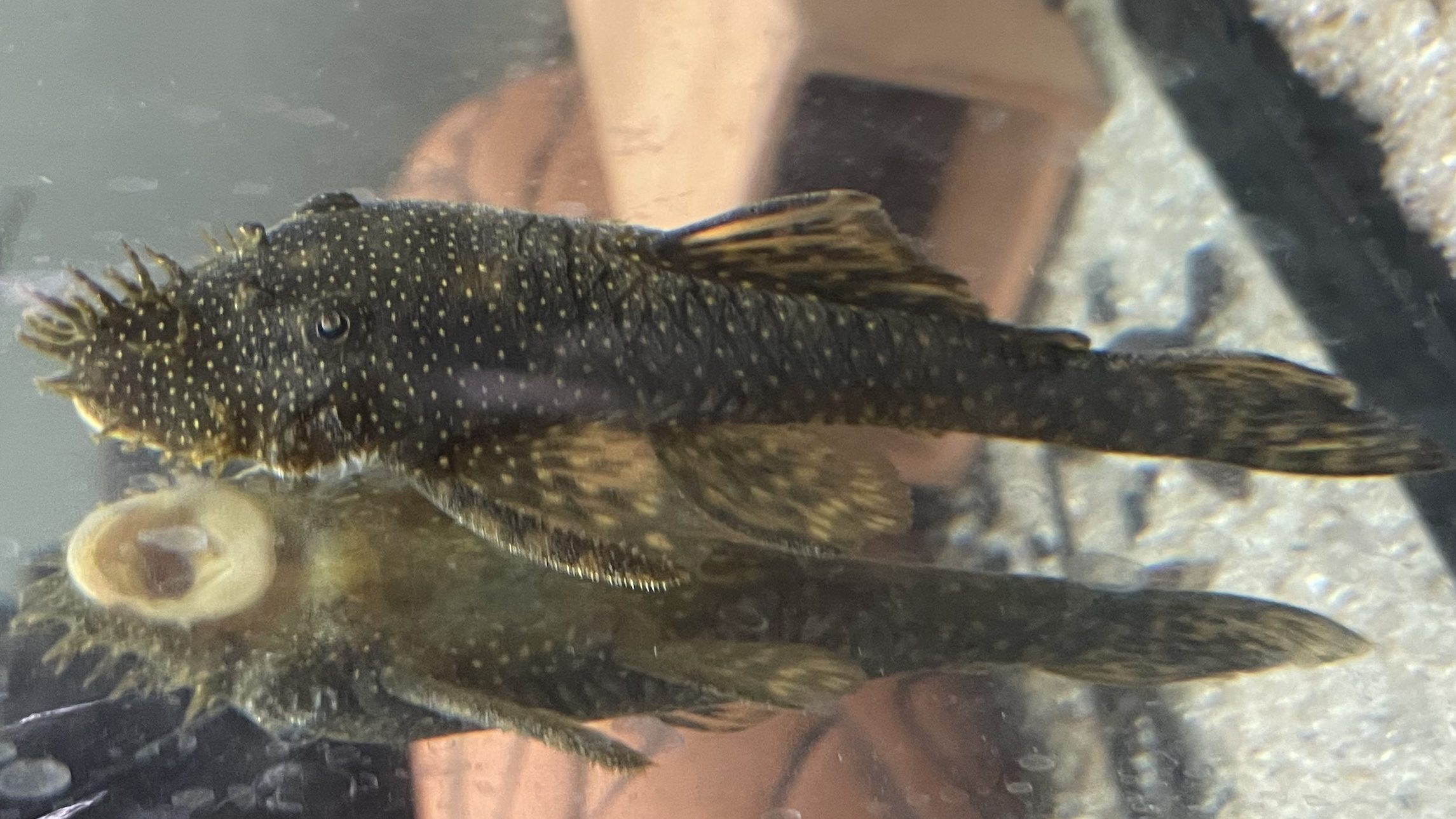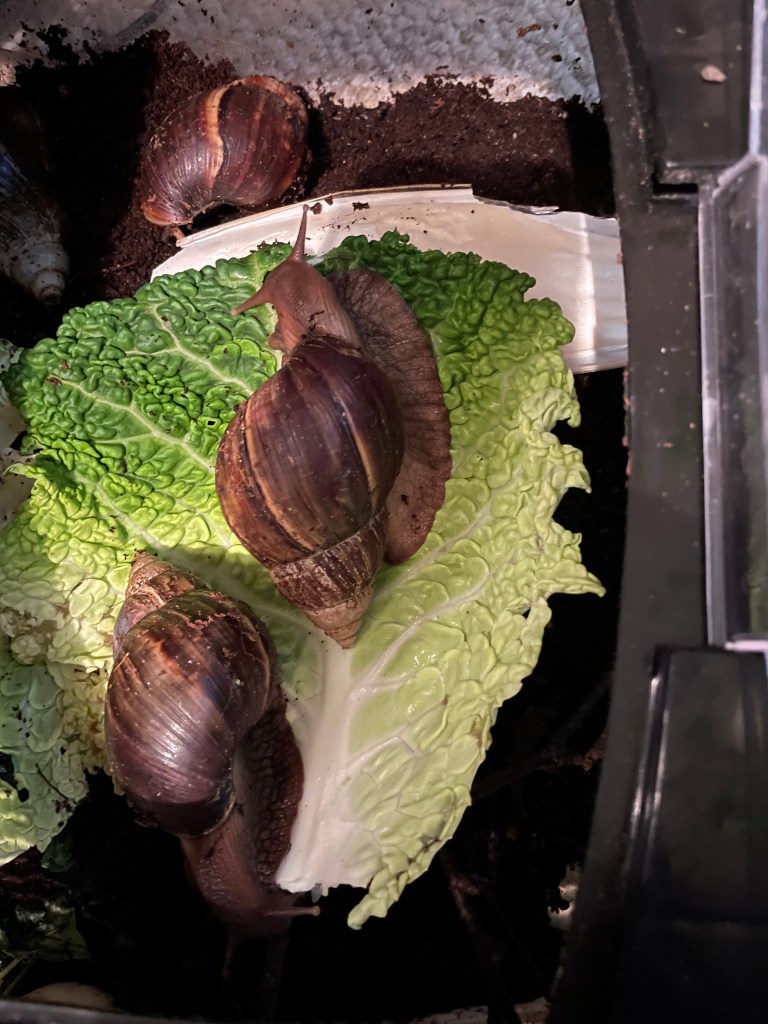
Category Archives: Furthering Freshwater Fishkeeping

Hybridisation, is it such a bad thing?

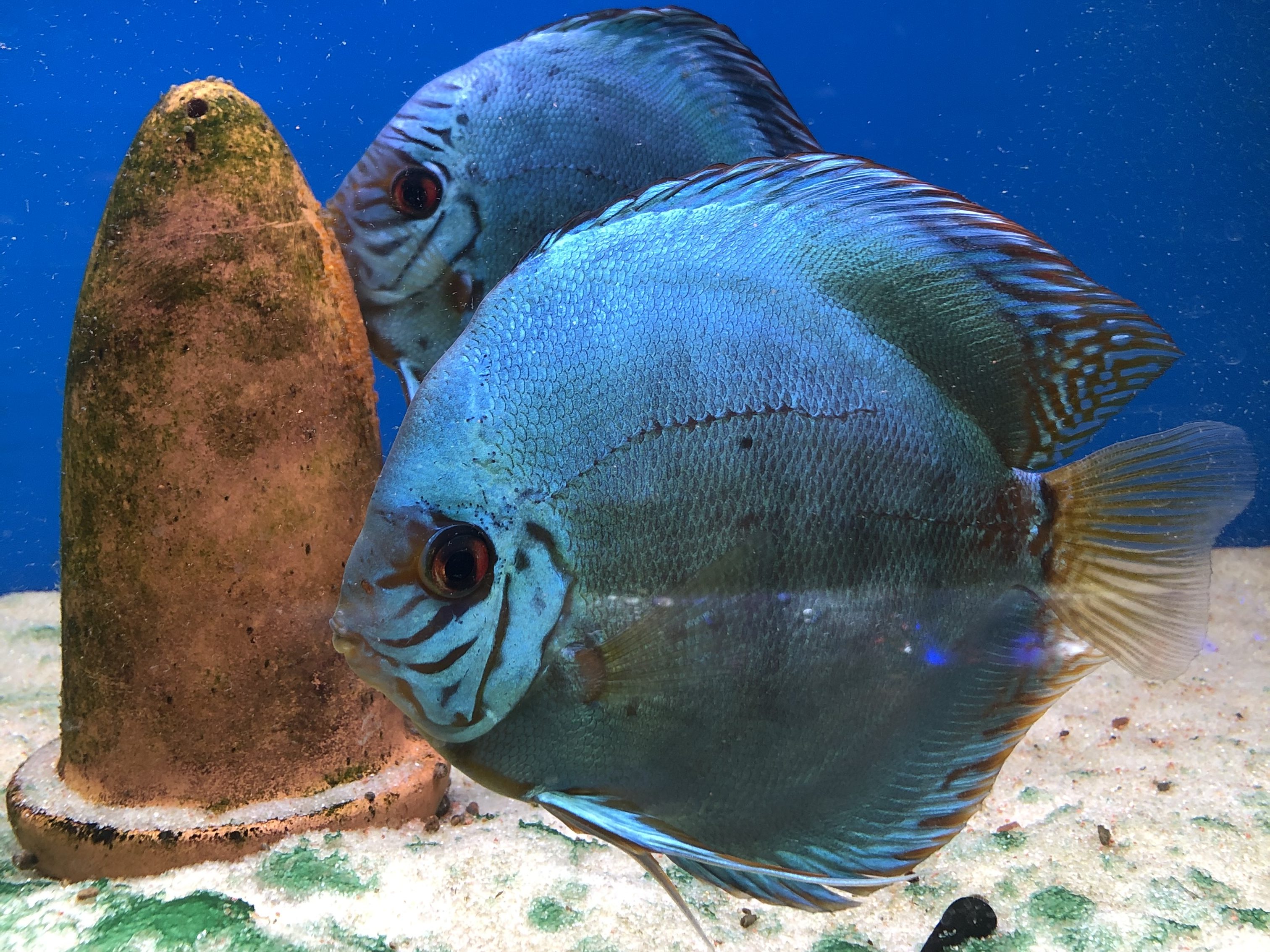
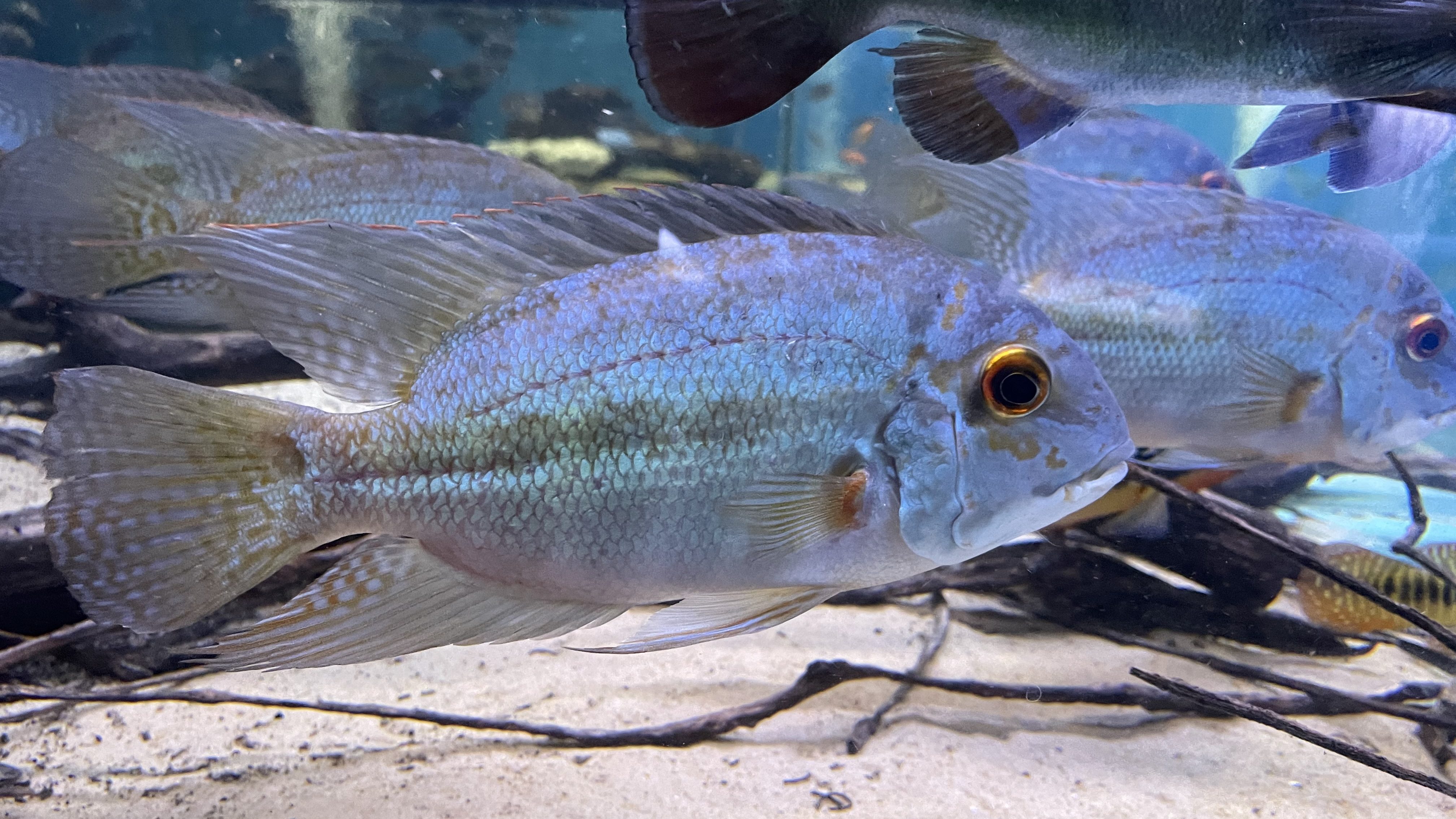
Stendker blue turquoise discus, Symphysodon sp. x. at Maidenhead Aquatics, Ascot 2019.
Hybridisation is such a trigger word these days with many opinions for and against. First there are two definitions required:

Hybridisation: Interbreeding between two members of different species (Adah et al., 2013).

Crossbreeding: Interbreeding between two members of the same species, they might be the same variety/breed/cultivar or different.

These two terms are often used interchangeably even if they do not refer to the same event. Although these terms are different they do rely on the definition of species, genera and higher taxa which is hotly debated. One frequent definition being the biological species definition which relies on hybridisation being a barrier although is largely unreliable (Mallet, 2001).

Hybridisation as an event is not uncommon (Scribner et al., 2000), the event (or events) has resulted in the development of new species, a process known as speciation (Litsios & Salamin, 2014). Not all of the offspring might be fertile, many people in the aquarium trade might be familiar with the hybrid parrot cichlids (Amphilophus citrinellus x. Heros efasciatus), this may be the biggest barrier to speciation.

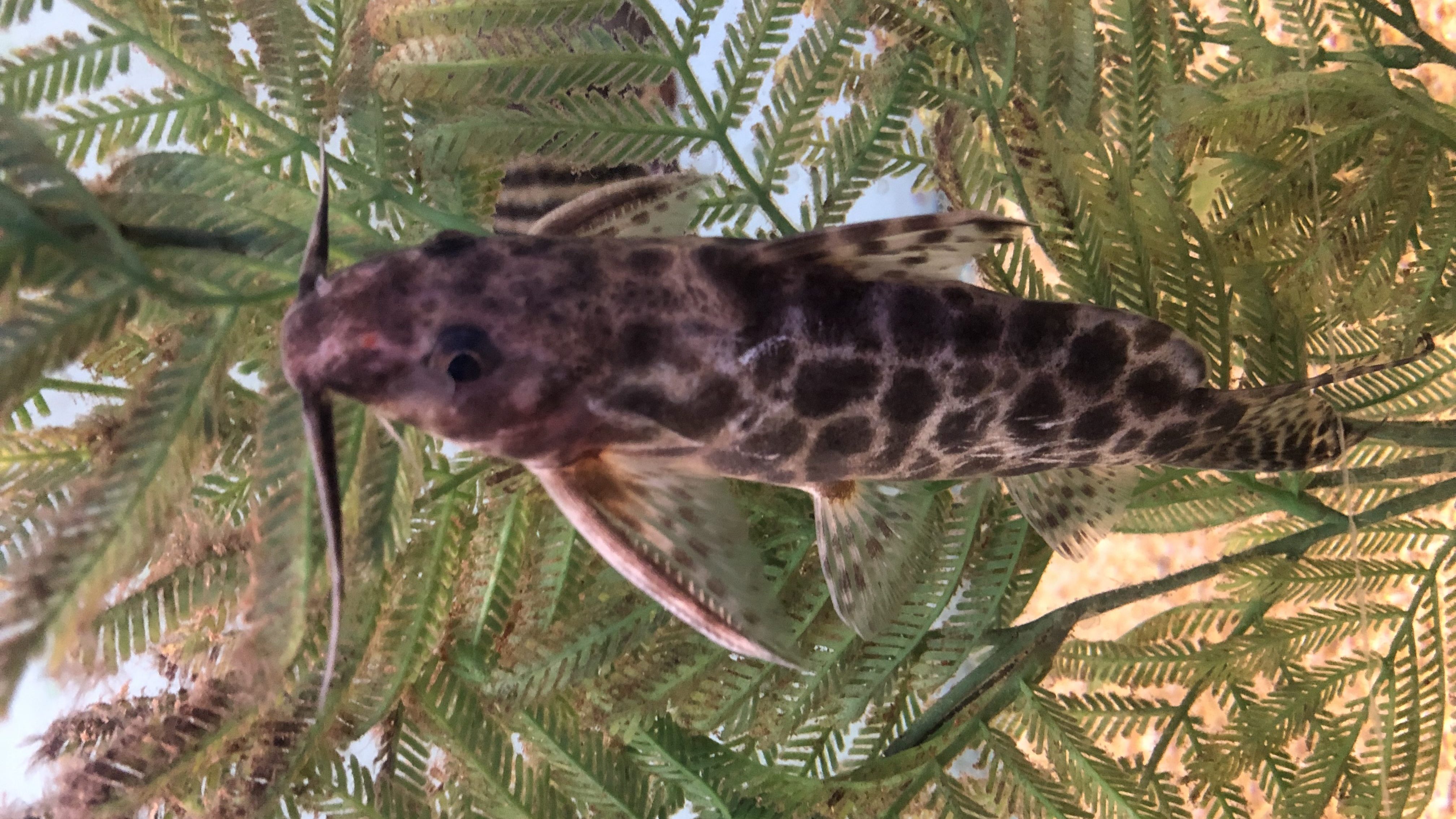
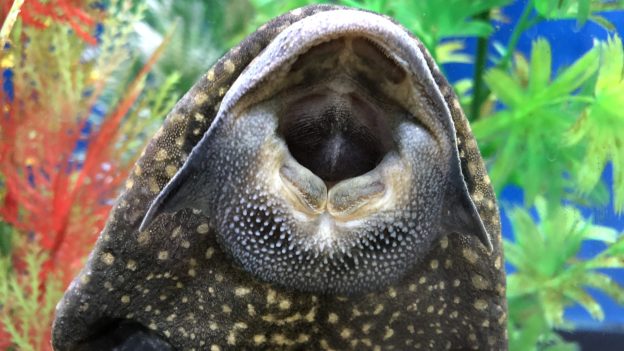
Synodontis sp. at Maidenhead Aquatics, Ascot 2019.

Barriers to Hybridisation

There are many barriers to hybridisation which really can effect the result if there is some compatibility.

Chromosomal number is the most well known barrier to hybridisation, chromosomes are units within the nucleus that contains all the DNA. Most humans have 22 pairs, fruit flies, Drosophila melanogaster have 4 pairs and the duckbilled platyplus has 26 (a lot of sex chromosomes though!), chromosomal number does not infer complexity at all and nor does the size of a genome. Generally different species might have a different number of chromosomes, this is very well displayed in the Loricariid (pleco) genus, Ancistrus (bristlenoses) which displays a diversity of different chromosomal numbers across a 50 or more species large grouping (Santos da Silva et al., 2022). During reproduction parental chromosome numbers ideally need to match to put simply. While this is a barrier it has resulted in infertile offspring, or in the example of the livebearers from Poecilidae a number of unusual adaptations. These hybrid Poecilidae have the ability to reproduce via gynogensis, asexual reproduction with the requirement of a male to stimulate the process, he contributes nothing to the offspring (Schultz, 1969) and this is displayed potentially in many species originating from hybridisation (Turner, 1980). The limitations of chromosomes really vary though but are definitely present.

Morphology is one of the obvious but so easily forgotten, organisms have to be morphologically compatible not just for the initial act but additionally for fertilisation and gestation. It might not seem it but that minor differences in morphology make a difference, what might seem obscure such as the shape of spermatozoa can differ resulting in the cell not being able to imbed into the egg, it’s even so diverse that the morphology of this cell can infer groups (Quagio-Grassiotto et al., 2020). Species often judge each other via their morphology and therefore there is some level of sameness particularly in the wild.

Behaviour, different species or even different populations might display very different behaviours. Behaviour itself is so integral to reproduction and mate choice, outside of captivity this is such a strong barrier.

Geography is maybe the most well known barrier and often can result in the other divisions. This can be within a small space such as fishes which inhabit deeper water whereas others the shallows. Barriers don’t always have to be spatial but they can also be temporal.

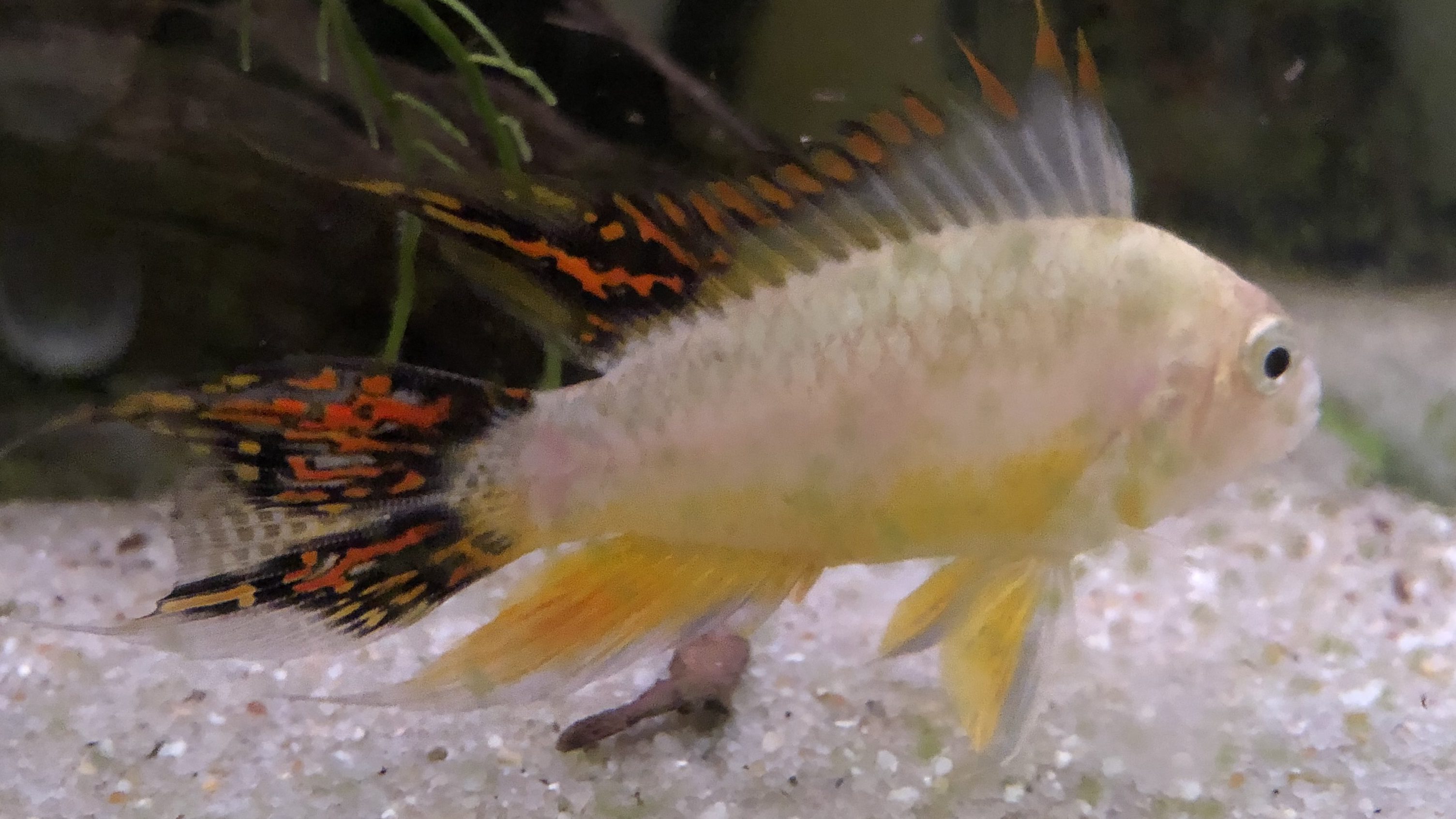
Golden dwarf cockatoo cichlid, Apistogramma cacatuoides

The issues with hybridisation

Hybridisation itself is not negative it’s just a force, in terms of conservation it can provide a variety of effects. Hybridisation can lead to the decline in a population of a species, most well known in the case of the Scottish wildcat (Felis silvestris silvestris) and the sister species, the domestic cat (Felis catus). As hybrids display what is known as a hybrid vigour (a mixture of traits between the two pariental species) it can change how these individuals interact with their environment and the genetic diversity of a species (Selz & Seehausen, 2019). The ecological impact of the introduction of hybrids can be described as unpredictable (Mandeville et al., 2022) which makes it difficult to identify those exact issues. Although, this argument is similar to introducing individuals who are selectively bred who might also influence the gene pool of wild individuals. It is generally not ideal, hybridisation in conservation is reserved for restoring species where no other alternative can be found e.g. Prezewalski’s horse (Equus ferus prezewalskii) and the domestic horse (Equus ferus caballus) in an effort to save the subspecies, although hybridisation is a risk to the subspecies (King, 2005).

But here we are talking about captivity, it’s highly unlikely any of our fishes will be involved in any real conservation effort or practices.

The main issue in captivity with these hybrids is so many do not go recorded, likely due to misidentifications of the parent species and lack of record keeping. Take Ancistrus dolichopterus, this species is generally diagnosed as having 8-9 soft dorsal rays, only one small individual was spotted excluding brown spots on the abdomen. While no seams were mentioned (Kner, 1854) it is commonly stated they display these, as with many other Ancistrus these often do fade with time and I have been shown individuals from the type locality lacking these seams. There are many spotted Ancistrus and over time localities and important information on them are lost. It’s more then often that these seams are how the judgement is based on what species it is. The point I am getting to is how well do we know these species and how they are defined? We are relying here on hybridisation not being able to occur but it likely does because species are kept together who are not the same species but assumed the same. I generally would assume unless wild caught for morphologically indistinctive Ancistrus, they should probably be assumed hybrids. I have frequently seen even Ancistrus ranunculus, a morphologically distinctive Ancistrus be misidentified so it’s a difficult situation. This doesn’t include how little we know about some genera, the frequency of bycatch and misidentifications from suppliers as well.

Surely those who argue against hybridisation should also argue against crossing those from different localities or populations. This is also changing the genetic landscape of a population and asks the question of how to define a species.

In captivity it does effect if you are getting what you think you are getting but for many this might not be an issue. One of the biggest worries though is because hybrids are a pick and mix of the parental species morphology and behaviour is largely unknown, it could be more similar to one parent then the other, an intermediate or totally different. Where parental species have different requirements this is also an issue.

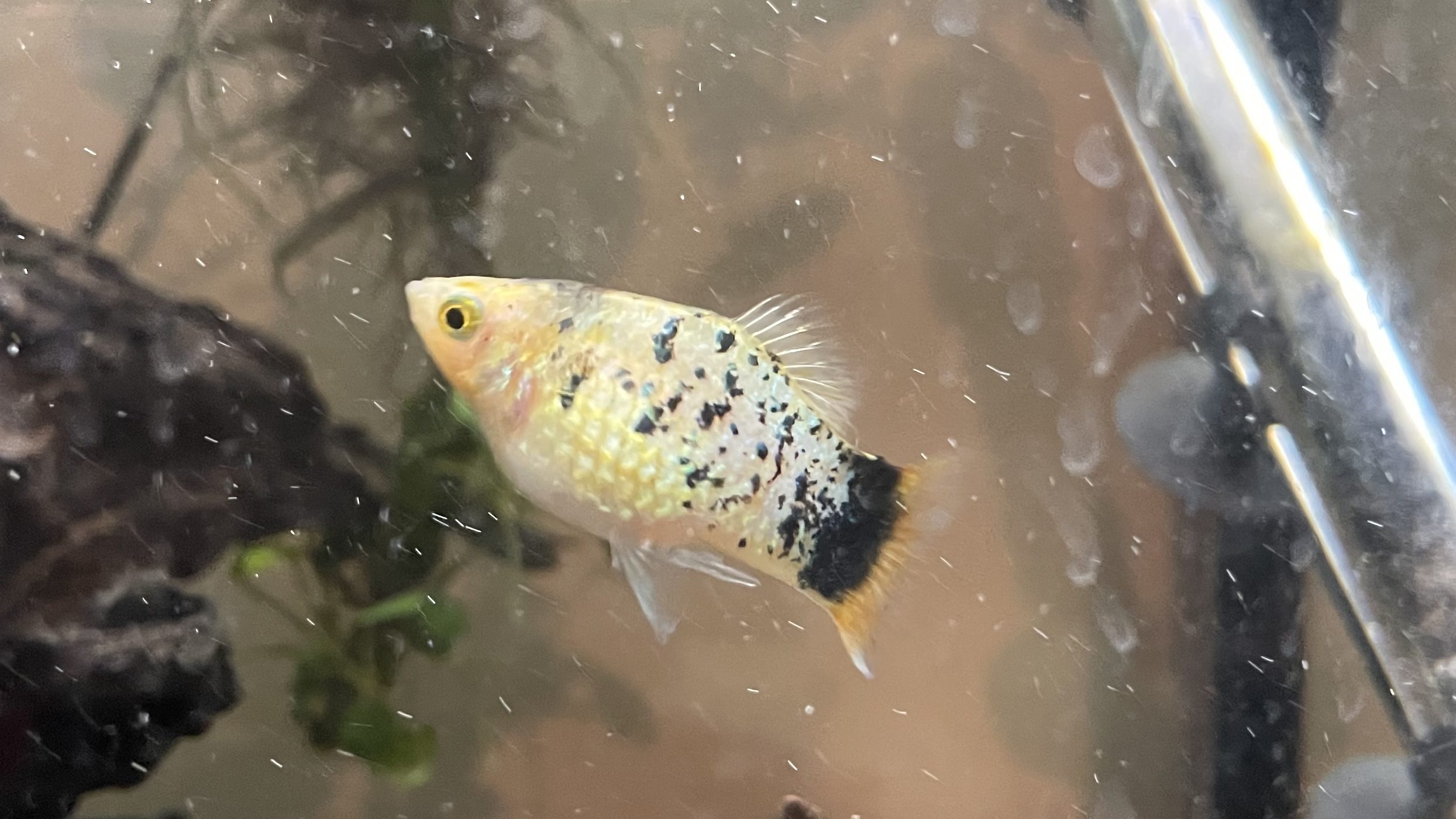
Platy, Xiphophorus sp. x. unknown likely X. maculatus x. X. variatus.

How to avoid hybridisation

For wild caught fishes maybe getting fishes from the same source and checking locality matches if you are not completely confident on the identification. Keep records of who is being crossed with who.

It’s quite simple to keep those who could maybe hybridised apart, this is difficult to judge as it is not just about genera but if it looks similar don’t keep them together. If hybridisation occurs clearly record that and any offspring should be sold labelled as such, if possible to pet only homes with no worries of breeding where that label can be forgotten over generations.

For captive bred individuals the situation is difficult, if you aren’t sure and they aren’t from a responsible or reliable source then don’t buy unless you plan on just having the animals as a pet, assuming you don’t want to increase the number of hybrids.

Hybridisation Bias

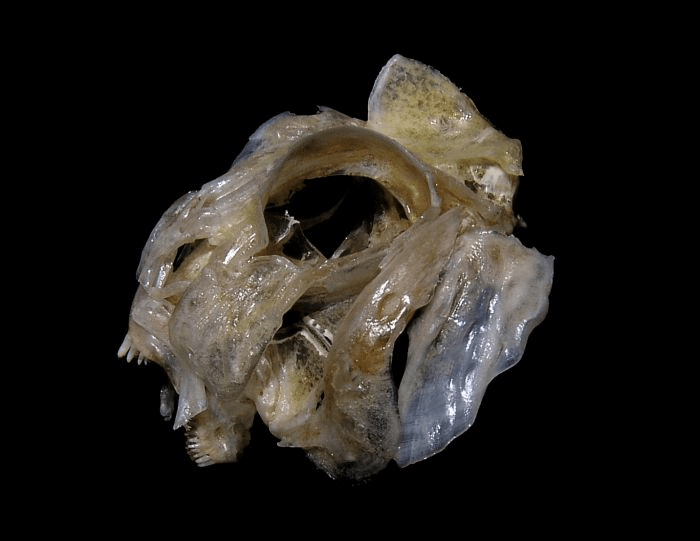
The skull of the parrot cichlid, Amphilophus sp. x. Vieja sp. as posted by Fish_Man_Dan on Monster Fish Keepers forum: https://www.monsterfishkeepers.com/forums/threads/my-mind-is-made-up-about-the-creation-of-blood-parrots.374666/

Much of the dislike towards hybrids is focused on certain species although hybrids are much more common then they seem. Fishes such as domestic discus (Symphysodon spp.) are a mixture of the three different species and definitely the different localities depending on the variety (Ng et al., 2021). Some domestic species might have hybrid origins such as the common bristlenose, Ancistrus sp. but we do not know. These species do not seem to have health related defects from their morphology although those such as the parrot cichlid, Amphilophus sp. x. Vieja sp. (not to be confused with the true parrot cichlid, Hoplarchus psittacus), clearly does have health related deformities as a result of selective breeding and hybridisation as displayed in this link to a Monster FishKeepers discussion forum.

The true parrot cichlid, Hoplarchus psittacus at Pier Aquatics, 2021

Conclusion

Hybridisation will always occur in the hobby, it is best that it is labelled so future keepers are aware of what their fishes are. If you are not completely sure of the species you are keeping then don’t breed it, ideally anyone who can identify the species should be able to cite a reliable website or the description of the species. Undescribed species might not have this so should have more precautions made such as keeping to one locality and morphology.

References

Adah, P. M., Onyia, L. U., & Obande, R. A. (2013). Fish hybridization in some catfishes: A review.

King, S. R. (2005). Extinct in the Wild to Endangered: the history of Przewalski’s horse (Equus ferus przewalskii) and its future conservation. Mongolian Journal of Biological Sciences3(2), 37-41.

Kner, R. (1854). Die Hypostomiden: Zweite Hauptgruppe der Familie der Panzerfische.(Loricata vel Goniodontes) (Vol. 1). KK Hof-und Staatsdruckerei.

Litsios, G., & Salamin, N. (2014). Hybridisation and diversification in the adaptive radiation of clownfishes. BMC Evolutionary Biology14, 1-9.

Mallet, J. (2001). Species, concepts of. Encyclopedia of biodiversity5, 427-440.

Mandeville, E. G., Hall Jr, R. O., & Buerkle, C. A. (2022). Ecological outcomes of hybridization vary extensively in Catostomus fishes. Evolution76(11), 2697-2711.

Ng, T. T., Sung, Y. Y., Danish-Daniel, M., Sorgeloos, P., de Peer, Y. V., Wong, L. L., & Tan, M. P. (2021). Genetic variation of domesticated discus (Symphysodon spp.). Aquaculture, Aquarium, Conservation & Legislation14(2), 832-840.

Schultz, R. J. (1969). Hybridization, unisexuality, and polyploidy in the teleost Poeciliopsis (Poeciliidae) and other vertebrates. The American Naturalist103(934), 605-619.

Santos da Silva, K., Glugoski, L., Vicari, M. R., de Souza, A. C. P., Noronha, R. C. R., Pieczarka, J. C., & Nagamachi, C. Y. (2022). Chromosomal Diversification in Ancistrus Species (Siluriformes: Loricariidae) Inferred From Repetitive Sequence Analysis. Frontiers in Genetics13, 838462.

Scribner, K. T., Page, K. S., & Bartron, M. L. (2000). Hybridization in freshwater fishes: a review of case studies and cytonuclear methods of biological inference. Reviews in Fish Biology and Fisheries10, 293-323.

Selz, O. M., & Seehausen, O. (2019). Interspecific hybridization can generate functional novelty in cichlid fish. Proceedings of the Royal Society B286(1913), 20191621.

Turner, B. J., Brett, B. L. H., & Miller, R. R. (1980). Interspecific hybridization and the evolutionary origin of a gynogenetic fish, Poecilia formosa. Evolution34(5), 917-922.

Quagio-Grassiotto, I., Baicere-Silva, C. M., de Oliveira Santana, J. C., & Mirande, J. M. (2020). Spermiogenesis and sperm ultrastructure as sources of phylogenetic characters. The example of characid fishes (Teleostei: Characiformes). Zoologischer Anzeiger289, 77-86.

A Fish to Do a Task: Algae Eating Fishes Within the Freshwater Aquarium

When keeping an aquarium for the first time many are confronted with algaes, they cover the glass, plants, decor or even the water itself. Fishes that feed on algaes, known as algivores are often deployed here, sometimes mistakenly.

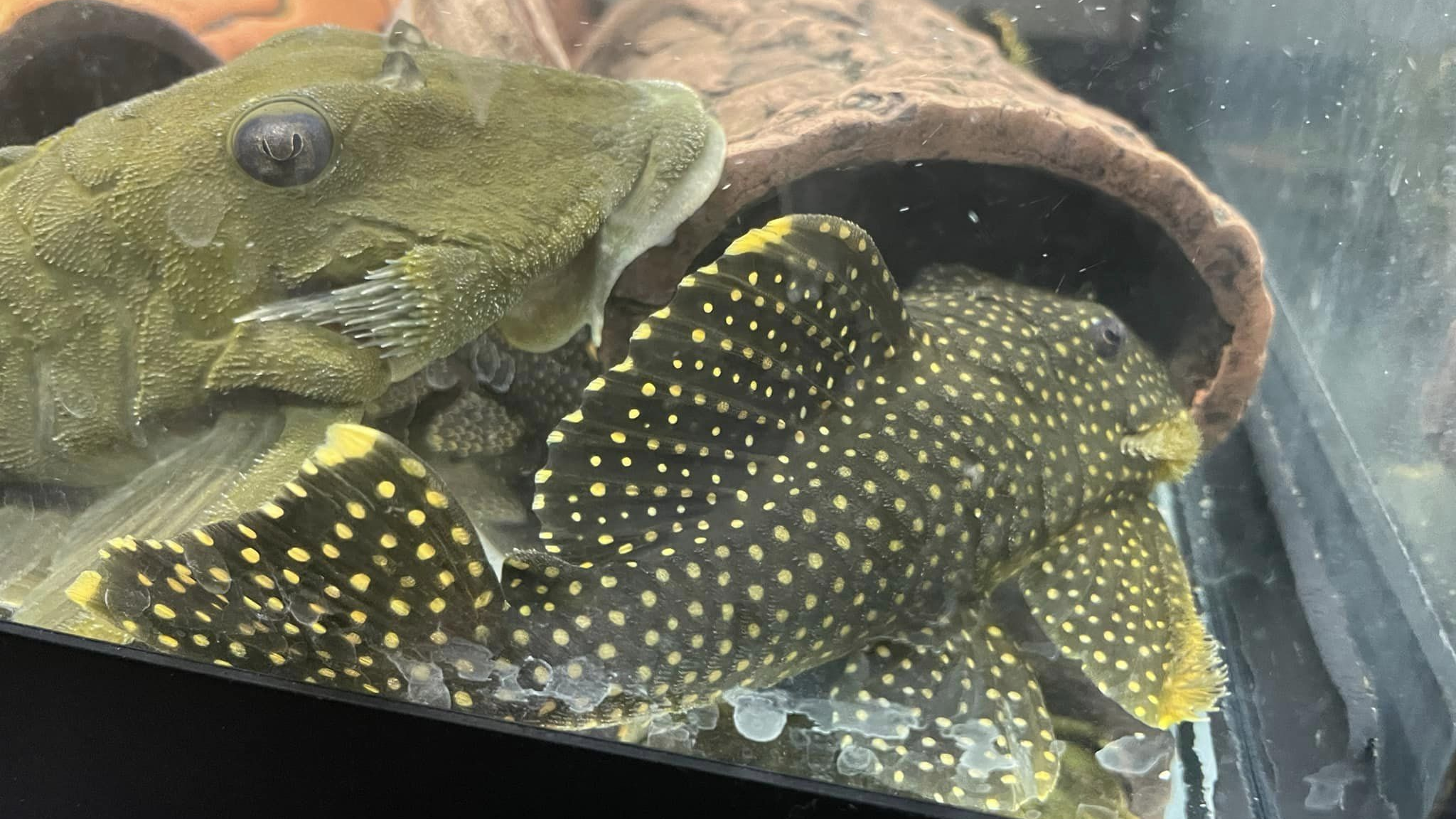
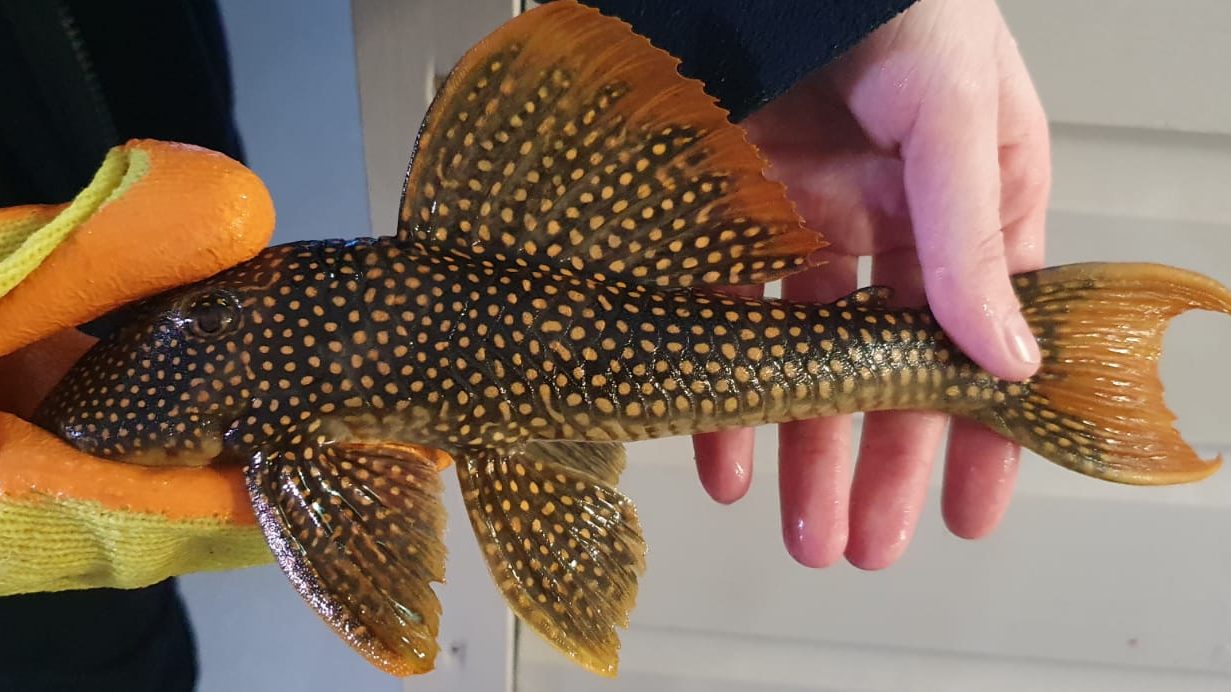
Pterygoplichthys joselimaianus (Common pleco, L001, gold spot pleco)

This I can only assume stems from the idea of a “clean up crew” and an aquarium ‘ecosystem’. The problem here is it is generalising algivores and misunderstanding this dietary niche in general because more then often we all keep algivores because they don’t fit the aesthetic we might not even know. Freshwater ecosystems are very complex and function cannot realistically be replicated in the aquarium.

Who are the algivores?

Algivores come from almost every branch of “fishes” from Cichlidae (Cichlids; Burress, 2016) to Siluriformes (catfishes). Even within these clades there is a wide amount of variation, in cichlids it’s quite obvious but in plecos, Loricariids there is a small number of carnivores and omnivores (Lujan et al., 2012). The actual mechanism of feeding varies a lot and this no doubt influences what algaes they can eat. Even within these groups there is a lot of variation in what algaes they will feed on (Delariva & Agostinho, 2001).

Both of these statements make sense when you buy algivores and they do not feed on some or all of the algaes that are causing an issue in the aquarium. Cyanobacteria makes the best example here, while many fishes do feed on it in the wild (Valencia & Zamudio; Baldo et al., 2019) it’s very evident they do not feed on the cyanobacteria that pests the aquarium, they are likely very different algaes. In many freshwater ecosystems there will be multiple species who feed on algaes and they could only co-exist if there was some partitioning in what algaes they feed on. Most of these fishes also feed on other microbes such as bacteria, protozoa etc. We even see divergent morphology likely based on what and the proportions of the different algaes and those other they feed on. This is where a common misconception comes, many will state that quite a lot of these fishes aren’t algivores because they aren’t ‘cleaning’ your aquarium.

So there is a lot of understanding the individual fishes to know what algaes they will eat and how much.

Another aspect here is the behaviour of algivores is often forgotten as they become more of a purpose then of a focus. Otocinclus, flying foxes (Epalzeorhynchos spp.) and Siamese algae eaters (Crossocheilus spp.) are shoaling and really do benefit from a minimum of 6 as shown here in the wild: https://www.inaturalist.org/taxa/98678-Crossocheilus-reticulatus/browse_photos. For Otocinclus they are shy when housed in small numbers, they are found in their hundreds in the wild. Epalzeorhynchos and Crossocheilus on the other hand in small numbers can become boisterous to each other and other fishes, there is no better example of this then E. bicolor. While for Otocinclus providing a group is rarely an issue for others it could be very limiting on aquarium size and particularly only to feed on one type of algae.

I can’t help but emphasize these fishes have their own requirements and they can be extremely specialized. Just because they feed on algae it does not mean they do not require a specialised environment based on their natural habitat. This is maybe why I see such a high mortality in certain species.

One thing never to forget is how long a fish might live and if it is only to solve an issue that might last a week or a few months you’ll have the fish years or even decades. Particularly catfishes, Loricariids/plecos, who are exceptionally long lived as often discussed in conversations:

Rehoming for some of these fishes can provide a particular challenge.

So what are the commonly recommended algivores:

Otocinclus sp.

Otocinclus spp.

Common name: Dwarf pleco, Oto

Locality: Widespread across South America (GBIF Backbone Taxonomy, 2023; Fricke et al., 2023)

Size: 16.5-43.8mm Standard Length (SL; Shaefer, 1997)

Comments: A small, shoaling (Axenrot & Kullander, 2003) genera found in clear, sandy waters with plenty of vegetation (Reis, 2004). This genus specialises in the finer algaes and other microbes growing on the variety of surfaces (Axenrot & Kullander, 2003). Otocinclus as a name has been used as a common name to refer to many other Hypoptopominae not all that stay that small, some such as Hypoptopoma incognitum at 9.4cm SL (Aquino & Schaefer, 2010). These other Hypoptopominae (The subfamily of Loricariidae that contains Otocinclus) are still just as social and some can be much more challenging to feed and sustain in captivity. I personally find particularly Rhinotocinclus and Nannoptopoma really suffer with the majority of ‘algae’ wafers where there isn’t a high amount of algae’s in the ingredient list. Otocinclus definitely do deal with the algae in an aquarium but not all such as black beard or cyanobacteria, after the algae is gone though they will need a more specialist algae based diet.

Common bristlenose, Ancistrus sp.

Ancistrus sp. ‘Common bristlenose’

Common name: BN, bristlenose pleco.

Locality: Unknown.

Size: 12-20cm SL, very variable.

Comments: This is a domestic species you’ll often see associated with Ancistrus cirrhosus or Ancistrus dolichopterus but it is related to neither of these species. As this species has been bred into many different variants from albino, super red, snow white to green dragon, there is additionally a lot of variation in size. It also makes any husbandry a lot more unpredictable as we neither know what the original species is nor can we really say how domestication has effected them. Unlike a few other Ancistrus this species is territorial and can take on any similarly shaped fishes if they enter their space, unlike many misconceptions this is regardless of sex. These do feed on algae but I can’t say they will deal with any on plants, nor black beard algae, cyanobacteria or most diatoms. Given how long these fishes can live and their size, certainly a consideration for any tank and they still have their own requirements.

Crossocheilus sp., photo taken by Chiroptera man This file is licensed under the Creative Commons Attribution-Share Alike 3.0 Unported license.

Epalzeorhynchos, Crossocheilus and Tariqilabeo 

Common name: Sharks, algae eaters and flying foxes.

Locality: East Asia.

Size: 12.46cm SL (Ciccotto et al., 2017) although individuals potentially grow up to 15cm SL in captivity.

Comments: As mentioned above generally social fishes who are boisterous with age in low numbers. They are brilliant in the right situation but temperatures definitely have to be considered for example the fishnet flying fox, Crossocheilus reticulatus who inhabits rapids and much cooler temperatures then generally expected. Certainly underrated fishes where they are almost never kept as the focus of an aquarium. Often noted to feed on black beard algaes but I’m not sure they are that rapid at it.

There are soo many fishes recommended and this changes with time such as the hillstream loaches, Gastromyzontidae who inhabit the rocky rapids of Asia but I might ask to look at these fishes in the wild and how specialised they are: https://uk.inaturalist.org/taxa/1032183-Gastromyzontidae/browse_photos

The actual problem, algaes

It is no doubt true that algaes can release toxins, these algaes have not been seen in the freshwater aquarium. Therefore, there is no real harm to algaes themselves excluding blocking filter inlets, outlets and sponges. More then anything algaes are a symptom of a variety of nutrients or conditions, some of them just might be an aquarium stabilising over the years.

Aquariums do have an ecosystem when it comes to microbes and with time the composition of these microbes will change. Aquariums don’t seem to really stabilise for years, obviously this likely wont have any scientific research behind it but if we look at natural ecosystems succession is a well known process. Succession is where the organisms change over time, while species diversity increases over time towards the end it then decreases. There is no same end goal to succession as it varies on so many factors and succession can be halted by certain species or environmental factors.

Of course the best method in the short term is likely really manually removing algae, this will likely effect this succession as removing the microbial populations that are competing with the algaes. Having worked in stores I use a variety of tools (ensure they are used for nothing else):

  • Scouring pad: Be careful on acrylic but this is great for most algaes and with a bit of hard work even diatoms.
  • Toothbrush: This is for the corners but can even work on decor. It can make a good attempt on blackbeard algae. Do not use too harshly on the corners as can damage and remove silicone.
  • Stanley blade: Definitely very sharp so be careful! Used wrong it can scratch glass and acrylic. Once you work out the right angle it’s great for removing any algaes such as diatoms and blackbeard on flat surfaces.
  • Filter Floss: Sometimes can be useful to clean large areas of soft algae, it can scratch the glass if catches sand granules but an easy thing to grab.

I personally do not recommend any of the magnetic algae cleaners due to the fact they tend to only remove the softest algaes and can easily catch sand, scratching the glass. T

Algaes themselves would deserve their own article but because of the polyphyletic (pick and mix) nature of the term between many very diverse groups of organisms, just because they are photosynthetic they aren’t simple.

I would treat algaes for mature aquariums particularly any sudden change in algaes present as biological indicators of nutrients, often ones we can’t or rarely test for.

The relationship between nutrients and algaes

Algal growth is inherently connected to nutrient composition. Unlike plants algaes can reproduce at a much more rapid rate taking advantage of any nutrients, the amount of algaes is usually connected to higher nitrate (Taziki et al., 2015) and phosphate levels (Fried et al., 2003). This makes sense as while a lot of rivers contain algaes which can contribute to the majority of the trophic interactions from photosynthesis, naturally rivers and lakes are oligotrophic (Lewis et al., 2001). Some of this nutrients we can’t help like nitrates out of the tap but when simply water changes which will benefit the health of the fish, what is the harm of that 30-60 minutes a week? Surely even a hamster, snake etc. takes more time. In another article I will probably discuss how to deal with when the source water is causing issues other then my article on RO.

Some sources of nutrients are easily forgotten, from certain botanicals to certain substrates. If it is the substrate usually it’ll be there from the beginning but adding certain botanicals like palms it’ll appear later on.

Conclusion

Algaes themselves are harmless and I think at some point we need to see them for what they are, maybe more interesting indicators.

References:

Aquino, A. E., & Schaefer, S. A. (2010). Systematics of the genus Hypoptopoma Günther, 1868 (Siluriformes, Loricariidae). Bulletin of the American Museum of Natural History2010(336), 1-110.

Axenrot, T. E., & Kullander, S. O. (2003). Corydoras diphyes (Siluriformes: Callichthyidae) and Otocinclus mimulus (Siluriformes: Loricariidae), two new species of catfishes from Paraguay, a case of mimetic association. Ichthyological Exploration of Freshwaters14(3), 249-272.

Baldo, L., Riera, J. L., Salzburger, W., & Barluenga, M. (2019). Phylogeography and ecological niche shape the cichlid fish gut microbiota in Central American and African Lakes. Frontiers in microbiology10, 2372.

Burress, E. D. (2016). Ecological diversification associated with the pharyngeal jaw diversity of Neotropical cichlid fishes. Journal of Animal Ecology85(1), 302-313.

Ciccotto, P. J., Pfeiffer, J. M., & Page, L. M. (2017). Revision of the cyprinid genus Crossocheilus (Tribe Labeonini) with description of a new species. Copeia105(2), 269-292.

Delariva, R. L., & Agostinho, A. A. (2001). Relationship between morphology and diets of six neotropical loricariids. Journal of Fish Biology58(3), 832-847.

Fricke, R., Eschmeyer, W. N. & Van der Laan, R. 2023.  ESCHMEYER’S CATALOG OF FISHES: GENERA, SPECIES, REFERENCES. (http://researcharchive.calacademy.org/research/ichthyology/catalog/fishcatmain.asp).

Fried, S., Mackie, B., & Nothwehr, E. (2003). Nitrate and phosphate levels positively affect the growth of algae species found in Perry Pond. Tillers4, 21-24.

Lewis Jr, W. M., Hamilton, S. K., Rodríguez, M. A., Saunders III, J. F., & Lasi, M. A. (2001). Foodweb analysis of the Orinoco floodplain based on production estimates and stable isotope data. Journal of the North American Benthological Society20(2), 241-254.

Lujan, N. K., Winemiller, K. O., & Armbruster, J. W. (2012). Trophic diversity in the evolution and community assembly of loricariid catfishes. BMC Evolutionary Biology12(1), 1-13.

Otocinclus Cope, 1871 in GBIF Secretariat. GBIF Backbone Taxonomy. Checklist dataset https://doi.org/10.15468/39omei accessed via GBIF.org on 2023-10-24.

Reis, R. E. (2004). Otocinclus cocama, a new uniquely colored loricariid catfish from Peru (Teleostei: Siluriformes), with comments on the impact of taxonomic revisions to the discovery of new taxa. Neotropical Ichthyology2, 109-115.

Schaefer, S. A. (1997). The Neotropical cascudinhos: systematics and biogeography of the Otocinclus catfishes (Siluriformes: Loricariidae). Proceedings of the Academy of Natural Sciences of Philadelphia148, 1-120.

Taziki, M., Ahmadzadeh, H., Murry, M. A., & Lyon, S. R. (2015). Nitrate and nitrite removal from wastewater using algae. Current Biotechnology4(4), 426-440.

Valencia, C. R., & Zamudio, H. (2007). Dieta y reproducción de Lasiancistrus caucanus (Pisces: Loricariidae) en la cuenca del río La Vieja, Alto Cauca, Colombia. Revista del Museo Argentino de Ciencias Naturales nueva serie9(2), 95-101.

What is a pleco? To be a pleco or not to be a pleco

Common names are half a mystery to themselves, their origins and what species they really apply to and not. They lack regulations and frequently change spatially and temporally. You can’t expect to go to every country and people call a giraffe, Giraffa, a giraffe. It’s like you can’t expect common names to stay the same, a well known example would be the European robin, Erithacus rubecula was at one point called the redbreast and then that changed to robin redbreast and then just robin. The point maybe is common names change so much with little ability to track, plant common names do so frequently as well.

Pleco is one of those common names, originally Plecostomus but Plecostomus used to be the name of a genus. Much like many have created Cory as a common name for the genus Corydoras. The type and most notable species was Hypostomus Plecostomus (Linnaeus 1758), formally Plecostomus Plecostomus. Plecostomus is no longer a valid genus and has not been since 1980 where species were then placed in multiple other genera such as Ancistrus, Isorineloricaria, Loricariichthys and eventually Aphanotorulus. The majority of those previously known as Plecostomus were moved into Hypostomus, described in 1803 with the type Hypostomus guacari which is now understood to be a synonym of Hypostomus plecostomus (Fricke et al., 2023). Interestingly Pterygoplichthys, a genus that contains species known as the common plecos was never in the genus Plecostomus. This summarizing the main flaws of the arguments behind the common name. Ancistrus, bristlenose plecos are often argued not to be plecos but they had members once in Plecostomus whereas many such as Pterygoplichthys who there is no debate about were never placed in Plecostomus. Currently while there are none with the genus Plecostomus there is Hypostomus plecostomus and H. plecostomoides. Of genera Neoplecostomus, Microplecostomus and Nannoplecostomus exists, currently within Hypoptopominae, which is the same subfamily as Otocinclus. These genera add the other argument do people consider Otocinclus a pleco?

The other issue with the name pleco as a common name is where it is applied evolutionary.

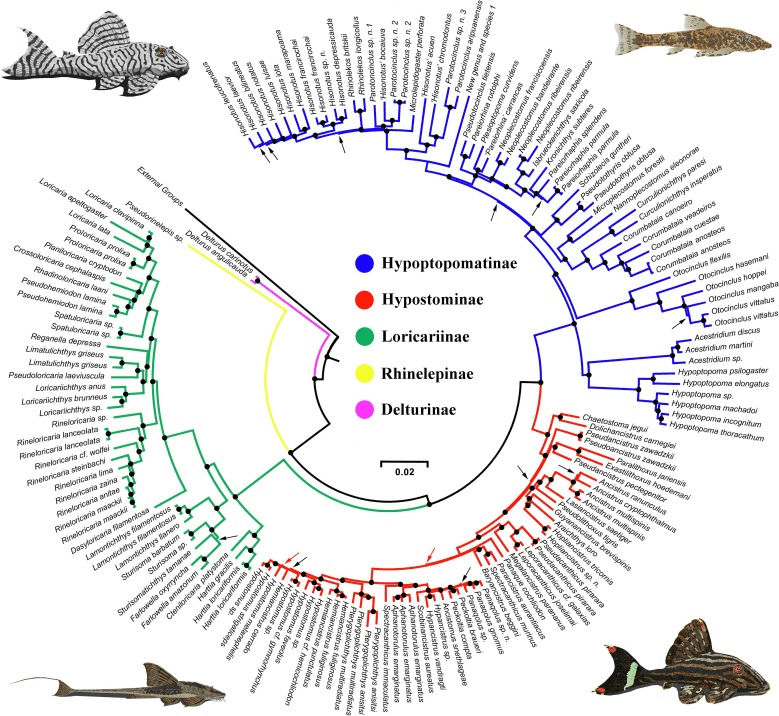
Phylogenetic tree using molecular data of Loricariidae from: Roxo, F. F., Ochoa, L. E., Sabaj, M. H., Lujan, N. K., Covain, R., Silva, G. S., … & Oliveira, C. (2019). Phylogenomic reappraisal of the Neotropical catfish family Loricariidae (Teleostei: Siluriformes) using ultraconserved elements. Molecular phylogenetics and evolution135, 148-165.

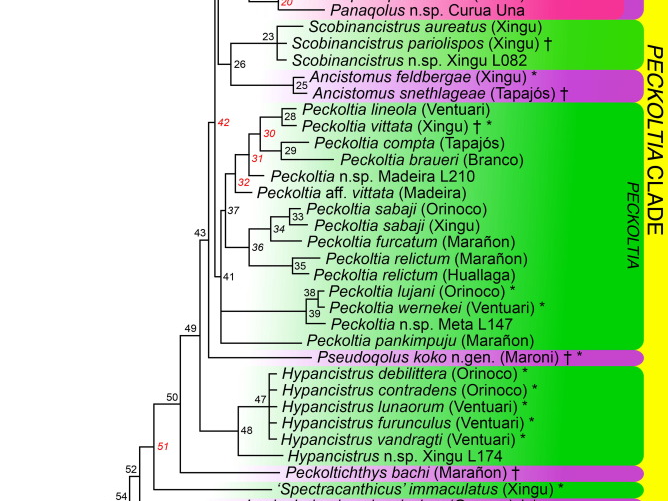
Names need some consistency so people can understand each other and that is what scientific names provide. The common name pleco also lacks consistency in where it places in the evolutionary/phylogenetic tree. If you exclude Ancistrus as so many do it is the only member of Hypostominae (coloured in red, Fig 1) to not be a pleco. But members outside of that subfamily are included, right at the earliest branches is Rinelepinae (coloured in yellow, Fig 1) it excludes a lot of later branching Loricariids. Not pictured here is also Pseudancistrus geniseiger who would be considered a pleco and also branches out this far (Lujan et al., 2015). Loricariinae and Hypoptopominae are often debated as if they are a pleco or not.

The problem is more that no one is quite referring to pleco in the same way under this pick and mix system. Some of us refer to the whole of Loricariidae as it would make sense to do, L numbers themselves also do as the L refers to Loricariidae. In Germany these fishes are often referred to as L Welse, meaning Loricariidae Catfish I assume as also members of Siluriforme, catfishes. It means everyone understands each other using this method even if being much broader, we should be recognising the diversity within Loricariidae anyway. In Loricariids and therefore plecos it is an international aspect of the fishkeeping hobby and many countries do not even use the term pleco.

References:

Britto, M. R. (2003). Phylogeny of the subfamily Corydoradinae Hoedeman, 1952 (Siluriformes: Callichthyidae), with a definition of its genera. Proceedings of the Academy of Natural Sciences of Philadelphia153(1), 119-154.

Fricke, R., Eschmeyer, W. N. & Van der Laan, R. (2023).  ESCHMEYER’S CATALOG OF FISHES: GENERA, SPECIES, REFERENCES. (http://researcharchive.calacademy.org/research/ichthyology/catalog/fishcatmain.asp). Electronic version accessed 18/10/2023.

Lujan, N. K., Armbruster, J. W., Lovejoy, N. R., & López-Fernández, H. (2015). Multilocus molecular phylogeny of the suckermouth armored catfishes (Siluriformes: Loricariidae) with a focus on subfamily Hypostominae. Molecular phylogenetics and evolution82, 269-288.

Roxo, F. F., Ochoa, L. E., Sabaj, M. H., Lujan, N. K., Covain, R., Silva, G. S., … & Oliveira, C. (2019). Phylogenomic reappraisal of the Neotropical catfish family Loricariidae (Teleostei: Siluriformes) using ultraconserved elements. Molecular phylogenetics and evolution135, 148-165.

The Medusa Pleco’s, Ancistrus spp. which do you have if one at all?

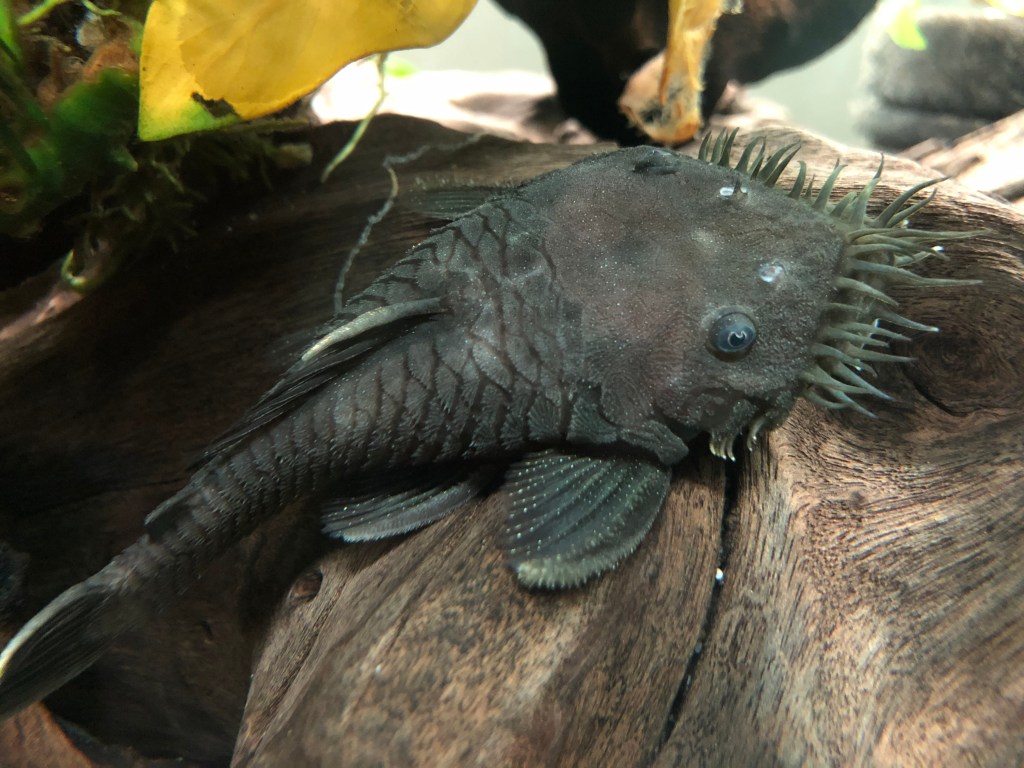
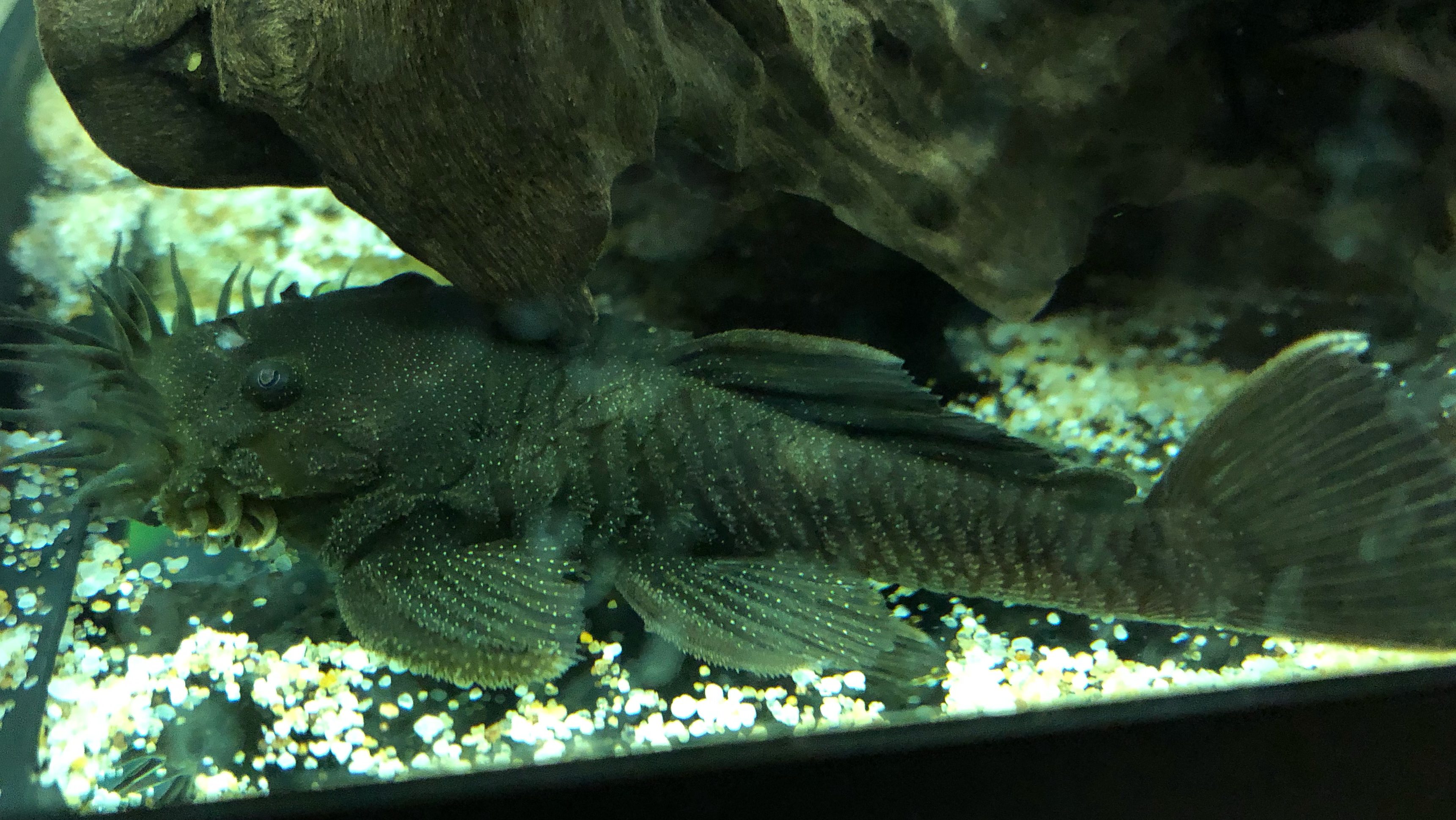
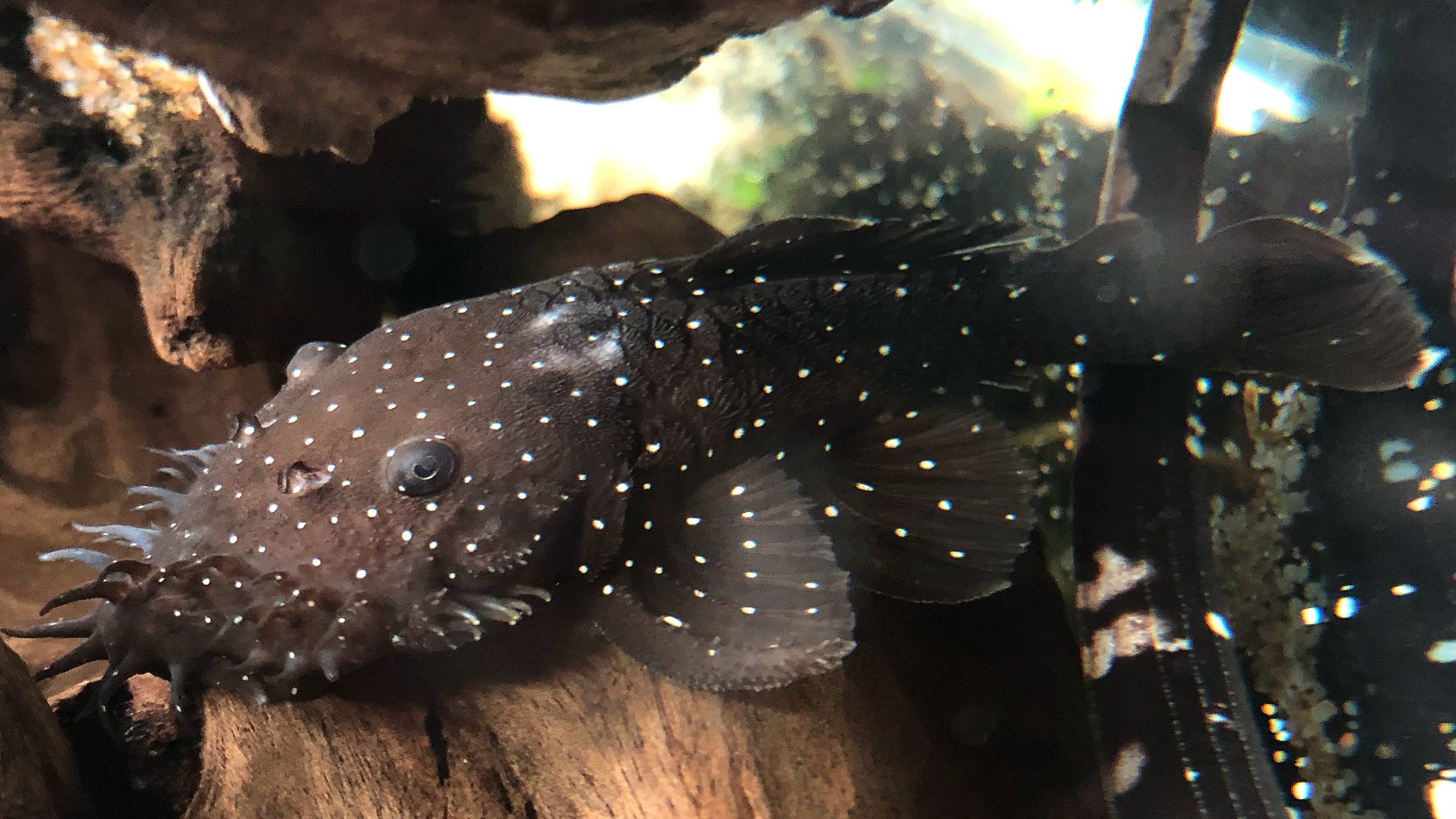
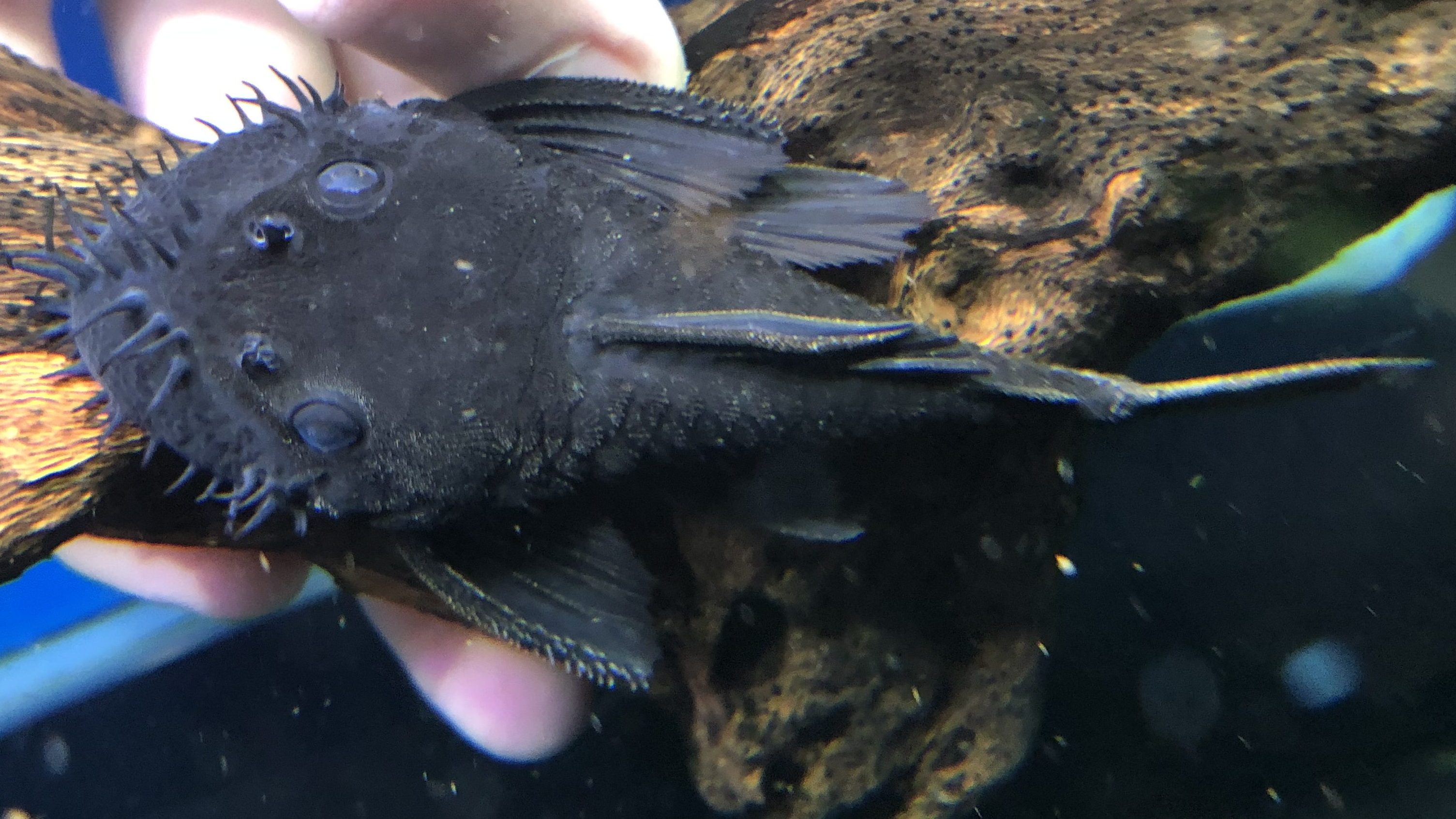
Ancistrus commonly known as bristlenose plecos, is a gigantic genus with around 50 spp. currently described but many more undescribed species. They are generally described with the presence of tentacles on the head unlike other Loricariids with the exception of Lasiancistrus tentaculatulatus. Tentacles are not a defining feature though for Ancistrus, there are many species who lack them and previously might have been known under the genera Xenocara.

A common misconception is the connection between tentacles and the sex of the fish which is maybe a half truth as for quite a few females tend to have small to no tentacles whereas males develop substantial (hypertrophied) tentacles. Of course there are exceptions here so lets discuss the mythical medusa plecos.

So who are the species called the medusa plecos:

Ancistrus ranunculus Muller et al., (1994)

Common name: L034

Location: Rio Xingu, Brazil

Diagnosis: This is one of the most extreme Ancistrus. This species displays a wide, flat, triangular head. The name ‘ranunculus refers to tadpole and this species definitely looks like the flattest and widest of tadpoles. Some what variable in body shape.

Males and females display very impressive tentacles, males do display often a double row of these tenatacles who are slightly larger. Either way females are often confused with being male.

Colouring is solid black with maybe a little of a blue tinge but not much. When stressed they often express white patches. Juveniles can be spotted in some variants they can have very small almost invisible spotting to maturity.

Ancistrus sp.

Common name: L255, spotted medusa pleco.

Location: Rio Xingu, Brazil

Length: 15cm SL

Diagnosis: This is very very similar to Ancistrus ranunculus although displays spotting into maturity which doesn’t disappear when relaxed. They are very striking and could be confused if it was not for that flat, triangular body shape with A. dolichopterus and other spotted Ancistrus.

Debatable if a new species or not.

Ancistrus macropthalamus Pellegrin (1912)

Common name: LDA074, blue medusa pleco.

Location: Rio Orinoco, Columbia

Length: 7-10cm SL.

Diagnosis: Flat with larger but rounder head then Ancistrus ranunculus. It is very unusual in comparison regarding eye placement to many Ancistrus.

Colouration is much more with a blue tinge and can be spotted but usually not into maturity.

Tentacles tend to be equal size between both sexes.

Ancistrus aguaboensis Fisch-Muller et al. (2001)

Common name: L032, green medusa pleco.

Length: 5cm SL.

Location: Rio Tocatins, Brazil.

Diagnosis: Almost much more like the traditional small Wild Ancistrus. It is some what of a flat head but not particularly wide.

Colouration is a brown/green tone with white spots, nothing impressive.

Tentacles are very sexually dimorphic and while females have tentacles are much smaller.

The Locality Clue

I have to empathise how important the difference in locality is. Always ask where these fishes were imported from as they will not be imported from other countries then their locality listed here. Ancistrus ranunculus is a Brazilian species and this is the biggest mistake as people will sell the Columbian Ancistrus macropthalamus under this name and label.

Husbandry

Not the focus of this article but half a warning. The morphology of these Ancistrus is based on high velocity of water not just that but high temperatures, 28c or more. I’ve tried lower at 26c and it was an awful failure, I don’t just say this from my experience. The Rio Xingu for Ancistrus ranunculus and Ancistrus sp. ‘L255’ rarely if ever dips below 28c (Rofrigues-Filho et al., 2015). Even below they struggle to feed. The other aspect is that as temperature increases oxygen saturation decreases and these are high velocity fishes so a good current is important either a powerhead, wavemaker or a strong air pump.

Many of these Ancistrus are gregarious, social but none more so then the Ancistrus ranunculus and Ancistrus sp. ‘L255’. It came to my notice when I saw so many people struggling but everyone with success had theirs as a group. Even in the ecological and species description of Ancistrus raununculus notes them as gregarious listed as unlike Hypancistrus zebra (Muller et al., 1994). These fishes generally are social in their own space but it goes elsewhere to where they might struggle to feed otherwise.

Diet might be one of the most important aspects of many fishes husbandry, it also is maybe the most forgotten. Most Ancistrus lack any dietary information although Ancistrus ranunculus has some records suggesting they are almost entirely algivores (Zuanon, 2019). Maybe there is evidence to suggest much more diversity to the genus. Generally this genus is very specialist and I cannot empathise the importance of Repashy soilent green.

Ancistrus is one of the most misunderstood genera maybe because everyone sees the common bristlenose, Ancistrus sp. who is largely much more hardy. There are slow feeding species who don’t compete well but could be much more successful in captivity if not treated like side on. They definitely require a tank being considered around them and while I’d love to see more species in the hobby I’d love there be more demand for treating this genus as it is, a pain!

References:

Fisch-Muller, S., Mazzoni, R. & Weber C. (2001). Genetic and morphological evidences for two new sibling species of Ancistrus (Siluriformes: Loricariidae) in upper rio Tocantins drainage, Brazil. Ichthyological Exploration of Freshwaters. 2(4): 289-304.

Muller, S., Rapp Py-Daniel, L. H. and Zuanon, J. (1994). Ancistrus ranunculus, a new species of loricariid fish (Siluriformes: Loricariidae) from the Xingú and Tocantins rivers, Brazil. Ichthyological Exploration of Freshwaters. 5 (4): 289-296.

Pellegrin, J. (1912). Description d’un poisson nouveau de l’Orénoque appartenant au genre Xenocara. Bulletin de la Société Zoologique de France. 37:271-272.

Rodrigues-Filho, J. L., Abe, D. S., Gatti-Junior, P., Medeiros, G. R., Degani, R. M., Blanco, F. P., Faria, C. R. L., Campanelli, L., Soares, F. S., Sidagis-Galli, C. V., Teixeira-Silva, V., Tundisi, J. E. M., Matsmura-Tundisi, T. and Tundisi, J. G. (2015). Spatial patterns of water quality in Xingu River Basin (Amazonia) prior to the Belo Monte dam impoundment. Brazilian Journal of Biology, 75(3).

Zuanon, J. A. S. (1999). “História natural da ictiofauna de corredeiras do rio Xingu, na região de Altamira, Pará” Unpublished Thesis. Dept. Ecologia Universidade Estadual de Campinas : Campinas, SP

You are what you eat – Livefood edition.

So often we don’t really think about what we are feeding our fishes but when we do, do we consider what the food is being fed? This isn’t much of a consideration when it comes to prepared feeds because the companies and manufactures will cater for that. Regarding live foods then what they are fed is up to you. Nutrition doesn’t come out of thin air and unlike plants they cannot manufacture a lot of the sugars.

Here I think we can exclude anything that is not carnivorous as their food requires very different nutrition or more correct fertilising which is a whole other topic.

The term relevant here is known as gut loading and largely refers to the feeding of invertebrate prey to increase nutrition.

Why gut load prey?

As previously mentioned gut loading increases the nutritional value of the prey provided, when initially bought from the store the food item might be low in nutrition particularly calcium and many vitamins (Boykin et al., 2021). While calcium is taken up from the environment in fishes there is still a dietary requirement which varies depending on the species and the environmental calcium values (Baldisserotto et al., 2019) explained a little bit more in my article on mineral content and fish biology.

Considerations

Just feeding anything to the invertebrate feeders wont provide the nutrition required. Whatever going into the prey should be going into the fish so it needs to be a complete diet and there is no benefit from reduced quality. The easiest way to do this would be feeding a complete fish food whether it be dry or a gel diet, alternatively there are many products based on gut loading insects. The issue with exact nutrients required for using feeders depends on the prey item (Finke et al., 2003) and the fish you are feeding of which most will not have complete nutritional studies (Teles et al., 2022; Velasco-Santamaría & Corredor-Santamaría, 2011).

Channa aurantimaculata, the cobra snakehead.

Time after gut loading is also important likely due to that nutrition being used for metabolism and other physiological processes, for dubia roaches and snails after around 1 hour calories decreased but fat content did continue increase up to 12 hours. Mealworms on the other hand nutrition only increases till the 6 hour mark where that creased (Gorst et al., 2015).

What should I gut load?

This really depends on the food items you are using as stated before and what it is possible to feed them. Excluding earthworms fish food would be a logical choice for most, I would not actually say it’d be a bad idea to use generic fish foods to at least meet all of those basic nutritional requirements. Generally a great rule for vegetables in addition to these fish foods is anything but the onion/garlic family so unlike herbivorous rodents even mushrooms. For snails definitely supplement the calcium with cuttlefish shells.

Bran is popular for feeding many feeders particularly insects, it’s not entirely clear the nutritional value of bran as a diet and at least compared to carrots it does seem to have benefits that carrots don’t have and vice versa (Fasce et al., 2022). I wouldn’t be opposed to it’s use with other items included in the insects diet.

Now there are things I would definitely consider avoiding, iceburg lettuce due to low nutrient value and for providing moisture there are many other alternatives.

A. fulica, African land snails. One of the smaller but most common species under that common name.

For feeding snails there are many resources on how to feed them, many snail specialist diets even if maybe not needed around. I give my land snails, A. fulica a variety of vegetables along with frequent fish food that has been mixed in with warm water, not that I use them to feed fishes. Herbs can be really great to add to this mixture of fish food. The fish food is to provide protein as definitely these snails are detritivores, omnivores who can be fed pinkie mice, mealworms and I’ve fed mine dubia roaches obviously those who are not alive though!

This does seem a very understudied topic when it comes to fishes and maybe because when it comes to food that needs to be gut loaded it is largely in the realm of ornamental fishes. I personally think citizen science could easily provide some answers such as whether fish condition improves depending on what the feeder is fed, the issue with calcium might be harder to answer though.

The Ethics

This is the final maybe most important statement. Live feeding obviously comes with ethics. In the UK invertebrates are not included under the Animal Welfare Act 2006 and are therefore not protected by law in terms of their welfare, this is largely why I do not mention fishes here. Fishes as a vertebrate are included in the Animal Welfare Act 2006, section 4 clearly stating they are protected from unnecessary harm. There are no fishes in wide distribution or distribution at all in the UK which are obligatory piscivores requiring a live feeder. Live feeding using vertebrates carries a higher parasite and even damage risk to the fish. Many of these fishes are not piscivores or would feed on vertebrates in the wild.

That is the legislation, the personal ethics and sentience of invertebrates is a long debate. I personally believe all animals should be treated with respect so when feeding invertebrates they shouldn’t be exposed to any suffering where possible. Certain Crustaceans and Cephalopods are protected by law in the UK, particularly the octopus and decapods under the Animal Welfare (Sentience) Act, 2022. It doesn’t seem clear to what extent these animals are protected. This legislation was introduced to recognise the intelligence of such animals. So the live feeding of these should be avoided.

The use of unprotected invertebrates in live feeding is not always a necessity and that should be recognised. This method of feeding is a lot more challenging to meet a fishes nutritional needs so if possible I’d recommend against. Of course some fishes need help after acclimating from the wild or even import. Some species are of particular challenges due to their specialised feeding morphology and behaviour. I would argue if creative enough most fishes can be pushed onto frozen, gel or dry, if not should we question their place in the hobby like many Gymnotiformes and Mormyrids? Or even leave them with those who can cater for them.

References:

Baldisserotto, B., Urbinati, E. C., & Cyrino, J. E. P. (Eds.). (2019). Biology and physiology of freshwater neotropical fish. Academic Press.

Boykin, K., Bitter, A., & Mitchell, M. A. (2021). Using a Commercial Gut Loading Diet to Create a Positive Calcium to Phosphorus Ratio in Mealworms (Tenebrio molitor). Journal of Herpetological Medicine and Surgery31(4), 302-306.

Fasce, B., Ródenas, L., López, M. C., Moya, V. J., Pascual, J. J., & Cambra-López, M. (2022). Nutritive value of wheat bran diets supplemented with fresh carrots and wet brewers’ grains in yellow mealworm. Journal of Insect Science22(3), 7.

Finke, M. D. (2003). Gut loading to enhance the nutrient content of insects as food for reptiles: a mathematical approach. Zoo Biology: Published in affiliation with the American Zoo and Aquarium Association22(2), 147-162.

Gorst, V. M., Mitchell, K., & Whitehouse-Tedd, K. M. (2015). Effect of post-gut loading time on the macro-nutrient content of three feeder invertebrate species. Journal of Zoo and Aquarium Research3(3), 87-93.

Teles, A. O., Couto, A., Enes, P., & Peres, H. (2020). Dietary protein requirements of fish–a meta‐analysis. Reviews in Aquaculture12(3), 1445-1477.

Velasco-Santamaría, Y., & Corredor-Santamaría, W. (2011). Nutritional requirements of freshwater ornamental fish: a review. Revista MVZ Córdoba16(2), 2458-2469.

A Natural Aquarium, but what is natural?

Natural has been the trigger word for the aquarium hobby for a long time, it’s a great way to sell a concept or product. You’ll commonly see claims like natural is more stable, healthier or the most extreme something along the lines of the only way. The word natural sells (Scott et al., 2020) and many of us get an aquarium to replicate a pocket of the natural world in our own home. But is it really natural, and is natural good?

Vitamin Green

Humans have a natural tendency to be attracted to nature and this was coined by the theory known as biophilia (Wilson, 2007) and there are many potential benefits of humans interacting with the natural world (2017). This is a very human centric way to think about the world, thinking about the world and how it benefits us but not what else is around us.

What we see as natural?

There seems to be no strict definition for natural and it definitely seems to be up to ones own interpretation. Our perception of nature is massively distorted, not much of the world is unchanged by humans and nothing more then freshwater (Eastwood et al., 2023). Our influence on freshwater has massively changed how freshwater ecosystems function and the species present (Søndergaard & Jeppesen, 2007). One of these changes has been the introduction of invasive species and although we commonly associate animals with this, plants can be invasive too. Invasive plant species can effect how rivers and lakes function along with the species present (Schultz & Dibble, 2012).

When we go out to see our local water ways, the anthropogenic influence is easily dismissed as it has always been there. American skunk cabbage as an invasive species to the UK was first sighted in 1947 (Department for Environmental and Rural Affairs et al., 2019). Elodea spp. on the other hand has been invasive in the UK since 1879 reproducing vegetatively due to a lack of male plants (Simpson, 1986).

Availability Bias

Of course when I talk about what we see locally as being natural or anthropogenic I am often referring to North American and European ecosystems which differ a lot from many popular locations we obtain fishes from. Most of us aren’t keeping native fishes so to understand natural we should think mostly about the ecosystems of South America, South East Asia and Africa. Here comes with the issue of availability bias, where information might be sparse for certain habitats.

Pterobunocephalus sp. at Pier Aquatics, Wigan.

Most fishkeepers are not looking at scientific papers which is obviously a lot more diverse so here we have to look at social media, websites and Youtube. Here we are confronted largely by ecosystems dense in vegetation, when it is not it is black water with leaves. While botanicals have been used to almost fight against the planted idea of nature it has come at the cost of many believing this is what represents freshwater in the tropics. Here comes the bias, if this is what we see is this all that there is?

Many freshwater ecosystems might not be accessible nor are they appealing to replicate.

Our Understanding of the Diversity of Freshwater

These do not represent the diversity of freshwater ecosystems, even in the Brazilian Amazon these ideas do not stand (Bogotá-Gregory et al., 2020). There is frequent generalisation of countries and continents, how often do you hear that Africa is hard water? Yet even just the Rift Valley represents a diversity of ecosystems (Nyingi et al., 2013). This diversity of freshwater ecosystems is likely partially why over 50% of fishes are freshwater, if there was that homogenous nature across countries and continents we would see many more cosmopolitan general species.

Not just do we as a hobby maybe not understand how diverse freshwater is but how rivers function, source to mouth. It’s not just the hobby, there is a lack of research and understanding from the scientific community in certain areas of the world, particularly the tropics (Faghihinia et al., 2021). Much of us have not had an education in river geography, I myself took an optional module during undergraduate to get the basics. Yet marine biology is extensively taught. So we are left with maybe a school education on rivers which at least in the UK is terribly poor, additionally given most people come out of school only being able to say how an oxbow lake is formed.

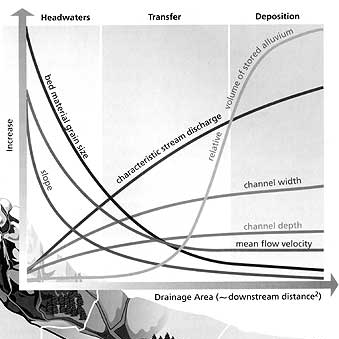
Figure 1: The Three Longitudinal Zones and Channel Characteristics. Reprinted with permission of Federal Interagency Stream Restoration Working Group (1998)

This article is not a lesson in how rivers function but Figure 1 is probably the most important graph in starting to understand how rivers function. It doesn’t just show function but shows diversity within the same water body, this should suggest even one river is not homogenous.

Blackwater

I should include this with a focus. Black water and botanicals, a growing popularity as people search for what is natural and what is not. As previously stated this style of fishkeeping is not representative of the diversity of freshwater ecosystems even within South America (Bogotá-Gregory et al., 2020). If we look at videos of rivers such as my favourite and a popular locality for Loricariids in the trade, the Rio Xingu there is little leaf litter in these localities opposed to largely biofilms If the reason for choosing black water is to replicate an ecosystem then I would argue against.

As a source of nutrients this is dependent on the water body in focus, even with high availability leaf litter is not always shown to be the source of energy opposed to algaes (Lewis et al., 2001). Any abiotic influences of botanicals particularly leaf litter is extremely diverse (Tonin et al., 2017). It’s not so simple basically.

I sound so very against botanicals but that is not my aim, my aim here is simply to say it is not always representative of tropical freshwater ecosystems. It has it’s place, a brilliant place, it provides enrichment and a way of replicating specific freshwater ecosystems e.g the Rio Negro. Of course there are other things to consider like oxygen saturation and waste removal in deep leaf litter, large amounts of nutrient introduction with certain botanicals e.g. palm leaves. The main point I’m making is, is it natural? Yes it is an attempt of replicating a freshwater ecosystem but is this the freshwater ecosystem of where the fish is found?

I think personally where black water has become increasingly possible many aquarists have taken it the wrong way.

The Planted Aquarium

Planted aquariums have been a staple of the aquarium hobby probably since the start. Ponds as well as a vital part of British horticulture and landscaping have long used plants. Our use of them has changed a lot, maybe from functional to aesthetic and then functional? I wont discuss the function here as that is a whole other discussion that is much more complex but I will say simply, they do not make an aquarium more stable.

I have mentioned earlier how plants might not be present or found in large numbers in freshwater habitats (Murphy et al., 2019). The presence and availability of plants in freshwater ecosystems is limited by factors linked often to stream order such as sedimentation, light availability, nutrient availability etc. (Fig 1). In freshwater where there might not be the sediment available for plants to root down you might see microbes such as photosynthetic bacteria, algaes and protozoa where they can cling on but take advantage of the light. There are other elements of freshwater which might be harsh to plants, the lack of light availability further downstream but there are plants who have evolved adaptation to this e.g. water lilies, Nymphaea growing fast to the surface or floating plants.

Where botanicals have been used from the influence of biotopes the planted aquarium is quite different. A few years ago natural was coined by aquascapers to describe a planted tank and now to be a tank with just plants but strongly influenced from the work of controversial Diana Walstad. There are so many variabilities with these new natural planted aquariums they are so difficult to discuss variabilities such as plant species, nutrient diversity and misunderstanding of freshwater ecosystems they are difficult to discuss.

I come from a horticulture background, my father who always had a diversity of exotic plants before moving to allotments and my mother a professional gardener, many of my grandparents and family have connections to horticulture. I grew up watching BBC Gardeners World. This has meant understanding of plants and their care is the norm to me, I’ve had house plants since my first memories and was encouraged to have a garden. This information about me is not entirely important, but from a young age it was ingrained the importance of different compounds depending on the species of plant, the pH of the soil and many abiotic factors. I am also a house plant enthusiast so keep relatives or the plants we often keep on our aquariums. Many of these plants are not being kept as how they would be found in the wild, this effects their morphology and their growth. Nutrient availability particularly ratios of each compound is important for many plants. Soil is not soil or dirt, soil is a substrate that represents many different types.

This understanding of soil I feel lacks the biggest understanding in the hobby as there is a wide diversity of different soils, even the reptile hobby recognises this. We have clay, sand, silt, loam, peat and chalk according to the Royal Horticulture Society (https://www.rhs.org.uk/soil-composts-mulches/soil-types) but more importantly the combination of which massively effects how plants might grow and which plants. In aquariums we also have to think about algaes and other microbes who will take advantage of this nutrients. Like earlier the amount of one compound/nutrients can effect the uptake of another. In horticulture we are only thinking about the plants but aquariums there are other organisms, even in horticulture when thinking about other organisms we can go drastically wrong.

I don’t think I can easily explain this whole topic in one article. Planted tanks are often more human-centric. Aquascapes often focusing on the human requirements of aesthetics, maybe lacking hiding spaces or where a fish might need to dig, definitely worth thinking about. In comparison the recent popular planted aquariums don’t focus on the fishes, never mentioning fish biology.

Why do I discuss this?

I am a fishkeeper and a biologist but freshwater fishes are my passion. Of all the aspects of the hobby the word natural has been misused as a keyword. Maybe nothing I say here matters because it is used as clickbait more then often. What matters more is to research individual fishes and their biology. If you want to keep plants, keep plants but consider the fishes if you’re adding them.

My passion is largely Loricariids and rasping fishes, regarding black water and botanicals there are definitely a large number of Loricariids found in ecosystems with those, mostly representatives of the subfamilies Loricariinae and Hypoptopominae. These planted ‘natural’ aquariums often do not provide enough current, not enough water changes and not enough oxygen, temperature. This is likely due to Loricariids being seen as generalist even if that is a total myth.

References:

Bogotá-Gregory, J. D., Lima, F. C., Correa, S. B., Silva-Oliveira, C., Jenkins, D. G., Ribeiro, F. R., … & Crampton, W. G. (2020). Biogeochemical water type influences community composition, species richness, and biomass in megadiverse Amazonian fish assemblages. Scientific Reports10(1), 15349.

Department for Environmental and Rural Affairs, Forestry England, Animal and Plant Health Agency & Gardiner, J. (2019). Invasive Species Week: American skunk cabbage creates a stink. GOV.UK. https://www.gov.uk/government/news/invasive-species-week-american-skunk-cabbage-creates-a-stink#:~:text=American%20skunk%20cabbage%20was%20first,an%20ornamental%20plant%20in%201901.

Eastwood, N., Zhou, J., Derelle, R., Abdallah, M. A. E., Stubbings, W. A., Jia, Y., … & Orsini, L. (2023). 100 years of anthropogenic impact causes changes in freshwater functional biodiversity. bioRxiv, 2023-02.

Faghihinia, M., Xu, Y., Liu, D., & Wu, N. (2021). Freshwater biodiversity at different habitats: Research hotspots with persistent and emerging themes. Ecological Indicators129, 107926.

Franco, L. S., Shanahan, D. F., & Fuller, R. A. (2017). A review of the benefits of nature experiences: More than meets the eye. International journal of environmental research and public health14(8), 864.

Lewis Jr, W. M., Hamilton, S. K., Rodríguez, M. A., Saunders III, J. F., & Lasi, M. A. (2001). Foodweb analysis of the Orinoco floodplain based on production estimates and stable isotope data. Journal of the North American Benthological Society20(2), 241-254.

Murphy, K., Efremov, A., Davidson, T. A., Molina-Navarro, E., Fidanza, K., Betiol, T. C. C., … & Urrutia-Estrada, J. (2019). World distribution, diversity and endemism of aquatic macrophytes. Aquatic Botany158, 103127.

Nyingi, D. W., Gichuki, N., & Ogada, M. O. (2013). Freshwater ecology of Kenyan highlands and lowlands. In Developments in earth surface processes (Vol. 16, pp. 199-218). Elsevier.

Schultz, R., & Dibble, E. (2012). Effects of invasive macrophytes on freshwater fish and macroinvertebrate communities: the role of invasive plant traits. Hydrobiologia684, 1-14.

Scott, S. E., Rozin, P., & Small, D. A. (2020). Consumers prefer “natural” more for preventatives than for curatives. Journal of Consumer Research47(3), 454-471.

Søndergaard, M., & Jeppesen, E. (2007). Anthropogenic impacts on lake and stream ecosystems, and approaches to restoration. Journal of applied ecology44(6), 1089-1094.

Simpson, D. A. (1986). Taxonomy of Elodea Michx in the British Isles. Watsonia16, 1-14.

Tonin, A. M., Goncalves Jr, J. F., Bambi, P., Couceiro, S. R., Feitoza, L. A., Fontana, L. E., … & Boyero, L. (2017). Plant litter dynamics in the forest-stream interface: precipitation is a major control across tropical biomes. Scientific Reports7(1), 10799.

Wilson, E. O. (2007). Biophilia and the conservation ethic. Evolutionary perspectives on environmental problems, 249-257.

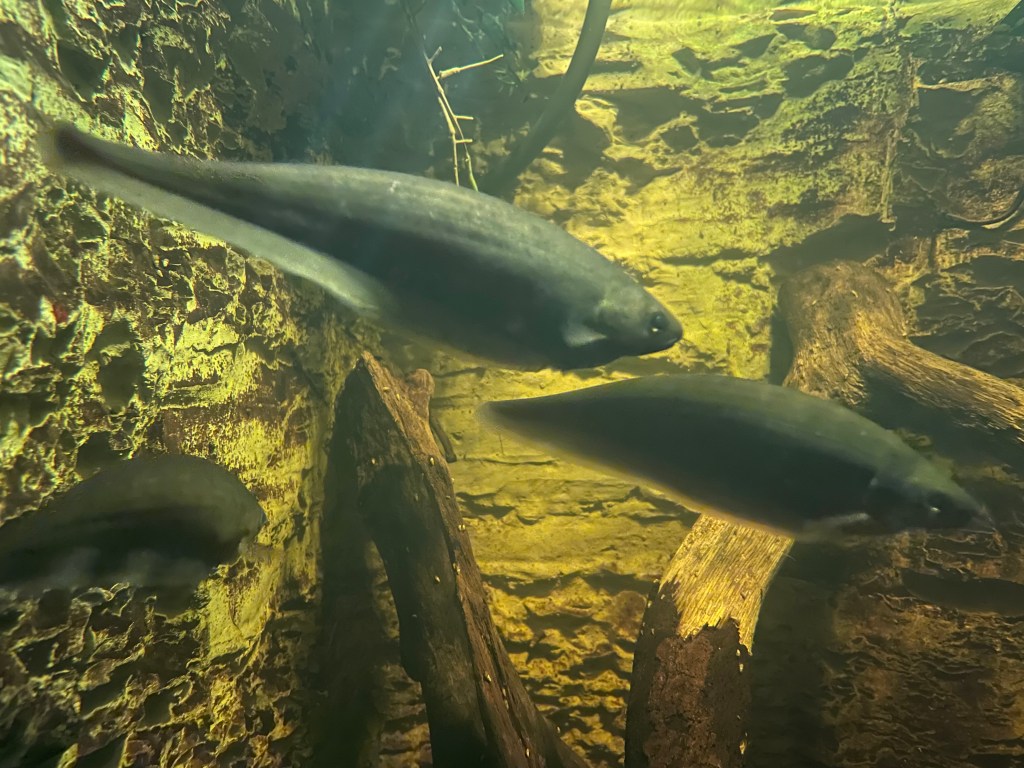
Xenomystus nigri, The African Knifefish: Anything but beige.

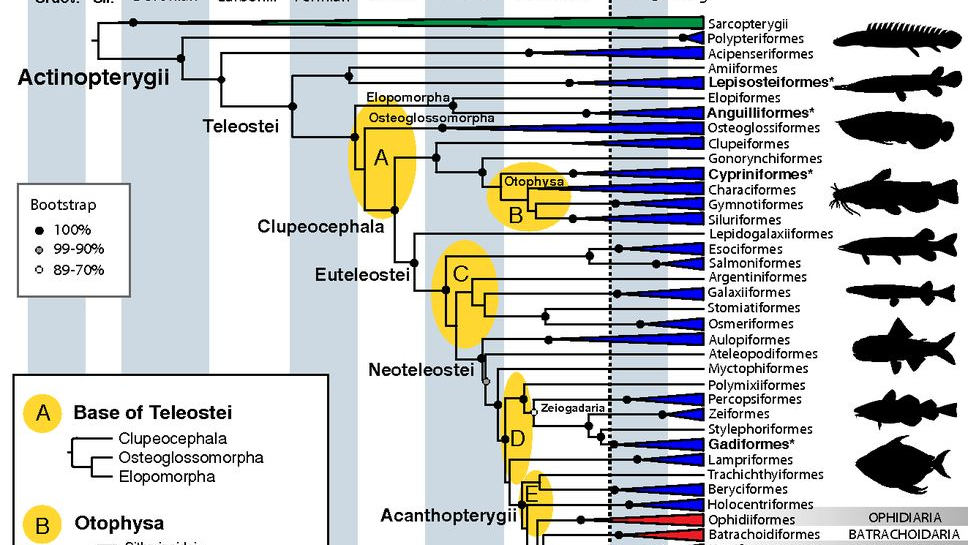
This is certainly an example of a problem with common names, X. nigri is actually more closely related to Mormyrids and as Osteoglossiformes are very closely related to arowana. While mormyrids are electrosensitive not all members of this group are, the clown knifefish Chitala spp. lacks this ability. The name knifefish is given to a few members of Osteoglossiformes but that is a story of convergent evolution of shared morphology for a solution to a common problem particularly with those electrosensitive species. They are not at all related to true knifefishes, Gymnotiformes which are exclusive to South America and are distantly placed in the tree of life on the same branch as the catfishes (Siluriformes) and tetra (Characiformes; Hughes et al., 2018; Fig 1).

Figure 1: Phylogeny of ray-finned fishes, Actinopterygii produced by Hughes et al. (2018)

These Asian and African species known as knifefishes are very different in care as a result from Gymnotiformes. Many Gymnotiformes with very few exceptions are challenging to feed due to specialist morphology (Evans et al., 2019) and/or grow to exceptional sizes. While this is entirely also the case for Mormyrids. Regarding size the majority of these knife shaped Osteoglossiformes it leaves one Xenomystus nigri.

Common name: African Knifefish, Brown knifefish, African Brown Knifefish.

Scientific name: Xenomystus nigri Günther, 1868.

Origin: Wide spread from West Africa to Ethiopian, type locality is the Niger river. (Golubtsov & Darkov et al., 2008; Günther, 1868).

Size: 15.24cm SL (Günther, 1868) but there is a bit of variability around that, measurement converted from inches.

But why are these the best knifefishes for most people?

Size as I have already stated, 15cm SL as an adult is not a bad maximum size and a lot better then the 50cm SL black ghost knifefish, Apteronotus albifrons or any much larger species commonly available. They are easy to identify with the only similar species being the bronze featherback, Notopterus notopterus but thankfully X. nigri lacks a dorsal fin. So not easily confused with larger species unlike Gymnotus spp. who all are very similar in appearance. Many knives, true and not are territorial and do not tolerate each other particularly well, X. nigri is social and a shoaling species who is just fascinating to watch interact with each other but do keep in groups of more then 3.

To emphasise more, what makes Xenomystus nigri better then any other knife is how easy they are to feed. I brought my first individual before I really saw them around with bags of live food, little did I realise just after introducing the fish it was feeding on dry food. Many true knifefish, Gymnotiformes are a nightmare to feed, often with extreme gape limitation meaning the smallest of foods for a reasonable sized fish and even then they can be fussy. Due to the nature of how electrosensitive fishes feed by locating prey using electromagnetism (Waddell & Caputi, 2020), they might not even notice any food that is not live.

Habitat

It seems although a reasonably easy to locate fish there is no specifics on the habitat of these fishes. I’ve kept a few and can definitely say they need a lot of decor and hiding places. This makes them great fishes to watch as they move between everything in the aquarium.

I would provide a mixture of wood, rocks, branches and just many different places for them to retreat to. They do prefer dimmer lighting or even better would be areas of brighter and darker lighting so they have choice.

Water parameters

Unfussy, I can’t say much more given how widespread they are but given largely from West Africa softer more acidic and low conductivity water might be more ideal. They certainly do not suffer in higher conductivity water. It’d also be wrong to be specific or entirely certain as it’s generalising entire countries and water ways.

Sociality

As said previously these are extremely social fishes and do need to be in groups, by watching them you can see how much they interact closely with each other. In very small numbers such as a pair they can cause a lot of harm to each other.

Regarding tankmates avoid anything that can easily fit in their reasonable large mouth so small tetra but otherwise they are not aggressive.

Feeding

There is no doubt that electosensitive fishes are carnivores, plants do not produce such signals they can pick up. Realistically we can understand what these fishes feed on based on the mouth size, these are likely invertivores which might be more insect larvae but probably a small amount of smaller fishes. It’s very difficult without seeing any research into the diets of these fishes.

In captivity they have no problems being fed on a dry diet. Unlike feeding even a large range of live and frozen foods it is difficult to know how much nutrition the fish is really getting.

References:

Bullock, T. H., & Northcutt, R. G. (1982). A new electroreceptive teleost: Xenomystus nigri (Osteoglossiformes: Notopteridae). Journal of comparative physiology148, 345-352.

Evans, K. M., Kim, L. Y., Schubert, B. A., & Albert, J. S. (2019). Ecomorphology of neotropical electric fishes: an integrative approach to testing the relationships between form, function, and trophic ecology. Integrative Organismal Biology1(1), obz015.

Golubtsov, A. S., & Darkov, A. A. (2008). A review of fish diversity in the main drainage systems of Ethiopia based on the data obtained by 2008. In Ecological and faunistic studies in Ethiopia, Proceedings of jubilee meeting “Joint Ethio-Russian Biological Expedition (Vol. 20, pp. 69-102). Moscow: KMK Scientific Press.

Günther, A. C. (1868). Catalogue of the Fishes in the British Museum: VII (Vol. 7). order of the Trustees.

Hughes, L. C., Ortí, G., Huang, Y., Sun, Y., Baldwin, C. C., Thompson, A. W., … & Shi, Q. (2018). Comprehensive phylogeny of ray-finned fishes (Actinopterygii) based on transcriptomic and genomic data. Proceedings of the National Academy of Sciences115(24), 6249-6254.

Waddell, J. C., & Caputi, A. A. (2020). Electrocommunication in pulse Gymnotiformes: the role of electric organ discharge (EOD) time course in species identification. Journal of Experimental Biology223(16), jeb226340.

How to Measure Your Fish, Properly and Scientifically

Little to common knowledge is that fishes are measured in multiple different ways and using different land marks to measure the fish from. These landmarks standardise any measurements and are frequently used in scientific papers over weight. The measuring of fishes is known as morphometrics, “morpho” coming from morphology the study of body shape and “metrics” coming from measuring.

Aspects of these measurements can be formal although many do provide a use in describing species and the landmarks used can be specific to particular taxa, groups. These measurements and as they change with age or between species, genera and families can tell us how fishes shape changes to the environment or allometric influences.

There are a few particularly common morphometrics that are most important as a fishkeeper to know:

  • Total Length (TL): This is the measurement from the tip of the head to the tip of the tail/caudal fin. This is the most problematic as caudal fins are commonly damaged and the length can be exceptionally and misleadingly long in some species or individuals. For example Panaqolus albivermis grows to around 12cm excluding this caudal fin but including the caudal fin and the extensions could bring it up to 20cm. Most reliable websites do not use this measurement.
  • Fork Length (FL): Very infrequently used in the aquarium hobby, this measurement goes from the tip of the head to the dip between the two lobes of a forked caudal fin. Similar flaws to total length but not all fishes have forked tails.
  • Standard Length (SL): As the name suggests this is the most reliable and common measure. Standard Length measures from the tip of the head to the end of the caudal peduncle or more easily remembered as to the base of the caudal fin. This measurement totally excludes the caudal fin and any variations with it. As this is the most reliable measurement reliable websites such as Seriously Fish, Planet Catfish, Scotcat etc. all use it even if they might not state it.
  • Head Length (HL): Rarely mentioned but worth just including, this is the measurement from the tip of the head to the end of the nuchal plate in Loricariids but seems to be end of the gill oppercula in others.

As people might have worked out there is a problem with these three measurements, many people are simply not aware they exist and therefore basing stocking and fish judgements on an incorrect measurement of length. For some species this misunderstanding might not make much of a difference but for some it could mean the difference between a 30cm fish and a 50cm fish.

It is also good to note that the metric system is used within science as it is the standard system and while many people use inches there is a reasonable difference in size particularly if choosing smaller fishes between each inch.

So why are these measurements used?

Well scientific papers and particularly species descriptions need standard units of measure. As hobbyists for many fishes particularly those who aren’t common or have not often been kept in the hobby we only have those scientific papers to go by on how big the fish gets. Sometimes we don’t even know potentially how long but these scientific papers will generally list the sizes of all the fishes they have caught. Assumptions can be made but do we want assumptions or honesty?

Many websites likely copy the length measurements of the reliable websites and do not transfer over how the fish are measured and this likely causes a lot of confusion.

Other Morphometrics

Maybe not so useful to aquariums apart from understanding physiology is there are many other measurements of fishes between different land marks all over the fish. These can be useful to identify certain fishes such as Panaque armbrusteri has a shorter pectoral fin then Panaque nigrolineatus (Lujan et al., 2010).

These measurements are generally what is specific to a group of fishes for example for Loricariidae we follow Armbruster (2009) as shown below:

Armbruster (2009) description of Peckoltia sabaji displaying the standard morphometrics used in Loricariidae.

1-20 here shows simple standard length and is probably the easiest way to visualise it. These measurements can show how shape changes between different species and individuals, Panaque for example would have deeper measurements around the head whereas Loricariinae will generally be slimmer and narrower.

Measurements are particularly useful for standardising, meaning everyone knows exactly what each other is talking about. Rather then me saying 15cm and someone saying 5 inches and another person saying 20cm. Scientists had long thought out and solved this issue but do state what measurements you are using hence you’ll see me say SL.

References:

Armbruster, J. W. (2003). Peckoltia sabaji, a new species from the Guyana Shield (Siluriformes: Loricariidae). Zootaxa344(1), 1-12.

Lujan, N. K., Hidalgo, M., & Stewart, D. J. (2010). Revision of Panaque (Panaque), with descriptions of three new species from the Amazon Basin (Siluriformes, Loricariidae). Copeia2010(4), 676-704.

Feeding Loricariids – The Basics: The substrate dwellers.

When people think of plecos they think of the term ‘suckermouth catfish’, yet these are the total exception with little to no ability to attach to any surface.

Here I am referring to those Loricariids who spend their time largely on the substrate often with their ornate mouths with many long and short barbels also known as cirri (Rojas-Molina et al., 2019). Unlike most other Loricariids, plecos these fishes are not crevice spawners and in some species the ornate cirri are used by the males to hold the eggs (Corvain & Fisch-Muller, 2007). There is one exception here, I tend to classify Isorineloricaria and Aphanotorulus (previously known as Squaliforma) and largely known as the Thresher plecos, these are in the subfamily Hypostominae where the majority of well known Loricariids, plecos place. While the majority of this category are in the subfamily Loricariinae often known as whiptail catfish.

So this is not so much a nutritional, dietary category as much as to where they feed and to me that makes a massive difference. Scientifically there isn’t the greatest understanding of this group either but hopefully with future advances in the coming years we can. So obviously I will have to edit this one day.

Many of these species forage and locate food by processing the substrate a bit like Panaque process wood in search of their food. Using their jaws they filter food objects from that substrate. All of these species really need a sandy substrate, not just because many need to hide in it but also the enrichment of naturally removing food from it.

There are both algivores/detritivores and carnivores in this category. Ofcourse I definitely recommend reading my article on algivores and detritivores but their mode of feeding limits a lot.

What genera are in this category?

  • Aphanotorulus (Squaliforma): Generalist detritivore
  • Crossoloricaria
  • Hemiodontichthys acipenserinus: Maybe a carnivore?
  • Isorineloricaria: Likely generalist detritivore.
  • Loricaria
  • Planiloricaria cryptodon: Either carnivore or feeds on seeds.
  • Pseudohemiodon: Suggested to be periplakton and algaes but could also feed on seeds.
  • Reganella
  • Rineloricaria (To an extent): Not exactly purely the substrate but do interact a lot with it.

There isn’t that many and I think this niche in many habitats are often catered for by other groups of fishes.

Anything these fishes feed needs to sink but that’s usually a given for Loricariids and ideally not large food items. Some of these genera have few to any teeth and very small jaws so cannot break into large food items. I’m not even sure we entirely know the actual mode of feeding they use and for research they are not the cheapest to obtain. For Isorineloricaria and Aphanotorulus their jaws are large and strong so it doesn’t make the largest amount of difference.

There are multiple genera here with morphology/anatomy that is unexplained, split between granivores (Seeds) or potentially molluscivorous (Gastropods like snails and bivalves) we just don’t know. We do know from a previous article that hardness of food items can matter so I think either way providing both would be beneficial, seeds such as from non-citrus fruits or apples, such as blue berries. Pest snails, no harm in having them as suggested in my snail article they can be a benefit. These are great snails for such species as easy for them to break down with the pharyngeal jaws.

When it comes to carnivores their interaction with the substrate does hint to them feeding on those invertebrates such as annelids and insect larvae that spend a considerable amount of time there.

It’s so difficult as we are making a lot of assumptions as to what they are eating and here I will treat them as the same. There is likely a lot of overlap at least. So as per the previous article into algivores and detritivores I highly recommend a good basic diet to build off. This will provide the essential nutrition to work off.

Anyway suggested basis diets:

  • Repashy Soilent Green and Bottom scratcher: Large diversity of algaes and high amounts of these algaes in Soilent Green. Bottom Scratcher on the other hand is very high in invertebrate items. They are higher up the list of ingredients so make up a lot of these diets. Easy to access for the majority of the world with many distributors. A gel diet so can be mixed to different consistencies and cooked to a jerky. It sinks and is very easy to break apart even if large by many of these species. The issue is what to which species if their diet is unknown.
  • In The Bag, Tropical Fish UK, Pleco Pops! Algae Grazer or Crickie-Dough: Over 75% algaes which is a very high amount for the algae based diet. The Crickie-Dough is even better I’d argue then bottom scratcher as high in crustaceans which is what most of these fishes would eat in the wild. While Repashy Bottom scratcher does provide a mollusc it is not closely related to gastropods or bivalves. Also a gel diet, the gelling agent used is brilliant as holds for an extremely long time, over 24 hours which is longer then any other gel food or one you can make your own. Cocoa powder is one is the most interesting and brilliant ingredients!
  • New Life Spectrum, Algaemax: Not to be confused with others of the same name so check the ingredients. Does contain a lot of algal ingredients but I can’t comment further due to UK availability.
  • C.E Essentials, Naturekind: While aimed at discus, Symphysodon it does contain a lot more algaes then other diets.
  • Should you make your own? You can but and that is a big but narrowing down the gelling agent that can last a few hours. This is difficult and takes time. Making your own diet commands research into nutrition and I’m really just only a beginner I think in that. It’s a large initial financial input as the ingredients particularly algaes are not cheap. This might be the only solution for some people in many countries and it is a debate for me how to help there.

Now to additions or supplements:

Frozen foods: A diversity of them would be brilliant so they can really feed off the substrate. Avoiding mussels as high in thiaminase and deficient in thiamine.

Live foods: Avoid any that move around the water column but those that focus in the substrate would be brilliant and offer more natural enrichment particularly black worms and tubifex.

Nori: Once it’s no longer a sheet I’d be inclined to suggest this as it rests in the substrate eventually, maybe not the best.

Earthworms: For larger species these might be found at the reptile store under the name Dendrobaena but definitely not to be missed. Do not forget though as they can survive underwater for some time if left and forgotten.

This sounds like a very limited list but compared to traditional algivores and detritivores frozen foods alone offers a lot more!

References:

Covain, R., & Fisch-Muller, S. (2007). The genera of the Neotropical armored catfish subfamily Loricariinae (Siluriformes: Loricariidae): a practical key and synopsis. Zootaxa1462(1), 1-40.

Rojas-Molina, Y. A., Provenzano-Rizzi, F., & Ramírez-Gil, H. (2019). A new species of whiptail armored catfish, genus Pseudohemiodon (Siluriformes: Loricariidae) from the Orinoco River basin, Llanos region of Colombia and Venezuela. Neotropical Ichthyology17, e180160.

Feeding Loricariids – The Basics. Part 1: Algivores, Detritivores and the Wood ‘Eaters’.

This is a seriously large topic with 1,050 species according to Catalog of Fishes, so it’s not a simple answer. The majority of Loricariids are algivores and detritivores (Lujan et al., 2012). Even within detritivory and algivory there is partitioning (Lujan et al., 2011), this does mean they will not be feeding on the same thing. There is little research if to whether their diet changes with age but it seems there might be slight changes, certainly not towards any omnivorous/carnivorous diet as adults still had algae within their gut (Nonogaki et al., 2007), there is although evidence for seasonal shifts in diet (Mazzoni et al., 2010).

Baryancistrus xanthellus (Gold Nugget Pleco)

Here as I cannot really discuss all species and we are still in early days of understanding Loricariid diets I will present different categories with diets and suggestions to further supplement their diet.

Contents:

  1. Algivores/Detritivores
  2. What brands can I recommend as this basis to the diet, the foundations?
  3. What genera are included in this (off the top of my head)?
  4. Quick comment on wood ‘eaters’
  5. So lets discuss supplements and additions to further cater for these fishes diets.
  6. Gut Biota, what and why?
  7. References:

Algivores/Detritivores

It’s almost impossible to separate algivores and detritivores when it comes to Loricariids as there is so much overlap between the two categories but of course there is partitioning. It’s just we can’t really entirely cater for that partitioning. A lot of what is contained within detritus is this matrix of bacteria, protozoa, algaes and other microbes. In addition there are species who will feed more on algaes and some certain algaes like cyanobacteria e.g. Lasiancistrus caucanus (potentially L. mayoloi; Valencia & Zamudio, 2007), while others who might focus more on bacteria or fungi. We really don’t entirely know how much subdivision there is beyond the fact it exists. This is maybe the most fascinating dietary category as few other groups of fishes can do it like Loricariids can.

Chaetostoma sp. from Pier Aquatics, Wigan.

So, this category fills up the majority of Loricariids (Lujan et al., 2012) yet is maybe the most misunderstood or catered for. Bacteria, protozoa and other microbes are not really available in any commercial diets or even as ingredients which is very limiting leaving just algaes. We do know algaes are great in nutrition given just one species of algae replaced the nutritional requirements of a commercial diet which contained fish meal, cereals but only very few algaes in small volumes (Vucko et al., 2017).

The common misconception is that algaes are low in protein, yet they can be very high (Chen et al., 2022). This misconception comes from their similarity to plants but only green algaes are closely related to plants, while the term algae includes many other groups e.g. spirulina which is a cyanobacteria. Plants used in fish feeds might even lack many essential amino acids or contain anti-nutritional factors (Trevi et al., 2023). Algaes aren’t just high in protein but also very high in vitamins, minerals and essential fatty acids, to top the list of why algaes are great is their benefits on fish pigmentation (Alagawany et al., 2021; Trevi et al., 2023; Chen et al., 2022). So certainly an ingredient that shouldn’t be forgotten.

As we are talking fishes that feed on algaes as a large amount of their wild diets I can’t see how these simple ingredients are not useful. There is the issue of palatability and I have largely noticed they might struggle to recognise food not growing on a surface so in a wafer or pellet as algaes hence some taxa like those which are carnivores seem to do better then the very strict algivores.

So all we have to go off is a very small set of algaes but what should you look for in a main staple diet?

A main diet is what I see as the foundations of any fish food, this will contain all the main nutrition, vitamins and minerals. I understand additionally that different foods are limited around the world and cost also varies which makes it incredibly difficult for this dietary group.

Parancistrus aurantiacus (Xanto pleco)

What brands can I recommend as this basis to the diet, the foundations?

  • Repashy Soilent Green and Repashy Super Green: Large diversity of algaes and high amounts of these algaes, I believe 80% in Super Green. They are higher up the list of ingredients so make up a lot of these diets. Easy to access for the majority of the world with many distributors. A gel diet so can be mixed to different consistencies and cooked to a jerky.
  • In The Bag, Tropical Fish UK, Pleco Pops: Over 75% algaes which is a very high amount. Also a gel diet, the gelling agent used is brilliant as holds for an extremely long time, over 24 hours which is longer then any other gel food or one you can make your own.
  • New Life Spectrum, Algaemax: Not to be confused with others of the same name so check the ingredients. Does contain a lot of algal ingredients but I can’t comment further due to UK availability.
  • C.E Essentials, Naturekind: While aimed at discus, Symphysodon it does contain a lot more algaes then other diets.
  • Should you make your own? You can but and that is a big but narrowing down the gelling agent that can last a few hours. This is difficult and takes time. Making your own diet commands research into nutrition and I’m really just only a beginner I think in that. It’s a large initial financial input as the ingredients particularly algaes are not cheap. This might be the only solution for some people in many countries and it is a debate for me how to help there.

What genera are included in this (off the top of my head)?

  • Acanthicus (maybe, the rest of that group isn’t)
  • Acestridium
  • Ancistrus
  • Aphanotorulus
  • Baryancistrus
  • Chaetostoma
  • Cordylancistrus
  • Guyanancistrus
  • Hemiancistrus
  • Hypancistrus
  • Hypoptopoma
  • Hypostomus
  • Isorineloricaria
  • Lasiancistrus
  • Nannoptopoma
  • Otocinclus
  • Panaqolus
  • Panaque – Largely specialist for extracting microbes and fungi from wood.
  • Parancistrus
  • Parotocinclus
  • Peckoltia
  • Pogonopoma
  • Pseudancistrus
  • Pseudorinelepis
  • Pterygoplichthys
  • Rhinotocinclus
  • Rinelepis
  • Spectracanthicus – maybe excluding S. murinus
  • Sturisoma
  • Sturisomatichthys

Obviously I might forget a few or they aren’t even seen in the trade. There is also a lot we haven’t found on these fishes diets yet. I also haven’t included some that I put other niches for other reasons e.g. the substrate dwellers. I also can’t use common names as I’d end up making a list of hundreds for every common name there is.

Panaque nigrolineatus (watermelon pleco, one of the many Royal plecos)

Quick comment on wood ‘eaters’

These fishes have been proven as the article linked here cites to not digest wood or use it for digestion. Instead these genera Panaque, Panaqolus, the Hypostomus cochliodon group and Lasiancistrus heteracanthicus digest the microbes within wood in the wild but are just finding it in a different place. They do though consume and digest fungi. If wood within the aquarium had this diversity of microbes it’d decay very rapidly in captivity and it clearly doesn’t given a bit of wood can last years or over a decade.

So lets discuss supplements and additions to further cater for these fishes diets.

  • Vegetables: The most well known and there are always long lists of what they can be fed. They should never replace the algaes as nutritionally do not even compare as even suggested in Trevi et al. (2023). There is always a use in having something when a fish is skinny or newly imported and just feeding, I particularly find sweet potato and courgette great there but it shouldn’t be relied on. For larger species additionally as just padding out their diet and adding to. Given these fishes are rarely if ever feeding on plants in the wild then there is a lot of nutrition that is not easily accessible from plants.
  • Mushrooms: Now I separate these as the only fungi available to use aquarists, for those wood ‘eaters’; Panaque, Panaqolus, Hypostomus cochliodon group and Lasiancistrus heteracanthicus they can be of massive use given they feed on fungi in the wild. Potentially other algivores/detritivores might additionally feed on these but it is difficult to identify for many scientists if they do. I definitely recommend removing before 12 hours as it smells strong after being in an aquarium.
  • Additional algaes: Algae powders can be brought and can be mixed in with diets like Repashy soilent green or super green to bulk them up. Just bare in mind they might expire quicker then the Repashy and the amount of gelling agent might not be sufficient for it to hold well with other ingredients. I wouldn’t recommend adding much and any dried seaweeds would need to be blended.
  • Nori: All I can say is great if they will eat it but I think how easily it breaks down in the water column. So for some genera like Pterygoplichthys who are reasonably fast to feed it might actually work.
  • Seeds: These feature reasonably in Hypancistrus diets but given monocots and dicots covers most plants it could mean a lot (Armbruster et al., 2007). I think there is no harm in trying seeds such as sunflower seeds but also small low acidic fruits such as blueberries or blackberries. It could be that these fishes are actually consuming fruits. I have seen multiple examples where Loricariids do feed on these small fruits not just Hypancistrus but Panaqolus seems keen on these food items. I’d definitely not look to citrus fruits, large amounts of fruit and apple seeds are best avoided.
  • Growing rocks in the sun for algae: This can really work and is great for Otocinclus, it’s just being able to do so and the surface growing enough.
  • Botanicals: These could provide benefits but in large amounts or certain types add a lot of complexity to an aquarium. I find additionally the biofilms botanicals produce actually vary in how they appeal to different fishes. They definitely wont sustain anything other then maybe a few of the smallest fish.
  • Nettles: Potentially a great resource that needs to be explored more. Definitely dry than blanch for a few minutes in hot water for a few minutes to remove the sting.
  • General fish foods: These typical diets might not always be bad if bulking out a diet particularly during periods where a fish needs more food.

Gut Biota, what and why?

This is an emerging science regarding to biology but has barely touched the ornamental fish industry beyond probiotics should they work. There is a lot to unpack and I think there is a benefit in having other fishes and their waste providing gut biota. These gut biota might have been lost during importing or a period of stress and poor diet. As much as gut biota might change with introduction after stressful periods diet does also influence this.

The common bristlenose, Ancistrus sp. male.

Wood

I generally in my day job look at Loricariid diets in the literature and other then the previously mentioned genera have never seen wood in the guts of other species. It is not needed and even those species who consume wood as a byproduct do not use it for digestion (Lujan et al., 2011) so is not needed in a diet. Even more so cellulose and lignin were proven not to be digested or used in digestion and these are added into many diets, so these are more wasted space and added waste to any fishes diet.

At the end of the day these are massively misunderstood fishes as is their diet. There are many more Loricariids to understand here such as the carnivores and substrate feeders.

References:

Alagawany, M., Taha, A. E., Noreldin, A., El-Tarabily, K. A., & Abd El-Hack, M. E. (2021). Nutritional applications of species of Spirulina and Chlorella in farmed fish: A review. Aquaculture542, 736841.

Armbruster, J.W., Lujan, N.K. and Taphorn, D.C., 2007. Four new Hypancistrus (Siluriformes: Loricariidae) from Amazonas, Venezuela. Copeia, 2007(1), pp.62-79

Chen, F., Qian, J., He, Y., Leng, Y., & Zhou, W. (2022). Could Chlorella pyrenoidosa be exploited as an alternative nutrition source in aquaculture feed? A study on the nutritional values and anti-nutritional factors. Frontiers in Nutrition9, 1069760.

Lujan, N. K., German, D. P., & Winemiller, K. O. (2011). Do wood‐grazing fishes partition their niche?: morphological and isotopic evidence for trophic segregation in Neotropical Loricariidae. Functional Ecology25(6), 1327-1338.

Lujan, N. K., Winemiller, K. O., & Armbruster, J. W. (2012). Trophic diversity in the evolution and community assembly of loricariid catfishes. BMC Evolutionary Biology12(1), 1-13.

Mazzoni, R., Rezende, C. F., & Manna, L. R. (2010). Feeding ecology of Hypostomus punctatus Valenciennes, 1840 (Osteichthyes, Loricariidae) in a costal stream from Southeast Brazil. Brazilian Journal of Biology70, 569-574.

Nonogaki, H., Nelson, J. A., & Patterson, W. P. (2007). Dietary histories of herbivorous loricariid catfishes: Evidence from δ 13 C values of otoliths. Environmental Biology of Fishes78, 13-21.

Valencia, C. R., & Zamudio, H. (2007). Dieta y reproducción de Lasiancistrus caucanus (Pisces: Loricariidae) en la cuenca del río La Vieja, Alto Cauca, Colombia. Revista del Museo Argentino de Ciencias Naturales nueva serie9(2), 95-101.

Van der Laan, R. & Fricke, R. (2023).  ESCHMEYER’S CATALOG OF FISHES: FAMILY-GROUP NAMES. (http://www.calacademy.org/scientists/catalog-of-fishes-family-group-names/). Electronic version accessed 04 October 2023.

Vucko, M. J., Cole, A. J., Moorhead, J. A., Pit, J., & de Nys, R. (2017). The freshwater macroalga Oedogonium intermedium can meet the nutritional requirements of the herbivorous fish Ancistrus cirrhosus. Algal research27, 21-31.

Trevi, S., Uren Webster, T., Consuegra, S., & Garcia de Leaniz, C. (2023). Benefits of the microalgae Spirulina and Schizochytrium in fish nutrition: a meta-analysis. Scientific Reports13(1), 2208.