
Aquarium snails are one of the most popular invertebrates people keep within the aquarium, there is quite the diversity of forms and colours. They are generally very low maintenance and are not costly in their upkeep.
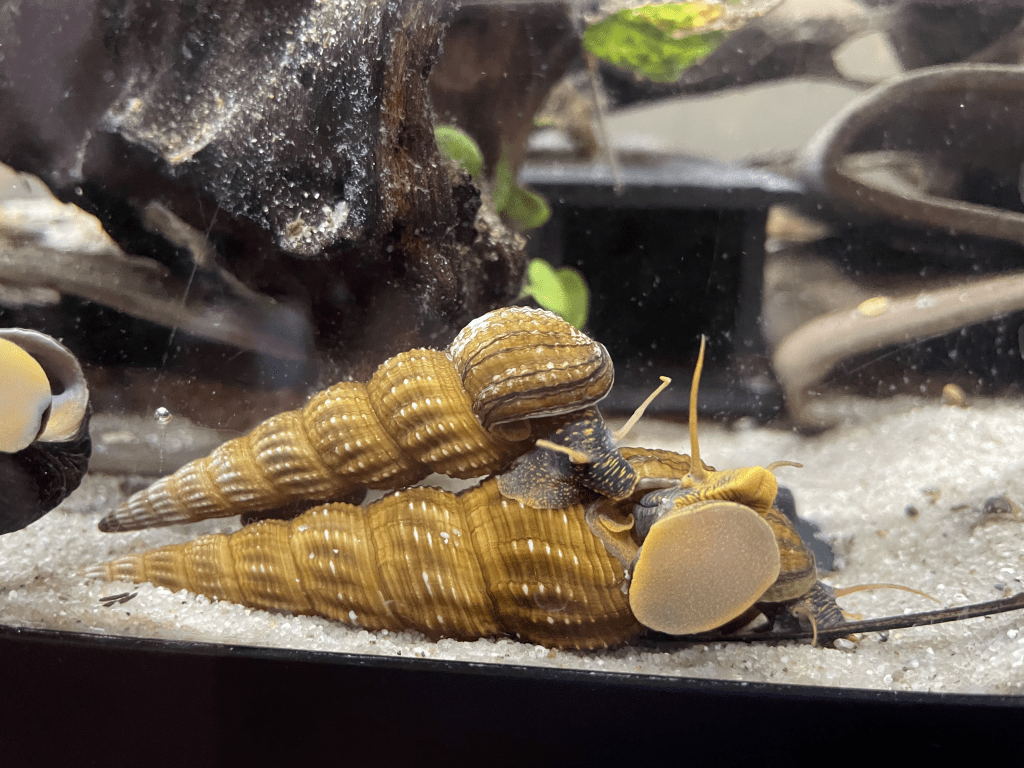
Snails are a common name for members of the Gastropoda who lack a shell and are in the family Mollusca which includes Cephalopods (Squids, cuttlefish and octopus), Bivalvia (clams, oysters and mussels) and a few lesser known clades. There are around 4,000 species of freshwater Gastropods, this value would include slugs due to there being no taxonomic difference and water bodies such as Lake Tanganyika or the Congo are hot spots for their diversity (Strong et al., 2008). There is a wide amount of diversity of shell morphology highly influenced by the habitat of these snails (Whelan, 2021).
Around 59 species of Gastropods are available within the aquarium trade, with 64% originating from Asia (Ng et al., 2016).
Ng et al. (2016) actually produced this amazing figure describing most if all of the Gastropods available within the aquarium trade although does seem to have some exceptions e.g. Asolene spixi.
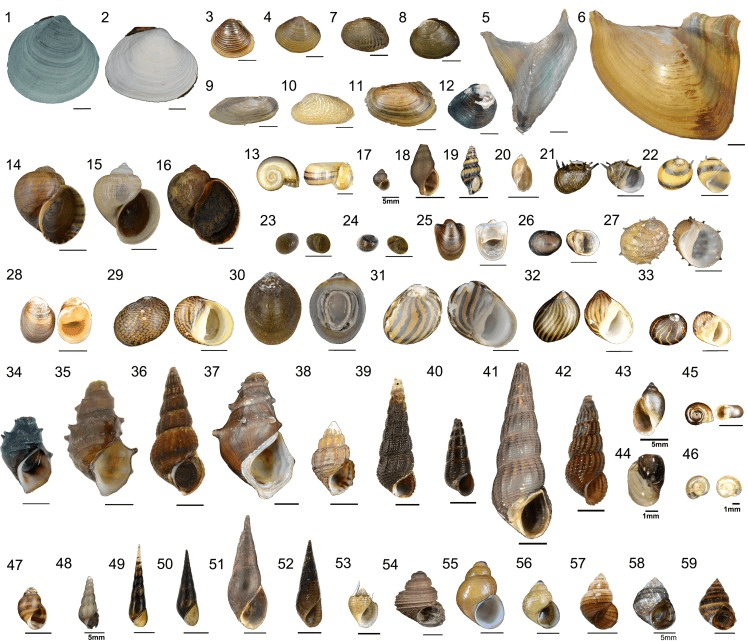
- Batissa similis
- Batissa violacea
- Corbicula fluminea
- Corbicula moltkiana
- Hyriopsis bialata
- Hyriopsis desowitzi
- Parreysia burmana
- Parreysia tavoyensis
- Pilsbryoconcha exilis (Tropical Freshwater Mussel)
- Scabies crispata (Ornamental Mussel)
- Sinanodonta woodiana (Chinese Pond Mussel)
- Unionetta fabagina
- Marisa cornuarietis (Columbian Ramshorn Snail)
- Pomacea canaliculata (Apple/Mystery snails)
- Pomacea diffusa (Apple/Mystery snails)
- Pomacea maculata (photograph by K.A. Hayes) (Apple/Mystery snails)
- Bithynia sp.
- Clea bockii
- Clea helena (Assassin Snail)
- Radix rubiginosa (Pond Snail)
- Clithon corona (Horned Nerite Snail.
- Clithon diadema (Horned Nerite Snail)
- Clithon lentiginosus (Nerite Snail)
- Clithon mertoniana (Nerite Snail)
- Neripteron auriculata (Batman Snail)
- Neritina iris (Nerite Snail)
- Neritina juttingae (King Koopa Nerite Snail)
- Neritina violacea (Violet Nerite Snail)
- Neritodryas cornea (Nerite Snail)
- Septaria porcellana (Marbled Limpet Nerite Snail)
- Vittina coromandeliana (Zebra Nerite Snail)
- Vittina turrita (Zebra Nerite Snail)
- Vittina waigiensis (Red Racer Nerite Snail)
- Brotia armata (Hedgehog Snail)
- Brotia binodosa
- Brotia herculea (White Hercules Snail)
- Brotia pagodula (Pagoda Snail)
- Sulcospira tonkiniana
- Tylomelania towutica (Yellow Spotted Rabbit Snail)
- Tylomelania sp. (Rabbit/Elephant Snail)
- Tylomelania sp. (Rabbit/Elephant Snail)
- Tylomelania sp. (Rabbit/Elephant Snail)
- Physa acuta (Tadpole/Bladder Snail)
- Amerianna carinata
- Indoplanorbis exustus (Ramshorn Snail)
- Gyraulus convexiusculus (Ramshorn Snail)
- Semisulcospira sp.
- Melanoides tuberculata (Malaysian Trumpet Snail)
- Stenomelania offachiensis
- Stenomelania plicaria (Chopstick Snail)
- Stenomelania cf. plicaria (Chopstick Snail)
- Stenomelania sp. (Chopstick Snail)
- Thiara cancellata (Hairy Snail)
- Celetaia persculpta (Blue Turbo Snail)
- Filopaludina martensi cambodjensis (White Wizard Snail)
- Filopaludina peninsularis
- Filopaludina polygramma (Tiger Tower Snail)
- Sinotaia guangdungensis
- Taia pseudoshanensis
When discussing snails we can’t help but discuss the diversity of snails labelled as pests, but what is a pest but a pet in the wrong place? Realistically we need to change our mind as to how we see these snails.
Tadpole/Bladder Snail (Physella acuta)
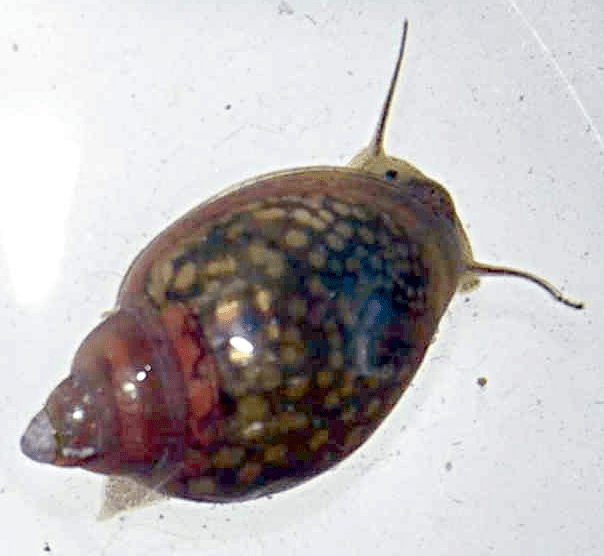
Pond Snails (Lymnaeidae)
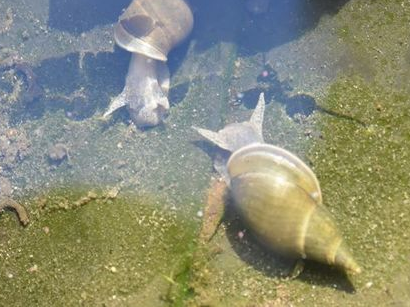
Ramshorn Snails (Planorbidae)
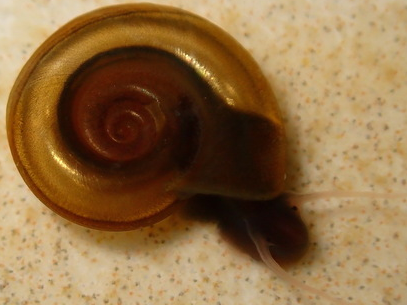
Pest snails get a very bad reputation, they generally come in on plants but sometimes by other means. These little Gastropods are generally harmless, they do not feed on plants nor will they attach to live fishes. In fact, they are great for any aquarium as they naturally feed on periplankton and detritus so act as a great indicator for overfeeding while helping further process any extra waste.
So lets discuss some of those more ornamental snails.
Rabbit/Elephant Snails (Tylomelania spp.)
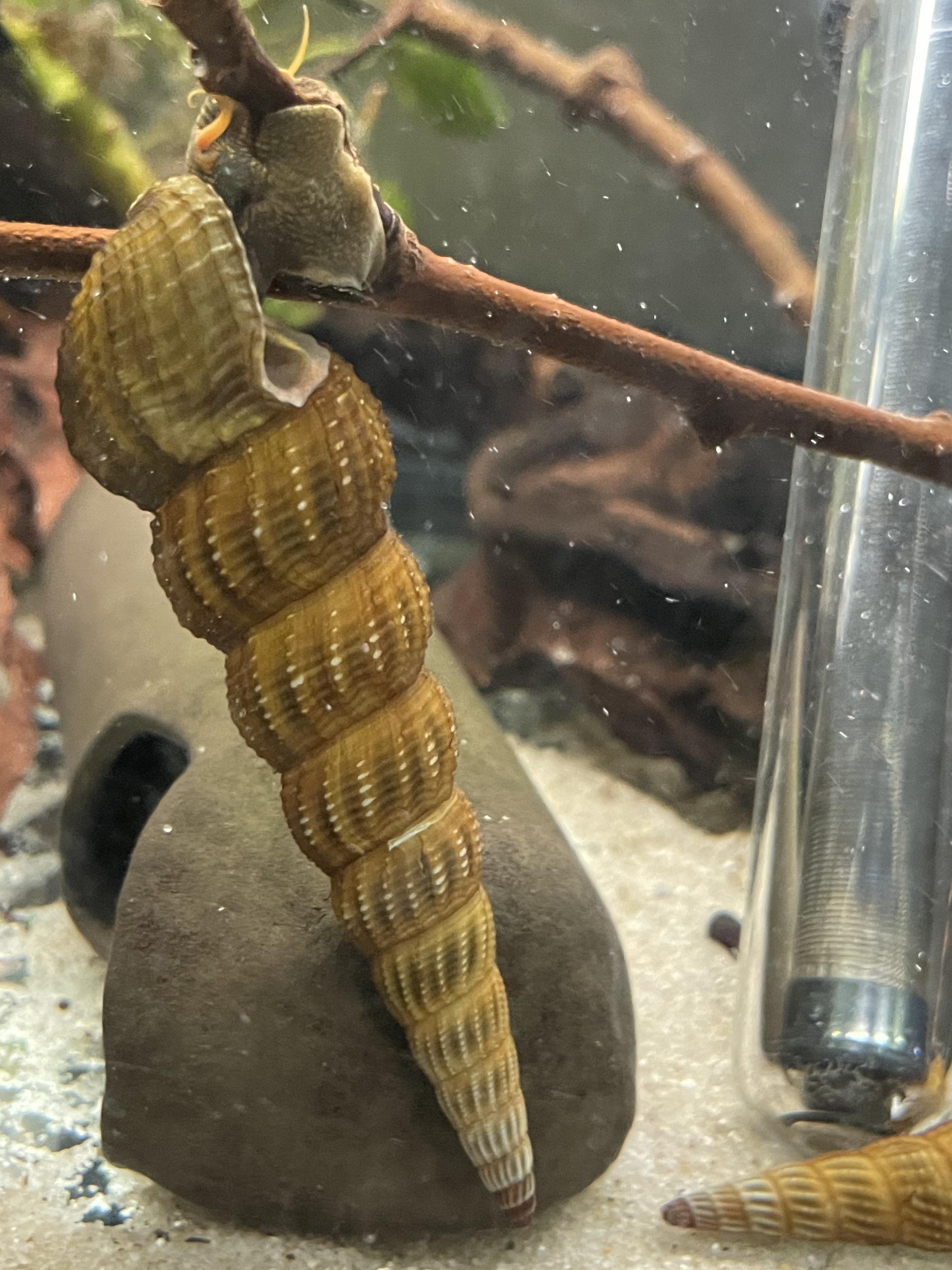
Tylomelania spp. are some of my favourite aquarium snails. They are active, rummaging around the substrate and have a lot of different diversity in colouration originating from Sulawesi (Glaubrecht & von Rintelen, 2009). Like other viviparous snails they are diecious (individuals are not hermaphrodites) and produce one offspring at a time. These are detritivores/periplanktivores and while do not seem to feed on plants in the aquarium some are noted to in the wild (Rintelen & Glaubrecht, 2003), this could be due to the difference in species used.
These snails generally seem to interact with a sandy substrate and in the wild are located on silty substrates or on rocks or wood (Von Rintelen et al., 2007). Temperatures in the water bodies of these snails aren’t well known but seem to be stable around the 28-31c, these snails seem to be most common at the banks of the lakes where temperatures are around 28-29c (Vuillemin et al., 2016). I have kept them and bred many Tylomelania in unheated aquariums with no issues in breeding so safe to say they are certainly adaptable. In Vuillemin et al. (2016) the parameters of one of Tylomelania’s water bodies is described as having a pH of 7.8 and a conductivity of 210 μS cm-1. This does mean the water is a much lower conductivity then what would normally be expected at that pH.
Assassin Snail (Anentome helena)
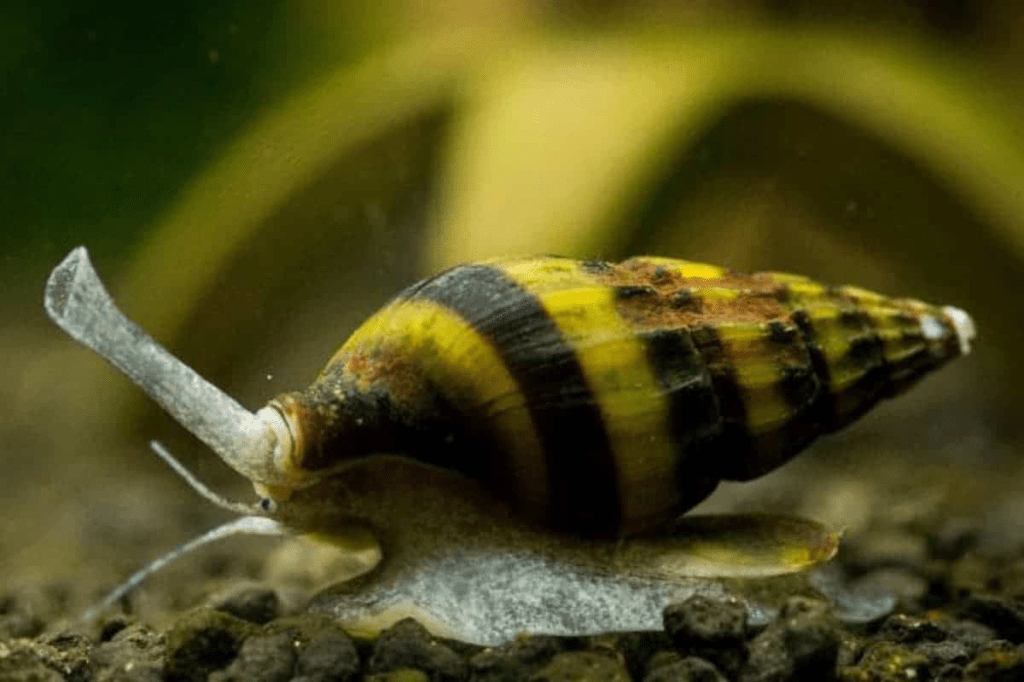
While a very ornately coloured species of snail, assassins are some of the most aggressive in the freshwater trade. They are often used to feed on pest snails and they are definitely very good at this task but they will additionally feed on any ornamental snails. If not feeding on snails Assassin snails are capable of feeding on waste, food etc. While they are diecious they can lay an incredible number of eggs so can soon become the pest they are usually brought to prevent.
Columbian Ramshorn Snail (Marisa cornuarietis)
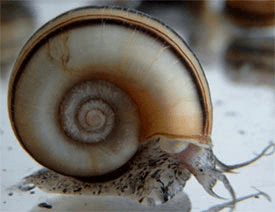
The most impressive of the ramshorn snails available to use in the aquarium trade, reaching sizes of 60-60mm (Grantham et al., 1993).
Although there seems to be no information on the habitats of this species, previous research has suggested that Columbian Ramshorn snails do best around 25c (Aufderheide et al., 2006). The downfall as with many Ampullariidae such as Asolene spixi is their very diverse diet of not just a diversity of plants (Seaman & Porterfield, 1964) but it seems snail eggs too (Demian & Lutfy, 1965). These are definitely snails to eat your plants.
White Wizard Snail (Filopaludina martensi)
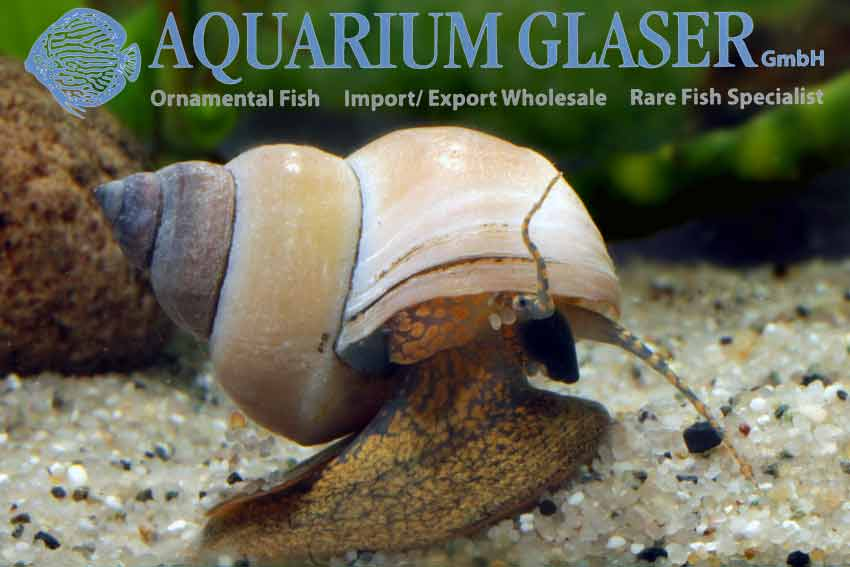
What can I say more about Viviparidae snails other then them being really charming inhabitants, I have discussed Tylomelania probably the easiest to keep so now one that requires more thought.
Filopaludina martensi are no doubt some of the most attractive snails in the aquarium hobby and realistically everything I say for Tylomelania regarding breeding stands true here. They will not overpopulate any aquarium with any speed and easy to rehome individuals should they do. Unlike Tylomelania who do not seem to display any sexually dimorphic features, F. martensi displays a modified tentacle in males and a larger shell size in females (Sawangproh et al., 2021).
They are a little bit more challenging as seem to require much more periplankton and detritus within the aquarium and are not keen to feed on any other foods provided. It seems in the literature they are suggested as filter feeders and this could explain why, although lacking citations or personal observations detritivore might be more accurate (Piyatiratitivorakul & Boonchamoi, 2008). By observation of this snails anatomy I would definitely say detritivore, it has no filter feeding apparatus maybe apart from the gills. It does seem very little is known about this snails ecology. Although one of the catch localities, Kwai Yai River (Sawangproh et al., 2021) for this snail records temperatures of 22-33c showing these snails are adaptable to a wide range of aquarium temperatures (Leelahakriengkrai & Peerapornpisal, 2011).
Obviously I cannot talk about all 59+ Gastropods within the aquarium trade and a lot of information will be species or taxa specific. So I will discuss some misconceptions.
The importance of calcium?
There is no doubt much like fish Gastropods utilise calcium to build their shells and for other physiological processes. Gastropods like fishes can uptake calcium from the water and also from their food but their ability to do so depends on the species. Snails have been split into two categories, those that require it in the water and those that can live in low calcium and utilise calcium from their food (Dalesman & Lukowiak, 2010). So you really need to look at individual species and considering the importance of calcium volumes within the water. The use of a calcium block, cuttlefish bone or any snail food wont replace what is required in the environment for those species. And for species that obtain calcium from their diet consider they are actually getting calcium in their diet.
Does diet matter?
I think this just has a simple answer, yes. Snails generally are amazing opportunists and many can eat a wide range of resources. Research your snail before you buy as there are some more challenging species as mentioned earlier. There are so many creative ways to feed aquarium Gastropods and this maybe needs it’s own article later on as you can easily get away without so much.
References
Aufderheide, J., Warbritton, R., Pounds, N., File‐Emperador, S., Staples, C., Caspers, N., & Forbes, V. (2006). Effects of husbandry parameters on the life‐history traits of the apple snail, Marisa cornuarietis: effects of temperature, photoperiod, and population density. Invertebrate Biology, 125(1), 9-20.
Dalesman, S., & Lukowiak, K. (2010). Effect of acute exposure to low environmental calcium on respiration and locomotion in Lymnaea stagnalis (L.). Journal of Experimental Biology, 213(9), 1471-1476.
Demian, E. S., & Lutfy, R. G. (1965). Predatory activity of Marisa cornuarietis against Biomphalaria alexandrina under laboratory conditions. Annals of Tropical Medicine & Parasitology, 59(3), 337-339.
Glaubrecht, M., & von Rintelen, T. (2009). The species flocks of lacustrine gastropods: Tylomelania on Sulawesi as models in speciation and adaptive radiation. In Patterns and Processes of Speciation in Ancient Lakes: Proceedings of the Fourth Symposium on Speciation in Ancient Lakes, Berlin, Germany, September 4–8, 2006 (pp. 181-199). Springer Netherlands.
Grantham, Ö. K., Moorhead, D. L., & Willig, M. R. (1993). Feeding preference of an aquatic gastropod, Marisa cornuarietis: effects of pre-exposure. Journal of the North American Benthological Society, 12(4), 431-437.
Leelahakriengkrai, P., & Peerapornpisal, Y. (2011). Water quality and trophic status in main rivers of Thailand. Chiang Mai Journal of Science, 38(2), 280-294.
Ng, T. H., Tan, S. K., Wong, W. H., Meier, R., Chan, S. Y., Tan, H. H., & Yeo, D. C. (2016). Molluscs for sale: assessment of freshwater gastropods and bivalves in the ornamental pet trade. PLoS One, 11(8), e0161130.
Piyatiratitivorakul, P., & Boonchamoi, P. (2008). Comparative toxicity of mercury and cadmium to the juvenile freshwater snail, Filopaludina martensi martensi. Sci Asia, 34, 367-370.
von Rintelen, T., Bouchet, P., & Glaubrecht, M. (2007). Ancient lakes as hotspots of diversity: a morphological review of an endemic species flock of Tylomelania (Gastropoda: Cerithioidea: Pachychilidae) in the Malili lake system on Sulawesi, Indonesia. Hydrobiologia, 592, 11-94.
Vuillemin, A., Friese, A., Alawi, M., Henny, C., Nomosatryo, S., Wagner, D., … & Kallmeyer, J. (2016). Geomicrobiological features of ferruginous sediments from Lake Towuti, Indonesia. Frontiers in Microbiology, 7, 1007.
Rintelen, T. V., & Glaubrecht, M. (2003). New discoveries in old lakes: three new species of Tylomelania Sarasin & Sarasin, 1897 (Gastropoda: Cerithioidea: Pachychilidae) from the Malili lake system on Sulawesi, Indonesia. Journal of Molluscan Studies, 69(1), 3-17.
Sawangproh, W., Phaenark, C., Chunchob, S., & Paejaroen, P. (2021). Sexual dimorphism and morphometric analysis of Filopaludina martensi martensi (Gastropoda: Viviparidae). Ruthenica, Russian Malacological Journal, 31(2).
Seaman, D. E., & Porterfield, W. A. (1964). Control of aquatic weeds by the snail Marisa cornuarietis. Weeds, 12(2), 87-92.
Strong, E. E., Gargominy, O., Ponder, W. F., & Bouchet, P. (2008). Global diversity of gastropods (Gastropoda; Mollusca) in freshwater. Freshwater animal diversity assessment, 149-166.
Whelan, N. V. (2021). Phenotypic plasticity and the endless forms of freshwater gastropod shells. Freshwater Mollusk Biology and Conservation, 24(2), 87-103.
 The Scientific Fishkeeper