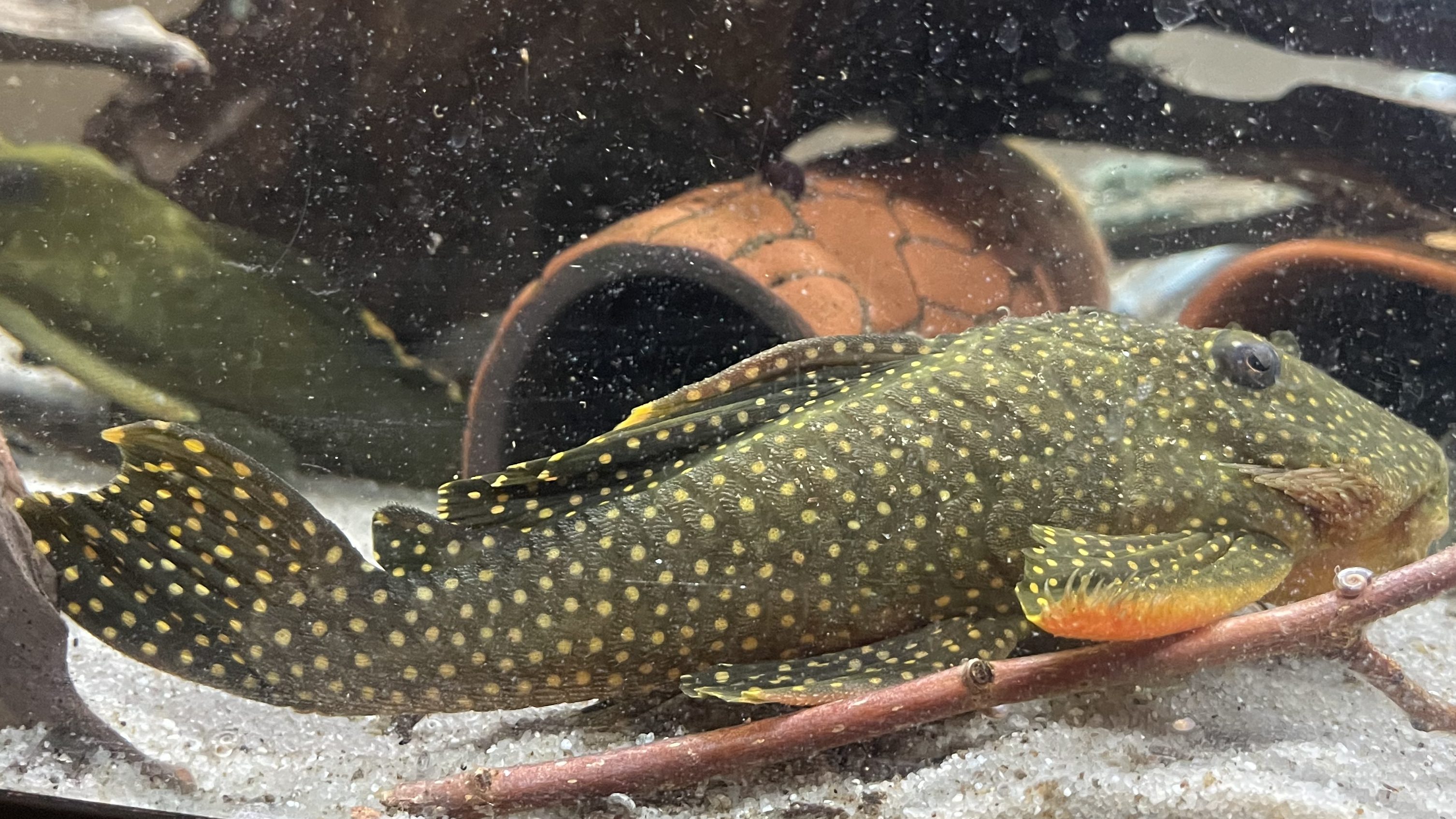
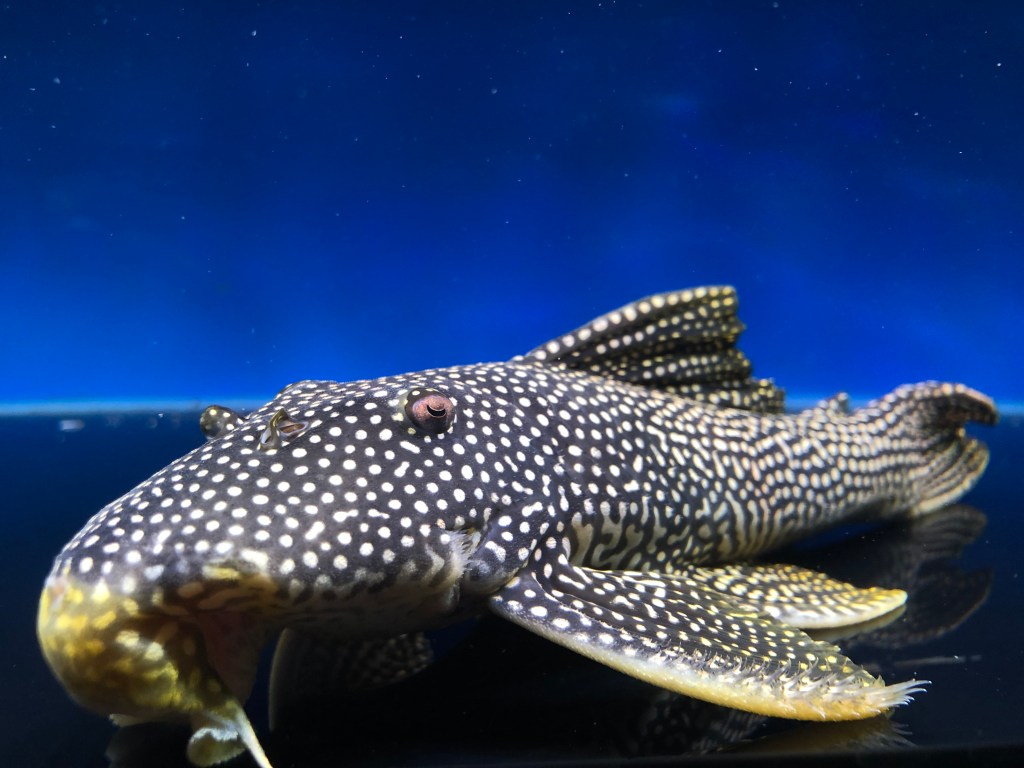
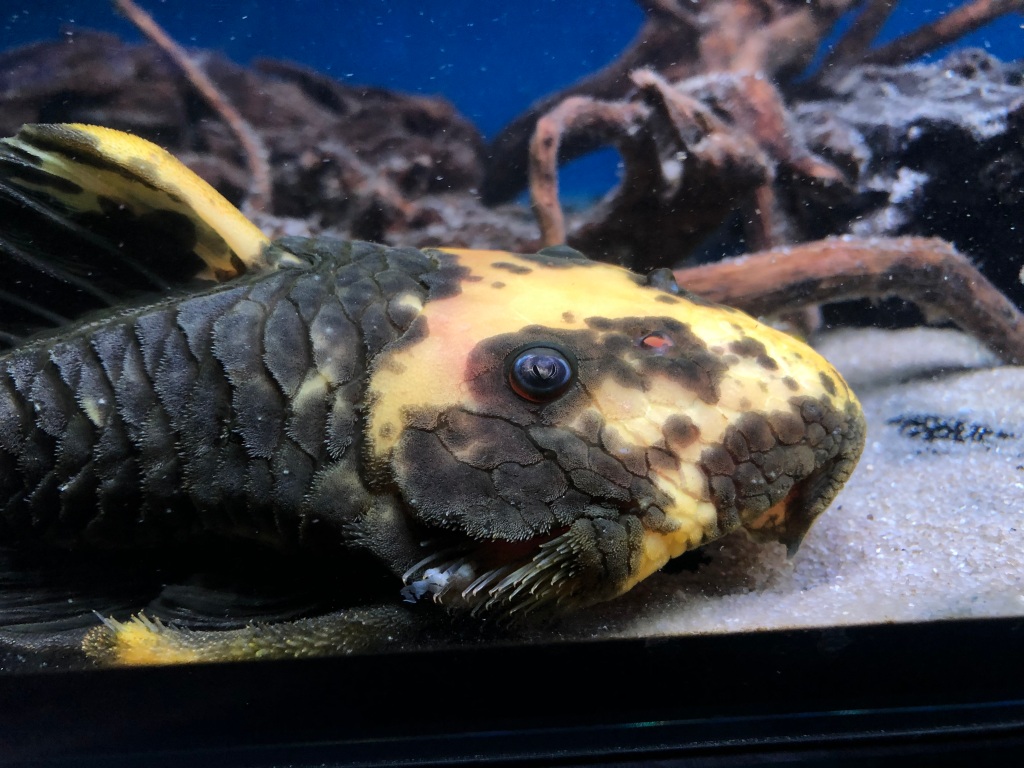
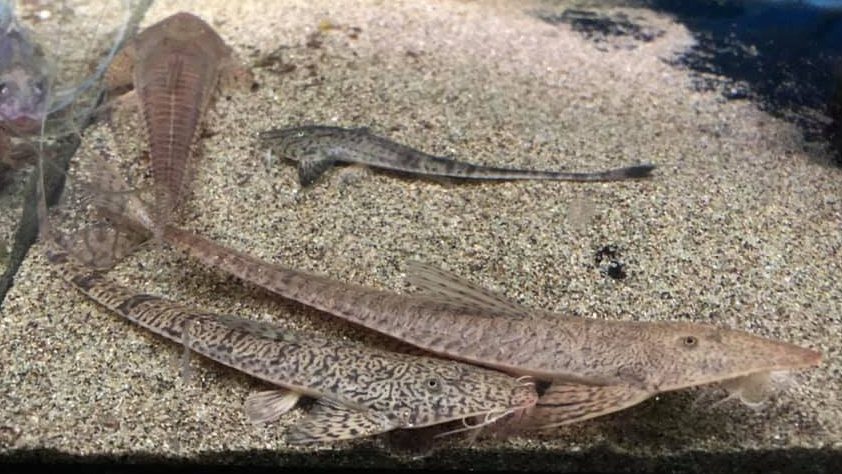
Category Archives: Loricariidae (Plecos)

How to Sex your Loricariid (Pleco/whiptail catfish).

This is a big question when it comes to keeping Loricariids in the aquarium as more then often people want to spawn the fishes but sometimes people just want to name them.
What is the sex determination methods in Loricariidae?

This is actually a more vast discussion then some other groups like mammals. In fact Loricariid’s use a range of karyotypes to determine sex from the more well known ZW and XY to multiple sex chromosomes. Ancistrus (Bristlenoses) is a large genus representing over 60 spp. (Eschmeyer, 2025), this genus does show multiple sex determination methods and some not as well known such as ZZ/ZW1W2 in Ancistrus clementinae (Nirchio et al., 2023) or ZZ/ZW in Ancistrus ranunculus (Oliveira et al., 2007). It seems many genera show a lot of diversity (Sassi et al., 2023) and this is possibly a large barrier to hybridization and maybe could lead to speciation.

What do you need to be able to identify the sex of your Loricariid?

  • A mature fish, unless the fish has reached sexual maturity it likely wont show many sexually dimorphic features although there are slight exceptions at the smaller level or during dissection. Largely this will mean close to fully grown and/or clearer odontode growth. Some species this might take a year such as some of the more common Ancistrus or 5+ years like the Hemiancistrus medians group (e.g. Panaque, Baryancistrus etc.)
  • A bowl, container or polybox can be useful to examine around the fish particularly below. Fill this with the tank water, do not do it during acclimation. It can be done in store.

Anatomy that allows you to sex Loricariids

Venting – Genital papilla and the urogenital pore
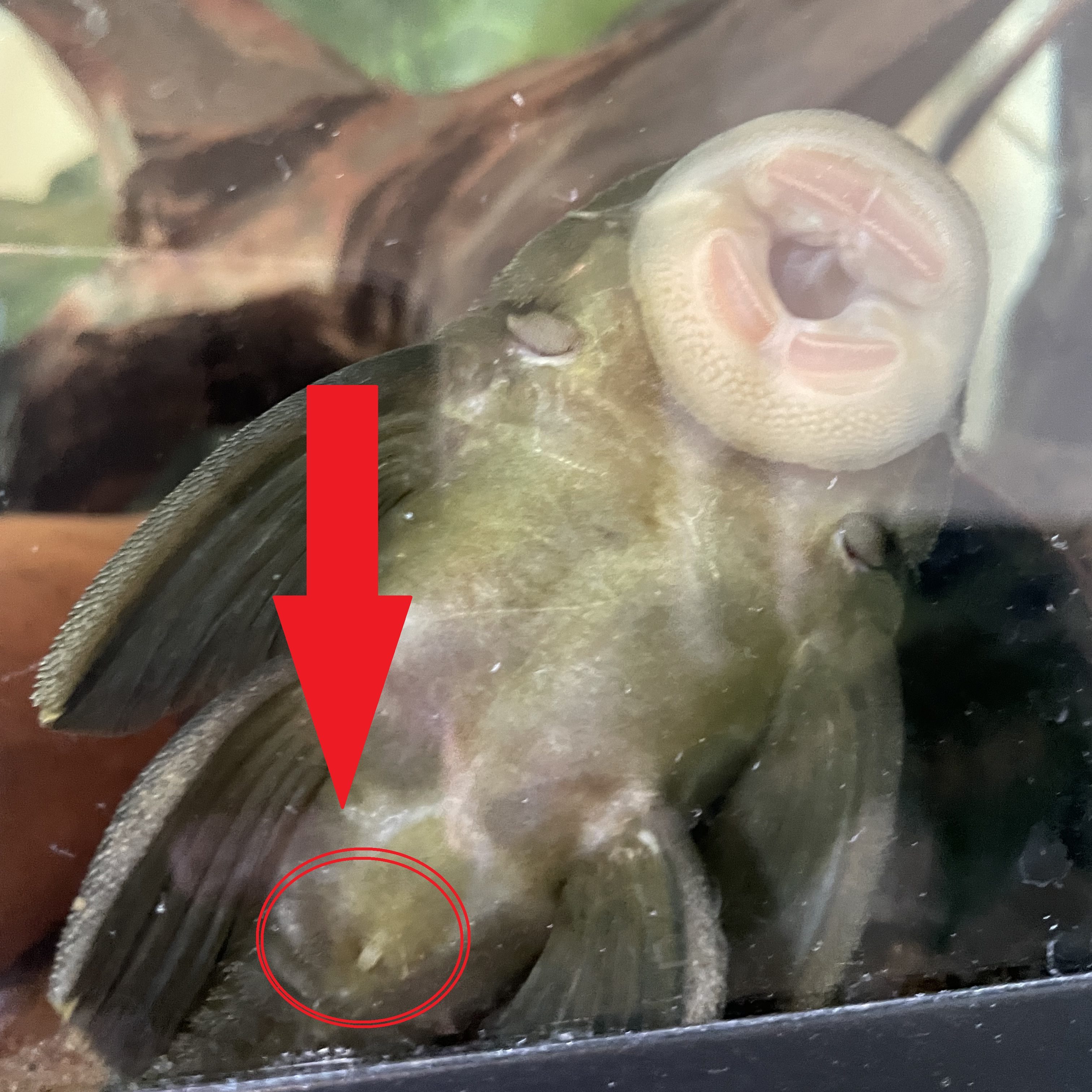
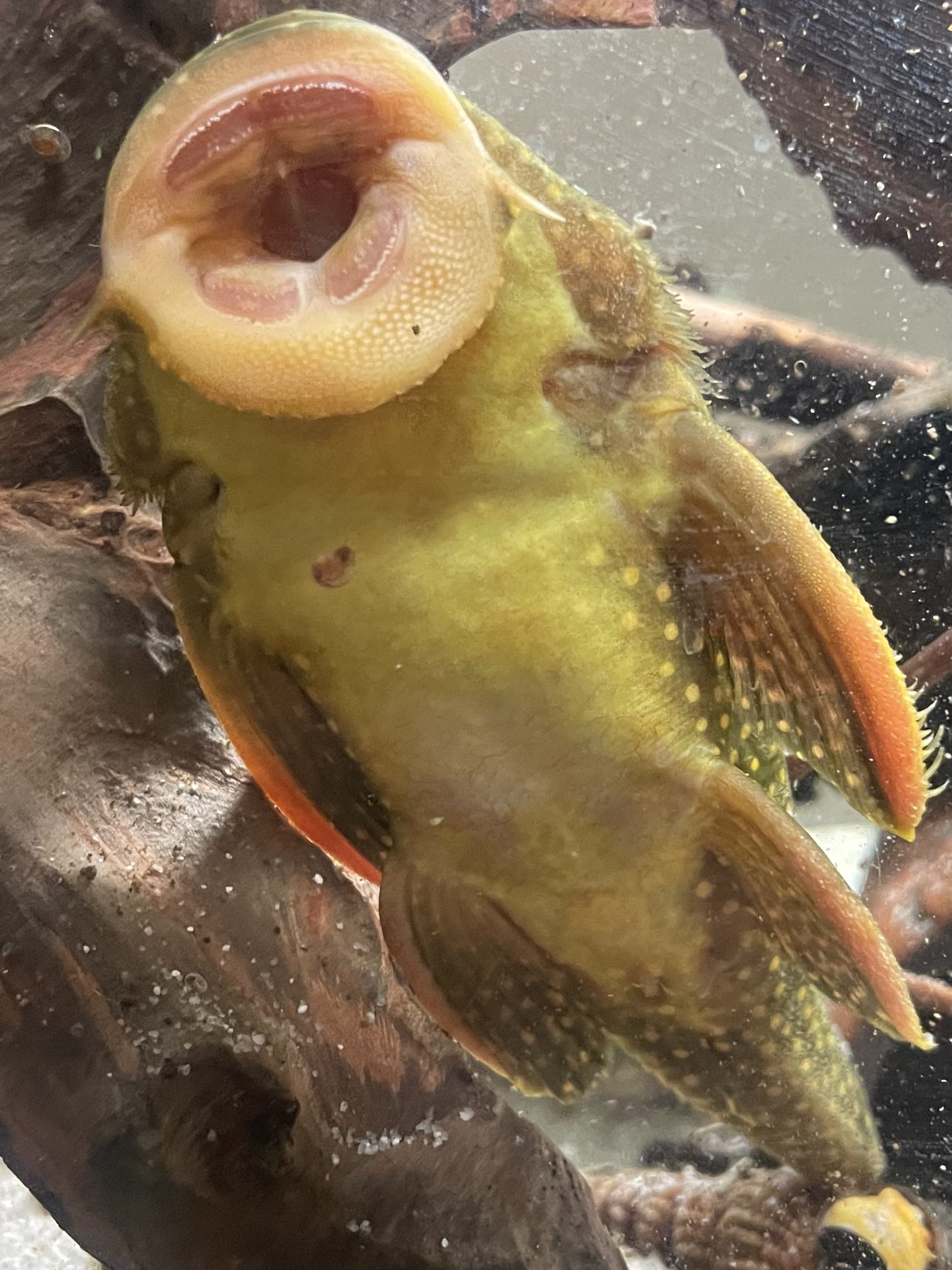
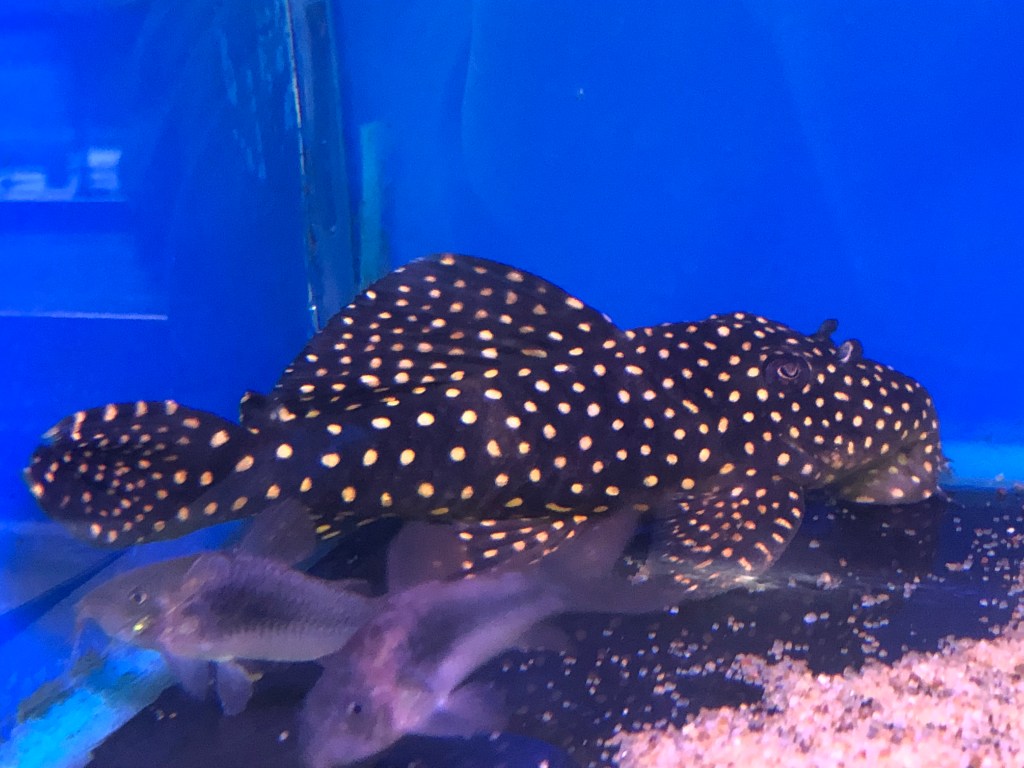
Figure 1: Baryancistrus chrysolomus, mango/magnum pleco juvenile.

The genital papilla and the urogenital pore are the same thing, this is a combined organ where the fish passes waste but also the gametes (eggs and sperm). This is not the same for all Loricariids where the genital pore is separate from the anus such as in Neoplecostomus. It is clearly on the abdomen, shape is normally ambiguous in juveniles.

The shape of the genital papilla is the most reliable method to sex Lorcariids, it’s most easily stated as V shaped in males and U in females. This can be tricky to see in some genera which have more elongate genital papilla such as the Pterygoplichthys in figure 2.
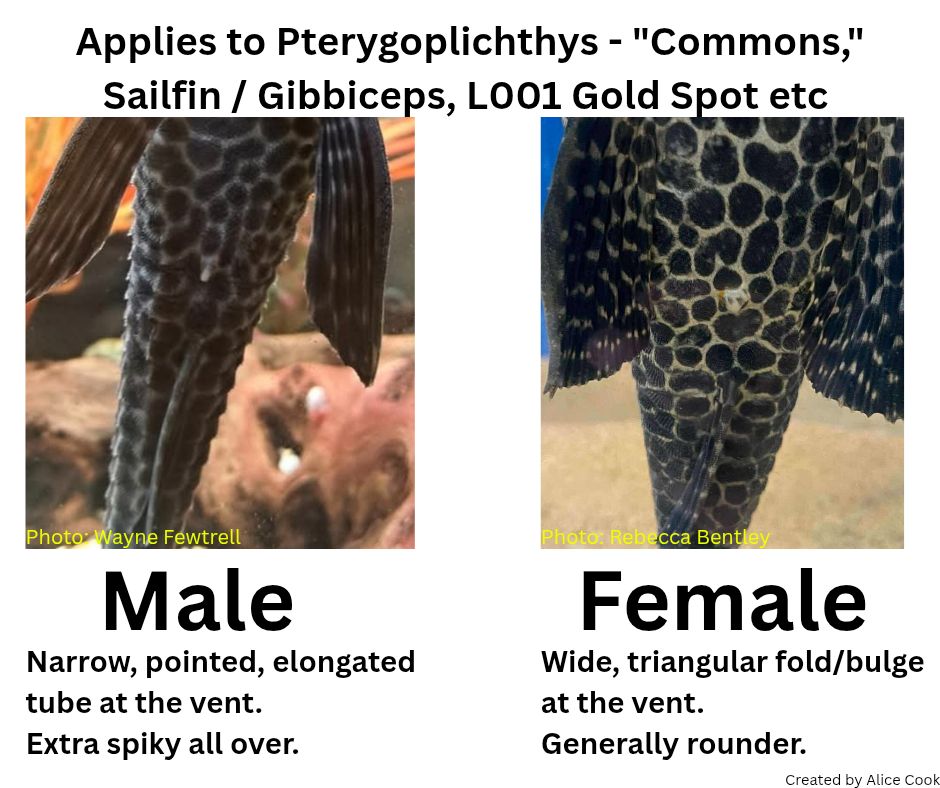
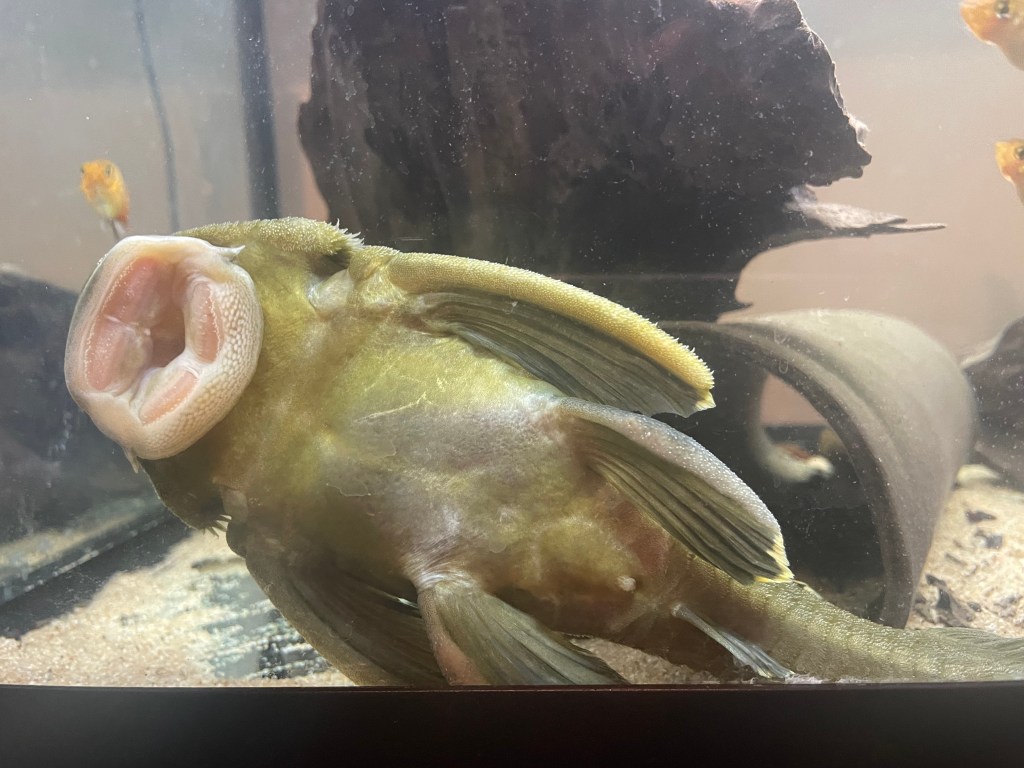
Figure 2: created by In the Bag Tropical Fish UK, Alice Cook. Depicting Pterygoplichthys pardalis and Pterygoplichthys gibbiceps.
Figure 4: Mature female Baryancistrus chrysolomus, not showing the clearest maturity.

Some other genera the females are much wider so it is much more square as above. The best method is to see multiple individuals and compare between them which can be done against the glass and taking photos or even within a container to take a more up close look.
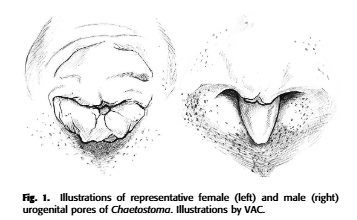
Figure 5: The genital papilla of Chaetostoma as explained by Lujan et al. (2015) in Lujan, N. K., Meza-Vargas, V., Astudillo-Clavijo, V., Barriga-Salazar, R., & López-Fernández, H. (2015). A multilocus molecular phylogeny for Chaetostoma clade genera and species with a review of Chaetostoma (Siluriformes: Loricariidae) from the Central Andes. Copeia103(3), 664-701.

I find this method the most reliable particularly as there is less individual variation between individuals and also depends less on the age of the fish. The shape can be applied also to Loricariinae (whiptail catfishes) and Hypoptopominae (Otocinclus, Parotocinclus, Hypoptopoma etc.).

The final part of the genital papilla when it comes to sexing Loricariids is spotting around this region in females. These papilla/spots can be green or yellow in colour and can range from one to many in number, once visible to the eye it hints maturity in the females. While it is very obvious in Hypostominae (traditional pleco’s) it is unclear as to if these are present in the other subfamilies even the distantly related but similarly looking Pseudancistrus genisetiger (slate pleco’s) and Rhinelepinae. Although I have been told by Fauna Tropica (https://www.faunatropica.eu/) that these spots can be seen under a microscope and maybe a macrolens before maturity even as younger juveniles.
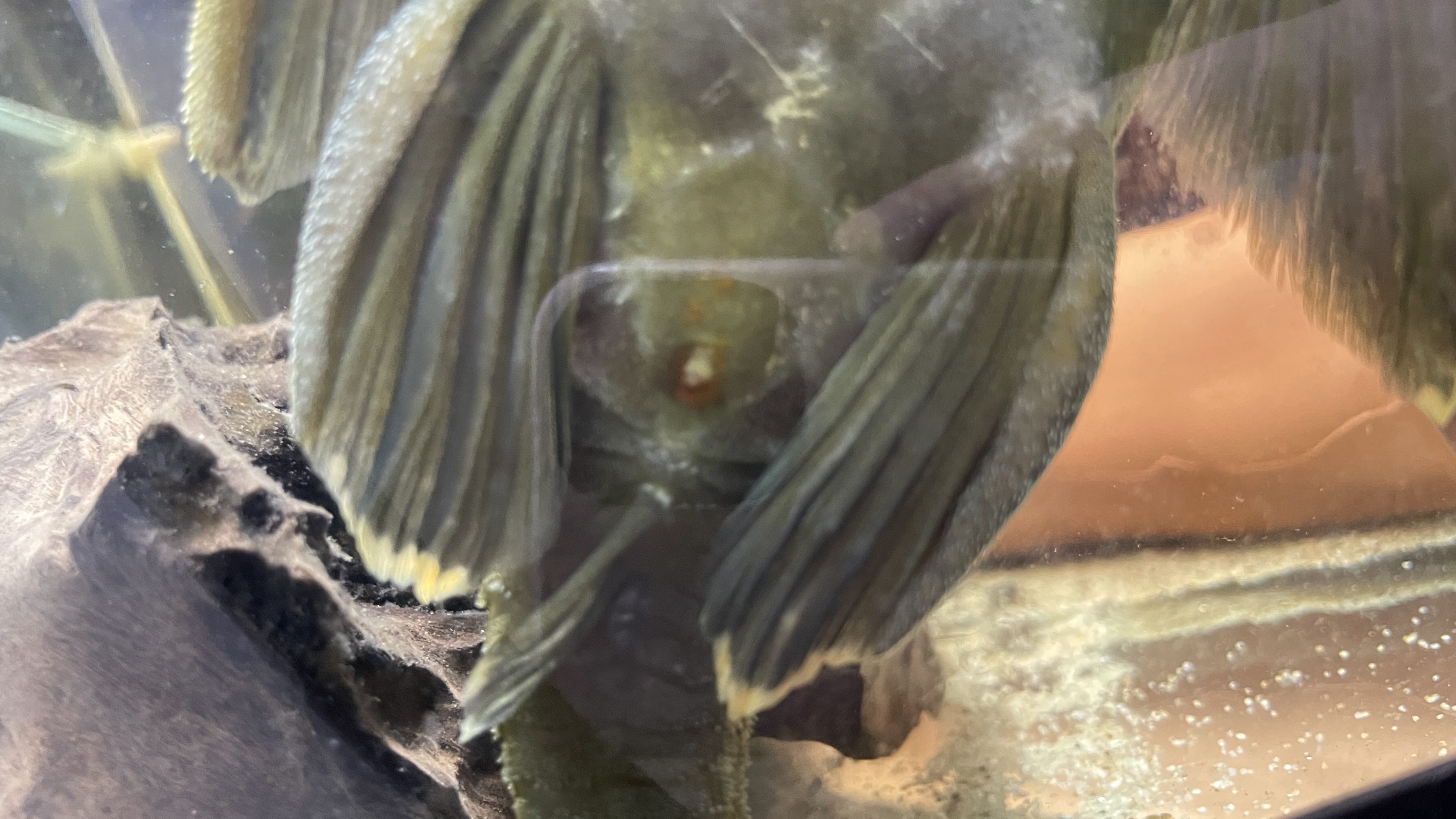
Figure 6: Genital papilla of a female Baryancistrus chrysolomus.

Body shape

I am not a massive fan of using body shape as it can depend on many factors. Using how plump the fish is does depend on how well the fish has been fed but also females once the female has released eggs can suddenly reduce weight.

Head shape does seem the most reliable method regarding the general anatomy but can be limited when it comes to stunted fish but there is also a lot of individual variation. In general it is assumed females display more elongate heads whereas males are shorter and wider, this is a trend we do see in other fishes.
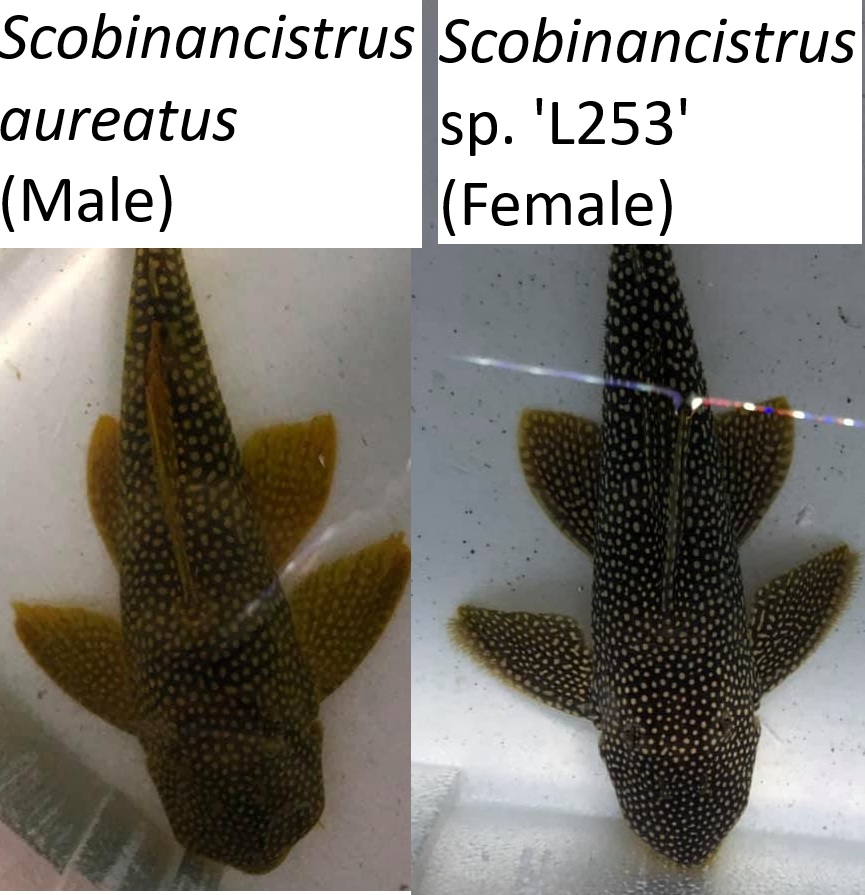
Figure 7: Body shape in two different Scobinancistrus species but clearly shows the sexual dimorphism.

Personally when it comes to sexing individuals from photos I am less of a fan of this method as it does rely even more on angle of the photo but also maturity. You can see a larger difference in some genera then others and some species you might not see it at all.

Odontodes

Figure 8: Opercular odontodes on Ancistrus ranunculus.

Odontodes are the external teeth that cover Loricariids, this does include everything from Otocinclus to Farlowella to Hypancistrus. In some species they can be enlarged in certain areas and this is known as hypertrophied, further in some these odontodes can be sexually dimorphic. Odontodes as a secondary sexual characteristic though are not a rule and there are many exceptions, in addition they can be seasonal so males might have reduced ones seasonally and females can have larger ones, it depends on the genus.
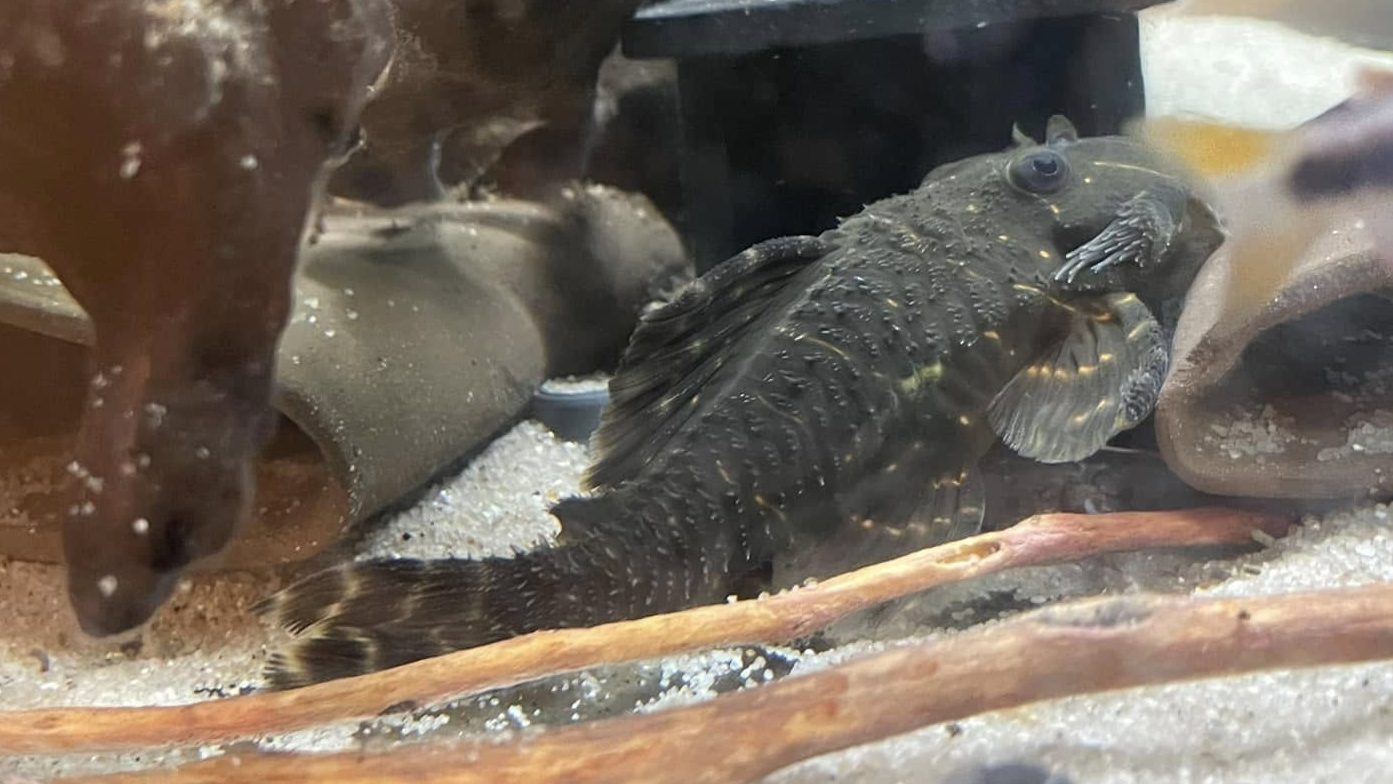
Figure 9: Panaqolus albivermis (flash pleco), male showing clear hypertrophied odontodes.

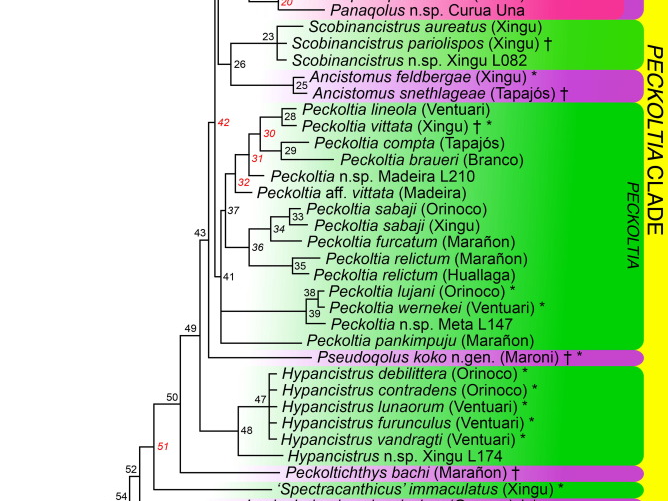
Odontodes are most useful in the Peckoltia clade, this includes Hypancistrus, Peckoltia, Panaqolus, Pseudoqolus, Ancistomus and Scobinancistrus. Although Scobinancistrus and species such as Peckoltia sabaji do not have particularly sexually dimorphic odontodes and I recommend using the genital papilla. These odontodes are hypertrophied in all individuals at the gill opercular although can be larger in males. The most obvious method with this clade is hypertrophied odontodes on the caudal peduncle and pectoral fin of the males.
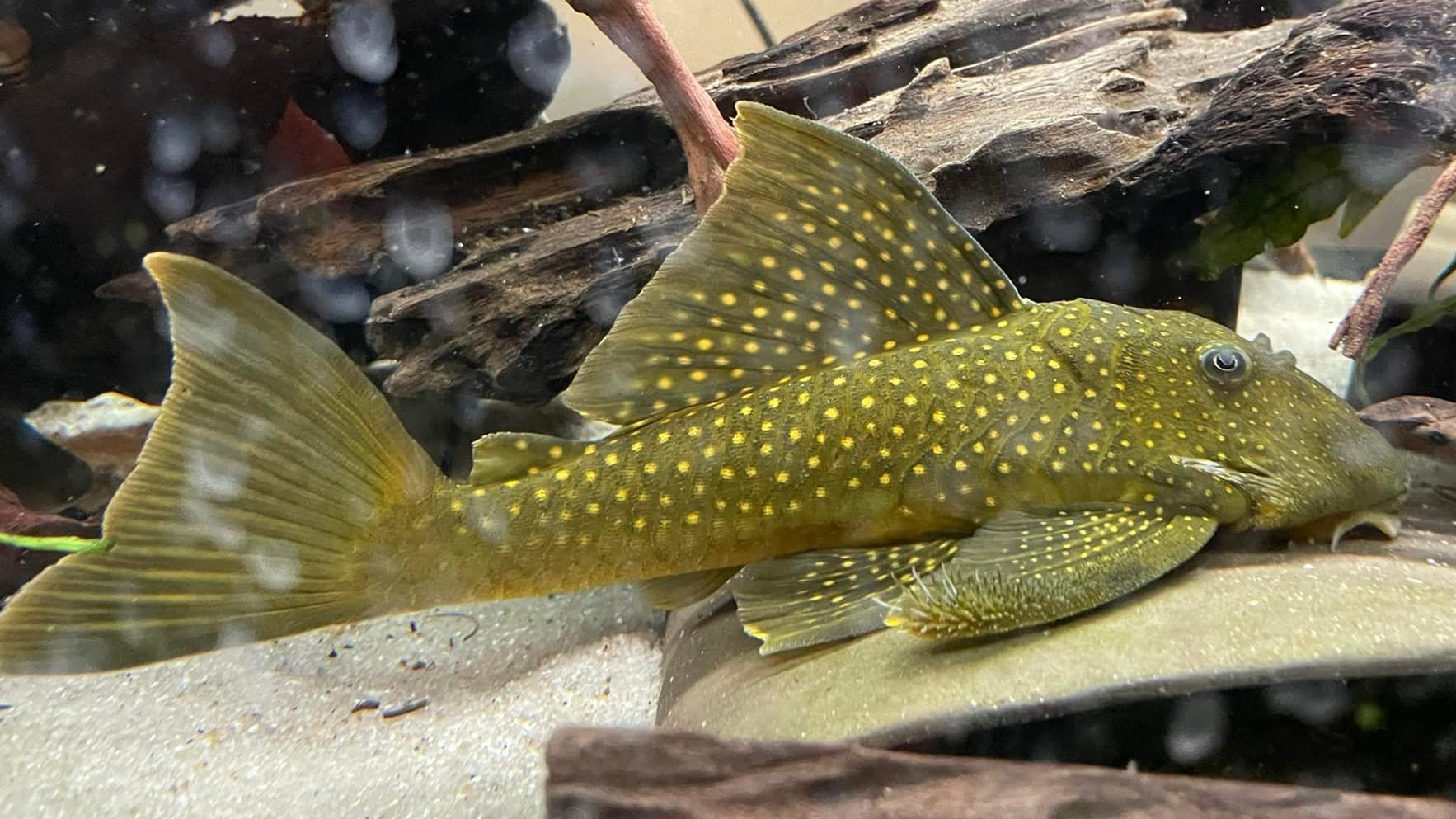
Figure 10: Baryancistrus demantoides (high finned green phantom), female.

When using this trait be careful with other clades, some such as the Hemiancistrus medians group which includes Hemiancistrus medians, some other Hemiancistrus (this genus requires revision), Panaque, Parancistrus, Baryancistrus and some Spectracanthicus (again another genus that requires revision). In these clades I find females can grow large odontodes seasonally and this was very evident to me in a clearly female Baryancistrus demantoides (Fig 10). The key thing to note about odontodes is they can be shed.
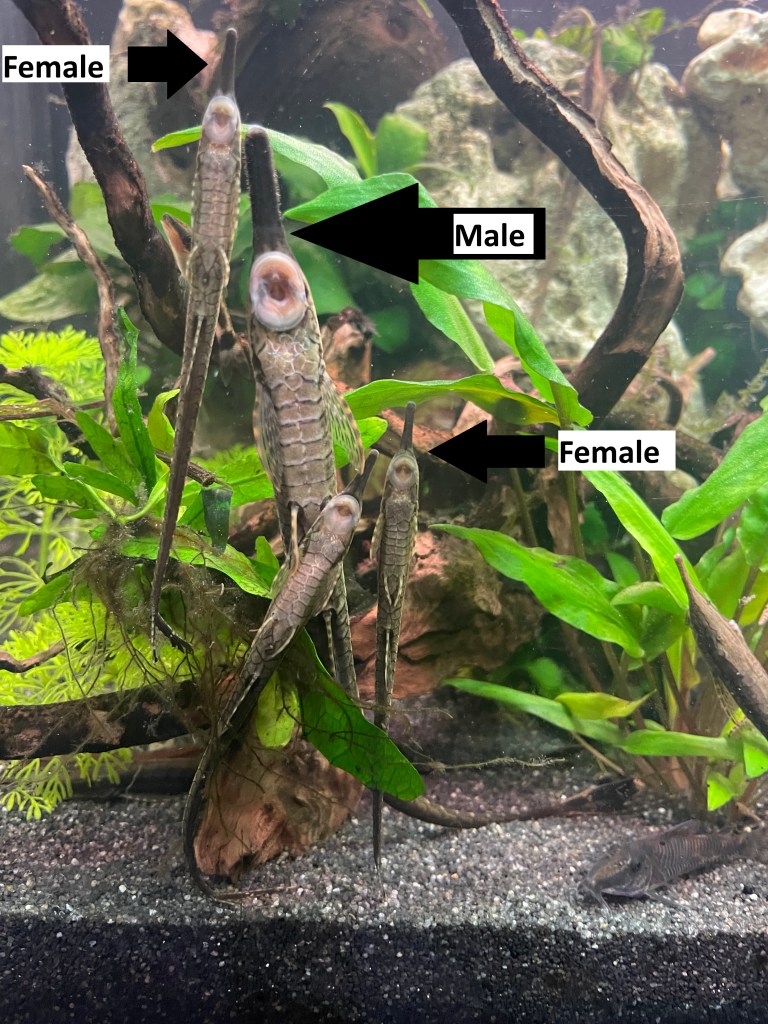
Figure 11: Farlowella vittata group pictured at Aqualife, Leyland.

Another clade that easily gets forgotten is Loricariinae, while genital papilla are a clear way to sex many genera within this subfamily. Odontodes can provide an additional quick way to sex many particularly Farlowellini (Farlowella, Sturisoma and Sturisomatichthys mostly; Fig 11). These are reliably hypertrophied around the head and/or rostrum in this clade.

Tentacles

This is an exclusive trait to the genus Ancistrus and the species Lasiancistrus tentaculatus. These are fleshy growths derived from the odontode sheaths (Sabaj et al., 1999), which might explain why sexually dimorphism is shown as related clades such as Lasiancistrus shows some clearer dimorphism in the odontodes. In Ancistrus while in the common bristlenose the males display larger tentacles whereas the females display little to none, there are Ancistrus where females have large tentacles, some which have none and some where the size is the same. Not to be confused with odontodes which is why it is best not to refer to them as spines or bristles.

Some factors that are often myths when it comes to sexing Loricariids

Behaviour

It is a common misconception that males are more aggressive then females and often this has no grounding in experience or science, it’s often an assumption. Males and females do have different territories as males are involved in the brood care whereas females roam but where species are territorial it is in both sexes. In territorial species aggression is shown between and within the sexes. Often this idea of males being more aggressive is based in the coy female myth (Milam, 2013; Rosvall, 2013), many scientists have disproved this but Lucy Cooke makes some good approachable books to the topic. Females in Loricariids have no reason to be less aggressive. Personal experience I’ve seen aggression from both and if anything where females tend to roam their aggression is wider spread then close to the caves where males dwell.

The other myth is that females will not use caves, particularly as juveniles they will definitely hide a lot but even as adults females use caves as refuges, they might even have a preferred cave. Males use the caves to spawn in Hypostominae and some Loricariinae but not all do and those that like crevices will use them.
Conclusion

It can be really tricky to identify whether your Loricariid is male or female. Hopefully this offers some ideas to help sex your fishes. I tend to recommend using the abdomen of the fish as I feel this is most reliable and doesn’t leave space for any amounts of individual variation.

For great comparative photos check out: https://www.suedamerikafans.de/en/zur-unterscheidung-der-geschlechter-klein-bleibender-hypostominaer-harnischwelse/

References:

Lujan, N. K., Meza-Vargas, V., Astudillo-Clavijo, V., Barriga-Salazar, R., & López-Fernández, H. (2015). A multilocus molecular phylogeny for Chaetostoma clade genera and species with a review of Chaetostoma (Siluriformes: Loricariidae) from the Central Andes. Copeia103(3), 664-701.

Milam, E. L. (2013). Making males aggressive and females coy: Gender across the animal-human boundary. In Women, Science, and Technology (pp. 206-222). Routledge.

Nirchio, M., Oliveira, C., de Bello Cioffi, M., de Menezes Cavalcante Sassi, F., Valdiviezo, J., Paim, F. G., … & Rossi, A. R. (2023). Occurrence of sex chromosomes in fish of the genus Ancistrus with a new description of multiple sex chromosomes in the Ecuadorian endemic Ancistrus clementinae (Loricariidae). Genes14(2), 306.

Oliveira, R. R. D., Feldberg, E., Anjos, M. B. D., & Zuanon, J. (2007). Karyotype characterization and ZZ/ZW sex chromosome heteromorphism in two species of the catfish genus Ancistrus Kner, 1854 (Siluriformes: Loricariidae) from the Amazon basin. Neotropical Ichthyology5, 301-306.

Rosvall, K. A. (2013). Proximate perspectives on the evolution of female aggression: good for the gander, good for the goose?. Philosophical Transactions of the Royal Society B: Biological Sciences368(1631), 20130083.

Sabaj, M. H., Armbruster, J. W., & Page, L. M. (1999). Spawning in Ancistrus (Siluriformes: Loricariidae) with comments on the evolution of snout tentacles as a novel reproductive strategy: larval mimicry. Ichthyological Exploration of Freshwaters10(3), 217-229.

Sassi, F. D. M. C., Deon, G. A., Sember, A., Liehr, T., Oyakawa, O. T., Moreira Filho, O., … & Cioffi, M. D. B. (2023). Turnover of multiple sex chromosomes in Harttia catfish (Siluriformes, Loricariidae): a glimpse from whole chromosome painting. Frontiers in Genetics14, 1226222.
Rebecca’s Menu for Pleco’s 2025

I commonly get asked what I’d feed different groups of pleco’s and it does vary by the pleco, Loricariid but also by what is available in your country. Some genera are more generalist and forgiving then others, some will withstand a less then ideal diet for maybe a few decades and others a few months/days.

While I would love to provide more details some I cannot list yet or am not entirely clear on some aspects of a species dietary ecology. So this should hopefully help for now.

I shall split it up by diet, some species might feed on a different diet to what you expect so please search for the genus/species.

The majority of Loricariids are algivores and detritivores so this contains the larger amount of categories.

Algivores

This is one of the largest categories as many Loricariids specialize in different algae’s, biofilms etc. But due to mode of feeding and availability of ingredients I will kind of have to generalize. Due to this the algae growing in the aquarium might be the wrong species so the fish might not feed on it, regardless any algae in the aquarium will not sustain most species long term.

Prepared diets:

  • Repashy Super Green
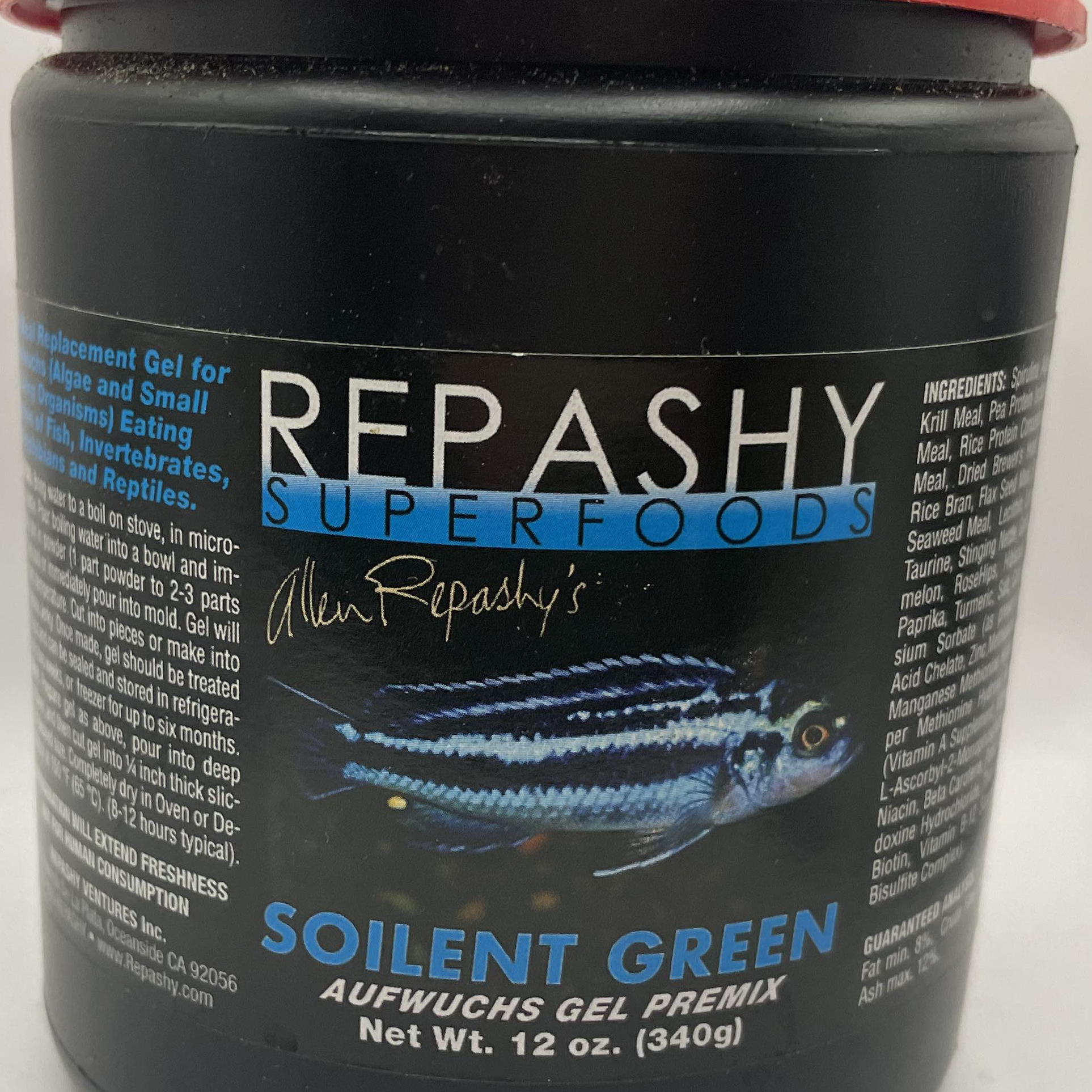
  • Repashy Soilent Green (you can add in extra algae powders to bulk it out, fishes seem to prefer this diet).

Making your own Algivore Diet

This is a trial as it seems Repashy is becoming unavailable in many countries. I have done many different trials and tests but am still developing something.

Nutritional ingredients:

These are the main ingredients and should make up at least 80% of the nutritional ingredients used but can makeup the whole diet minus gelling agents (Vucko et al., 2017). Percentages might vary, ideally try to include higher volumes of those highlighted in bold, not all will be available so try to include as wide of a diversity of possible. High spirulina content might take a while for the fishes to get used to. Seaweeds will need to be blended or might not be eaten.

  • Chlorella algae (Vital)
  • Spirulina algae (Vital)
  • Seaweed meal (Vital)
  • Kelp meal (vital)
  • Wakame algae (vital)
  • Nori (Vital)
  • Bladderwrack
  • Other human consumption seaweeds and algaes.
  • Potentially mosses, never tried but are recorded in Loricariid diets.

Herbal ingredients:

These should be very limited excluding the mushrooms I wouldn’t go above around 1-2% per ingredient.

  • Paprika, associated with red enhancing.
  • Mushrooms, dried or powdered while not entirely known it is potential they feed on fungi in the wild. While edible mushrooms might not be the same taxa it does seem to be a taste enhancer for fishes at least.
  • Basil, associated with improved physiological and immunological health while being an attractant (Mansour et al., 2023).
  • Ginger, feed attractant and immunological support (Ahmad et al., 2024).
  • Garlic, I don’t always use it but feed attractant with potential immunological support but can cause liver damage.
  • Seeds, particularly found in the guts of Hypancistrus and potentially Peckoltia. Higher in fats and proteins.

Gelling agents:

I would recommend using carrageenan powder due to it lasting longer then the alternatives. I would use this regardless as to whether it is a carnivorous or herbivorous diet.

Who are the algivores that we keep?

  • Ancistrus
  • Baryancistrus
  • Dekeyseria
  • Farlowella
  • Hemiancistrus
  • Hypostomus
  • Isorineloricaria
  • Lamontichthys
  • Lasiancistrus
  • Nannoptopoma
  • Otocinclus
  • Panaque
  • Panaqolus
  • Parancistrus
  • Parotocinclus
  • Pseudancistrus
  • Pseudorinelepis
  • Pterygoplichthys
  • Rhinotocinclus
  • Spectracanthicus zuanoni/punctasissimus
  • Sturisoma/Sturisomatichthys

This diet will cover most of Loricariidae but particularly these genera, while they might be also more detritivorous in the wild this is the closest we can get to their natural diet.

Regarding Hypancistrus, Peckoltia and potentially Panaqolus I would add seeds to their diet and maybe look at the addition of infrequent invertebrates.

A little more carnivorous

If you want to increase the volume of carnivorous ingredients, Loricariids don’t consume fishes in the wild so we will be looking at invertebrates. Due to the presence of thiaminase in some ingredients I do not recommend the frequent use of mussels or prawns.

So as you’re looking more into carnivory I would increase the volume of these ingredients, luckily for carnivorous ingredients you could feed as a frozen or live food they have to forage.

Ingredients:

  • Daphina
  • Brine shrimp
  • Tubifex
  • Bloodworm (Chironomatid larvae).
  • Cockels
  • Mysis
  • Red plankton
  • Ant eggs
  • Earthworms
  • Cyclops
  • Whiteworms
  • Blackworms
  • Vinegar worms

What about molluscivores?

Scobiancistrus, Leporacanthicus, Pseudohemiodon, Loricaria and Planiloricaria are likely capable on feeding on mussels and occasionally this is proven. A diversity of snails can be trialed for the Scobinancistrus and Leporacanthicus larger species such as Ampulluridae would be ideal as these are evolved to extract snails from their shells, escargot snails that are not treated with garlic would be interesting to explore. For others then smaller snails whether it be juveniles of harder species of pest snails.

Plant eaters

Realistically many Loricariids do not consume traditional plants so often these are best to identify if a fish is feeding or not. Some very broad generalist taxa might consume more like Pterygoplichthys and Hypostomus.

Using other premade foods as a base.

This is largely only possible with gel diets but possibly some pastes. The main rule is not to add so many that the gelling agent doesn’t hold as well as it used to but also this will depend on how fast your fishes feed.

What base diets can you use?

  • Repashy. It does have a wide range of other ingredients.
  • In the Bag Tropical Fish UK’s pleco pops. Very strong gelling agents and true carnivorous and herbivorous diets.
  • EBO pastes
  • Tropical’s gels/pastes

Testing diets to identify if they are being used.

Glass petri dishes can be ideal here as they sink and are inert, you can pipette or place food on and ideally it will not be disturbed over the time you are not observing the food being eaten. Therefore it can be a reliable method of identifying what is taken and what is not.

References:

Ahmad, I., Irm, M., Ahmed, I., Haoran, Y., Taj, S., Bhat, T. A., … & Amin, A. (2024). Role of ginger in fish nutrition with special emphasis on growth, health, gut and liver morphology. Journal of the World Aquaculture Society55(6), e13101.

Mansour, A. T., Diab, A. M., Khalil, R. H., Eldessouki, E. A., El-Sabbagh, N., Elsamannoudy, S. I., & Younis, N. A. (2023). Physiological and immunological responses of Nile tilapia fed dietary supplementation of sweet basil ethanolic and aqueous extracts. Frontiers in Marine Science9, 1064455.

Vucko, M. J., Cole, A. J., Moorhead, J. A., Pit, J., & de Nys, R. (2017). The freshwater macroalga Oedogonium intermedium can meet the nutritional requirements of the herbivorous fish Ancistrus cirrhosus. Algal research27, 21-31.

Two New Loricariids Described: Hypancistrus seideli and H. yudja

Hypancistrus have long been an issue for hobbyists and taxonomists providing challenges to identify and define what is a species, over time a few have been described but leaving one of the most common species.

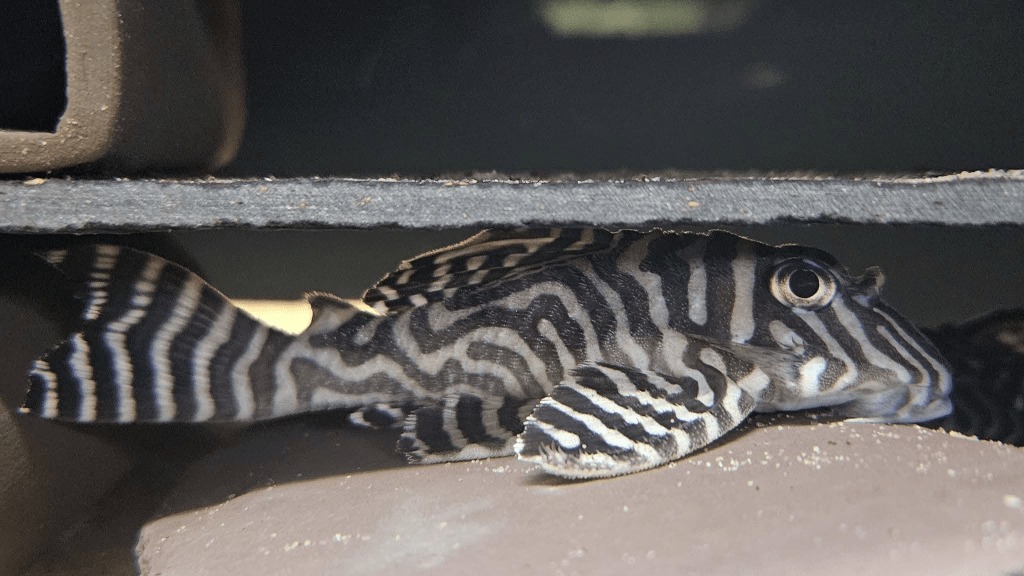
Hypancistrus seideli ‘L333 King tiger’ Image originated from: Olivia and Dad’s Fish Room https://www.facebook.com/profile.php?id=100063396450007

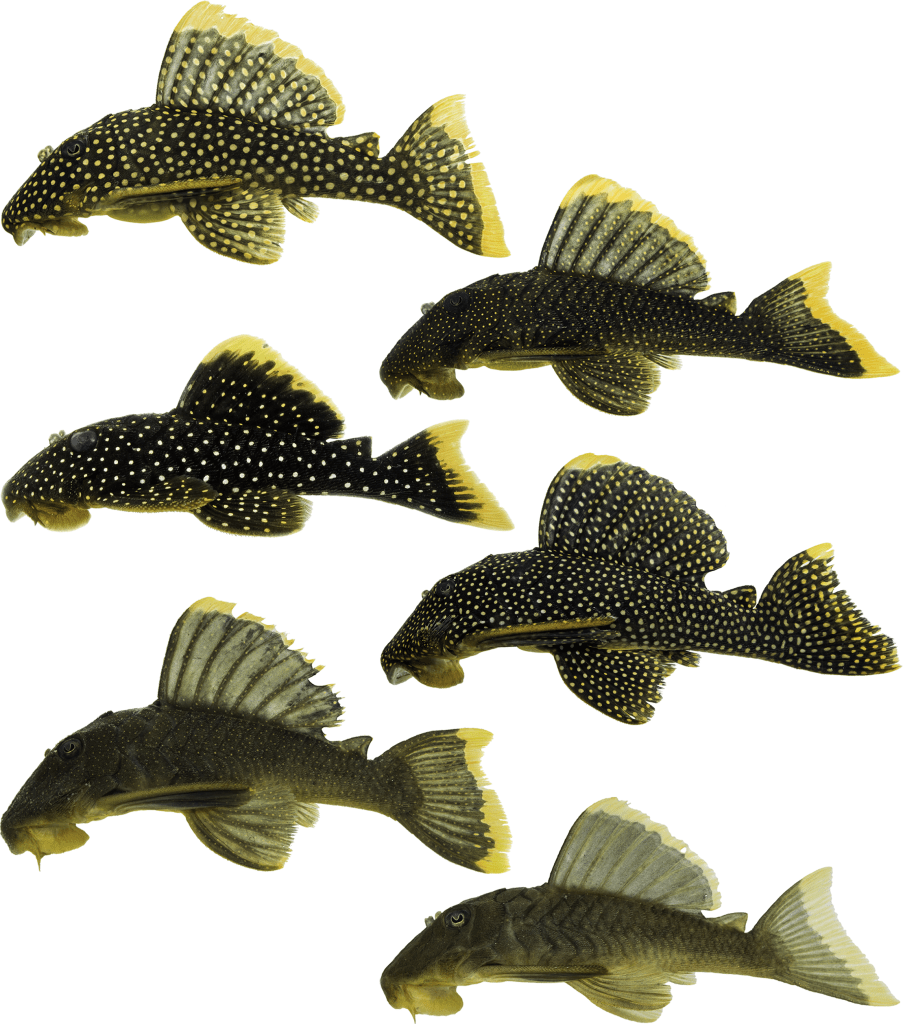
This topic is tricky for scientists regarding how a species is defined and where do you draw a line, even trickier for hobbyists. The Rio Xingu species have been particularly tricky as there are many striped species with only Hypancistrus zebra being particularly distinctive. For the hobbyist the L number system can add to the confusion as while different individuals can be given different L number it doesn’t infer they are different species. Morphology can be tricky to navigate as there are many very diverse species both morphologically and genetically for example Baryancistrus xanthellus (of which does include a green variant, verde that is not B. chrysolomus) or Peckoltia sabaji (Fig 1; Magalhães et al., 2021; Armbruster 2003).

Figure 1: The morphological diversity of Baryancistrus xanthellus, the gold nugget pleco (L177, L018, L081, L085, verde) as featured in Magalhães, K. X., da Silva, R. D. F., Sawakuchi, A. O., Gonçalves, A. P., Gomes, G. F. E., Muriel-Cunha, J., … & de Sousa, L. M. (2021). Phylogeography of Baryancistrus xanthellus (Siluriformes: Loricariidae), a rheophilic catfish endemic to the Xingu River basin in eastern Amazonia. Plos one16(8), e0256677.

Some of this morphological and genetic diversity can be based on different populations and localities, it is tricky to infer whether there is interbreeding as to when and extent this occurs without detailed analysis for both morphologically and genetically. We also risk drawing lines between populations or individuals of the same species that don’t exist in nature.

Commonly understood is the importance of species as a biological unit and in some manner it is, but this is no one overarching definition for a species, it’s much more complex then that. As said earlier species can be both morphologically and genetically diverse or not at all, it varies so much and on where the line is drawn. The common misconception is that genetics solves any issues with defining a species but when you create these trees to plot species different genes, regions or even whether you use mitochondrial or nuclear DNA can infer different groupings. But this reliance on species being the important factor that matters for many aquarists ignores much of this and can lead to splitting species into unrealistic groupings. Realistically like the killifish and Poecilidae sides of the hobby, we need to recognize populations are as valuable as species, even if they cross or not. Populations might have unique genetics or morphology, doesn’t make them different species but we should really think through how we breed our fishes and what individuals we choose. If fishes come from different suppliers maybe double checking locality, maybe considering if certain captive bred fishes are useful for maintaining a population.

So in summary just because some species might look different it doesn’t mean they are but doesn’t mean they aren’t distinct populations that shouldn’t be valued.

Hypancistrus seideli ‘L236 basic’ Image originated from: Olivia and Dad’s Fish Room https://www.facebook.com/profile.php?id=100063396450007

The Two New Species of Hypancistrus

Description for Hypancistrus seideli and H. yudja:

Sousa LM, Sousa EB, Oliveira RR, Sabaj MH, Zuanon J, Rapp Py-Daniel L. (2025). Two new species of Hypancistrus (Siluriformes: Loricariidae) from the rio Xingu, Amazon, Brazil. Neotropical Ichthyology. 23(1). https://doi.org/10.1590/1982-0224-2024-0080

These exciting descriptions help us understand the Loricariids we keep in the aquariums better and more accurately describe them. Hopefully it leads to further studies of Hypancistrus.

Hypancistrus seideli Sousa, Sousa, Oliveira, Sabaji, Zuanon & Rapp Py-Daniel 2025.

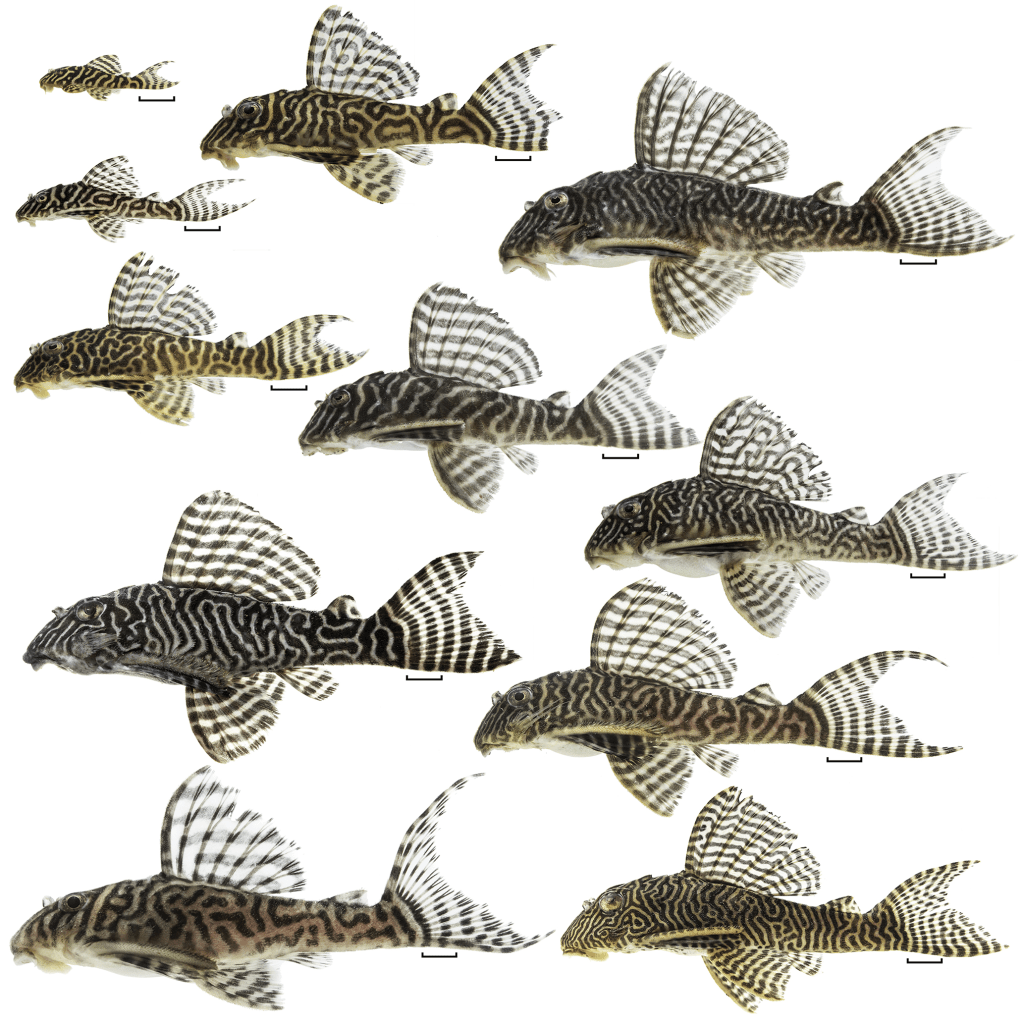
Figure 2: Hypancistrus seideli as featured in: Sousa LM, Sousa EB, Oliveira RR, Sabaj MH, Zuanon J, Rapp Py-Daniel L. (2025). Two new species of Hypancistrus (Siluriformes: Loricariidae) from the rio Xingu, Amazon, Brazil. Neotropical Ichthyology. 23(1). https://doi.org/10.1590/1982-0224-2024-0080

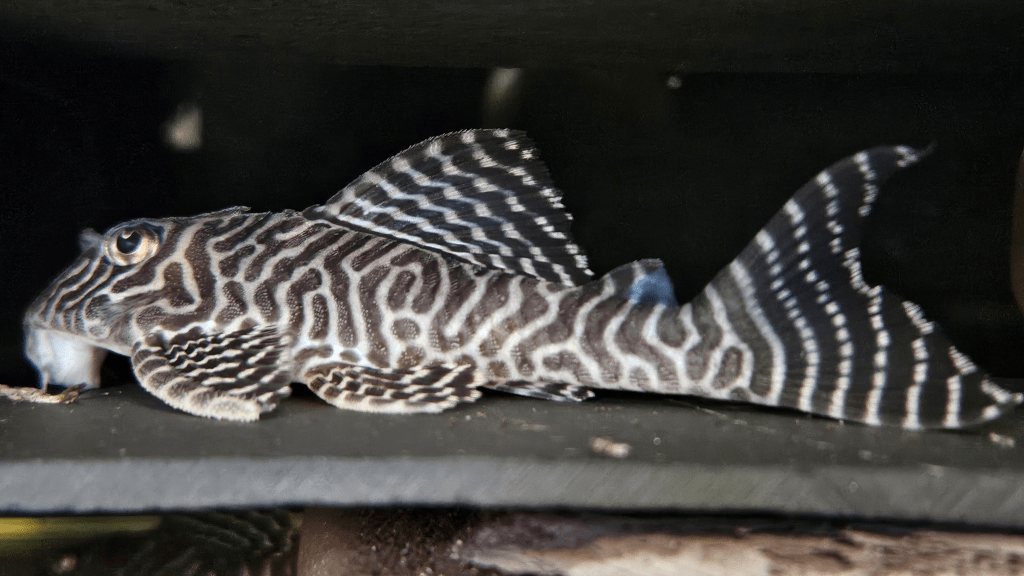
This species includes the L numbers: L333, L066, L236, L287, L399, L400.

This species includes the common names: King tiger pleco, maze zebra pleco.

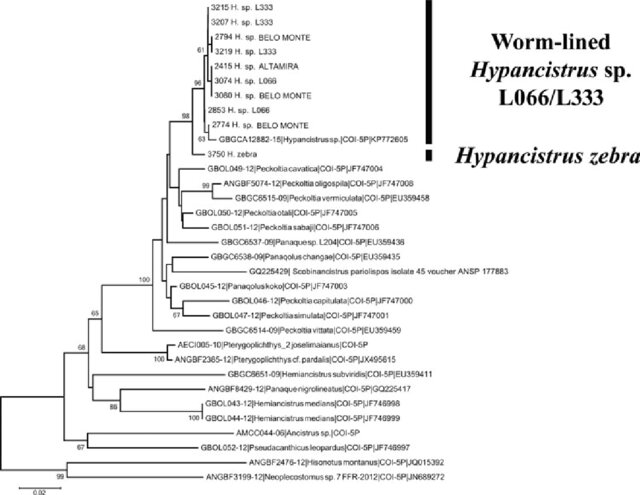
Diagnosed by alternating dark and pale vermiculation’s from currently described species although recognised as extremely varied (Sousa et al., 2025). Hypancistrus seideli covers a wide range of the Hypancistrus diversity in the Rio Xingu and some of the most popular species in the aquarium trade. Although morphologically diverse (Fig 2) there it seems to not have the same amount of molecular diversity so further inferring at least L066 and L333 regardless are the same species. Phylogenetically there also seems to be an issue to designate them as different species given L066 and Belo Monte seem to be paraphyletic (Cardoso et al., 2016). Although using sequences from a public database does rely on correct identification of those sequencing the samples (Fig 3).

Figure 3: Molecular phylogeny using the COI barcode sequences located from a public database as featured in: Cardoso, A. L., Carvalho, H. L. S., Benathar, T. C. M., Serrao, S. M. G., Nagamachi, C. Y., Pieczarka, J. C., … & Noronha, R. C. R. (2016). Integrated cytogenetic and mitochondrial DNA analyses indicate that two different phenotypes of Hypancistrus (L066 and L333) belong to the same species. Zebrafish13(3), 209-216.

Etymology: Hypancistrus seideli is named after the well known and respected aquarist Ingo Seidel who has contributed a lot to the knowledge of Hypancistrus (Sousa et al., 2025).

Habitat: While the paper doesn’t go into detail that isn’t well known it describes their environment as rocky with strong currents (Sousa et al., 2025).


Hypancistrus seideli ‘L066 King Tiger’ Image originated from: Olivia and Dad’s Fish Room https://www.facebook.com/profile.php?id=100063396450007

Hypancistrus yudja Sousa, Sousa, Oliveira, Sabaji, Zuanon & Rapp Py-Daniel 2025.

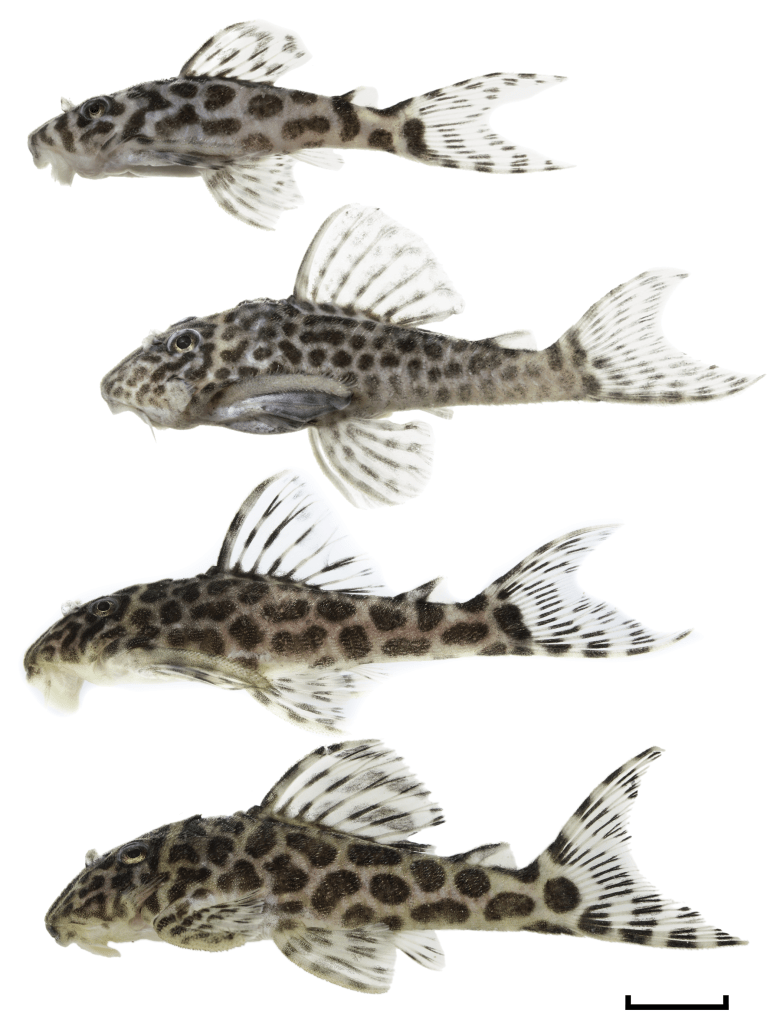
Figure 4: Hypancistrus yudja as described in: Sousa LM, Sousa EB, Oliveira RR, Sabaj MH, Zuanon J, Rapp Py-Daniel L. (2025). Two new species of Hypancistrus (Siluriformes: Loricariidae) from the rio Xingu, Amazon, Brazil. Neotropical Ichthyology. 23(1). https://doi.org/10.1590/1982-0224-2024-0080

This species includes the L numbers: L174.

This species includes the common names: Ozelot pleco.

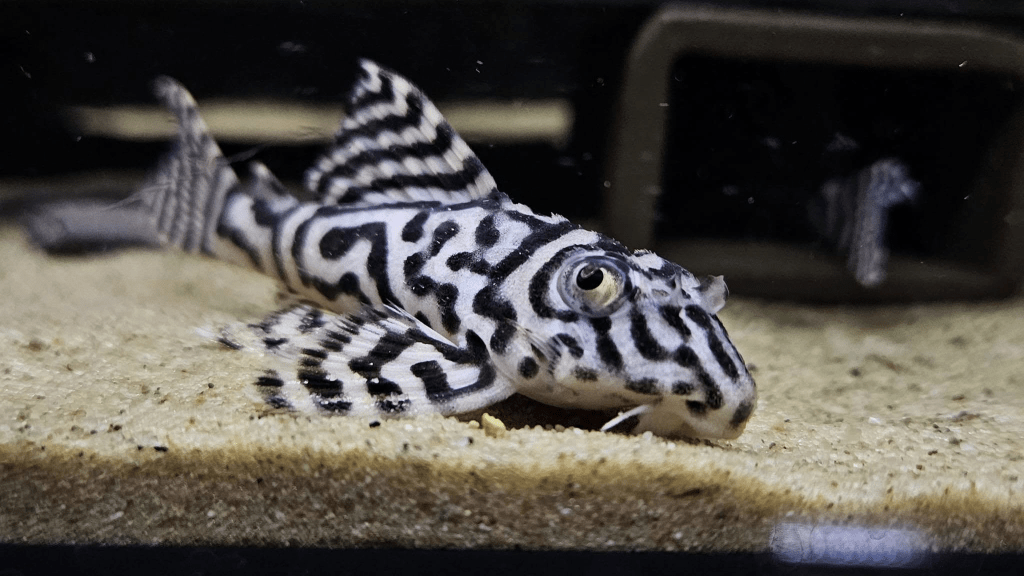
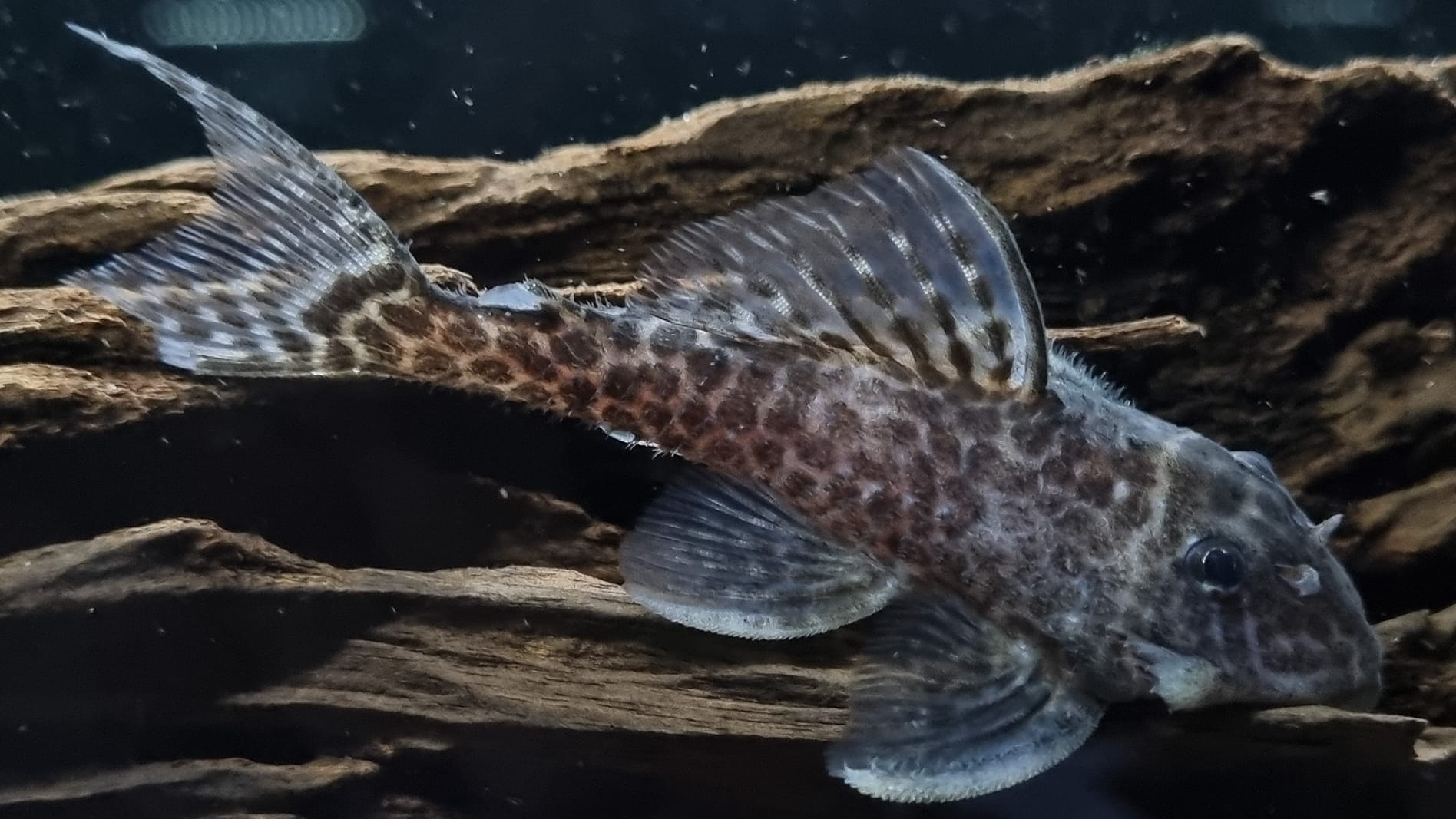
Diagnosed by large brown splotches and saddles on a tanned background (Sousa et al., 2025).

Etymology: Named after the Yudjá people of the Volta Grande, Rio Xingu, Brazil who are located in the same area as these fishes and described as equally threatened by the Belo Monte dam (Sousa et al., 2025).

Habitat: Located specifically from deep but rocky waters but remains hidden in crevices for large amounts of time (Sousa et al., 2025).

Hypancistrus yudja ‘L174 Ozelot pleco’ Image originated from: Olivia and Dad’s Fish Room https://www.facebook.com/profile.php?id=100063396450007

References:

Armbruster, J. W. (2003). Peckoltia sabaji, a new species from the Guyana Shield (Siluriformes: Loricariidae). Zootaxa344(1), 1-12.
Cardoso, A. L., Carvalho, H. L. S., Benathar, T. C. M., Serrao, S. M. G., Nagamachi, C. Y., Pieczarka, J. C., … & Noronha, R. C. R. (2016). Integrated cytogenetic and mitochondrial DNA analyses indicate that two different phenotypes of Hypancistrus (L066 and L333) belong to the same species. Zebrafish13(3), 209-216.
Magalhães, K. X., da Silva, R. D. F., Sawakuchi, A. O., Gonçalves, A. P., Gomes, G. F. E., Muriel-Cunha, J., … & de Sousa, L. M. (2021). Phylogeography of Baryancistrus xanthellus (Siluriformes: Loricariidae), a rheophilic catfish endemic to the Xingu River basin in eastern Amazonia. Plos one16(8), e0256677.

Pleco Teeth, what snails can teach us about Loricariids.

While it is not always obvious Loricariids all have teeth and they show a wide range of morphological disparity (Lujan & Armbruster, 2012). Morphological disparity refers to that range of different anatomy within a group. Unlike many fishes Loricariids are rarely gape limited, their prey (that includes algae) is not limited by the size of their mouth and this makes comparison with traditional fishes like carp or cichlids limited.

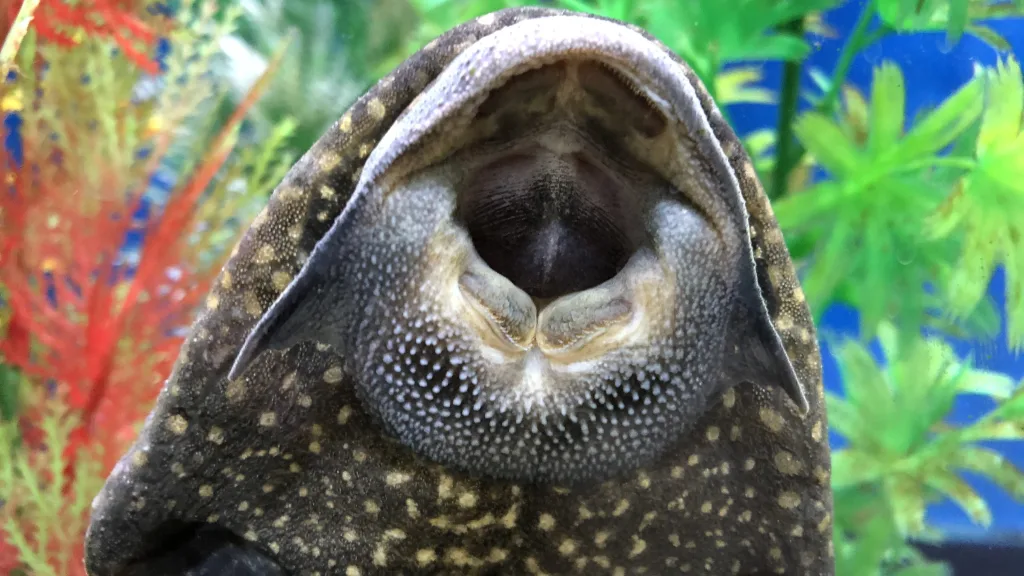
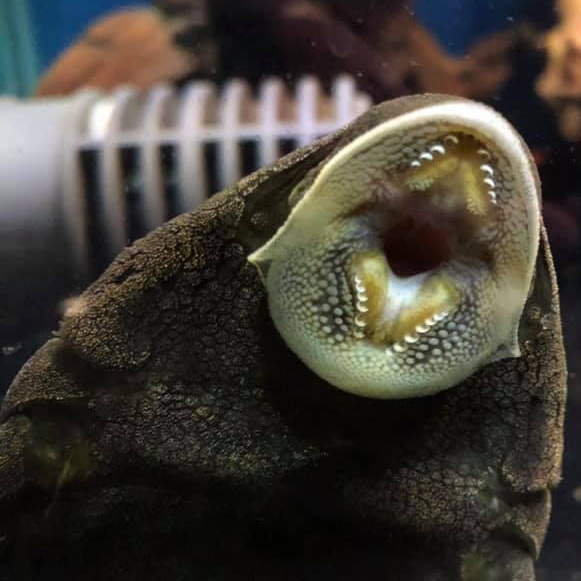
Figure 1: Pterygoplichthys joselimaianus jaw, a typical jaw for Loricariidae.

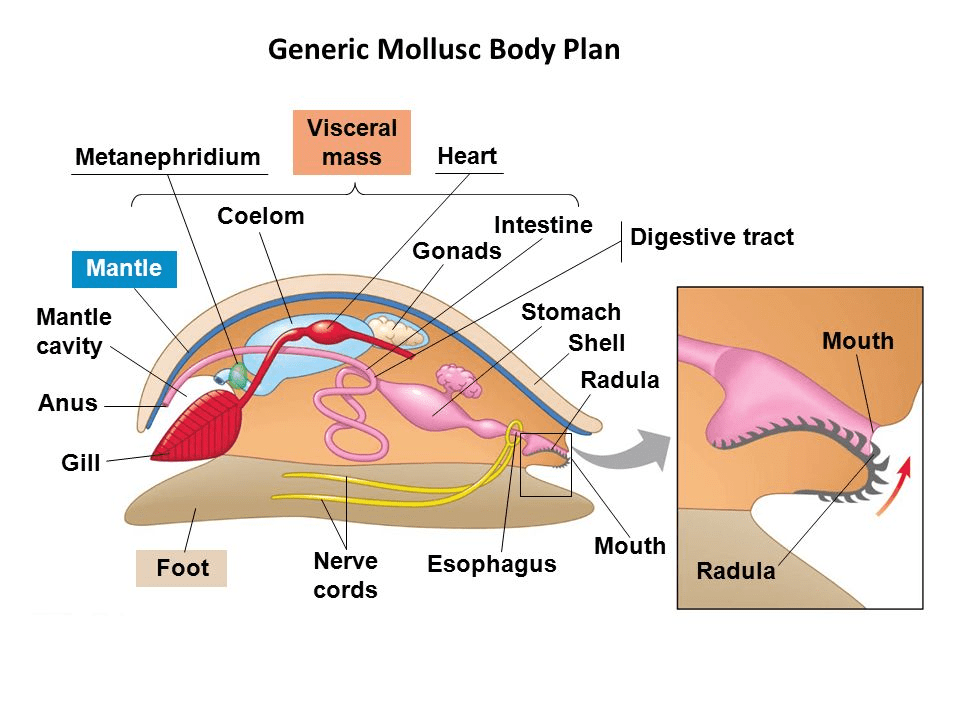
Loricariids feed largely by a rasping motion, this is extremely similar to how snails feed. Snails also have teeth on a ribbon like organ known as a radula (Fig 2).

Figure 2: Snail body plan including the mouth anatomy. Unknown source.

Both snails and Loricariids use their jaws, containing the teeth to basically scrape at a surface (rasp), it can be the food item itself but it could be rocks or wood to extract food.

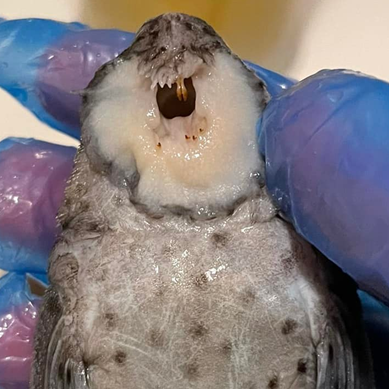
Figure 3: Leporacanthicus joselimai

While I say the majority of Loricariid jaws are similar to snails not all are, there are carnivorous genera such as Pseudohemiodon or Scobinancistrus who differ in how they move and function. Carnivorous genera have elongate fewer teeth with often narrower oral jaws but can be much more robust (Fig 3), or in some those oral jaws are almost entirely just the jaws, reduced tooth cups. It’s easy to say these carnivores are using different morphology for the same solution to carnivory but maybe in a different place, one feeds amongst crevices (those with the elongate teeth and jaws) and others amongst the substrate (those with reduced jaws). We do have a slight exception with Spatuloricaria, an obvious substrate feeder but it seems to use the substrate a little differently and feed on different invertebrates.

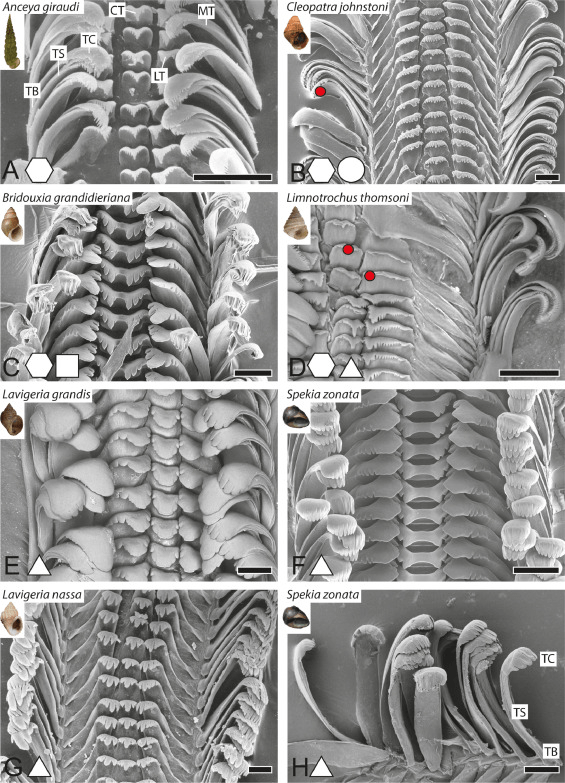
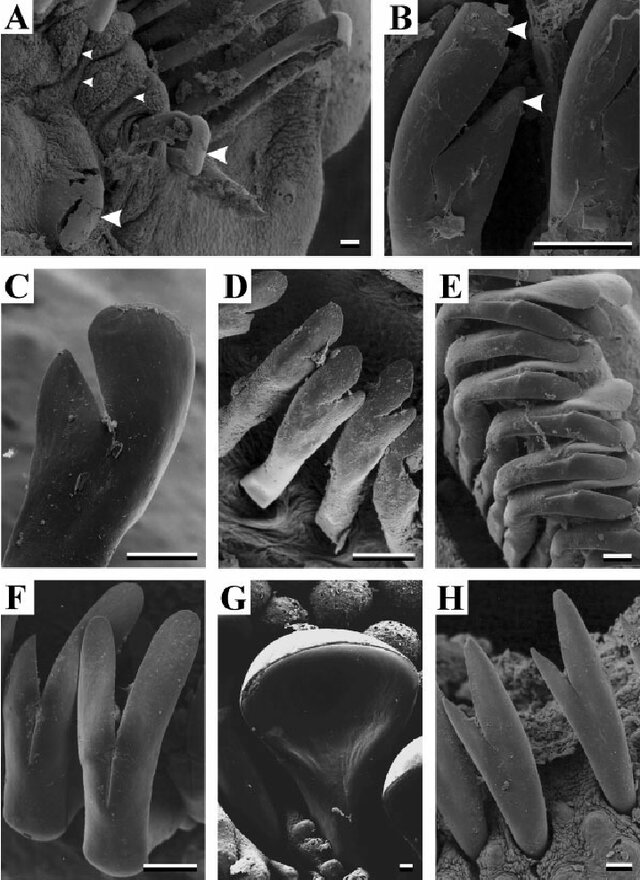
Figure 4: Gastropod radula diversity. Krings, W., Kovalev, A., & Gorb, S. N. (2021). Collective effect of damage prevention in taenioglossan radular teeth is related to the ecological niche in Paludomidae (Gastropoda: Cerithioidea). Acta Biomaterialia135, 458-472.

Snails, Gastropods have long been studied in terms of their radula diversity (Fig 4), I assume this is due to the fact when you’re dealing with preserved snails there are fewer tissues to identify the species. Additionally they make great models for understanding how anatomy relates to morphology, ecomorphology. Gastropods are everywhere and it’s easy to find those that scrape algae’s off rocks vs more carnivorous gastropods. To put it simply though, Gastropods feed by rasping and their teeth are uniquely shaped to what they are feeding on.

I think even just ignoring carnivory Loricariidae shows a wide diversity of tooth morphological disparity but there is little studies regarding that in relation to their ecology. Plenty of these studies focus on the development and morphology (Geerinckx et al., 2007). What there is is a fascinating study looking at another part of the fishes anatomy that could be similar, the unculi, small protrusions on the oral disc’s of the fishes. While the study focuses on how these structures allow for the fishes to inhabit certain habitats, could these also function in a similar fashion to radula?

Figure 5: The diversity of Loricariid teeth, Geerinckx, T., De Poorter, J., & Adriaens, D. (2007). Morphology and development of teeth and epidermal brushes in loricariid catfishes. Journal of morphology268(9), 805-814.

The diversity of Loricariid tooth morphological diversity is clear (Geerinckx et al., 2007) and we clearly see that Loricariids have a diversity of diets beyond herbivory and carnivory (Lujan et al., 2012), whatever they really mean to aquatic animals.

When looking outside of carnivory there is clear differences in morphology, none are so much clearer then those Loricariids that utilize wood. These genera display clearly spoon shaped teeth even if these genera (Panaqolus, Panaque, Hypostomus cochliodon group etc.) do not digest the wood and it is simply where they might find food. Compared with carnivores such as Leporacanthicus, these have more elongate teeth but it depends on where they are accessing their food. This difference is also reflected in gastropods whether they be snails or slugs have evolved teeth on their radula that reflect not just their diet but the methods they use to extract it. Elongate pointed teeth infers carnivory whereas further cusps leans towards herbivory. Perhaps carnivory requires less complexity to herbivory and I assume largely as carnivory relies on more then the teeth to extract food.

References:

Geerinckx, T., De Poorter, J., & Adriaens, D. (2007). Morphology and development of teeth and epidermal brushes in loricariid catfishes. Journal of morphology268(9), 805-814.

Krings, W., Konn-Vetterlein, D., Hausdorf, B., & Gorb, S. N. (2023). Holding in the stream: convergent evolution of suckermouth structures in Loricariidae (Siluriformes). Frontiers in Zoology20(1), 37.

Krings, W., Kovalev, A., & Gorb, S. N. (2021). Collective effect of damage prevention in taenioglossan radular teeth is related to the ecological niche in Paludomidae (Gastropoda: Cerithioidea). Acta Biomaterialia135, 458-472.

Lujan, N. K., & Armbruster, J. W. (2012). Morphological and functional diversity of the mandible in suckermouth armored catfishes (Siluriformes: Loricariidae). Journal of Morphology273(1), 24-39.

Pleco’s and Whiptail Catfishes, the Beginners Guide to Loricariid catfishes.

With a whole section designated to Loricariidae, I haven’t actually done a beginners guide to the group. This website largely isn’t designed for beginners but Loricariid’s are some of the most misunderstood group of fishes.

  1. What is a Pleco or Whiptail Catfish?
  2. What is the L number system?
  3. Introduction
  4. The size of plecos
  5. What should I feed my pleco?
  6. Do pleco’s need wood?
  7. What parameters do pleco’s need?
  8. What decor do plecos require?
  9. Tankmates
  10. Recommended websites
  11. References:

What is a Pleco or Whiptail Catfish?

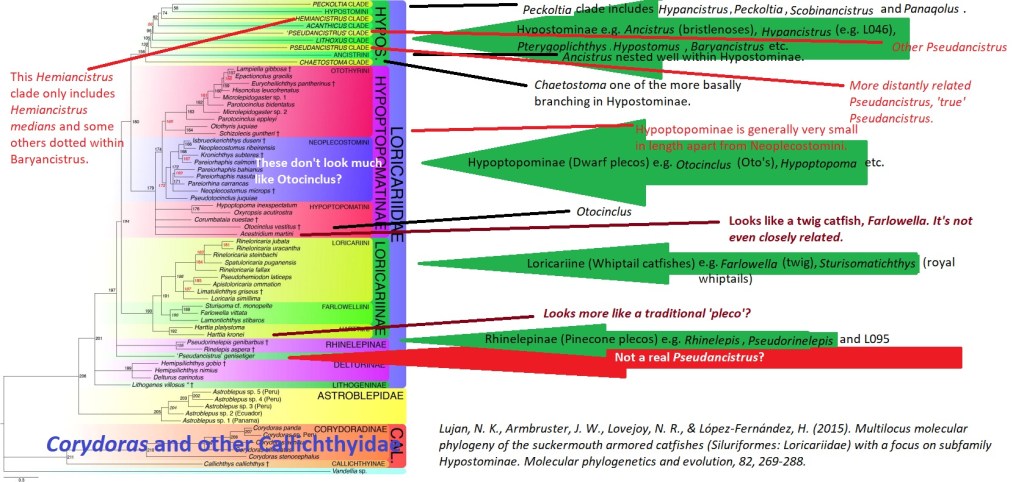
These two common names have no certain definitions, the majority of their use is a pick and mix that varies between the user. It is even more confusing that some loaches are referred to as pleco’s. All common names are equally as valid as each other. I find it easier to refer to the whole of Loricariidae as plecos, why? Figure 1 explains this situation. By excluding the subfamily Loricariinae (whiptail catfishes), you exclude Loricariichthys of which Plecostomus was synonymized with. If you exclude Hypoptopominae (Otocinclus and relatives) then Neoplecostomini and Neoplecostomus are excluded. Ancistrus, commonly known as bristlenose’s places right in the middle of Hypostominae, traditional plecos but Ancistrus also includes the medusa pleco, Ancistrus ranunculus. Then outside of all of these groups is Rhinelepinae, so that includes the pineapple pleco’s, and on it’s own Pseudancistrus genisetiger, so none of those are plecos then?

What would solve the common name issue? Simply not using them. Sadly with Loricariids you can’t avoid scientific names as many species do lack common names or share them.

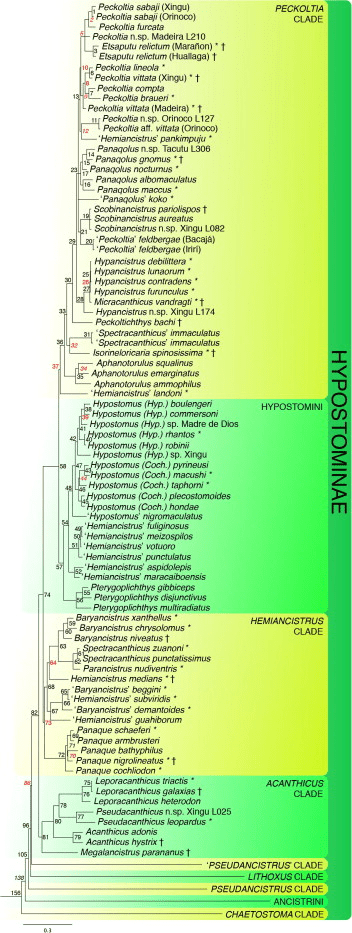
Figure 1: Annotated phylogeny of Loricariidae from Roxo, F. F., Ochoa, L. E., Sabaj, M. H., Lujan, N. K., Covain, R., Silva, G. S., … & Oliveira, C. (2019). Phylogenomic reappraisal of the Neotropical catfish family Loricariidae (Teleostei: Siluriformes) using ultraconserved elements. Molecular phylogenetics and evolution135, 148-165.

What is the L number system?

The L number system is actually quite simple, it is a hobby made system originating from the German Magazine, DATZ. It simply designates an L number to a variant or species. It is commonly stated that undescribed species are given L numbers, this is partially true but there are many species who were described decades or over 100 years before given their L number such as the sailfin/common/leopard pleco, Pterygoplichthys gibbiceps who was described by Kner in 1854.

I am not entirely convinced the L number system is easy to use, the order of the numbers doesn’t infer anything regarding the fishes care or lineages. Multiple species can share an L number e.g. Baryancistrus demantoides and Hemiancistrus subvirdis are both L200 also known as green phantoms. Hemiancistrus subvirdis is likely the same species as L128 although that is a topic for another day. One species can have multiple L numbers, which don’t always describe populations or all of the morphological variation of the species e.g. Baryancistrus xanthellus has 4 L numbers.

To top it off there are fake L numbers, L600 for example described Pseudacanthicus leopardus who already has the L numbers, L114 and L427. The L number system is only up to around 530 species so far. The letters added to L numbers aren’t a part of the L number system and increase confusion. Sometimes species are given by the hobby the L number of an entirely different species such as L144 which doesn’t even exist in the hobby and hasn’t done for decades or L056 for Parancistrus aurantiacus when actually that L number refers to an undescribed brown Pseudancistrus.

There is additionally the LDA number system which does overlap slightly but isn’t so expansive.

Introduction

Loricariidae, pleco’s are the largest family within the order of fishes known as Siluriforme also known as catfishes or welse, representing 1050 currently described species (Fricke et al., 2024). This group is exclusive to South and Central American freshwaters although has invasive populations in many continents.

Panaque nirolineatus from Maidenhead Aquatics at Ascot.

The family is identified by a downwards (ventrally) facing oral disc shaped mouth, in some species this is more of a suction cup whereas others they cannot attach to surfaces well or at all. This trait isn’t exclusive to Loricariids but it is not quite the same in other groups. Further more, Loricariids are defined by having a body covered in bony scutes, more scientifically known as dermal plating, not scales as catfishes lack scales.

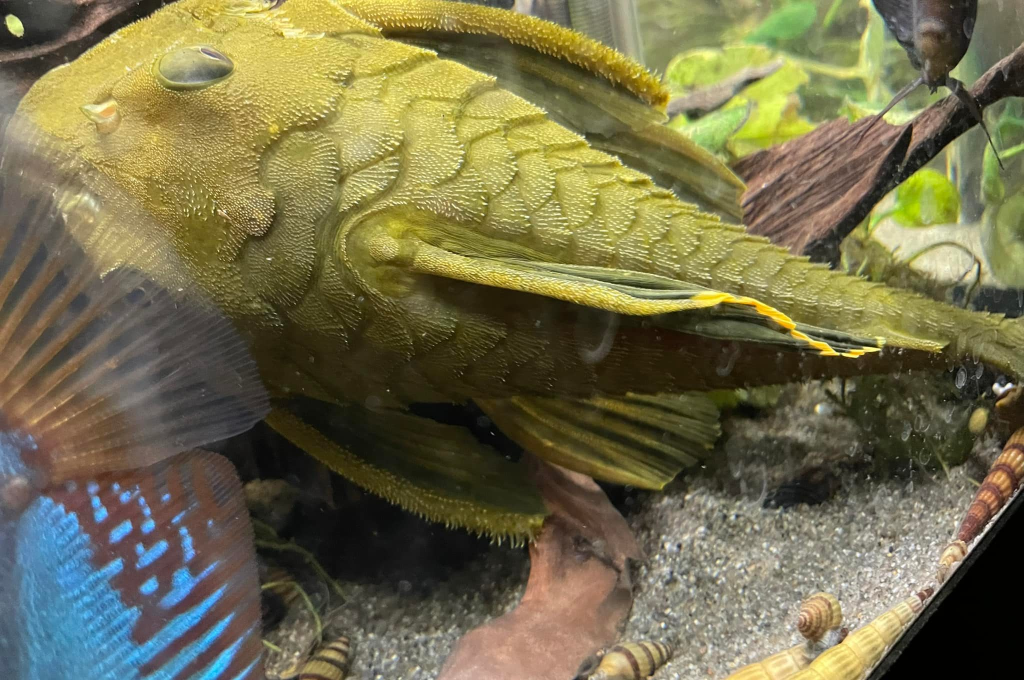
Baryancistrus chrysolomus.

Not does Loricariidae just have dermal plating but they have spines known as odontodes, external teeth (Fig 2). Sometimes these are sexually dimorphic but not always, they can also be shed seasonally.

Figure 2: Odontodes found on I believe Peckoltia sabaji.

Loricariids realistically are one of the most morphologically diverse clades of fishes.

This diversity means that as a group, Loricariids are really difficult if impossible to generalize, research is paramount for this group.

The size of plecos

As one of the most diverse groups of fishes their size varies vastly, 0.2-0.8cm in Parotocinclus halbothi (Lehmann et al., 2014) to 100cm SL possibly in Acanthicus adonis. There is a wide diversity of sizes within many groups so there is no shortage of smaller and larger species. At the end of the article I will recommend reliable websites, there is frequent misleading information about the adult size of many species.

It is important to recognize reliable websites will use standard length, from the head to the base of the caudal/tail fin. That caudal/tail fin will be excluded as these can vary in length. I mention this as many people will not consider this measurement and forget their fish grows much bigger then they would originally consider. This is explained in detail in this article.

Parancistrus aurantiacus

What should I feed my pleco?

This topic has the majority of misconceptions about Loricariids, the majority are algivores or detritivores (Lujan et al., 2012) but a wide range of diets are utilized. I have written a range of articles on a wide variety of diets across the family:  Hypancistrus (zebra, king tigers, queen arabesque, snowball pleco, L236 etc.)Panaque and Panaqolus (royal pleco’s, flash pleco and the clown pleco’s)substrate dwelling Loricariinae (Pseudohemiodon, Planiloricaria etc.)Baryancistrus (gold nugget pleco, mango/magnum pleco, snowball pleco)mollusc specialists (Scobinancistrus, goldie/sunshine pleco, vampire pleco, galaxy pleco, Leporacanthicus)Chaetostoma (Rubbernoses and one of the bulldog plecos) and finally algivores/detritivores.

There are a few myths regarding Loricariid diets I will summerise:

  • Pleco’s are largely carnivores, there are plenty of papers discussing their diets and while I wont cite them all Lujan et al. (2015) summerises it well.
  • Pleco’s become carnivorous with age, there isn’t any studies regarding change in diet as the fishes age. Unlike most fishes, the majority of Loricariids break down their food before it enters their mouth, so the size of the fish doesn’t limit their food item, so not gape limited. This means unlike many other fishes their food item doesn’t need to change with size.
  • Pleco’s clean a tank, while the majority are algivores and detritivores (Lujan et al., 2015) there is a wide diversity in niche partitioning (Lujan et al., 2011) and therefore those algivore’s specialize in certain algae’s. These algae’s seem not to be those that are an issue in the aquarium. Given their lifespan and waste production, they could be an expensive solution to high nutrients.
  • Pleco’s don’t eat cyanobacteria, they actually don’t just eat those that are pests in the aquarium, in the wild they feed on cyanobacteria (Valencia & Zamudio ,2007).

Always check the ingredients as some diets that claim to contain algae’s might contain anything from none to 5%.

Do pleco’s need wood?

This is discussed in more detail here: Panaque and Panaqolus (royal pleco’s, flash pleco and the clown pleco’s).

In simple NO, they do not need wood. The only species that utilize wood are in the genera Panaque, Panaqolus, Hypostomus cochliodon group, Pseudoqolus and perhaps Lasiancistrus heteracanthicus. These groups all share unique spoon shaped teeth they can gouge into wood and if found among wood, wood is found in their gut (Lujan et al., 2017). No other Loricariid has wood in their gut, I’ve scoured gut records but they simply don’t have the jaws or teeth to gouge into wood. There have been many studies to confirm these fishes do not eat/digest the wood (Watts et al., 2021; German, 2009), instead they are just evolved to feed on biofilms, like other species from where other species cannot access, within wood (Lujan et al., 2011).

Peckoltia compta

What parameters do pleco’s need?

While the general idea is that Loricariids and in general anything South America requires soft, low conductivity and acidic water there is a wide diversity of parameters. Some species are found in lower temperatures while other much higher, 28c or higher (Collins et al., 2015; Urbano‐Bonilla & Ballen et al., 2021). Other misconceptions are that South American habitats have a lot of leaf litter and is black water, this is completely untrue, there are many different habitat types (Bogotá-Gregory et al., 2020). In general the majority of Loricariidae are rheophilic and would benefit from a current within the aquarium although there is some diversity (Krings et al., 2023). In general any current within the aquarium is a lot weaker then any of the weaker streams in their wild range.

Planet Catfish has really accessible information to identify parameters before looking into the scientific literature.

What decor do plecos require?

This is largely the only consistent aspect of Loricariids. If anyone has kept Loricariids they will know how much they like cracks, crevices, hiding spaces, rocks, branches and in general cover. There are many caves and tunnels on the market designed for the preferences of a variety of species. I recommend stacking up wood or rocks in a careful way so nothing falls but this will create many more caves.

Tankmates

This will always be based on experience and understanding of the fishes. It’s important to recognize a few key things about Loricariids.

  • Loricariids do not often feed rapidly but even if they do it can take them minutes to an hour to reach food. Fast feeding fishes such as most cichlids, loaches, tetra, livebearers and goldfish particularly in large numbers are a bad idea.
  • Their temperature might not overlap.
  • They will need a current, some more then others which this means they wont work with fishes like long finned Betta splendens.
  • While some Loricariids feed on food items that they wouldn’t naturally it doesn’t mean it is good for them. Bloat can happen in some genera more then others. So I do not recommend keeping other fishes with Loricariids who you plan on feeding anything like beefheart.
  • Hardness, conductivity etc. We don’t actually know the KH or GH of the water many of these fishes come from, usually we have conductivity and pH records for many waters. Ideally these fishes are ill-suited regardless with Rift Valley cichlids, generally the biggest issue is above, those cichlids feed way too rapidly for any Loricariid.

Planet Catfish

Scotcat

Loricariidae.info

L-Welse

www.suedamerikafans.de

References:

Collins, R. A., Ribeiro, E. D., Machado, V. N., Hrbek, T., & Farias, I. P. (2015). A preliminary inventory of the catfishes of the lower Rio Nhamundá, Brazil (Ostariophysi, Siluriformes). Biodiversity Data Journal, (3).

Bogotá-Gregory, J. D., Lima, F. C., Correa, S. B., Silva-Oliveira, C., Jenkins, D. G., Ribeiro, F. R., … & Crampton, W. G. (2020). Biogeochemical water type influences community composition, species richness, and biomass in megadiverse Amazonian fish assemblages. Scientific Reports10(1), 15349.

Fricke, R., Eschmeyer, W. N. & Van der Laan, R. 2024.  ESCHMEYER’S CATALOG OF FISHES: GENERA, SPECIES, REFERENCES. (http://researcharchive.calacademy.org/research/ichthyology/catalog/fishcatmain.asp). Electronic version accessed 22 July 2024.

German, D. P. (2009). Inside the guts of wood-eating catfishes: can they digest wood?. Journal of Comparative Physiology B179, 1011-1023.

Krings, W., Konn-Vetterlein, D., Hausdorf, B., & Gorb, S. N. (2023). Holding in the stream: convergent evolution of suckermouth structures in Loricariidae (Siluriformes). Frontiers in Zoology20(1), 37.

Lehmann, P. A., Lazzarotto, H., & Reis, R. E. (2014). Parotocinclus halbothi, a new species of small armored catfish (Loricariidae: Hypoptopomatinae), from the Trombetas and Marowijne River basins, in Brazil and Suriname. Neotropical Ichthyology12, 27-33.

Lujan, N. K., Cramer, C. A., Covain, R., Fisch-Muller, S., & López-Fernández, H. (2017). Multilocus molecular phylogeny of the ornamental wood-eating catfishes (Siluriformes, Loricariidae, Panaqolus and Panaque) reveals undescribed diversity and parapatric clades. Molecular phylogenetics and evolution109, 321-336.

Lujan, N. K., German, D. P., & Winemiller, K. O. (2011). Do wood‐grazing fishes partition their niche?: morphological and isotopic evidence for trophic segregation in Neotropical Loricariidae. Functional Ecology25(6), 1327-1338.

Lujan, N. K., Winemiller, K. O., & Armbruster, J. W. (2012). Trophic diversity in the evolution and community assembly of loricariid catfishes. BMC Evolutionary Biology12, 1-13.

Roxo, F. F., Ochoa, L. E., Sabaj, M. H., Lujan, N. K., Covain, R., Silva, G. S., … & Oliveira, C. (2019). Phylogenomic reappraisal of the Neotropical catfish family Loricariidae (Teleostei: Siluriformes) using ultraconserved elements. Molecular phylogenetics and evolution135, 148-165.

Urbano‐Bonilla, A., & Ballen, G. A. (2021). A new species of Chaetostoma (Siluriformes: Loricariidae) from the Orinoco basin with comments on Amazonian species of the genus in Colombia. Journal of Fish Biology98(4), 1091-1104.

Valencia, César Román, and Héctor Zamudio. 2007. Dieta y reproducción de Lasiancistrus caucanus (Pisces: Loricariidae) en la cuenca del río La Vieja, Alto Cauca, Colombia. Revista del Museo Argentino de Ciencias Naturales nueva serie 9(2): 95-101.

Watts, J. E., McDonald, R. C., & Schreier, H. J. (2021). Wood degradation by Panaque nigrolineatus, a neotropical catfish: diversity and activity of gastrointestinal tract lignocellulolytic and nitrogen fixing communities. In Advances in Botanical Research (Vol. 99, pp. 209-238). Academic Press.

What to feed your pleco when they wont eat.

Loricariidae, also known under the common names L numbers, whiptail catfishes and pleco’s are popular fishes within the aquarium trade. Many people will come across the problem in their new fish where they will not eat and in fact they might never eat.

Worming

The first sign might be that the fish might have a concaved stomach and the first solution will be to worm the fish. I doubt this is the usual cause of the concave stomach in Loricariid’s but it is worth crossing out, Loricariids do quite frequently have parasitic worm’s (usually nematodes rather then Annelid’s) in the wild and these will maintain at a low level (Borges et al., 2018). If a fish is stressed such as from import this parasite load can become much higher then a healthy level. So there is logic in worming fishes when they arrive and most stores do this. Most wormers cover different internal parasites but the most common would be containing praziquantel, levamisole and flubendazole (do not use with stingrays). I would personally advise definitely not using more then one as they do all have side effects. Generally wormers need to be repeated after a week to cover the parasites lifecycle.

Panaqolus aff. maccus

The importance of getting the fish feeding.

While a rounded and healthy diet is important for wild caught fishes particularly they do need to feed. It is quite a large jump for many from a wild diet to a captive diet and many might not even identify it as food.

More importantly it is possible that the gut flora, microbes will start to decline in number while they are not eating and for shipping this is useful but not for keeping the fish. One possible thing that could help this is rather then adding them to a clean quarantine tank is to one where other similar species have lived, there is likely a benefit from those fishes waste in rebuilding that gut flora lost after shipping.

What should I feed my fish?

First identify what they eat, so their natural diet. While most diets contain the steryotypical fish/insect/krill meal, cereal, vegetable and minimal algae diets this is no issue in the short term but many wont touch these diets at first. So regardless of long term them being vastly different from their natural diet and homogenous whether you have a Trophius, Loricariid or angelfish they actually are the same (Vucko et al., 2017); they can also be unhelpful.

One day I will create a proper list of what Loricariid eats what as far as we know but currently I cannot. I do have articles on some commonly misunderstood fishes; Hypancistrus (zebra, king tigers, queen arabesque, snowball pleco, L236 etc.), Panaque and Panaqolus (royal pleco’s, flash pleco and the clown pleco’s), substrate dwelling Loricariinae (Pseudohemiodon, Planiloricaria etc.), Baryancistrus (gold nugget pleco, mango/magnum pleco, snowball pleco), mollusc specialists (Scobinancistrus, goldie/sunshine pleco, vampire pleco, galaxy pleco, Leporacanthicus), Chaetostoma (Rubbernoses and one of the bulldog plecos) and finally algivores/detritivores. Maybe some more will be created in the future.

This is important as feeding an incorrect diet can lead to bloat and other issues, it has been commonly noted when Hypancistrus are fed a wholly carnivorous diet.

Carnivorous species

This is only for true carnivores but aspects of this can be fed to others in small numbers with care, avoid it with some of the more extreme algivores such as Ancistrus, Chaetostoma, Baryancistrus etc.

Mussels and prawns are very good for getting a fish feeding at first but the issue with these two food items at high in thiaminase and therefore degrade thiamin, vitamin b1.

Generally for this reason I’d advise a range of frozen foods and for some larger species earthworms might not be a bad choice.

Nannopotopoma sp. ‘Peru/robocop’ at Maidenhead Aquatics at Ascot

Algivores and Detritivores

This includes most Loricariids that people keep to some degree but the specialities within their diet are best looking at later.

These are definitely the most tricky to get feeding at first and I often give a range of options even at the same time. Generally I’d offer that dry/gel diet once or twice a day and vegetables replaced every 12-24 hours depending on how quickly they are braking down.

For dry/gel diets I’d offer certainly Repashy soilent green if possible as I’ve never had a fish fail to give it a go. Later on I’d bulk it out with other ingredients such as algal powders, you could do similar with other gel diets but I can’t say fishes are going to take up them as well. At the end of the day whatever they are eating in the short term is worth it. Remember vegetables and similar are more treats as do not even closely replicate their wild diets.

Vegetables and other easy food items you can leave in for the fishes:

CourgetteReasonable in nutrition, is willingly eaten by many fishes but they might select either the flesh or skin over the other.
CucumberWhile often declared as low nutrients due to water content they do contain minerals and other compounds that have nutritional value.
Mushrooms (Edible species from supermarket)Could be part of a staple diet for Panaqolus, Panaque and Hypostomus cochliodon group as they do feed on fungi in the wild (Lujan et al., 2011). It is difficult to say the nutrition levels for these fishes as many might be able to digest more so then nutritional estimates for humans. So far mushrooms are shown to increase weight gain opposed to traditional diets (Zakaria et al., 2021; Dawood et al., 2010), a potential prebiotic (Chandra & Qureshi, 2023) and other potential benefits (Sánchez-Velázquez et al., 2014)
Sweet PotatoesThese doesn’t need to be blanched and I am not convinced by their digestibility for Loricariids (Omoregie et al., 2009) but if they can get the fish feeding that is what matters.
Further on I find whether fishes feed on these more hit and miss.
Green beansThe common bristlenose, Ancistrus sp. is meant to be a big fan of this. Nutrition doesn’t need to be debated but as a plant would be more of a treat after acclimation.
Bell peppersI don’t think it entirely matters whether the pepper is red, yellow or green but the sugar and nutrition levels will vary.
Pumpkins and other squashesI find very hit or miss but never blanched them. They can break down very quickly producing a film over the fruit. I would say they are much more similar to courgette.

Later on and narrowing down the diet

While whatever they will eat is generally the best rule as they are acclimatizing over the first few weeks and months. Afterwards I would look to narrowing down their diet to what they would feed on in the wild as in the articles mentioned earlier on.

Is the setup right?

This sometimes get’s forgotten but a major part of why a fish might not be feeding could be they are not getting to the food. Loricariids are slow to feed, some might take hours even without lights to feed and this can make some tankmates ill-suited. Some tankmates might work better where if needed you can remove them to another tank so that is worth considering particularly for many cichlids, many shoaling species in very high numbers or quite a few live numbers.

Planiloricaria cryptodon at Maidenhead Aquatics at Ascot.

References:

Borges, W. F., de Oliveira, M. S. B., Santos, G. G., & Tavares-Dias, M. (2018). Parasites in Loricariidae from Brazil: checklist and new records for fish from the Brazilian Amazon. Acta Scientiarum. Biological Sciences40, 1-9.

Chandra, O. P., & Qureshi, Y. (2023). Importance of mushroom supplementation as a prebiotic amalgamation in fed diet of improvement of weight gain (WG) in Nile Tilapia,(Oreochromis niloticus). Journal of Pharmaceutical Negative Results, 1681-1687.

Dawood, M. A., Eweedah, N. M., El-Sharawy, M. E., Awad, S. S., Van Doan, H., & Paray, B. A. (2020). Dietary white button mushroom improved the growth, immunity, antioxidative status and resistance against heat stress in Nile tilapia (Oreochromis niloticus). Aquaculture523, 735229.

Lujan, N. K., German, D. P., & Winemiller, K. O. (2011). Do wood‐grazing fishes partition their niche?: morphological and isotopic evidence for trophic segregation in Neotropical Loricariidae. Functional Ecology25(6), 1327-1338.

Omoregie, E., Igoche, L., Ojobe, T. O., Absalom, K. V., & Onusiriuka, B. C. (2009). Effect of varying levels of sweet potato (Ipomea Batatas) peels on growth, feed utilization and some biochemical responses of the cichlid (Oreochromis Niloticus). African Journal of Food, Agriculture, Nutrition and Development9(2), 700-712.

Sánchez-Velázquez, J., Peña-Herrejón, G. A., & Aguirre-Becerra, H. (2024). Fish Responses to Alternative Feeding Ingredients under Abiotic Chronic Stress. Animals14(5), 765.

Vucko, M. J., Cole, A. J., Moorhead, J. A., Pit, J., & de Nys, R. (2017). The freshwater macroalga Oedogonium intermedium can meet the nutritional requirements of the herbivorous fish Ancistrus cirrhosus. Algal research27, 21-31.

Zakaria, Z., Abd Rasib, N. A., & Tompang, M. F. (2021). Spent mushroom substrate based fish feed affects the growth of catfish (Clarias gariepinus). In IOP Conference Series: Earth and Environmental Science (Vol. 765, No. 1, p. 012082). IOP Publishing.

Premixed foods for plecos (Loricariids) and other rasping fishes.

Choosing fish foods can be very confusing, there are many products on the market all with various claims. The majority of fish diets are formulated based on the nutrition for food fishes, these diets have an aim to have a high growth rate while minimizing costs, efficiency would be the best term. The aim of the ornamental aquarist is far from that, we want a long lived healthy fish with good coloration. The nutritional composition requirements are differ between the two aims (Vucko et al., 2017). This has resulted in many diets not catering for the aim of the fishkeeper and no where is this more obvious then diets aimed at plecos, Loricariids.

  1. Catering for Algivores/detritivores.
  2. Catering for Carnivores.
  3. Other niches and specialization.
  4. Will they eat it?
  5. Premade diets and their ingredients
  6. The hidden issue with premade diets
  7. Products sold for plecos

The majority of Loricariids are algivores or detritivores, but there is a diversity of dietary niches (Lujan et al., 2015). Contrastingly many products labelled as pleco or algae wafers/pellets contain little to no algae but higher proportions of fish meal (Vucko et al., 2017). The majority of popular Loricariids are along the lines of algivory or feed on various volumes so this should be a focus for the aquarist. Additionally I have yet to see fish ever recorded in the gut of any Loricariid.

Catering for Algivores/detritivores.

I have written quite a bit about this niche and therefore I recommend reading this article here which covers details into algivory, detritivory and wood eating.

These fishes are the most difficult to cater for giving there isn’t quite the selection of algaes available in any diet. Some of them can be difficult for the fish to take to so hence I find Repashy soilent green good and can then be bulked out with even more algae’s.

Catering for Carnivores.

I am not really discussing carnivores so much in this article as there are many diets that cater for them and in recent years with the focus into invertebrates it is only improving. Still, many diets are very high in fish meals, something Loricariids do not consume and nutritionally these do not compare. Not just can fish meals be different nutritionally, the nutrients can be difficult to access (Žák et al., 2022).

There is a little diversity of carnivory within Loricariidae but we don’t entirely know to what extent. I have written this article for mollusc specialists and although diverse in diets this for dwell in and around the substrate.

The great thing for carnivores is the diversity of frozen foods we have available within the hobby and even fishmongers. Although keep aware for the enzyme thiaminase (in mussels and some fishes) and limit the frequency these are fed to your fishes.

Other niches and specialization.

Fungi hyphae are found in the diets of Panaque, Panaqolus and the Hypostomus cochliodon group and are likely digested, mushrooms or mycoproteins would be the closest to replicating this (Lujan et al., 2011). Sadly most diets don’t contain these. It would be interesting to feed wood that has many of these but usually by the point they have obvious hyphae they are almost entirely broken down.

While Hypancistrus are largely algivores, there is evidence a few of them feed on seeds, read about Hypancistrus here. The exception being Hypancistrus vandragti who seems a little more carnivorous in comparison (Lujan & Armbruster, 2011).

Will they eat it?

Something few consider is that just because a diet might be amazing with ingredients they might not eat it. So there are a range of ingredients such as some herbs used entirely to encourage fishes to eat a diet. This has been the issue I’ve found with some that have great ingredients Repashy super green for example.

Premade diets and their ingredients

Premade diets unlike if you were to make anything yourself entirely will have a reasonable range of nutrients. They are best more as a basis to work from for a more well rounded diet.

From these tables it is easy to understand the varying suitability of different diets to different species and genera. The colour coding is only to give an idea as many ingredients have multiple purposes e.g. fish meal can be a binding agent as well as for nutrition.

Ingredients are ordered in quantity so the top of the list contributes the most.

The hidden issue with premade diets

There is a hidden issue, as you look across the table how similar are many of these diets? Many fishkeepers will buy a range of different products in the aim of diversity of nutrition and ingredients. If so many of the ingredients and the orders are similar this means that there is little diversity, the exception would be there the major ingredients are very different.

Products sold for plecos

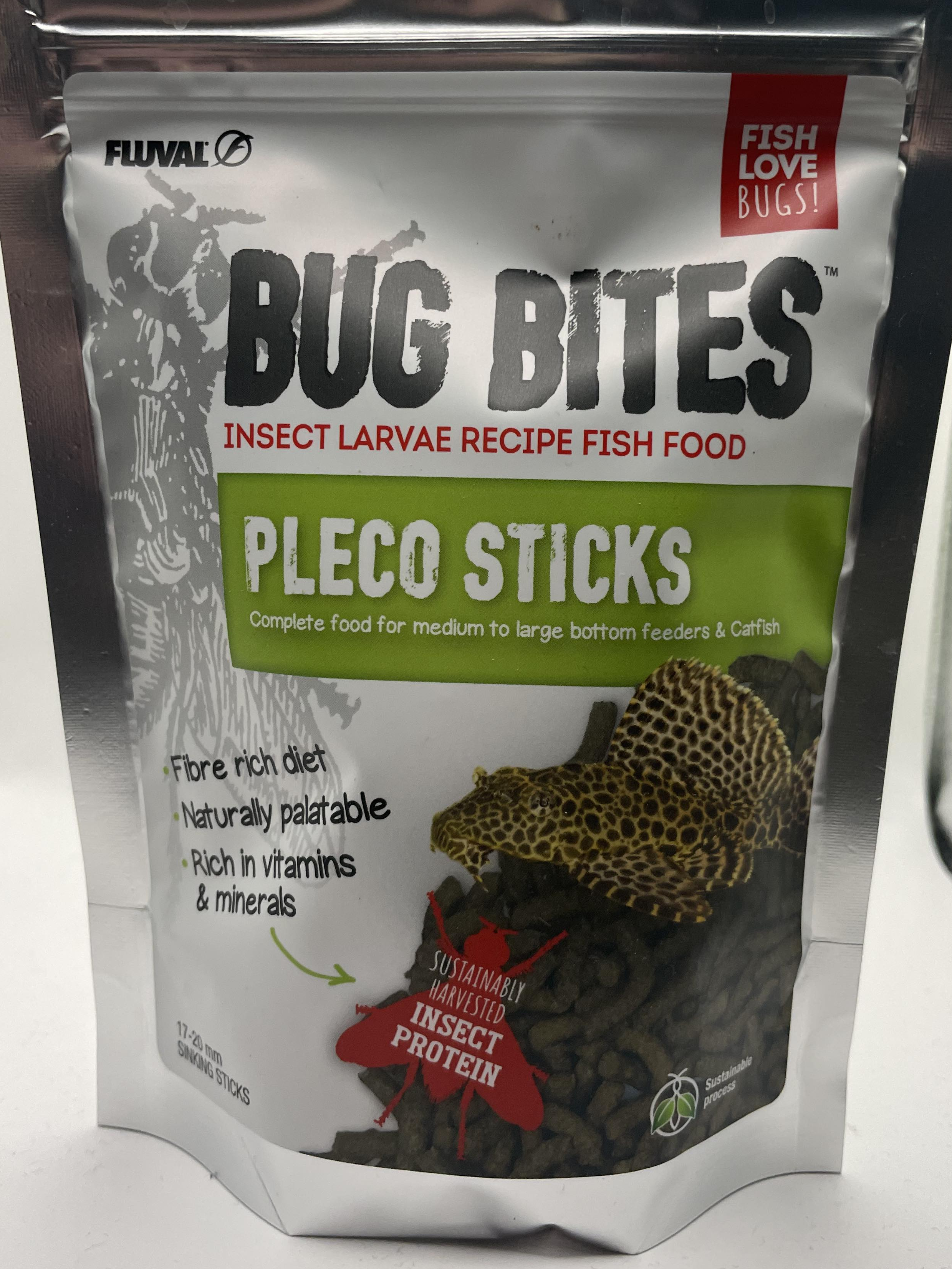
CompanyRepashy
ProductSoilent GreenSuper GreenBottom scratcherMorning wood
Dietary NicheAlgivoryAlgivoryCarnivoryXylovory
SummaryFishes tend to prefer this diet. Contains mostly algae but has a some animal meals but can be bulked out with more algae’s.Contains no animal products. Fish seem less keen on it. High in algae’s.Contains a diversity of invertebrates. Shouldn’t be fed as the only diet for non-carnivores as can lead to bloat e.g. Hypancistrus.No Loricariids digest wood, cellulose is the main ingredient.
Composition (%):
Protein40354520
Fat88103
Fibre881250
Moisture8888
Ash1291115
Ingredients
Spirulina Algae, Algae Meal (Chlorella), Krill Meal, Pea Protein Isolate, Squid Meal, Rice Protein Concentrate, Fish Meal, Alfalfa Leaf Meal, Dried Brewer’s Yeast, Coconut Meal, Stabilized Rice Bran, Flax Seed Meal, Schizochytrium Algae, Dried Seaweed Meal,  Lecithin, Dried Kelp, Locust Bean Gum, Potassium Citrate, Taurine, Stinging Nettle, Garlic, RoseHips, Hibiscus Flower, Calendula Flower, Marigold Flower, Paprika, Turmeric, Salt, Calcium Propionate and Potassium Sorbate (as preservatives), Magnesium Amino Acid Chelate, Zinc Methionine Hydroxy Analogue Chelate, Manganese Methionine Hydroxy Analogue Chelate, Copper Methionine Hydroxy Analogue Chelate, Selenium Yeast. Vitamins: (Vitamin A Supplement, Vitamin D Supplement, Choline Chloride, Calcium L-Ascorbyl-2-Monophosphate, Vitamin E Supplement, Niacin, Beta Carotene, Pantothenic Acid, Riboflavin, Pyridoxine Hydrochloride, Thiamine Mononitrate, Folic Acid, Biotin, Vitamin B-12 Supplement, Menadione Sodium Bisulfite Complex).Spirulina Algae, Algae Meal (Chlorella),  Pea Protein Isolate, Rice Protein Concentrate, Alfalfa Leaf Powder, Stabalized Rice Bran, Dandelion Powder, Dried Brewer’s Yeast, Coconut Meal, Ground Flaxseed, Schizochytrium Algae, Dried Seaweed Meal, Dried Kelp, Locust Bean Gum, Lecithin,  Potassium Citrate, Taurine, Stinging Nettle, Garlic, RoseHips, Hibiscus Flower, Calendula Flower, Marigold Flower, Paprika, Turmeric, Calcium Propionate and Potassium Sorbate (as preservatives), Magnesium Amino Acid Chelate, Zinc Methionine Hydroxy Analogue Chelate, Manganese Methionine Hydroxy Analogue Chelate, Copper Methionine Hydroxy Analogue Chelate, Selenium Yeast. Vitamins: (Vitamin A Supplement, Vitamin D Supplement, Choline Chloride, Calcium L-Ascorbyl-2- Monophosphate, Vitamin E Supplement, Niacin, Beta Carotene, Pantothenic Acid, Riboflavin, Pyridoxine Hydrochloride, Thiamine Mononitrate, Folic Acid, Biotin, Vitamin B-12 Supplement, Menadione Sodium Bisulfite Complex).Krill Meal, Insect Meal, Mussel MealSquid Meal, Dried Brewer’s Yeast, Dried Seaweed Meal,  Lecithin,  Dried Kelp, Locust Bean Gum, Potassium Citrate, Taurine, Watermelon, RoseHips, Hibiscus Flower, Calendula Flower, Marigold Flower, Paprika, Turmeric, Stinging Nettle, Garlic, Salt, Calcium Propionate and Potassium Sorbate (as preservatives), Magnesium Amino Acid Chelate, Zinc Methionine Hydroxy Analogue Chelate, Manganese Methionine Hydroxy Analogue Chelate, Copper Methionine Hydroxy Analogue Chelate, Selenium Yeast. Vitamins: (Vitamin A Supplement, Vitamin D3 Supplement, Choline Chloride, Calcium L-Ascorbyl-2-Monophosphate, Vitamin E Supplement, Niacin, Beta Carotene, Pantothenic Acid, Riboflavin, Pyridoxine Hydrochloride, Thiamine Mononitrate, Folic Acid, Biotin, Vitamin B-12 Supplement, Menadione Sodium Bisulfite Complex).Cellulose Powder, Dried Seaweed Meal, Alfalfa Leaf Meal, Spirulina Algae, Rice Protein Concentrate, Pea Protein Isolate, Stabilized Rice Bran, Dried Brewer’s Yeast, Dried Kelp, Stinging Nettle, Locust Bean Gum, Calcium Carbonate, Potassium Citrate, Malic Acid, Taurine, GarlicWatermelon, RoseHips, Hibiscus Flower, Calendula Flower, Marigold Flower, Paprika, Turmeric, Salt, Calcium Propionate and Potassium Sorbate (as preservatives), Magnesium Amino Acid Chelate, Zinc Methionine Hydroxy Analogue Chelate, Manganese Methionine Hydroxy Analogue Chelate, Copper Methionine Hydroxy Analogue Chelate, Selenium Yeast. Vitamins: (Vitamin A Supplement, Vitamin D Supplement, Choline Chloride, Calcium L-Ascorbyl-2-Monophosphate, Vitamin E Supplement, Niacin, Beta Carotene, Pantothenic Acid, Riboflavin, Pyridoxine Hydrochloride, Thiamine Mononitrate, Folic Acid, Biotin, Vitamin B-12 Supplement, Menadione Sodium Bisulfite Complex).
Repashy products, coloured by type of product; algae (Dark green), Plant Matter (blue), cereal (Orange), animal matter (red), vitamins (pink), not highlighted might have other purposes such as binding agents or other nutrition.

Repashy unlike the other brands is a gel diet, this means other products such as algae powders can be added in. This means for any of them you can increase the algal composition or add ingredients such as basil.

CompanyFluvalAquaCare
ProductBug Bites Pleco SticksBug Bites Pleco CrispsSpirulina Sinking WafersOak
Dietary NicheCarnivoreOmnivore/cerealsOmnivoreOmnivore/cereals
SummaryA reasonable amount of insects so more ideal then those with more fish meals for carnivores. A smaller amount of insect meals and contains a wider range of cereals.Mostly fish meal with a lot of cereals, little algae. Loricariids cannot digest wood/cellulose nor is it used for digestion. Mostly wheat, which will have limited nutrition and a high amount of fish meal.
Composition (%):
Protein3243.543.738.3
Fat1245.73.7
Fibre6333.2
Moisture??7.19
Ash9510.513.4
Ingredients
Black soldier fly larvae (30%), salmon (22%), wheat, peas, potato, dicalcium phosphate, alfalfa nutrient concentrate, calcium carbonate, calendula, rosemary.Insect Meal (Mealworm Meal 15%, Black Soldier Fly Larvae 10%), Wheat flour, Wheat Gluten, Wheat germ, Alfalfa, Spirulina, Fish Protein Hydrolyzed, Kelp (5%), Shrimp Protein Hydrolyzed, Spinach (5%), Activated Charcoal.Fish meal, Wheat, Wheat Gluten, Mycoprotein, Shrimp, Spirulina, Alfa-Alfa, Salmon Oil, Wheat germ, Spinach, Vitamins, MineralsWheat, Herring Meal, Wheatgerm, Spirulina, Alfalfa, Kelp, Oak Bark, Zeolite, Minerals, Vitamins
Coloured by type of product; algae (Dark green), Plant Matter (blue), cereal (Orange), animal matter (red), vitamins and minerals (pink), not highlighted might have other purposes such as binding agents or other nutrition.
CompanyHikariDr BasslerVitalis
ProductAlgae WafersGreen RegularPleco Pellets
Dietary NicheOmnivoreOmnivoreOmnivoreOmnivore
SummaryNot ideal. Contains a lot of fish meal and cereals. A general diet that targets no species. Very high in cereals and fish meals. Too few algaes to cater for an algivore. Pretty much the same as the green diet. A lot of fish meal and cereals. Not ideal. A very general diet that doesn’t cater for any species. Mostly contains fish.
Composition (%):
Protein33575439.4
Fat418167
Fibre3241.5
Moisture10?625
Ash17101017.3
Ingredients
Fish meal, wheat flour, wheat germ meal, cassava starch, dried bakery product, dried seaweed meal, alfalfa nutrient concentrate dehydrated, dehydrated alfalfa meal, brewers dried yeast, soybean meal, fish oil, krill meal, spirulina, garlic.Cereals, fish and fish derivatives, derivatives of vegetable origin, Chlorella pyrenoidosa (5 %), Moringa oleifera (5 %), molluscs and crustaceans, yeast, minerals
Additives: Vitamins: E672 Vitamin A 7,500 IE/kg, E671 Vitamin D3 2,500 IE/kg , E300 Vitamin C 500 mg/kg, E307 Vitamin E 260 mg/kg, Magnesium 400 mg/kg, Iron 300 mg/kg, Omega-3 fatty acids 50 mg/g, Vitamin B3 7.5 mg/kg, Chlorophyll 2 mg/kg, Folic acid 2 mg/kg, Selenium 1 mg/kg, Iodine 0.02 mg/kg
Fish and fish derivatives, cereals, molluscs and crustaceans, derivatives of vegetable origin, yeast, minerals
Additives: Vitamins: E672 vitamin A 7500 IU/kg, E671 vitamin D3 2500 IU/kg, E300 vitamin C 500 mg/kg, E307 vitamin E 260 mg/kg
Fish and Fish Derivatives, Derivatives of Vegetable Origin, Algae, Oils and Fats, Minerals, Molluscs and Crustaceans.
Coloured by type of product; algae (Dark green), Plant Matter (blue), cereal (Orange), animal matter (red), vitamins (pink), not highlighted might have other purposes such as binding agents or other nutrition.
CompanyOaseTetraNew Life SpectrumFish Science
ProductOrganix Veggievore TabsSpirulina WafersAlgae MaxAlgae wafers
Dietary NicheCarnivoreHerbivoreAlgivoreOmnivore
SummaryA lot of fish/shrimp meals. Only a small amount of krill. Plant focused but lacks a lot of algaes.Beware some have higher fish meal volumes. Otherwise a great range of algaes.Would benefit from more algaes, the use of mycoproteins is interesting but still a large amount of cereals and fish meal.
Composition (%):
Protein35283442
Fat13687.5
Fibre1582.2
Moisture?91010
Ash9??8.5
Ingredients
Whole Salmon, Whole Shrimp, Wheat Flour, Kelp, Whole Herring, Wheat GermVitamins and Minerals.Cereals, Vegetable protein extracts, Derivatives of vegetable origin, Yeasts, Oils and fats, Algae (Ascophyllum Nodosum 3,0%, Spirulina 0,9 %), Minerals.
Vitamins: Vitamin D3 1810 IU/kg. Trace elements: Manganese (manganese (II) sulphate, monohydrate) 81 mg/kg, Zinc (zinc sulphate, monohydrate) 48 mg/kg, Iron (iron(II) sulphate, monohydrate) 32 mg/kg. Colourants, Preservatives, Antioxidants.
Seaweed (Ulva latuca, Undaria pinnatafida, Eucheuma cottonii, Eucheuma spinosum, Chondrus crispus, Porphyra umbilicus), Krill (Euphasia superba), Squid (Dosidicus gigas), Whole Wheat Flour, Kelp, Spirulina, Fish (Brevoortia tyrannus), Fish Oil, Garlic, Ginger, Astaxanthin, Marigold, Bentonite Clay, Sea Salt, Vitamin A Acetate,Vitamin D Supplement,Vitamin E Supplement, Vitamin B12 Supplement,Niacin, Folic Acid, Biotin, Thiamine Hydrochloride, Riboflavin Supplement, Pyridoxine Hydrochloride, Calcium Pantothenate, L-Ascorbyl-2-Polyphosphate (Vitamin C), Choline, Chloride, Ethylenediamine Dihydroiodide, Cobalt Sulfate, Ferrous Sulfate, Manganese Sulfate, Tocopherols (a preservative).Algae (Spirulina & Kelp 15%), Mycoprotein, Cereals, Herring meal, Vegetable protein extracts, Insect meal, Vegetables (Cucumber, Spinach), Molluscs and crustaceans, Yeast, Salmon oil and Garlic.
Coloured by type of product; algae (Dark green), Plant Matter (blue), cereal (Orange), animal matter (red), vitamins (pink), not highlighted might have other purposes such as binding agents or other nutrition.

References:

Lujan, N. K., & Armbruster, J. W. (2011). Two new genera and species of Ancistrini (Siluriformes: Loricariidae) from the western Guiana Shield. Copeia2011(2), 216-225.

Lujan, N. K., German, D. P., & Winemiller, K. O. (2011). Do wood‐grazing fishes partition their niche?: morphological and isotopic evidence for trophic segregation in Neotropical Loricariidae. Functional Ecology25(6), 1327-1338.

Lujan, N. K., Winemiller, K. O., & Armbruster, J. W. (2012). Trophic diversity in the evolution and community assembly of loricariid catfishes. BMC Evolutionary Biology12, 1-13.

Vucko, M. J., Cole, A. J., Moorhead, J. A., Pit, J., & de Nys, R. (2017). The freshwater macroalga Oedogonium intermedium can meet the nutritional requirements of the herbivorous fish Ancistrus cirrhosus. Algal research27, 21-31.

Žák, J., Roy, K., Dyková, I., Mráz, J., & Reichard, M. (2022). Starter feed for carnivorous species as a practical replacement of bloodworms for a vertebrate model organism in ageing, the turquoise killifish Nothobranchius furzeri. Journal of Fish Biology100(4), 894-908.

Company
Product
Dietary Niche
Summary
Composition (%):
Protein
Fat
Fibre
Moisture
Ash
Ingredients
Coloured by type of product; algae (Dark green), Plant Matter (blue), cereal (Orange), animal matter (red), vitamins (pink), not highlighted might have other purposes such as binding agents or other nutrition.

Chaetostoma – The Coolest Plecos/Loricariidae

I am personally most charmed by those Loricariids with unusual anatomy and none more then that dorso-ventrally compressed body shape. Most of these fishes enjoy high velocity water, living in the cracks and crevices of the rocks present, more then often not fishes you’d find around plants or even wood. Two genera come to mind when we think of this, Chaetostoma and Ancistrus although many more do exploit such a niche like Pseudolithoxus. Many genera we do not see in the trade though, these are largely members of that Chaetostoma clade; the paraphyletic Cordylancistrus, Andeanancistrus, Transancistrus and Leptoancistrus (Lujan et al., 2015).

Chaetostoma cf. joropo

This Chaetostoma clade have a unique appearance of long wide jaws and dermal plating stopping before the end of the head leaving a fleshy rim that lacks tentacles. The only taxa that look similar would be a few Ancistrus and the Neoplecostominae, Pareiorhapis but the latter displays quite reasonable hypertrophied odontodes and a much wider head. There is more precise skeletal anatomy to identify Chaetostoma (Lujan et al., but not really the easiest for the fishkeeper to identify.

As of 2022 there were 49 currently described species in the genus (Meza-Vargas et al., 2022) making Chaetostoma one of the numerous Loricariid genera excluding Ancistrus and Hypostomus all of which have many undescribed species. While in the aquarium trade we see very few with some rarities appear on occasion, the majority seem to be imported rather generally and therefore bycatch is not rare. This is one of the genera you can find something almost unseen in a general fish store due to this lack of identification. The most common being Chaetostoma formosae, C. sp. ‘L147’ and C. dorsale but Chaetostoma sp. L455/L457 is not unseen and has some amazingly striking patterning.

Chaetostoma brevilabiatum at Pier Aquatics

Chaetostoma has often been associated with being small but this genus represents some larger species such as Chaetostoma brevilabiatum growing to over 18cm Standard Length (SL) although most are around that 6/7cm SL mark (Lujan et al., 2015). They are notorious fast growers if in the right setup so certainly not one to forget about upgrading soon enough.

Habitat

While largely a hillstream or high velocity fish (In terms of our fishkeeping) they can be particularly widespread or less so depending on the species (Lujan et al., 2015). Ecology is rarely recorded as with many fishes where taxonomy has been the focus and while most descriptions come with coordinates that can be crosschecked against other information it is still somewhat making assumptions. Although for Chaetostoma chimu, C. formosae, C. dorsale, C. platyrhynchus and C. joropo all three are found in the same locality, explains mixed imports and we do have ecological records focused on C. chimu. The water is well oxygenated and by our aquarium standards has a high flow, temperatures of 21-29c, a pH of 7.1-8.9 along with a conductivity of 20.4–269.0 μS (Urbano‐Bonilla & Ballen, 2021) . This suggests fishes that experience quite a bit of variation and swings seasonally or maybe if there is frequent rainfall. Generally this does infer maybe a few species not difficult to house in captivity. That neutral pH is not uncommonly recorded, Chaetostoma spondylus is recorded from a habitat of a pH of 7.1 with again highly oxygenated water (Salcedo & Ortega 2015). Chaetostoma joropo also inhabiting highly oxygenated water at a pH of 7.1-8.6, a conductivity of 10.4–258.0 μS and temperatures of 21-30c. These are certainly not fish to keep at least at the high extreme but given the locality of many it seems particularly those at higher elevations would need much cooler water year round.

Chaetostoma sp. ‘L445/L457’

These habitats are extremely rocky with round boulders weathered from the flow of the rivers (Urbano‐Bonilla& Ballen, 2021; Meza-Vargas et al., 2022). Whether it be rocks, wood, pleco caves etc. plenty of hiding spots are a must for this genus.

Diet

While the habitat of Chaetostoma proves them adaptable their diet might not, these elongate jaws are extremely similar to other genera that have provided a challenge to aquarists e.g. Baryancistrus. The longer jaws with more numerous teeth are strongly associated with algivory (feeds on mostly algaes/aufwuch/periplankton; Lujan et al., 2012). Zúñiga-Upegui et al. (2017) is probably the most detailed paper on the diet of Chaetostoma although few ever discuss their diet, from their analysis the genus feeds almost entirely on algaes particularly diatoms. These diatoms are unlikely to be those highly stubborn ones to cause issues in the aquarium though.

If anything much like Baryancistrus this is a genus who would benefit from large amounts of algae’s in their diet whether it be Repashy soilent green with additional algal powders mixed in or In The Bag’s Pleco Pops. Many fish diets even most claimed as algae wafers contain very little and this genus has shown adaptable to these diets nutritionally I can’t see them being ideal.

Behaviour

I can’t argue for or against their territoriality as I haven’t seen it, even with any territorial species there is a benefit in others for enrichment given the right amount of space. Many fishes seem to learn feeding behaviours off each other.

Chaetostoma sp. ‘L445/L457’

Conclusion

Chaetostoma, it’s so unusual looking and can look creepy, they often get forgotten. These algivores who enjoy high flow and velocity would certainly make interesting tankmates in some of those aquariums which allow for such seasonal variation. Adaptable in parameters and maybe less so in diet is probably what defines the genus.

References/species descriptions:

Lujan, N. K., Meza-Vargas, V., Astudillo-Clavijo, V., Barriga-Salazar, R., & López-Fernández, H. (2015). A multilocus molecular phylogeny for Chaetostoma clade genera and species with a review of Chaetostoma (Siluriformes: Loricariidae) from the Central Andes. Copeia103(3), 664-701.

Lujan, N. K., Winemiller, K. O., & Armbruster, J. W. (2012). Trophic diversity in the evolution and community assembly of loricariid catfishes. BMC Evolutionary Biology12(1), 1-13.

Meza-Vargas, V., Calegari, B. B., Lujan, N. K., Ballen, G. A., Oyakawa, O. T., Sousa, L. M., … & Reis, R. E. (2022). A New Species of Chaetostoma (Siluriformes: Loricariidae) Expands the Distribution of Rubbernose Plecos Eastward into the Lower Amazon Basin of Brazil. Ichthyology & herpetology110(2), 364-377.

Salcedo, N. J., & Ortega, H. (2015). A new species of Chaetostoma, an armored catfish (Siluriformes: Loricariidae), from the río Marañón drainage, Amazon basin, Peru. Neotropical Ichthyology13, 151-156.

Urbano‐Bonilla, A., & Ballen, G. A. (2021). A new species of Chaetostoma (Siluriformes: Loricariidae) from the Orinoco basin with comments on Amazonian species of the genus in Colombia. Journal of Fish Biology98(4), 1091-1104.

Zúñiga-Upegui, P. T., Villa-Navarro, F. A., García-Melo, L. J., García-Melo, J. E., Reinoso-Flórez, G., Gualtero-Leal, D. M., & Ángel-Rojas, V. J. (2014). Aspectos ecológicos de< em> Chaetostoma sp.(Siluriformes: Loricariidae) en el alto río Magdalena, Colombia. Biota Colombiana15(2).

Leporacanthicus and Scobinancistrus: A dietary guide to molluscivorous Loricariids.

While the majority of Loricariids are algivores/detritivores (Lujan et al., 2012), there is a number of those who are carnivorous and even less likely specialise in molluscs.

Figure 1: Scobinancistrus auratus at Maidenhead Aquatics, Ascot.

Scobinancistrus and Leporacanthicus are both genera in the subfamily Hypostominae of the Siluriforme (catfish) family, Loricariidae. Scobinancistrus is nested within the Peckoltia group while Leporacanthicus places within the Acanthicus group (Fig 2). As a result these two species are not closely related at all, making the molluscivorous dietary niche convergent.

Figure 2: Phylogeny of the Peckoltia group from: Lujan, N. K., Armbruster, J. W., Lovejoy, N. R., & López-Fernández, H. (2015). Multilocus molecular phylogeny of the suckermouth armored catfishes (Siluriformes: Loricariidae) with a focus on subfamily Hypostominae. Molecular phylogenetics and evolution82, 269-288.

Both genera are reasonably small in size, Leporacanthicus contains four described species: L. galaxias (Galaxy/vampire pleco/L007/L240), L. joselimai (Sultan pleco/L264), L. heterodon (Golden vampire pleco) and L. triactus (Three becon pleco/L091); Scobinancistrus contains three described species: S. auratus (Sunshine pleco/L014), S. pariolispos (Golden cloud pleco/L133) and S. raonii (L082). There are multiple undescribed species or variant’s in both genera. Species descriptions are included in the reference list.

Neither of these genera are particularly small in size particularly Scobinancistrus where both S. pariolispos, S. auratus and the undescribed species grow to 30cm SL, S. raonii being an exception at 22cm SL (Chaves et al., 2023). On the other hand Leporacanthicus while the Acanthicus group represents the largest species is generally around 24cm SL (Collins et al., 2015) with the exception of Leporacanthicus joselimai at around 15cm SL (Isbrücker & Nijssen, 1989). So these are not the smallest of fishes but generally the scientific literature includes much smaller sizes then some of the images of fishes obtained from the wild.

When we look at habitats for this clade it is generally always rocky with little to no macrophyte plants, these fishes enjoy a good current (Chaves et al., 2023; Isbrücker & Nijssen, 1989; https://amazonas.dk/index.php/articles/brasilien-rio-xingu). This is partially a clue to why their morphology is the way it is. Particularly those Rio Xingu species e.g. Scobinancistrus auratus, S. raonii and Leporacanthicus heterodon will not experience temperatures below 28c (Rofrigues-Filho et al., 2015).

While juveniles are not noted to be a particular issue unlike the majority of the Acanthicus clade both can be particularly territorial with age. I have a clear memory of a Leporacanthicus breeder explaining how a pair couldn’t be housed with other Loricariids due to the level of aggression. In a larger aquarium with plenty of caves and decor to break up the tank could work but this has to be taken into consideration for the future.

Figure 3: Scobinancistrus aureatus at Maidenhead Aquatics, Ascot.

Dietary niche

Both of these genera have very specialist jaws, they are particularly agile to move around or into a food item as displayed in figure 3. This mobility of the soft oral suction cup-like mouth is to more of an extreme then other carnivores; Pseudacanthicus who is much more general as a carnivore.

Figure 4: Leporacanthicus galaxias from: https://www.suedamerikafans.de/wels-datenbank/maulstudien/

Leporacanthicus goes a little more further with a particularly large, fleshy with many particularly large unculi.

Figure 5: The jaws of Leporacanthicus sp. as featured in: Lujan, N. K., Winemiller, K. O., & Armbruster, J. W. (2012). Trophic diversity in the evolution and community assembly of loricariid catfishes. BMC Evolutionary Biology12(1), 1-13.

If anything talks about diets so much, it is the skeletal anatomy and the jaws (Fig 5). These two genera have very robust jaws but other Loricariids particularly Hypostominae have this, what separates Scobinancistrus and Leporacanthicus is the area around the tooth cup. It is extremely elongate downwards, protruding but unlike other Loricariids it is also very limited for teeth (Fig 5).

The teeth are very few and sparse, which correlates with carnivory (Lujan et al., 2012). These teeth being strong, maybe due to colouration maybe mineralised and, more then anything long.

Their diet

These fish are adapted for reaching into something so……..molluscs……..

The interesting thing about diets is for quite a lot of species we don’t entirely know what they eat. Gut analysis is still the most common method of analysing animal diets but that only shows a snapshot of what is in their gut at that time but ignores seasonal variance or digestion. Hence Panaque being a particular curiosity, few organisms can digest wood were studied further but others it’s not looked further. Often with fishes only a small number of individuals are used which can limit it further. When thinking functionally half of diet is what they eat the rest is where they eat, like it’s fine to eat invertebrates, many animals do but to extract it from an object is another, you can’t compare their morphology.

The suggestion of these fishes feeding on molluscs is not old (Black & Armbruster 2022), other groups e.g. fishes are confirmed to feed on molluscs but morphologically nothing similar. Morphology doesn’t mean molluscs are not their diet as molluscs can be in difficult to reach areas.

The description of Scobinancistrus raonii was the most detailed of their diets inferring the use of invertebrates, algaes and porferia (I know an invertebrate; Chaves et al., 2023). Porferia is not a rare mention in the scientific literature as a Loricariid diet as featuring in the diet of Megalancistrus aculeatus but based on dietary analysis (Delariva & Agostinho, 2001). Sponges are a discussion that would need analysing further, Professor Donovan P. German, a scientist specialising in fishes diets discusses that previous fishes that specialise in sponges do so similar to Panaque, they break down the sponges in search of things they can digest. So I will illude suggestions they can digest sponges, either way not a viable diet in captivity as sponges take so long to grow.

Personal experience only hold up so much ground but I have experienced both take particular interest in molluscs and extracting them from their shells, unlike other taxa they cannot crush those shells. Their jaws and teeth even just suggest how they cannot crush, look at your own teeth, your crushing teeth are rounder and shorter.

We don’t really know if they do eat molluscs, the bodies of molluscs wont appear on gut analysis as easily processed. I don’t know yet enough about isotope analysis to test other methods. But if they show the interest it’s something to explore.

The other avenue is these long jaws and teeth are for extracting things from the cracks and crevices in wood.

Either way though we don’t have the captive diets to really cater carnivory that well yet so no harm in the snails but look at a diet that is based on invertebrates. They show an interest in molluscs so those without the trapdoor would be amazing.

In Loricariidae there is the new frontier in diets, places to explore and understand. We do not know yet so worth looking further. We are miles from the answer in what they really digest and eat.

References:

Black, C. R., & Armbruster, J. W. (2022). Chew on this: Oral jaw shape is not correlated with diet type in loricariid catfishes. Plos one17(11), e0277102.

Collins, R. A., Ribeiro, E. D., Machado, V. N., Hrbek, T., & Farias, I. P. (2015). A preliminary inventory of the catfishes of the lower Rio Nhamundá, Brazil (Ostariophysi, Siluriformes). Biodiversity Data Journal, (3).

Delariva, R. L., & Agostinho, A. A. (2001). Relationship between morphology and diets of six neotropical loricariids. Journal of Fish Biology58(3), 832-847.

Lujan, N. K., Armbruster, J. W., Lovejoy, N. R., & López-Fernández, H. (2015). Multilocus molecular phylogeny of the suckermouth armored catfishes (Siluriformes: Loricariidae) with a focus on subfamily Hypostominae. Molecular phylogenetics and evolution82, 269-288.

Lujan, N. K., Winemiller, K. O., & Armbruster, J. W. (2012). Trophic diversity in the evolution and community assembly of loricariid catfishes. BMC Evolutionary Biology12(1), 1-13.

Rios-Villamizar, E. A., Piedade, M. T. F., Da Costa, J. G., Adeney, J. M. and Junk, W. J. (2013). Chemistry of different Amazonian water types for river classification: A preliminary review. Water and Society 2013, 178.

Species descriptions:

Burgess, W. E. (1994). Scobinancistrus aureatus, a new species of Loricariid Catfish from the Rio Xingu (Loricariidae: Ancistrinae). TFH Magazine. 43(1):236–42.

Chaves, M. S., Oliveira, R. R., Gonçalves, A. P., Sousa, L. M., & Py-Daniel, L. H. R. (2023). A new species of armored catfish of the genus Scobinancistrus (Loricariidae: Hypostominae) from the Xingu River basin, Brazil. Neotropical Ichthyology21, e230038.

Isbrücker I. J. H. and Nijssen H. (1989). Diagnose dreier neuer Harnischwelsgattungen mit fünf neuen Arten aus Brasilien (Pisces, Siluriformes, Loricariidae). DATZ. 42(9):541–47

Isbrucker, I. J., Nijssen, H., & Nico, L. G. (1992). Leporacanthicus triactis, a new loricariid fish from upper Orinoco River tributaries in Venezuela and Colombia (Pisces, Siluriformes, Loricariidae). Die Aquarien-und Terrarienzeitschrift (DATZ)46(1), 30-34.

Hypancistrus – A Dietary Guide to the Fancy Pleco

Figure 1: Hypancistrus zebra (Zebra pleco, L046)

Hypancistrus is a relatively medium sized genera with a type species of Hypancistrus zebra (Fig 1). The genus is nested within the Peckoltia clade in the subfamily Hypostominae (Fig 2) and displays similar morphology to many members of this group.

Figure 2: Phylogeny of the Peckoltia clade: Lujan, N. K., Cramer, C. A., Covain, R., Fisch-Muller, S., & López-Fernández, H. (2017). Multilocus molecular phylogeny of the ornamental wood-eating catfishes (Siluriformes, Loricariidae, Panaqolus and Panaque) reveals undescribed diversity and parapatric clades. Molecular phylogenetics and evolution109, 321-336.

The body shape of Hypancistrus is generally quite characteristic of many typical Hypostominae plecos. They tend to have a shorter head and larger eyes compared to Panaqolus and Peckoltia. Markings are spotted or striped but vermiculations are present, these might reduce with age or change shape. Colouration similarly becomes less distinctive with age but the majority of members are white/yellow and grey/black.

Like the majority of the Peckoltia group Hypancistrus displays hypertrophied (large) odontodes (external teeth, not used for feeding) on the caudal peduncle, pectoral fin spines and at the gill opercula. These odontodes are sexually dimorphic being hypertrophied in the caudal peduncle and pectoral fin spines within males while females also absent. In mature males the odontodes that cover the body tend to become larger giving a more blurred appearance to the fish (Reis et al., 2022).

Figure 3: Hypancistrus sp. ‘L236’

Regardless of the popularity of the genus Hypancistrus, there are only 9 described species (Fricke et al., 2023) but almost four times that are undescribed with and without L numbers. This doesn’t define if these undescribed individuals are species as L066 and L333 has been suggested to be the same species (Cardoso et al., 2016).

Hypancistrus is generally located within areas of high velocity water residing between the cracks and crevices. Water temperatures are a minimum of 28c and this is why flow within captivity is important to keep oxygen levels high (de Sousa et al., 2021).

The Ecomorphology of Hypancistrus

Figure 4: Hypancistrus sp. L333, the image is from the amazing website: https://www.suedamerikafans.de/en/wels-datenbank/maulstudien/?cookie-state-change=1701028628501 Great for anyone wanting to look at mouths of Loricariids and other information.

Ecomorphology are anatomical traits that are involved in functional behaviour such as feeding. This oral morphology (Fig 4) is very similar to particularly Peckoltia itself. There are a reasonable amount of teeth particularly on the maxaillae, upper jaw and less on the dentary, lower jaw. While there are a few it is a lot more then the closely related, carnivorous Scobinancistrus. The jaws of Hypancistrus are strong and robust, very similar again to Peckoltia but not quite the same as the other closely related genus, Panaqolus.

Dietary Ecology

Hypancistrus is often recorded as being a carnivore, I don’t entirely know where the assumption comes from but it must stem from this common idea that any of the colourful Loricariids are, I have seen this stated quite frequently. Additionally maybe the doctorial thesis of Dr. Jansen Zuanon where the species Hypancistrus zebra is suggested to feed on reasonable amounts of Bryozoa along with algaes (Zuanon, 1999). As many things do with time information is lost, some older information generalises the genus as omnivores and later others have suggested carnivores.

When reading the scientific literature including Zuanon (1999) there is limited references to the diet of Hypancistrus. There is gut analysis attached to the description of four species. While various algae and detritus made up the majority of the gut contents of these four species: numerous processed seeds were located in the gut of Hypancistrus inspector (Armbruster, 2002), bryophytes (mosses) within Hypancistrus lunaorum and; in Hypancistrus contradens in addition to mostly algae and detritus, some aquatic invertebrates were located (Armbruster et al., 2007). This infers that Hypancistrus is some what of a generalist but likely more on the herbivorous side.

So what should you feed Hypancistrus in captivity?

Don’t forget those algae’s, a diet with a range and high amounts of these algae’s will be beneficial. Always check ingredient lists, algae’s unlike many macrophyte plants are high in protein and various vitamins and minerals. As the fish are evolved to feed on these it’ll be much more easy for them to digest and less waste produced as a result. In addition a little bit of variation, the odd frozen food such as brine shrimp, tubifex etc. would not be bad but many diets that contain algaes also contain this. Mosses would be an interesting addition to trial, aquarium mosses can be quite expensive but perhaps terrestrial mosses from areas without pesticides?

Of all the things to trial seeds, as mentioned by Armbruster (2002), at least Hypancistrus inspector feeds on seeds. This is certainly worth exploring with many more Loricariids and a variety of seeds as bare in mind the number of plants that produce seeds is immense, fruits that contain seeds such as blueberries and pomegranate could be worth trying. They might not jump to them but it’s worth sitting back and watching, in discussion with other fishkeepers seeds have been worth the trial. As seeds are almost a storage body for many plants they will contain a lot of nutrition and could explain why Hypancistrus and maybe Peckoltia have such strong jaws. A selective advantage at a seasonal or occasional food item? Selective advantages towards awkward to reach food items are not rare in Loricariidae.

Conclusion

Hypancistrus might be popular for their colours, their patterning but ecologically they offer quite a lot that has yet to be explored. The focus on breeding them has maybe moved the husbandry of the genus away from a curiosity of just keeping them and understanding them.

References:

Armbruster, J. W. (2002). Hypancistrus inspector: a new species of suckermouth armored catfish (Loricariidae: Ancistrinae). Copeia2002(1), 86-92.

Armbruster, J. W., Lujan, N. K., & Taphorn, D. C. (2007). Four new Hypancistrus (Siluriformes: Loricariidae) from Amazonas, Venezuela. Copeia2007(1), 62-79.

Cardoso, A. L., Carvalho, H. L. S., Benathar, T. C. M., Serrao, S. M. G., Nagamachi, C. Y., Pieczarka, J. C., … & Noronha, R. C. R. (2016). Integrated cytogenetic and mitochondrial DNA analyses indicate that two different phenotypes of Hypancistrus (L066 and L333) belong to the same species. Zebrafish13(3), 209-216.

Fricke, R., Eschmeyer, W. N. & Van der Laan, R. (eds) 2023.  ESCHMEYER’S CATALOG OF FISHES: GENERA, SPECIES, REFERENCES. (http://researcharchive.calacademy.org/research/ichthyology/catalog/fishcatmain.asp)

Lujan, N. K., Cramer, C. A., Covain, R., Fisch-Muller, S., & López-Fernández, H. (2017). Multilocus molecular phylogeny of the ornamental wood-eating catfishes (Siluriformes, Loricariidae, Panaqolus and Panaque) reveals undescribed diversity and parapatric clades. Molecular phylogenetics and evolution109, 321-336.

Reis, R. G. A., Oliveira, R. S. D., da Silva Viana, I. K., Abe, H. A., Takata, R., de Sousa, L. M., & da Rocha, R. M. (2022). Evidence of secondary sexual dimorphism in King Tiger Plecos Hypancistrus sp, Loricariidae, of the Amazon River basin. Aquaculture Research53(10), 3718-3725.

de Sousa, L. M., Lucanus, O., Arroyo-Mora, J. P., & Kalacska, M. (2021). Conservation and trade of the endangered Hypancistrus zebra (Siluriformes, Loricariidae), one of the most trafficked Brazilian fish. Global Ecology and Conservation27, e01570.

Zuanon, J. A. S. (1999). História natural da ictiofauna de corredeiras do rio Xingu, na região de Altamira, Pará.