Category Archives: Loricariidae (Plecos)

The Myth of Female Aggression: A Focus on Territoriality in Loricariids (Pleco’s) Catfishes.

Men are from Mars and Women are from Venus, Mars the roman god of war and Venus the Roman goddess of love and fertility. Males of a species are often associated with aggression and self determination; females associated with passivity and a peaceful nature. Species such as the Spotted Hyena (Crocuta crocuta) that so obviously turn this view upside down are often of curiosity.
Misconceptions of female aggression are common throughout all vertebrates for various reasons. Within horses one mare determines where the rest of the group are going and the others can determine if to tolerate the male or not. They show a range of different aggressive behaviours between each other and towards males (Curry et al., 2007), hierarchy is as important in the females in a group as it is for males. It’s not all about reproduction but social positioning can effect a females chance as it does for males.

Cichlid Aggression

Cichlids are well known for aggression, perhaps it is a bit overemphasized as their behaviour is much more complex then just needless aggression. It is also a vast grouping where levels of aggression and territoriality vary along with the reasons for. And like Loricariids there are social species and more solitary species, juveniles of any will spend a considerable amount of time in a gregarious state (Forsatkar et al., 2016).

Apistogramma macmasteri, female

Territoriality is common in cichlids where both males and females defend a space particularly if spawning. In species with large size disparity the females contribution might be easily forgotten yet keep a female alone regardless of the presence of eggs and it is notable she is not a passive individual. In hareming species such as many Apistogramma or the shelldwelling Neolamprologous males hold a larger territory. The females are not shoaling passively, they each hold their own territory within the males defending from other females and sometimes keeping the male within a reasonable distance should there be fry and eggs. Interestingly males play a role in mediating aggression between females (Walter & Trillmich, 1994), this is a role I have seen in other animals where the mixture of sexes reduces overall aggression.

The Siamese Fighting Fish, Betta splendens

Male Betta splendens

This species has been the objects of fascination for many for the males beautiful morphology and their territorial behaviour. While the males have often been the highly valued fishes, females are seen as a side addition. Neither sex is social in the wild, these are largely solitary, territorial fishes so the benefit of keeping females in a group is only that of the owners. Females are shown to be equally as aggressive as males with similar aggressive behaviours (Braddock & Braddock, 1955). Where females are not known for aggression likely stems from the majority of these being plakat, short finned whereas many males are long finned and therefore will struggle with any territorial interactions.

Although it could be argued in a sufficiently big enough tank multiple individuals of both sexes could provide social enrichment assuming they can all develop their own territory. I would largely only advice keeping individuals alone unless spawning, there are social species of Betta that might be a better option for some.

I have worked with and kept a lot of Betta splendens, they are a staple of the aquarium trade and if anything can be a problem is sorority setups. Due to the amount of tanks needed to store individuals only males and the most fancy females could be housed alone. In these sorority tanks there was always a high rate of injuries between individuals, some variants were worse then others, particularly long finned females. In store setups it’s quite easy to experiment and increasing the amount of decor or adding in a variety of different tankmates did not reduce these aggressive interactions.

Why might females display aggression?

  • Sociality, even a gregarious species will have many complex interactions between individuals. Maintaining ones place within a shoal hierarchy is a common cause for aggression.
  • Territoriality, maintaining a space in which might contain resources such as food or the best spawning caves. Aggression to defend an item of food is common because this will aid in them maintaining a good condition.
  • Reproduction, sometimes females will defend the offspring from other species, individuals or even the male.

Loricariid (pleco) aggression

Loricariidae is a 1,051 species strong family of fishes so they cannot easily be generalised. There are both gregarious and territorial species within this gigantic clade. Generally Hypoptopominae are social and gregarious, Rinelepinae I have not heard of aggression from this strange subfamily. Deluturinae and Lithogeninae are subfamilies which never reach the aquarium trade so easily can be ignored here. This leaves the two largest subfamilies, Loricariinae and Hypostominae.

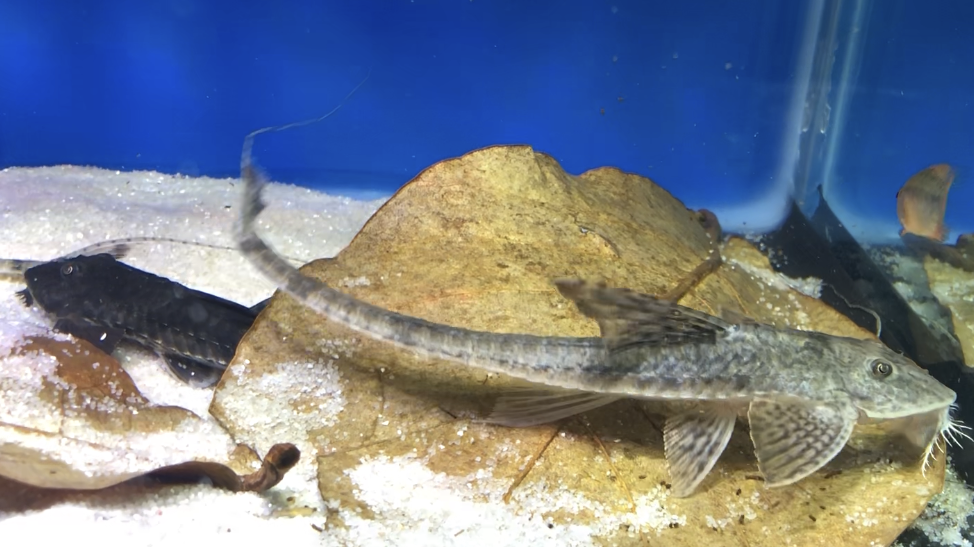
Loricariinae (Whiptail catfishes), the majority of these are social such as Farlowella (twig catfish), Sturisomatichthys (royal whiptail), even those which are not the steryotypical pleco/Loricariid like Rineloricariae. Although some species like Planiloricaria cryptodon can be particularly aggressive, it’s not entirely clear why, these are a species that spawns using their amazing barbels so not need to defend a spot. It is not sex specific but in caring for them around maturity they really need a larger tank or one per a tank.

Hypostominae, the largest subfamily with over 500 species. The majority of fishkeepers keep juvenile and with their illusive behaviour many interactions are easily missed. There is only a small number of gregarious species in this subfamily who lack any territorial tendencies e.g. Ancistrus ranunculus. Hypostominae are far from peaceful in general, sometimes fearsely defending an area from congeners (Hossain et al., 2018).

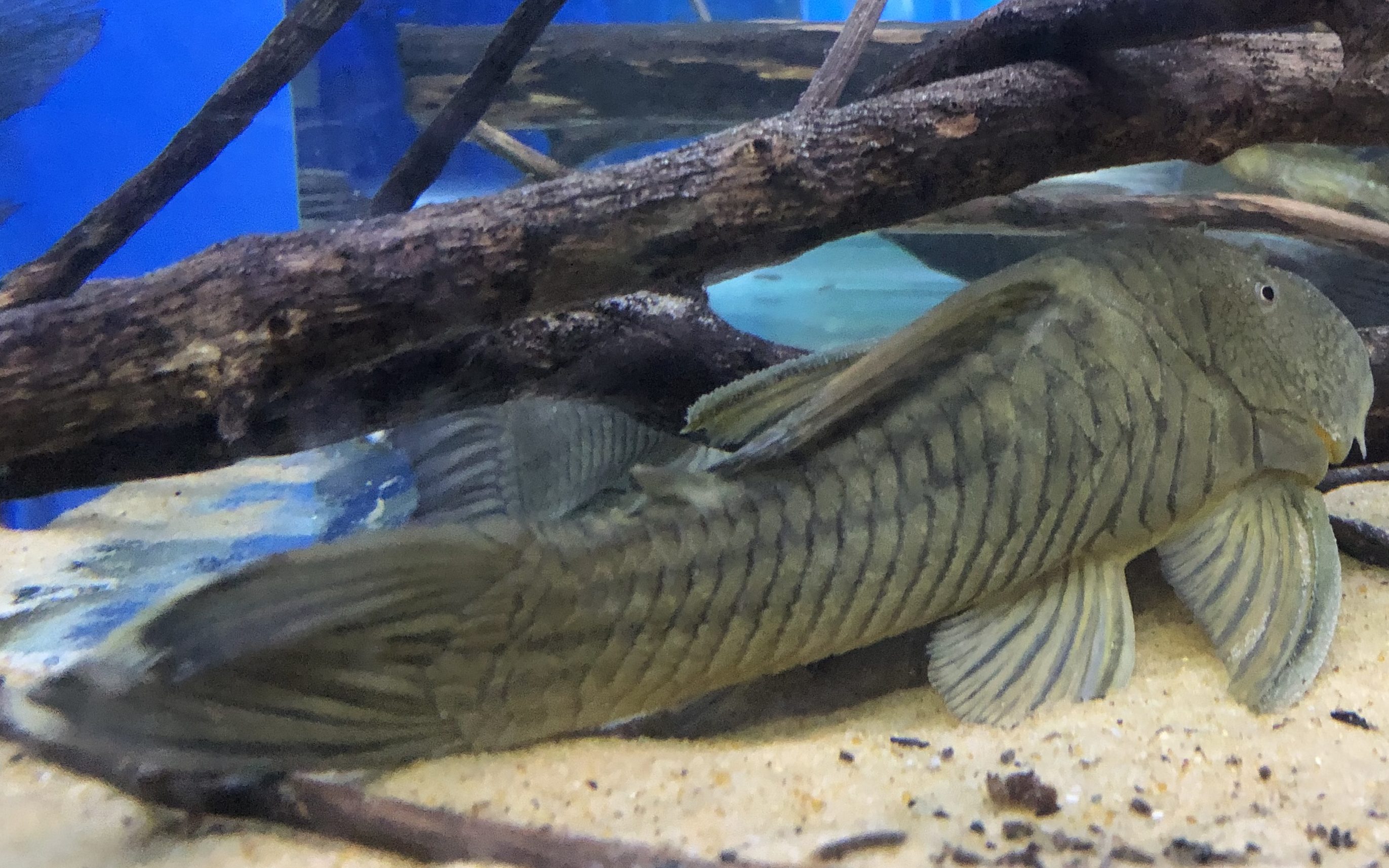
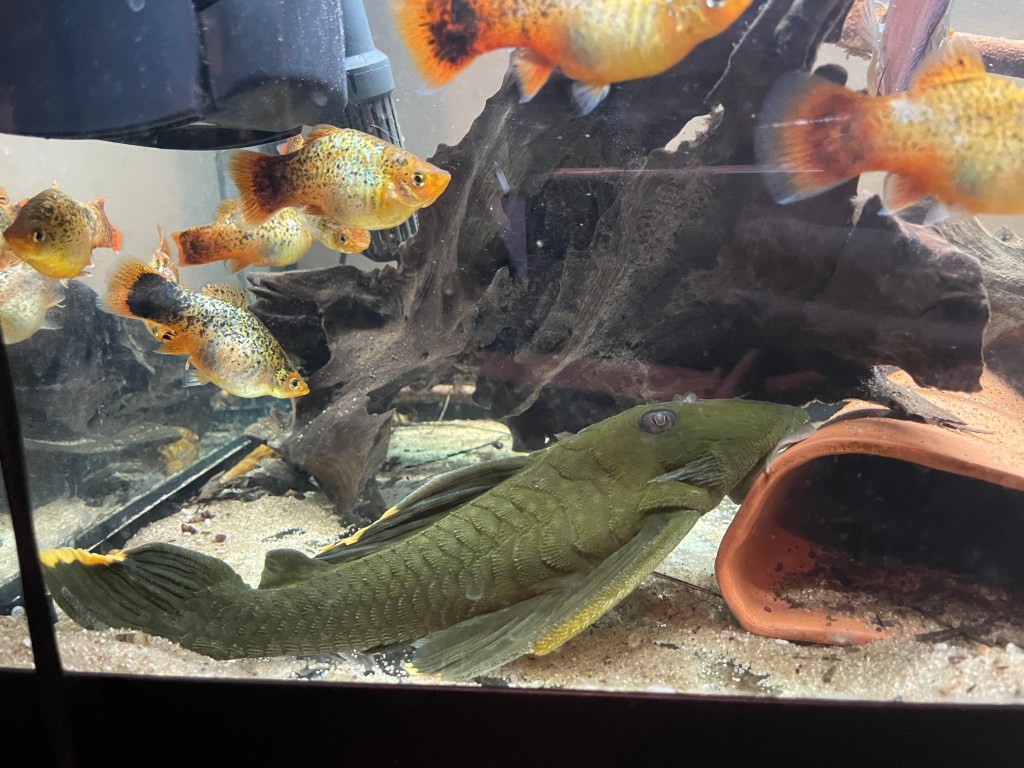
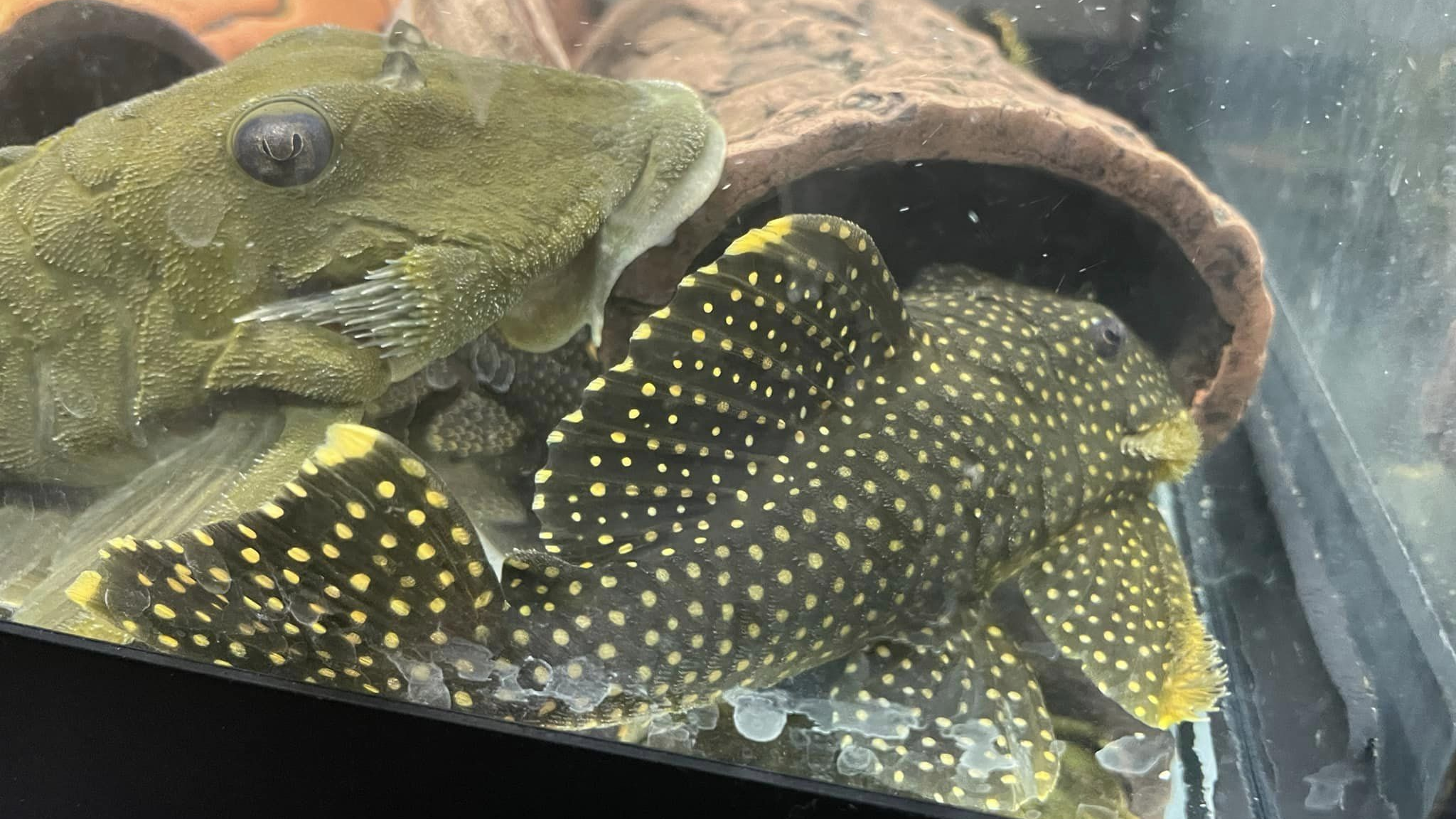
Hemiancistrus subvirdis (Green Phantom Pleco, L200) at Acres Aquatics, Wiltshire.

Hypostominae are crevice spawners in which a male defends a cave when there are fry or eggs within the space (Secutti, S., & Trajano, 2009). Although this doesn’t mean females do not express any aggression, both are territorial and will defend their space from any similarly shaped and sized fishes. It’s not difficult to understand why, as these fishes are likely defending food resources and the best caves to hide from predators regardless if used for spawning. The best grazing spots for many species are probably quite highly prized. Females are only spawning for short periods of time as play no role in brood care (Mendes et al., 2018), but as a result unlike males they tend to roam much larger areas, regarding aggression this poses a larger issue to the fishkeeper.

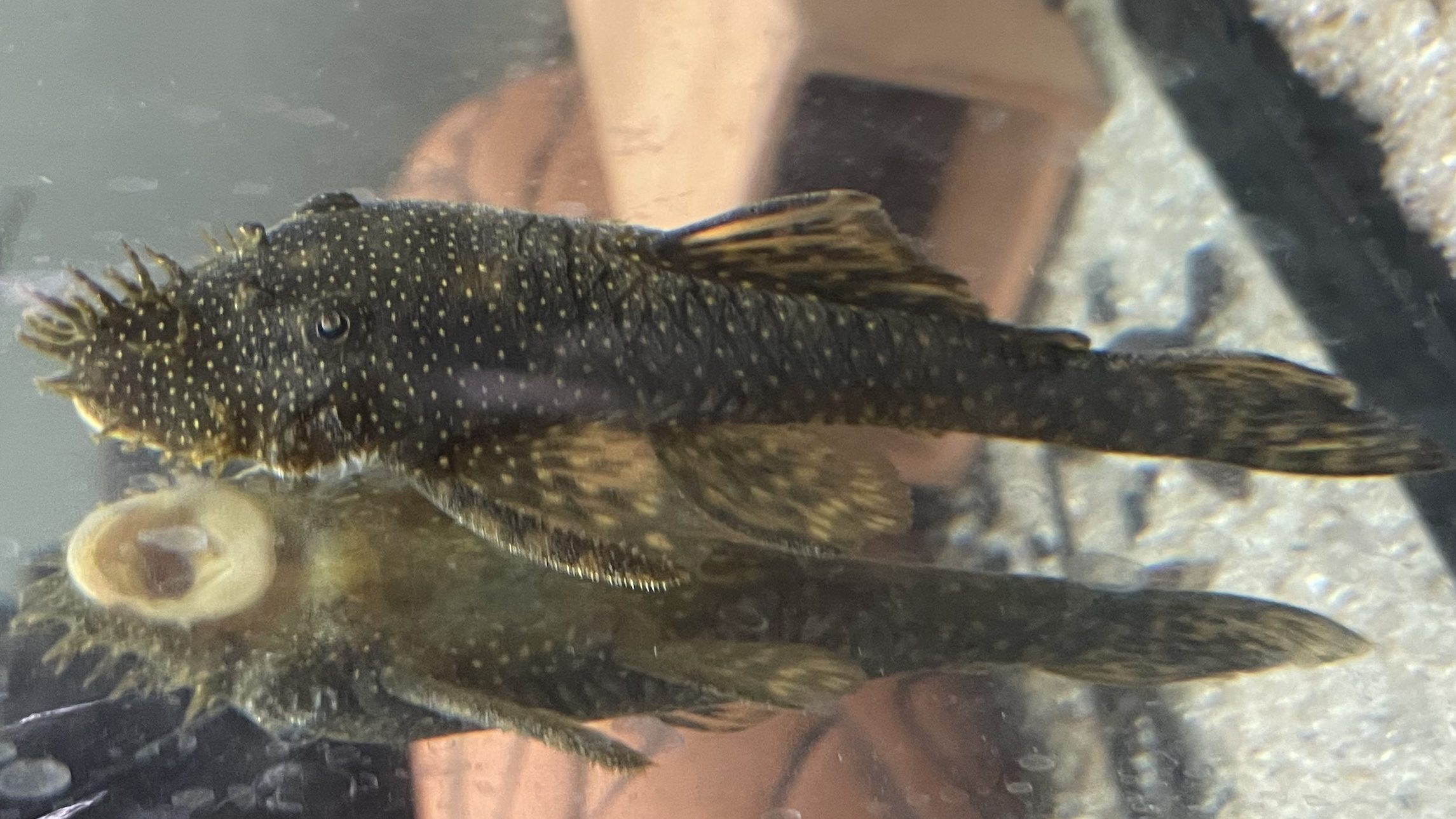
Some genera display much higher levels of aggression then others, the Acanthicus clade is particularly noted for aggression even in juveniles Pseudacanthicus will rasp on each other. Hypostominae are not loyal with their pairs although fishkeepers have noted aggression towards other fishes of both individuals in a pair preventing other fishes being added. I myself have quite a few mature Baryancistrus, in which the females I’ve seen lunge at other fishes, ram others into caves and intense shoving matches. In the common bristlenose, an Ancistrus, two mature females where this shoving match resulted in serious injuries. I have worked with an adult female Hypostomus luteus who couldn’t be housed with any other fishes within the restricted space of an aquarium after chasing many Pterygoplichthys non-stop.

Juvenile Pseudacanthicus serratus (Black mustang pleco)

Aggression is not restricted to males and for many species they are not easy to sex so for the majority of fishkeepers they would not know whether this fish is male or female. They are fishes who enjoy having their own space so plenty of caves and the space needed, it doesn’t mean multiple species can’t be kept together it just means consideration is needed. Aggression is also not limited to being intrasexual as individuals of different sexes will also display aggressive behaviours when not spawning.

The issue with Loricariidae is outside their phylogenetics and taxonomy we don’t know an awful lot about them so there is little research into their behaviour and the causes of territoriality between the two sexes.

Conclusion

Aggression is found throughout many clades of fishes and there are many different triggers for this behaviour. Where a male is aggressive it’s likely the females will be too and sometimes much more then those males.

References:

Braddock, J. C., & Braddock, Z. I. (1955). Aggressive behavior among females of the Siamese fighting fish, Betta splendens. Physiological Zoology28(2), 152-172.

Curry, M. R., Eady, P. E., & Mills, D. S. (2007). Reflections on mare behavior: Social and sexual perspectives. Journal of veterinary behavior2(5), 149-157.

Forsatkar, M. N., Nematollahi, M. A., & Bisazza, A. (2016). Quantity discrimination in parental fish: female convict cichlid discriminate fry shoals of different sizes. Animal cognition19, 959-964.

Hossain, M. Y., Vadas Jr, R. L., Ruiz-Carus, R., & Galib, S. M. (2018). Amazon sailfin catfish Pterygoplichthys pardalis (Loricariidae) in Bangladesh: a critical review of its invasive threat to native and endemic aquatic species. Fishes3(1), 14.

Mendes, Y. A., Lee, J. T., Viana, I. K., Rocha, R. M., & Ferreira, M. A. (2018). Reproductive biology of the tiger pleco Panaqolus tankei (Loricariidae) in a lentic system of the Amazon Basin. Journal of Fish Biology93(4), 711-714.

Secutti, S., & Trajano, E. (2009). Reproductive behavior, development and eye regression in the cave armored catfish, Ancistrus cryptophthalmus Reis, 1987 (Siluriformes: Loricariidae), breed in laboratory. Neotropical Ichthyology7, 479-490.

Walter, B., & Trillmich, F. (1994). Female aggression and male peace-keeping in a cichlid fish harem: conflict between and within the sexes in Lamprologus ocellatus. Behavioral Ecology and Sociobiology34, 105-112.
What is a pleco? To be a pleco or not to be a pleco

Common names are half a mystery to themselves, their origins and what species they really apply to and not. They lack regulations and frequently change spatially and temporally. You can’t expect to go to every country and people call a giraffe, Giraffa, a giraffe. It’s like you can’t expect common names to stay the same, a well known example would be the European robin, Erithacus rubecula was at one point called the redbreast and then that changed to robin redbreast and then just robin. The point maybe is common names change so much with little ability to track, plant common names do so frequently as well.

Pleco is one of those common names, originally Plecostomus but Plecostomus used to be the name of a genus. Much like many have created Cory as a common name for the genus Corydoras. The type and most notable species was Hypostomus Plecostomus (Linnaeus 1758), formally Plecostomus Plecostomus. Plecostomus is no longer a valid genus and has not been since 1980 where species were then placed in multiple other genera such as Ancistrus, Isorineloricaria, Loricariichthys and eventually Aphanotorulus. The majority of those previously known as Plecostomus were moved into Hypostomus, described in 1803 with the type Hypostomus guacari which is now understood to be a synonym of Hypostomus plecostomus (Fricke et al., 2023). Interestingly Pterygoplichthys, a genus that contains species known as the common plecos was never in the genus Plecostomus. This summarizing the main flaws of the arguments behind the common name. Ancistrus, bristlenose plecos are often argued not to be plecos but they had members once in Plecostomus whereas many such as Pterygoplichthys who there is no debate about were never placed in Plecostomus. Currently while there are none with the genus Plecostomus there is Hypostomus plecostomus and H. plecostomoides. Of genera Neoplecostomus, Microplecostomus and Nannoplecostomus exists, currently within Hypoptopominae, which is the same subfamily as Otocinclus. These genera add the other argument do people consider Otocinclus a pleco?

The other issue with the name pleco as a common name is where it is applied evolutionary.

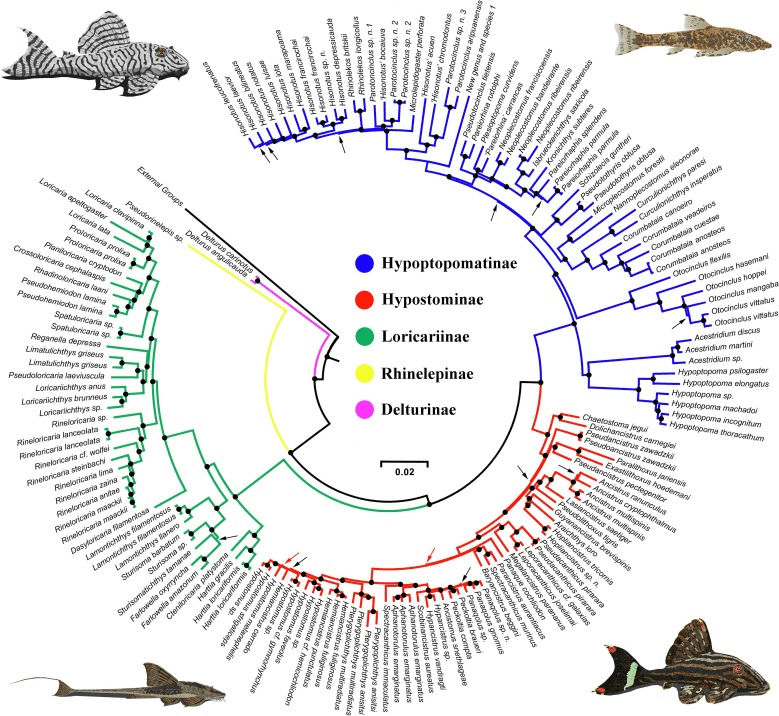
Phylogenetic tree using molecular data of Loricariidae from: Roxo, F. F., Ochoa, L. E., Sabaj, M. H., Lujan, N. K., Covain, R., Silva, G. S., … & Oliveira, C. (2019). Phylogenomic reappraisal of the Neotropical catfish family Loricariidae (Teleostei: Siluriformes) using ultraconserved elements. Molecular phylogenetics and evolution135, 148-165.

Names need some consistency so people can understand each other and that is what scientific names provide. The common name pleco also lacks consistency in where it places in the evolutionary/phylogenetic tree. If you exclude Ancistrus as so many do it is the only member of Hypostominae (coloured in red, Fig 1) to not be a pleco. But members outside of that subfamily are included, right at the earliest branches is Rinelepinae (coloured in yellow, Fig 1) it excludes a lot of later branching Loricariids. Not pictured here is also Pseudancistrus geniseiger who would be considered a pleco and also branches out this far (Lujan et al., 2015). Loricariinae and Hypoptopominae are often debated as if they are a pleco or not.

The problem is more that no one is quite referring to pleco in the same way under this pick and mix system. Some of us refer to the whole of Loricariidae as it would make sense to do, L numbers themselves also do as the L refers to Loricariidae. In Germany these fishes are often referred to as L Welse, meaning Loricariidae Catfish I assume as also members of Siluriforme, catfishes. It means everyone understands each other using this method even if being much broader, we should be recognising the diversity within Loricariidae anyway. In Loricariids and therefore plecos it is an international aspect of the fishkeeping hobby and many countries do not even use the term pleco.

References:

Britto, M. R. (2003). Phylogeny of the subfamily Corydoradinae Hoedeman, 1952 (Siluriformes: Callichthyidae), with a definition of its genera. Proceedings of the Academy of Natural Sciences of Philadelphia153(1), 119-154.

Fricke, R., Eschmeyer, W. N. & Van der Laan, R. (2023).  ESCHMEYER’S CATALOG OF FISHES: GENERA, SPECIES, REFERENCES. (http://researcharchive.calacademy.org/research/ichthyology/catalog/fishcatmain.asp). Electronic version accessed 18/10/2023.

Lujan, N. K., Armbruster, J. W., Lovejoy, N. R., & López-Fernández, H. (2015). Multilocus molecular phylogeny of the suckermouth armored catfishes (Siluriformes: Loricariidae) with a focus on subfamily Hypostominae. Molecular phylogenetics and evolution82, 269-288.

Roxo, F. F., Ochoa, L. E., Sabaj, M. H., Lujan, N. K., Covain, R., Silva, G. S., … & Oliveira, C. (2019). Phylogenomic reappraisal of the Neotropical catfish family Loricariidae (Teleostei: Siluriformes) using ultraconserved elements. Molecular phylogenetics and evolution135, 148-165.

The Medusa Pleco’s, Ancistrus spp. which do you have if one at all?

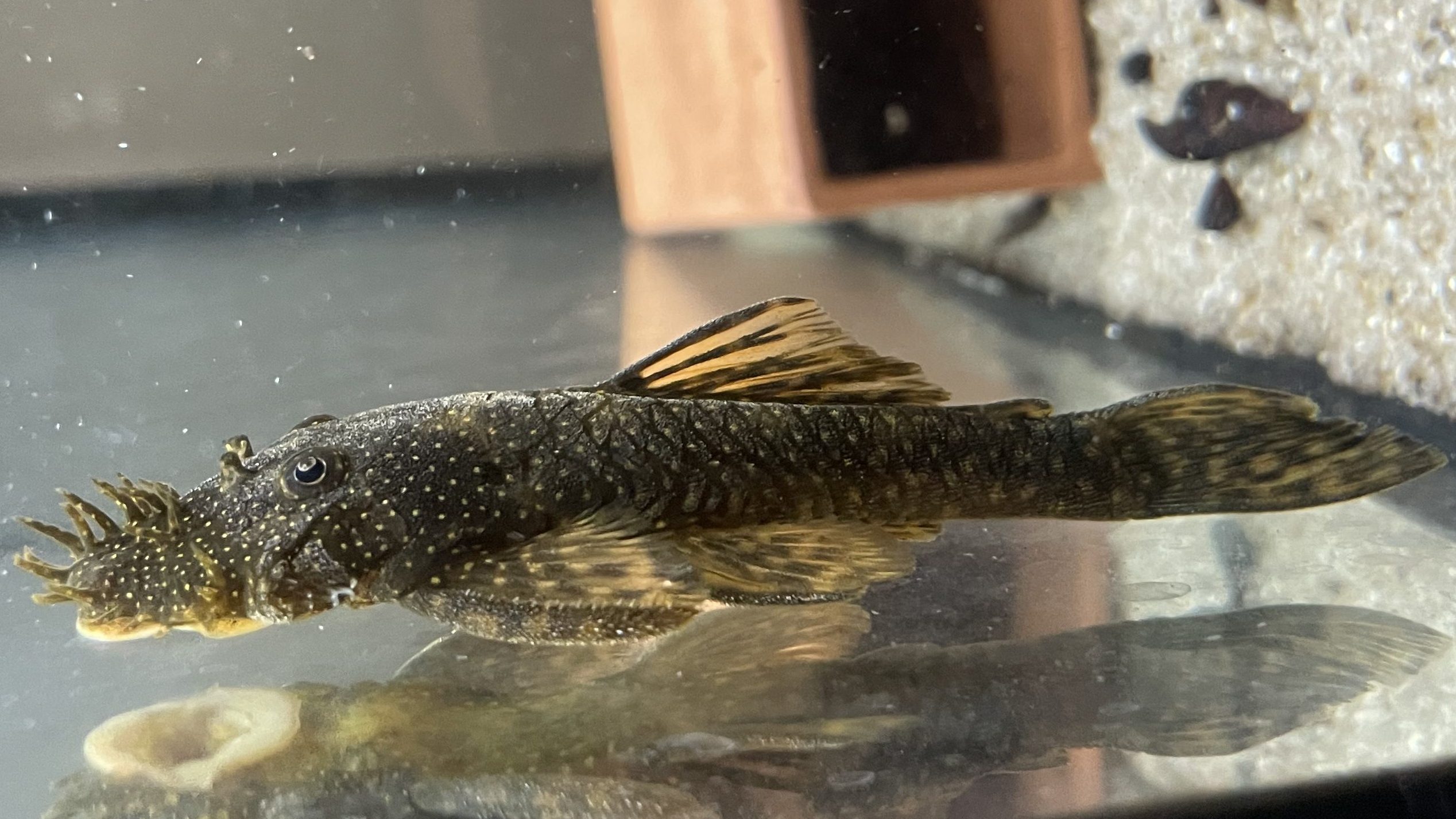
Ancistrus commonly known as bristlenose plecos, is a gigantic genus with around 50 spp. currently described but many more undescribed species. They are generally described with the presence of tentacles on the head unlike other Loricariids with the exception of Lasiancistrus tentaculatulatus. Tentacles are not a defining feature though for Ancistrus, there are many species who lack them and previously might have been known under the genera Xenocara.

A common misconception is the connection between tentacles and the sex of the fish which is maybe a half truth as for quite a few females tend to have small to no tentacles whereas males develop substantial (hypertrophied) tentacles. Of course there are exceptions here so lets discuss the mythical medusa plecos.

So who are the species called the medusa plecos:

Ancistrus ranunculus Muller et al., (1994)

Common name: L034

Location: Rio Xingu, Brazil

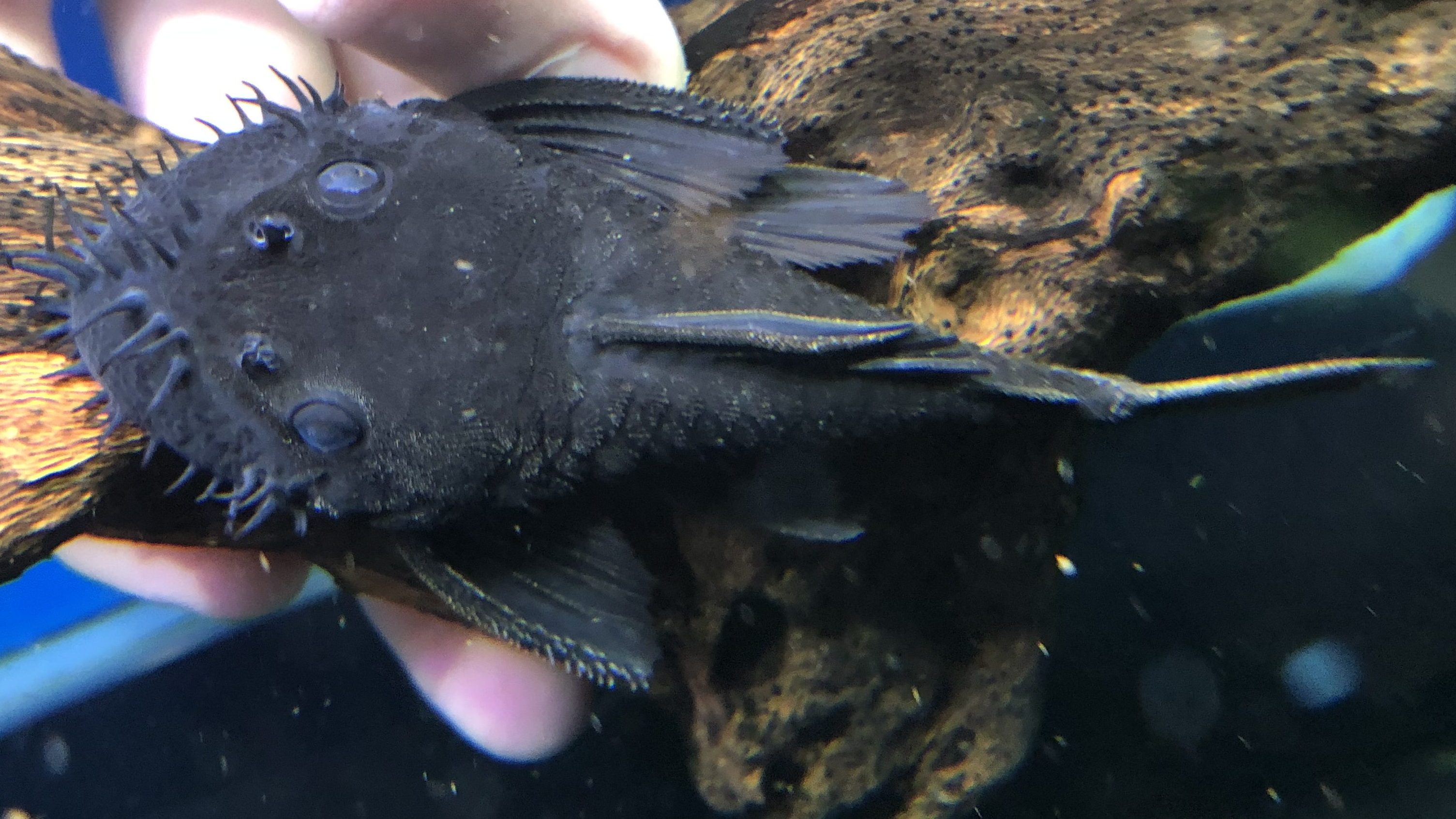
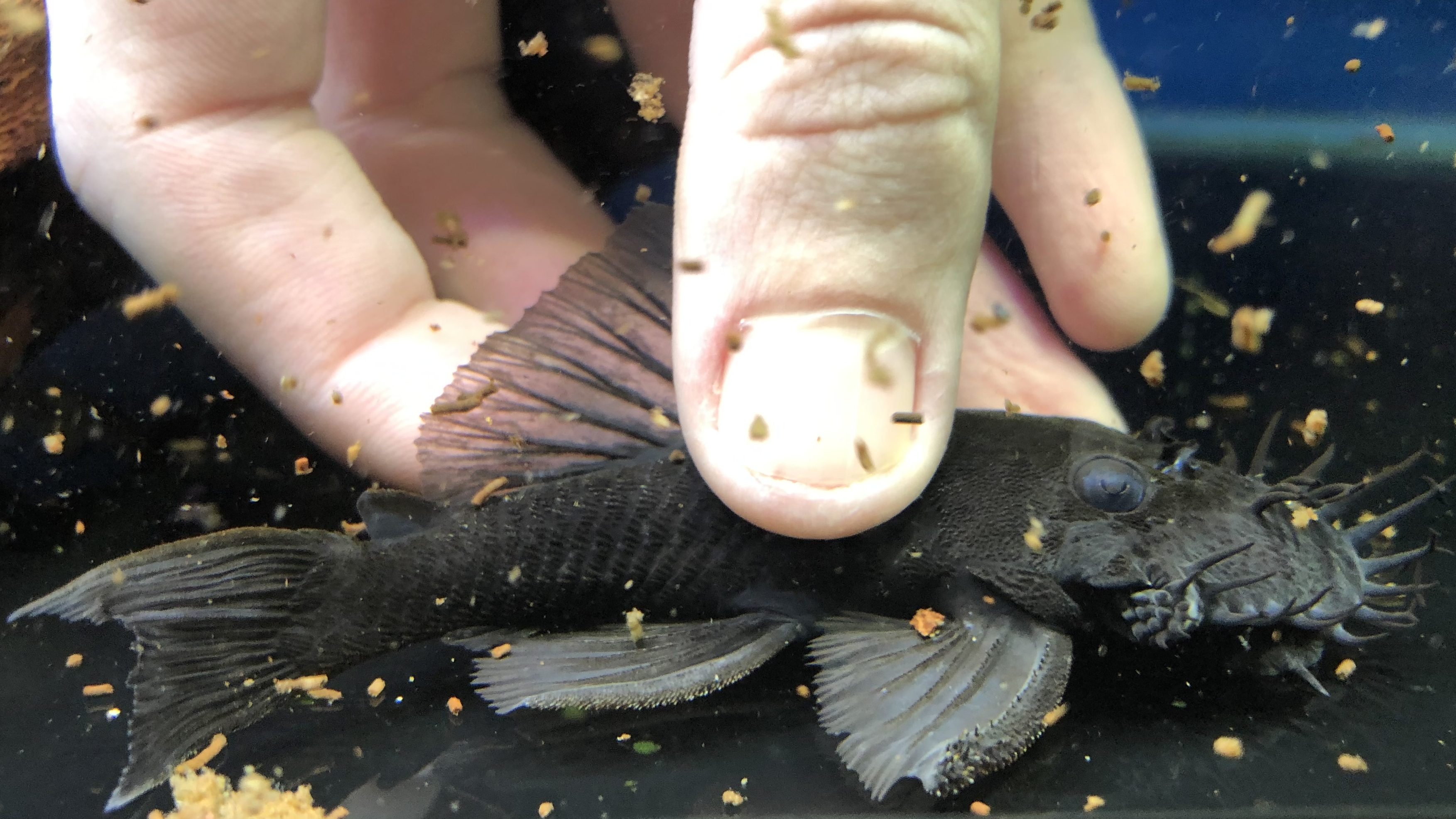
Diagnosis: This is one of the most extreme Ancistrus. This species displays a wide, flat, triangular head. The name ‘ranunculus refers to tadpole and this species definitely looks like the flattest and widest of tadpoles. Some what variable in body shape.

Males and females display very impressive tentacles, males do display often a double row of these tenatacles who are slightly larger. Either way females are often confused with being male.

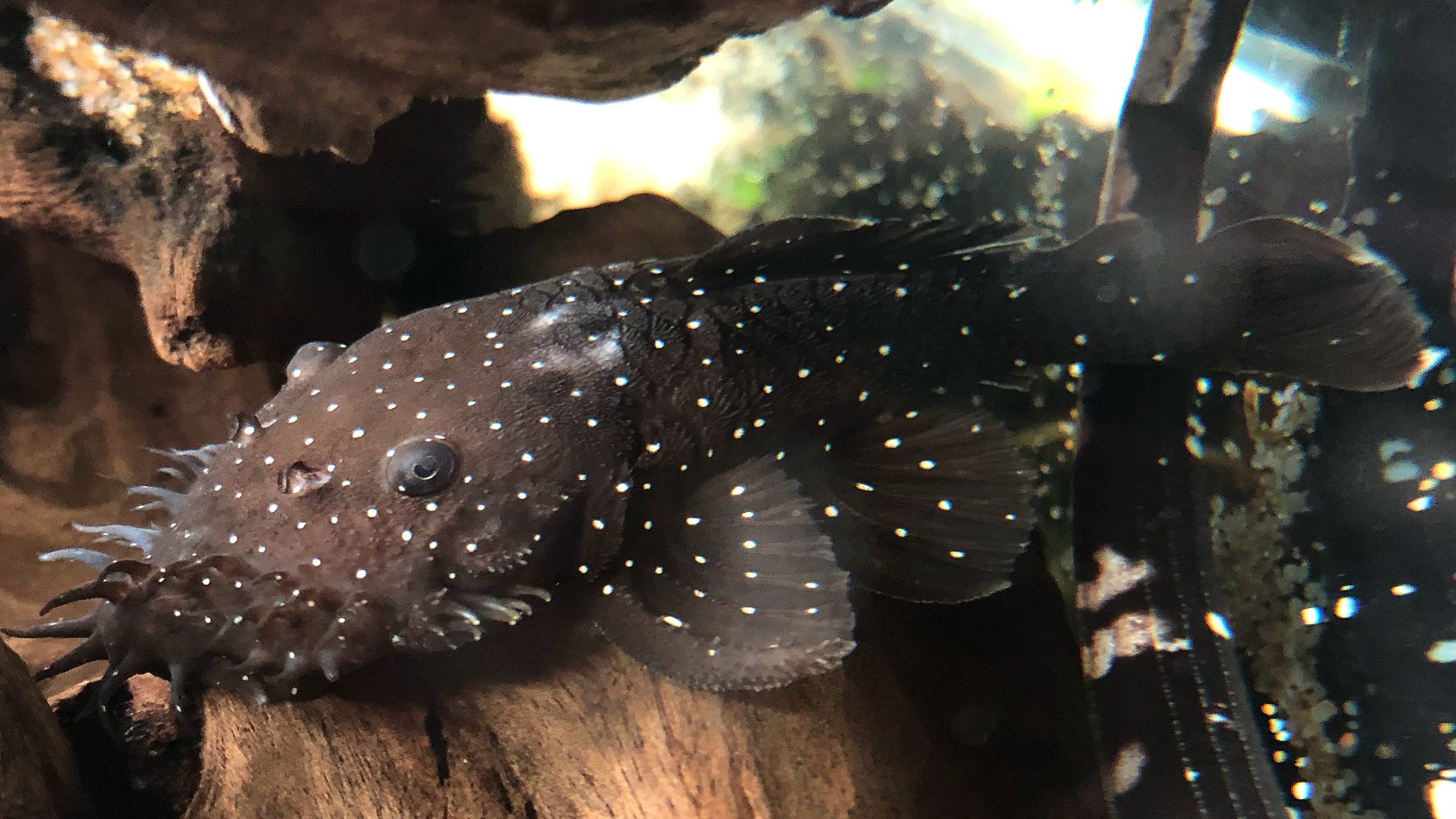
Colouring is solid black with maybe a little of a blue tinge but not much. When stressed they often express white patches. Juveniles can be spotted in some variants they can have very small almost invisible spotting to maturity.

Ancistrus sp.

Common name: L255, spotted medusa pleco.

Location: Rio Xingu, Brazil

Length: 15cm SL

Diagnosis: This is very very similar to Ancistrus ranunculus although displays spotting into maturity which doesn’t disappear when relaxed. They are very striking and could be confused if it was not for that flat, triangular body shape with A. dolichopterus and other spotted Ancistrus.

Debatable if a new species or not.

Ancistrus macropthalamus Pellegrin (1912)

Common name: LDA074, blue medusa pleco.

Location: Rio Orinoco, Columbia

Length: 7-10cm SL.

Diagnosis: Flat with larger but rounder head then Ancistrus ranunculus. It is very unusual in comparison regarding eye placement to many Ancistrus.

Colouration is much more with a blue tinge and can be spotted but usually not into maturity.

Tentacles tend to be equal size between both sexes.

Ancistrus aguaboensis Fisch-Muller et al. (2001)

Common name: L032, green medusa pleco.

Length: 5cm SL.

Location: Rio Tocatins, Brazil.

Diagnosis: Almost much more like the traditional small Wild Ancistrus. It is some what of a flat head but not particularly wide.

Colouration is a brown/green tone with white spots, nothing impressive.

Tentacles are very sexually dimorphic and while females have tentacles are much smaller.

The Locality Clue

I have to empathise how important the difference in locality is. Always ask where these fishes were imported from as they will not be imported from other countries then their locality listed here. Ancistrus ranunculus is a Brazilian species and this is the biggest mistake as people will sell the Columbian Ancistrus macropthalamus under this name and label.

Husbandry

Not the focus of this article but half a warning. The morphology of these Ancistrus is based on high velocity of water not just that but high temperatures, 28c or more. I’ve tried lower at 26c and it was an awful failure, I don’t just say this from my experience. The Rio Xingu for Ancistrus ranunculus and Ancistrus sp. ‘L255’ rarely if ever dips below 28c (Rofrigues-Filho et al., 2015). Even below they struggle to feed. The other aspect is that as temperature increases oxygen saturation decreases and these are high velocity fishes so a good current is important either a powerhead, wavemaker or a strong air pump.

Many of these Ancistrus are gregarious, social but none more so then the Ancistrus ranunculus and Ancistrus sp. ‘L255’. It came to my notice when I saw so many people struggling but everyone with success had theirs as a group. Even in the ecological and species description of Ancistrus raununculus notes them as gregarious listed as unlike Hypancistrus zebra (Muller et al., 1994). These fishes generally are social in their own space but it goes elsewhere to where they might struggle to feed otherwise.

Diet might be one of the most important aspects of many fishes husbandry, it also is maybe the most forgotten. Most Ancistrus lack any dietary information although Ancistrus ranunculus has some records suggesting they are almost entirely algivores (Zuanon, 2019). Maybe there is evidence to suggest much more diversity to the genus. Generally this genus is very specialist and I cannot empathise the importance of Repashy soilent green.

Ancistrus is one of the most misunderstood genera maybe because everyone sees the common bristlenose, Ancistrus sp. who is largely much more hardy. There are slow feeding species who don’t compete well but could be much more successful in captivity if not treated like side on. They definitely require a tank being considered around them and while I’d love to see more species in the hobby I’d love there be more demand for treating this genus as it is, a pain!

References:

Fisch-Muller, S., Mazzoni, R. & Weber C. (2001). Genetic and morphological evidences for two new sibling species of Ancistrus (Siluriformes: Loricariidae) in upper rio Tocantins drainage, Brazil. Ichthyological Exploration of Freshwaters. 2(4): 289-304.

Muller, S., Rapp Py-Daniel, L. H. and Zuanon, J. (1994). Ancistrus ranunculus, a new species of loricariid fish (Siluriformes: Loricariidae) from the Xingú and Tocantins rivers, Brazil. Ichthyological Exploration of Freshwaters. 5 (4): 289-296.

Pellegrin, J. (1912). Description d’un poisson nouveau de l’Orénoque appartenant au genre Xenocara. Bulletin de la Société Zoologique de France. 37:271-272.

Rodrigues-Filho, J. L., Abe, D. S., Gatti-Junior, P., Medeiros, G. R., Degani, R. M., Blanco, F. P., Faria, C. R. L., Campanelli, L., Soares, F. S., Sidagis-Galli, C. V., Teixeira-Silva, V., Tundisi, J. E. M., Matsmura-Tundisi, T. and Tundisi, J. G. (2015). Spatial patterns of water quality in Xingu River Basin (Amazonia) prior to the Belo Monte dam impoundment. Brazilian Journal of Biology, 75(3).

Zuanon, J. A. S. (1999). “História natural da ictiofauna de corredeiras do rio Xingu, na região de Altamira, Pará” Unpublished Thesis. Dept. Ecologia Universidade Estadual de Campinas : Campinas, SP

Feeding Loricariids – The Basics: The substrate dwellers.

When people think of plecos they think of the term ‘suckermouth catfish’, yet these are the total exception with little to no ability to attach to any surface.

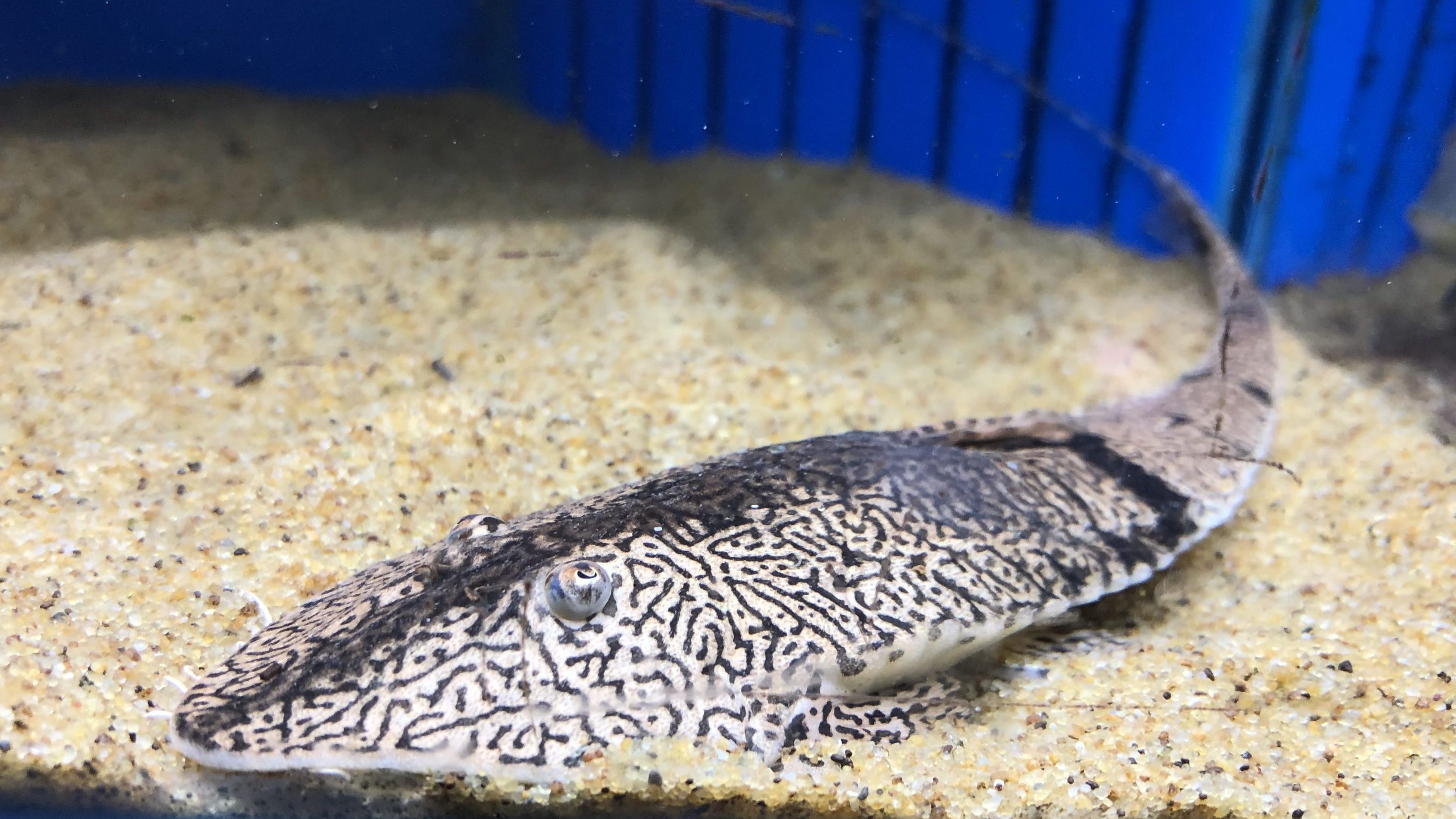
Here I am referring to those Loricariids who spend their time largely on the substrate often with their ornate mouths with many long and short barbels also known as cirri (Rojas-Molina et al., 2019). Unlike most other Loricariids, plecos these fishes are not crevice spawners and in some species the ornate cirri are used by the males to hold the eggs (Corvain & Fisch-Muller, 2007). There is one exception here, I tend to classify Isorineloricaria and Aphanotorulus (previously known as Squaliforma) and largely known as the Thresher plecos, these are in the subfamily Hypostominae where the majority of well known Loricariids, plecos place. While the majority of this category are in the subfamily Loricariinae often known as whiptail catfish.

So this is not so much a nutritional, dietary category as much as to where they feed and to me that makes a massive difference. Scientifically there isn’t the greatest understanding of this group either but hopefully with future advances in the coming years we can. So obviously I will have to edit this one day.

Many of these species forage and locate food by processing the substrate a bit like Panaque process wood in search of their food. Using their jaws they filter food objects from that substrate. All of these species really need a sandy substrate, not just because many need to hide in it but also the enrichment of naturally removing food from it.

There are both algivores/detritivores and carnivores in this category. Ofcourse I definitely recommend reading my article on algivores and detritivores but their mode of feeding limits a lot.

What genera are in this category?

  • Aphanotorulus (Squaliforma): Generalist detritivore
  • Crossoloricaria
  • Hemiodontichthys acipenserinus: Maybe a carnivore?
  • Isorineloricaria: Likely generalist detritivore.
  • Loricaria
  • Planiloricaria cryptodon: Either carnivore or feeds on seeds.
  • Pseudohemiodon: Suggested to be periplakton and algaes but could also feed on seeds.
  • Reganella
  • Rineloricaria (To an extent): Not exactly purely the substrate but do interact a lot with it.

There isn’t that many and I think this niche in many habitats are often catered for by other groups of fishes.

Anything these fishes feed needs to sink but that’s usually a given for Loricariids and ideally not large food items. Some of these genera have few to any teeth and very small jaws so cannot break into large food items. I’m not even sure we entirely know the actual mode of feeding they use and for research they are not the cheapest to obtain. For Isorineloricaria and Aphanotorulus their jaws are large and strong so it doesn’t make the largest amount of difference.

There are multiple genera here with morphology/anatomy that is unexplained, split between granivores (Seeds) or potentially molluscivorous (Gastropods like snails and bivalves) we just don’t know. We do know from a previous article that hardness of food items can matter so I think either way providing both would be beneficial, seeds such as from non-citrus fruits or apples, such as blue berries. Pest snails, no harm in having them as suggested in my snail article they can be a benefit. These are great snails for such species as easy for them to break down with the pharyngeal jaws.

When it comes to carnivores their interaction with the substrate does hint to them feeding on those invertebrates such as annelids and insect larvae that spend a considerable amount of time there.

It’s so difficult as we are making a lot of assumptions as to what they are eating and here I will treat them as the same. There is likely a lot of overlap at least. So as per the previous article into algivores and detritivores I highly recommend a good basic diet to build off. This will provide the essential nutrition to work off.

Anyway suggested basis diets:

  • Repashy Soilent Green and Bottom scratcher: Large diversity of algaes and high amounts of these algaes in Soilent Green. Bottom Scratcher on the other hand is very high in invertebrate items. They are higher up the list of ingredients so make up a lot of these diets. Easy to access for the majority of the world with many distributors. A gel diet so can be mixed to different consistencies and cooked to a jerky. It sinks and is very easy to break apart even if large by many of these species. The issue is what to which species if their diet is unknown.
  • In The Bag, Tropical Fish UK, Pleco Pops! Algae Grazer or Crickie-Dough: Over 75% algaes which is a very high amount for the algae based diet. The Crickie-Dough is even better I’d argue then bottom scratcher as high in crustaceans which is what most of these fishes would eat in the wild. While Repashy Bottom scratcher does provide a mollusc it is not closely related to gastropods or bivalves. Also a gel diet, the gelling agent used is brilliant as holds for an extremely long time, over 24 hours which is longer then any other gel food or one you can make your own. Cocoa powder is one is the most interesting and brilliant ingredients!
  • New Life Spectrum, Algaemax: Not to be confused with others of the same name so check the ingredients. Does contain a lot of algal ingredients but I can’t comment further due to UK availability.
  • C.E Essentials, Naturekind: While aimed at discus, Symphysodon it does contain a lot more algaes then other diets.
  • Should you make your own? You can but and that is a big but narrowing down the gelling agent that can last a few hours. This is difficult and takes time. Making your own diet commands research into nutrition and I’m really just only a beginner I think in that. It’s a large initial financial input as the ingredients particularly algaes are not cheap. This might be the only solution for some people in many countries and it is a debate for me how to help there.

Now to additions or supplements:

Frozen foods: A diversity of them would be brilliant so they can really feed off the substrate. Avoiding mussels as high in thiaminase and deficient in thiamine.

Live foods: Avoid any that move around the water column but those that focus in the substrate would be brilliant and offer more natural enrichment particularly black worms and tubifex.

Nori: Once it’s no longer a sheet I’d be inclined to suggest this as it rests in the substrate eventually, maybe not the best.

Earthworms: For larger species these might be found at the reptile store under the name Dendrobaena but definitely not to be missed. Do not forget though as they can survive underwater for some time if left and forgotten.

This sounds like a very limited list but compared to traditional algivores and detritivores frozen foods alone offers a lot more!

References:

Covain, R., & Fisch-Muller, S. (2007). The genera of the Neotropical armored catfish subfamily Loricariinae (Siluriformes: Loricariidae): a practical key and synopsis. Zootaxa1462(1), 1-40.

Rojas-Molina, Y. A., Provenzano-Rizzi, F., & Ramírez-Gil, H. (2019). A new species of whiptail armored catfish, genus Pseudohemiodon (Siluriformes: Loricariidae) from the Orinoco River basin, Llanos region of Colombia and Venezuela. Neotropical Ichthyology17, e180160.

Feeding Loricariids – The Basics. Part 1: Algivores, Detritivores and the Wood ‘Eaters’.

This is a seriously large topic with 1,050 species according to Catalog of Fishes, so it’s not a simple answer. The majority of Loricariids are algivores and detritivores (Lujan et al., 2012). Even within detritivory and algivory there is partitioning (Lujan et al., 2011), this does mean they will not be feeding on the same thing. There is little research if to whether their diet changes with age but it seems there might be slight changes, certainly not towards any omnivorous/carnivorous diet as adults still had algae within their gut (Nonogaki et al., 2007), there is although evidence for seasonal shifts in diet (Mazzoni et al., 2010).

Baryancistrus xanthellus (Gold Nugget Pleco)

Here as I cannot really discuss all species and we are still in early days of understanding Loricariid diets I will present different categories with diets and suggestions to further supplement their diet.

Contents:

  1. Algivores/Detritivores
  2. What brands can I recommend as this basis to the diet, the foundations?
  3. What genera are included in this (off the top of my head)?
  4. Quick comment on wood ‘eaters’
  5. So lets discuss supplements and additions to further cater for these fishes diets.
  6. Gut Biota, what and why?
  7. References:

Algivores/Detritivores

It’s almost impossible to separate algivores and detritivores when it comes to Loricariids as there is so much overlap between the two categories but of course there is partitioning. It’s just we can’t really entirely cater for that partitioning. A lot of what is contained within detritus is this matrix of bacteria, protozoa, algaes and other microbes. In addition there are species who will feed more on algaes and some certain algaes like cyanobacteria e.g. Lasiancistrus caucanus (potentially L. mayoloi; Valencia & Zamudio, 2007), while others who might focus more on bacteria or fungi. We really don’t entirely know how much subdivision there is beyond the fact it exists. This is maybe the most fascinating dietary category as few other groups of fishes can do it like Loricariids can.

Chaetostoma sp. from Pier Aquatics, Wigan.

So, this category fills up the majority of Loricariids (Lujan et al., 2012) yet is maybe the most misunderstood or catered for. Bacteria, protozoa and other microbes are not really available in any commercial diets or even as ingredients which is very limiting leaving just algaes. We do know algaes are great in nutrition given just one species of algae replaced the nutritional requirements of a commercial diet which contained fish meal, cereals but only very few algaes in small volumes (Vucko et al., 2017).

The common misconception is that algaes are low in protein, yet they can be very high (Chen et al., 2022). This misconception comes from their similarity to plants but only green algaes are closely related to plants, while the term algae includes many other groups e.g. spirulina which is a cyanobacteria. Plants used in fish feeds might even lack many essential amino acids or contain anti-nutritional factors (Trevi et al., 2023). Algaes aren’t just high in protein but also very high in vitamins, minerals and essential fatty acids, to top the list of why algaes are great is their benefits on fish pigmentation (Alagawany et al., 2021; Trevi et al., 2023; Chen et al., 2022). So certainly an ingredient that shouldn’t be forgotten.

As we are talking fishes that feed on algaes as a large amount of their wild diets I can’t see how these simple ingredients are not useful. There is the issue of palatability and I have largely noticed they might struggle to recognise food not growing on a surface so in a wafer or pellet as algaes hence some taxa like those which are carnivores seem to do better then the very strict algivores.

So all we have to go off is a very small set of algaes but what should you look for in a main staple diet?

A main diet is what I see as the foundations of any fish food, this will contain all the main nutrition, vitamins and minerals. I understand additionally that different foods are limited around the world and cost also varies which makes it incredibly difficult for this dietary group.

Parancistrus aurantiacus (Xanto pleco)

What brands can I recommend as this basis to the diet, the foundations?

  • Repashy Soilent Green and Repashy Super Green: Large diversity of algaes and high amounts of these algaes, I believe 80% in Super Green. They are higher up the list of ingredients so make up a lot of these diets. Easy to access for the majority of the world with many distributors. A gel diet so can be mixed to different consistencies and cooked to a jerky.
  • In The Bag, Tropical Fish UK, Pleco Pops: Over 75% algaes which is a very high amount. Also a gel diet, the gelling agent used is brilliant as holds for an extremely long time, over 24 hours which is longer then any other gel food or one you can make your own.
  • New Life Spectrum, Algaemax: Not to be confused with others of the same name so check the ingredients. Does contain a lot of algal ingredients but I can’t comment further due to UK availability.
  • C.E Essentials, Naturekind: While aimed at discus, Symphysodon it does contain a lot more algaes then other diets.
  • Should you make your own? You can but and that is a big but narrowing down the gelling agent that can last a few hours. This is difficult and takes time. Making your own diet commands research into nutrition and I’m really just only a beginner I think in that. It’s a large initial financial input as the ingredients particularly algaes are not cheap. This might be the only solution for some people in many countries and it is a debate for me how to help there.

What genera are included in this (off the top of my head)?

  • Acanthicus (maybe, the rest of that group isn’t)
  • Acestridium
  • Ancistrus
  • Aphanotorulus
  • Baryancistrus
  • Chaetostoma
  • Cordylancistrus
  • Guyanancistrus
  • Hemiancistrus
  • Hypancistrus
  • Hypoptopoma
  • Hypostomus
  • Isorineloricaria
  • Lasiancistrus
  • Nannoptopoma
  • Otocinclus
  • Panaqolus
  • Panaque – Largely specialist for extracting microbes and fungi from wood.
  • Parancistrus
  • Parotocinclus
  • Peckoltia
  • Pogonopoma
  • Pseudancistrus
  • Pseudorinelepis
  • Pterygoplichthys
  • Rhinotocinclus
  • Rinelepis
  • Spectracanthicus – maybe excluding S. murinus
  • Sturisoma
  • Sturisomatichthys

Obviously I might forget a few or they aren’t even seen in the trade. There is also a lot we haven’t found on these fishes diets yet. I also haven’t included some that I put other niches for other reasons e.g. the substrate dwellers. I also can’t use common names as I’d end up making a list of hundreds for every common name there is.

Panaque nigrolineatus (watermelon pleco, one of the many Royal plecos)

Quick comment on wood ‘eaters’

These fishes have been proven as the article linked here cites to not digest wood or use it for digestion. Instead these genera Panaque, Panaqolus, the Hypostomus cochliodon group and Lasiancistrus heteracanthicus digest the microbes within wood in the wild but are just finding it in a different place. They do though consume and digest fungi. If wood within the aquarium had this diversity of microbes it’d decay very rapidly in captivity and it clearly doesn’t given a bit of wood can last years or over a decade.

So lets discuss supplements and additions to further cater for these fishes diets.

  • Vegetables: The most well known and there are always long lists of what they can be fed. They should never replace the algaes as nutritionally do not even compare as even suggested in Trevi et al. (2023). There is always a use in having something when a fish is skinny or newly imported and just feeding, I particularly find sweet potato and courgette great there but it shouldn’t be relied on. For larger species additionally as just padding out their diet and adding to. Given these fishes are rarely if ever feeding on plants in the wild then there is a lot of nutrition that is not easily accessible from plants.
  • Mushrooms: Now I separate these as the only fungi available to use aquarists, for those wood ‘eaters’; Panaque, Panaqolus, Hypostomus cochliodon group and Lasiancistrus heteracanthicus they can be of massive use given they feed on fungi in the wild. Potentially other algivores/detritivores might additionally feed on these but it is difficult to identify for many scientists if they do. I definitely recommend removing before 12 hours as it smells strong after being in an aquarium.
  • Additional algaes: Algae powders can be brought and can be mixed in with diets like Repashy soilent green or super green to bulk them up. Just bare in mind they might expire quicker then the Repashy and the amount of gelling agent might not be sufficient for it to hold well with other ingredients. I wouldn’t recommend adding much and any dried seaweeds would need to be blended.
  • Nori: All I can say is great if they will eat it but I think how easily it breaks down in the water column. So for some genera like Pterygoplichthys who are reasonably fast to feed it might actually work.
  • Seeds: These feature reasonably in Hypancistrus diets but given monocots and dicots covers most plants it could mean a lot (Armbruster et al., 2007). I think there is no harm in trying seeds such as sunflower seeds but also small low acidic fruits such as blueberries or blackberries. It could be that these fishes are actually consuming fruits. I have seen multiple examples where Loricariids do feed on these small fruits not just Hypancistrus but Panaqolus seems keen on these food items. I’d definitely not look to citrus fruits, large amounts of fruit and apple seeds are best avoided.
  • Growing rocks in the sun for algae: This can really work and is great for Otocinclus, it’s just being able to do so and the surface growing enough.
  • Botanicals: These could provide benefits but in large amounts or certain types add a lot of complexity to an aquarium. I find additionally the biofilms botanicals produce actually vary in how they appeal to different fishes. They definitely wont sustain anything other then maybe a few of the smallest fish.
  • Nettles: Potentially a great resource that needs to be explored more. Definitely dry than blanch for a few minutes in hot water for a few minutes to remove the sting.
  • General fish foods: These typical diets might not always be bad if bulking out a diet particularly during periods where a fish needs more food.

Gut Biota, what and why?

This is an emerging science regarding to biology but has barely touched the ornamental fish industry beyond probiotics should they work. There is a lot to unpack and I think there is a benefit in having other fishes and their waste providing gut biota. These gut biota might have been lost during importing or a period of stress and poor diet. As much as gut biota might change with introduction after stressful periods diet does also influence this.

The common bristlenose, Ancistrus sp. male.

Wood

I generally in my day job look at Loricariid diets in the literature and other then the previously mentioned genera have never seen wood in the guts of other species. It is not needed and even those species who consume wood as a byproduct do not use it for digestion (Lujan et al., 2011) so is not needed in a diet. Even more so cellulose and lignin were proven not to be digested or used in digestion and these are added into many diets, so these are more wasted space and added waste to any fishes diet.

At the end of the day these are massively misunderstood fishes as is their diet. There are many more Loricariids to understand here such as the carnivores and substrate feeders.

References:

Alagawany, M., Taha, A. E., Noreldin, A., El-Tarabily, K. A., & Abd El-Hack, M. E. (2021). Nutritional applications of species of Spirulina and Chlorella in farmed fish: A review. Aquaculture542, 736841.

Armbruster, J.W., Lujan, N.K. and Taphorn, D.C., 2007. Four new Hypancistrus (Siluriformes: Loricariidae) from Amazonas, Venezuela. Copeia, 2007(1), pp.62-79

Chen, F., Qian, J., He, Y., Leng, Y., & Zhou, W. (2022). Could Chlorella pyrenoidosa be exploited as an alternative nutrition source in aquaculture feed? A study on the nutritional values and anti-nutritional factors. Frontiers in Nutrition9, 1069760.

Lujan, N. K., German, D. P., & Winemiller, K. O. (2011). Do wood‐grazing fishes partition their niche?: morphological and isotopic evidence for trophic segregation in Neotropical Loricariidae. Functional Ecology25(6), 1327-1338.

Lujan, N. K., Winemiller, K. O., & Armbruster, J. W. (2012). Trophic diversity in the evolution and community assembly of loricariid catfishes. BMC Evolutionary Biology12(1), 1-13.

Mazzoni, R., Rezende, C. F., & Manna, L. R. (2010). Feeding ecology of Hypostomus punctatus Valenciennes, 1840 (Osteichthyes, Loricariidae) in a costal stream from Southeast Brazil. Brazilian Journal of Biology70, 569-574.

Nonogaki, H., Nelson, J. A., & Patterson, W. P. (2007). Dietary histories of herbivorous loricariid catfishes: Evidence from δ 13 C values of otoliths. Environmental Biology of Fishes78, 13-21.

Valencia, C. R., & Zamudio, H. (2007). Dieta y reproducción de Lasiancistrus caucanus (Pisces: Loricariidae) en la cuenca del río La Vieja, Alto Cauca, Colombia. Revista del Museo Argentino de Ciencias Naturales nueva serie9(2), 95-101.

Van der Laan, R. & Fricke, R. (2023).  ESCHMEYER’S CATALOG OF FISHES: FAMILY-GROUP NAMES. (http://www.calacademy.org/scientists/catalog-of-fishes-family-group-names/). Electronic version accessed 04 October 2023.

Vucko, M. J., Cole, A. J., Moorhead, J. A., Pit, J., & de Nys, R. (2017). The freshwater macroalga Oedogonium intermedium can meet the nutritional requirements of the herbivorous fish Ancistrus cirrhosus. Algal research27, 21-31.

Trevi, S., Uren Webster, T., Consuegra, S., & Garcia de Leaniz, C. (2023). Benefits of the microalgae Spirulina and Schizochytrium in fish nutrition: a meta-analysis. Scientific Reports13(1), 2208.

The Golden Nugget, Mango/Magnum and the Snowball plecos, Baryancistrus.

The gold nugget, Baryancistrus xanthellus one of the most well known and popular Loricariids, plecos within the aquarium trade and maybe one of the most misunderstood. They are often challenging to keep and are rarely grown to maturity and even less frequently bred.

Baryancistrus xanthellus is a member of the genus Baryancistrus with a the type species being Baryancistrus niveatus, a species we do not see in the aquarium trade frequently. A type species is basically the species that defines the genus, in a way. There are 12 described species within this genus although phylogenetically/evolutionarly two of these do not belong in this genus, Baryancistrus demantoides and Baryancistrus beginni of which both are more closely related to the ‘Hemiancistrus’ clade (Lujan et al., 2015; Fig 1).

Figure 1: Phylogeny of Hypostominae featured in Lujan et al., (2015).

Because of this I wont be discussing either of those two species who are morphologically very different and their care is additionally different.

Additional to these described species are several undescribed species within the L number system, as many do not reach the aquarium trade the only undescribed species I’ll discuss here is Baryancistrus sp. ‘L142’

Like all Loricariids, Baryancistrus is exclusive to South America, the majority of this genus particularly is located in Brazil. They are a large bulky fish with a deeper head, not so much a defining feature because it is not present in all species and found also outside of the genus is a membrane between the dorsal and adipose fin. Their heads are not particularly wide but they are a strong appearing fishes. All species have spots to one degree or another, in Baryancistrus chrysolomus, the mango/magnum pleco these are rarely visible.

Like the undescribed species only two of the described species tend to occur in the aquarium trade so it would not be worth discussing the others.

So what are the three species:

Scientific name: Baryancistrus chrysolomus

Common names: Mango pleco, magnum pleco, L047

Adult size: 22cm SL (Py-Daniel et al., 2011), likely larger.

Origin: Rio Xingu

Temperature: 28c or higher (Rofrigues-Filho et al., 2015).

Water type: Clear water.

Habitat: Largely rocky with a strong current. Plenty of periplankton and sponges.

Scientific name: Baryancistrus sp. ‘L142’

Common name: Snowball pleco, L142, LDA033.

Adult size: 25cm SL

Origin: Rio Tapajos

Scientific name: Baryancistrus xanthellus

Common name: Gold nugget pleco, queen gold nugget pleco, L081, L018, L085, L177, LDA060, LDA116, LDA117.

Adult size: 21.5cm SL but reports of individuals over 30cm SL (Py-Daniel et al., 2011).

Origin: Rio Xingu

Temperature: 28c or higher (Rofrigues-Filho et al., 2015).

Water type: Clear water.

Habitat: Largely rocky with a strong current. Plenty of periplankton and sponges.

Temperature

I can’t emphasise enough the importance of the higher temperatures with these species, particularly the two found in the Rio Xingu are not frequently exposed below 28c. More then often the water seems to be above 30c although oxygen saturation does decrease as the temperature increases so this needs to be thought of.

In my experience these fishes just don’t thrive lower. Temperature is known to be important in many biological processes not just gut biota function best at an optimum temperature but enzymes within the gut do too.

Water current

The habitat of these fishes has strong currents while rocks might act as refuge (Py-Daniel et al., 2011). The importance of a strong flow of water around the aquarium isn’t just for replicating their natural environment but also to maintain a higher oxygen saturation within the water as possible. The flow provides surface movement increasing gaseous exchange and circulates that oxygen around the aquarium.

Powerheads and wavemakers are probably the best at this, although they can be loud an expensive. If you have the DIY ability a river manifold system would be amazing such as seen here: https://www.loaches.com/articles/river-tank-manifold-design but also https://www.practicalfishkeeping.co.uk/features/the-secret-to-setting-up-a-better-river-aquarium/ . Recently floating bases have been appearing on the market but require a little more money.

Air powered alternatives could easily work but turnover and amount of water movement is very difficult to work out.

While a filter will never provide enough circulation I definitely recommend adding a device to it that sucks air through e.g. Eheim Venturi.

Setup

For understanding the natural environment of these fishes this article displays so many photos of their habitat: https://amazonas.dk/index.php/articles/brasilien-rio-xingu

Rocks or wood I don’t think it makes the difference, the main thing is about these fishes is plenty of caves and crevices. They really benefit from their own territory and spaces to hide. I always have plenty of caves for them as well but I recognise these are not available everywhere. For caves to try then Nature2Aqua has a brilliant range of caves and tunnels in a range of shapes and sizes and PlecoCeramics has some really nice designs.

There is no harm though in PVC caves as it’s about breaking up their enclosure and having ceramic caves is not important.

As you could maybe see of their habitat it does lack many plants with the exception of Podostemaceae, it’s a particularly challenging habitat for them. I would argue there is no harm in adding plants as long as the fishes needs are met. But these fishes will dig up any plants in the substrate and much of the fishes requirements conflict with that of plants.

Diet

This is the most interesting aspect of Baryancistrus. For some reason people see a colourful pleco/Loricariid and assume carnivore or omnivore. In no mean is Baryancistrus an omnivore. These fishes are quite strict algivores feeding almost entirely on algaes with the occasional invertebrate particularly bryozoans (Py-Daniel et al., 2011). Bryozoans are strange animals, like sponges they are filter feeding clonal organisms. It is additionally likely they are feeding on a wide range of other microbes. This is reflected in their jaw morphology, long with many numerous teeth is particularly noted in algivorous species (Lujan et al., 2012), one of the most extreme examples might be the hillstream Chaetostoma and Ancistrus. I can’t yet comment on their pharyngeal jaws, yes Loricariids have two sets of jaws.

This doesn’t sound like a specialist diet but it is, the algaes that grow in the aquarium do not grow enough and are more then often the wrong species. If aquarium algaes were enough then we wouldn’t see the failure rate we do. The other aspect is the amount of algaes in traditional captive diets, or just the majority is so very low usually being higher in cereals and fish/krill meal. I do recommend reading the ingredients of any fish food first!

So what should you feed them? This is a difficult question to answer and it is partially why I do not recommend this species. So what brands to consider:

  • Repashy: Great range of ingredients and wide range of algaes so a wider diversity of nutrition. For this species soilent or super green would be required. I have used this diet frequently to acclimatise fishes from the wild with great success. A gel diet but replicates their natural mode of feeding.
  • In the Bag, Tropical Fish UK Pleco Pops: Really high amount of algal ingredients and designed with Loricariids in mind. Again another gel diet.
  • Naturekind: While not designed for Loricariids it does provide a larger amount of algaes and is much more herbivorous then commercial brands.
  • Make your own: The one I least recommend, buying all the algaes is difficult and can get expensive. Gelling agents might not hold long enough and it is luck of the draw if the fishes even eat it. The biggest risk is getting that range of nutrition for the fishes.

It is really difficult in some countries and there becomes a kind of balance in regards to feeding for this genus and even most Loricariids.

Frequency of feeding Loricariids is almost always understated. These fishes are almost like underwater cows constantly grazing or eating with long digestive tracts. The algivores particularly this is no doubt the case. So for juveniles once a day would not be harmful but as the fish gets older more frequent feeding events would be beneficial. I would definitely leave courgette or mushrooms in between main feeding times but certainly not as a main diet.

Feeding at night is very important as it limits other fishes outcompeting for the food and these fishes are less likely to come out and feed with lights on.

These fishes are seriously slow feeders and will not compete with anything even slightly fast to feed. I have seen many issues when they are kept with fishes such as Geophagus, barbs or large Poecilidae (livebearer) groups. Definitely for many reasons why they should not be housed with very boisterous cichlids such as many of the popular Rift Valley cichlids.

Behaviour

Baryancistrus are very territorial, I have two/three adults and even before maturity disputes were not a rare occurrence. They are large and bulky and will through their weight around and for this reason large size disparities between individuals could result in issues. Plenty of caves and cover really does help here to break up the outline and prevent them frequently meeting each other but with time they will develop their own spaces they will keep to.

The aggression like other Loricariids is not just exclusive to other Baryancistrus. Slow moving tankmates who can’t move out the way are best avoided. But equally as much nothing very fast moving that can outcompete them for food.

Maintenance

I can definitely recommend a minimum of weekly water changes, these fishes want next to no nitrates or as little as possible, the same for any Loricariid.. They do seem to really thrive and survive on good water quality, not to say this shouldn’t be provided for any fish. I just feel it needs saying because of the popularity of certain aquarium methods.

Colouration

No doubt Baryancistrus are only popular for their striking and contrasting colouration. The seams found in two of them are half of that popularity and of all the colouration the seams will fade with age particularly the Baryancistrus xanthellus. Any spotting will reduce in size and these fishes tend to become a lot duller with age. But Baryancistrus xanthellus it is most obvious where the three L numbers people buy them for look the same as adults with minimal pin prick spots and little to no seams.

I have not described the different L numbers of Baryancistrus xanthellus and because of their adult colouration I don’t think it should matter. I also feel the L numbers are not reflective of the wild diversity nor of localities.

You might have noticed I have not mentioned sexing, that is a discussion for another article into sexing Loricariids. These members of the Hemiancistrus clade are a challenge and so few have mature enough fishes.

Baryancistrus are beautiful fishes but take considerable thought into their care with their adult size. They are not forgiving fishes and there are many smaller or easier to keep alternatives who also hold their colouration.

References:

Fred Furrer (2013). Successful Breeding of Baryancistrus xanthellus. IG-BSSW. https://www.ig-bssw.org/successful-breeding-of-baryancistrus-xanthellus/?lang=en

Lujan, N. K., Armbruster, J. W., Lovejoy, N. R., & López-Fernández, H. (2015). Multilocus molecular phylogeny of the suckermouth armored catfishes (Siluriformes: Loricariidae) with a focus on subfamily Hypostominae. Molecular phylogenetics and evolution82, 269-288.

Lujan, N. K., Winemiller, K. O., & Armbruster, J. W. (2012). Trophic diversity in the evolution and community assembly of loricariid catfishes. BMC Evolutionary Biology12(1), 1-13.

Magalhães, K. X., da Silva, R. D. F., Sawakuchi, A. O., Gonçalves, A. P., Gomes, G. F. E., Muriel-Cunha, J., … & de Sousa, L. M. (2021). Phylogeography of Baryancistrus xanthellus (Siluriformes: Loricariidae), a rheophilic catfish endemic to the Xingu River basin in eastern Amazonia. Plos one16(8), e0256677.

Py-Daniel, L. R., Zuanon, J., & Oliveira, R. R. D. (2011). Two new ornamental loricariid catfishes of Baryancistrus from rio Xingu drainage (Siluriformes: Hypostominae). Neotropical Ichthyology9, 241-252.

Rios-Villamizar, E. A., Piedade, M. T. F., Da Costa, J. G., Adeney, J. M. and Junk, W. J. (2013). Chemistry of different Amazonian water types for river classification: A preliminary review. Water and Society 2013, 178.

Rodrigues-Filho, J. L., Abe, D. S., Gatti-Junior, P., Medeiros, G. R., Degani, R. M., Blanco, F. P., Faria, C. R. L., Campanelli, L., Soares, F. S., Sidagis-Galli, C. V., Teixeira-Silva, V., Tundisi, J. E. M., Matsmura-Tundisi, T. and Tundisi, J. G. (2015). Spatial patterns of water quality in Xingu River Basin (Amazonia) prior to the Belo Monte dam impoundment. Brazilian Journal of Biology, 75(3).

The Panaque Problem – To Wood or not to Wood

Do plecos need wood? Now this has to be one of the most commonly mentioned things within the pleco part of the aquarium hobby. First as always when talking about plecos I should specify, the Siluriforme (catfish) family known as Loricariidae. To set the first bit clear, the majority of this family do not utilise wood as anything more then a place to hide or a surface for food. This is quite clear as in the many gut content analysis studies wood is not found in them. So here we are talking about Panaque, Panaqolus, Hypostomus cochliodon group and maybe Lasiancistrus heteracanthicus (I’ve yet to certainly confirm that species).

For those wanting the major points I made this poster below with all references:

Another argument is that the wood is used for digestion, this is unlikely given only these genera are found with wood in their gut and whatever is in the wood is what they are digesting.

This is the best example of niche partitioning, with so many detritivores/algivores in the same area it means these genera are able to feed where others can’t. Is that not more interesting then them being xylovores?

So is wood worth it?

Yes, as a hiding place it is great. It can be great for growing different microbial films that the fish might feed on. In my experience those microbial films will be hit and miss if they do feed on them at all.

For those genera that find their food within the wood then there will be some behavioural enrichment by providing that wood so why not.

Why?

Does it matter? Yes because quite often these genera have not been fed and expected to survive on wood and the family in general, Loricariidae have a misconception as a clean up crew. I see this quite often leading to starvation, malnutrition and definitely stunting.

In general without that first point the presence or lack of a presence of wood is used to detract from the main reason a fish might be having issues. It is also spreading a myth, I cannot justify that.