Category Archives: Uncategorized

The Natural Diet of Discus, Symphysodon spp.

This touches on a very controversial topic, what should you feed your discus fish? Strangely this fish has been described as a carnivore, an invertivore or an insectivore sometimes these myths are impossible to track down the origins. As a result traditionally for many years the answer has been beefheart, there is a lot to unpack about beefheart but equally as much about dry diets. No doubt that beefheart does result in weight gain (Reis et al., 2022; Wen et al., 2018) but it would not be fair entirely to compare it to dry diets given the diversity of dry diets out there. But this is half the story, these fishes are not carnivores in the wild.

Interestingly wild fish show a higher muscle protein content and crude fat was lower then domestic fishes (Wang et al., 2016) although I cannot identify the diet of those domestic fishes. So there is definitely a difference between these fishes, it could also be due to activity levels between the wild and domestic fishes.

There is only one paper specifically covering what these fishes eat in the wild, Crampton (2008). In this study the diet of Symphysodon “haraldi” was identified using gut analysis, as this species name is no longer valid (Amado et al., 2011) and the locality of these fishes being from the Rio Tefe these are probably Symphysodon tarzoo, the green discus identified by spots on the anal fin. This matters because there are other species of discus, Symphysodon aequifasciatus (Blue discus) and S. discus (Heckels) along with one undescribed species known as the blue discus and the undescribed Rio Xingu discus (Amado et al., 2011). Domestics result from a hybridisation of a variety of these species.
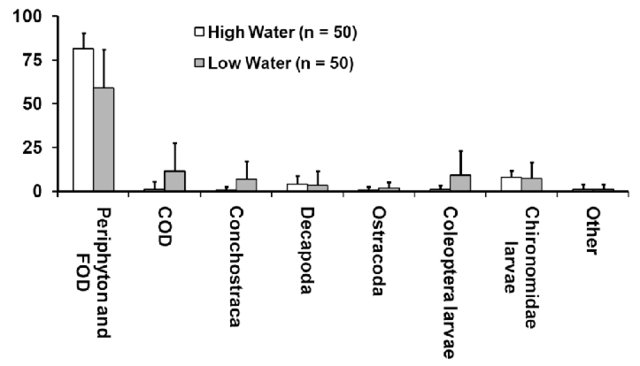
Figure 1: The diet of Symphysodon tarzoo (haraldi) in Crampton, W. G. (2008). Ecology and life history of an Amazon floodplain cichlid: the discus fish Symphysodon (Perciformes: Cichlidae). Neotropical Ichthyology6, 599-612. FOD: Fine Organic Detritus, COD: Course Organic detritus. Periplankton is referred to as algae.

One can clearly see the seasonal variation in diets with a slightly higher contribution from invertebrates but still minimal. What is most clear though is the amount of detritus and periplankton these fishes are feeding on (Fig 1).

It is not just scientific research that has reported this, Bleher’s (2009) article on discus care also suggests this diet of mostly detritus. Detritus is a difficult term as a lot of it cannot be identified without a microscope, usually it seems in many fishes any loose or soft detritus generally is a microbial matrix, from my observations of research into Loricariids.

If we look at discus we can really think more about their diet.

Figure 2: Symphysodon tarzoo from the Rio Nanay, Peru.

These fishes are not the best built for prey capture beyond body shape lets focus on the anatomy that is most important for feeding. The jaws, and I don’t just mean upper and lower jaws. First looking at the mouth, they have a small mouth that cannot extend far, this means they are extremely limited on the size of item they can eat, this is known as gape limitation as many fishes including discus cannot chew with the oral jaws. They have strong lips great at removing food items from surfaces much like many other fishes who have a similar niche (Cohen et al., 2023). These are all factors connected with that first set of jaws, the oral jaws that really have a limited ability to expand outwards.

There is a second set of jaws, the pharyngeal jaws which are not immediately obvious as at the back of the mouth. Unlike the oral jaws that are about prey/food capture these pharyngeal jaws are about food processing. In discus these are thinner and more elongate (Roberts-Hugghis et al., 2023), not great at processing particularly solid food like large amount of invertebrates, also lacking the stronger villiforme or molariform teeth. Very similar to other detritivores or fishes feeding largely on algaes and detritus (Burress et al., 2020).

So, not just from their gut analysis but their morphology, Symphysodon are best classified along the lines of algivores and detritivores. You could say omnivores but if the mere addition no matter how small of any animal to any species diet makes them an omnivore then all organisms are omnivores.

From knowing this how should we see what we are feeding our fishes? Should we look to the inclusion of more algaes? And what algaes? What is the current long term effects of captive diets on discus?

There are brands such as Nature Kind by CE Fish Essentials who have started to look at wild diets and the inclusion of replicating that into their captive diet. https://cefishessentials.com/product/naturekind-fish-food-100g/ is the link for anyone who is curious.

Beefheart shouldn’t be the scapegoat for captive diets. Most commercial feeds as well differ massively from wild fish diets and there is a lot of questions to be asked about their use. Beefheart has proven itself as an effective captive diet though and many fishes live full lives on it.

So the story here is, read both what the fish eat in the wild and the ingredients of the food you are feeding.

References:

Amado, M. V., Farias, I. P., & Hrbek, T. (2011). A molecular perspective on systematics, taxonomy and classification Amazonian discus fishes of the genus Symphysodon. International Journal of Evolutionary Biology2011.

Bleher, H. (2009). Definitive Guide to Discus: Part 2. Practical Fishkeeping. https://www.practicalfishkeeping.co.uk/features/definitive-guide-to-discus-part-two/

Burress, E. D., Martinez, C. M., & Wainwright, P. C. (2020). Decoupled jaws promote trophic diversity in cichlid fishes. Evolution74(5), 950-961.

Cohen, K. E., Lucanus, O., Summers, A. P., & Kolmann, M. A. (2023). Lip service: Histological phenotypes correlate with diet and feeding ecology in herbivorous pacus. The Anatomical Record306(2), 326-342.

Crampton, W. G. (2008). Ecology and life history of an Amazon floodplain cichlid: the discus fish Symphysodon (Perciformes: Cichlidae). Neotropical Ichthyology6, 599-612.

Reis, G. A., Siqueira, M. S., & Momo, H. (2022). Evaluation of commercial and experimental grower diets for use in intensive culture of Symphysodon aequifasciatus. Pan-American Journal of Aquatic Sciences17(3), 190-200.

Roberts-Hugghis, A. S., Burress, E. D., Lam, B., & Wainwright, P. C. (2023). The cichlid pharyngeal jaw novelty enhances evolutionary integration in the feeding apparatus. Evolution, qpad109.

Wang, L., Chen, Z., Leng, X., Gao, J., Sun, P., Qu, H., … & Song, X. (2016). Comparison of muscle composition of wild and cultured discus fishes Symphysodon spp. Journal of Shanghai Ocean University25(5), 719-725.

Wen, B., Chen, Z., Qu, H., & Gao, J. (2018). Growth and fatty acid composition of discus fish Symphysodon haraldi given varying feed ratios of beef heart, duck heart, and shrimp meat. Aquaculture and fisheries3(2), 84-89.

Introducing Aquarium Snails

Aquarium snails are one of the most popular invertebrates people keep within the aquarium, there is quite the diversity of forms and colours. They are generally very low maintenance and are not costly in their upkeep.

Snails are a common name for members of the Gastropoda who lack a shell and are in the family Mollusca which includes Cephalopods (Squids, cuttlefish and octopus), Bivalvia (clams, oysters and mussels) and a few lesser known clades. There are around 4,000 species of freshwater Gastropods, this value would include slugs due to there being no taxonomic difference and water bodies such as Lake Tanganyika or the Congo are hot spots for their diversity (Strong et al., 2008). There is a wide amount of diversity of shell morphology highly influenced by the habitat of these snails (Whelan, 2021).

Around 59 species of Gastropods are available within the aquarium trade, with 64% originating from Asia (Ng et al., 2016).

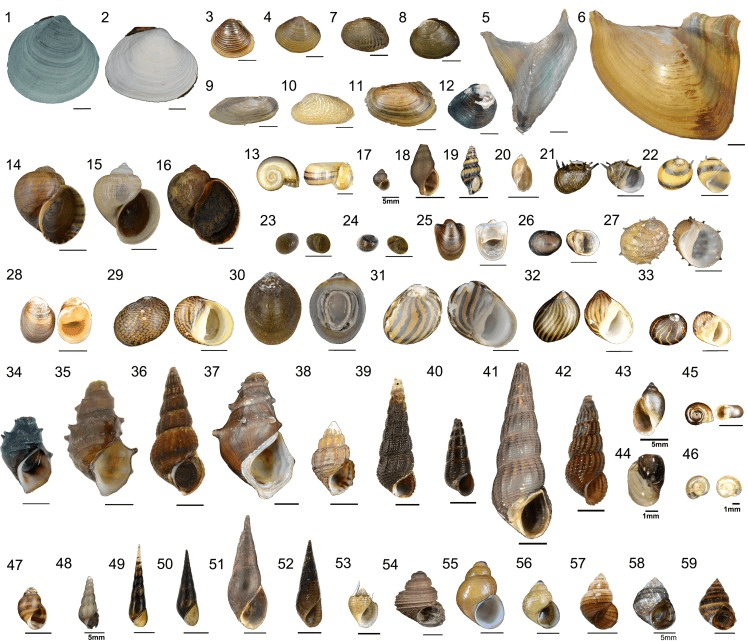
Ng et al. (2016) actually produced this amazing figure describing most if all of the Gastropods available within the aquarium trade although does seem to have some exceptions e.g. Asolene spixi.

All the aquarium Gastropods available in the aquarium trade as suggested by Ng et al. (2016) as followed by the text below.
  1. Batissa similis
  2. Batissa violacea
  3. Corbicula fluminea
  4. Corbicula moltkiana
  5. Hyriopsis bialata
  6. Hyriopsis desowitzi
  7. Parreysia burmana
  8. Parreysia tavoyensis
  9. Pilsbryoconcha exilis (Tropical Freshwater Mussel)
  10. Scabies crispata (Ornamental Mussel)
  11. Sinanodonta woodiana (Chinese Pond Mussel)
  12. Unionetta fabagina
  13. Marisa cornuarietis (Columbian Ramshorn Snail)
  14. Pomacea canaliculata (Apple/Mystery snails)
  15. Pomacea diffusa (Apple/Mystery snails)
  16. Pomacea maculata (photograph by K.A. Hayes) (Apple/Mystery snails)
  17. Bithynia sp.
  18. Clea bockii
  19. Clea helena (Assassin Snail)
  20. Radix rubiginosa (Pond Snail)
  21. Clithon corona (Horned Nerite Snail.
  22. Clithon diadema (Horned Nerite Snail)
  23. Clithon lentiginosus (Nerite Snail)
  24. Clithon mertoniana (Nerite Snail)
  25. Neripteron auriculata (Batman Snail)
  26. Neritina iris (Nerite Snail)
  27. Neritina juttingae (King Koopa Nerite Snail)
  28. Neritina violacea (Violet Nerite Snail)
  29. Neritodryas cornea (Nerite Snail)
  30. Septaria porcellana (Marbled Limpet Nerite Snail)
  31. Vittina coromandeliana (Zebra Nerite Snail)
  32. Vittina turrita (Zebra Nerite Snail)
  33. Vittina waigiensis (Red Racer Nerite Snail)
  34. Brotia armata (Hedgehog Snail)
  35. Brotia binodosa
  36. Brotia herculea (White Hercules Snail)
  37. Brotia pagodula (Pagoda Snail)
  38. Sulcospira tonkiniana
  39. Tylomelania towutica (Yellow Spotted Rabbit Snail)
  40. Tylomelania sp. (Rabbit/Elephant Snail)
  41. Tylomelania sp. (Rabbit/Elephant Snail)
  42. Tylomelania sp. (Rabbit/Elephant Snail)
  43. Physa acuta (Tadpole/Bladder Snail)
  44. Amerianna carinata
  45. Indoplanorbis exustus (Ramshorn Snail)
  46. Gyraulus convexiusculus (Ramshorn Snail)
  47. Semisulcospira sp.
  48. Melanoides tuberculata (Malaysian Trumpet Snail)
  49. Stenomelania offachiensis
  50. Stenomelania plicaria (Chopstick Snail)
  51. Stenomelania cf. plicaria (Chopstick Snail)
  52. Stenomelania sp. (Chopstick Snail)
  53. Thiara cancellata (Hairy Snail)
  54. Celetaia persculpta (Blue Turbo Snail)
  55. Filopaludina martensi cambodjensis (White Wizard Snail)
  56. Filopaludina peninsularis
  57. Filopaludina polygramma (Tiger Tower Snail)
  58. Sinotaia guangdungensis
  59. Taia pseudoshanensis

When discussing snails we can’t help but discuss the diversity of snails labelled as pests, but what is a pest but a pet in the wrong place? Realistically we need to change our mind as to how we see these snails.

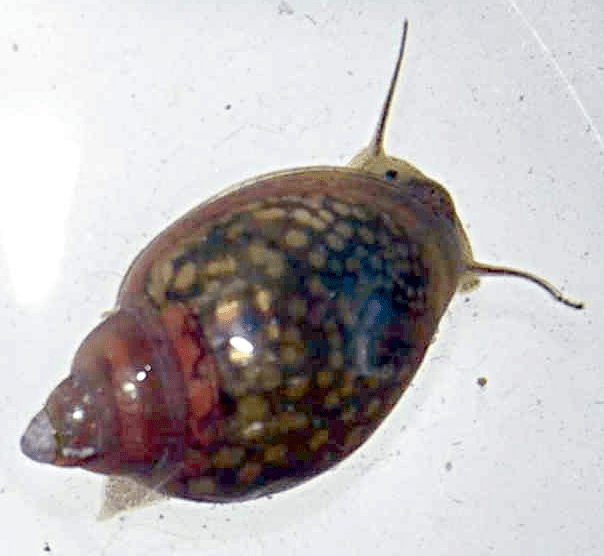
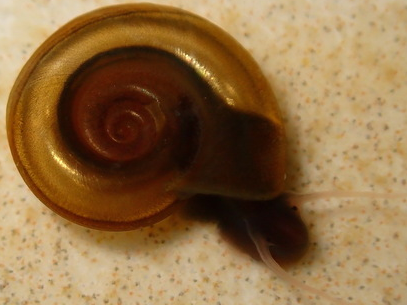
Tadpole/Bladder Snail (Physella acuta)

Of all the pest snails Physella acuta is so distinctive with the spots on the shell, quite a pretty little snail. Image obtained from: https://creativecommons.org/licenses/by/2.5/deed.en

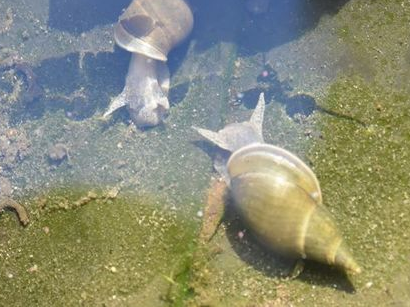
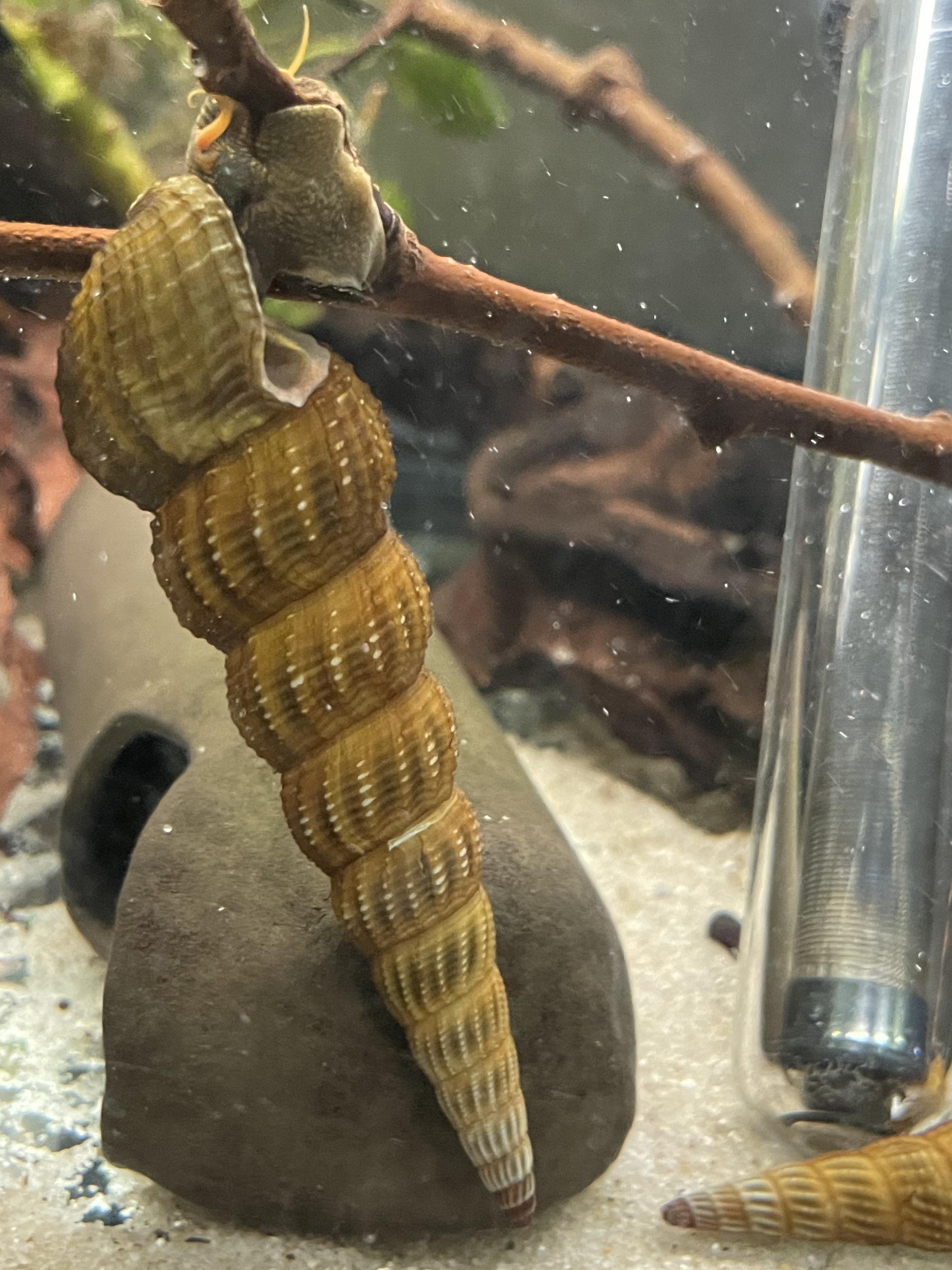
Pond Snails (Lymnaeidae)

This common name covers a whole family of snails found throughout the world, they additionally vary in size massively. These snails clearly have much more fleshy tentacles. Image obtained from INaturalist and copyrighted to Herman Berteler under the Creative Commons licence https://creativecommons.org/licenses/by-nc/4.0/.

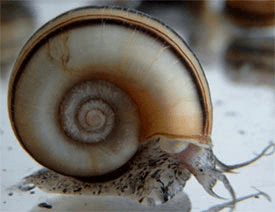
Ramshorn Snails (Planorbidae)

These snails display a very distinctive shell shape opposed to other pest snails although this is an entire family and additionally represents many ornamental species. Image belongs to Анатолий Кузьмин and sourced from INaturalist.

Pest snails get a very bad reputation, they generally come in on plants but sometimes by other means. These little Gastropods are generally harmless, they do not feed on plants nor will they attach to live fishes. In fact, they are great for any aquarium as they naturally feed on periplankton and detritus so act as a great indicator for overfeeding while helping further process any extra waste.

So lets discuss some of those more ornamental snails.

Rabbit/Elephant Snails (Tylomelania spp.)

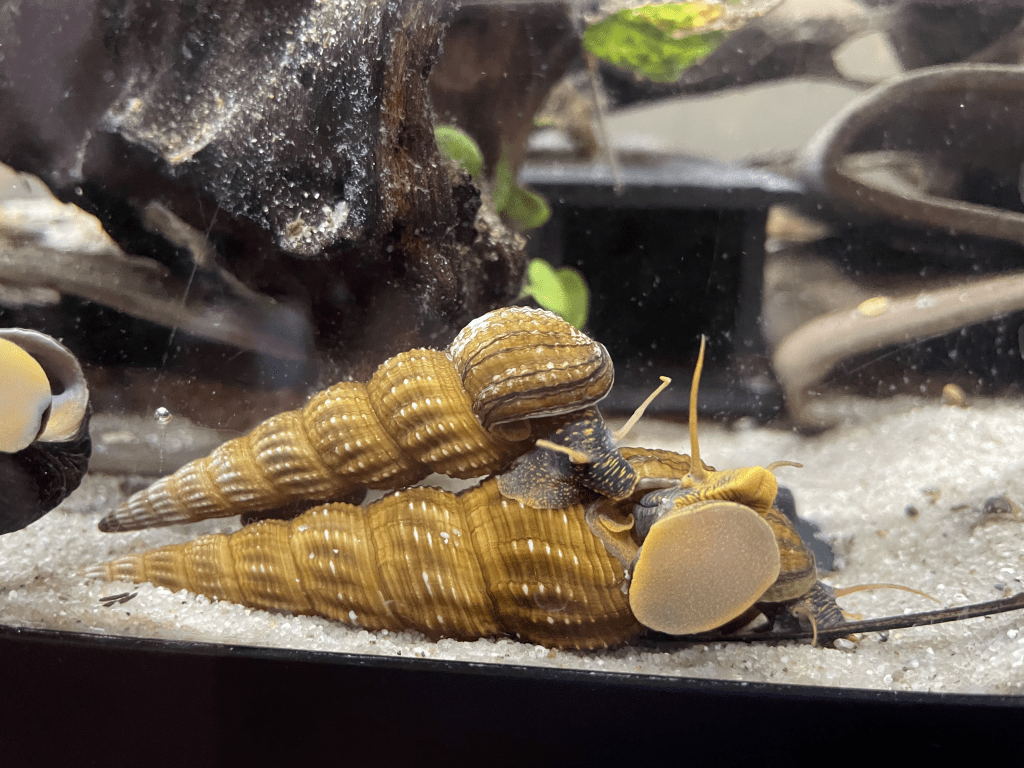
Tylomelania spp. are some of my favourite aquarium snails. They are active, rummaging around the substrate and have a lot of different diversity in colouration originating from Sulawesi (Glaubrecht & von Rintelen, 2009). Like other viviparous snails they are diecious (individuals are not hermaphrodites) and produce one offspring at a time. These are detritivores/periplanktivores and while do not seem to feed on plants in the aquarium some are noted to in the wild (Rintelen & Glaubrecht, 2003), this could be due to the difference in species used.

These snails generally seem to interact with a sandy substrate and in the wild are located on silty substrates or on rocks or wood (Von Rintelen et al., 2007). Temperatures in the water bodies of these snails aren’t well known but seem to be stable around the 28-31c, these snails seem to be most common at the banks of the lakes where temperatures are around 28-29c (Vuillemin et al., 2016). I have kept them and bred many Tylomelania in unheated aquariums with no issues in breeding so safe to say they are certainly adaptable. In Vuillemin et al. (2016) the parameters of one of Tylomelania’s water bodies is described as having a pH of 7.8 and a conductivity of 210 μS cm-1. This does mean the water is a much lower conductivity then what would normally be expected at that pH.

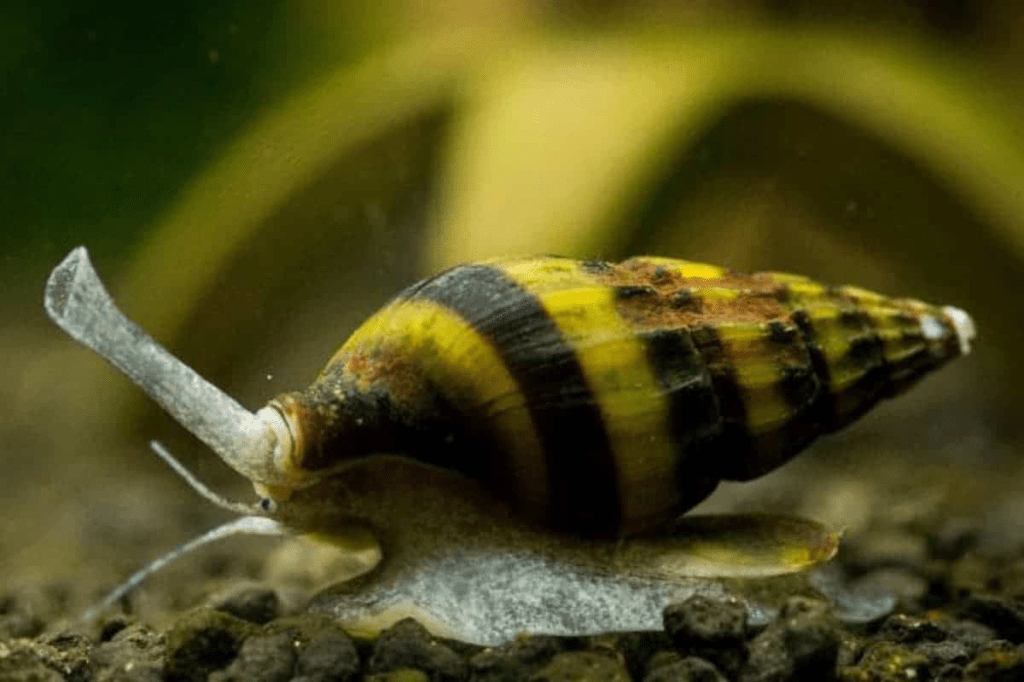
Assassin Snail (Anentome helena)

Image source: Aquariumbreeder.com

While a very ornately coloured species of snail, assassins are some of the most aggressive in the freshwater trade. They are often used to feed on pest snails and they are definitely very good at this task but they will additionally feed on any ornamental snails. If not feeding on snails Assassin snails are capable of feeding on waste, food etc. While they are diecious they can lay an incredible number of eggs so can soon become the pest they are usually brought to prevent.

Columbian Ramshorn Snail (Marisa cornuarietis)

Image source: https://diszhal.info/

The most impressive of the ramshorn snails available to use in the aquarium trade, reaching sizes of 60-60mm (Grantham et al., 1993).

Although there seems to be no information on the habitats of this species, previous research has suggested that Columbian Ramshorn snails do best around 25c (Aufderheide et al., 2006). The downfall as with many Ampullariidae such as Asolene spixi is their very diverse diet of not just a diversity of plants (Seaman & Porterfield, 1964) but it seems snail eggs too (Demian & Lutfy, 1965). These are definitely snails to eat your plants.

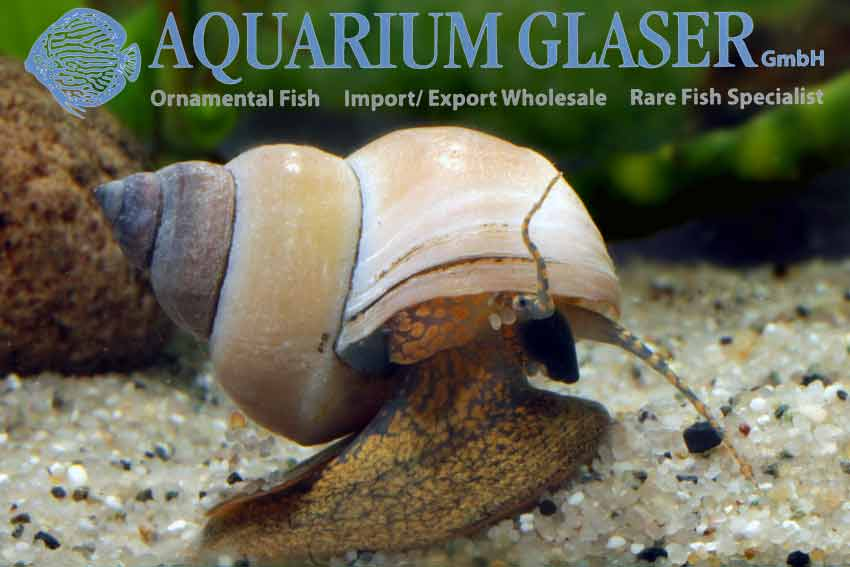
White Wizard Snail (Filopaludina martensi)

Image source: Aquarium Glaser GmbH

What can I say more about Viviparidae snails other then them being really charming inhabitants, I have discussed Tylomelania probably the easiest to keep so now one that requires more thought.

Filopaludina martensi are no doubt some of the most attractive snails in the aquarium hobby and realistically everything I say for Tylomelania regarding breeding stands true here. They will not overpopulate any aquarium with any speed and easy to rehome individuals should they do. Unlike Tylomelania who do not seem to display any sexually dimorphic features, F. martensi displays a modified tentacle in males and a larger shell size in females (Sawangproh et al., 2021).

They are a little bit more challenging as seem to require much more periplankton and detritus within the aquarium and are not keen to feed on any other foods provided. It seems in the literature they are suggested as filter feeders and this could explain why, although lacking citations or personal observations detritivore might be more accurate (Piyatiratitivorakul & Boonchamoi, 2008). By observation of this snails anatomy I would definitely say detritivore, it has no filter feeding apparatus maybe apart from the gills. It does seem very little is known about this snails ecology. Although one of the catch localities, Kwai Yai River (Sawangproh et al., 2021) for this snail records temperatures of 22-33c showing these snails are adaptable to a wide range of aquarium temperatures (Leelahakriengkrai & Peerapornpisal, 2011).

Obviously I cannot talk about all 59+ Gastropods within the aquarium trade and a lot of information will be species or taxa specific. So I will discuss some misconceptions.

The importance of calcium?

There is no doubt much like fish Gastropods utilise calcium to build their shells and for other physiological processes. Gastropods like fishes can uptake calcium from the water and also from their food but their ability to do so depends on the species. Snails have been split into two categories, those that require it in the water and those that can live in low calcium and utilise calcium from their food (Dalesman & Lukowiak, 2010). So you really need to look at individual species and considering the importance of calcium volumes within the water. The use of a calcium block, cuttlefish bone or any snail food wont replace what is required in the environment for those species. And for species that obtain calcium from their diet consider they are actually getting calcium in their diet.

Does diet matter?

I think this just has a simple answer, yes. Snails generally are amazing opportunists and many can eat a wide range of resources. Research your snail before you buy as there are some more challenging species as mentioned earlier. There are so many creative ways to feed aquarium Gastropods and this maybe needs it’s own article later on as you can easily get away without so much.

References

Aufderheide, J., Warbritton, R., Pounds, N., File‐Emperador, S., Staples, C., Caspers, N., & Forbes, V. (2006). Effects of husbandry parameters on the life‐history traits of the apple snail, Marisa cornuarietis: effects of temperature, photoperiod, and population density. Invertebrate Biology125(1), 9-20.

Dalesman, S., & Lukowiak, K. (2010). Effect of acute exposure to low environmental calcium on respiration and locomotion in Lymnaea stagnalis (L.). Journal of Experimental Biology213(9), 1471-1476.

Demian, E. S., & Lutfy, R. G. (1965). Predatory activity of Marisa cornuarietis against Biomphalaria alexandrina under laboratory conditions. Annals of Tropical Medicine & Parasitology59(3), 337-339.

Glaubrecht, M., & von Rintelen, T. (2009). The species flocks of lacustrine gastropods: Tylomelania on Sulawesi as models in speciation and adaptive radiation. In Patterns and Processes of Speciation in Ancient Lakes: Proceedings of the Fourth Symposium on Speciation in Ancient Lakes, Berlin, Germany, September 4–8, 2006 (pp. 181-199). Springer Netherlands.

Grantham, Ö. K., Moorhead, D. L., & Willig, M. R. (1993). Feeding preference of an aquatic gastropod, Marisa cornuarietis: effects of pre-exposure. Journal of the North American Benthological Society12(4), 431-437.

Leelahakriengkrai, P., & Peerapornpisal, Y. (2011). Water quality and trophic status in main rivers of Thailand. Chiang Mai Journal of Science38(2), 280-294.

Ng, T. H., Tan, S. K., Wong, W. H., Meier, R., Chan, S. Y., Tan, H. H., & Yeo, D. C. (2016). Molluscs for sale: assessment of freshwater gastropods and bivalves in the ornamental pet trade. PLoS One11(8), e0161130.

Piyatiratitivorakul, P., & Boonchamoi, P. (2008). Comparative toxicity of mercury and cadmium to the juvenile freshwater snail, Filopaludina martensi martensi. Sci Asia34, 367-370.

von Rintelen, T., Bouchet, P., & Glaubrecht, M. (2007). Ancient lakes as hotspots of diversity: a morphological review of an endemic species flock of Tylomelania (Gastropoda: Cerithioidea: Pachychilidae) in the Malili lake system on Sulawesi, Indonesia. Hydrobiologia592, 11-94.

Vuillemin, A., Friese, A., Alawi, M., Henny, C., Nomosatryo, S., Wagner, D., … & Kallmeyer, J. (2016). Geomicrobiological features of ferruginous sediments from Lake Towuti, Indonesia. Frontiers in Microbiology7, 1007.

Rintelen, T. V., & Glaubrecht, M. (2003). New discoveries in old lakes: three new species of Tylomelania Sarasin & Sarasin, 1897 (Gastropoda: Cerithioidea: Pachychilidae) from the Malili lake system on Sulawesi, Indonesia. Journal of Molluscan Studies69(1), 3-17.

Sawangproh, W., Phaenark, C., Chunchob, S., & Paejaroen, P. (2021). Sexual dimorphism and morphometric analysis of Filopaludina martensi martensi (Gastropoda: Viviparidae). Ruthenica, Russian Malacological Journal31(2).

Seaman, D. E., & Porterfield, W. A. (1964). Control of aquatic weeds by the snail Marisa cornuarietis. Weeds12(2), 87-92.

Strong, E. E., Gargominy, O., Ponder, W. F., & Bouchet, P. (2008). Global diversity of gastropods (Gastropoda; Mollusca) in freshwater. Freshwater animal diversity assessment, 149-166.

Whelan, N. V. (2021). Phenotypic plasticity and the endless forms of freshwater gastropod shells. Freshwater Mollusk Biology and Conservation24(2), 87-103.

Self Sustaining or Self Destroying?

Mother Earth has been a concept for a long time but the scientific concept of life being self regulating was largely coined by the late Dr. James Lovelock in a theory known as the Gaia Hypothesis. This hypothesis captured life’s nature to recover and the interconnected system between organisms. Although later combated or maybe better complicated by the Medea hypothesis theorised by Professor Peter Ward and the popular book, The Selfish Gene by Dr Richard Dawkins. These two theories encapsulate the complex nature of life itself and the many mass extinction events caused by species in that fight for life and reproduction.

Survival is argued as not altruistic regardless if competing with members of your own species or another. There is a constant battle not just between predator and prey but between competitors for resources such as space. This battle is not just found in the animal world though, plants fight for space and use a variety of mechanisms to do this.

But how does this effect us in the aquarium hobby? Just by the selfish nature of organisms we can’t look at each organism providing a role, that’s not how nature works and it ignores that species provide multiple interactions. Plants don’t just photosynthesise but they constantly respire and also utilise minerals within the water. These plants might then compete with each other and maybe a fish for a variety of these resources. To compete with plants many develop methods to block out light but in that competition for space other methods might be utilised, plants like many other organisms potentially utilise chemical warfare.

Within animals when people think about purposes particularly pests they might not just interact as ideally wanted, loaches that feed on snails might take smaller fishes.

In the aquarium I feel we have to balance this constant battle. Everything using oxygen, feeding on nutrients and space.

While I’ve provided no citations it’s more a food for thought short communication essay.

Outdoor Care of Fancy Goldfish

There is no doubt goldfish, Carassius auratus is one of the most adaptable fish species. While the parent species being either/or the Prussian carp, C. gibelio or the Crucian carp, C. carassius are proven without a doubt to adapt to a range of climates the goldfish on the other hand is treated as the sensitive child. Well, not all goldfish but this is very much a cherry picking of different varieties thrown into hardy or not.

First lets split the goldfish up:

Single tails

  • Common/hibuna: This is the typical goldfish with the short single caudal fin.
  • Comet: Displays a more elongate caudal fin that might be more ribbon shaped.
  • Shubunkin: This is a variety that is split into multiple different subvarieties depending on caudal fin type. The London shubunkin has a shorter caudal fin, the common body and tail shape. The Japanese shubunkin has that comet caudal fin shape. The Bristol shubunkin being unique with a large elongate but heart shaped caudal fin that holds it’s height and shape. The difference between the shubunkin and the first two is the calico patterning, black, red, orange and blue.
  • Tamasaba and sabao, shorter ryukin shaped goldfish with white and red patterning originally bred by Japanese koi breeders. The Tamasaba has the longer caudal fin.
  • Nymph, not so much a variety but a undesirable mutation of the double tailed varieties where a number of single tailed individuals are produced.

Double tailed, this is produced by a duplication event (Abe et al., 2014).

  • Wakin: Very similar to the common goldfish but with a double tail. Not to be confused with mutations in commons, comets and shubunkin resulting in a double tail, I have seen full to partial splits at least 3 times, the wakin seems to have more of an arch to the spine at the back.
  • Jikin: Similar to the wakin but deeper bodied, seems to lack that arching and with more of a flower shaped caudal fin. It is strictly red and white, ideally with 13 points of red but this is produced by certain methods.
  • Fantail: The most famous and varies on quality or how much it matches the standards. This variety by standard should be deeper bodied but has a short heart shaped caudal fin.
  • Oranda: There are multiple subvarieties from goosehead to lionhead oranda, this variety is a deep bodied fish with fatty growths covering the head or the top of the head. Caudal fin shape also varies depending on standard and variety from a straight long veiltail to a short heart shaped caudal fin.
  • Ryukin: An extreme deep bodied and described by the GSGB (Goldfish Society of the British Isles) as having a bulldog like appearance, it has a hump behind the head resulting in it’s unusual appearance. Despite the name it is not originally Japanese as having originated from China arriving via the Ryukyu Islands, quite a few varieties often thought of as Japanese have Chinese origins.
  • Lionhead: As of recent an uncommon variety, most sold under this name are in fact low quality oranda. It should have a large fatty head growth like the oranda but lack a dorsal fin and have a straighter back.
  • Ranchu: There are multiple varieties of this, the original Japanese ranchu is known as the top view ranchu, uncommon outside certain exporters. Like most true Japanese fish to be judged from above. Lacks a dorsal fin with a nice smooth arched back, short caudal fin and an attractive fatty head growth. Side view ranchu are common in the trade.
  • Tosakin: A rare variety in the UK, very similar to a fantail but has a long caudal fin that is spread out in a butterfly shape to be viewed from above. Reached close to extinction in Japan but is making a recovery.
  • Izumo nankin: A rare variety, similar to the ranchu in it’s deeper body but lacks any head growth. Red and white patterning in a desired pattern.
  • Veiltail: Uncommon outside the show scene, has a broad, lacking that forking long caudal fin otherwise similar to the fantail.
  • Moor: A telescope eyed variety, it generally in the UK has a veiltailed caudal fin to be standard and must have more triangular eyes.
  • Globe eye: Similar to the moor in being a telescope eye but the eyes are rounded, the tail can be short or long but generally rounded and forked. Demekins do somewhat fall under this but are almost like a cross between the ryukin and globe eye.

I didn’t list these varieties for no reason, body shape is extremely diverse between each and therefore the split only means a difference in whether there is two or one caudal fin. Fancy usually refers to any goldfish but the comet, shubunkin and common which if you get what I mean it really means very little as a term.

There is a long history of goldfish’s being kept and bred outside in not just Japan and China; but also Thailand, Java, the UK and the USA. It is not difficult to find this in societies alternatively in a greenhouse.

I myself have kept a variety of fancies outside year round but it requires serious thought.

What benefits could keeping goldfish outside have?

  • The major obvious one is colouration, natural lighting perhaps it’s the UVB really enhances black pigmentation (melanin) in goldfish or preventing any loss. Any green water encourages red colouration.
  • Potentially more natural food sources, many insects and invertebrates naturally become introduced to ponds.
  • Natural seasonal cycles like they would have experienced as a wild species, it gives them a period of rest. It is obvious how seasonal these fishes are in the fact they spawn with seasonal temperature ques.
  • The opportunity and ease of providing more space, ponds are generally cheaper then aquariums. This can allow for much more enrichment.

Considerations

  • Goldfish still need water changes and filtration in a pond regardless of plants or setup.
  • Only add fishes to ponds in the warmer months, May to September (based on UK temperatures), ideally 15-18c or above giving them plenty of time to adapt to temperature drops later on in the year and avoiding sudden frosts.
  • Over winter and when temperatures drop the fishes will have a reduced appetite and reduced metabolism so feeding is best reduced slowly to a stop in winter to prevent any rotting of uneaten food. When temperatures increase again the fish can be fed again. Water changes aren’t required when the fishes have such a drop of metabolism.
  • Goldfish are susceptible to predators so netting or grids above the pond is a must.
  • While goldfish are more then capable of going anaerobic during periods of cold extreme cold resulting in a deep and thick ice layer should be considered in countries where this occurs. This might mean any fishes being taken inside between September to May. Depth of pond is also important as the bottom will create a refuge for the fishes, shallow is much better for body shape but the temperature will drop much more rapidly.
  • Any fishes displaying swim bladder disorders should be removed and kept inside as the heat or cold can damage any floating fish.
  • In summer a good filter should create enough aeration and goldfish can gulp but an air pump or fountain would be important to maintain oxygen levels.

You can see it’s not so simple but it doesn’t mean it’s bad to keep them outside. The importance of natural cycles is potentially very understudied and underrated within the aquarium hobby. Potentially it could even lead to a longer lifespan and healthier fishes but we don’t really know?

Both goldfish considered fancy and not are both farmed in hotter climates then ours in the UK so there isn’t so much logic behind their perceived variance sensitivity excluding the limited gene pool of some.

References

Abe, G., Lee, S. H., Chang, M., Liu, S. C., Tsai, H. Y., & Ota, K. G. (2014). The origin of the bifurcated axial skeletal system in the twin-tail goldfish. Nature communications5(1), 3360.

Biological Oxygen Demand and Botanicals

Biological/Biochemical Oxygen Demand (BOD) is a topic we never discuss in the hobby, it refers to largely to the amount of oxygen that aerobic microorganisms use to remove or process waste (Brenniman, 1999) and are directly connected with oxygen saturation and nitrate concentration (Alam et al., 2020).

In a way the hobby talks so little about decomposition focusing on other aspects of nutrient cycling. For a fishkeeper that water changes, siphons and leaves little to no waste or items decaying in the aquarium it might not be of concern.

Botanicals and planted tanks are very popular as of recent with people reaching for some idea of nature they feel they have lost, natural or not. Both of these setups can allow for the trapping of waste where siphoning is not possible or limited. One solution is reduced stocking but definitely keeping fishes adapted for low oxygen saturations is a great solution such as airbreathers.

Decomposition of material such as decaying plants or botanicals involve bacteria, protozoa and other microorganism’s. It’s not just these as an introduction of nutrients but also anything that can be used as a nutrient source for bacteria, I find particularly sugars and carbohydrates. We can split them between aerobic (With oxygen) and anaerobic (without oxygen), anaerobic is another topic here but it does involve the production of other compounds. Just because there is a thick layer of substrate it doesn’t mean it is anaerobic particularly with the presence of plant roots that encourage oxygenation. We also don’t know the rate of either and this will depend on a variety of factors.

These microorganisms are more then capable of competing with fishes for oxygen and the rate will depend on multiple conditions (Nolan, 1996; El-Moghazy & El-Morsy, 2017). Microorganisms can proliferate much faster then fishes so can quickly adapt and increase to those higher nutrient levels.

The issue is that we can barely measure BOD but we can measure oxygen saturation. This means it is difficult to experiment the BOD within any aquarium so we do have to make assumptions.

Most of these are purely assumptions and ideas based on previous knowledge as it’s not so much a topic that the literature will look into. It’s also something fishkeepers certainly need to be thinking about or considering particularly for heavily stocked tanks or fishes who uptake a lot of oxygen.

Temperature, oxygen saturation and decomposition rate

It is a well known effect that as temperature increases oxygen saturation in turn decreases although when thinking about decomposition this increases as microbial decomposers can proliferate at a much faster rate and consume their resources further. This could result in further BOD when there are already low levels (El-Moghazy & El-Morsy, 2017).

Generally it’s better safe then sorry so removing detritus that has built up in the tank and within the filter. Decomposers are probably only providing a benefit maybe for plants but for fishes in many aspects discussed previously they are not of benefit. Any botanicals or high nutrient imputs should be added gradually over time so not to unload a lot of nutrients into the aquarium or when decaying again as much nutrients for these microbes and reducing oxygen saturation.

While we don’t have values and honestly, there is no way of doing that as every aquarium is difficult it’s difficult to predict.

References

Alam, M. S., Han, B., Gregg, A., & Pichtel, J. (2020). Nitrate and biochemical oxygen demand change in a typical Midwest stream in the past two decades. H2Open Journal3(1), 519-537.

Brenniman, G. R. (1999). Biochemical oxygen demand. Environmental Geology. Encyclopedia of Earth Science. Springer, Dordrecht. https://doi. org/10.1007/1-4020-4494-1_34.

El-Moghazy, M. M., & El-Morsy, A. M. (2017). Effect of water aquaria changes on growth performance of Nile tilapia Oreochromis niloticus and the relationship between bacterial load and biological oxygen demand. International Journal of Fisheries and Aquatic Studies5(3), 341-349.

Nolan, C. (1996). Ventilation rates for carassius auratus during changes in dissolved oxygen.

Fish Meal, Krill Meal or Insect Meal?

This is the big question, what do you base a fish diet on?

Fish meal is the most common but has come with many questions based on sustainability, but regarding sustainability this can be a little more complex regarding shifting impact (Ghamkar & Hicks, 2020). Therefore there is the question of what gives the most nutrition?

Žák et al. (2023) has been one of the most enlightening papers published in the last few years. This research and other previous research has inferred that for invertivores and insectivores but it is eye opening to apply elsewhere. Digestibility of fish meals does vary depending on the taxa and likely what they feed on in the wild, Cyprinids largely feeding on invertebrates and lacking a stomach struggle to process fishes whereas Tilapia, a cichlid that likely is very generalist even feeding on fishes processes fish much better (Hua & Bureau, 2010). The other aspect is that fish meal can be difficult to extract phosphorus and calcium for fishes that do not naturally feed on fishes (Žák et al. 2023). We can apply this knowledge further?

So maybe fishes isn’t ideal, most of the fishes we keep don’t eat fishes. But what about invertebrates? There is no denying most of the scientific literature focuses on fishes that likely feed on krill being marine fishes or very much generalist omnivores. So, I’m not sure I can find anything regarding that, any environmental impact would be similar to fish meals, talking from personal experience krill and marine mysis does come with a lot of bycatch.

Although insect meals are definitely interesting, there are many more nutritional aspects to consider. While much of the focus from the customer is into protein, vitamins and minerals are vital for fishes. Vitamin b12 is a popular vitamin to mention due to origins, insects contain little to higher amounts but also depends on what they have been fed (Schmidt et al., 2019) although there is a lot of deceptively high amounts in all insects from pseudovitamin b12 such as contained in algaes. Chitin might cause an issue in some fishes, in my experience largely it’s whether an invertebrate is processed or not rather then causing issues with digestion.

There is no strict one is better then the other like many things as it has multiple aspects to the topic (Terova et al., 2021). Given the literature mentioned think about what the fishes eat in the wild and are they piscivores, feeding on fishes naturally.

It is well know how diet influences gut biota, not just are species adapted through evolution regarding enzymes to a specific diet but also symbiotically with bacteria allowing some items to be digested better then others. It’s not just that simple either but like with humans the introduction or even encouragement of certain biota in the gut can effect health in general (Ringø et al., 2016). With humans we are now discussing the gut brain axis but it is becoming a topic within fishes as well where the presence, lack or amount of certain biota influences how the brain functions in fishes and the prevalence of disease (Butt & Volkoff, 2019).

The Question of Soya

The use of crops like soya has been mentioned of reducing the impact of animal based meals yet increases demand for water up 63%, land 81% and phosphorus 83%, phosphorus itself is a finite resource but a vital fertiliser (Malcorps et al., 2019). There are other aspects of soya and I think it’s best to mention most if any fishes I research and this is largely Loricariids do not consume anything similar, cereal crops are very fibrous and difficult to digest which is different from the allochthonous sources they generally feed on.

While regarding short term use to certain volumes could replace other meals such as insect or fish (Howlader et al., 2023; Arriaga-Hernández et al., 2021). Yet the use of soya has been associated with a negative effects on growth (Pang et al., 2023). Many of these studies do not look into fishes even similar to what we keep, for discus (Symphysodon) beyond 30% replacement of other meals resulted in reduced growth rate (Chong et al., 2003).

Forgetting algivores?

Algivores or anything feeding on anything similar are not represented or thought about by the fishkeeper often, yet we keep so many of them. Similar information to the above definitely applies regarding how fishes are adapted through evolution to what they feed on in the wild. But could these other meals be of use? There is definitely a lack of studies looking into aquaculture, yet for an algivore just one species of algae the replacement of these traditional meals can produce the same results (Vucko et al., 2017), imagine using other algaes and a diversity of algaes?

References

Arriaga-Hernández, D., Hernández, C., Martínez-Montaño, E., Ibarra-Castro, L., Lizárraga-Velázquez, E., Leyva-López, N., & Chávez-Sánchez, M. C. (2021). Fish meal replacement by soybean products in aquaculture feeds for white snook, Centropomus viridis: Effect on growth, diet digestibility, and digestive capacity. Aquaculture530, 735823.

Butt, R. L., & Volkoff, H. (2019). Gut microbiota and energy homeostasis in fish. Frontiers in endocrinology10, 9.

Chong, A., Hashim, R., & Ali, A. B. (2003). Assessment of soybean meal in diets for discus (Symphysodon aequifasciata HECKEL) farming through a fishmeal replacement study. Aquaculture Research34(11), 913-922.

Ghamkhar, R., & Hicks, A. (2020). Comparative environmental impact assessment of aquafeed production: Sustainability implications of forage fish meal and oil free diets. Resources, Conservation and Recycling161, 104849.

Howlader, S., Sumi, K. R., Sarkar, S., Billah, S. M., Ali, M. L., Howlader, J., & Shahjahan, M. (2023). Effects of dietary replacement of fish meal by soybean meal on growth, feed utilization, and health condition of stinging catfish, Heteropneustes fossilis. Saudi Journal of Biological Sciences30(3), 103601.

Hua, K., & Bureau, D. P. (2010). Quantification of differences in digestibility of phosphorus among cyprinids, cichlids, and salmonids through a mathematical modelling approach. Aquaculture308(3-4), 152-158.

Malcorps, W., Kok, B., van ‘t Land, M., Fritz, M., van Doren, D., Servin, K., van der Heijden, P., plamer, R., Auchterlonie, N. A., Rietkerk, M., Santos, M. J. & Davies, S. J. (2019). The sustainability conundrum of fishmeal substitution by plant ingredients in shrimp feeds. Sustainability11(4), 1212.

Pang, A., Xin, Y., Xie, R., Wang, Z., Zhang, W., & Tan, B. (2023). Differential analysis of fish meal substitution with two soybean meals on juvenile pearl gentian grouper. Frontiers in Marine Science10, 1170033.

Ringø, E. Z. Z. V., Zhou, Z., Vecino, J. G., Wadsworth, S., Romero, J., Krogdahl, Å., Olden, R. E., Dimitroglou, A., Foey, Davies, S., Owen, M., Lauzon, H. L., Martinsen, L. L., De Schryver, P., Bossier, P., Sperstad, S. & Merrifield, D. L. (2016). Effect of dietary components on the gut microbiota of aquatic animals. A never‐ending story?. Aquaculture nutrition22(2), 219-282.

Schmidt, A., Call, L. M., Macheiner, L., & Mayer, H. K. (2019). Determination of vitamin B12 in four edible insect species by immunoaffinity and ultra-high performance liquid chromatography. Food chemistry281, 124-129.

Terova, G., Gini, E., Gasco, L., Moroni, F., Antonini, M., & Rimoldi, S. (2021). Effects of full replacement of dietary fishmeal with insect meal from Tenebrio molitor on rainbow trout gut and skin microbiota. Journal of Animal Science and Biotechnology12(1), 1-14.

Vucko, M. J., Cole, A. J., Moorhead, J. A., Pit, J., & de Nys, R. (2017). The freshwater macroalga Oedogonium intermedium can meet the nutritional requirements of the herbivorous fish Ancistrus cirrhosus. Algal research27, 21-31.

Žák, J., Roy, K., Dyková, I., Mráz, J., & Reichard, M. (2022). Starter feed for carnivorous species as a practical replacement of bloodworms for a vertebrate model organism in ageing, the turquoise killifish Nothobranchius furzeri. Journal of Fish Biology100(4), 894-908.

Disease, pathogens and diagnosis

As with every organism fishes do experience diseases and can play hosts for pathogens (some fish could be considered pathogens e.g. Vandellia cirrhosa (candiru catfish)). For the fishes and the fishkeeper it is an arms race of immune systems and treatments against the adaptability and damage to the host. This can be discussed as part of the red queen hypothesis (Van Valen, 1973), as a never ending feedback cycle, without the constant adaptation a species will go extinct.

I, the editor will clearly state that I am not a fish pathologist and this article, I am an evolutionary biologist/ichthyologist although this has given me an understanding into aspects of evolutionary pathology. Having worked in the aquarium trade I have additionally experienced a wide range of different pathogens. I will also state decisions regarding discussion the diseases as a result because I feel many fishkeepers have misunderstood fish pathology, there aren’t many hobbyists with that in their background I assume is the reason why.

Right now lets look a bit into pathogens.

Host specificity

While it is quite common knowledge that pathogens within humans or mammals can be very specific this is the same for fishes. There will be several reasons for this:

  • The evolutionary mechanisms to actually become a host require a variety of adaptations and some might be very specific. For example for viruses and bacteria they will have to have the correct proteins to enter cells (Cohen, 2016; A great paper introducing how viruses function). Pathogens might require the presence of specific tissues, this could be why there have been no proven cases of Lymphocytis in catfishes (siluriformes), salmonids and carp as these clades are very close and possibly lack the effected tissues.
  • Simply the environment might not be suitable for transmission between individuals, maybe the salinity is too high or the temperature is out of range.

The easiest way to assume is to look half at evolutionary distance, the more distant species are from each other the less likely transmission will occur. Additionally the pathogens of marine fishes are less likely to be able to survive and cause disease in freshwater and vice versa.

The fishes weaponry against pathogens.

This is very difficult to generalise given how many fishes there are and there is a lot of convergence with other organisms.

  • The first barrier, the skin, the scales and slime coat in general prevent or reduce access of pathogens to the internal environment where they can cause damage.
  • The slime coat, other then a physical barrier the skin contains many goblet cells which secretes many antimicrobial compounds such as proteases and lysozymes (Dash et al., 2018). These destroy and damage microbial pathogens and even parasitic pathogens. There is also the potential that the slime coat contains many beneficial microbes who help aid in that defence against any that become pathogenic. There is the possibility that fishes shed their slime coat to dislodge pathogens on their skin/scales or in the slime coat but I cannot find any evidence in the literature.
  • The immune system, this part of biology is probably the most complex and it is very species specific. So rather then me explain it very poorly I will link a very good, recent review paper on the topic https://www.mdpi.com/2410-3888/8/2/93

The latest science

There is a lot of research as of recent looking into how a microbial ecosystem in the gut and over the surfaces of fishes aid in protection against disease (Chu et al., 2014; D’Alvise et al., 2013). This can be influenced by the environment where poor water quality can change the balance, where a bacteria or fungus previously managed by the immune system and other pathogens can cause disease (Bentzon-Tilla et al., 2016). A major cause of tipping this balance is antibiotics and therefore, antibiotic resistance, this also limits ability to use antibiotics for more concerning bacteria (de Bruijn et al., 2018).

The balance of treatment

Regardless of what treatment I cannot think of one which doesn’t have a biological effect. In my first pharmacology lecture during my undergraduate degree the lecturer stated all treatments should be understood to not just effect the target tissue, they will travel throughout the body where they can. We are very limited within the aquarium trade of what we can use and it should be understood that there might be undesired long term consequences of any treatment e.g. formalin and formaldehyde are carcinogens yet very effective on protozoa. Antibiotic resistance is a real risk with their use hence strict UK regulations.

So this brings me onto my final point:

To diagnose or not to diagnose

Fishes can host many pathogens, some more common then others. They are extremely diverse and there are many more species then vets that do 5 years training normally handle, like 10-100x more species. A fish pathologist might do 3-4 years undergraduate training, 1-2 years masters training and maybe 3-6 years PhD training, just to understand maybe a set of bacteria, fungi, parasites etc. Or what most commonly hosts a particular taxa of fishes. It’s not a simple topic.

Even with identifying fishes I see the most common species misidentified, let alone pathogens of which many need to be seen under the microscope. That access to the microscope is half of the issues, most fishkeepers outside the koi world don’t own one. And I dare say if many did, can they identify what they are seeing? And it’s great if you can but then most bacteria, viruses can’t be seen using that method. For fishes it’s not so simple to do a biopsy. What makes me really think about this topic is the misdiagnosis of Epistylis, the literature diagnoses it very differently to the hobby (Valladao et al., 2015; Wang et al., 2017; Wu et al., 2021; Ksepka & Bullard, 2021) and I am not entirely sure where the myth that Epistylis can be confused with white spot started but it’s rather frustrating. From all the literature I cited there it can’t be really diagnosed using the naked eye. I am not a pathologist but I think maybe this is more a story of fact checking because a quick read of the literature tells another story.

There are a lot more diseases and pathogens then we even know as a hobby and sometimes they can appear in a wide diversity of forms e.g. Dermocystidium. There isn’t going to be a set 5-10 most common pathogens otherwise you could say other vertebrates you only need to know those few. I prefer to back off from fish pathology because honestly how easy is it to misdiagnose? Swim bladder disorders vs neurological disorders vs malnutrition. And with so little fact checking how much can be trust? There are great fish pathologists out there and a few fish specialist vets.

The other problem with diagnosis is, how much does the science even know about the fishes we keep? Individual species in our hobby often don’t hold the largest economic weight to warrant scientific study so I believe there is a lot we don’t know. Other then pathogens malnutrition is something that hasn’t particularly been looked at in tropical ornamental fishes.

Why does correct diagnosis matter?

If you want to use the correct treatment being the main reason you need to know what you are dealing with, without using one compound after another crossing them out as you go without thinking about the physiological impact on the fish. Treatment might need to be quick or need long multiple rounds of treatment. Thankfully there might be some overlap in some. For some diseases such as neurological or related to nutrition the cause or point might never be reached.

What do you recommend?

I don’t know, contacting a vet specialised in fishes is a great idea, if there is a laboratory or pathology service this can be another option.

But maybe the most important thing is prevention, great water quality so water changes! A diverse diet regarding ingredients that caters for what the fish feeds on in the wild.

I think discussing exposure to pathogens is another topic but….. there are definitely many pathogens that risks should be taken against.

References:

Bentzon‐Tilia, M., Sonnenschein, E. C., & Gram, L. (2016). Monitoring and managing microbes in aquaculture–Towards a sustainable industry. Microbial biotechnology9(5), 576-584.

de Bruijn, I., Liu, Y., Wiegertjes, G. F., & Raaijmakers, J. M. (2018). Exploring fish microbial communities to mitigate emerging diseases in aquaculture. FEMS Microbiology Ecology94(1), fix161.

Chu, W., Zhou, S., Zhu, W., & Zhuang, X. (2014). Quorum quenching bacteria Bacillus sp. QSI-1 protect zebrafish (Danio rerio) from Aeromonas hydrophila infection. Scientific reports4(1), 5446.

Cohen, F. S. (2016). How viruses invade cells. Biophysical journal110(5), 1028-1032.

D’Alvise, P. W., Lillebø, S., Wergeland, H. I., Gram, L., & Bergh, Ø. (2013). Protection of cod larvae from vibriosis by Phaeobacter spp.: a comparison of strains and introduction times. Aquaculture384, 82-86.

Dash, S., Das, S. K., Samal, J., & Thatoi, H. N. (2018). Epidermal mucus, a major determinant in fish health: a review. Iranian journal of veterinary research19(2), 72.

Diwan, A. D., Harke, S. N., & Panche, A. N. (2023). Host-microbiome interaction in fish and shellfish: An overview. Fish and Shellfish Immunology Reports, 100091.

Ksepka, S. P., & Bullard, S. A. (2021). Morphology, phylogenetics and pathology of “red sore disease”(coinfection by Epistylis cf. wuhanensis and Aeromonas hydrophila) on sportfishes from reservoirs in the South‐Eastern United States. Journal of Fish Diseases, 44(5), 541-551

Mokhtar, D. M., Zaccone, G., Alesci, A., Kuciel, M., Hussein, M. T., & Sayed, R. K. (2023). Main components of fish immunity: An overview of the fish immune system. Fishes8(2), 93.

Valladao, G. M. R., Levy-Pereira, N., Viadanna, P. H. D. O., Gallani, S. U., Farias, T. H. V., & Pilarski, F. (2015). Haematology and histopathology of Nile tilapia parasitised by Epistylis sp., an emerging pathogen in South America. Bulletin of the European Association of Fish Pathologists, 35(1), 14-20.

Van Valen, L. (1973). A New Evolutionary Law. Evolutionary Theory, 1(1):1-30.

Wang, Z., Zhou, T., Guo, Q., & Gu, Z. (2017). Description of a new freshwater ciliate Epistylis wuhanensis n. sp.(Ciliophora, Peritrichia) from China, with a focus on phylogenetic relationships within family Epistylididae. Journal of Eukaryotic Microbiology, 64(3), 394-406.

Wu, T., Li, Y., Zhang, T., Hou, J., Mu, C., Warren, A., & Lu, B. (2021). Morphology and molecular phylogeny of three Epistylis species found in freshwater habitats in China, including the description of E. foissneri n. sp.(Ciliophora, Peritrichia). European Journal of Protistology, 78, 125767.

The Algae Eaters by rasping

Now this is only an introduction to my favourite dietary niche, I think. When algae eating is mentioned most will think about Loricariids, a 1,040 species strong family of Siluriformes (catfishes) according to Catalog of Fishes as of 2023 but many many more are to be described and discovered. It might be the small Otocinclus or the reasonably sized Pterygoplichthys and Hypostomus, if in the aquarium hobby even just a short time a wider diversity of this family becomes obvious with almost everyone having kept the common bristlenose, Ancistrus aff. cirrhosus or one of the ‘L numbers’ as they are called regardless if they have a number or not.

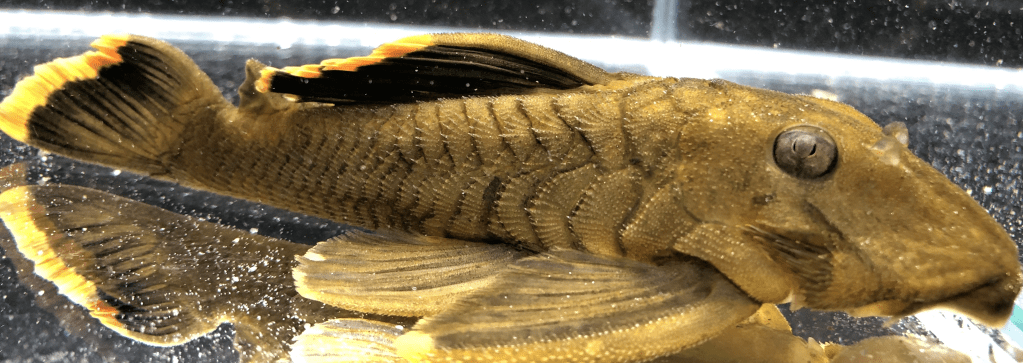
Baryancistrus chrysolomus, an algivore from the Rio Xingu, Brazil.

It’s also pretty well known that there are other fishes who do not rasp, maybe in the same way and feed on algaes, the diversity of Rift Valley cichlids who are a model taxa for adaptive radiation (McGee et al., 2020) has many species that frequently feed on algaes (McKaye & Marsh, 2020). The extent of their specialisation is certainly interesting given they are more then capable of generalisation where possible as explained in the Liems paradox (Liem, 1980). There is definitely the Gastromyzontidae, these are the hillstream loaches and looking at their mouth parts they don’t rasp in the same way to Loricariids.

So if not Loricariids what am I talking about? And ignoring those other groups? When looking at the mouth of any Loricariid you can’t help but notice those big rasping plates, part of the reason these are the suckermouth fishes. But are there others?

Loricariids obviously dominate South America, yet elsewhere that clade is not found. Africa, a vast but underrated continent when looking beyond the Rift Valley, we need to look no further then the secretly well known but diverse family, Mochokididae. I cannot even just express how fascinating this family is for algae raspers.

Synodontis brichardi

Synodontis, the genus anyone with Rift Valley will be aware of. But there is a lot more to this genus, they are found further then the Rift Valley and across the vast nature of Synodontis. There is also a wide diversity of diets within this genus (Yongo et al., 2019). Synodontis brichardi, S. shoutedeni and S. victoriae (Elison et al., 2018) are well known algae raspers, sometimes based on that very specialised rasping morphology. There has been little studies to whether they are able to generalise but in my personal experience I have seen Synodontis brichardi at least be able and willing to feed on live earthworms over algae, Liems paradox maybe?

Chiloglanis sp. image sourced from Wikipedia, and licensed for use by https://creativecommons.org/licenses/by-sa/3.0/

There is one other Mochokidae you might not have heard of regarding algae rasping, Chiloglanis although others I shall not have the time to mention (Gerrinckx & Kegal, 2014) . A good sized genus, Chiloglanis (Van Wassenbergh et al., 2009) these feed on algaes and other Periplankton. They are not common in the trade but maybe they should be? As riverine fishes adapted to low flow maybe they should be?

Looking towards Asia Sisoridae (Mousavi-Sabet et al., 2021) could contain many algae raspers but maybe just adapted to that high velocity water?

The answer might be partially is there other taxa that might rasp on the algae or how much do we know about fish diets? Most understanding seems reasonably limited.

While I say all of this it doesn’t mean they are eating exclusively algae but maybe other periplankton or aufwuch by a specific feeding motion. The jaws outside of Loricariid seem to be a lot less diverse and more specialised competing I assume with other species and genera whereas Loricariidae dominate so much.

References:

Elison, M. V., Mlaponi, E., Musiba, M. J., NGUPULA, G. W., Kashindye, B. B., & Kayanda, R. J. (2018). Changes in the Diet of Synodontis victoriae and Synodontis afrofischeri in Lake Victoria, Tanzanian waters. African Journal of Tropical Hydrobiology and Fisheries16(1), 10-15.

Geerinckx, T., & De Kegel, B. (2014). Functional and evolutionary anatomy of the African suckermouth catfishes (Siluriformes: Mochokidae): convergent evolution in Afrotropical and Neotropical faunas. Journal of Anatomy225(2), 197-208.

Liem, K. F. (1980). Adaptive significance of intraspecific and interspecific differences in thefeeding repertoires of cichlid fishes. American Zoologist20,295 – 314.

McGee, M. D., Borstein, S. R., Meier, J. I., Marques, D. A., Mwaiko, S., Taabu, A., Kiche, M. A., O’Meara, B., Bruggmann, R., Excoffier, L. & Seehausen, O. (2020). The ecological and genomic basis of explosive adaptive radiation. Nature586(7827), 75-79.

McKaye, K. R., & Marsh, A. (1983). Food switching by two specialized algae-scraping cichlid fishes in Lake Malawi, Africa. Oecologia56, 245-248.

Mousavi-Sabet, H., Eagderi, S., Vatandoust, S. A. B. E. R., & Freyhof, J. Ö. R. G. (2021). Five new species of the sisorid catfish genus Glyptothorax from Iran (Teleostei: Sisoridae). Zootaxa5067(4), 451-484.

Van Wassenbergh, S., Lieben, T., Herrel, A., Huysentruyt, F., Geerinckx, T., Adriaens, D., & Aerts, P. (2009). Kinematics of benthic suction feeding in Callichthyidae and Mochokidae, with functional implications for the evolution of food scraping in catfishes. Journal of Experimental Biology212(1), 116-125.

Yongo, E., Iteba, J., & Agembe, S. (2019). Review of food and feeding habits of some Synodontis fishes in African freshwaters. OFOAJ10, 27-31.

The Swim Bladder, a disease?

To put it more then simply, no the swim bladder is not a disease. It is an organ, also known as the gas bladder largely used for buoyancy in many of the fishes we are familiar with. Of course given the wide diversity of fishes there is variations on this for example; Polypterus (bichir) use it as an equivalent of a lung (Pelster, 2021) and it’s pretty well known sharks lack this organ (Yalowitz & Feriuson, 2006).

It’s a rather curious organ, as ichthyologists or even biologists we learn about it pretty early during our university undergraduate degree. Maybe like me it’s a lot of physiology that involves biochemistry so I phase out a little at the niche aspects.

There are also two main types of fishes, Actinopterygii fishes to be correct I guess depending on this organ:

Physostomes: This is where there is a direct duct/tube from the gas/swim bladder to the gut. This includes what seems to be groups of fishes that branched out earlier; carps, catfish, eels, Polypterus. It is largely assumed they fill up the organ by gulping for air (Solberg & Kaartvedt, 2014’Sundnes & sand, 1975).

Diagram of trout internal anatomy, sourced from Pearsons Education Inc. An example of a Physostome.

Physoclisti: These species lack a duct, the gas is secreted into the organ (Ross, 1979).

Maybe more to the point of this article, it is an organ with an important purpose.

What about the disease some might ask?

A panda coloured globe eye goldfish.

It’s no different from heart disease, it’s anything causing an issue with an individual organ.

Honestly I think I can’t state much without asking people to read this paper first: https://weu-az-web-cdnep.azureedge.net/mediacontainer/medialibraries/midlandvetsurgery/documents/buoyancy-disorders-of-ornamental-fish.pdf

It’s brilliant just for showing the gross anatomy, gross as in just the anatomy as it’s not simple. Given the funding of fish pathology how much do we know? I feel sometimes it just shows we are jumping at strings. Much of what we see in goldfish I think is anatomical but other fishes might have complex answers.

What else?

Well when people see this they will be asking why does this fish spin, why does it move how it does? My fish is acting different?

The short answer is like with most animals that strange behaviours can be a sign of many things. If your spatial awareness and balance is gone is the answer always the inner ear, maybe our equivalent? I must always ask can we define the difference? Beyond goldfishes where it is likely the cause due to their shape, I’m not sure but maybe it seems less likely the swim bladder.

Neurological disorders (Burton & Burgess, 2023) can cause issues with balance that could look like swim bladder disorders such as those caused by malnutrition or oxygen starvation. Both of these examples either limit those elements or compounds required for neurological function or in the case of oxygen, the starvation of that can cause areas of the brain to die as they can no longer respire.

There is so little maybe we do know about fish pathology and for individual situations then there is individual solutions, another aspect is when researching fishes it comes up with mostly how to eat fish haha.

References:

Burton, E. A., & Burgess, H. A. (2023). A Critical Review of Zebrafish Neurological Disease Models− 2. Application: Functional and Neuroanatomical Phenotyping Strategies and Chemical Screens. Oxford Open Neuroscience2, kvac019.

Pelster, B. (2021). Using the swimbladder as a respiratory organ and/or a buoyancy structure—Benefits and consequences. Journal of Experimental Zoology Part A: Ecological and Integrative Physiology335(9-10), 831-842.

Ross, L. G. (1979). The haemodynamics of gas resorption from the physoclist swimbladder: the structure and morphometrics of the oval in Pollachim virens (L). Journal of Fish Biology14(3), 261-266.

Sundnes, G., & Sand, O. (1975). Studies of a physostome swimbladder by resonance frequency analyses. ICES Journal of Marine Science36(2), 176-182.

Solberg, I., & Kaartvedt, S. (2014). Surfacing behavior and gas release of the physostome sprat (Sprattus sprattus) in ice-free and ice-covered waters. Marine biology161, 285-296.

Wildgoose, W. H. (2007). Buoyancy disorders of ornamental fish: A review of cases seen in veterinary practice. Fish Vet. J9, 22-37.

Yalowitz, S., & Ferguson, A. (2006). Sharks: Myth and mystery. Monterey Bay Aquarium.