
While it is not always obvious Loricariids all have teeth and they show a wide range of morphological disparity (Lujan & Armbruster, 2012). Morphological disparity refers to that range of different anatomy within a group. Unlike many fishes Loricariids are rarely gape limited, their prey (that includes algae) is not limited by the size of their mouth and this makes comparison with traditional fishes like carp or cichlids limited.
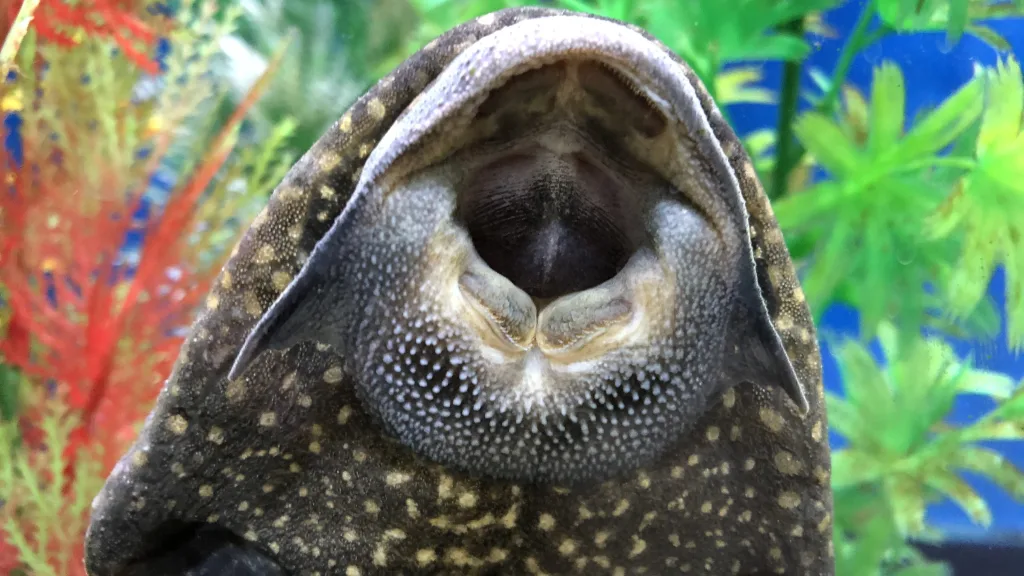
Loricariids feed largely by a rasping motion, this is extremely similar to how snails feed. Snails also have teeth on a ribbon like organ known as a radula (Fig 2).
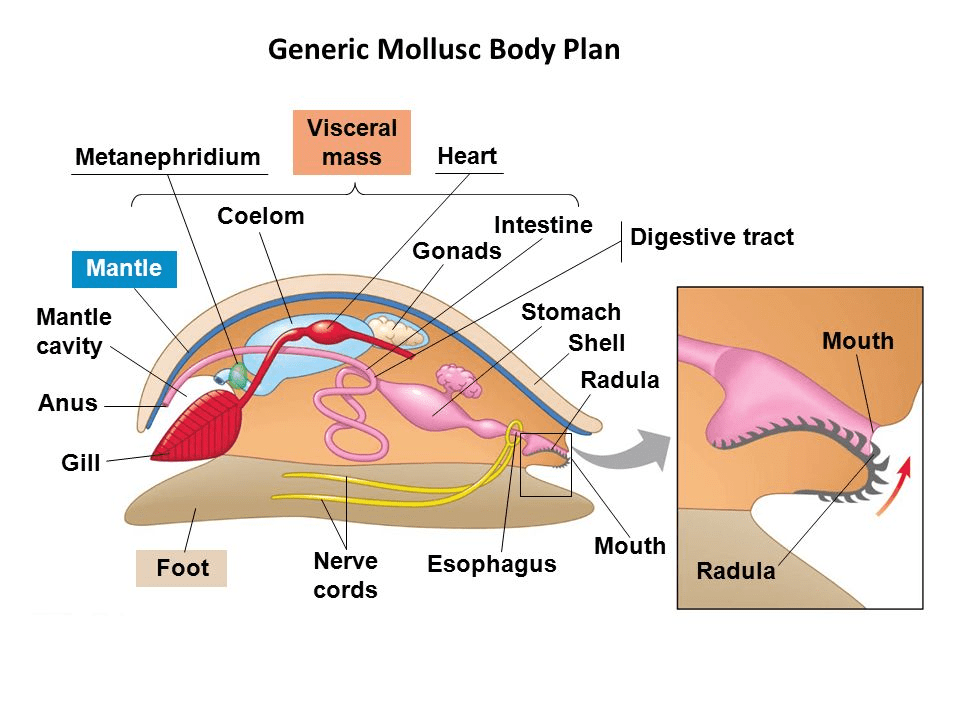
Both snails and Loricariids use their jaws, containing the teeth to basically scrape at a surface (rasp), it can be the food item itself but it could be rocks or wood to extract food.
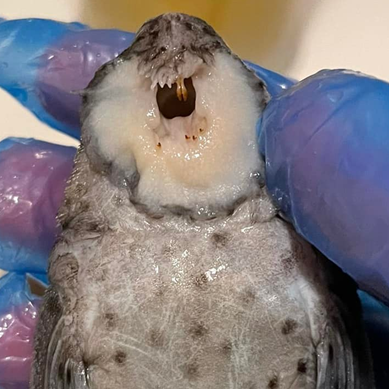
While I say the majority of Loricariid jaws are similar to snails not all are, there are carnivorous genera such as Pseudohemiodon or Scobinancistrus who differ in how they move and function. Carnivorous genera have elongate fewer teeth with often narrower oral jaws but can be much more robust (Fig 3), or in some those oral jaws are almost entirely just the jaws, reduced tooth cups. It’s easy to say these carnivores are using different morphology for the same solution to carnivory but maybe in a different place, one feeds amongst crevices (those with the elongate teeth and jaws) and others amongst the substrate (those with reduced jaws). We do have a slight exception with Spatuloricaria, an obvious substrate feeder but it seems to use the substrate a little differently and feed on different invertebrates.
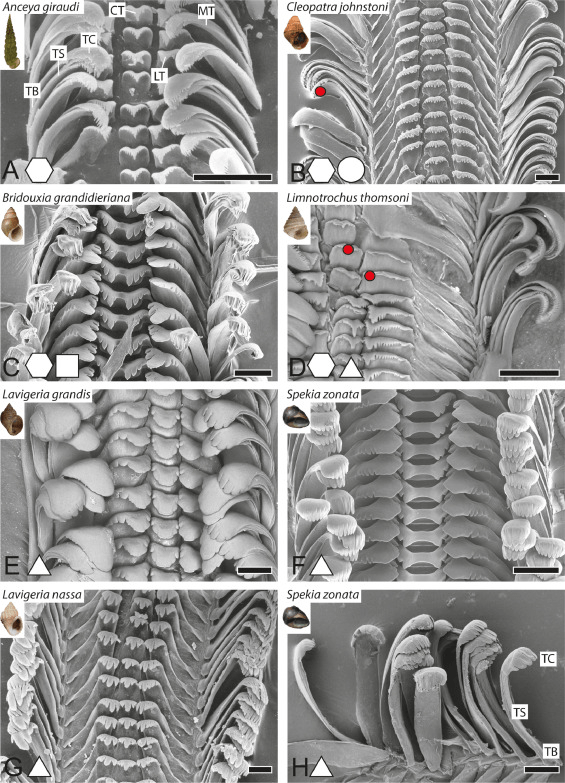
Snails, Gastropods have long been studied in terms of their radula diversity (Fig 4), I assume this is due to the fact when you’re dealing with preserved snails there are fewer tissues to identify the species. Additionally they make great models for understanding how anatomy relates to morphology, ecomorphology. Gastropods are everywhere and it’s easy to find those that scrape algae’s off rocks vs more carnivorous gastropods. To put it simply though, Gastropods feed by rasping and their teeth are uniquely shaped to what they are feeding on.
I think even just ignoring carnivory Loricariidae shows a wide diversity of tooth morphological disparity but there is little studies regarding that in relation to their ecology. Plenty of these studies focus on the development and morphology (Geerinckx et al., 2007). What there is is a fascinating study looking at another part of the fishes anatomy that could be similar, the unculi, small protrusions on the oral disc’s of the fishes. While the study focuses on how these structures allow for the fishes to inhabit certain habitats, could these also function in a similar fashion to radula?
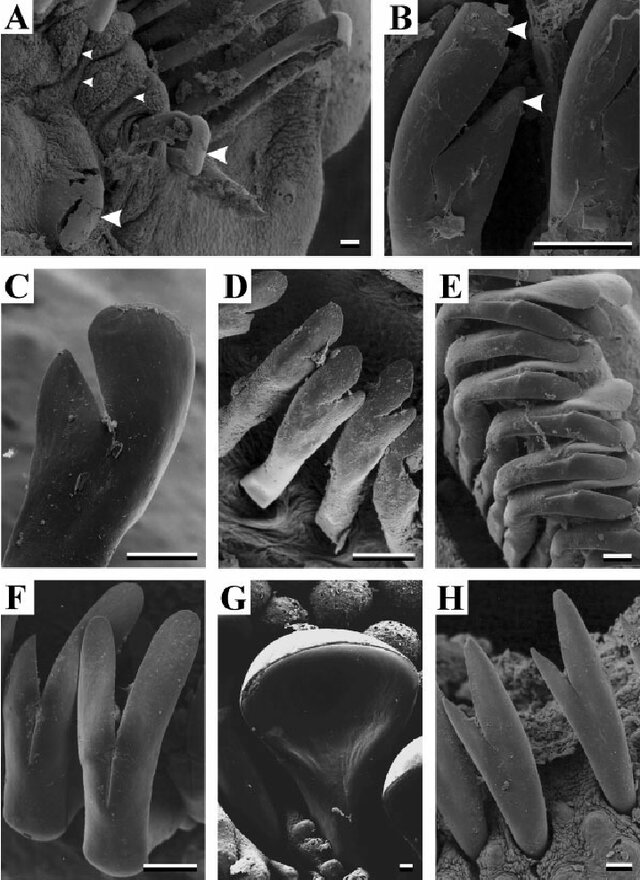
The diversity of Loricariid tooth morphological diversity is clear (Geerinckx et al., 2007) and we clearly see that Loricariids have a diversity of diets beyond herbivory and carnivory (Lujan et al., 2012), whatever they really mean to aquatic animals.
When looking outside of carnivory there is clear differences in morphology, none are so much clearer then those Loricariids that utilize wood. These genera display clearly spoon shaped teeth even if these genera (Panaqolus, Panaque, Hypostomus cochliodon group etc.) do not digest the wood and it is simply where they might find food. Compared with carnivores such as Leporacanthicus, these have more elongate teeth but it depends on where they are accessing their food. This difference is also reflected in gastropods whether they be snails or slugs have evolved teeth on their radula that reflect not just their diet but the methods they use to extract it. Elongate pointed teeth infers carnivory whereas further cusps leans towards herbivory. Perhaps carnivory requires less complexity to herbivory and I assume largely as carnivory relies on more then the teeth to extract food.
References:
Geerinckx, T., De Poorter, J., & Adriaens, D. (2007). Morphology and development of teeth and epidermal brushes in loricariid catfishes. Journal of morphology, 268(9), 805-814.
Krings, W., Konn-Vetterlein, D., Hausdorf, B., & Gorb, S. N. (2023). Holding in the stream: convergent evolution of suckermouth structures in Loricariidae (Siluriformes). Frontiers in Zoology, 20(1), 37.
Krings, W., Kovalev, A., & Gorb, S. N. (2021). Collective effect of damage prevention in taenioglossan radular teeth is related to the ecological niche in Paludomidae (Gastropoda: Cerithioidea). Acta Biomaterialia, 135, 458-472.
Lujan, N. K., & Armbruster, J. W. (2012). Morphological and functional diversity of the mandible in suckermouth armored catfishes (Siluriformes: Loricariidae). Journal of Morphology, 273(1), 24-39.
 The Scientific Fishkeeper