
It is frequently understood that ornamental fish nutrition differs from food fish nutrition due to differing aims, yet many fish feeds use the same ingredients (Yanong, 1999; Vucko et al., 2017). Much of the research into fish nutrition no doubt due to funding focuses on aquaculture (farming fishes) the concept of efficiency, a fish farmer wants a fish to grow large in as minimal time (usually months) as possible for as little cost as possible. This opposes the fishkeepers who want a diet to give the fish longevity, colour and long term reproductive success, there is also a higher focus on the welfare element as fishes are our pets.
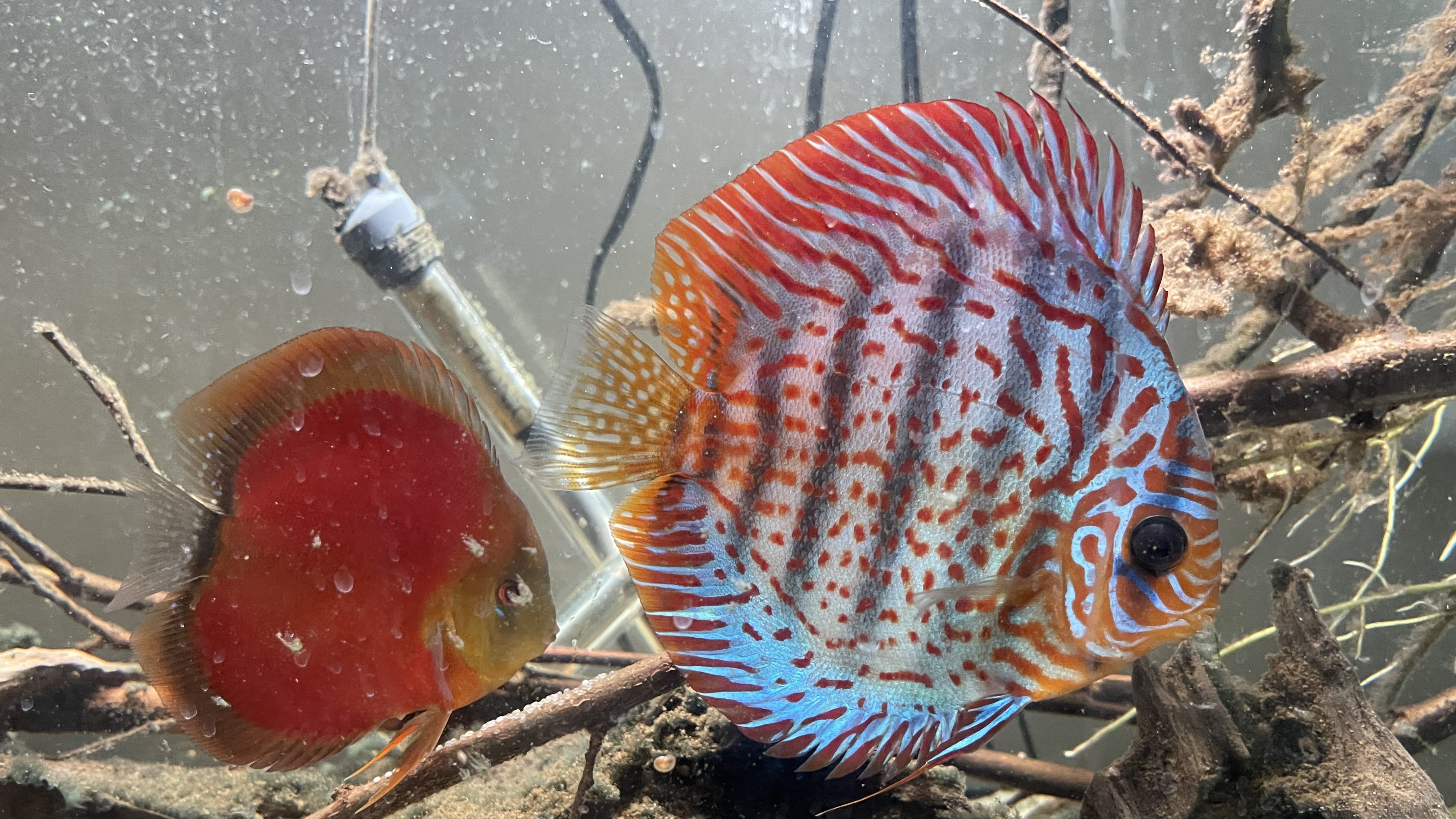
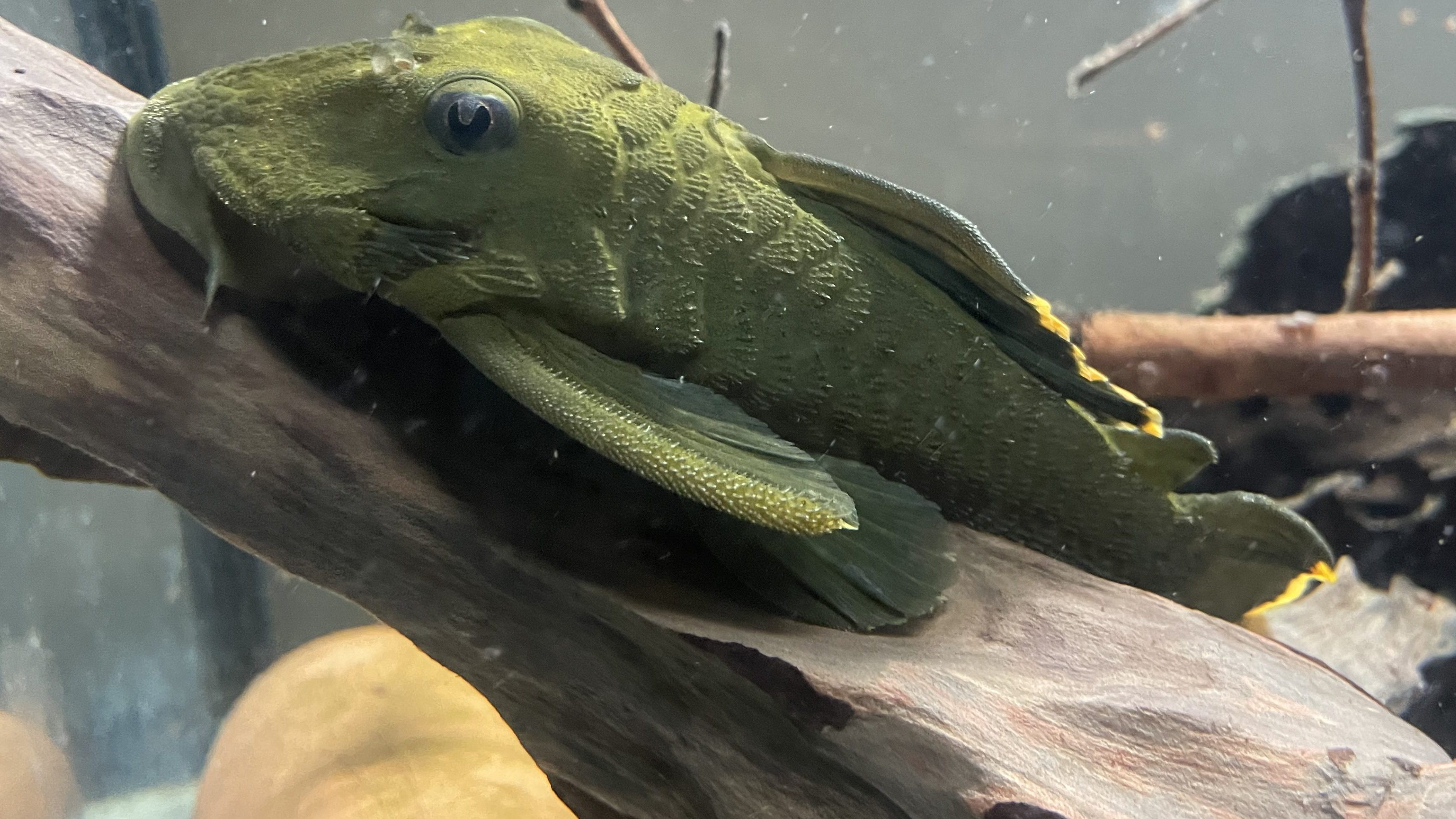
A large factor is there are many species of ornamental fishes across many different fish groupings, this proposes a challenge as reflected in this is the wide range of dietary niches that fishes can exhibit. There are carnivores which can be split into different invertebrate specialist, generalists and also piscivores. Herbivory which can be split into frugivores, algivores, plant eaters and many different specialist and generalist niches. Detritivory also exists and while often classified as feeding on decaying matter in the aquatic sense this could be many things from microbial matrices crossing over a lot with algivory to a mixture of unidentified matter. Omnivory does exist but it is often vague to clearly state a fish is an omnivore as there are few which broadly generalize. And while clades can be generalized such as Loricariids being largely algivores and detritivores, there are carnivores; similarly for Cichlidae the majority are carnivores but there are many exceptions verging into algivory. An important concept as above is generalism vs specialism, the degree of specialism varies between clades and this differs largely between captivity and the wild (Golcher-Benavides and Wagner, 2019). This poses a particular issue for the ornamental aquarist as many aquarium diets fall along the lines of generalism, the ingredients do not largely differ between many products and even brands. This means that even offering a range of different products doesn’t always cater for diversity or all the dietary niches of the fishes you have in the aquarium.
It is always advisable to research the wild diet of the fishes as this will give a good idea of the dietary niche a fish has evolved for over hundreds or thousands of years. Often there are clues in the morphology of the fish, such as head shape, pharyngeal jaw shape and dentition (Burress, 2016). Well known hobby ideas of fish diets can lack fact checking such as the common misconception of Symphysodon (discus fishes) being carnivores yet their wild diet follows more algivory/detritivory (Crampton, 2008) and their morphology is most similar to Tropheus (Fraser et al., 2009), a known algivore. There does remain issues with understanding of wild fish diets, there can be frequent gaps or sampling errors. Such as the original understanding behind the diets of Corydoradinae was based on aquarium fishes, not the wild fishes so it would be better to identify gut analysis and isotope studies of the wild fishes (Alexandrou et al., 2011).
What are the basic nutritional requirements of ornamental fishes?
Like any animal there are broadly the same categories here; carbohydrates, lipids, proteins, vitamins and minerals.
Proteins These are the nutritional requirements many will state of importance with fishes being high and low protein dependent. Although the idea of herbivores having a lower protein requirement then carnivores in the aquatic world fails to understand the high protein levels of algae’s opposed to the terrestrial vascular plants. Different sources of protein do have different volumes of different amino acid and this is important to recognize. This is arguably more important then the actual volume of protein along with accessibility of the protein source. Algivorous fishes might have a lower requirement for protein (Vucko et al., 2017; Yanong, 1999). A large factor of protein requirements is the fishes age, temperature and genetics, as with any nutrient all juvenile fishes will require higher nutrition then those whose growth rate has plateaued more. Excessive protein also increases ammonia production.
Carbohydrates are used as an energy source for many fishes. It is understood that starch unlike cellulose is the utilized form for many ornamental fish feeds, many herbivores and omnivores do not require carbohydrates. Excessive carbohydrates can prevent protein and sugar uptake (Yanong, 1999).
Lipids are another energy source and important for ornamental fishes (Vucko et al., 2017; Yanong, 1999) particularly for spawning fishes who will require them for egg development.
Vitamins and minerals are a complex and diverse topic given how many are vital for life within fishes, without them it can lead to many health issues. I would encourage the reader to read Yanong (1999; https://www.researchgate.net/publication/12102293_Nutrition_of_Ornamental_Fish) for details into this. Some of these vitamins and minerals are taken through diet and others through water, when it comes to water uptake this must be considered with the wild water parameters of the fishes as where calcium is low in the water uptake must be largely from diet. The mineral content of diets can be vague although the total volume is reflected in what is called ash. No, ash isn’t literal ash it means mineral content as when you burn down a diet all that is left is the minerals.
Colour enhancers, this is a concept that is frequently mentioned in food reviewed largely in reference to a diversity of carotenes. While it will always be stated in marketing and social media as a benefit to a fish feed, most fish feeds contain red enhancers of some kind, this is largely a benefit to most fishkeepers excluding those with yellow discus who will change their colour when feeding on it.
Largely these requirements are so complex it’s tricky to address them with one diet when we keep so many species.
Why might change be needed in what we feed our fishes?
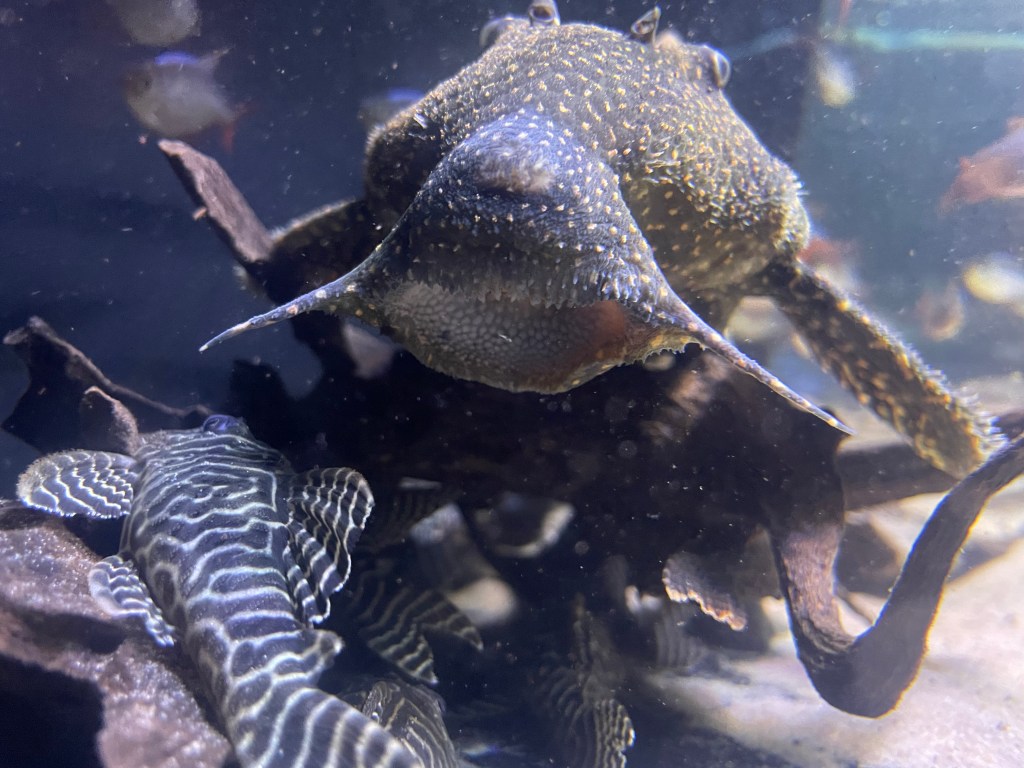
Seeing as many farmed fishes diets do not replicate their wild diets, many do not replicate a diversity in fish diets that is the start. Maybe sometimes they do in the labels but the ingredients do, when a diet aimed at algivores has the same ingredients as one aimed at carnivores. For algivores we already know just one algae can compete with a commercial mix of many ingredients which says a lot (Vucko et al., 2017).
It has become clear that diet is key in the health of a fish with diet influencing the development of tumours (cancer; Spitsbergen et al., 2012), liver damage (Rašković et al., 2011) and other health conditions (Žák et al., 2022). There is the potential of poor fecundity and reproductive lifespans on certain diets although could require further exploration. Many fishes we just don’t see them grow to their adult sizes let alone spawn and mortality might be high where they can refuse to feed on traditional captive diets.
References:
Alexandrou, M. A., Oliveira, C., Maillard, M., McGill, R. A., Newton, J., Creer, S., & Taylor, M. I. (2011). Competition and phylogeny determine community structure in Müllerian co-mimics. Nature, 469(7328), 84-88.
Burress, E. D. (2016). Ecological diversification associated with the pharyngeal jaw diversity of Neotropical cichlid fishes. Journal of Animal Ecology, 85(1), 302-313.
Crampton, W. G. (2008). Ecology and life history of an Amazon floodplain cichlid: the discus fish Symphysodon (Perciformes: Cichlidae). Neotropical Ichthyology, 6, 599-612.
Fraser, G. J., Hulsey, C. D., Bloomquist, R. F., Uyesugi, K., Manley, N. R., & Streelman, J. T. (2009). An ancient gene network is co-opted for teeth on old and new jaws. PLoS biology, 7(2), e1000031.
Golcher-Benavides, J., & Wagner, C. E. (2019). Playing out Liem’s paradox: opportunistic piscivory across Lake Tanganyikan cichlids. The American Naturalist, 194(2), 260-267.
Vucko, M. J., Cole, A. J., Moorhead, J. A., Pit, J., & de Nys, R. (2017). The freshwater macroalga Oedogonium intermedium can meet the nutritional requirements of the herbivorous fish Ancistrus cirrhosus. Algal research, 27, 21-31.
Rašković, B., Stanković, M., Marković, Z., & Poleksić, V. (2011). Histological methods in the assessment of different feed effects on liver and intestine of fish. Journal of Agricultural Sciences (Belgrade), 56(1), 87-100.
Spitsbergen, J. M., Buhler, D. R., & Peterson, T. S. (2012). Neoplasia and Neoplasm-Associated Lesions in Laboratory Colonies of Zebrafish Emphasizing Key Infl uences of Diet and Aquaculture System Design. Ilar Journal, 53(2), 114-125.
Yanong, R. P. (1999). Nutrition of ornamental fish. Veterinary Clinics of North America: Exotic Animal Practice, 2(1), 19-42.
Žák, J., Roy, K., Dyková, I., Mráz, J., & Reichard, M. (2022). Starter feed for carnivorous species as a practical replacement of bloodworms for a vertebrate model organism in ageing, the turquoise killifish Nothobranchius furzeri. Journal of Fish Biology, 100(4), 894-908.
 The Scientific Fishkeeper