
The majority of discussions regarding lighting in the aquarium is very plant centric, plants depend on light to a much higher degree then animals. Although the extent that aquarists looking at plant growth goes to maybe verges on the unnatural, probably because many aquarium plants we keep are not naturally aquatic so some are evolved for much higher degrees of lighting.
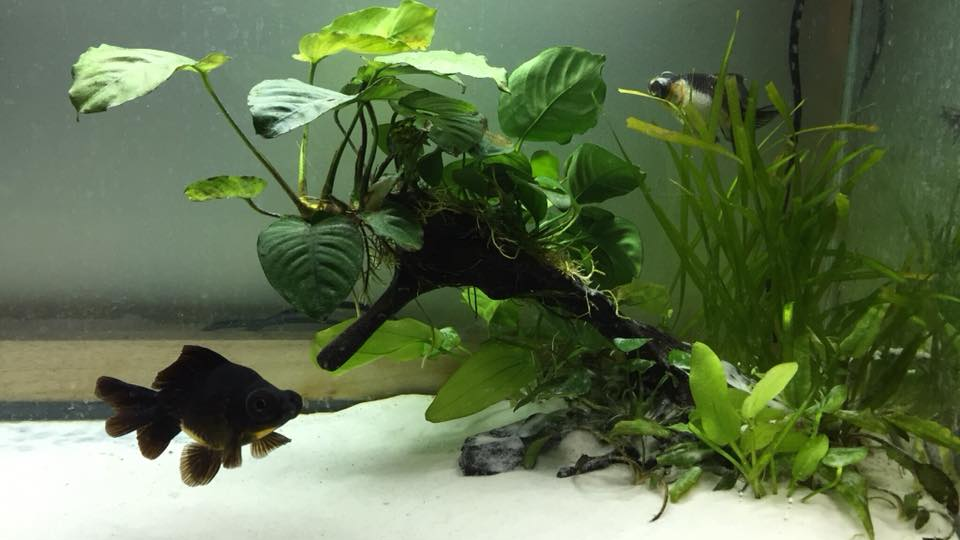
Fishes having eyes and melanin so do respond to and can see light (Guthrie, 1986). Previously in an article focusing on UVB and lighting intensity I discuss the importance for enhancing colouration particularly and any benefits of UVB. In this article I want to talk more in a broader sense of the importance for lighting itself rather then to go into depth on aspects of the lighting spectrum.
One of the largest debates in animal biology regarding vision is how much can they see, fishes is a large category and even in freshwater there will be a massive diversity in colour vision. Some fishes also do not have any eyes, usually due to a trilobite lifestyle in caves, only the Mexican cave fish, Astyanax mexicanus seems to really enter the aquarium trade with any frequency and some of these have reduced eyes known as microphthalmia (Borowsky, 2018). Unlike many other vertebrates fishes display other senses (Gill, 2018) that allow many to cope without eyes as some fishkeepers might have noticed after their fish had lost one or both.
What colour should my lights be?
Generally it would be considered the most natural light would be white light and this is partially true, it has the widest range of colours in it after all. One thing to consider if we are replicating a fishes habitat and wanting to give them lighting that will benefit them is the influence of depth. The deeper the water the more certain colours are filtered out such as reds. I personally think that unless you are using the brightest colouration for an aim it probably has no benefit to the fishes, personally I much prefer those warmer tones. We do know at least in humans the actual colours of the spectrum exposed to the eye does effect the physiology so I personally think this means that white light is so important.
Many freshwater fishes are tetrachromatic, having four colour cone receptors in the eye rather then the three of typical humans or two-three of reef fishes (Marshall et al., 2019). This colour vision does depend on the light intensity, so at lower intensities freshwater fishes tend to be trichromatic (Neumeyer & Arnold, 1989). So this does pose an issue where people use blue lights to watch particularly catfishes at night, if the fishes can see that blue light it is likely disrupting them. I personally would only recommend doing this for short periods so the fish can rest. It might also be a factor that if using only blue lights the lighting is dimmer anyway which is why they are more active rather then them thinking it’s night. Personally I’d rather use a camera for hidden behaviour.
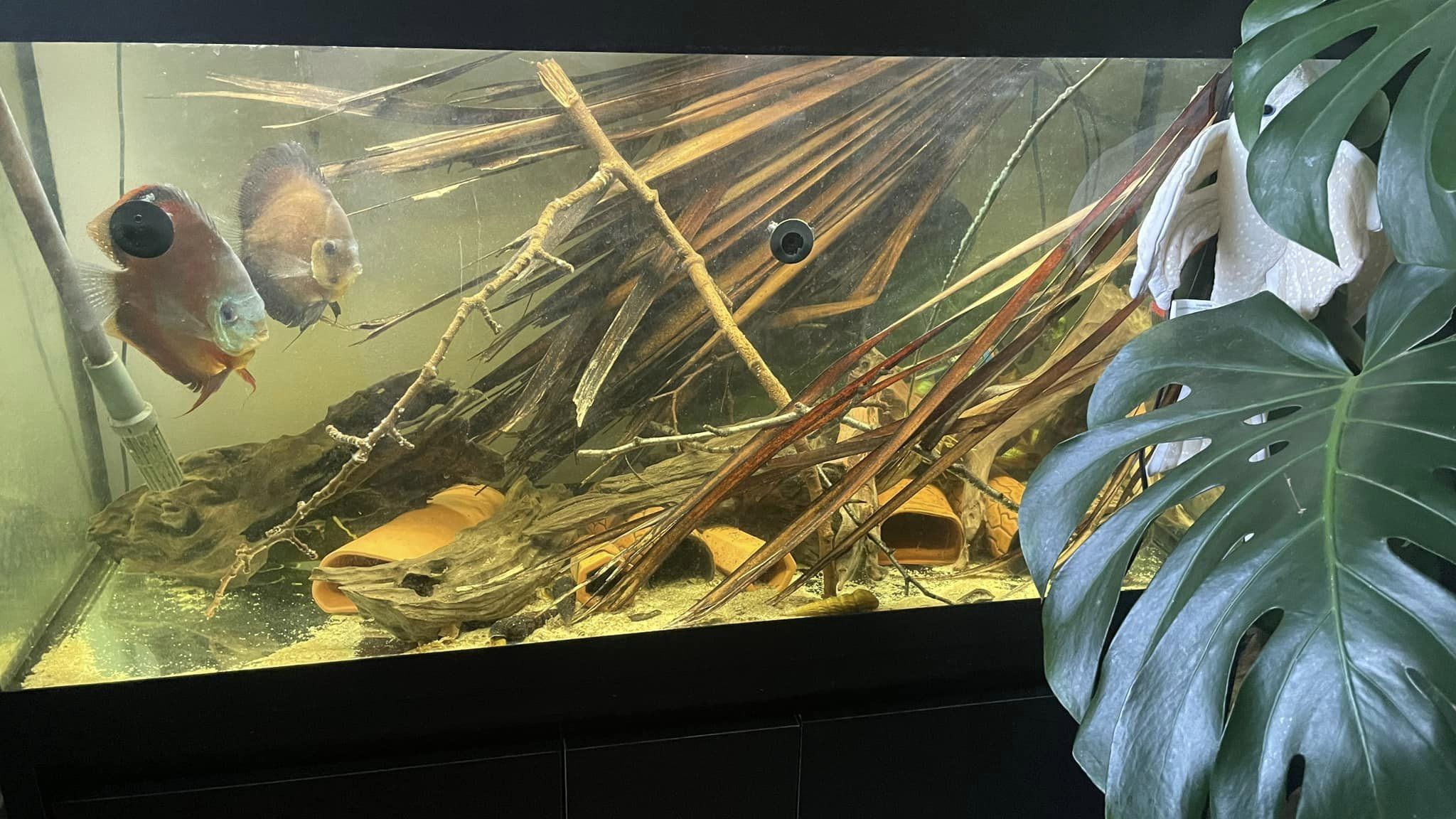
How long should lights be on? If at all?
Fishes much like humans have an internal clock known as a Circadian rhythm, this can be influenced by multiple factors but in particular light (Vera et al., 2023). This means having a regular cycle where the lights are on and off is beneficial. This is not just limited by eyes, even without eyes certain physiology can occur meaning a fish can identify day and night (Frøland Steindal & Whitmore, 2019). This means a regular schedule of day and night is important for fishes much like with people, changes seasonally would work.
There is no doubt a range in nocturnal and and diurnal fishes that we keep, probably many are also crepuscular. The length of time required to sleep likely also varies between individuals and species, some taking short frequent rest periods and much longer periods (Reebs et al., 1992). Sleep is incredibly important for fishes, so it is a necessity to provide that time for them (Leung et al., 2019).
References:
Borowsky, R. (2018). Cavefishes. Current Biology, 28(2), R60-R64.
Frøland Steindal, I. A., & Whitmore, D. (2019). Circadian clocks in fish—what have we learned so far?. Biology, 8(1), 17.
Gill, A. B. (2019). The sensory ecology of fishes. Journal of Fish Biology, 95(1), 3-4.
Guthrie, D. M. (1986). Role of vision in fish behaviour. In The behaviour of Teleost fishes (pp. 75-113). Boston, MA: Springer US.
Leung, L. C., Wang, G. X., Madelaine, R., Skariah, G., Kawakami, K., Deisseroth, K., … & Mourrain, P. (2019). Neural signatures of sleep in zebrafish. Nature, 571(7764), 198-204.
Marshall, N. J., Cortesi, F., de Busserolles, F., Siebeck, U. E., & Cheney, K. L. (2019). Colours and colour vision in reef fishes: Past, present and future research directions. Journal of Fish Biology, 95(1), 5-38.
Neumeyer, C., & Arnold, K. (1989). Tetrachromatic color vision in the goldfish becomes trichromatic under white adaptation light of moderate intensity. Vision research, 29(12), 1719-1727.
Reebs, S. (1992). Sleep, inactivity and circadian rhythms in fish. In Rhythms in fishes (pp. 127-135). Boston, MA: Springer US.
Vera, L. M., de Alba, G., Santos, S., Szewczyk, T. M., Mackenzie, S. A., Sánchez-Vázquez, F. J., & Planellas, S. R. (2023). Circadian rhythm of preferred temperature in fish: Behavioural thermoregulation linked to daily photocycles in zebrafish and Nile tilapia. Journal of Thermal Biology, 113, 103544.
 The Scientific Fishkeeper
Very informational; will take all of this into consideration for my own tank.
LikeLike