
Blackwater is one of the most popular biotypes of current years although it has been one of the most commonly known. Biotypes being more loose then biotope, just fishes which originate from similar habitats but could be from different localities. Although blackwater is diverse so maybe more then a biotype. There have been many misconceptions about blackwater for various reasons and this is possibly due to the popularity but also as entire regions become generalised as blackwater.
This article is not really going to be about biotopes, more then often most blackwater setups are not biotopes.
What is blackwater?
Blackwater is most simply defined as an aquatic habitat stained by tannins but are low in suspended sediment (Meyer, 1990). Tannins are also known as tannoids and tannic acids. These tannic acids result in a higher turbidity. Most often these habitats are drained from regions with sandy soils that do not retain any of the organic matter so it is leached into the water. These rivers are often low gradient (Meyer, 1990) but actual size of the river varies given the Rio Negro and .
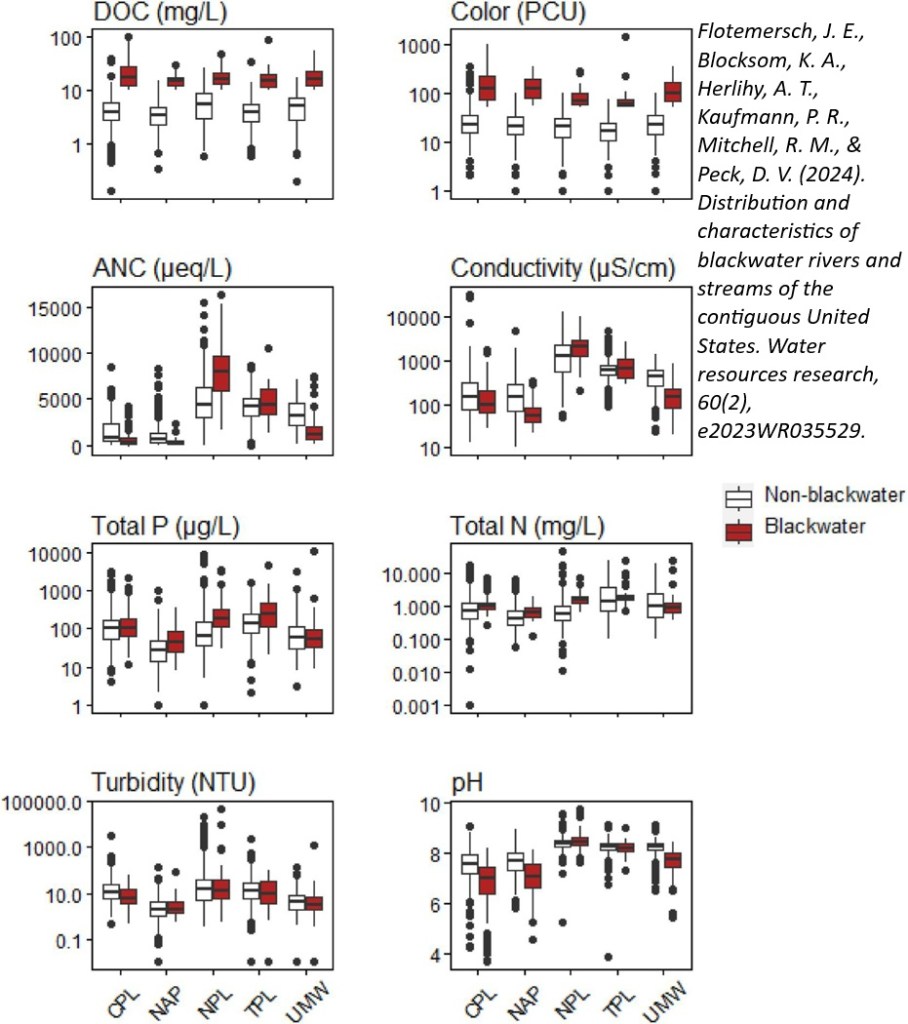
The water chemistry of blackwater habitats can be varied in conductivity and pH and therefore hardness (Fig 1; Flotemersch et al., 2024). Although they are typically lower in conductivity and pH this is not always the case.
Frequently cited will be Alfred Russell Wallace’s publication on his travels within South America. When inspecting the book there is no mention of water parameters and this is not surprising as the ability to test water parameters was already limited in the 1850’s, particularly for a naturalist of a modest background but also in the field would entirely be impractical. In fact, the book is very vague as to the hydrology (Wallace, 1853). So while he was analysing species within the Rio Negro, Brazil he wasn’t the first to identify these stained waters, in fact many have given the number of towns and rivers labelled as blackwater and later noted for being of this physiology.
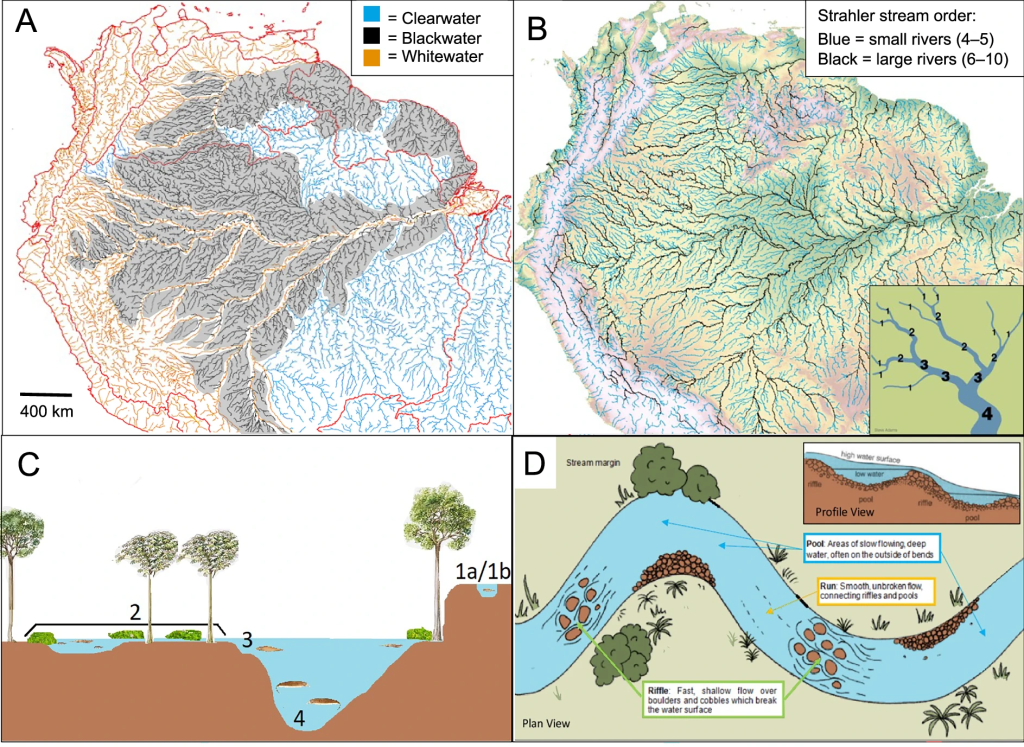
Blackwater habitats as previously mentioned are more typical with specific river hydrological physiologies and distributions are often based on these. Figure 2 displays the distribution of blackwater habitats across Northern South American freshwater ecosystems, defining them mostly at lower flow habitats.
What are tannins?
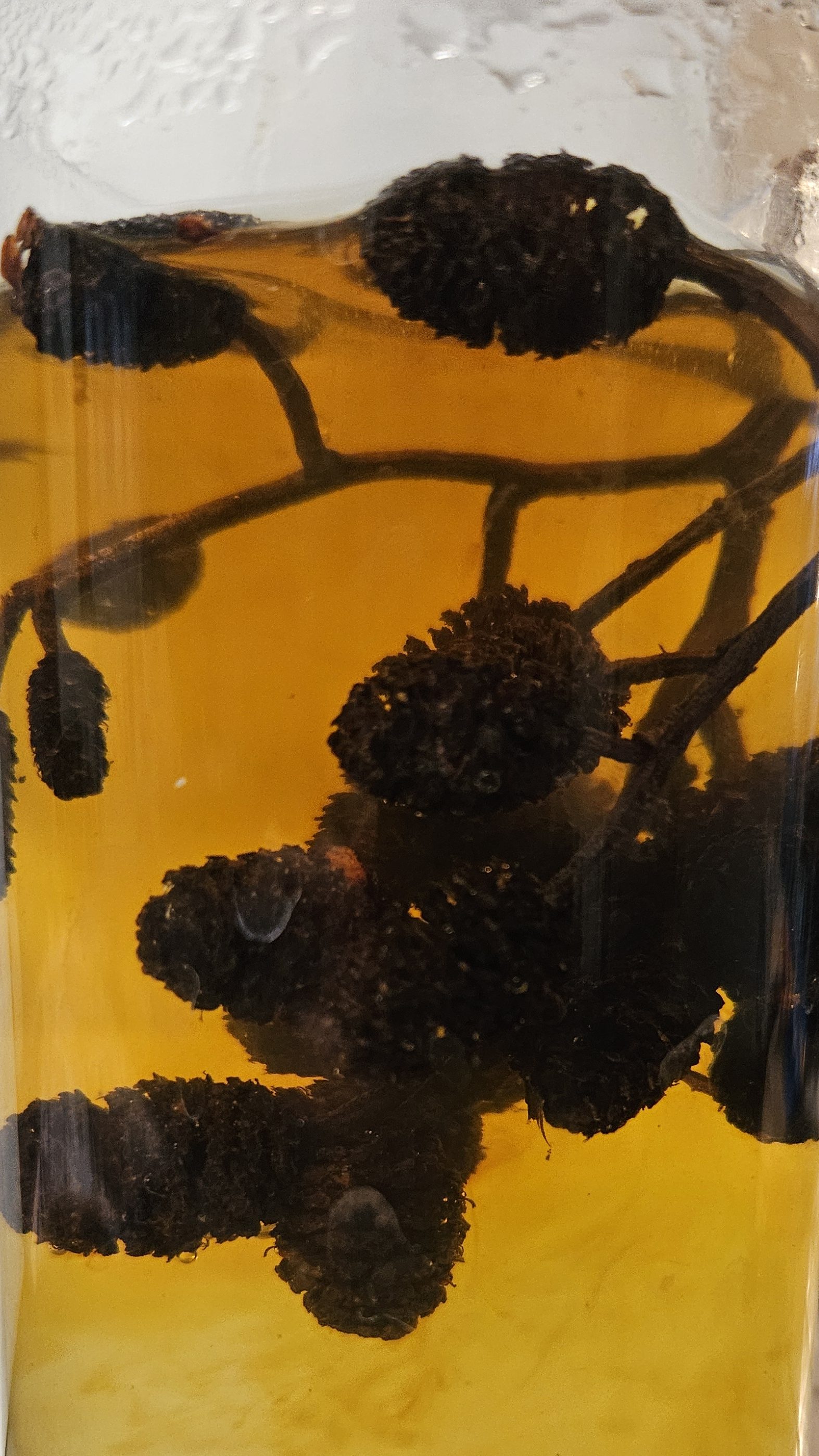
Tannins are one of the many compounds produced by plants to reduce predation by herbivores, often bitter tasting compounds. These compounds are what stains your black, green and red teas which actually disproves the idea that tannins can only exist in soft, low pH waters but it is easier to obtain in those softer waters as any tea drinker might know.
These compounds are a bit more complex as anti-herbivory mechanisms using a bitter taste. Tannins are antinutrients, limiting protein uptake (Becker and Makker, 1999; Hassan et al., 2020; Wang et al., 2024; Kokou and Fountoulak, 2018) although could also damage other physiological processes (Liu et al., 2025; Omnes et al., 2017). While a more well known benefit is that tannins are also antimicrobial (Wagner et al., 2012; Balta & Balta, 2024), like the antinutrient effect it will be concentration dependent. While there are studies on both looking at these effects of tannins, we don’t know the concentrations of these compounds in our aquariums and it makes it impossible to assume if there is an antimicrobial or antinutritional effect when present within our aquariums. This unpredictability is increased by the fact that other compounds influence the turbidity/staining so we can’t assume that darker stains mean increased antimicrobial/antinutritional effects over a tank with reduced staining as the concentrations of tannins to change the stain differ.
The effect of hardness
What you might have noticed is that there is no mention of hardness or conductivity in my definitions. There is a reason why, there are hard water and brackish blackwater habitats but these are less common but this doesn’t mean they don’t exist and many definitions allow for this (Flotemersch et al., 2024; Hackney et al., 2022; Bonotto et al., 2025) . Blackwater as a term is useful as a definition for tannin rich waters as distinctive habitats as these tannins effect productivity just by light penetration but it’d require a shift in the other terms whitewater and clearwater into much broader categories.
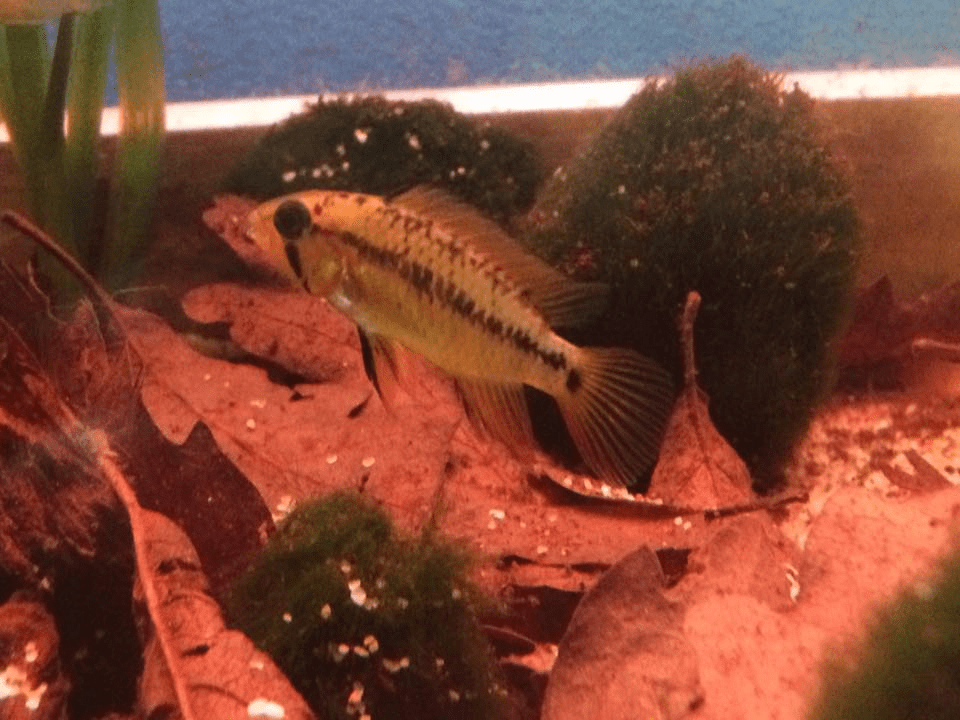
Tannins are actually reasonably common in daily life, these are the compounds which stain teas, beers and wines with their distinctive range of red, yellow and brown tones. If you are a tea drinker you might know that you can make a stained tea whether you have hard or soft water, just if you have hard water often you need a higher concentration. The tannins are still released as the plant breaks down, this is no different from in nature. Maybe the misconception that blackwater is only found in softer waters is also the perception that all freshwater habitats are full of leaf litter and botanicals which is a photographical bias regarding popular freshwater media. But there is an incredible diversity of freshwater habitats and situations, so while there will be white/clear waters with leaf litter and submerged plant matter not all do. What probably switches a river towards being blackwater further is the amount of external humic acids draining from outside the river into it, this is confirmed with Meyers (1990) definition. Most of these rivers at the end of the day seem to flow through heavily forested areas so it is likely a strong influence from the external and internal plant matter. But as earlier stated don’t confuse a highly turbid (low clarity) river with being blackwater, there are many rivers with higher sediment loads or other reasons clarity can be low such as just being lower down the stream order with a lot of silt and maybe tidal which kicks up a lot of that silt.
Differences in plant species and structures
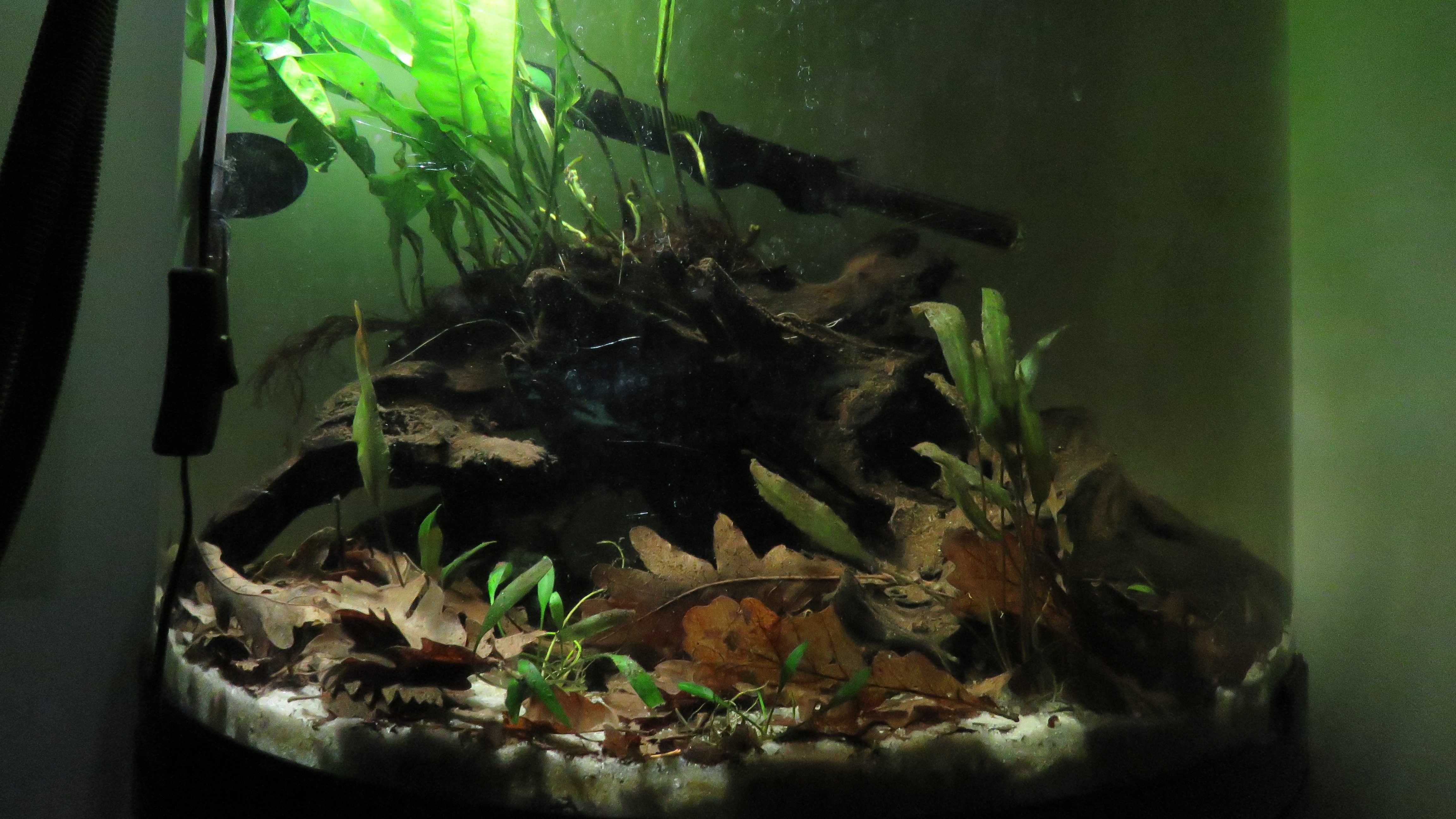
Different species of plants contain different concentrations of tannins, this is kind of well known as you might have your preference of species but also noticed some produce a deeper stain more easily then others. What is probably lesser known is different plant structures produce different levels of tannins and this can vary seasonally, this is why plant saplings can be more toxic then their leaves at lower doses. This isn’t a guide on how to use botanicals but I recommend this article on species to use: https://www.practicalfishkeeping.co.uk/features/free-tank-decor/ Just be careful with articles as many do not cover the positives and negatives of plant compounds and many of the health benefits could be overstated in the concentrations we are using.
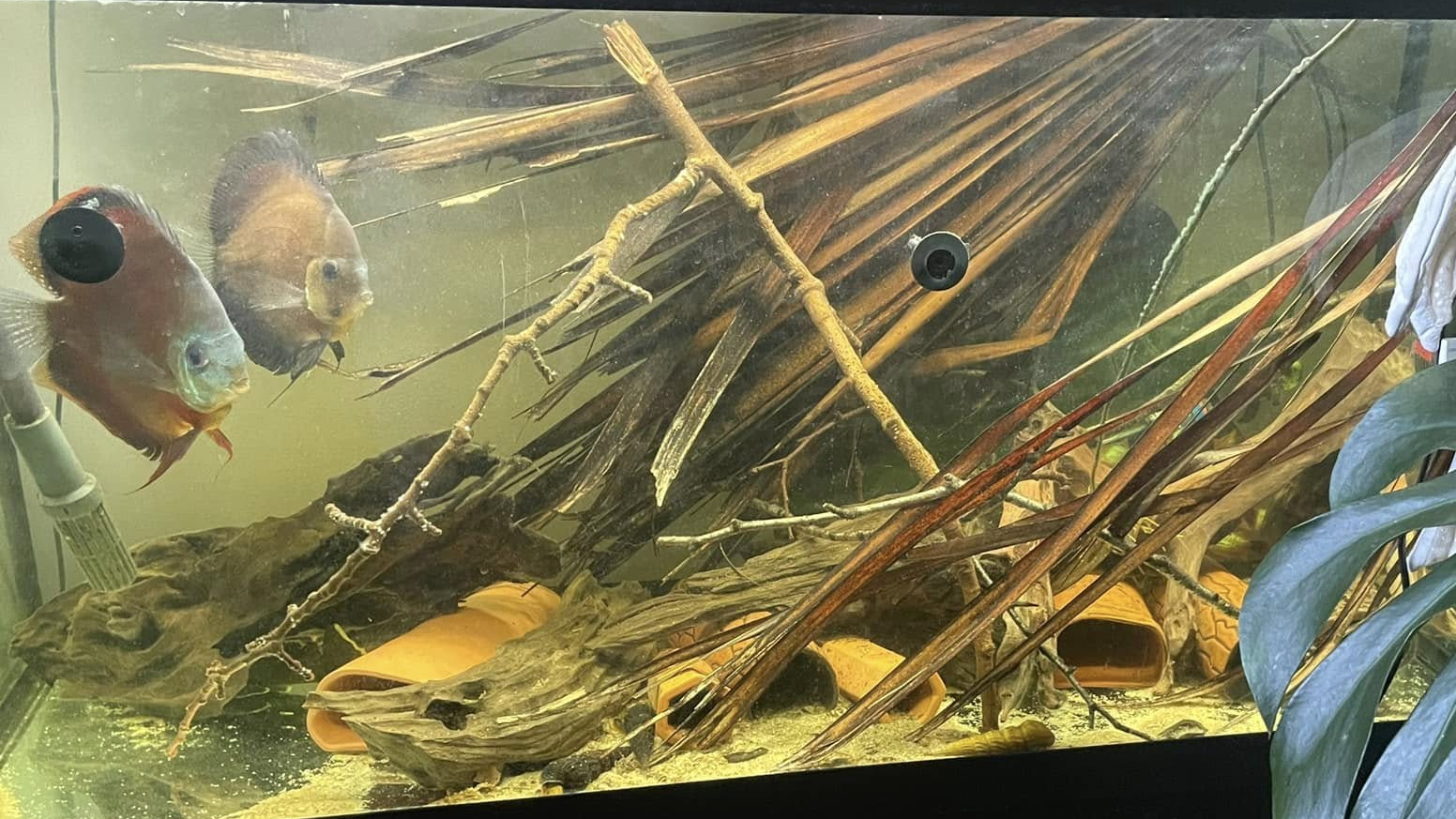
Personally I do not collect botanicals for their stains and I do not use leaves as I keep largely clear/whitewater fishes personally. Alder cones (from Alnus spp.) are one of the best examples to release tannins that you can collect whereas for leaf litter oak leaves (Quercus spp.) are often distinctive. I have also found palm leaves from Trachycarpus fortunei seem to release over a long time a weaker tannin content. But I do largely collect fresh and dried woods from safe deciduous trees such as oak, beech, birch and sycamores.
Plant compounds
Tannins seem the most well known of the plant compounds to the aquarist, these are a form of polyphenol but plants produce a whole diversity of different compounds with a wide range of different properties. It is worth investigating the various compounds of different plants before adding them to the aquarium in larger quantities, dried or fresh because drying doesn’t largely remove them unless you have a way of draining them. This is a massive topic and while many probably wont kill a fish rapidly and depend on how they are introduced to the fish it is worth considering. One example is calcium oxalates found in many aroids such as Anubias and pothos, these are toxins which require being ingested and particular volumes so while they cause damage it is only a concern in larger volumes but we don’t know how much as it’s largely unknown how much many different aroid species contain.
The blackwater adaptation
Fishes that inhabit blackwater habitats likely have adaptations to cope with the physiological stressors of tannins and other plant compounds so they might be able to benefit from those positives such as antimicrobial activity. Perhaps it could be from a higher protein requirement but then due to antimicrobial properties they might not have evolved an immune system that can cope with higher microbial loads. It is likely species dependent. Recognised adaptations is to the lower oxygen saturations within blackwater habitats which is likely a barrier for other species (Small et al., 2014) but blackwater species could be less adaptable to temperatures higher then their normal range (Braz‐Mota et al., 2025).
Conclusion
Blackwater habitats and freshwaters are unusual habitats classified by their ‘tea’ coloured staining caused by compounds known as tannins. Tannins are complicated and there are negatives as well as positives. At the end of the day if you have fishes from blackwater habitats there is likely a benefit.
References:
Albert, J. S., Abrahão, V., Akin, D. R., Allen, J. G., Ândrade, M., Arce, M., … & Reis, R. E. (2025). An ecological trait matrix of Neotropical freshwater fishes. Scientific data, 12(1), 1127.
Balta, Z. D., & Balta, F. (2024) Determination of Antimicrobial Activity and MIC Value of Tannic Acid Against Four Different Fish Pathogens. Journal of Anatolian Environmental and Animal Sciences, 9(4), 582-589.
Becker, K., & Makkar, H. P. S. (1999). Effects of dietary tannic acid and quebracho tannin on growth performance and metabolic rates of common carp (Cyprinus carpio L.). Aquaculture, 175(3-4), 327-335.
Bogotá-Gregory, J. D., Lima, F. C., Correa, S. B., Silva-Oliveira, C., Jenkins, D. G., Ribeiro, F. R., … & Crampton, W. G. (2020). Biogeochemical water type influences community composition, species richness, and biomass in megadiverse Amazonian fish assemblages. Scientific Reports, 10(1), 15349.
Bonotto, D. M., Lunardi, M., & Goonetilleke, A. (2025). Hydrochemistry of Blackwaters in a Shoreline Zone of São Paulo State, Brazil. Journal of Marine Science and Engineering, 13(8), 1575.
Braz‐Mota, S., Duarte, R. M., & Val, A. L. (2025). Contrasting thermal and hypoxic responses of species from blackwater and whitewater rivers. Journal of Fish Biology.
Hackney, C. T., Adams, S. M., & Martin, W. H. (Eds.). (1992). Biodiversity of the southeastern United States: aquatic communities (pp. xiii+-779).
Hassan, Z. M., Manyelo, T. G., Selaledi, L., & Mabelebele, M. (2020). The effects of tannins in monogastric animals with special reference to alternative feed ingredients. Molecules, 25(20), 4680.
Kokou, F., & Fountoulaki, E. (2018). Aquaculture waste production associated with antinutrient presence in common fish feed plant ingredients. Aquaculture, 495, 295-310.
Liu, J., Zhang, X., Lu, Q., Zhang, H., Lin, L., & Li, Q. (2025). Tannic acid reduced the growth performance, antioxidant, and immune functions of the Nile tilapia (Oreochromis niloticus). Aquaculture, 596, 741872.
Meyer, J. L. (1990). A blackwater perspective on riverine ecosystems. BioScience, 40(9), 643-651.
Flotemersch, J. E., Blocksom, K. A., Herlihy, A. T., Kaufmann, P. R., Mitchell, R. M., & Peck, D. V. (2024). Distribution and characteristics of blackwater rivers and streams of the contiguous United States. Water resources research, 60(2), e2023WR035529.
Omnes, M. H., Le Goasduff, J., Le Delliou, H., Le Bayon, N., Quazuguel, P., & Robin, J. H. (2017). Effects of dietary tannin on growth, feed utilization and digestibility, and carcass composition in juvenile European seabass (Dicentrarchus labrax L.). Aquaculture Reports, 6, 21-27.#
Ríos-Villamizar, E. A., Adeney, J. M., Piedade, M. T. F., & Junk, W. J. (2020). New insights on the classification of major Amazonian river water types. Sustainable Water Resources Management, 6(5), 83.
Small, K., Kopf, R. K., Watts, R. J., & Howitt, J. (2014). Hypoxia, blackwater and fish kills: experimental lethal oxygen thresholds in juvenile predatory lowland river fishes. PLoS One, 9(4), e94524.
Wallace, A. R. (1889). A narrative of travels on the Amazon and Rio Negro: with an account of the native tribes, and observations on the climate, geology, and natural history of the Amazon valley (No. 8). Ward, Lock.
Wagner, E. J., Oplinger, R. W., & Bartley, M. (2012). Evaluation of tannic acid for disinfection of rainbow trout eggs. North American Journal of Aquaculture, 74(1), 80-83.
Wang, Y., Wu, J., Li, L., Yao, Y., Chen, C., Hong, Y., … & Liu, W. (2024). Effects of Tannic Acid Supplementation of a High‐Carbohydrate Diet on the Growth, Serum Biochemical Parameters, Antioxidant Capacity, Digestive Enzyme Activity, and Liver and Intestinal Health of Largemouth Bass, Micropterus salmoides. Aquaculture Nutrition, 2024(1), 6682798.
 The Scientific Fishkeeper